
Work Visa Options for Foreign Workers in the U.S: Complete 2026 Guide
The United States continues to attract talented professionals from around the world. In 2026, understanding work visa options for foreign workers in the U.S has become more important than ever.
Whether you’re a skilled professional, entrepreneur, or specialist in your field, navigating the complex U.S. immigration system can feel overwhelming. The good news is that multiple visa pathways exist to help you achieve your American career dreams.
This comprehensive guide breaks down everything you need to know about obtaining work authorization in the United States. From temporary work visas to permanent residence options, you’ll discover which path fits your unique situation.
Understanding U.S. Work Visas: What You Need to Know
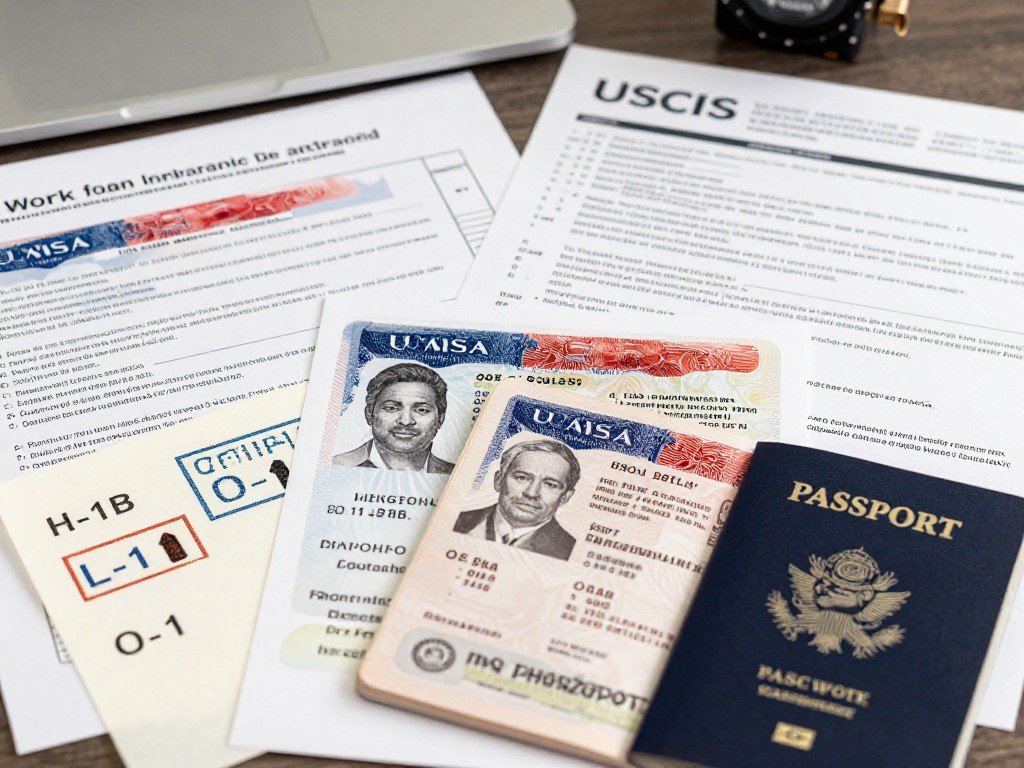
A work visa allows foreign nationals to legally work in the United States for a specific period. The U.S. Citizenship and Immigration Services oversees these programs.
Work visas fall into two main categories. Non-immigrant visas permit temporary work authorization. Immigrant visas lead to permanent residence and eventual citizenship.
Key Terms Every Applicant Should Understand
Before diving into specific visa types, understanding basic immigration terminology helps you navigate the process more effectively.
Employment Authorization
This refers to your legal permission to work in the United States. It can come through visa status or a separate work permit document.
- Must be obtained before starting work
- Linked to specific employer or job category
- Has expiration dates requiring renewal
- Violations can result in deportation
Visa Petition Process
Most work visas require your U.S. employer to file a petition on your behalf with government agencies.
- Employer initiates the petition
- Labor Department certification may be required
- USCIS reviews and approves petitions
- Applicant applies for visa at embassy
Non-Immigrant vs Immigrant
Non-immigrant visas are temporary work permits. Immigrant visas provide a pathway to permanent residence in the country.
- Non-immigrant: H-1B, L-1, O-1, TN status
- Immigrant: EB-1, EB-2, EB-3 categories
- Some allow dual intent (can pursue green card)
- Different application processes and timelines
Employer Sponsorship
Most work visa categories require a U.S. employer to sponsor your application and verify job details.
- Employer must prove need for foreign worker
- Job offer required before application
- Employer pays most petition fees
- Sponsorship ties you to that employer
Difference Between Temporary and Permanent Work Authorization
Temporary work visas allow you to work in the United States for a limited time. These visas have specific validity periods ranging from one year to several years.
Most temporary visas can be extended. However, maximum stay limits apply. H-1B visa holders can typically stay up to six years total.
Permanent work authorization comes through employment-based green cards. These provide permanent residence status. Green card holders can live and work anywhere in the United States indefinitely.
The path to permanent residence often starts with a temporary visa. Many workers transition from H-1B or L-1 status to green card applications. This process can take several years depending on your country of birth and visa category.
Most Popular Temporary Work Visa Categories

The United States offers several temporary work visa options for foreign workers. Each category serves different professional needs and industries.
Understanding which visa type matches your qualifications is crucial. The right visa category can make your application process smoother and faster.
H-1B Visa: For Specialty Occupation Professionals
The H-1B is the most common work visa for skilled professionals. It requires a bachelor degree or higher in a specialty occupation.
Technology companies, healthcare organizations, and educational institutions frequently sponsor H-1B workers. The visa allows employment for three years initially. Extensions up to six years total are possible.
Important Note: H-1B visas are subject to an annual cap of 65,000 visas, plus 20,000 for advanced degree holders from U.S. universities. Registration typically occurs in March for October start dates.
H-1B Eligibility Requirements
- Bachelor degree or equivalent in specialty field
- Job offer from U.S. employer for specialty occupation
- Employer must file Labor Condition Application
- Position requires theoretical or technical expertise
- Prevailing wage must be met or exceeded
- Selected in annual lottery (if cap-subject)
L-1 Visa: Intracompany Transfer for Managers and Specialists
The L-1 visa facilitates transfers of employees within multinational companies. Workers must have worked for a foreign branch for at least one continuous year.
Two subcategories exist under L-1 classification. L-1A serves managers and executives. L-1B covers workers with specialized knowledge.
L-1A visa holders can stay up to seven years. L-1B applicants receive up to five years maximum stay. No annual cap limits L-1 visas, making them more predictable than H-1B.
Who Qualifies for L-1 Status
- One year employment with foreign company affiliate
- Transfer to U.S. parent, branch, or subsidiary
- Managerial, executive, or specialized knowledge role
- Qualifying relationship between companies verified
- Position in U.S. must be similar level or higher
O-1 Visa: For Individuals with Extraordinary Ability
The O-1 visa category recognizes individuals with extraordinary ability in their field. This includes sciences, arts, education, business, or athletics.
Applicants must demonstrate sustained national or international acclaim. Evidence of major awards, published materials, or membership in prestigious associations helps prove extraordinary ability.
O-1 visas have no annual cap. Initial grants provide up to three years. Extensions in one-year increments are unlimited if you continue qualifying work.
O-1A: Sciences, Business, Education, Athletics
This subcategory serves professionals in technical and business fields. You must show extraordinary achievement through major recognized prizes or meet at least three criteria from a specific list.
O-1B: Arts, Motion Picture, Television
Artists, directors, actors, and entertainment professionals use O-1B classification. The standard requires distinction, meaning a high level of achievement evidenced by a degree of skill and recognition.
TN Visa: NAFTA Professionals from Canada and Mexico
Citizens of Canada and Mexico can access TN status under the United States-Mexico-Canada Agreement. This replaces the previous NAFTA treaty provisions.
The TN category covers 63 specific professional occupations. Engineers, scientists, teachers, and management consultants commonly use this classification.
Canadian citizens can apply directly at the port of entry. Mexican nationals must obtain a visa at a U.S. embassy before travel. Initial periods grant three years, with unlimited extensions possible.
E-2 Visa: Treaty Investor for Entrepreneurs
The E-2 visa serves nationals of treaty countries who invest substantial capital in a U.S. business. You must own at least 50% of the enterprise or control operations.
Investment amounts vary by business type and location. Generally, $100,000 represents the minimum practical investment. The business must be active and create jobs for U.S. workers.
E-2 status is renewable indefinitely in two-year increments. However, it does not directly lead to permanent residence. Family members can accompany you and may apply for work authorization.
Employment-Based Immigration: Path to Permanent Residence
Employment-based immigrant visas provide a pathway to permanent residence. Unlike temporary visas, these allow you to live and work permanently in the United States.
The government issues approximately 140,000 employment-based green cards each year. These are divided into five preference categories, each with specific requirements.
EB-1: Priority Workers
The EB-1 category serves the most accomplished professionals. Three subcategories exist under this classification.
EB-1A covers persons of extraordinary ability in sciences, arts, education, business, or athletics. No job offer is required. You can self-petition based on your achievements.
EB-1B serves outstanding professors and researchers with international recognition. At least three years of teaching or research experience is needed. A permanent job offer from a university or research institution is required.
EB-1C applies to multinational executives and managers. You must have worked for a foreign company for one year in the past three years. The U.S. employer must be related to that foreign company.
EB-2: Advanced Degree Professionals and Exceptional Ability
The EB-2 category requires either an advanced degree or exceptional ability. Most applicants need a master’s degree or bachelor’s plus five years of progressive experience.
Labor certification is typically required. Your employer must prove no qualified U.S. workers are available for the position. This process involves advertising the job and documenting recruitment efforts.
The National Interest Waiver (NIW) allows some applicants to skip labor certification. You must demonstrate that your work benefits the United States nationally. Scientists, researchers, and entrepreneurs sometimes qualify for NIW.
EB-3: Skilled Workers, Professionals, and Other Workers
The EB-3 classification serves workers requiring less extensive qualifications than EB-1 or EB-2. Three subcategories exist within EB-3.
Skilled workers must have at least two years of job experience or training. Professionals need a bachelor degree. Other workers perform unskilled labor requiring less than two years of training.
Labor certification is mandatory for all EB-3 applications. Processing times are generally longer than EB-1 or EB-2 categories. Workers from certain countries face substantial waiting periods due to per-country limits.
Requirements and Eligibility Criteria for Work Visas
Each work visa category has specific eligibility requirements. Understanding these criteria before you begin helps avoid wasted time and application denials.
Most work visas share some common requirements. However, the details vary significantly between visa types. Careful attention to your specific category is essential.
Educational Qualifications
Education requirements differ based on visa classification. H-1B visas typically require a bachelor degree or higher in a specialty occupation field.
Your degree must relate to the position you’ll fill. A computer science degree works for a software developer role. An unrelated degree may require additional evidence showing equivalency.
Foreign degrees need evaluation by credential services. These agencies compare your education to U.S. standards. Some visa types accept a combination of education and experience in place of a degree.
Professional Experience and Specialized Skills
Work experience plays a crucial role in many visa applications. L-1 visas require at least one continuous year with the foreign employer. This must occur within the three years immediately before transfer.
O-1 applicants must demonstrate extraordinary ability through achievements. Evidence might include awards, publications, high salary, or critical role in distinguished organizations.
EB-2 positions often require five years of progressive experience. Each year should show increased responsibility or skill development. Recommendation letters from previous employers strengthen experience claims.
Job Offer and Employer Sponsorship
Most work visa applicants need a valid job offer from a U.S. employer. The employer becomes your petition sponsor. They file forms with government agencies on your behalf.
The job must be genuine and full-time. Part-time positions rarely qualify for visa sponsorship. The employer must demonstrate financial ability to pay your offered wage.
Employer Responsibilities: Sponsoring employers must file Labor Condition Applications for H-1B and some other categories. They attest to paying prevailing wages and maintaining proper working conditions. Violations can result in penalties and loss of sponsorship privileges.
Essential Documents for Work Visa Applications
Gathering proper documentation is critical for application success. Missing or inadequate documents cause delays or denials. Each visa type requires specific forms and supporting evidence.
- Valid passport with six months validity beyond intended stay
- Form I-129 Petition for Nonimmigrant Worker (filed by employer)
- Labor Condition Application for wage-based visas
- Educational credentials and diploma copies
- Detailed resume showing relevant experience
- Letters of recommendation from supervisors or industry experts
- Proof of specialized skills or extraordinary ability
- Job offer letter with detailed position description
- Company documentation proving legitimacy and capacity
- Passport-style photographs meeting specifications
- Previous visa documentation if applicable
- Financial documents showing ability to support yourself
Step-by-Step Work Visa Application Process
Applying for a work visa involves multiple steps and government agencies. Understanding the process helps you prepare properly and set realistic expectations.
The exact steps vary by visa type. However, most employment-based visas follow a similar general pattern. Timing and coordination are critical for success.
Step 1: Secure U.S. Job Offer
Your journey begins with finding a U.S. employer willing to sponsor you. This employer must need your skills and have the capacity to file visa petitions.
The job position must qualify for the visa category you seek. A specialty occupation works for H-1B. An executive role fits L-1A. Ensure the position matches visa requirements before proceeding.
Negotiate your employment terms including salary, benefits, and start date. The offered wage must meet prevailing wage requirements set by the Department of Labor. Lower wages can cause petition denials.
Step 2: Employer Files Labor Condition Application
For H-1B and some other visa types, your employer must file a Labor Condition Application with the Department of Labor. This document attests to proper wages and working conditions.
The LCA specifies your job location and wage. If you’ll work in multiple locations, the employer may need multiple LCAs. Processing typically takes seven to ten days.
After approval, the employer must post the LCA at the worksite. This notifies other workers of the foreign hire. The posting requirements must be followed precisely to avoid violations.
Step 3: Employer Submits Form I-129 to USCIS
Your employer files Form I-129 Petition for a Nonimmigrant Worker with U.S. Citizenship and Immigration Services. This petition includes extensive documentation supporting your qualifications and the job offer.
Supporting documents might include your resume, diplomas, recommendation letters, and company information. The petition must demonstrate you meet all requirements for the visa classification.
Premium processing is available for an additional fee. This service guarantees a response within 15 calendar days. Regular processing can take several months depending on the service center and visa type.
Step 4: Wait for USCIS Petition Approval
After filing, USCIS reviews the petition. They may request additional evidence if something is unclear or missing. Responding promptly to such requests prevents delays.
If approved, USCIS issues Form I-797 Notice of Action. This approval notice is essential for the next steps. Keep multiple copies of this document.
Petition denials can be appealed or refiled with corrections. Understanding the denial reason helps improve future applications. Some applicants consult immigration attorneys after denials.
Step 5: Apply for Visa at U.S. Embassy or Consulate
With an approved petition, applicants outside the United States must apply for the actual visa at a U.S. embassy or consulate. Those already in the United States may be able to change status instead.
Schedule a visa interview appointment at the embassy in your home country. Wait times vary by location and time of year. Summer months often have longer waiting periods.
Attend your interview with all required documents. The consular officer will ask questions about your job, qualifications, and intentions. Be honest and provide clear answers.
| Application Step | Responsible Party | Typical Duration | Key Requirements |
| Job Offer | Applicant/Employer | Varies widely | Qualifying position and willing sponsor |
| LCA Filing | Employer | 7-10 days | Prevailing wage determination |
| I-129 Petition | Employer | 2-6 months (regular) | Complete documentation package |
| USCIS Processing | Government | 15 days (premium) or 2-6 months | Accurate petition information |
| Visa Interview | Applicant | 2-8 weeks for appointment | Approved I-797, supporting documents |
| Visa Issuance | Embassy/Consulate | 1-2 weeks after interview | Interview approval |
Step 6: Enter United States and Begin Employment
After receiving your visa, you can travel to the United States. The visa allows you to request entry at a port of entry. Customs and Border Protection officers make the final admission decision.
You receive an I-94 Arrival/Departure Record upon entry. This document shows your authorized period of stay. Check it carefully for accuracy and keep a copy.
You may only begin work on or after the start date listed on your petition. Starting earlier violates your status and can result in deportation. Coordinate your arrival with your employer to ensure proper timing.
Processing Times and Associated Costs

Understanding timeframes and costs helps you plan your immigration journey. Processing times vary significantly based on visa type, service center, and current backlogs.
Budget carefully for application expenses. Government fees represent only part of the total cost. Attorney fees, translation services, and travel expenses add up quickly.
Average Processing Timeframes by Visa Type
H-1B petitions currently take two to six months under regular processing. Premium processing reduces this to 15 calendar days for an additional fee.
L-1 petitions typically process in three to five months. Blanket L petitions approved in advance can speed the process for qualifying companies.
O-1 applications generally take two to three months. The complexity of demonstrating extraordinary ability can affect preparation time before filing.
Employment-based green card applications take considerably longer. EB-1 cases might complete in one to two years. EB-2 and EB-3 applications often take three to ten years depending on your country of birth.
Country-Specific Delays: Applicants from India and China face much longer waits for employment-based green cards. Per-country limits create backlogs lasting many years. Check current visa bulletin dates published monthly by the Department of State.
Government Filing Fees
USCIS charges a base filing fee for Form I-129. As of 2026, this fee is $460. However, additional fees apply to most petitions.
The American Competitiveness and Workforce Improvement Act fee is $750 or $1,500 depending on company size. Companies with 25 or fewer employees pay the lower amount.
The fraud prevention and detection fee adds $500 for initial H-1B and L-1 petitions. This fee does not apply to extensions with the same employer.
Premium processing costs an additional $2,500. This service guarantees a response within 15 calendar days. It does not guarantee approval, only faster processing.
- Form I-129 base filing fee: $460
- ACWIA fee: $750 or $1,500 (H-1B only)
- Fraud prevention fee: $500 (initial H-1B and L-1)
- Premium processing: $2,500 (optional)
- Public Law 114-113 fee: $4,000 (certain employers)
- Visa application fee (DS-160): $190
- Visa issuance fee: varies by country and visa type
- I-140 immigrant petition: $700
- I-485 adjustment of status: $1,140 (plus $85 biometrics)
Additional Expenses to Consider
Attorney fees vary widely based on case complexity and location. Simple H-1B cases might cost $2,000 to $5,000. Complex O-1 petitions or green card applications can exceed $10,000.
Document translation and credential evaluation add several hundred dollars. Official translators must certify that translations are complete and accurate.
Medical examinations are required for green card applicants. Panel physicians charge $200 to $500 depending on location. Required vaccinations add to this cost.
Travel expenses for visa interviews can be substantial. If your nearest embassy is in a different city, budget for transportation and accommodation.
Common Mistakes to Avoid in Work Visa Applications
Many work visa applications face delays or denials due to preventable mistakes. Learning from others’ errors saves time, money, and frustration.
Attention to detail makes the difference between approval and denial. Even small oversights can derail your application. Review these common pitfalls carefully.
Applying Without a Valid Job Offer
Most work visas require employer sponsorship. You cannot simply apply for a work visa on your own. The employer must file the petition and prove they need your skills.
Some applicants waste time preparing documents before securing sponsorship. Focus on finding a willing employer first. Only gather application materials after you have a concrete job offer.
Ensure the job offer is genuine and in writing. Verbal promises are not sufficient. The position must be real, full-time, and consistent with visa requirements.
Missing H-1B Registration Deadlines
The H-1B cap-subject lottery requires electronic registration during a short window, typically in March. Missing this registration period means waiting another full year.
Set calendar reminders for the registration opening date. USCIS announces dates several weeks in advance. Multiple people in your organization should monitor for announcements.
Registration requires basic information and a small fee. Complete it even if some details are not finalized. You can update information if selected in the lottery.
Confusing Visa Validity with Status Period
Your visa stamp allows entry to the United States. Your I-94 record determines how long you can stay. These dates often differ and serve different purposes.
A visa might be valid for five years. However, your I-94 might only authorize six months of stay initially. You must track your I-94 date and extend status before expiration.
Working beyond your authorized stay period violates immigration law. This is true even if your visa stamp remains valid. Check your I-94 regularly at the official CBP website.
Working Without Proper Authorization
Starting work before your status becomes effective is illegal. Your petition approval notice lists the earliest start date. Beginning even one day early can result in deportation and bars to future visas.
Accepting unauthorized employment during visa processing jeopardizes your application. If you are in the United States on a different visa, check whether work authorization is included. Tourist visas never permit work.
Some visa types restrict you to employment with the sponsoring employer only. Taking a second job or freelancing without authorization violates your status. Understand your specific work limitations.
Failing to Maintain Valid Status
Staying beyond your I-94 expiration triggers unlawful presence. Accumulating 180 days creates a three-year bar to returning. More than one year results in a ten-year bar.
File extensions well before your current status expires. Processing delays are common. Submitting your extension application before expiration usually maintains your status even during processing.
Notify USCIS of address changes within 10 days of moving. Failure to update your address is a violation. Important notices might be sent to the wrong address, causing you to miss deadlines.
Not Keeping Document Copies
Original documents can be lost in government processing. Always keep complete copies of everything you submit. This includes forms, supporting documents, and proof of mailing.
Maintain a file with your passport, visas, I-94s, approval notices, and employment letters. You may need to prove your status history years later. Digital and physical copies provide backup.
Track all filing receipts and case numbers. These numbers allow you to check processing status online. Without them, obtaining information becomes difficult.
Providing Inconsistent Information
Government agencies cross-reference information across applications. Inconsistencies raise red flags and can lead to denials. Ensure dates, employers, and addresses match across all forms.
If your resume shows different employment dates than your visa application, explain the discrepancy. Unexplained contradictions suggest fraud.
Be truthful about prior visa denials or immigration violations. These will be discovered in background checks. Lying about them guarantees denial and possible permanent bars.
Best Practices
- Start process early with employer
- Maintain organized document files
- Track all deadlines carefully
- Respond promptly to requests for evidence
- Keep copies of everything submitted
- Monitor case status regularly online
- Maintain valid status continuously
Avoid These Errors
- Working before authorization effective date
- Missing registration or filing deadlines
- Providing inconsistent information
- Overstaying authorized period
- Failing to notify address changes
- Accepting unauthorized employment
- Ignoring requests for evidence
Tips to Improve Your Approval Chances

While no strategy guarantees approval, certain approaches significantly improve your odds. Preparation, accuracy, and strategic planning make a difference.
Strong applications anticipate reviewer concerns and address them proactively. Weak applications force reviewers to make assumptions or issue requests for evidence.
Begin the Process as Early as Possible
Immigration processes take time. Starting early allows flexibility for unexpected delays or complications. Rush applications often contain errors that lead to denials.
For H-1B cap-subject positions, begin employer discussions six to nine months before your desired start date. This accommodates lottery uncertainty and processing time.
Green card applications can span years. Begin conversations with your employer about sponsorship within your first year of H-1B status. Early filing preserves priority dates if backlogs worsen.
Work With Experienced Immigration Employers
Employers who regularly sponsor work visas understand the process better. They have systems in place and know what documentation USCIS expects. Their experience speeds applications and reduces errors.
Large companies often employ immigration specialists or have relationships with law firms. These resources help navigate complex requirements. Ask potential employers about their visa sponsorship experience during interviews.
Smaller companies new to visa sponsorship may need more hand-holding. This can cause delays. However, their genuine need for your skills might make them willing to invest the time and money required.
Consider Professional Legal Assistance
Immigration attorneys provide value beyond filling out forms. They develop legal strategies, identify potential issues, and present your case persuasively. Complex cases benefit especially from professional help.
O-1 and EB-1 applications require extensive evidence compilation. Attorneys understand what convinces reviewers. Their experience with similar cases guides evidence selection and presentation.
If you’ve had prior visa denials or immigration violations, attorney assistance becomes critical. They can address past problems and minimize their impact on current applications.
When to Hire an Attorney: Consider professional help for complex cases, prior denials, requests for evidence, unusual circumstances, or when the stakes are particularly high. Simple extensions with the same employer often do not require attorney assistance.
Submit Comprehensive Supporting Documentation
Include all required documents and relevant optional materials. Reviewers should not need to guess or make assumptions. Answer their likely questions before they ask.
For degree requirements, include official transcripts, not just diplomas. Foreign credentials need evaluation reports from approved agencies. Include both the evaluation and original documents.
Recommendation letters should be detailed and specific. Generic letters provide little value. Writers should explain how they know you, what work you performed, and why your skills are exceptional or necessary.
Maintain Clean Records and Honest Applications
Background checks uncover criminal records, immigration violations, and prior application fraud. Be honest about any issues. Explaining problems upfront is better than having them discovered later.
Minor traffic violations typically do not affect applications. However, DUIs, drug offenses, or crimes involving moral turpitude cause serious problems. Consult an attorney if you have any criminal history.
Never misrepresent facts or submit false documents. Immigration fraud creates permanent bars to visas. Even decades-old fraud can be grounds for denial or deportation.
Monitor Case Status and Respond Promptly
Check your case status online regularly. USCIS may request additional evidence or schedule interviews. Missing these communications can result in denials.
Respond to requests for evidence quickly and thoroughly. The response deadline is usually 84 days. However, preparing comprehensive responses takes time. Start immediately upon receiving the request.
If you move during processing, update your address with USCIS within 10 days. Use Form AR-11 online. Missing notices due to wrong addresses is a common problem.
Latest Policy Changes and 2026 Updates
Immigration policies evolve constantly. Staying informed about changes helps you plan effectively and avoid surprises. The following updates reflect the current landscape in 2026.
H-1B Lottery and Registration System Modifications
USCIS continues refining the H-1B registration system to reduce fraud. The electronic lottery now requires more detailed employer information upfront. Companies must verify their EIN and demonstrate legitimate operations.
Recent changes address concerns about multiple registrations for single beneficiaries. USCIS now deduplicates entries more aggressively. Each person can only win the lottery once regardless of how many employers register them.
The registration period remains in March with lottery results typically announced in late March or early April. Selected petitions must be filed by June 30th. Processing begins October 1st for that fiscal year’s start date.
Premium Processing Expansion
USCIS has expanded premium processing availability to more form types. I-140 immigrant petitions now accept premium processing in all categories. This speeds green card processing significantly.
The premium processing fee remains $2,500. The 15-day processing guarantee applies to initial review. If USCIS requests evidence, the clock resets upon receiving your response.
Premium processing does not affect approval rates. It only speeds the review timeline. Cases still must meet all substantive requirements for approval.
Temporary Agricultural Worker Program Changes
The H-2A program for temporary agricultural workers saw significant reforms. The Department of Labor streamlined applications for returning workers with the same employer.
Wage rates for agricultural workers continue increasing annually. The adverse effect wage rate ensures foreign workers do not depress American wages. Employers must pay the highest of several wage calculations.
H-2B non-agricultural seasonal workers face similar changes. The annual cap remains at 66,000 visas. However, Congress has authorized additional visas in recent years based on employer demand.
Employment-Based Green Card Backlogs
Visa bulletin retrogression continues affecting applicants from India and China. EB-2 India dates moved backward in some months due to high demand. Current wait times exceed ten years for some categories and countries.
Legislative proposals to eliminate per-country caps remain under discussion. Such changes would redistribute wait times more evenly among all applicants. However, no legislation has passed as of 2026.
The number of employment-based green cards available each year fluctuates. Unused family-based visas from previous years can become available for employment categories. This provides occasional relief but is unpredictable.
Validity Period Extensions for Certain Visa Categories
Some countries negotiated reciprocal visa validity extensions with the United States. E-2 investor visas for nationals of certain treaty countries now grant longer initial periods.
L-1 blanket petition approvals now last longer before renewal. Qualifying multinational companies can use approved blanket petitions for five years instead of three.
O-1 visas maintain unlimited one-year extensions. However, USCIS scrutinizes continued extraordinary ability for long-term extension applicants. Maintain evidence of ongoing achievements and acclaim.
Online Account Access and Case Management
USCIS expanded its online account system. More form types can now be filed electronically. Online filing typically results in faster processing and easier status tracking.
The USCIS online account allows document uploads for evidence requests. This speeds responses compared to mailing physical documents. Digital submissions also provide confirmation of receipt.
Automatic email and text notifications keep applicants informed of case progress. Enable these alerts in your online account. They provide faster updates than checking the website manually.
Specialized Work Visa Categories

Beyond the most common visa types, specialized categories serve specific industries and purposes. These niche visas address unique employment situations.
R-1 Religious Worker Visas
The R-1 classification serves religious workers employed by non-profit religious organizations. Positions include ministers, religious instructors, and other religious vocations.
You must have been a member of the religious denomination for at least two years before applying. The organization must be recognized as tax-exempt in the United States.
R-1 status grants initial periods of up to 30 months. Extensions allow maximum total stay of five years. Family members can accompany you but cannot work without separate authorization.
P Visas for Athletes and Entertainers
P visa categories cover athletes, entertainers, and artists coming to perform. P-1 serves internationally recognized individuals or teams. P-2 covers artists under reciprocal exchange programs.
P-3 applies to culturally unique artists or entertainers. You must participate in programs that are culturally unique. The performance must educate or demonstrate cultural traditions.
Essential support personnel can obtain P visas if they perform duties that are integral to the performance. This includes coaches, trainers, and technical specialists.
J-1 Exchange Visitor Program
The J-1 program facilitates cultural and educational exchanges. Categories include interns, trainees, teachers, professors, research scholars, and specialists.
Program sponsors must be designated by the Department of State. Your activities must fulfill public diplomacy objectives. Programs have specific duration limits depending on category.
Some J-1 participants face a two-year home residence requirement. You must return to your home country for two years before certain other visas become available. Waivers exist but require specific justifications.
I Visas for Foreign Media Representatives
Journalists, reporters, film crews, and other media professionals use I visas when working in the United States. The work must be informational or educational rather than commercial.
Your employer must be foreign media organization. Freelance journalists typically do not qualify. The reporting must be for dissemination to foreign audiences.
I visa holders can remain in status as long as their employment continues. There are no maximum duration limits like other non-immigrant categories.
Family Members and Dependent Visas

Most work visa categories allow family members to accompany you. Understanding dependent visa options helps you plan family relocation.
Spouse and Children Derivative Status
Your spouse and unmarried children under 21 years can obtain derivative status based on your work visa. They receive the same visa classification with a dependent designation.
For H-1B principal holders, spouses receive H-4 status and children also get H-4 classification. L-1 workers’ families receive L-2 status. The derivative visa validity matches the principal worker’s authorized period.
Dependent status allows family members to live in the United States. However, work authorization varies by visa type. Some dependent categories prohibit employment while others allow it with separate authorization.
Work Authorization for Spouses
H-4 spouses of H-1B workers can apply for work authorization under certain conditions. The H-1B holder must have an approved I-140 immigrant petition or be in H-1B status beyond the six-year limit.
L-2 spouses can apply for work authorization. No additional conditions apply. Filing Form I-765 with USCIS grants employment authorization documents allowing any lawful employment.
E-2 treaty investor spouses can also obtain work authorization. O-1 dependents holding O-3 status cannot work. Each visa category has different rules for dependent employment.
Education for Dependent Children
Children in dependent status can attend U.S. schools. Public K-12 education is available to all children regardless of immigration status. Private schools also accept international students.
For higher education, dependent children may face different tuition rates than U.S. citizens. In-state tuition typically requires state residency beyond simple visa status. International student rates often apply.
Children who turn 21 or marry lose dependent status. They must change to their own visa classification to remain in the United States legally. Plan for these transitions in advance.
From Work Visa to Citizenship: Long-Term Pathways
Many work visa holders eventually pursue permanent residence and citizenship. Understanding these pathways helps you plan your long-term future in the United States.
Transition from Temporary Visa to Green Card
H-1B and L-1 visas allow dual intent. This means you can simultaneously hold temporary status while pursuing permanent residence. Other visas prohibit immigrant intent.
Your employer can sponsor you for an employment-based green card while you work in H-1B or L-1 status. This process runs parallel to your temporary visa. Time already spent working counts toward building your case.
Labor certification represents the first step for most employment-based green cards. Your employer must test the labor market and prove no qualified U.S. workers are available. This process takes six months to a year.
Maintaining Status During Green Card Processing
Green card processing can take many years. You must maintain valid status throughout. H-1B extensions beyond six years become possible once certain green card milestones are reached.
If your I-140 immigrant petition is approved, you can extend H-1B status in three-year increments. This continues indefinitely while waiting for visa number availability.
Changing employers during green card processing requires careful planning. Labor certifications are employer-specific. Starting over with a new employer means losing your place in line unless you meet portability requirements.
Path to U.S. Citizenship
After obtaining permanent residence, you can apply for citizenship through naturalization. Generally, you must hold green card status for five years before applying.
Physical presence and continuous residence requirements apply. You must spend at least 30 months in the United States during the five years before applying. Absences longer than six months can break continuous residence.
Naturalization requires demonstrating good moral character, English language ability, and civics knowledge. The citizenship test covers U.S. history and government. Study materials are available free from U.S. Citizenship and Immigration Services.
Time to Citizenship: From H-1B to citizenship typically takes 8-15 years depending on green card category and country of birth. H-1B status (1-6 years) + green card processing (2-10 years) + permanent residence waiting period (5 years) + naturalization processing (6-12 months) = total timeline.
Employer Responsibilities in Visa Sponsorship

Employers who sponsor foreign workers have significant legal obligations. Understanding these responsibilities helps both employers and employees ensure compliance.
Labor Condition Application Requirements
Employers filing H-1B petitions must submit Labor Condition Applications to the Department of Labor. The LCA attests to specific working conditions and protections.
The employer must pay the higher of the prevailing wage or actual wage paid to similarly employed workers. Wage data comes from government surveys or private wage surveys meeting specific criteria.
Working conditions for H-1B employees must not adversely affect U.S. workers. The employer cannot displace American workers within certain time periods before and after hiring foreign workers.
Public Access File Maintenance
Employers must maintain a public access file for each H-1B employee. This file contains the LCA, wage information, and other required documents. It must be available for public inspection.
The file must be kept at the place of employment or central location. Employees and any member of the public can request to review it. Failure to maintain proper files can result in penalties.
Documentation must be retained for one year beyond the worker’s employment. Even after the employee leaves, certain records must remain available for government audits.
Notification and Termination Obligations
If an H-1B employee is terminated before the petition end date, the employer must offer to pay reasonable return transportation costs to the worker’s last country of residence.
The employer should also notify USCIS of the termination. While no formal requirement exists for such notification, withdrawing the petition protects the employer from ongoing LCA obligations.
Termination ends the employee’s work authorization. They must either find new sponsorship, change to different status, or depart the United States. A grace period of up to 60 days may apply.
Conclusion: Planning Your Work Visa Journey
Navigating work visa options for foreign workers in the U.S requires careful planning and attention to detail. The United States offers multiple pathways for talented professionals seeking employment opportunities.
Start by identifying which visa category matches your qualifications and career goals. H-1B serves specialty occupation workers. L-1 facilitates intracompany transfers. O-1 recognizes extraordinary ability. Each has distinct requirements and benefits.
Work closely with your employer throughout the process. Most work visas require employer sponsorship. Their cooperation and experience significantly affect application success and timing.
Begin preparations early and gather documentation thoroughly. Immigration processes take months or years. Missing deadlines or submitting incomplete applications causes expensive delays.
Stay informed about policy changes affecting your visa category. Immigration rules evolve frequently. Monitoring official government sources helps you adapt plans as needed.
Consider long-term goals beyond initial visa approval. Many temporary visas provide pathways to permanent residence. Strategic planning from the beginning facilitates eventual green card and citizenship applications.
The immigration journey challenges patience and persistence. However, millions of foreign workers have successfully built careers in the United States. With proper preparation and expert guidance, you can join them in achieving your American dream.
Official Resources and Further Information
The following government agencies provide authoritative information about work visa options for foreign workers in the U.S:
- Form I-129 instructions and filing procedures
- Processing time estimates by service center
- Policy manuals and adjudicator guidance
- Online account creation and case tracking
- Fee schedule and payment options
USCIS Resources
- Visa appointment scheduling system
- Country-specific embassy information
- Visa bulletin for immigrant category dates
- Exchange visitor program details
- Travel advisories and consular updates
Department of State
- Labor Condition Application filing system
- Prevailing wage determination database
- Foreign Labor Certification programs
- Employer compliance guidance
- Wage and hour regulations
Department of Labor
Always verify information from official government sources. Commercial websites may contain outdated or inaccurate information. When in doubt, consult the official agency websites or qualified immigration attorneys.