Adjustment of Status vs Consular Processing: Complete Guide for 2026
Choosing between Adjustment of Status and Consular Processing is one of the most important decisions you will make on your journey to obtaining a green card. This choice affects your timeline, costs, travel flexibility, and overall immigration experience in 2026.
Both pathways lead to the same destination. They both result in lawful permanent resident status in the United States. However, the route you take depends on your current location, immigration status, and personal circumstances.
In 2026, immigration processing continues to evolve. Recent policy updates have created new considerations for applicants. Processing times fluctuate based on application volume and USCIS capacity. Understanding these pathways helps you make an informed decision.
This comprehensive guide explains both processes in simple terms. You will learn eligibility requirements, step-by-step procedures, costs, timelines, and common mistakes to avoid. Whether you are already in the United States or living abroad, this article provides the clarity you need.
What These Immigration Processes Mean
Understanding the fundamental difference between Adjustment of Status and Consular Processing is essential before you begin your green card application. These terms describe two distinct methods of obtaining permanent resident status.
What is Adjustment of Status?
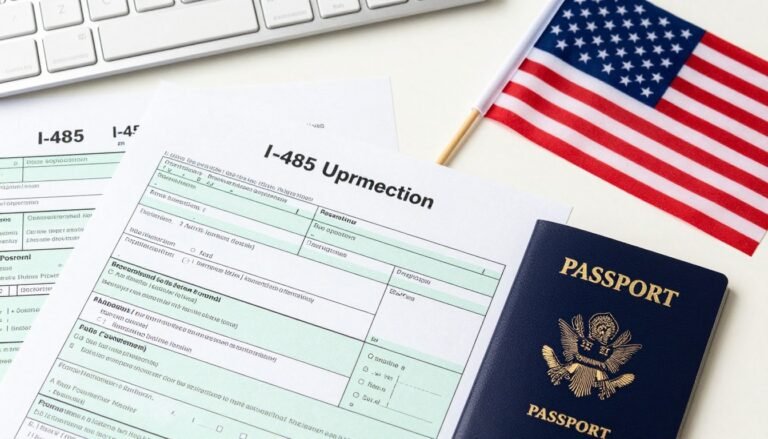
Adjustment of Status is the process of applying for a green card while you are physically present in the United States. You submit your application to U.S. Citizenship and Immigration Services without leaving the country. This option allows you to remain in the United States throughout the entire process.
The process involves filing Form I-485 Application to Register Permanent Residence or Adjust Status. You attend your biometrics appointment and interview at a local USCIS office. If approved, you receive your green card by mail while staying in the United States.
Common categories for adjustment of status include family-based immigration, employment-based immigration, asylum status adjustment, diversity visa lottery winners already in the U.S., and special immigrant categories.
What is Consular Processing?
Consular Processing is the method of obtaining a green card through a U.S. embassy or consulate in your home country. This pathway requires you to complete most of the process outside the United States. You attend your visa interview abroad and receive an immigrant visa to enter the United States as a permanent resident.
The National Visa Center coordinates this process after USCIS approves your immigrant petition. You complete forms, submit documents, and schedule your interview at a U.S. consulate. After approval, you receive a visa stamp in your passport allowing entry to the United States.
People choose consular processing when they live outside the United States, when they are ineligible for adjustment of status, when they prefer to wait outside the U.S., or when consular processing offers faster timelines for their country.
Who Qualifies for Each Pathway?
- Currently residing in the United States
- Entered the U.S. legally with valid inspection
- Maintained lawful immigration status
- Have an approved immigrant petition
- Have an available visa number (priority date current)
- Admissible to the United States
Adjustment of Status Qualifications
- Living outside the United States
- Have an approved immigrant petition
- Have an available visa number
- Admissible to the United States
- No requirement for prior lawful U.S. entry
- Willing to complete process abroad
Consular Processing Qualifications
Requirements and Eligibility
Both Adjustment of Status and Consular Processing have specific requirements you must meet. Understanding these eligibility criteria helps you determine which option is available to you and what documentation you need to prepare.
Eligibility for Adjustment of Status
To qualify for adjustment of status, you must meet several specific conditions. Your physical presence in the United States is the first requirement. You must be in the country when you file your application and remain here during processing.
Your manner of entry matters significantly. Most applicants must have entered the United States legally with inspection by an immigration officer. There are limited exceptions for immediate relatives of U.S. citizens, who may adjust status even after unlawful entry.
Maintaining lawful status is crucial for most applicants. If you overstayed your visa or worked without authorization, you may be ineligible for adjustment status. However, immediate relatives of U.S. citizens receive forgiveness for most status violations.
You need an approved immigrant petition. For family-based cases, this is Form I-130. For employment-based immigration, it is Form I-140. The petition must be approved before you can file for adjustment of status.
Your priority date must be current. Check the monthly Visa Bulletin published by the State Department. When your priority date is current, a visa number is available for your category and country. Only then can you proceed with filing.
Eligibility for Consular Processing
Consular processing eligibility is often more straightforward. You do not need to be in the United States. In fact, most applicants complete this process while living in their home country throughout the entire application.
Your immigration history matters less with consular processing. Previous unlawful presence, overstays, or unauthorized work in the United States does not automatically disqualify you. However, these issues may trigger bars to admission that you must address.
You need the same approved immigrant petition as adjustment of status applicants. Your petitioner files Form I-130 for family cases or Form I-140 for employment cases. After USCIS approves the petition, the case transfers to the National Visa Center.
The visa bulletin and priority date requirements apply equally. You cannot proceed to the interview stage until your priority date becomes current and a visa number is available in your category.
Required Documents
Adjustment of Status Documents
- Form I-485 Application to Register Permanent Residence
- Copy of approved immigrant petition
- Birth certificate with certified translation
- Passport-style photographs
- Copy of passport and visa
- Form I-94 Arrival/Departure Record
- Medical examination Form I-693
- Affidavit of Support Form I-864
- Employment authorization application (if desired)
- Advance parole application (if travel needed)
- Police certificates if applicable
- Court dispositions for any arrests
Consular Processing Documents
- Form DS-260 Immigrant Visa Application
- Copy of approved immigrant petition
- Birth certificate with certified translation
- Passport valid for six months beyond entry
- Police certificates from all countries of residence
- Military records if applicable
- Court and prison records if applicable
- Medical examination from approved physician
- Affidavit of Support Form I-864
- Civil documents (marriage, divorce certificates)
- Two passport-style photographs
- Interview appointment letter
Step-by-Step Process
Understanding the complete process for each pathway helps you prepare properly and know what to expect at each stage. Both routes have multiple steps that require attention to detail and proper timing.
Adjustment of Status Process Steps
- Petition Approval: Your sponsoring relative or employer files and receives approval for your immigrant petition Form I-130 or I-140. This establishes your relationship or qualification for permanent residence.
- Check Visa Bulletin: Monitor the monthly Visa Bulletin to determine when your priority date becomes current. You cannot file your adjustment application until your priority date is current for your category and country.
- File Form I-485: Submit your adjustment of status application package to USCIS. Include all required forms, supporting documents, photographs, and filing fees. You may also file for employment authorization and advance parole simultaneously.
- Receive Receipt Notices: USCIS sends receipt notices confirming they received your application. These notices include your case number for tracking purposes. Keep these notices safe as proof of your pending application.
- Biometrics Appointment: Attend your scheduled biometrics appointment at a local Application Support Center. USCIS collects your fingerprints, photograph, and signature for background checks and your green card production.
- Complete Medical Examination: Visit a USCIS-approved civil surgeon for your medical examination. The doctor completes Form I-693 in a sealed envelope. You can submit this with your initial application or bring it to your interview.
- Attend Interview: USCIS schedules your adjustment of status interview at your local field office. Bring your original documents, identification, and any requested additional evidence. Answer questions truthfully about your application and background.
- Decision and Green Card: USCIS approves, denies, or requests additional evidence. If approved, you receive your green card by mail within two to three weeks. Your permanent resident status begins on the approval date.
Consular Processing Process Steps
- Petition Approval: Your sponsor files Form I-130 or I-140 with USCIS. After approval, USCIS sends the approved petition to the National Visa Center for consular processing.
- National Visa Center Processing: The NVC sends you a welcome letter with case number and invoice ID number. You create an account on the Consular Electronic Application Center to manage your case online.
- Pay Fees: Pay the immigrant visa processing fee and Affidavit of Support fee through the NVC online system. Keep payment confirmation receipts for your records.
- Submit DS-260: Complete and submit Form DS-260 Immigrant Visa Application online. Provide detailed information about your background, family, education, and work history. Review carefully before submission as changes are difficult later.
- Submit Supporting Documents: Upload required civil documents and supporting evidence through the NVC portal. This includes birth certificates, marriage certificates, police certificates, and financial documents. The NVC reviews all documents for completeness.
- NVC Review: The National Visa Center reviews your case for completeness. They may request additional documents or clarification. Once satisfied, they declare your case documentarily complete and ready for interview scheduling.
- Interview Scheduling: The NVC sends your case to the U.S. embassy or consulate in your country. The consulate schedules your immigrant visa interview. You receive instructions about required medical examination and additional documents.
- Medical Examination: Visit an embassy-approved physician for your immigrant visa medical examination. The doctor completes required forms and vaccinations. Results go directly to the embassy in a sealed envelope.
- Attend Consular Interview: Appear at the U.S. embassy or consulate on your scheduled date. Bring all original civil documents, passport, photographs, and medical examination results. A consular officer conducts the interview and determines visa eligibility.
- Visa Issuance and Travel: If approved, the consulate keeps your passport to print the immigrant visa. You collect your passport with the visa stamp within several days. You must enter the United States before the visa expiration date, typically six months from medical examination.
- Entry and Green Card: Enter the United States with your immigrant visa. The border officer stamps your passport, activating your permanent resident status. Your physical green card arrives by mail at your U.S. address within several weeks.
Processing Time and Costs
Understanding the financial investment and time commitment for each pathway helps you plan appropriately. Both processes involve government fees, and timelines vary significantly based on multiple factors.

Processing Times
Processing times for Adjustment of Status vary widely depending on your USCIS field office and case complexity. Current average processing times range from eight to fourteen months from filing to green card receipt. High-volume offices like New York, Los Angeles, and Miami often experience longer delays.
Employment authorization and advance parole typically arrive within three to five months after filing. This allows you to work and travel while waiting for your green card interview. These benefits make adjustment of status attractive despite longer overall timelines.
Consular processing timelines depend heavily on the National Visa Center workload and specific embassy efficiency. After petition approval, NVC processing takes two to four months. Interview scheduling adds another two to six months depending on the consulate and visa category demand.
Total consular processing time from petition approval to immigrant visa typically ranges from six to twelve months. Some high-volume embassies schedule interviews faster, while others face significant backlogs. The COVID-19 pandemic continues affecting embassy operations in 2026.
Priority date wait times affect both pathways equally. Family preference categories and employment-based categories often have multi-year waits before visa numbers become available. Check the Visa Bulletin to understand current wait times for your category and country.
| Processing Stage | Adjustment of Status Timeline | Consular Processing Timeline |
| After Petition Approval to Filing | When priority date current | When priority date current |
| Initial Processing and Review | 2-4 months | 2-4 months (NVC) |
| Work/Travel Authorization | 3-5 months | Not applicable |
| Interview Scheduling | 6-12 months | 2-6 months |
| Total Average Timeline | 8-14 months | 6-12 months |
Filing Fees and Costs
Adjustment of status requires payment of multiple USCIS fees. The Form I-485 filing fee is currently $1,225 for most applicants. This includes the biometric services fee. Applicants under age 14 filing with parents pay $950. Children under 14 filing separately pay $1,225.
Additional optional applications include costs. Form I-765 for employment authorization costs $260 when filed separately, but it is free when filed concurrently with Form I-485. Form I-131 for advance parole costs $630 when filed separately, but it is also free with concurrent I-485 filing.
Medical examination costs range from $200 to $500 depending on the civil surgeon and required vaccinations. This fee is not paid to USCIS but directly to the examining physician. Costs vary by location and individual medical history.
Consular processing fees include the immigrant visa application fee of $325 per person. You pay this fee to the National Visa Center. The Affidavit of Support review fee costs $120 per family. Medical examination fees abroad vary by country but typically range from $200 to $400.
After entering the United States with an immigrant visa, USCIS charges a $220 immigrant fee for green card production and delivery. This fee applies to consular processing cases only. You pay online before or after arrival.
| Fee Type | Adjustment of Status | Consular Processing |
| Main Application Fee | $1,225 (I-485) | $325 (Visa fee) |
| Affidavit of Support Fee | Included in I-485 | $120 |
| Medical Examination | $200-$500 | $200-$400 |
| Biometrics | Included in I-485 | Not applicable |
| Green Card Production | Included in I-485 | $220 (USCIS Immigrant Fee) |
| Work Authorization (optional) | Free if filed with I-485 | Not applicable |
| Travel Document (optional) | Free if filed with I-485 | Not applicable |
| Estimated Total Cost | $1,425-$1,725 | $665-$865 |
Common Mistakes to Avoid
Many applicants make preventable errors that delay their cases or lead to denials. Understanding these common pitfalls helps you navigate the process successfully and avoid costly setbacks.
Filing Before Priority Date is Current
One of the most frequent mistakes is filing Form I-485 before the priority date becomes current. Applicants eager to start the process submit applications prematurely. USCIS rejects these applications and returns filing fees, causing delays of several months.
Always check the current Visa Bulletin before filing. Understand the difference between the “Final Action Date” and “Dates for Filing” charts. USCIS announces which chart applies each month. File only when your priority date is current under the applicable chart.
Choosing the Wrong Pathway
Some applicants qualify for both pathways but choose poorly based on incomplete information. Adjustment of Status offers work authorization and the ability to stay in the United States. However, it takes longer in many cases.
Consular processing may be faster but requires international travel and time outside the United States. Consider your personal circumstances. If you are working in the U.S. and cannot afford to leave, adjustment of status makes sense despite longer timelines.
If you face bars to admission from previous unlawful presence, consular processing may trigger these bars. Consult an immigration attorney to evaluate whether you face three-year or ten-year bars before leaving the United States.
Incomplete or Incorrect Documentation
Submitting incomplete applications or incorrect documents causes significant delays. USCIS and consulates issue Requests for Evidence that extend processing times by months. Missing signatures, unsigned forms, or outdated forms result in rejections.
Review all forms multiple times before submission. Ensure every required field is completed accurately. Gather all supporting documents on the checklist. Use current form versions from official government websites.
Translations must be certified and include translator affidavits. Documents in foreign languages require both original and certified English translation. Poor translations can lead to misunderstandings and requests for new translations.
Failing to Maintain Status During Adjustment
Applicants often assume filing Form I-485 protects them from status violations. This is incorrect. Until you receive employment authorization, you cannot work. Until you receive advance parole, you cannot travel internationally without abandoning your application.
Maintain your current visa status throughout the adjustment process. If your work authorization expires, stop working immediately. If you need to travel, wait for advance parole approval before departing. Unauthorized work or travel can result in application denial.
Missing Deadlines and Appointments
USCIS and consulates provide specific deadlines for document submission, fee payment, and appointment attendance. Missing these deadlines can terminate your case. Biometrics appointments, interviews, and medical examinations have strict scheduling requirements.
Mark all important dates in multiple places. Set phone reminders for upcoming deadlines. If you cannot attend a scheduled appointment, contact USCIS or the consulate immediately to request rescheduling. Many offices allow one rescheduling without penalty.
Not Disclosing Previous Immigration Violations
Failing to disclose previous visa overstays, unauthorized employment, or immigration violations is a critical mistake. USCIS and consular officers have access to extensive databases. They will discover undisclosed information, and lying on immigration forms constitutes visa fraud.
Always answer questions truthfully, even if the answer reveals past mistakes. Previous violations may be waivable or forgivable in certain circumstances. However, fraud and misrepresentation carry permanent consequences and bars to admission.
Traveling Without Advance Parole
Applicants adjusting status must obtain advance parole before international travel. Leaving the United States without advance parole approval automatically abandons your Form I-485 application. This applies even for emergency travel.
Plan ahead if you anticipate needing to travel. File Form I-131 for advance parole immediately with your adjustment application. Wait for the physical advance parole document before booking international flights. Emergency situations do not excuse this requirement.
Tips to Improve Approval Chances
Maximizing your approval chances requires thorough preparation, attention to detail, and strategic planning. These proven strategies help strengthen your application and demonstrate eligibility clearly.
Submit a Complete and Organized Application
Organization demonstrates professionalism and makes adjudication easier. Create a cover letter listing all included forms and documents. Use tabs or dividers to separate sections. Order documents logically following USCIS or NVC instructions.
Include a table of contents for complex applications. Make copies of everything you submit. Keep a complete duplicate file for your records. This helps if you need to reference information later or if documents get lost in processing.
Provide Strong Financial Evidence
The Affidavit of Support is crucial for approval. Your sponsor must demonstrate income at least 125 percent of the federal poverty guidelines for household size. Provide recent tax returns, W-2 forms, pay stubs, and employment verification letters.
If your sponsor’s income is insufficient, consider joint sponsors or household members. Joint sponsors must meet the same income requirements independently. Combine incomes strategically to meet financial requirements. Assets can supplement income at a five-to-one ratio.
Prepare Thoroughly for Your Interview
Interview preparation significantly impacts outcomes. Review your entire application before the interview. Know the details of your petition, employment history, and family relationships. Inconsistencies raise red flags.
Bring original documents even if you submitted copies. Officers may request to see originals for verification. Organize documents in a folder for easy access. Arrive early to allow time for security screening. Dress professionally to make a positive impression.
Practice answering common interview questions with family or friends. Speak clearly and confidently. If you do not understand a question, ask for clarification. Never guess or provide information you are uncertain about.
Address Potential Issues Proactively
If you have concerns about your case, address them upfront. Previous immigration violations, criminal history, or health conditions require explanation. Provide evidence showing rehabilitation, waivers, or circumstances that mitigate concerns.
Include a personal statement explaining complex situations. Document positive changes in your life. Character reference letters from employers, community leaders, or family members strengthen your case. Show you are a person of good moral character.
Maintain Consistent Communication
Update USCIS or the consulate immediately about address changes. Use Form AR-11 for USCIS cases. Notify the National Visa Center through their online system. Failure to receive notices because of outdated addresses can result in case closure.
Respond promptly to all requests for evidence. USCIS typically gives 87 days to respond. Consulates set their own deadlines. Submit requested documents well before deadlines. Late responses can lead to denials even if you eventually provide required evidence.
Consider Professional Legal Assistance
Immigration law is complex and changes frequently. Mistakes can have serious consequences including denials, bars to admission, and removal proceedings. An experienced immigration attorney reviews your case, identifies potential issues, and develops strategies to address them.
Attorneys help with form preparation, document collection, and interview preparation. They correspond with USCIS and consulates on your behalf. Legal representation is especially important if you have complicated circumstances, previous denials, or criminal history.
Many attorneys offer free initial consultations. This allows you to discuss your case, understand your options, and determine if legal assistance makes sense for your situation. The investment in professional help often prevents much more costly mistakes.

When to Seek Legal Help
- Previous visa denials or immigration violations
- Criminal history or arrests
- Previous unlawful presence in the United States
- Complex family situations or multiple marriages
- Employment-based cases with labor certification
- Bars to admission requiring waivers
- Requests for Evidence from USCIS
- Interview scheduling delays or administrative processing
Latest Updates and Policy Changes
Immigration policies and procedures continue evolving in 2026. Staying informed about recent changes helps you navigate the process effectively and take advantage of beneficial updates.
Processing Time Improvements
U.S. Citizenship and Immigration Services has implemented initiatives to reduce processing times. Increased staffing at field offices and the National Benefits Center has shortened adjustment of status timelines in many locations. Average processing times decreased by approximately 15 percent compared to 2025.
The Department of State expanded consular staffing at high-volume embassies. Interview scheduling improved in countries with significant backlogs. Manila, Mexico City, and New Delhi saw particular improvements with additional consular officer positions.
Online Filing Expansion
USCIS continues expanding online filing options. Form I-485 online filing is now available to more applicant categories. Employment-based adjustment applicants and certain family-based categories can file electronically. This speeds up initial processing and reduces mail delays.
The National Visa Center improved its Consular Electronic Application Center platform. Document upload processes are more streamlined. Applicants receive clearer instructions about required documents. System improvements reduce technical issues during submission.
Medical Examination Updates
The Centers for Disease Control and Prevention updated vaccination requirements for immigration medical examinations. COVID-19 vaccination became a permanent requirement for immigrant visa applicants. The vaccination series must be complete before the medical examination.
USCIS updated the list of approved civil surgeons. More physicians received authorization to conduct immigration medical examinations. This increases appointment availability and may reduce medical examination costs in competitive markets.
Interview Waiver Expansion
USCIS expanded interview waiver eligibility for certain adjustment of status applications. Some employment-based cases no longer require in-person interviews if documentation is complete and no concerns exist. This speeds processing for qualified applicants.
However, most family-based applications still require interviews. Marriage-based green card cases always require interviews to verify relationship authenticity. The expansion primarily benefits employment-based applicants in straightforward cases.
Fee Changes
USCIS adjusted filing fees in early 2026. Most fees increased modestly to account for inflation and processing costs. Form I-485 fees increased from $1,140 to $1,225. The increases represent approximately 7 percent adjustments across most application types.
Fee waiver eligibility expanded for certain applicants. More individuals qualify for reduced fees or fee exemptions based on income levels. USCIS provides detailed guidance on fee waiver eligibility and required documentation.
Visa Bulletin Changes
The State Department made Visa Bulletin interpretation clearer. Monthly bulletins now provide more detailed explanations of priority date movement. Predictions about future movements help applicants plan timing better.
Certain employment-based categories saw visa number increases. Congressional legislation allocated additional visa numbers to reduce backlogs in specific categories. This benefits applicants in oversubscribed categories with long priority date waits.
Key Differences: Adjustment of Status vs Consular Processing
Understanding the fundamental differences between these pathways helps you make an informed decision based on your specific circumstances and priorities.
Adjustment of Status Advantages
- Remain in the United States throughout the process
- Obtain work authorization while waiting
- Receive advance parole for international travel
- Avoid triggering unlawful presence bars
- Continue current employment without interruption
- No need to coordinate international travel
- Interview at local USCIS office
- Immediate relatives can overcome status violations
Adjustment of Status Disadvantages
- Generally longer processing times
- Higher filing fees and costs
- Stricter eligibility requirements
- Must have lawful entry for most categories
- Cannot travel without advance parole
- Travel before approval can abandon application
- Limited to applicants already in the U.S.
- Status violations can cause ineligibility
Consular Processing Advantages
- Often faster total processing time
- Lower government filing fees
- Available to applicants outside the U.S.
- No requirement for lawful U.S. entry
- Can wait in home country comfortably
- Fewer eligibility restrictions
- Clear timeline with scheduled interview
- Immediate permanent resident status upon entry
Consular Processing Disadvantages
- Must complete process outside the United States
- No work authorization during processing
- No travel document for U.S. visits
- May trigger unlawful presence bars
- Requires international travel coordination
- Embassy delays can extend timelines
- Medical exam at embassy-approved physicians only
- Administrative processing can cause indefinite delays
| Factor | Adjustment of Status | Consular Processing |
| Location During Process | United States | Home Country |
| Average Timeline | 8-14 months | 6-12 months |
| Total Costs | $1,425-$1,725 | $665-$865 |
| Work Authorization | Available during processing | Only after green card receipt |
| Travel Permission | Advance parole required | Not applicable |
| Interview Location | Local USCIS office | U.S. Embassy abroad |
| Eligibility Requirements | More restrictive | More flexible |
| Unlawful Presence Bars | Not triggered | May be triggered |
Making Your Decision
Choosing between Adjustment of Status and Consular Processing depends on your individual circumstances. Several key factors should guide your decision-making process.

Consider Your Current Location
Your physical location is often the deciding factor. If you currently reside in the United States with valid status, adjustment of status is usually preferable. This allows you to remain in the country, continue working, and avoid international travel complications.
If you live outside the United States, consular processing is your only option. Even if you have previously lived in the U.S., consular processing is necessary when residing abroad. The process is designed for applicants in their home countries.
Evaluate Your Status History
Your immigration status history affects eligibility significantly. If you maintained lawful status continuously, adjustment of status is straightforward. If you have status violations, overstays, or unauthorized employment, consular processing may be required or preferable.
Immediate relatives of U.S. citizens receive forgiveness for most status violations through adjustment of status. Other categories face stricter requirements. Unlawful presence of six months or more can trigger bars when you leave for consular processing.
Assess Timeline Priorities
If speed is your priority, consular processing often completes faster. The structured process through the National Visa Center and embassy creates clearer timelines. However, this requires willingness to complete the process abroad.
Adjustment of status takes longer but provides work authorization during processing. If continuing your U.S. employment is essential, the additional months of processing time may be worthwhile. Employment authorization typically arrives within five months of filing.
Analyze Financial Considerations
Consular processing costs significantly less in government fees. Total costs are approximately $500 to $700 less than adjustment of status. For families filing multiple applications, these savings multiply substantially.
However, consider indirect costs. Consular processing requires international travel, temporary housing in your home country, and potential lost income if you must leave your U.S. job. These costs can exceed the savings in government fees.
Review Travel and Employment Needs
If you need to travel internationally during green card processing, adjustment of status with advance parole offers flexibility. You can work and travel while waiting. Consular processing requires remaining outside the U.S. until the visa is issued.
If international travel is not necessary and you prefer remaining in one location, adjustment of status provides stability. Your daily life continues relatively normally while your application processes.
Frequently Asked Questions
Can I switch from Adjustment of Status to Consular Processing or vice versa?
Yes, in most cases you can switch between pathways, though timing matters significantly. If you filed Form I-485 for adjustment of status but decide to pursue consular processing instead, you can request USCIS transfer your approved petition to the National Visa Center. This typically happens if you leave the United States permanently before your adjustment case completes.
Switching from consular processing to adjustment of status is more complex. If your case is at the National Visa Center and you are now in the United States with valid status, you may be able to file Form I-485. However, you cannot have an active consular processing interview scheduled. Consult an immigration attorney before making this change to ensure you do not jeopardize your case.
What happens if I travel outside the U.S. during Adjustment of Status without Advance Parole?
Traveling internationally without advance parole approval automatically abandons your Form I-485 application. USCIS will deny your case for abandonment. There are extremely limited exceptions to this rule, and emergency situations do not constitute valid exceptions.
If you departed without advance parole, your adjustment application is terminated. You must pursue consular processing instead. The approved immigrant petition remains valid, but you start the green card process through the National Visa Center and embassy. Additionally, if your previous unlawful presence exceeded six months, you may now face three-year or ten-year bars to returning to the United States.
How long does Advance Parole remain valid?
Advance parole documents typically remain valid for one year from the issue date. USCIS determines the specific validity period based on your circumstances. You can travel multiple times during this period as long as each trip’s purpose aligns with your approved advance parole category.
If your advance parole expires before your adjustment of status completes and you need to travel again, you must file a new Form I-131 application. Filing fees apply to renewal applications unless you are renewing while your original application is still pending. Plan travel carefully to avoid situations where you are outside the United States when your advance parole expires.
Can I work in the United States while my Consular Processing case is pending?
No, consular processing does not provide work authorization in the United States. You can only work in the U.S. with an existing valid work visa such as H-1B, L-1, or E-2. Your consular processing application does not grant any employment rights.
If you need to work in the United States during your green card process, adjustment of status with employment authorization is the better option. The Form I-765 employment authorization document typically arrives within three to five months of filing your adjustment application. This allows you to work legally while waiting for your green card interview.
What is Administrative Processing and how long does it take?
Administrative processing is additional review required by the consular officer after your immigrant visa interview. The officer may need additional background checks, document verification, or clarification about your case. This is more common in consular processing than adjustment of status.
Administrative processing duration varies widely from several weeks to many months. Security clearances, name checks, and verification of foreign documents can take extensive time. The embassy cannot provide specific timeframes because they depend on external agencies. Some cases resolve in 30 to 60 days, while others take six months or longer. You cannot do much to speed this process except respond promptly to any embassy requests for additional information.
Do I need an attorney for Adjustment of Status or Consular Processing?
Hiring an attorney is not legally required, but it is often beneficial, especially for complex cases. Many straightforward family-based cases successfully complete without attorney representation. USCIS and State Department forms include detailed instructions for self-filing.
However, legal representation is strongly recommended if you have criminal history, previous immigration violations, prior visa denials, unlawful presence, complex employment situations, or health inadmissibility concerns. Attorneys identify potential problems, develop strategies to address issues, and represent you if complications arise. The cost of attorney services often prevents much more expensive mistakes and denials.
Official Resources and Information
Accessing reliable, official information ensures you have accurate guidance throughout your immigration process. These government resources provide authoritative information directly from agencies processing your application.
U.S. Citizenship and Immigration Services (USCIS)
USCIS processes Adjustment of Status applications and provides comprehensive guidance on eligibility, forms, and procedures.
- Official website: www.uscis.gov
- Form I-485 information and instructions
- Processing time estimates by office
- Case status tracking system
- Contact center: 1-800-375-5283
U.S. Department of State
The State Department manages Consular Processing through the National Visa Center and U.S. embassies worldwide.
- Official website: travel.state.gov
- National Visa Center information
- Monthly Visa Bulletin publication
- Embassy and consulate directory
- Visa processing information by country
U.S. Department of Homeland Security
DHS oversees immigration enforcement and provides policy guidance affecting green card applications.
- Official website: www.dhs.gov
- Immigration policy announcements
- Security and background check information
- I-94 arrival/departure record access
- Immigration-related alerts and updates
Conclusion
Choosing between Adjustment of Status and Consular Processing is a significant decision that impacts your green card journey. Both pathways lead to permanent residence, but they differ substantially in process, timeline, cost, and requirements.
Adjustment of Status allows you to remain in the United States throughout processing. You receive work authorization and travel documents while waiting. This pathway suits applicants currently in the U.S. who want to maintain employment and avoid international relocation. However, it generally takes longer and costs more in government fees.
Consular Processing requires completing your application through a U.S. embassy in your home country. This pathway often processes faster and costs less. It accommodates applicants living abroad and those who prefer waiting outside the United States. However, it requires international travel and does not provide interim work authorization.
Your individual circumstances determine which option is best. Consider your current location, status history, employment needs, travel requirements, and financial situation. Immediate relatives of U.S. citizens have the most flexibility, while other categories face stricter eligibility rules for adjustment of status.
Regardless of which pathway you choose, thorough preparation is essential. Complete all forms accurately, gather required documents, meet financial requirements, and prepare for your interview. Avoid common mistakes like filing before your priority date is current, traveling without advance parole, or providing incomplete documentation.
Stay informed about policy changes and processing updates. USCIS and the State Department regularly update procedures and requirements. Check official government websites regularly for the most current information affecting your case.
If you have complex circumstances, previous immigration issues, or simply want professional guidance, consult with an experienced immigration attorney. Expert advice can identify potential problems and develop strategies to strengthen your case.
Your green card represents permanent residence and the foundation for your future in the United States. Take time to understand your options, prepare thoroughly, and proceed confidently with the pathway that best fits your situation. With proper preparation and attention to detail, you can successfully navigate either Adjustment of Status or Consular Processing to achieve your immigration goals.

Get Your Personalized Immigration Strategy
Every immigration case is unique. Your pathway to a green card depends on your specific circumstances, status history, and personal goals. Don’t navigate this complex process alone.