F-1 Student Visa: Complete Guide to Requirements and Work Options in 2026
The dream of studying in the United States begins with securing an F-1 Student Visa. This non-immigrant visa allows international students to pursue academic programs at accredited U.S. institutions. Each year, hundreds of thousands of students from around the world successfully obtain their F-1 visa status.
In 2026, the F-1 visa remains one of the most sought-after pathways for international education. Recent immigration policy updates have streamlined certain application procedures while maintaining strict eligibility standards. Understanding these requirements can significantly improve your chances of approval.
This comprehensive guide walks you through every step of the F-1 Student Visa process. You’ll learn about eligibility criteria, required documentation, application procedures, processing timelines, and valuable work authorization options. Whether you’re applying for the first time or seeking to understand your student status better, this resource provides the clarity you need.
What Is an F-1 Student Visa and Who Qualifies
An F-1 Student Visa is a non-immigrant visa issued by the United States Department of State. This visa category allows foreign nationals to enter the country for the purpose of pursuing full-time academic studies at an accredited educational institution.
Understanding Key F-1 Visa Terms
Before starting your application, familiarize yourself with these essential terms:
- SEVIS (Student and Exchange Visitor Information System): A government database that tracks international students and exchange visitors in the United States
- Form I-20 (Certificate of Eligibility): An official document issued by your school confirming your acceptance and program details
- DSO (Designated School Official): The administrator at your institution who manages international student records and SEVIS reporting
- F-1 Student Status: Your legal immigration status while studying in the United States on an F-1 visa
- Practical Training: Work authorization programs (CPT and OPT) that allow F-1 students to gain employment experience
Who Qualifies for an F-1 Student Visa
To qualify for F-1 visa status, you must meet several fundamental criteria. The United States immigration system requires that all applicants demonstrate genuine intent to study.
You must be enrolled in an academic or language training program at a SEVP-approved school. Your program must lead to a degree, diploma, or certificate. The institution must be authorized by the U.S. Citizenship and Immigration Services to enroll international students.
Students must prove they have sufficient financial resources. You need to show you can cover tuition, living expenses, and other costs without working illegally in the United States. Your school will verify these finances before issuing the Form I-20.
You must maintain a residence abroad that you have no intention of abandoning. This requirement helps establish that you plan to return home after completing your studies. Many applicants demonstrate this through family ties, property ownership, or career prospects in their home country.
English language proficiency is typically required unless you’re enrolling in an English language program. Most institutions require TOEFL or IELTS scores as part of their admission process. Check with your specific school for their language requirements.
F-1 Student Visa Requirements and Eligibility Criteria
The F-1 visa application requires careful preparation and documentation. Understanding each requirement helps you avoid common delays and increases your approval chances. The United States embassy or consulate in your home country will review your complete application package.
Essential Documents You Must Provide
Your application package must include several critical documents. Each piece of documentation serves a specific purpose in demonstrating your eligibility for student status.
Primary Application Documents
- Valid passport (must remain valid for at least six months beyond your intended stay in the United States)
- Form I-20 Certificate of Eligibility from your SEVP-approved school
- Form DS-160 (Online Nonimmigrant Visa Application) confirmation page
- SEVIS fee payment receipt (currently $350)
- Visa application fee payment receipt (currently $185)
- Recent photograph meeting U.S. visa photo requirements
Supporting Documentation
- Financial evidence showing ability to pay for entire course of study
- Bank statements from the past six months
- Scholarship or financial aid award letters
- Sponsor affidavit of support with sponsor’s financial documents
- Academic transcripts and diplomas from previous schools
- Standardized test scores (TOEFL, IELTS, SAT, GRE, GMAT as applicable)
Financial Requirements Explained
Demonstrating sufficient financial resources is one of the most critical F-1 visa requirements. The U.S. embassy consulate wants assurance that you won’t need to work illegally to support yourself during your studies.
Your financial documentation must cover the complete cost of your first year of study. This includes tuition, fees, room and board, books, transportation, and personal expenses. Your school’s Form I-20 will list the estimated annual cost.
Acceptable forms of financial evidence include personal bank accounts, family savings, education loans from recognized lenders, or scholarships from your institution. If someone else is sponsoring your education, they must provide an affidavit of support along with their own financial statements.
The funds must be readily available and accessible. Immigration officers look for liquid assets rather than property or investments that cannot be quickly converted to cash. Bank statements should show consistent balances over several months rather than sudden large deposits.
Academic Qualifications and Prerequisites
Beyond financial capacity, you must meet the academic requirements for your chosen program. Each institution sets its own admission standards based on the program level and field of study.
For undergraduate programs, you typically need a high school diploma or equivalent. Graduate programs require a bachelor’s degree in a related field. Some competitive programs may have specific GPA requirements or prerequisite coursework.
Your academic credentials must be evaluated if they come from institutions outside the United States. Many schools require official transcripts sent directly from your previous educational institutions. Some programs may require professional credential evaluation services to verify the equivalency of your foreign degrees.
Test scores play an important role in demonstrating academic readiness. English proficiency tests like TOEFL or IELTS are nearly universal requirements for non-native English speakers. Graduate programs often require GRE or GMAT scores depending on the field of study.
Step-by-Step F-1 Student Visa Application Process
The F-1 visa application follows a specific sequence of steps. Starting early and following the process carefully helps ensure a smooth experience. Most students should begin this process at least three to five months before their intended travel date.
Step 1: Receive Acceptance and Form I-20 From Your School
Your journey begins with admission to a SEVP-approved institution. After you receive your acceptance letter, the school’s international student office will process your Form I-20 Certificate of Eligibility.
The Form I-20 is your most important document. This multi-page form contains your SEVIS identification number, program details, and estimated costs. Your designated school official will sign this document and provide information for the next steps.
Review your Form I-20 carefully upon receipt. Verify that all personal information, program details, and financial estimates are correct. Any errors must be corrected by your school before you proceed with the visa application.
Step 2: Pay the SEVIS I-901 Fee
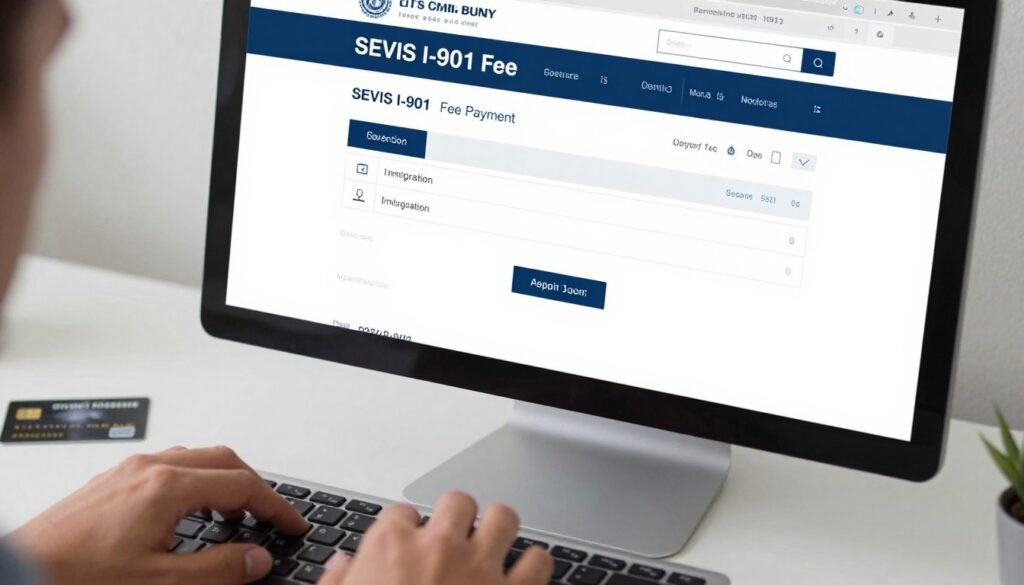
Before applying for your visa, you must pay the SEVIS I-901 fee. This fee supports the Student and Exchange Visitor Information System that tracks international students in the United States. The current fee is $350 for F-1 students.
Pay this fee online at the official SEVIS website using a credit card or other accepted payment methods. You can also pay by check or money order if you prefer. Keep your payment receipt, as you will need to present it at your visa interview.
The SEVIS system typically processes payments within three business days. You can check your payment status online using your SEVIS ID number from your Form I-20. Print your receipt confirmation as soon as the payment processes.
Step 3: Complete Form DS-160 Online Application
The DS-160 is the standard online application for all nonimmigrant visas. This comprehensive form asks about your background, education, work history, and travel plans. Answer all questions honestly and completely.
The application takes approximately 90 minutes to complete. You can save your progress and return later using your application ID number. Have your passport, Form I-20, and travel information ready before starting.
Upload a recent photograph that meets specific U.S. visa photo requirements. The photo must be in color, taken within the last six months, and show your full face against a white background. Most photo studios familiar with visa applications can provide compliant photos.
After submitting your DS-160, print the confirmation page with the barcode. You must bring this confirmation to your visa interview at the U.S. embassy or consulate.
Step 4: Schedule Your Visa Interview Appointment
Most F-1 visa applicants between 14 and 79 years old must attend an in-person interview at a U.S. embassy consulate in their home country. Schedule this appointment as early as possible, as wait times vary by location and season.
Visit the U.S. embassy or consulate website for your country to access the appointment system. You will need your passport number, DS-160 confirmation number, and visa application fee receipt to schedule the interview.
Peak application periods typically occur before fall and spring semester start dates. Summer months see especially high demand. Try to schedule your interview at least two to three months before your program start date to allow time for processing.
Step 5: Attend Your Visa Interview
Arrive at the embassy or consulate early on your interview date. Bring all required documents in an organized folder. Security procedures may take time, so plan to spend several hours at the facility.
The consular officer will review your documents and ask questions about your study plans. Common questions include why you chose this particular school and program, how you will finance your education, and what you plan to do after graduation. Answer clearly and honestly.
Be prepared to demonstrate strong ties to your home country. Officers want assurance that you intend to return after completing your studies. Discuss your family connections, career plans, or other factors that will bring you back home.
Most applicants receive a decision on the same day. If approved, the embassy will retain your passport to place the visa stamp. You will receive instructions on when and how to collect your passport with the valid visa.
F-1 Visa Processing Time and Associated Costs
Understanding the timeline and expenses involved in obtaining an F-1 Student Visa helps you plan effectively. Costs vary based on your program and personal circumstances, while processing times depend on multiple factors including your location and time of year.
Expected Processing Timelines

Visa processing times fluctuate based on demand at your local U.S. embassy consulate. During peak seasons before fall and spring semesters, wait times for interview appointments can extend several weeks. Some locations experience shorter delays during off-peak months.
The typical timeline from application submission to visa approval ranges from two to eight weeks. This includes the time to schedule your interview, attend the appointment, and receive your passport with the visa stamp. Administrative processing may add additional time in some cases.
After your interview, most straightforward cases receive approval within three to five business days. Your passport with the visa stamp typically becomes available for pickup within one week. Some applications require additional administrative processing that can take several weeks or even months.
Start your application process at least three months before your intended departure date. This buffer allows time for unexpected delays or requests for additional documentation. If you need your visa during peak season, begin even earlier to secure an interview appointment.
Complete Cost Breakdown
Obtaining an F-1 Student Visa involves several mandatory fees. These government charges are non-refundable regardless of your application outcome. Budget for these expenses early in your planning process.
| Fee Type | Amount (USD) | Payment Timing | Purpose |
| SEVIS I-901 Fee | $350 | Before visa interview | Maintains student tracking database |
| Visa Application Fee | $185 | Before scheduling interview | Processes nonimmigrant visa application |
| Visa Issuance Fee | Varies by country | After approval (if applicable) | Reciprocity fee for certain nationalities |
The total mandatory government fees amount to $535 for most applicants. Citizens of certain countries may face additional visa issuance fees based on reciprocity agreements. Check the U.S. Department of State website for country-specific fee information.
Beyond government fees, budget for additional expenses. Professional photos for your application typically cost $10 to $20. Translation and notarization of documents in foreign languages may cost $50 to $200 depending on the volume of materials.
Some applicants choose to use visa consultation services or immigration attorneys. These professional services can range from a few hundred to several thousand dollars. While not required, they may provide valuable assistance for complex cases or first-time applicants feeling uncertain about the process.
Travel to the U.S. embassy consulate for your interview may involve transportation and accommodation costs. If your nearest embassy is in another city, factor in these expenses when budgeting for your visa application.
F-1 Student Visa Work Authorization Options
International students on F-1 visa status have limited but valuable opportunities to work in the United States. Understanding these work authorization options helps you gain practical experience while managing your finances during your studies.
On-Campus Employment for F-1 Students
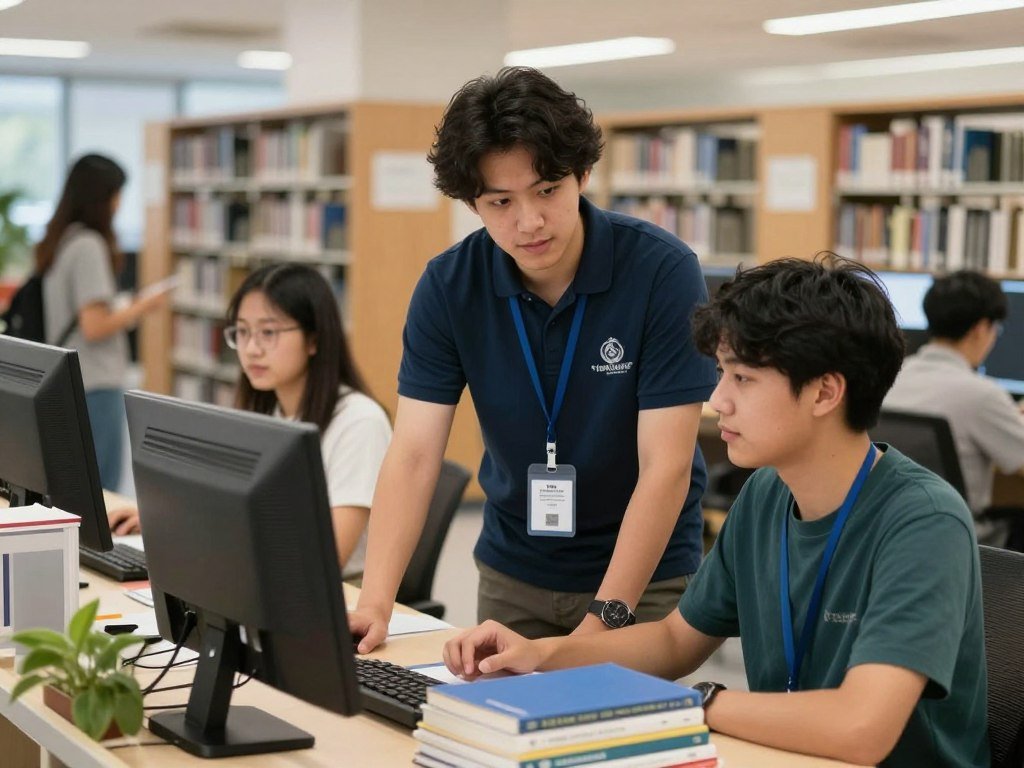
The most accessible work option for F-1 students is on-campus employment. Students can work on their school’s premises for up to 20 hours per week during the academic term. During breaks and summer vacation, students may work full-time up to 40 hours per week.
On-campus jobs include positions in libraries, cafeterias, bookstores, dormitories, and administrative offices. Some schools offer research or teaching assistant positions that provide valuable experience in your field of study. Students can begin on-campus work as soon as classes start.
No special authorization is needed for on-campus employment beyond maintaining valid F-1 status. Simply maintain full-time enrollment and good academic standing. Your school’s international student office can provide a letter confirming your eligibility for on-campus work when you apply for positions.
Earnings from on-campus employment help cover living expenses but typically don’t provide enough income to support yourself entirely. Most positions pay minimum wage or slightly above. View these opportunities as valuable experience rather than primary financial support.
Curricular Practical Training (CPT) Programs
Curricular Practical Training allows F-1 students to gain work experience directly related to their major field of study. CPT must be an integral part of your curriculum, such as an internship or cooperative education program required for graduation.
Students become eligible for CPT after completing one full academic year of study. Your school must approve the practical training and ensure it fulfills curriculum requirements. The employment must be directly related to your course of study and major.
CPT can be part-time (20 hours or less per week) or full-time (more than 20 hours per week). Part-time CPT during academic terms allows you to maintain your studies while gaining experience. Full-time CPT is typically reserved for summer breaks or final semesters.
Your designated school official must authorize CPT by updating your Form I-20. The authorization specifies the employer, dates of employment, and whether the training is part-time or full-time. You must receive this authorization before beginning any CPT employment.
Important limitation: If you participate in one year or more of full-time CPT, you become ineligible for Optional Practical Training after graduation. Carefully plan your practical training timeline to preserve your post-graduation work options.
Optional Practical Training (OPT) Employment
Optional Practical Training provides the most flexible work authorization for F-1 students. OPT allows you to work in your field of study for up to 12 months before or after completing your program. This authorization gives you valuable professional experience in the United States.
Pre-completion OPT allows students to work before graduation during their studies. This option follows the same 20-hour weekly limit during academic terms as on-campus employment. You can work full-time during official breaks and vacation periods.
Post-completion OPT is more commonly used and provides 12 months of full-time work authorization after graduation. You can work for any employer in your field of study anywhere in the United States. Many students use OPT to gain professional experience before returning home or pursuing further education.
Students in STEM fields (science, technology, engineering, mathematics) may qualify for a 24-month OPT extension. This STEM OPT extension provides up to 36 months total of work authorization. Your degree program must be on the official STEM Designated Degree Program List maintained by the Department of Homeland Security.
How to Apply for OPT Work Authorization
The OPT application process requires careful timing and documentation. You must apply while maintaining valid F-1 student status and before your program ends. Start preparing your application at least three months before you want to begin working.
- Meet with your designated school official to discuss your OPT plans and ensure you meet all eligibility requirements
- Request your DSO to recommend OPT in SEVIS and issue a new Form I-20 with the OPT recommendation
- Complete Form I-765 (Application for Employment Authorization) with accurate information and current address
- Gather required supporting documents including passport copies, visa copies, I-94 record, previous I-20 forms, and two passport photos
- Pay the $410 filing fee to U.S. Citizenship and Immigration Services using check, money order, or credit card
- Mail your complete application package to the appropriate USCIS address based on your location
- Wait for USCIS to process your application and issue an Employment Authorization Document (EAD card)
- Begin employment only after receiving your physical EAD card in the mail
USCIS typically processes OPT applications within three to five months. You can track your case status online using the receipt number USCIS sends after receiving your application. Do not begin working until you receive your approved EAD card, as unauthorized employment violates your student status.
Common F-1 Visa Application Mistakes to Avoid
Many F-1 visa applications face delays or denials due to preventable errors. Learning from common mistakes helps you prepare a stronger application. Awareness of these pitfalls protects your chances of approval and saves time.
Critical Errors That Harm Your Application
Documentation Mistakes
Incomplete financial documentation is one of the most frequent reasons for visa delays. Many applicants underestimate the total cost of their education or provide insufficient evidence of available funds. Always include documentation exceeding the amount listed on your Form I-20.
Submitting expired documents creates unnecessary complications. Ensure your passport remains valid for at least six months beyond your intended stay in the United States. Bank statements should be recent, typically from within the past three months. Old transcripts or test scores may not be acceptable.
Missing signatures or certifications can invalidate critical documents. Your Form I-20 must bear an original signature from your designated school official. Financial affidavits require notarization in many cases. Double-check that all documents have necessary signatures and official stamps.
Providing inconsistent information across different forms raises red flags. The details on your DS-160 must match your Form I-20 and other supporting documents. Discrepancies in dates, names, or program information may lead to additional questioning or denial.
Interview and Application Errors
Failing to demonstrate strong ties to your home country is a common reason for F-1 visa denials. Consular officers must be convinced you will return home after your studies. Prepare specific examples of family obligations, property ownership, career prospects, or other connections to your country.
Providing vague or inconsistent answers during the interview damages your credibility. Know specific details about your program, school, and future plans. Unclear responses about funding sources or post-graduation intentions raise concerns about your true intentions.
Appearing unprepared or disorganized creates a poor impression. Bring all documents organized in a folder in the order you may need them. Practice answering common interview questions beforehand. Professional appearance and confident communication strengthen your application.
Misunderstanding the difference between immigrant and nonimmigrant intent causes problems. The F-1 visa is temporary and nonimmigrant. Expressing plans to stay permanently in the United States or immigrate through other means contradicts the purpose of student status and will likely result in denial.
Additional Mistakes to Avoid
- Applying too late: Starting the visa process just weeks before your program begins creates unnecessary stress and may result in missing your enrollment date. Begin at least three to four months early.
- Choosing an inappropriate school: Enrolling in a non-accredited or non-SEVP-approved institution makes you ineligible for an F-1 visa. Verify your school’s approval status on the official SEVP website.
- Ignoring English proficiency requirements: Applying without sufficient English language skills or required test scores may lead to denial. Complete all language testing before your visa interview.
- Relying on outdated information: Immigration policies and procedures change regularly. Always consult official government sources for current requirements rather than relying on secondhand advice or old information.
- Overstaying previous visas: Any history of immigration violations severely impacts your F-1 visa application. Previous overstays, unauthorized work, or other violations may result in automatic denial and multi-year bars to reentry.
- Misrepresenting facts or providing false information: Dishonesty on your application or during your interview can result in permanent visa ineligibility. Always provide truthful, accurate information even if you think it may hurt your chances.
- Failing to maintain SEVIS compliance: After receiving your F-1 visa, you must maintain your student status by attending classes full-time, reporting address changes, and following all program requirements. Violations can result in status termination.
Important: If your visa is denied, you have the right to reapply. However, you must address the reasons for the initial denial and provide additional documentation or clarification. Simply reapplying with the same materials will likely result in another denial.
Expert Tips to Improve Your F-1 Visa Approval Chances
Strategic preparation significantly increases your likelihood of F-1 visa approval. These proven tips come from immigration experts and successful international students. Implementing these strategies strengthens every aspect of your application.
Before Your Application

Research your chosen institution thoroughly before applying. Understand why this specific school and program align with your academic and career goals. Be prepared to articulate these reasons clearly during your interview. Genuine enthusiasm and specific knowledge about your program make a strong impression.
Build a compelling narrative about your educational journey. Connect your previous education and experience to your chosen program of study. Explain how this degree fits into your long-term career plans in your home country. A coherent story demonstrates serious academic purpose.
Strengthen your ties to your home country before applying. Consider postponing your application if your home country connections seem weak. Strong ties might include accepting a job offer contingent on completing your U.S. degree, purchasing property, or making other significant commitments to return home.
Gather more financial documentation than the minimum required. If the minimum requirement is proof of one year’s expenses, provide documentation for two or three years. Substantial financial backing reduces concerns about potential unauthorized employment or financial hardship.
Preparing Your Documents
Create a document checklist specific to your situation. Include every required and recommended document. Check off items as you collect them. This organized approach prevents last-minute scrambling for missing materials.
Organize documents in a logical order that tells your story. Group related materials together. Place the most important documents at the front for easy access during your interview. Consider using labeled dividers or folders for different document categories.
Prepare certified translations for any documents not in English. Use professional translation services that provide certification. Consular officers cannot review documents they cannot read. Proper translations demonstrate professionalism and respect for the process.
Make multiple copies of all documents. Bring original documents plus at least two complete sets of copies to your interview. Keep one set with you and leave backup copies with family. This preparation protects against loss or damage.
For Your Visa Interview
Practice answering common interview questions with a friend or family member. Common questions include why you chose this school, how you will finance your education, what you plan to do after graduation, and why you want to study in the United States. Confident, well-rehearsed answers make a positive impression.
Prepare specific examples and evidence to support your claims. Rather than simply stating you will return home, describe specific job opportunities, family obligations, or other concrete reasons. Bring supporting documentation like job offers, family business documents, or property records.
Dress professionally and arrive early for your interview appointment. First impressions matter. Professional attire demonstrates respect for the process and seriousness about your application. Arriving early shows responsibility and reduces stress.
Answer questions directly and honestly without over-explaining. Provide complete but concise responses. Avoid volunteering unnecessary information that might raise additional questions. If you don’t understand a question, politely ask for clarification rather than guessing.
Remain calm and respectful even if the interview becomes challenging. Consular officers sometimes ask difficult questions to test your responses. Stay composed, stick to your prepared narrative, and maintain a polite, professional demeanor throughout.
Demonstrating Nonimmigrant Intent
Emphasize your strong connections to your home country throughout the interview. Discuss family members who depend on you, career opportunities waiting for you, or community obligations you will fulfill. Make it clear that the United States is a temporary destination for education, not permanent relocation.
Explain how your U.S. education will benefit your home country. Describe specific ways your new skills and knowledge will contribute to your country’s development or your own career there. This demonstrates that your education serves a purpose beyond simply living in America.
Be consistent in your statements across all forms and interviews. Any contradiction between your DS-160, I-20, interview answers, or supporting documents raises suspicion. Review all your materials before the interview to ensure consistency.
Avoid mentioning any interest in immigration or permanent residence. Even casual comments about liking the United States or potentially wanting to stay longer can harm your application. Focus exclusively on your educational goals and return plans.
Maintaining Your F-1 Student Status in the United States
Receiving your F-1 visa is just the beginning. Maintaining valid student status throughout your time in the United States requires ongoing compliance with immigration regulations. Understanding these requirements protects your legal status and future immigration options.
Full-Time Enrollment Requirements

F-1 students must maintain full-time enrollment throughout each academic term. For most undergraduate and graduate programs, full-time means at least 12 credit hours per semester. English language programs typically require at least 18 hours of instruction per week.
Exceptions to the full-time requirement exist for specific situations. Students in their final semester may enroll in fewer credits if that’s all they need to complete their program. Medical or academic difficulties may justify reduced course loads with proper authorization from your designated school official.
Never drop below full-time enrollment without prior approval. Unauthorized reduced course loads violate your student status. If you need to reduce your course load, meet with your DSO immediately to discuss your options and obtain proper authorization before making any changes.
Make normal academic progress toward completing your program. Repeatedly failing courses or making insufficient progress may jeopardize your status. Your school monitors your academic performance and reports to SEVIS. Maintain good academic standing according to your institution’s standards.
Employment and Work Limitations
Unauthorized employment is one of the most serious F-1 status violations. Work only in authorized positions with proper documentation. On-campus employment, CPT, and OPT all require specific authorizations before you begin working.
Keep detailed records of all employment authorizations and dates. Maintain copies of CPT authorizations on your I-20, OPT approval notices, and EAD cards. These documents prove your work was authorized if questions arise later.
Never exceed authorized work hours during the academic term. Full-time students can work only part-time (20 hours or less per week) during school sessions. Violations can result in immediate status termination and removal from the United States.
Report all employment to your designated school official as required. Some schools require students to notify them of on-campus employment or CPT positions. Follow your school’s reporting procedures to ensure compliance.
Address Reporting and SEVIS Updates
Update your address in SEVIS within 10 days of any move. This federal requirement applies to all address changes, even moving within the same city. Failure to report address changes violates your status and can lead to serious consequences.
Report address changes through your school’s international student office. Most schools provide an online system for updating your information. Some may require you to visit the office in person. Check your school’s specific procedures.
Notify your DSO of any changes to your program. This includes changing your major, extending your program completion date, or transferring to a different school. Your DSO must update your SEVIS record to reflect these changes before they take effect.
Keep your passport valid at all times while in the United States. Renew your passport through your country’s embassy or consulate well before it expires. An expired passport doesn’t immediately violate your F-1 status, but it creates complications for travel and other activities.
Travel and Reentry Considerations
Obtain proper signatures before traveling outside the United States. Your Form I-20 must have a travel signature from your DSO dated within the past six months for F-1 students or 12 months for dependents. Without this signature, you may not be able to return.
Carry all required documents when traveling internationally. Bring your valid passport, valid F-1 visa stamp, signed Form I-20, and proof of enrollment or continued student status. Have financial documentation available in case immigration officers request it upon reentry.
Plan international travel carefully to avoid missing academic requirements. Extended absences may raise questions about your commitment to your program. Travel during official school breaks whenever possible. Notify your DSO of extended travel plans.
Understand that visa stamps expire separately from your I-20. An expired visa stamp in your passport doesn’t affect your status in the United States, but you need a valid stamp to reenter after traveling abroad. Apply for visa renewal at a U.S. embassy consulate before returning if your stamp has expired.
Latest F-1 Visa Policy Updates and Changes in 2026
Immigration policies evolve regularly in response to changing priorities and circumstances. Staying informed about current regulations ensures you make decisions based on accurate, up-to-date information. Several recent developments affect F-1 students in 2026.
Recent Processing Improvements
The Department of State has implemented several measures to reduce visa processing times. Many U.S. embassy and consulate locations now offer expedited interview scheduling for students. These improvements particularly benefit applicants during peak seasons before fall and spring semesters.
Digital document submission systems have expanded at many locations. Some embassies now accept certain supporting documents electronically rather than requiring physical copies at interviews. Check your specific embassy’s website for available digital submission options.
SEVIS processing has become more efficient with system upgrades. The Student and Exchange Visitor Information System now processes fee payments and updates more quickly. Most students see their SEVIS status updated within one to two business days rather than three to five.
STEM OPT Expansion
The list of STEM Designated Degree Programs continues to expand. Recent additions include several business analytics, data science, and environmental engineering programs. Students in newly designated programs may now qualify for the 24-month STEM OPT extension.
Review the official STEM list published by the U.S. Department of Homeland Security to verify if your degree program qualifies. Your school’s Classification of Instructional Programs (CIP) code must exactly match a code on the STEM list. Your DSO can confirm whether your specific program qualifies.
STEM OPT reporting requirements have been clarified with new guidance. Students on STEM extensions must complete more detailed reporting about their employment. Employers must provide structured training programs that clearly relate to the student’s field of study.
Financial Documentation Standards
Some U.S. embassy and consulate offices have increased scrutiny of financial documentation. Officers now more carefully verify that funds are liquid and accessible rather than tied up in investments or property. Ensure your financial evidence clearly shows available cash or easily convertible assets.
Cryptocurrency and digital assets face increased questions as proof of financial support. While not automatically rejected, digital asset holdings may require additional documentation and explanation. Traditional bank accounts and certified financial instruments remain the most accepted forms of evidence.
Scholarship and financial aid verification has become more thorough. If you’re relying on scholarships or institutional aid to fund your studies, bring official award letters with specific amounts and duration. General promises of future funding may not be sufficient.
Current Policy Discussions
Several policy proposals under discussion may affect future F-1 students. While not yet implemented, these potential changes deserve attention as you plan your educational journey. Policy discussions include possible extensions to OPT durations, changes to dependent work authorization, and modifications to post-graduation grace periods.
Stay informed through official government sources. The U.S. Citizenship and Immigration Services website publishes policy updates, proposed rule changes, and implementation timelines. The Department of State’s Bureau of Consular Affairs provides visa-specific updates.
Your school’s international student office monitors policy changes that affect students. Register for updates from your DSO’s office to receive important announcements. Many schools send regular newsletters with policy updates and compliance reminders.
Options After F-1 Visa Program Completion
Completing your academic program opens several pathways forward. Understanding your options helps you make informed decisions about your next steps. Most F-1 students face choices between returning home, continuing education, or pursuing work authorization.
Grace Periods and Departure Planning
F-1 students receive a 60-day grace period after completing their program. This time allows you to prepare for departure, travel within the United States, or transition to another status. The grace period begins on your program completion date as listed on your Form I-20.
During the grace period, you cannot work unless you have valid OPT authorization. You may travel within the United States and prepare for your departure. Many students use this time to visit locations they didn’t see during their studies before returning home.
If you plan to depart, book your travel well in advance. Airlines often increase prices during peak graduation seasons. Ensure you have all necessary documents for reentry to your home country. Some countries require advance notification for citizens returning after extended absences.
Continuing Education Options
Many students pursue additional degrees in the United States. If you’ve been accepted to another SEVP-approved program, you can transfer your SEVIS record to the new school. This process maintains your F-1 status without requiring a new visa application.
Request your current DSO to transfer your SEVIS record to your new school. The transfer must occur within 60 days of your program completion date. Provide your new school’s acceptance letter and financial documentation to your current DSO.
Your new school will issue a new Form I-20 showing your new program of study. You don’t need to leave the United States or obtain a new visa stamp if your current stamp remains valid. Your F-1 status continues uninterrupted when you begin the new program.
Students changing education levels may be eligible for additional OPT. Each higher degree level (bachelor’s, master’s, doctorate) provides new OPT eligibility. You can use OPT after each completed program, subject to usage rules and time limitations.
Employment Through Optional Practical Training
Post-completion OPT provides the most common pathway for working after graduation. Apply for OPT before completing your program to ensure authorization begins promptly. Your employment authorization can start as early as the day after your program completion date.
STEM degree holders can extend their OPT for an additional 24 months beyond the standard 12 months. This STEM extension requires working for an employer enrolled in E-Verify. Your employer must provide structured training related to your degree program.
The OPT unemployment limits require careful attention. Students on standard OPT can be unemployed for a maximum of 90 days during the 12-month period. STEM extension participants can accumulate an additional 60 days of unemployment during their 24-month extension.
Track your unemployment days carefully to avoid status violations. Any day you’re not working counts as unemployment unless you qualify for specific exceptions. Volunteer work and unpaid internships generally count as employment if they relate to your field of study.
Transitioning to Other Visa Categories
Some F-1 students transition to work visas sponsored by their employers. The H-1B specialty occupation visa is the most common option for graduates. Employers must sponsor your application and demonstrate that the position requires your specialized knowledge.
H-1B visa applications face annual caps and lottery systems. Only a limited number of H-1B visas are available each year. Applications typically occur in April for employment starting in October. Plan this transition carefully with your employer’s support.
Other visa options include L-1 intracompany transfers for multinational companies, O-1 visas for individuals with extraordinary ability, and J-1 exchange visitor programs. Each category has specific requirements and application procedures. Consult with an immigration attorney to evaluate your options.
Family-based immigration may be available if you have immediate relatives who are U.S. citizens or permanent residents. Spouses and parents of U.S. citizens can pursue immigrant visas. These processes typically take months or years to complete.
Official Resources and Additional Support
Accessing reliable information sources is crucial for navigating the F-1 visa process successfully. Official government websites provide authoritative guidance, while your educational institution offers personalized support for your specific situation.
Key Government Resources
U.S. Department of State
The Bureau of Consular Affairs manages all visa applications and processing. Their website provides comprehensive information about F-1 visa requirements, application procedures, and embassy-specific instructions.
Visit their student visa section for official forms, instruction guides, and frequently asked questions. The site includes a visa appointment system for scheduling interviews at U.S. embassies and consulates worldwide.
U.S. Citizenship and Immigration Services
USCIS oversees immigration benefits including OPT applications and status changes. Their website contains policy manuals, form instructions, and processing time estimates for various applications.
Use their online case status system to track OPT applications and other immigration benefits. The site provides official answers to common questions about maintaining F-1 status and work authorization.
Student and Exchange Visitor Program
SEVP maintains the official list of approved schools and provides guidance for students and schools. Their website includes the SEVIS fee payment system and important compliance information.
Search the SEVP-approved school directory to verify your institution’s authorization to enroll international students. Access student resources explaining your responsibilities while in F-1 status.
U.S. Department of Homeland Security
DHS oversees immigration enforcement and policy implementation. Their website provides information about border procedures, compliance requirements, and immigration regulations affecting students.
Review the STEM Designated Degree Program List on the DHS website to verify if your program qualifies for OPT extension. Find official announcements about policy changes and new requirements.
Support at Your Educational Institution

Your designated school official serves as your primary resource for F-1 status questions. The DSO manages your SEVIS record, issues I-20 forms, and provides guidance on maintaining compliance. Schedule appointments early when you have questions or need assistance.
Most schools maintain international student offices dedicated to supporting foreign students. These offices offer orientation programs, workshops on immigration topics, and ongoing advising throughout your studies. Take advantage of these services to stay informed about your obligations.
Many institutions provide specific workshops on work authorization options. Attend CPT and OPT information sessions to understand application procedures and timelines. These sessions often include application assistance and document review services.
Career services offices at your school can help you find employment opportunities that fit within F-1 work authorization parameters. They understand the regulations governing student employment and can help you identify appropriate positions.
Finding Reliable Immigration Information
Always verify information against official government sources. Immigration policies change frequently, and secondhand information may be outdated or incorrect. The websites listed above represent the most authoritative sources for current requirements.
Be cautious of unofficial immigration advice on forums or social media. While these communities may offer helpful perspectives, they cannot replace official guidance. People’s experiences vary based on individual circumstances and may not apply to your situation.
If you need personalized legal advice, consult with a licensed immigration attorney. The American Immigration Lawyers Association provides a directory of qualified attorneys. Many offer initial consultations to assess your situation and explain your options.
Your country’s embassy or consulate in the United States can provide assistance with passport renewal and notarized documents. They may also offer guidance on specific requirements for citizens of your country applying for U.S. visas.
Taking the Next Step in Your F-1 Visa Journey
The F-1 Student Visa opens doors to world-class education and valuable international experience. Success in the application process requires careful preparation, attention to detail, and understanding of complex requirements. The information in this guide provides a comprehensive foundation for navigating each stage of the process.
Remember that each student’s situation is unique. While this guide covers general requirements and procedures, your specific circumstances may require additional documentation or steps. Consult official sources and your designated school official for personalized guidance throughout your journey.
Start your preparation early to allow adequate time for each stage of the process. Gather financial documentation, complete required tests, and organize your application materials well before deadlines. Early preparation reduces stress and allows time to address any unexpected challenges.
Maintain your focus on your educational goals throughout the application process. The F-1 visa provides an opportunity to advance your knowledge, develop new skills, and prepare for your future career. Let your genuine academic motivation guide every aspect of your application and interview responses.
Your commitment to following regulations and maintaining status begins before you even receive your visa. Understanding your obligations from the start helps you stay in compliance throughout your program. This attention to detail protects your status and preserves future immigration options.
The journey to studying in the United States may seem challenging, but thousands of international students successfully complete this process every year. With proper preparation, accurate information, and commitment to the requirements, you can join them in pursuing your educational dreams. Your future begins with taking that first step toward your F-1 Student Visa application.