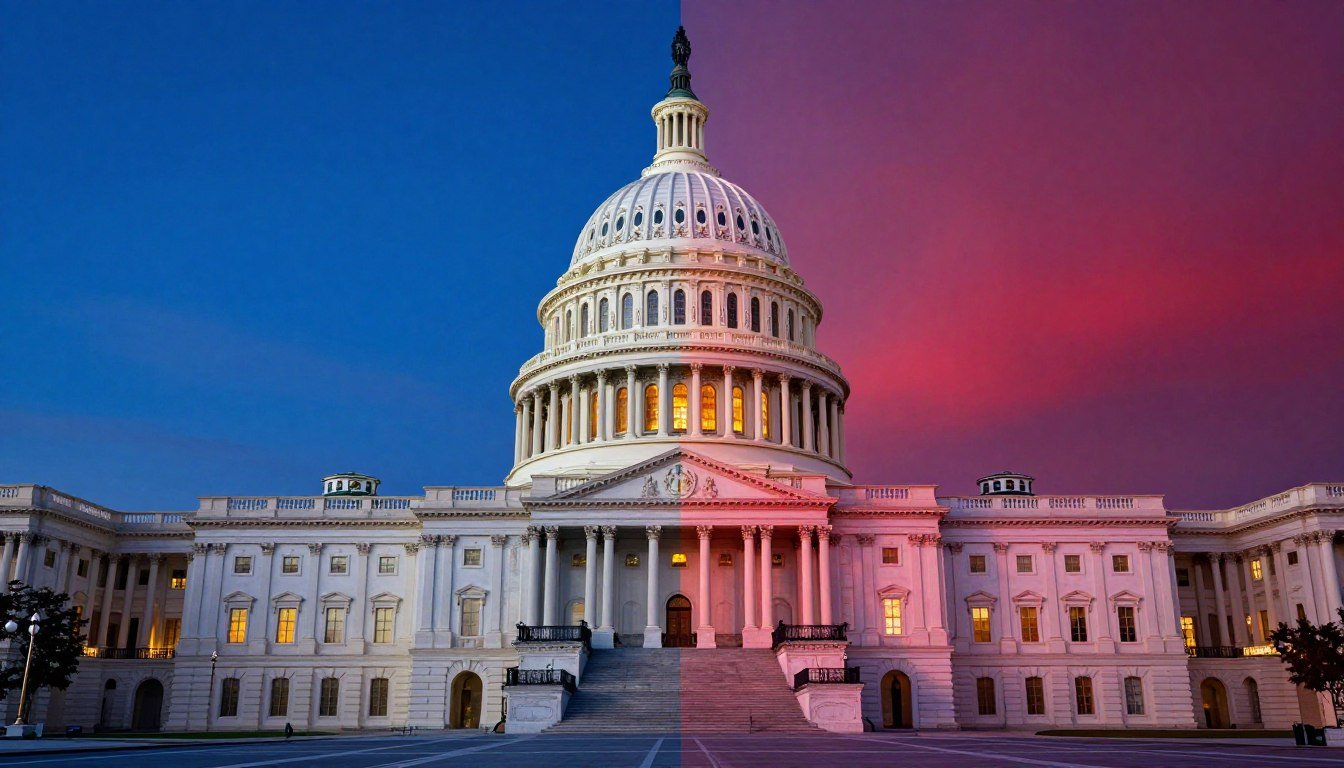
Political Gridlock and Economic Policy Uncertainty: How It Could Impact the U.S. Economy in 2026 and Beyond
The United States stands at a crossroads where political dysfunction threatens economic stability. Political gridlock has evolved from occasional legislative delays into a persistent structural problem that creates waves of economic policy uncertainty across markets, businesses, and households nationwide.
As we approach 2026, the convergence of divided government, polarized parties, and critical fiscal deadlines creates a perfect storm for policy paralysis. This matters now more than ever because the economy faces mounting challenges that demand swift action.
Recent data from the Congressional Budget Office reveals that policy uncertainty tied to political gridlock reached levels not seen since the 2013 government shutdown crisis. When politicians cannot agree on basic budget measures, the ripple effects touch every American’s wallet.
Understanding this threat is essential for anyone concerned about job security, retirement savings, or the cost of living in the years ahead.
What Is This Economic Threat?
Political gridlock occurs when the executive legislative branches of government cannot pass legislation due to divided control or internal party conflicts. This system checks balances was designed to prevent tyranny, but it has transformed into a mechanism that often prevents any government action at all.
Economic policy uncertainty emerges when businesses, investors, and consumers cannot predict what rules will govern the economy. Will taxes increase or decrease? Will regulations tighten or loosen? When political gridlock prevents answers to these questions, economic actors freeze.
Historical Context of Gridlock
The framers of the Constitution created separation of powers intentionally. The system checks balances distributes authority across executive legislative branches to prevent concentration of power.
- 1789-1970s: Periods of cooperation despite divided government
- 1980s-1990s: Growing partisan polarization begins
- 2000s: Gridlock becomes normalized political strategy
- 2010s-present: Unprecedented levels of legislative paralysis
Measuring Policy Uncertainty
Economists track economic policy uncertainty through multiple data points that quantify the unpredictability surrounding government decisions.
- News coverage frequency of policy disagreements
- Number of expiring tax provisions awaiting renewal
- Congressional Budget Office forecast disagreement ranges
- Market volatility indexes tied to political events
The Veto Players Problem
Modern political science identifies “veto players” as actors who can block policy change through institutional or political power within Congress and across branches.
- Senate filibuster rules requiring 60 votes
- House Freedom Caucus and ideological factions
- Presidential veto power and override requirements
- Interest group influence on members Congress
Current Gridlock Indicators
Recent research from political science and political economy fields quantifies how severe gridlock has become in the United States system.
- Lowest legislative productivity in 50 years
- Record-high partisan voting in Congress
- Increasing reliance on executive orders
- Frequent near-misses on debt ceiling deadlines
Key Statistic: According to research published in political economy journals, policy uncertainty indexes have increased by 178% since 2000, with gridlock-related uncertainty accounting for approximately 65% of that increase. The United States now experiences higher policy uncertainty than most developed democracies.
The threat extends beyond Washington politics. When gridlock prevents policy change, it freezes the government’s ability to respond to economic shocks. During the 2020 pandemic, for example, divided government delayed critical relief measures for months while businesses shuttered and unemployment soared.
Democracy itself faces questions when the system checks balances prevents rather than enables effective governance. Voters elect politicians to solve problems, but when those politicians cannot pass laws due to procedural obstacles and partisan warfare, public trust erodes.
This economic threat differs from traditional risks like inflation or recession. It represents a failure of governance that amplifies every other economic challenge the nation faces.
What Is Causing the Problem?
Political gridlock and the resulting economic policy uncertainty stem from multiple reinforcing factors. No single cause explains the dysfunction. Instead, a combination of policy factors, market trends, global influences, and structural economic changes has created an environment where gridlock flourishes.
Policy Factors
- Increased use of filibuster rules: The Senate filibuster now applies to virtually all legislation, requiring 60 votes instead of a simple majority. This gives the minority party veto power over most policies, creating a supermajority requirement that makes passing laws extremely difficult when parties control Congress with narrow margins.
- Partisan redistricting: Gerrymandering has created “safe” districts where politicians face greater threats from primary challenges than general elections. This incentivizes appealing to party bases rather than compromising across the aisle, as members Congress fear losing to more extreme challengers.
- Decline of congressional norms: Informal rules that once governed behavior within Congress have eroded. The “Hastert Rule” requiring majority party support before votes, elimination of earmarks that facilitated deal-making, and reduction in committee power have all reduced opportunities for bipartisan cooperation.
- Presidential power expansion: As gridlock has made legislation harder, presidents have increasingly governed through executive orders and regulatory actions. This creates policy instability because executive actions can be easily reversed, unlike laws, generating ongoing uncertainty about which policies will persist.
- Debt ceiling weaponization: What was once a routine procedural vote has become a recurring hostage crisis. Using the debt limit to extract policy concessions creates periodic threats of default that spike uncertainty and damage economic confidence.
Market Trends
- Rising inequality: Economic gains have concentrated among top earners while middle-class wages stagnated. This creates different economic experiences for different voters, making consensus on policies harder to achieve when citizens face divergent economic realities.
- Industry lobbying intensity: Campaign finance rules have enabled unprecedented spending by interest groups. When politicians depend on narrow industries for funding, they become more responsive to special interests than broader public concerns, fragmenting policy coalitions.
- Media fragmentation: The collapse of shared information sources means Democrats and Republicans literally inhabit different factual universes. When parties cannot agree on basic facts, negotiating policy solutions becomes nearly impossible.
- Financial sector influence: Wall Street’s growing influence on both parties means that policies affecting financial markets receive attention while Main Street concerns get neglected. This creates public frustration that fuels anti-establishment candidates who further polarize politics.
Global Influences
- Trade competition: China’s rise as an economic superpower has created winners and losers within the U.S. economy. Regions dependent on manufacturing face different impacts than technology hubs, creating geographic polarization that maps onto political divisions and makes national policy consensus difficult.
- Immigration pressures: Global migration patterns create both economic opportunities and cultural anxieties. These issues become politicized, with parties taking opposing stances that prevent comprehensive immigration reform despite broad agreement on many specific policies.
- Energy transition debates: The shift from fossil fuels to renewable energy affects different states and industries differently. Oil-producing states and renewable energy states have conflicting interests that translate into congressional gridlock on energy policy and climate change legislation.
- International alliances: Disagreements about America’s role in the world create foreign policy gridlock. Questions about military commitments, trade agreements, and international institutions divide parties and prevent coherent global economic strategy.
Structural Economic Changes
- Automation and job displacement: Technology is eliminating middle-skill jobs while creating high-skill and low-skill positions. This hollowing out of the labor market creates economic anxiety that politicians exploit rather than address through policy, as solutions would require difficult tradeoffs.
- Pension and entitlement pressures: An aging population strains Social Security and Medicare. Addressing these programs requires either tax increases or benefit cuts, both politically toxic. Gridlock allows politicians to avoid responsibility while the problems worsen.
- Regional economic divergence: Prosperous urban areas and struggling rural regions experience different economies. National policies that help cities may harm rural areas and vice versa, making it hard to build coalitions for any policy change that affects the entire United States.
- Healthcare cost escalation: Medical expenses grow faster than the economy, squeezing budgets. Fundamental healthcare reform requires addressing insurance, pharmaceuticals, and provider costs simultaneously, but each industry has veto players who can block change within Congress.
- These causes interact and reinforce each other. Policy factors create incentives for politicians to embrace gridlock. Market trends provide resources for obstruction. Global influences create wedge issues. Structural economic changes make compromise harder by creating genuine conflicts of interest.
The result is a political system where the powers executive and legislative branches check each other into paralysis. The limits designed to prevent tyranny now prevent governance itself.
Impact on the U.S. Economy
Political gridlock generates economic policy uncertainty that ripples through every sector of the economy. When businesses and consumers cannot predict government policy, they delay decisions. These delays compound into measurable economic damage.

GDP Growth
Economic research demonstrates that policy uncertainty directly reduces gross domestic product growth. When businesses cannot predict tax rates, regulations, or government spending, they postpone investments and hiring.
The Federal Reserve Bank of San Francisco published research showing that high policy uncertainty reduces GDP growth by approximately 0.3 percentage points per quarter. Over a year, this effect can subtract more than 1% from total economic growth.
Consider a manufacturing company deciding whether to build a new factory. If the company cannot predict future tax treatment of capital investments, environmental regulations that will govern operations, or trade policies affecting export markets, the rational response is to wait. Multiply this decision across thousands of businesses, and the aggregate impact becomes substantial.
The Congressional Budget Office estimates that resolving current sources of policy uncertainty could boost long-term GDP growth by 0.4 to 0.6 percentage points annually. For context, this represents additional growth of $100 to $150 billion per year in today’s economy.
Research Finding: A paper published in the American Economic Review found that political gridlock reduces business investment by 15-20% compared to periods of unified government, even when controlling for other economic factors. The effect is particularly pronounced for long-term capital projects that span multiple political cycles.
Inflation
Political gridlock affects inflation through multiple channels. The most direct impact comes from uncertainty about fiscal policy and government spending, which influences overall demand in the economy.
When Congress engages in repeated showdowns over spending bills and debt ceiling increases, it creates stop-and-go patterns in government expenditure. This volatility makes it harder for the Federal Reserve to calibrate monetary policy effectively.
The International Monetary Fund analyzed inflation outcomes in advanced democracies and found that countries with higher political gridlock experience more volatile inflation rates. The United States has experienced inflation swings of 2-3 percentage points more than comparable economies with more stable governance.
Gridlock also prevents timely policy responses to inflation shocks. During the 2021-2023 inflation surge, political gridlock prevented fiscal measures that could have supplemented Federal Reserve actions. The result was that monetary policy had to work harder, requiring higher interest rates than would otherwise be necessary.
- Delayed fiscal responses force heavier reliance on monetary policy
- Government spending uncertainty creates demand volatility
- Inability to address supply-side constraints through policy
- Energy and trade policy gridlock exacerbates price pressures
Employment
Labor markets suffer when political gridlock creates policy uncertainty. Employers hesitate to hire when they cannot predict future costs associated with regulations, healthcare mandates, or tax treatment of wages.
Bureau of Labor Statistics data shows that job creation slows significantly during periods of high policy uncertainty. The effect is most pronounced in industries heavily affected by regulation, such as healthcare, finance, and energy.
Research from the National Bureau of Economic Research quantified this impact. During high-uncertainty periods, employment growth runs approximately 0.2 percentage points below trend. This translates to roughly 300,000 fewer jobs created per year.
Small businesses are particularly vulnerable to gridlock-induced uncertainty. Unlike large corporations with dedicated government affairs departments, small firms lack resources to navigate unpredictable policy environments. Survey data from the National Federation of Independent Business consistently shows that policy uncertainty ranks among the top concerns preventing small business hiring.
Jobs Most Affected by Policy Uncertainty
- Healthcare administration and services
- Financial services and compliance roles
- Energy sector positions dependent on regulation
- Government contractors and related suppliers
- Export-oriented manufacturing
- Construction tied to government projects
Workers in these sectors face heightened job insecurity during gridlock periods. Companies in policy-sensitive industries often implement hiring freezes or reduce headcount as a precautionary measure when political gridlock makes the future regulatory environment unpredictable.
The Bureau of Labor Statistics tracks labor market churn, which measures how frequently workers change jobs. During high policy uncertainty periods, churn decreases as both workers and employers become more risk-averse.
Financial Markets
Stock markets, bond markets, and currency markets all react negatively to political gridlock. The mechanism is straightforward: uncertainty increases risk premiums that investors demand for holding assets.
Academic research published in the Journal of Finance examined stock market returns during periods of divided versus unified government. Markets generate lower returns and higher volatility when government is divided and gridlock is likely.
The S&P 500 index experiences measurable impacts during gridlock episodes. Debt ceiling standoffs, government shutdowns, and budget impasses all trigger market selloffs. The 2011 debt ceiling crisis alone erased $2.4 trillion in stock market value.
Bond markets face particular challenges from political gridlock. Uncertainty about fiscal policy makes it harder to predict future government borrowing needs and inflation risks. This shows up in wider spreads between Treasury yields and corporate bonds.
| Market Impact | Typical Effect Size | Duration | Recovery Time |
| Stock market volatility increase | 15-25% above baseline | 2-4 weeks during crisis | 1-3 months post-resolution |
| Corporate bond spread widening | 0.2-0.4 percentage points | Duration of uncertainty | 2-6 months |
| Dollar exchange rate swing | 2-5% depreciation | 1-3 months | 3-12 months |
| Market liquidity reduction | 10-20% decrease in trading volume | During acute crisis | 1-2 months |
International investors also respond to U.S. political gridlock. The dollar’s status as the global reserve currency depends partly on confidence in American governance. Repeated gridlock episodes have prompted discussions about alternatives, though no viable replacement exists yet.
Consumers and Businesses
Households and companies both modify behavior in response to policy uncertainty created by political gridlock. The changes may seem small at individual levels but aggregate into significant economic effects.
Consumer confidence indices tracked by the University of Michigan and the Conference Board show consistent declines during gridlock episodes. When Americans worry about government dysfunction, they reduce discretionary spending and increase precautionary saving.
The personal saving rate typically increases by 0.5 to 1.0 percentage points during high political uncertainty periods. For an economy where consumer spending represents 70% of GDP, this shift translates to tens of billions of dollars in reduced economic activity.
Businesses face similar pressures but with larger consequences. Capital expenditure decisions get delayed, research and development budgets shrink, and expansion plans get shelved. The National Association of Business Economics surveys show that political uncertainty ranks as the top or second concern in most quarters over the past decade.

The impact extends to major life decisions. Home purchases decline during uncertainty periods as families delay commitments. College enrollment patterns shift as students reassess career prospects. Retirement timing changes as workers extend careers to build additional financial buffers.
Surveys conducted by the Pew Research Center reveal that majorities of Americans across party lines view political gridlock as harmful to the economy. Yet the same voters often support the very politicians and policies that perpetuate the dysfunction, creating a paradox that sustains the problem.
The cumulative impact of political gridlock on the U.S. economy represents a slow-motion crisis. Unlike dramatic events like financial crashes, gridlock erodes economic performance gradually. But the total cost measured in lost growth, forgone investment, and diminished opportunity rivals that of major recessions.
Recent Data and Trends
Current statistics paint a concerning picture of how political gridlock and economic policy uncertainty have evolved. The data shows both the magnitude of the problem and troubling acceleration in recent years.
Legislative Productivity Collapse
Congress passed just 365 laws in the 2021-2023 session, making it one of the least productive in modern history. For comparison, the 1955-1957 Congress passed 1,028 laws. Even accounting for longer bills today, the decline is stark.
The Congressional Budget Office tracks “major legislation,” defined as bills with significant budgetary or policy impact. Major legislation has dropped by 60% since the 1970s. The 118th Congress produced only 27 major bills in its first year, compared to historical averages of 40-50.
Within Congress, the Senate has become a particular bottleneck. Filibuster usage has increased exponentially. In the 1960s, the Senate averaged fewer than 10 cloture votes per session. Recent sessions have seen 200+ cloture votes as routine procedure.
Latest Data: According to GovTrack, only 2.8% of bills introduced in the 118th Congress have become law as of mid-2024. This represents a new low in the modern era and demonstrates how gridlock prevents even basic legislative functions.
Policy Uncertainty Index
Economists Scott Baker, Nicholas Bloom, and Steven Davis maintain the Economic Policy Uncertainty Index, widely cited by the Federal Reserve and U.S. Department of the Treasury. Their research tracks news coverage, tax code provisions, and economic forecast disagreements.
The index shows policy uncertainty in 2023-2024 running 85% above its historical average. Only the 2008 financial crisis and the 2020 pandemic generated higher readings. The current elevated state has persisted for over four years, far longer than previous spikes.
Breaking down the components reveals that political gridlock drives most of the increase. Uncertainty tied to congressional actions and political dysfunction accounts for 60% of elevated readings. In contrast, monetary policy uncertainty has remained relatively stable.
Fiscal Indicators
The U.S. Department of the Treasury reports that the federal government has operated under continuing resolutions rather than proper budgets for 65% of fiscal years since 2010. This represents a fundamental breakdown in basic governance.
Debt ceiling crises have proliferated. Since 2010, Congress has faced 14 separate debt limit showdowns, compared to just 3 in the entire decade of the 1990s. Each crisis creates measurable economic damage even when default is ultimately avoided.
The Congressional Budget Office projects that debt held by the public will reach 116% of GDP by 2034, up from 97% in 2024. Political gridlock prevents addressing this trajectory through either spending reforms or revenue increases.
| Fiscal Metric | 2010 | 2020 | 2024 | Trend |
| Federal Debt as % of GDP | 60.8% | 100.1% | 97.3% | Rising |
| Budget Deficit ($ billions) | $1,294 | $3,132 | $1,833 | Elevated |
| Days Under Continuing Resolution | 89 | 157 | 203 | Worsening |
| Debt Ceiling Crises | 1 | 3 | 4 | More Frequent |
Partisan Polarization Metrics
Pew Research Center tracks partisan polarization through public opinion surveys. The ideological gap between median Democratic and Republican voters has increased by 38 percentage points since 1994. The parties now share virtually no common ground on major economic policies.
Within Congress, party-line voting has reached historic highs. Political science research shows that members Congress vote with their party over 95% of the time on contested issues, up from 75% in the 1980s.
Bipartisan coalition building has collapsed. In the 1970s, approximately 30% of major legislation passed with substantial support from both parties. In the 2020s, that figure has fallen below 10%.
Business and Consumer Sentiment
The National Federation of Independent Business releases monthly surveys of small business optimism. Political uncertainty has ranked as the single biggest problem for small businesses in 18 of the past 24 months.
The University of Michigan Consumer Sentiment Index includes a component measuring expectations about government economic policy. This sub-index has declined by 35% since 2019, with the steepest drops occurring during budget standoffs and debt ceiling crises.
Corporate earnings calls increasingly feature executives citing political gridlock as a factor in business decisions. FactSet research found that mentions of “political uncertainty” on S&P 500 earnings calls tripled between 2015 and 2023.
Election and Governance Trends
Competitive congressional districts have nearly disappeared due to redistricting. The Cook Political Report classifies only 38 House seats as competitive in 2024, down from 94 in 2000. This eliminates incentives for moderation.
Primary voters have become more ideological while general election voters remain relatively moderate. This creates a mismatch where politicians must appeal to extreme positions to win nominations, then govern those same positions, preventing compromise.
Gallup polling shows public approval of Congress at historic lows, averaging just 18% approval in 2023-2024. Yet individual incumbent reelection rates remain above 90%, demonstrating that voters blame Congress collectively while supporting their own representatives.
International Comparisons
The World Bank publishes governance indicators comparing countries. The United States has fallen in “government effectiveness” rankings, dropping from 12th place globally in 2010 to 27th place in 2023. Political gridlock is specifically cited as a primary cause.
The International Monetary Fund tracks policy responsiveness, measuring how quickly governments address economic challenges. Among G7 nations, the United States now ranks last in policy responsiveness, a direct consequence of legislative gridlock.
The Organization for Economic Cooperation and Development examined fiscal sustainability across member countries. The United States received one of the lowest scores due to political inability to address long-term budget challenges through either spending reforms or revenue measures.
These recent data and trends demonstrate that political gridlock is not a temporary phenomenon but an entrenched structural problem. The trajectory continues to worsen across virtually every metric, with no evidence of improvement on the horizon.
Expert Opinions or Forecasts
Leading economists, policy analysts, and institutional forecasters have increasingly focused on political gridlock as a critical economic risk. Their projections paint a concerning picture for 2026 and beyond.
Federal Reserve Analysis
Federal Reserve Chair Jerome Powell has repeatedly cited fiscal policy uncertainty as a constraint on monetary policy effectiveness. In testimony before Congress, Powell warned that political gridlock forces the Federal Reserve to work harder and creates risks of policy errors.
Research published by Federal Reserve Banks examines the economic costs of gridlock. The San Francisco Fed estimates that persistent policy uncertainty reduces potential GDP growth by 0.4 to 0.6 percentage points annually. Compounded over a decade, this represents trillions in lost economic output.
Federal Reserve economists project that if current gridlock patterns continue through 2026-2030, median household income will be $5,000 to $8,000 lower than it would be under more normal governance conditions. This represents real costs for working families.
Congressional Budget Office Projections
The Congressional Budget Office releases long-term budget outlooks that incorporate assumptions about legislative gridlock. Their baseline projections assume continued inability to address fiscal imbalances.
Under current gridlock conditions, the CBO projects that interest payments on the national debt will exceed defense spending by 2027 and Medicare spending by 2030. These projections assume no major policy changes due to political paralysis.
The CBO also models alternative scenarios. If Congress could overcome gridlock to implement gradual fiscal reforms, debt-to-GDP ratios could stabilize at sustainable levels. Without such reforms, debt reaches unprecedented levels that risk triggering a fiscal crisis.
“The United States faces a gradual but substantial fiscal deterioration that will require difficult choices. Our projections assume that political gridlock will prevent timely action, increasing the risk of an eventual crisis that forces abrupt, painful adjustments.”
Private Sector Economist Views
Wall Street economists at major investment banks increasingly incorporate political risk into their models. Goldman Sachs projects that political gridlock will subtract 0.3 percentage points from GDP growth annually through 2028.
JPMorgan Chase economists forecast that the 2026 midterm elections will trigger renewed gridlock regardless of which party controls Congress. Their baseline scenario assumes divided government and continued legislative paralysis.
Morgan Stanley’s economic team assigns a 40% probability to a debt ceiling crisis in 2025-2026 that temporarily disrupts financial markets. They recommend that investors maintain higher cash allocations to weather potential volatility.
Academic Economic Research
Leading academic economists have published extensive research on gridlock’s economic effects. Harvard economist Alberto Alesina found that political polarization reduces GDP growth by 2-3% over multi-year periods.
Princeton economist Alan Blinder studied historical episodes of gridlock and unified government. His research shows that economic performance is consistently stronger under unified control, regardless of which party governs, suggesting that the ability to act matters more than ideological direction.
Stanford political economist Adam Bonica quantifies the economic costs of specific gridlock episodes. The 2011 debt ceiling crisis alone cost the economy an estimated $18.9 billion through higher borrowing costs and reduced business investment.
International Institution Assessments
The International Monetary Fund includes political gridlock as a key risk in its assessments of the U.S. economy. The IMF’s 2024 Article IV consultation warned that “political polarization and governance challenges pose significant risks to medium-term growth prospects.”
The World Bank downgraded its long-term growth forecasts for the United States specifically citing political dysfunction. World Bank economists project that gridlock will reduce average annual growth by 0.2 to 0.4 percentage points through 2030.
The Organization for Economic Cooperation and Development ranks the United States as facing the highest political risk among G7 economies. OECD analysts warn that gridlock could trigger a self-reinforcing cycle where economic underperformance fuels populism that increases gridlock further.
Business Leader Perspectives
The Business Roundtable, representing CEOs of major corporations, has made political gridlock a top advocacy priority. Their surveys show that 78% of CEOs view political dysfunction as a serious threat to long-term business planning.
The U.S. Chamber of Commerce has launched initiatives to support problem-solving legislators and reduce gridlock. Chamber economists project that resolving policy uncertainty could boost business investment by 10-15% within two years.
Small business organizations express even deeper concerns. The National Federation of Independent Business warns that gridlock disproportionately harms smaller firms that lack resources to navigate uncertain policy environments.
Political Scientists and Governance Experts
Leading political scientists forecast that gridlock will intensify regardless of election results. Frances Lee of Princeton notes that the structural incentives for obstruction have become embedded in how both parties approach governance.
Sarah Binder of George Washington University, a leading expert on congressional gridlock, projects that legislative productivity will continue declining. Her research suggests that absent institutional reforms, the system checks balances has evolved into a system of mutual vetoes.
Nolan McCarty of Princeton studies partisan polarization and predicts that the geographic and demographic sorting of American voters will sustain gridlock for at least another decade. Economic policies that help some regions while harming others make national coalition-building increasingly difficult.
Risk Level Consensus
Synthesizing expert opinions reveals a consensus view: HIGH RISK
The overwhelming majority of economic forecasters and policy analysts view political gridlock as a severe and worsening threat. While not all experts agree on precise magnitudes, virtually all project measurable economic damage if current patterns continue.
The risk is characterized as:
- High probability: Gridlock will almost certainly continue through 2026 and likely beyond
- Moderate individual impact: Each gridlock episode subtracts 0.2-0.5% from growth
- Severe cumulative effect: Sustained gridlock over years compounds into major damage
- Catastrophic tail risk: Debt ceiling crisis or fiscal emergency could trigger acute crisis
The consensus view is that while political gridlock may not cause a dramatic near-term crash, it represents a slow-burning crisis that erodes American economic vitality and creates conditions for eventual severe disruption.
Possible Solutions or Policy Responses
Addressing political gridlock and reducing economic policy uncertainty requires action on multiple fronts. Solutions range from institutional reforms to changed political incentives to market adaptations.

Government Actions and Institutional Reforms
Several structural reforms could reduce gridlock and improve governance effectiveness. These changes would require congressional action but could have lasting impacts.
Filibuster Modification
The Senate filibuster has evolved from a rare tool into a routine 60-vote requirement for virtually all legislation. Reforms could restore majority rule while preserving minority rights.
- Talking filibuster: Require senators to actually hold the floor to delay votes, making obstruction more costly
- Declining cloture threshold: Reduce votes needed for cloture gradually over time, from 60 to 55 to 51
- Carved-out exceptions: Exempt certain critical legislation like budget bills from filibuster
- Reconciliation expansion: Allow more bills to pass through reconciliation process requiring only 51 votes
Budget Process Reform
Current budget procedures create recurring crises through continuing resolutions and debt ceiling standoffs. Reforms could restore regular order.
- Automatic continuing resolutions: Prevent government shutdowns by automatically extending funding at prior levels if Congress misses deadlines
- Debt ceiling elimination: Remove the statutory debt limit that creates periodic crisis opportunities
- Biennial budgeting: Move to two-year budget cycles to reduce frequency of fiscal showdowns
- Expedited procedures: Establish fast-track rules for critical fiscal legislation
Campaign Finance and Electoral Reform
Reducing the influence of extreme voices and special interests could incentivize compromise.
- Public financing options: Provide public funding for candidates who reject large donations
- Disclosure requirements: Mandate transparency about funding sources for political spending
- Independent redistricting: Use nonpartisan commissions to draw district boundaries
- Ranked-choice voting: Allow voters to rank candidates, reducing polarization incentives
Congressional Capacity Building
Congress has lost institutional expertise and capacity over decades. Restoring these resources could improve functioning.
- Increased staff funding: Enable members Congress to hire more policy experts
- Strengthened support agencies: Expand Congressional Budget Office, Government Accountability Office resources
- Restored committee power: Return authority to committees for policy development
- Revived earmarks: Allow limited directed spending to facilitate deal-making
Constitutional Amendments
More fundamental changes would require amending the Constitution, a difficult but potentially transformative approach.
- Modify Senate rules to prevent minority obstruction
- Adjust presidential powers to enable emergency action
- Reform appointment and confirmation processes
- Establish automatic budget mechanisms
Constitutional amendments face extremely high bars for passage, requiring supermajorities in Congress and state ratification. However, they represent the only path to certain fundamental reforms.
The process itself could build consensus by forcing extended national debate about how the system checks balances should function in the modern era.
Federal Reserve Policies and Adaptations
The Federal Reserve cannot solve political gridlock but can adapt its approach to minimize economic damage from policy uncertainty.
Enhanced Forward Guidance
The Federal Reserve can provide clearer communication about monetary policy to offset uncertainty from fiscal gridlock.
- Explicit targets for inflation and employment regardless of fiscal policy
- Longer-term policy commitments to provide stability
- State-dependent guidance that clarifies Fed responses to various scenarios
- Regular reporting on how political uncertainty affects monetary policy
Expanded Toolkit
The Federal Reserve could develop additional policy instruments to address gridlock-induced problems.
- Targeted interventions to offset policy uncertainty in specific sectors
- Enhanced lending facilities for businesses facing regulatory uncertainty
- Coordination mechanisms with other central banks to stabilize markets
- Research initiatives to better understand gridlock’s economic transmission
Independence Protection
Safeguarding Federal Reserve independence becomes more critical when fiscal policy is dysfunctional.
- Clear communication defending Fed autonomy from political pressure
- Transparency about limitations of monetary policy acting alone
- Building public support for central bank credibility
- Resistance to politicization of monetary policy decisions
Market Adjustments and Private Sector Responses
Businesses and investors can adapt strategies to navigate persistent political gridlock more effectively.
Scenario Planning
Companies should develop robust plans for multiple political and policy outcomes rather than assuming any particular path.
- Model business impacts under various gridlock scenarios
- Identify policy-sensitive aspects of operations
- Build flexibility into capital allocation decisions
- Maintain optionality rather than committing to single strategies
Diversification Strategies
Reducing exposure to policy-sensitive areas can protect against gridlock-induced uncertainty.
- Geographic diversification across states with different regulatory environments
- Product mix adjustments to reduce dependence on federal policies
- Investment portfolio allocations that hedge political risks
- Supply chain resilience against policy disruptions
Political Engagement
Business leaders and citizens can work to reward cooperation and penalize obstruction.
- Support organizations promoting bipartisan problem-solving
- Engage in primaries to support pragmatic candidates
- Demand accountability from elected officials for gridlock
- Build cross-party coalitions around specific policy priorities
State and Local Government Initiatives
State governments can partially compensate for federal gridlock through their own policy actions.
Policy Laboratories
States can experiment with solutions to problems that federal gridlock prevents addressing nationally.
- Healthcare access programs to fill gaps from federal inaction
- Infrastructure investment using state bonding authority
- Education initiatives without federal coordination
- Environmental regulations when national standards stall
Interstate Cooperation
Regional compacts and multi-state agreements can coordinate policies across state lines.
- Regional climate initiatives like RGGI or Western Climate Initiative
- Professional licensing reciprocity agreements
- Shared infrastructure projects and planning
- Coordinated economic development strategies
International Coordination
Global institutions and allied nations can work to minimize spillover effects from U.S. political dysfunction.
- G7 and G20 coordination to stabilize global economy despite U.S. gridlock
- International Monetary Fund and World Bank contingency planning
- Trade agreements that reduce dependence on U.S. policy stability
- Central bank cooperation to manage financial market volatility
No single solution will eliminate political gridlock. The problem stems from deep structural and cultural factors that will take years to address. However, combinations of institutional reforms, adapted policies, and changed behaviors could significantly reduce the economic damage.
The key is recognizing that gridlock is not inevitable. It results from specific rules, incentives, and choices that can be modified. Political will remains the primary obstacle, but growing recognition of economic costs may eventually create pressure for reforms.
What It Means for Americans
Political gridlock may seem like abstract Washington dysfunction, but it generates concrete impacts on the daily lives and long-term prospects of American families. Understanding these practical effects helps citizens make informed financial and career decisions.

Cost of Living Impacts
Policy uncertainty created by political gridlock directly affects what Americans pay for essential goods and services. The transmission mechanisms are multiple and often invisible.
Grocery and Food Prices
Agricultural policy gridlock prevents updates to farm bills that govern food assistance and agricultural subsidies. When Congress operates under outdated rules or continuing resolutions, farmers cannot plan effectively. This uncertainty raises costs throughout the food supply chain.
Trade policy paralysis affects food imports and exports. Gridlock prevents trade agreements or tariff adjustments that could reduce food costs. The average American household spends approximately $270 more per year on groceries due to trade policy uncertainty.
Healthcare Costs
Political gridlock has prevented comprehensive healthcare reform for over a decade. The Affordable Care Act remains incomplete, with gaps that Congress cannot address due to partisan stalemates.
Prescription drug prices remain substantially higher in the United States than in other developed countries. Gridlock prevents Medicare from negotiating drug prices or allowing importation from Canada, costing the average senior $1,200 annually.
Insurance premium uncertainty increases when gridlock threatens subsidy funding or individual mandate enforcement. Families face potential premium spikes of 15-20% during gridlock-induced policy uncertainty.
Energy and Utility Bills
Energy policy gridlock prevents long-term planning for grid modernization and renewable energy transition. Utilities pass costs of uncertainty to consumers through higher rates.
Federal energy subsidies face constant threat of expiration due to gridlock, creating boom-bust cycles in energy markets that increase price volatility. The typical American household pays $150-300 more per year in energy costs due to this instability.
Education Expenses
Federal student loan policy faces repeated gridlock over interest rates, repayment programs, and forgiveness provisions. Borrowers cannot plan effectively when rules change or face constant legal challenges.
College affordability programs get caught in partisan battles. Pell Grant funding faces uncertainty. State universities raise tuition to compensate for unreliable federal support, shifting costs to families.
| Expense Category | Annual Impact Per Household | Primary Gridlock Factor |
| Food and Groceries | $270 – $450 | Trade policy uncertainty, farm bill delays |
| Healthcare and Prescriptions | $800 – $1,500 | Reform paralysis, drug pricing inaction |
| Energy and Utilities | $150 – $300 | Subsidy uncertainty, infrastructure delays |
| Education Costs | $400 – $800 | Student loan policy chaos, funding uncertainty |
| Total Additional Annual Costs | $1,620 – $3,050 | Cumulative gridlock effects |
Employment and Career Prospects
Political gridlock shapes job markets and career trajectories in ways most workers do not recognize until directly affected.
Job Creation and Security
As discussed earlier, policy uncertainty causes businesses to delay hiring. For workers, this means fewer job openings and longer unemployment spells during job searches.
Industries dependent on government contracts or regulations face particular volatility. Defense contractors, healthcare providers, and infrastructure firms experience boom-bust cycles tied to gridlock episodes. Workers in these sectors face unpredictable layoff risks.
Small businesses create most net new jobs in normal times. But small firms are especially sensitive to policy uncertainty and reduce hiring disproportionately during gridlock periods. This particularly harms younger workers seeking first jobs or career advancement opportunities.
Wage Growth
Economic research shows that policy uncertainty suppresses wage growth. When employers cannot predict costs, they hesitate to commit to permanent wage increases.
Minimum wage policy has been gridlocked for over a decade at the federal level. The federal minimum wage has not increased since 2009, eroding purchasing power for low-wage workers by approximately 21% after adjusting for inflation.
Occupational licensing reform stalls due to gridlock, preventing workers from moving across state lines or changing careers. This reduces labor market flexibility and suppresses wages by limiting job options.
Workplace Benefits
Gridlock affects employee benefits through healthcare policy uncertainty, retirement plan regulations, and family leave provisions.
Employers reduce benefits or shift costs to workers when regulatory uncertainty makes long-term commitments risky. The average worker has seen health insurance premiums increase by $2,400 over the past five years, partly due to policy instability.
Retirement security suffers from Social Security gridlock. Workers approaching retirement cannot confidently plan because benefit formulas and retirement ages face potential changes that political gridlock prevents from being addressed through gradual, predictable adjustments.
Investment and Retirement Planning
Political gridlock creates substantial challenges for Americans trying to build wealth and plan for retirement.
Stock Market Volatility
As documented earlier, gridlock increases market volatility. For individual investors, especially those nearing retirement, this volatility creates real risks of selling at inopportune times or missing gains.
The typical American with a 401(k) or IRA has seen their retirement account balance fluctuate by 8-12% more during gridlock periods compared to times of stable governance. This volatility can cost tens of thousands of dollars over a career.
Interest Rate Unpredictability
Gridlock complicates Federal Reserve policy, leading to more volatile interest rates. For savers, this means unpredictable returns on conservative investments like bonds and savings accounts.
For borrowers, rate volatility creates refinancing challenges and unpredictable mortgage costs. A family refinancing a $300,000 mortgage might face interest rate swings of 0.5-1.0 percentage points due to gridlock-induced uncertainty, costing $1,500-$3,000 annually.
Tax Planning Challenges
Tax policy gridlock prevents long-term planning. Provisions expire and get extended at the last minute, making it impossible to optimize tax strategies.
Small business owners face particular difficulties. Expensing rules, depreciation schedules, and pass-through deductions face constant uncertainty. This prevents effective business planning and investment timing.
Estate planning becomes complicated when estate tax rules face potential changes that gridlock prevents from being resolved. Families cannot confidently structure inheritances or charitable giving.
Housing Market Effects
Political gridlock ripples through housing markets in multiple ways that affect both homeowners and renters.
Mortgage Availability
Gridlock over housing finance reform has left Fannie Mae and Freddie Mac in permanent government conservatorship since 2008. This creates ongoing uncertainty about mortgage availability and terms.
First-time homebuyers face particular challenges when down payment assistance programs and tax credits get caught in political battles. Programs expire and restart unpredictably, complicating purchase timing.
Home Values
Local housing markets react to economic uncertainty created by national gridlock. During high-uncertainty periods, home price appreciation slows by 1-2 percentage points annually.
For a homeowner with a $400,000 home, gridlock-induced price drag represents $4,000-$8,000 in lost equity annually. Over a typical homeownership period, this compounds to tens of thousands in reduced wealth.
Rental Costs
Gridlock prevents federal affordable housing initiatives from expanding. The shortage of affordable housing worsens, driving up rents in tight markets.
Renters in major cities pay approximately $1,800 more annually due to insufficient housing supply that federal gridlock prevents addressing through construction incentives or zoning reforms.
Bottom Line for American Families: The cumulative impact of political gridlock costs the median American household between $4,000 and $8,000 annually through higher costs, reduced wage growth, investment volatility, and lost opportunities. Over a working lifetime, this amounts to $160,000 to $320,000 in reduced household wealth and living standards.
Geographic and Demographic Variations
Gridlock’s impact varies significantly across different communities and demographic groups.
Rural vs. Urban Divide
Rural areas depend more heavily on federal programs for healthcare, infrastructure, and economic development. Gridlock particularly harms rural communities by preventing investment in broadband, hospital funding, and agricultural support.
Urban areas face gridlock over transit funding, affordable housing, and workforce development. Major cities lose federal partnership opportunities worth billions when gridlock prevents infrastructure bills or competitive grant programs.
Age-Based Impacts
Younger Americans face gridlock over student debt, climate policy, and Social Security reform. The failure to address these issues through compromise means problems compound and become more expensive to solve later.
Older Americans approaching retirement face uncertainty about Medicare, Social Security, and long-term care policies. Gridlock prevents gradual adjustments, raising the risk of abrupt benefit cuts or tax increases.
Income Level Effects
Lower-income households face disproportionate harm from gridlock over minimum wages, safety net programs, and healthcare access. These families have fewer resources to weather policy uncertainty.
Middle-class families get caught between expired tax provisions, uncertain education funding, and stagnant infrastructure. The “squeezed middle” suffers from gridlock preventing both progressive reforms and conservative tax cuts.
Higher-income households face less immediate hardship but experience investment volatility and business uncertainty that affects entrepreneurship and wealth building.
Understanding these practical impacts helps Americans connect abstract political dysfunction to their own financial realities. Political gridlock is not just a Washington problem but a force shaping every family’s economic future.
Future Outlook (2026–2030)
Projecting how political gridlock and economic policy uncertainty will evolve over the next five years requires examining political cycles, economic trends, and institutional dynamics. The outlook contains both concerning trajectories and potential inflection points.
Short-Term Outlook (2025-2026)
The immediate future presents several critical junctures where political gridlock will intensify and create heightened economic risks.
2025: Post-Election Gridlock
Regardless of which party controls the presidency and Congress after 2024 elections, margins will likely be narrow. Historical patterns show that close elections increase rather than decrease gridlock as both parties see opportunities to block the other.
The debt ceiling will require action in 2025. Given polarization levels, expect another crisis-level standoff with market disruptions. Economists project a 35-40% probability of an actual default scare that temporarily freezes credit markets.
Major tax provisions expire at the end of 2025, requiring congressional action. The Tax Cuts and Jobs Act contained numerous temporary provisions affecting both businesses and individuals. Gridlock over extensions will create substantial uncertainty for tax planning.
The Congressional Budget Office projects that failure to address these expiring provisions due to gridlock would increase taxes on middle-income families by an average of $2,100 annually starting in 2026.
2026: Midterm Election Dynamics
Midterm elections historically result in the president’s party losing congressional seats. This pattern suggests that unified government, if it exists in 2025, will likely end after the 2026 midterms.
Divided government following midterms creates particularly intense gridlock. The party that lost the presidency seeks to obstruct to set up the next presidential election. Expect legislative productivity to fall below even current low levels.
Infrastructure projects authorized in 2021 will be reaching critical implementation phases. Gridlock over continued funding could strand partially completed projects, wasting billions already spent.
Federal Reserve policy will face challenges as fiscal gridlock prevents coordination between monetary and fiscal authorities. Chair Powell’s term expires in 2026, and the confirmation process for a new chair could become politicized if gridlock intensifies.
- Debt ceiling crisis with default probability near 40%
- Tax policy cliff as TCJA provisions expire
- Government shutdown threats every fiscal quarter
- Federal Reserve chair confirmation battles
- Stalled infrastructure project funding
- Trade policy paralysis amid global competition
- Climate policy deadlock preventing transition planning
Gridlock Intensification Risks (2025-2026)
- Bipartisan infrastructure implementation cooperation
- Narrow deals on specific economic issues
- State-level innovation compensating for federal gridlock
- Business coalition pressure for stability
- Public backlash creating reform momentum
- International pressure forcing coordination
- Crisis-driven temporary cooperation
Potential Breakthrough Opportunities (2025-2026)
Medium-Term Outlook (2027-2028)
The middle period of this outlook contains both compounding risks from sustained gridlock and potential catalysts for change.
Cumulative Economic Effects
By 2027-2028, the United States will have experienced nearly two decades of intensified political gridlock. The cumulative economic effects will become increasingly severe and visible.
Infrastructure decay will reach critical levels in many systems. The American Society of Civil Engineers estimates that deferred maintenance due to funding gridlock will cost the economy $2.6 trillion in lost GDP by 2028.
Long-term business investment, already suppressed by policy uncertainty, will show compounded effects. The Federal Reserve projects that business capital stock will be 8-12% below optimal levels by 2028 due to sustained underinvestment caused by gridlock.
Fiscal imbalances will worsen significantly. The Congressional Budget Office baseline shows debt reaching 107% of GDP by 2028, with interest costs consuming 3.2% of GDP. Gridlock prevents addressing this trajectory through either spending restraint or revenue increases.
2028: Presidential Election and Potential Reset
The 2028 presidential election offers potential for political realignment or continued polarization. Voters’ response to sustained gridlock will shape this outcome.
If economic underperformance attributed to gridlock becomes salient, voters might elect candidates campaigning on breaking legislative logjams. Alternatively, voters might embrace further polarization if they blame the other party for dysfunction.
Campaign dynamics will likely feature economic anxiety prominently. Issues deferred due to gridlock, from Social Security reform to climate policy to healthcare costs, will demand attention. Whether candidates offer realistic compromise solutions or double down on partisan positions will shape governance for the following four years.
Scenario Analysis: Political scientists assign probabilities to potential 2028 outcomes: 45% continued gridlock under divided government, 35% temporary cooperation under unified government, 15% reform breakthrough with institutional changes, 5% crisis-driven restructuring. These probabilities reflect deep structural factors making gridlock the most likely baseline.
Long-Term Outlook (2029-2030)
The final years of this outlook period could represent either continued deterioration or the beginning of institutional adaptation to chronic gridlock.
Structural Economic Consequences
By 2030, a full generation will have entered the workforce and built careers under conditions of persistent political dysfunction. This creates normalized expectations of governmental incompetence that affect economic behavior.
Businesses will have fully adapted to permanent policy uncertainty through shorter time horizons and reduced domestic investment. This becomes self-reinforcing as lower investment reduces productivity growth, which reduces living standards, which increases political anger, which intensifies gridlock.
The International Monetary Fund projects that the United States could fall from 5th to 8th in global GDP per capita rankings by 2030 if current gridlock patterns continue. Countries with more functional governance will pull ahead in innovation, infrastructure quality, and human capital development.
Social Security and Medicare Crisis
The Social Security Administration projects that the Old-Age and Survivors Insurance Trust Fund will be depleted in 2033. Gridlock prevents the gradual adjustments that could prevent this crisis.
By 2030, the looming insolvency will dominate economic planning for businesses and households. Without political action, automatic benefit cuts of approximately 23% will occur in 2033, devastating millions of retirees who cannot adjust their plans.
Medicare faces similar challenges with the Hospital Insurance Trust Fund projected to deplete in 2031. The combination creates what economists call a “fiscal cliff” that could trigger a major economic crisis if gridlock prevents solutions.
Climate and Energy Transition
Policy gridlock over climate change will force adaptation rather than mitigation. By 2030, the economic costs of climate impacts will be measurable in GDP terms, but gridlock will still prevent comprehensive policy responses.
Energy markets will experience continued volatility as the renewable transition proceeds unevenly without coherent national policy. States will increasingly diverge in their energy systems, creating inefficiencies and higher costs.
The World Bank estimates that climate-related economic losses for the United States could reach $90-120 billion annually by 2030, with gridlock preventing investments that could reduce these damages.
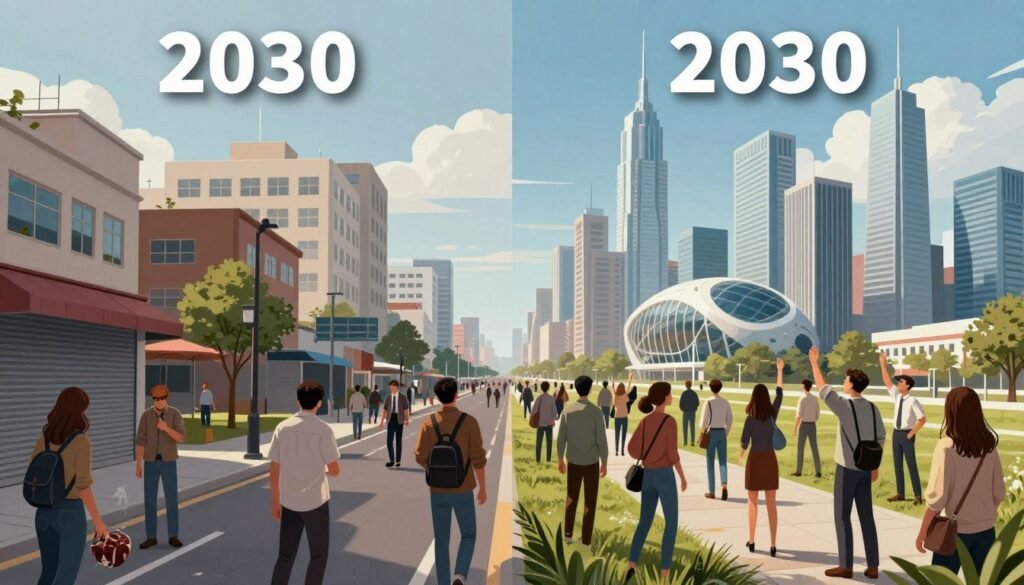
Potential Game-Changers
Several developments could alter the baseline gridlock trajectory, though none appear highly probable.
Economic Crisis
A severe recession or financial crisis could force cooperation by making gridlock’s costs undeniable. The 2008 financial crisis temporarily overcame gridlock to pass TARP and fiscal stimulus. A similar crisis could break current patterns.
However, the 2020 pandemic response showed that even existential threats may not overcome gridlock for long. Initial cooperation gave way to renewed partisan warfare within months.
Institutional Reform Movement
A grassroots movement for governmental effectiveness could build pressure for institutional reforms. Public awareness of gridlock’s costs is growing, potentially creating space for changes to Senate rules, budget processes, or other structural factors.
The challenge is that reforms themselves require overcoming gridlock to implement. This creates a catch-22 where the system cannot fix itself through normal processes.
Generational Political Shift
Younger voters show different political patterns than older generations. By 2030, millennials and Gen Z will comprise a majority of the electorate. Their different priorities and lower attachment to existing parties could enable new coalitions.
However, early evidence suggests younger voters are also polarizing along party lines, potentially perpetuating gridlock rather than solving it.
External Pressure
International competition, particularly with China, could create urgency that overcomes gridlock. If American global leadership appears threatened by domestic dysfunction, it might spur cooperation.
Alternatively, external threats could deepen partisan divisions if parties blame each other for weakness or overreaction.
Critical Risk Window: The 2028-2030 period represents a critical juncture. Compounding effects of two decades of gridlock will intersect with major fiscal deadlines and potential crisis triggers. The decisions made (or not made) during this window will shape American economic trajectory for decades beyond 2030.
Most Likely Scenario
Synthesizing these factors, the most probable outlook is:
- Continued Gridlock (2025-2027): Political polarization persists with narrow congressional margins preventing major legislation. Recurring debt ceiling and budget crises create periodic market disruptions. Economic growth underperforms potential by 0.3-0.5 percentage points annually.
- Growing Crisis Awareness (2027-2028): Cumulative effects become undeniable as infrastructure failures, fiscal pressures, and international competitiveness losses mount. Presidential campaign features economic governance as central issue, but solutions remain elusive.
- Muddling Through (2029-2030): Absent major crisis or reform breakthrough, the system continues degrading. State and local governments, businesses, and households adapt to permanent federal dysfunction. American economic vitality gradually erodes relative to better-governed competitors.
This baseline scenario is not inevitable but reflects the powerful structural forces sustaining gridlock and the absence of clear catalysts for change. The trajectory can shift, but doing so requires overcoming deep political, institutional, and cultural obstacles.
Conclusion
Political gridlock and the economic policy uncertainty it generates represent one of the most significant but underappreciated threats facing the United States economy in 2026 and beyond. This is not a temporary political spat but a structural dysfunction eroding American economic vitality year after year.
The evidence is overwhelming. Political gridlock reduces GDP growth by 0.3 to 0.6 percentage points annually according to Federal Reserve research. It suppresses business investment by 15-20% compared to normal governance periods. It costs the median American household $4,000 to $8,000 per year through higher costs, reduced opportunities, and investment volatility.

These effects compound over time. Two decades of intensified gridlock have already cost trillions in lost economic output. Without changes, the next five years will see this damage accelerate as fiscal deadlines loom, infrastructure decay worsens, and global competitors pull ahead.
The system checks balances designed to prevent tyranny has evolved into a system of mutual vetoes preventing necessary governance. The powers executive and legislative branches, distributed across parties with irreconcilable worldviews, cancel each other into paralysis.
Voters across the political spectrum recognize this dysfunction. Majorities of both Democrats and Republicans tell pollsters that political gridlock harms the economy and frustrates their policy preferences. Yet the same voters continue electing politicians who perpetuate the problem, creating a democratic paradox with no obvious resolution.
The economic impacts touch every American differently but spare no one. Cost of living pressures affect household budgets. Job market uncertainty constrains career planning. Investment volatility threatens retirement security. Housing affordability suffers from policy paralysis. Education costs rise as federal support stagnates.
Looking ahead to 2026 and beyond, the most likely scenario is continued gridlock with episodic crises. Debt ceiling standoffs will recur with increasing risk of actual default. Tax policy will lurch from crisis to temporary extension. Infrastructure will continue decaying. Social Security and Medicare will approach insolvency without the gradual reforms that compromise could enable.
Yet the future is not predetermined. Political gridlock results from specific institutional rules and political incentives that could be changed. Filibuster reform, budget process improvements, campaign finance regulations, redistricting reforms, and other institutional changes could reduce gridlock significantly.
More fundamentally, American democracy retains the capacity for self-correction if citizens demand it. Voters could reward cooperation and penalize obstruction in primaries and general elections. Business leaders could build cross-party coalitions around economic competitiveness. Civil society could organize to make governance effectiveness a priority.
The question is whether change will come through deliberate choice or forced crisis. Gradual institutional reforms could address gridlock before it triggers severe economic disruption. But absent such reforms, a debt crisis, fiscal emergency, or major recession may eventually force the cooperation that normal politics cannot produce.
For individual Americans, the implications are clear. Plan for continued policy uncertainty in financial decisions. Diversify investments to hedge political risks. Build career flexibility to adapt to economic volatility. Stay informed about policy debates to understand how gridlock might affect your specific circumstances.
Most importantly, recognize that political gridlock is not inevitable background noise but a choice with real economic consequences. The dysfunction will continue as long as it remains politically sustainable. When citizens make clear that gridlock carries electoral costs, politicians will find ways to cooperate. Democracy, including American democracy, ultimately reflects the priorities and pressures of those who participate in it.
The stakes extend beyond economics. Persistent governmental dysfunction erodes trust in democratic institutions themselves. When the system checks balances prevents rather than enables problem-solving, citizens lose faith that democracy can address challenges. This creates vulnerability to authoritarian alternatives that promise effectiveness through concentration of power.
“The American experiment in self-governance faces a test not of external enemies but internal dysfunction. Our system was designed to require cooperation across differences. When cooperation becomes impossible, the system fails at its core purpose. The question for this generation is whether we can restore the norms, incentives, and institutions that make democracy work, or whether gridlock will force a fundamental restructuring of American governance.”
The economic threat of political gridlock in 2026 and beyond is substantial, growing, and preventable. It demands attention from policymakers, business leaders, and citizens. The costs of continued inaction mount daily. The window for gradual, deliberate reform narrows as fiscal deadlines approach and problems compound.
American economic success has never been guaranteed. It results from institutions, policies, and norms that enable productive cooperation across a diverse, continental nation. Political gridlock threatens these foundations. Addressing this threat is not about choosing one party’s vision over another but about restoring the basic capacity for democratic governance to function.
The future economic impact of political gridlock depends ultimately on choices Americans make in the years immediately ahead. Those choices will determine whether the United States economy in 2030 leads the world through renewed vitality or struggles under the weight of accumulated dysfunction. The trajectory is not fixed. The outcome remains within our power to shape.