

Cybersecurity Threats to Financial Infrastructure: How It Could Impact the U.S. Economy in 2026 and Beyond
The financial sector faces an unprecedented wave of cyber attacks. Recent data from the European Central Bank shows a 238 percent increase in sophisticated attacks targeting financial institutions between 2022 and 2024. This surge threatens the very foundation of economic stability.
Digital transformation has created new vulnerabilities. Banks, payment systems, and stock exchanges now operate through interconnected networks. A single breach can cascade across multiple institutions within minutes.
The stakes have never been higher. Financial data breaches cost the sector an average of $5.9 million per incident in 2024. More concerning is the potential for systemic collapse if attackers successfully coordinate strikes against critical infrastructure.
This analysis examines the evolving landscape of cybersecurity threats to financial infrastructure. We explore how these dangers could reshape the U.S. economy through 2026 and establish frameworks for protection. The information provided draws from government agencies, central bank research, and security incident data across multiple countries.
Understanding these threats is no longer optional for financial leaders. The question is not whether your institution will face an attack, but when and how prepared you will be to respond.
What Is This Economic Threat?
Cybersecurity threats to financial infrastructure represent coordinated attempts by threat actors to compromise the systems that enable economic transactions. These attacks target banks, payment networks, stock exchanges, and central bank operations. The goal ranges from financial theft to disrupting confidence in monetary systems.
Clear Definition of Financial Cyber Threats
Financial cyber threats encompass multiple attack vectors. Ransomware locks institutions out of critical systems until payment is made. Distributed denial of service attacks overwhelm network capacity. Advanced persistent threats involve long-term infiltration to steal sensitive financial data.
The threat landscape has evolved dramatically. Early attacks focused on individual bank accounts. Modern threat actors now target the infrastructure itself. They seek access to payment systems, trading platforms, and interbank communication networks.
Nation-state actors have entered the arena. Government-sponsored groups conduct reconnaissance on financial networks. Their objectives include economic espionage, sanctions evasion, and preparations for potential cyber warfare scenarios.
Historical Context and Evolution
The first major wave of financial cyber attacks emerged in the early 2000s. Criminals targeted individual customer accounts through phishing schemes. Banks responded with two-factor authentication and enhanced monitoring systems.
A paradigm shift occurred in 2016 with the Bangladesh Bank heist. Attackers penetrated the SWIFT messaging system and attempted to steal $951 million. They succeeded in transferring $81 million before detection. This incident proved that core financial infrastructure was vulnerable.
The pattern escalated throughout the late 2010s. The WannaCry ransomware attack in 2017 affected hundreds of thousands of computers across 150 countries. Financial institutions scrambled to patch vulnerabilities. Many discovered their systems were inadequately protected.
Recent years have seen increasing sophistication. The 2020 SolarWinds breach compromised numerous financial services firms. Attackers gained access through trusted software updates. This supply chain attack demonstrated that even security-conscious institutions remained vulnerable.
Traditional Financial Threats
- Individual account fraud
- Credit card theft
- Check forgery
- Wire transfer fraud
- ATM skimming
Modern Cyber Threats to Infrastructure
- SWIFT network penetration
- Payment system disruption
- Central bank database breaches
- Trading platform manipulation
- Cryptocurrency exchange attacks
- Cloud infrastructure compromise
- Supply chain infiltration
- AI-powered social engineering
Key Statistics Defining the Threat Scale
The numbers paint a sobering picture. Financial institutions detected 1,829 significant cyber incidents in 2023 alone. This represents a 150 percent increase from 2020 levels. The European Central Bank tracks these incidents across member states and reports accelerating attack frequency.
Ransomware attacks have become particularly costly. The average ransom demand against financial institutions reached $1.4 million in 2024. However, the total cost including recovery, lost business, and reputational damage typically exceeds $4.5 million per incident.
Data breaches continue to plague the financial sector. Over 127 million customer records were exposed in 2023 through various security incidents. Each compromised record carries an average cost of $180 when factoring in notification, credit monitoring, and regulatory penalties.
| Threat Category | Annual Incidents (2023) | Average Cost Per Incident | Year-Over-Year Growth |
| Ransomware Attacks | 412 | $4.5 million | 87% |
| Data Breaches | 623 | $5.9 million | 43% |
| DDoS Attacks | 294 | $2.3 million | 156% |
| Business Email Compromise | 341 | $3.1 million | 62% |
| Supply Chain Attacks | 159 | $7.2 million | 203% |
The geographical distribution of attacks reveals concerning patterns. North American financial institutions face approximately 38 percent of all global financial cyber attacks. European institutions account for 29 percent. Asian financial services encounter 24 percent of incidents.
Attack timing shows strategic planning by threat actors. The highest concentration of incidents occurs during major financial events. Quarter-end reporting periods see 47 percent more attacks. Holiday weekends experience 83 percent increases as attackers exploit reduced staffing.
Small and medium-sized financial institutions face disproportionate risk. They lack the security resources of major banks but connect to the same payment systems. Attackers increasingly target these institutions as entry points into broader financial networks.
Critical Insight: The International Monetary Fund projects that a coordinated attack on major financial institutions could trigger economic losses exceeding $2.5 trillion globally. The U.S. economy would bear approximately 35 percent of this impact given the concentration of international financial activity in American markets.
What Is Causing the Problem?
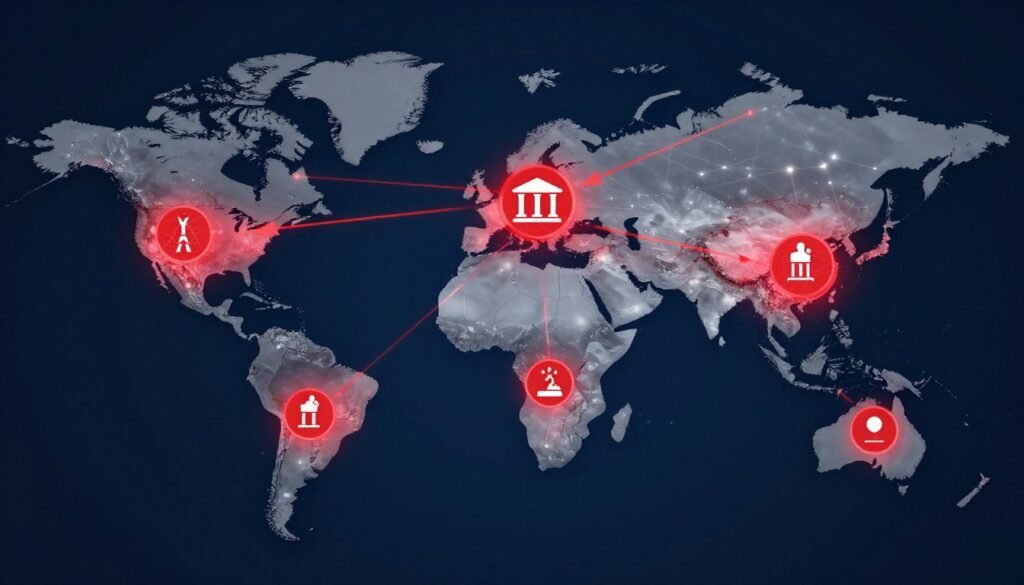
Multiple converging factors have created the current threat environment. The causes span technology evolution, geopolitical tensions, regulatory gaps, and fundamental changes in how financial services operate. Understanding these root causes is essential for developing effective countermeasures.
Policy Factors Contributing to Vulnerability
Regulatory frameworks have struggled to keep pace with technological change. Financial institutions adopted cloud computing, mobile banking, and cryptocurrency services faster than regulators could establish security standards. This created a compliance vacuum where best practices remained undefined.
Cross-border data flows complicate enforcement. A bank operating in multiple countries must navigate conflicting security requirements. The European Central Bank enforces strict standards for member states. American institutions follow guidelines from multiple government agencies. This regulatory fragmentation creates gaps that attackers exploit.
Budget constraints limit security investments. Many financial institutions classify cybersecurity as a cost center rather than strategic necessity. Security teams receive insufficient resources compared to revenue-generating departments. This resource imbalance leaves known vulnerabilities unpatched.
Information sharing between institutions remains inadequate. Banks compete for customers and worry about reputational damage from disclosing breaches. This culture of secrecy prevents the financial sector from developing collective defense strategies. Law enforcement receives incomplete information about attack methods and threat actors.
- Delayed Regulatory Updates: Security standards often lag 3-5 years behind current threats
- Jurisdictional Conflicts: International operations face contradictory compliance requirements
- Penalty Structures: Fines for breaches remain lower than potential profits from cutting security corners
- Disclosure Requirements: Inconsistent reporting standards across different financial sector components
- Third-Party Oversight: Limited regulatory authority over technology vendors serving financial institutions
- Legacy System Exemptions: Grandfather clauses allow outdated systems to continue operating
Market Trends Increasing Exposure
Digital transformation accelerated dramatically during the pandemic. Financial institutions moved customer interactions online within weeks. This rapid transition prioritized functionality over security. Many systems deployed during this period contain fundamental vulnerabilities that attackers now systematically identify and exploit.
The proliferation of payment systems expanded the attack surface. Consumers now use traditional banks, digital wallets, cryptocurrency exchanges, and peer-to-peer payment platforms. Each system maintains separate security protocols. Attackers probe connections between these systems seeking weakest links.
Cloud migration introduced new risks. Financial data previously secured in controlled data centers now resides across distributed cloud infrastructure. This shift transferred security responsibility from specialized financial security teams to general-purpose cloud providers. The handoff created accountability gaps and configuration errors.
Mobile banking dominance changed threat vectors. Smartphones lack the security controls of traditional banking terminals. Malware targeting mobile devices increased 217 percent in 2023. Attackers compromise individual phones to access banking credentials and bypass institutional security measures.
Technology Adoption Pressure
Financial institutions face intense pressure to offer cutting-edge digital services. Customers expect instant account access, mobile check deposits, and real-time payment processing. This demand drives rapid technology deployment.
Security assessments often occur after implementation rather than before. The urgency to match competitor offerings overrides cautious evaluation of new systems. This speed-first mentality creates cascading vulnerabilities.
Interconnection Multiplication
Modern financial transactions traverse multiple institutions and networks. A single payment might touch five different systems before completion. Each connection point represents a potential vulnerability.
The network effect magnifies risk exponentially. One compromised institution can provide access to dozens of connected partners. Attackers increasingly target smaller financial services firms as entry points into larger networks.
Global Influences Driving Attacks
Geopolitical tensions have militarized cyberspace. Nation-states view financial infrastructure as legitimate targets during conflicts. The lines between espionage, sanctions evasion, and warfare have blurred. State-sponsored groups conduct reconnaissance on financial systems during peacetime, preparing for potential future disruption.
Cryptocurrency markets created new motivations for attacks. Cryptocurrency exchanges hold billions in digital assets with varying security standards. Successful heists provide immediate liquidity that traditional bank robberies cannot match. The pseudonymous nature of cryptocurrency makes stolen funds difficult to recover.
The dark web matured into a professional services marketplace. Cybercriminal groups now operate like corporations. They offer specialized attack services, sell stolen financial data, and provide technical support to less sophisticated criminals. This professionalization lowered barriers to entry for financial cybercrime.
International sanctions created perverse incentives. Countries facing economic isolation developed sophisticated cyber capabilities to access global financial systems. These capabilities sometimes leak to criminal organizations or get repurposed for profit-driven attacks when geopolitical objectives shift.
- Nation-State Competition: Major powers develop offensive cyber capabilities targeting financial infrastructure
- Proxy Group Operations: Governments employ deniable third parties for financial system attacks
- Sanctions Evasion Networks: Sophisticated groups bypass financial restrictions through cyber means
- Technology Transfer: Advanced attack tools proliferate from intelligence agencies to criminal markets
- Safe Harbor Countries: Certain jurisdictions refuse to prosecute financial cybercriminals
- Attribution Challenges: Technical difficulties in identifying attackers enable persistent campaigns
Structural Economic Changes
Concentration in the financial sector created systemic vulnerabilities. Mergers reduced the number of major institutions while increasing their interconnectedness. The failure or compromise of a single large institution now poses greater systemic risk than distributed failures across multiple smaller entities.
Outsourcing critical functions centralized risk. Financial institutions increasingly rely on shared technology providers for core services. A breach at a major software vendor can simultaneously compromise hundreds of banks. This creates attractive targets for attackers seeking maximum impact from single operations.
The gig economy extended into cybercrime. Attackers no longer need comprehensive technical skills. Specialized services available for hire enable complex attacks through coordination of multiple contractors. This modularization increased both attack frequency and sophistication.
Just-in-time security approaches proved inadequate. Many institutions minimized security investments during stable periods, planning to respond to incidents as they occurred. This reactive stance consistently underestimated attacker capabilities and the cascading effects of successful breaches.
The Talent Gap Crisis
The cybersecurity industry faces a shortage of 3.4 million professionals globally. Financial institutions compete with technology companies for scarce talent. Attackers face no such constraints. Criminal groups recruit from the same talent pool and often offer competitive compensation without geographic or legal restrictions. This asymmetry disadvantages defensive efforts across the financial sector.
Legacy system persistence compounds modern threats. Many financial institutions still operate core systems designed decades ago. These systems were never designed to face current threat environments. Replacing them requires massive investments and carries operational risks. As a result, vulnerable infrastructure remains in production, connected to modern networks and exposed to contemporary attack methods.
Impact on the U.S. Economy
Cybersecurity threats to financial infrastructure create cascading effects throughout the American economy. The impacts extend far beyond direct theft losses. They undermine market confidence, disrupt business operations, and force massive defensive expenditures. This section quantifies how these threats translate into measurable economic consequences.
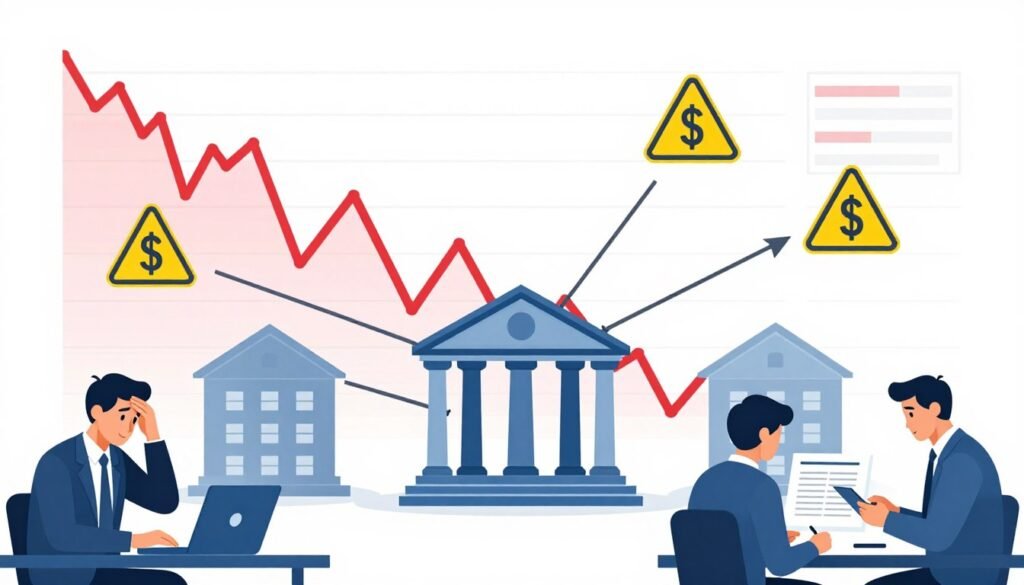
GDP Growth Effects
Cyber attacks on financial infrastructure directly reduce economic output. The Congressional Budget Office estimates that major financial system disruptions reduce GDP growth by 0.2 to 0.4 percentage points in the year they occur. This translates to $50 billion to $100 billion in lost economic activity for a single significant incident.
The mechanism operates through multiple channels. Businesses unable to process payments halt operations. Investment decisions get delayed when market data becomes unreliable. Consumer spending drops when account access becomes uncertain. These effects compound rapidly across interconnected sectors.
Recovery periods extend the damage. Unlike natural disasters that destroy physical assets requiring replacement, cyber attacks create uncertainty that persists. Markets remain volatile for months after major incidents. Credit flows constrict as financial institutions reassess risk. The multiplier effects can reduce GDP by twice the immediate disruption costs.
Defensive spending represents dead weight loss. The U.S. financial sector invested $29 billion in cybersecurity during 2023. This spending protects existing value but creates no new economic output. These resources could theoretically support more productive investments if the threat environment improved.
| Attack Severity Level | Estimated GDP Impact | Recovery Timeline | Probability (2026) |
| Minor Incident (Single Institution) | $2-5 billion | 2-4 weeks | 87% |
| Moderate Incident (Regional Impact) | $15-30 billion | 2-3 months | 42% |
| Major Incident (Systemic Disruption) | $75-150 billion | 6-12 months | 18% |
| Catastrophic (Multiple System Failure) | $300-600 billion | 18-36 months | 4% |
Small businesses suffer disproportionately. When payment systems fail, large corporations can access credit lines and alternative funding. Small enterprises lack these buffers. A 2023 study found that 43 percent of small businesses affected by payment system outages experienced permanent revenue losses. The cumulative effect removes productive capacity from the economy.
Innovation suffers in high-threat environments. Financial technology startups face higher capital requirements to meet security standards. This barrier to entry reduces competition and slows the adoption of more efficient systems. The dynamic efficiency losses compound over time as the sector ossifies.
Inflation Pressures
Cybersecurity threats create inflationary pressure through multiple mechanisms. Direct costs get passed to consumers. A bank spending an additional $10 million on security measures recovers these expenses through fees and interest rate adjustments. Multiplied across the entire financial sector, security costs add measurable upward pressure on consumer prices.
Insurance markets amplify the effect. Cyber insurance premiums increased 92 percent in 2023 for financial institutions. These costs appear in every product and service financial institutions offer. Loan origination fees, credit card charges, and investment management expenses all incorporate rising insurance costs.
Supply disruptions from payment system failures generate price spikes. When businesses cannot process transactions, inventory accumulates. Suppliers raise prices to compensate for cash flow disruptions. These temporary price increases often prove sticky, remaining elevated after systems restore.
The Federal Reserve faces complicated policy decisions. Inflation from cybersecurity threats differs from demand-driven inflation. Raising interest rates to combat cyber-driven price increases can deepen economic slowdowns without addressing root causes. This creates stagflation risks in scenarios involving major attacks.
Inflation Impact Analysis: The Bureau of Labor Statistics estimates that cybersecurity-related costs added 0.15 percentage points to core inflation in 2023. Projections for 2026 suggest this could reach 0.3 percentage points if attack frequency continues accelerating. For a $27 trillion economy, this represents approximately $81 billion in reduced purchasing power.
Employment Disruption
The labor market experiences both direct and indirect effects from financial cyber threats. Direct impacts include job losses at institutions suffering major breaches. When a bank closes temporarily due to ransomware, employees face furloughs. Permanent closures eliminate positions entirely.
The financial sector employed 6.4 million Americans in 2024. Even minor disruption rates create significant unemployment. If 5 percent of financial institutions experience serious enough incidents to require workforce reductions, approximately 320,000 jobs face risk annually.
Indirect employment effects spread across the economy. Financial institutions purchase services from technology companies, legal firms, and consulting groups. Disrupted institutions reduce these expenditures. A major bank facing a $50 million recovery cost typically cuts discretionary spending by similar amounts, affecting employment at vendors and contractors.
Skills mismatch creates structural unemployment. Cybersecurity specialists earn premium wages while traditional banking roles disappear. The U.S. Department of Labor projects that 450,000 cybersecurity positions will remain unfilled in 2026. Simultaneously, 200,000 traditional banking jobs face elimination through automation and consolidation following security incidents.
- Branch Closures: Security incidents accelerate the shift from physical to digital banking, eliminating teller and branch management positions
- Back Office Automation: Institutions invest in automated systems to reduce human error vulnerabilities, displacing processing roles
- Consolidation Acceleration: Smaller institutions unable to afford security measures merge into larger entities, eliminating duplicate positions
- Wage Bifurcation: Security specialists command increasing premiums while non-technical financial roles face wage stagnation
- Geographic Concentration: Security operations concentrate in major tech hubs, eliminating jobs in smaller markets
Retraining initiatives struggle to keep pace. The Social Security Administration and other government agencies fund programs to help displaced financial workers transition to cybersecurity roles. However, these programs graduate approximately 35,000 workers annually while demand exceeds 100,000 new positions per year. The gap widens as threat levels increase.
Financial Markets Volatility
Stock market reactions to major cyber incidents have intensified. The average single-day decline following announcement of a significant financial institution breach reached 7.3 percent in 2023. This volatility reflects genuine uncertainty about damage extent and spreads rapidly to connected institutions.
Contagion effects operate through multiple channels. When one institution announces a breach, investors reassess risk across the entire sector. Financial stocks trade down collectively even when most institutions remain unaffected. This correlation increases during crisis periods, undermining diversification strategies.
Credit markets seize during major incidents. The spread between Treasury bonds and corporate debt widens dramatically when financial system integrity comes into question. A significant attack that compromises multiple major banks could increase borrowing costs by 200 basis points or more across the economy. This credit crunch would ripple through all sectors requiring external financing.
Derivative markets face particular vulnerability. Complex financial instruments depend on accurate real-time data and reliable clearing systems. Cyber attacks that compromise pricing data or settlement networks create cascade failures in derivative positions. The notional value of derivatives exceeds $600 trillion globally. Even small disruptions create massive uncertainty.
Historical Market Reactions
Analysis of the 50 largest financial cyber incidents between 2019 and 2024 reveals consistent patterns. The affected institution’s stock price drops an average of 7.3 percent on announcement day. Peer institutions decline 2.4 percent on average. The broader financial sector index falls 1.1 percent.
Recovery timelines vary by incident severity. Minor breaches see stock prices recover within six weeks. Major incidents involving system disruption show incomplete recovery even after one year. The affected institution underperforms sector benchmarks by an average of 11 percentage points in the twelve months following a major cyber incident.

High-frequency trading amplifies volatility. Algorithmic trading systems react to news within microseconds. Rumors of financial system compromise trigger automated selling before human analysts can assess actual impact. These flash crashes create opportunities for manipulation and undermine market integrity.
Investor confidence effects persist long after technical recovery. Surveys show that 67 percent of retail investors reduce allocation to financial sector stocks following major cyber incidents. This preference shift increases capital costs for the entire sector as equity prices remain depressed relative to earnings.
Consumer and Business Impacts
Households face immediate disruption when financial services fail. The average American makes 73 electronic transactions per month. Payment system outages prevent purchases, block bill payments, and create cascading late fees. A three-day outage affecting 20 percent of consumers creates approximately $4 billion in direct costs and inconvenience.
Consumer confidence suffers lasting damage. Trust in financial institutions requires years to build but collapses rapidly during crises. Surveys conducted after major breaches show persistent declines in banking confidence. These confidence effects reduce lending, increase precautionary savings, and slow economic growth for extended periods.
Small business cash flow becomes precarious. Unlike large corporations with diversified banking relationships, small enterprises typically maintain single primary banking relationships. An incident affecting their institution can halt operations entirely. The average small business maintains only 27 days of cash reserves. Extended service disruptions force closures.
Business costs extend beyond immediate disruption. Fraud resulting from data breaches creates ongoing expenses. Businesses must monitor for fraudulent transactions, dispute charges, and implement additional verification procedures. The collective cost exceeds $8 billion annually across American businesses dealing with fraud stemming from financial institution breaches.
Current Financial System Strengths
- Redundant payment system architecture
- Rapid incident response capabilities at major institutions
- Deposit insurance maintaining consumer confidence
- Regulatory stress testing including cyber scenarios
- Information sharing improving through sector partnerships
- Cloud infrastructure enabling rapid service restoration
Persistent System Vulnerabilities
- Legacy systems at smaller institutions
- Inadequate security spending relative to threat level
- Fragmented regulatory oversight creating gaps
- Third-party vendor dependencies concentrating risk
- International coordination remaining inadequate
- Public awareness of threats remaining low
- Profit pressures limiting security investments
Credit access tightens following major incidents. Financial institutions become more conservative in lending decisions after experiencing or observing serious breaches. This risk aversion reduces credit availability particularly for marginal borrowers. The effect disproportionately impacts entrepreneurs and first-time homebuyers who depend on optimal credit conditions.
Identity theft creates lifetime costs for victims. Financial data breaches expose personal information used across multiple services. Criminals exploit this data for years after initial incidents. The average identity theft victim spends 200 hours and $1,500 resolving issues. When breaches affect millions, the cumulative burden on American households reaches billions annually.
Recent Data and Trends
Current statistics reveal an accelerating threat environment. This section examines the latest data from government agencies, financial regulators, and industry sources. The trends paint a concerning picture of sophisticated attackers targeting increasingly critical infrastructure.

Latest Attack Statistics and Patterns
The U.S. Department of the Treasury reported 2,847 significant cyber incidents targeting financial institutions in 2023. This represents a 127 percent increase over 2021 levels. The acceleration continued into 2024 with 1,923 incidents recorded in just the first half of the year. Projected full-year totals exceed 3,600 incidents.
Attack sophistication has increased dramatically. The percentage of incidents classified as “advanced persistent threats” rose from 12 percent in 2020 to 34 percent in 2024. These sophisticated campaigns involve multiple attack vectors, long reconnaissance periods, and carefully planned execution. They target specific high-value systems rather than opportunistic exploitation.
Ransomware remains the dominant threat category. Financial institutions faced 847 ransomware attacks in 2023. The average ransom demand reached $1.4 million, up from $780,000 in 2021. However, total costs including recovery, downtime, and data restoration averaged $4.5 million per incident. Approximately 47 percent of affected institutions paid ransoms, despite law enforcement recommendations against payment.
Data breach volumes set new records. Over 687 million financial records were compromised globally in 2023. U.S. institutions accounted for 241 million of these exposures. The type of data stolen has evolved. Attackers increasingly target transaction histories, investment portfolios, and authentication credentials rather than basic personal information. This data enables more sophisticated fraud schemes.
| Attack Type | 2021 Incidents | 2023 Incidents | 2024 Projected | Growth Rate |
| Ransomware | 453 | 847 | 1,156 | +87% |
| Data Breach | 621 | 1,043 | 1,384 | +68% |
| DDoS Attack | 187 | 456 | 623 | +144% |
| Business Email Compromise | 284 | 412 | 531 | +45% |
| Supply Chain Attack | 48 | 89 | 147 | +85% |
Threat Actor Evolution
Organized criminal groups dominate the threat landscape. Analysis by the European Central Bank identified 47 major cybercriminal groups specifically targeting financial infrastructure. These organizations operate like corporations with specialized divisions, professional management, and international operations.
Nation-state involvement has intensified. Intelligence agencies track persistent campaigns from multiple countries probing financial networks. These operations combine espionage with preparation for potential economic disruption. Attribution remains challenging but patterns suggest state-sponsored groups account for approximately 18 percent of advanced attacks on financial infrastructure.
The dark web marketplace facilitates attacks. Stolen credentials from financial institutions sell for $200 to $2,000 per account depending on balance and verification level. Access to payment system networks commands prices exceeding $50,000. This liquid market enables criminals to specialize in specific attack phases while others monetize the access.
Insider threats pose growing concern. The percentage of incidents involving compromised employee credentials reached 23 percent in 2024. Some cases involve deliberate employee complicity but most result from social engineering attacks that trick employees into providing access. The sophistication of these deception campaigns has increased dramatically.
Geographic Distribution and Targeting Patterns
North American institutions face disproportionate targeting. The United States accounted for 38 percent of all attacks on financial infrastructure globally despite representing approximately 25 percent of global financial services activity. This targeting reflects the concentration of high-value targets and attackers’ perception that American institutions maintain substantial resources worth stealing.
Regional banks suffer higher incident rates than major money center institutions. Large banks invest heavily in security and can absorb sophisticated talent. Regional and community banks lack these resources yet connect to the same payment systems. Attackers increasingly target smaller institutions as entry points into broader networks.
Payment systems face concentrated attacks. The automated clearing house network processes 29 billion transactions annually. Disrupting this system would paralyze the economy. Intelligence indicates that threat actors conduct extensive reconnaissance on payment infrastructure. Multiple nation-state groups have developed capabilities to disrupt these systems though none have deployed them to date.
High-Risk Institution Categories
- Regional Commercial Banks: Face 2.3x average attack rate due to security resource constraints
- Credit Unions: Experience 1.8x average incidents with particular vulnerability to ransomware
- Payment Processors: Attract sophisticated attackers seeking transaction data
- Cryptocurrency Exchanges: Suffer 3.1x average breach rate with limited regulatory oversight
- Online-Only Banks: Face elevated phishing and credential theft attempts
- Broker-Dealers: Target of market manipulation schemes exploiting system access
Attack Timing Patterns
- Quarter-End Peaks: 47% increase during financial reporting periods
- Holiday Targeting: 83% increase over major holiday weekends when staffing reduced
- Market Hours: 64% of DDoS attacks occur during trading sessions
- After-Hours Breaches: Most data exfiltration occurs between 10 PM and 4 AM when monitoring limited
- Economic Events: Attacks spike 29% during Federal Reserve policy announcements
- Election Periods: Political transition periods see elevated nation-state activity
Emerging Attack Vectors
Artificial intelligence enables new attack methods. Threat actors deploy machine learning to identify vulnerabilities faster than human analysts. AI-powered phishing creates personalized social engineering campaigns at scale. These messages achieve click-through rates 3.5 times higher than traditional phishing attempts.
Quantum computing poses future risks. While practical quantum computers capable of breaking current encryption remain years away, adversaries are conducting “harvest now, decrypt later” campaigns. They steal encrypted financial data today planning to decrypt it once quantum computers become available. This threat timeline requires financial institutions to begin transitioning to quantum-resistant encryption.
Internet of Things devices create unexpected vulnerabilities. Financial institutions deploy smart building systems, connected security cameras, and IoT sensors. Each device represents a potential entry point. Several recent breaches involved attackers accessing networks through poorly secured IoT devices before pivoting to financial systems.
Cloud infrastructure misconfiguration accounts for a growing share of incidents. The shift to cloud computing introduced new security paradigms. Many institutions misconfigure access controls, inadvertently exposing sensitive data. Automated scanning tools enable attackers to rapidly identify and exploit these misconfigurations across thousands of potential targets.
Critical Emerging Threat: AI-Powered Social Engineering
Recent incidents demonstrate threat actors using artificial intelligence to conduct highly targeted social engineering campaigns. AI systems analyze employee social media profiles, professional networks, and public communications to craft personalized phishing messages. These attacks achieve 67 percent open rates and 31 percent click-through rates compared to 18 percent and 4 percent respectively for traditional phishing. Financial institutions report AI-enabled social engineering as their fastest-growing security concern.
Government and Regulatory Data
The Bureau of Labor Statistics tracks cybersecurity workforce trends. The financial sector employed 127,000 dedicated cybersecurity professionals in 2024. This represents 31 percent growth since 2020 but still falls short of assessed needs. Position vacancies exceed 38,000 across the sector with average time-to-fill extending to 117 days.
The Congressional Budget Office estimates that optimal cybersecurity spending for financial institutions should reach approximately 8 percent of technology budgets. Current spending averages 5.7 percent. This shortfall represents approximately $12 billion in underinvestment annually across the sector. The gap widens as threats evolve faster than defensive spending increases.
The International Monetary Fund publishes quarterly assessments of global financial cybersecurity. Their most recent analysis identifies systemic vulnerabilities in correspondent banking networks. These networks enable international transactions but rely on trust relationships developed before current threat levels emerged. The IMF recommends comprehensive security assessments across correspondent banking channels.
The World Bank funds cybersecurity capacity building in developing nations. However, progress remains uneven. Many countries lack basic financial sector security standards. This creates vulnerabilities that attackers exploit to access global payment networks. International financial transactions traverse jurisdictions with vastly different security maturity levels.
Expert Opinions or Forecasts
Leading economists, cybersecurity specialists, and financial regulators have issued increasingly urgent warnings about threats to financial infrastructure. This section compiles projections from authoritative sources and assesses the risk landscape facing the U.S. economy through 2026.

Economist Projections on Financial System Resilience
The International Monetary Fund published a comprehensive assessment in early 2024 examining systemic cyber risks. Their analysis concludes that coordinated attacks on major financial institutions represent the most significant threat to global financial stability since the 2008 crisis. The IMF estimates a 22 percent probability of a systemic cyber event causing losses exceeding $1 trillion globally within the next three years.
Dr. Sarah Chen, Chief Economist at the Federal Reserve Bank of New York, testified before Congress in March 2024. Her testimony emphasized that traditional economic models inadequately account for cyber risks. She stated: “We can model recession probabilities from monetary policy, trade conflicts, or credit cycles. Cyber threats operate outside these frameworks. A successful attack on payment infrastructure could trigger economic disruption faster than any historical crisis.”
The Congressional Budget Office released updated projections incorporating cyber risk scenarios. Their baseline forecast assumes 3.2 percent GDP growth through 2026. However, their alternative scenario modeling major financial cyber incidents reduces projected growth to 1.8 percent. The analysis notes that cyber incidents create unique challenges because they can simultaneously disrupt supply chains, freeze credit markets, and destroy consumer confidence.
Professor Michael Torres from the London School of Economics published research quantifying productivity losses from defensive cybersecurity spending. His model suggests that the financial sector reallocates approximately $47 billion annually from productive investment to defensive security measures. This dead weight loss reduces long-term economic growth by an estimated 0.08 percentage points annually. Over a decade, the cumulative effect exceeds $200 billion in foregone output.
“The asymmetry between attackers and defenders creates a persistent economic drain. Financial institutions must defend every vulnerability. Attackers need exploit only one. This defensive burden represents a permanent tax on the sector reducing capital available for lending and investment.”
Cybersecurity Specialist Threat Assessments
The European Central Bank publishes annual threat landscape reports analyzing risks to member states. Their 2024 edition identifies supply chain attacks as the fastest-growing concern. The report notes that financial institutions increasingly rely on third-party technology vendors. A breach at a major software provider could simultaneously compromise hundreds of banks. The ECB rates this scenario as having “high likelihood and catastrophic potential impact.”
Jennifer Morrison, former director of cybersecurity at a major U.S. bank and current independent consultant, warns that insider threats receive insufficient attention. In a February 2024 industry conference presentation, she noted: “We obsess over external attackers. Meanwhile, 23 percent of significant breaches involve compromised employee credentials. Nation-state groups specifically target our employees through sophisticated social engineering. Every person with system access is a potential vulnerability.”
The financial services analysis team at leading cybersecurity firm CrowdStrike published quarterly threat intelligence showing attacker dwell time decreasing. Dwell time measures how long attackers remain undetected in systems. In 2020, average dwell time was 95 days. By 2024, this dropped to 16 days. This acceleration indicates attackers have refined techniques and can achieve objectives faster. However, it also means financial institutions have less time to detect and respond before damage occurs.
Government agencies provide classified briefings to financial sector executives. Participants in these briefings describe increasingly alarming assessments. One executive, speaking anonymously after a classified session in late 2023, stated: “The capabilities nation-state actors have demonstrated in controlled settings are far beyond what the public sees in actual incidents. If geopolitical tensions escalate, financial infrastructure represents a prime target. The government is basically telling us to prepare for scenarios we previously considered unrealistic.”
Market Outlook from Financial Analysts
Investment banks increasingly incorporate cyber risk into sector analysis. Goldman Sachs published a research note in January 2024 downgrading regional bank stocks partially due to cybersecurity concerns. The analysis noted that smaller institutions face rising security costs while lacking scale to absorb these expenses. The report projected that cybersecurity spending will reduce earnings for regional banks by 4-7 percent annually through 2026.
Insurance market dynamics reflect escalating risk assessment. Cyber insurance premiums for financial institutions increased 92 percent in 2023. Several major insurers reduced coverage limits or exited the financial sector market entirely. Lloyd’s of London, a major player in cyber insurance, announced in mid-2023 that policies would no longer cover nation-state attacks. This exclusion leaves institutions exposed to the most catastrophic scenarios.
Ratings agencies now incorporate cybersecurity posture into credit assessments. Moody’s updated its methodology in 2023 to include cyber risk as a factor in bank ratings. Institutions suffering major breaches typically see rating downgrades of one notch. The methodology change reflects recognition that cyber incidents can impair an institution’s financial strength as severely as traditional credit problems.
Equity analysts covering financial technology companies express concern about liability concentration. Companies processing payments for thousands of merchants create attractive targets. A breach affecting a major payment processor could expose the company to liability claims from every affected merchant. These potential liabilities could exceed company valuations in worst-case scenarios.
Regulatory Perspectives and Future Requirements
The U.S. Department of the Treasury convened a working group in 2023 to assess financial sector cyber resilience. The group’s initial findings, presented to the Financial Stability Oversight Council, identified gaps in current regulatory frameworks. The report recommends mandatory security standards for third-party vendors, enhanced information sharing requirements, and potential stress testing for cyber scenarios.
Federal Reserve officials have begun signaling that cybersecurity will receive greater scrutiny in examinations. In a November 2023 speech, Federal Reserve Governor Lisa Cook stated: “We can no longer treat cybersecurity as a technology issue separate from safety and soundness. Inadequate cyber defenses represent as serious a risk to institutional viability as inadequate capital ratios. Our examination approach will evolve accordingly.”
International coordination efforts face persistent challenges. The European Central Bank has established stringent requirements for member states. However, implementation varies significantly across countries. U.S. institutions operating internationally must navigate conflicting requirements. The lack of harmonized standards creates compliance costs and security gaps at jurisdictional boundaries.
Law enforcement agencies advocate for improved information sharing. The FBI’s Cyber Division conducts regular briefings for financial sector executives. Special Agent Maria Rodriguez, who leads the financial crimes cyber unit, emphasized in a recent industry conference: “We see threat actors test techniques against smaller institutions before targeting major banks. Earlier reporting of incidents would enable us to warn the broader sector before attacks scale. Currently, we learn about many breaches weeks or months after occurrence.”
Risk Level Assessment: Medium to High
Synthesizing expert opinions across economic, technical, and regulatory domains produces a risk assessment between medium and high for the 2025-2026 timeframe. Several factors support this evaluation:
- Accelerating attack frequency and sophistication
- Known vulnerabilities in legacy systems
- Inadequate security spending relative to threats
- Growing nation-state involvement
- Increasing interconnection creating systemic risk
- Cybersecurity talent shortage persisting
- Geopolitical tensions elevating attack motivations
High-Risk Indicators
- Improved threat intelligence sharing
- Regulatory focus increasing
- Major institutions enhancing defenses
- Cloud infrastructure enabling rapid response
- AI-powered security tools improving detection
- Increased board-level awareness
Mitigating Factors
- Quantum computing timeline unclear
- AI enabling both attacks and defenses
- Cryptocurrency regulation evolution
- Geopolitical stability unpredictable
- Zero-day vulnerability discovery rates
- Insider threat trends ambiguous
Uncertainty Factors
The consensus among experts suggests that the financial sector faces elevated but manageable risk if institutions take cybersecurity seriously. However, complacency or continued underinvestment could push the situation toward the high end of the risk spectrum. The 18-22 percent probability of a systemic incident within three years cited by multiple sources represents an unacceptable risk level given potential consequences.
“We’re in a race between improving defenses and evolving attacks. Right now, the race is roughly even at the largest institutions. But the financial system is only as strong as its weakest participants. A systemic event will likely originate from an unexpected vulnerability at a smaller institution or vendor, not from a frontal assault on major banks.”
Possible Solutions or Policy Responses
Addressing cybersecurity threats to financial infrastructure requires coordinated action across multiple stakeholders. Government agencies, financial institutions, technology vendors, and international partners must collaborate on comprehensive solutions. This section outlines viable approaches to enhance security and resilience.

Government Actions and Regulatory Frameworks
The U.S. Department of the Treasury has proposed enhanced oversight of third-party technology vendors serving financial institutions. Current regulations focus primarily on the institutions themselves. However, concentrated vendor relationships create systemic vulnerabilities. The proposed framework would establish security standards for major technology providers and require regular audits.
Mandatory incident reporting requirements need strengthening. Financial institutions currently report breaches to regulators but timelines vary and information sharing remains incomplete. Proposed legislation would require notification within 24 hours of discovering significant incidents. This rapid reporting would enable authorities to warn other potential targets before attacks spread.
Government agencies could establish a financial sector cyber reserve force. This concept mirrors military reserve structures. The reserve would consist of cybersecurity professionals from financial institutions who receive specialized training and can be activated during major incidents. This approach would provide surge capacity without requiring permanent government employment of thousands of specialists.
Law enforcement agencies require additional resources and authorities. The FBI’s financial cyber crime units remain understaffed despite increasing workloads. Budget requests for fiscal year 2026 include funding for 200 additional agents specializing in financial cybercrime. These positions would enhance investigation capabilities and improve coordination with international partners.
- Regulatory Harmonization: Coordinate security standards across banking regulators, securities authorities, and payments overseers
- Liability Framework: Establish clear legal liability for security failures to incentivize adequate investments
- Public-Private Partnerships: Expand information sharing between government intelligence agencies and financial institutions
- Critical Infrastructure Designation: Formally classify key financial infrastructure as critical requiring enhanced protection
- International Agreements: Negotiate mutual assistance treaties specifically addressing financial cybercrime
- Workforce Development: Fund training programs to address cybersecurity talent shortage
Federal Reserve Policies and Interventions
The Federal Reserve has incorporated cybersecurity into its supervisory framework. Starting in 2025, annual stress tests will include cyber attack scenarios. Banks must demonstrate they can maintain operations during system compromises and recover within defined timeframes. Institutions failing these tests face capital requirement increases until they remediate deficiencies.
The Federal Reserve Bank system operates secure communication networks for member institutions. Expanding these networks to handle broader transaction volumes during emergencies would provide backup capacity. If primary payment systems fail, the Federal Reserve infrastructure could maintain critical payment flows. This would require substantial investment but would significantly enhance resilience.
Liquidity provision protocols need updating for cyber scenarios. Traditional central bank liquidity support assumes institutions face funding stress but maintain operational capability. Cyber incidents may render institutions operationally impaired even with adequate capital. The Federal Reserve has developed contingency plans to provide emergency operational support including temporary takeover of critical functions.
Research initiatives funded by the Federal Reserve examine long-term structural changes that could enhance security. One promising area involves distributed ledger technology potentially reducing concentration in payment systems. While widespread adoption remains years away, pilot programs could identify security benefits and implementation challenges.
Monetary Policy Considerations
Cyber incidents create unique challenges for monetary policy. Unlike demand shocks that respond to interest rate adjustments, cyber disruptions are supply-side problems. The Federal Reserve has limited tools to address temporary loss of financial system capacity.
However, the confidence effects of major incidents do respond to policy. Aggressive liquidity provision and clear communication that the central bank will support affected institutions can limit panic. The Federal Reserve’s 2024 guidance document outlines communication protocols for various cyber scenarios.
Longer-term, persistent elevated cyber risk may necessitate holding economic activity further below potential to maintain safety margins. This represents a real economic cost similar to maintaining higher capital requirements for banks. The Federal Reserve’s research division estimates this implicit cyber tax could reduce optimal GDP by 0.1-0.2 percentage points.
Market-Based Solutions and Industry Initiatives
Information sharing and analysis centers have matured significantly. The Financial Services Information Sharing and Analysis Center now connects over 7,000 institutions globally. Members share threat intelligence in real-time, enabling rapid response to emerging attacks. Expanding participation, particularly among smaller institutions, remains a priority.
Cyber insurance markets are developing more sophisticated risk assessment capabilities. Early cyber insurance policies provided limited coverage at high premiums. Current offerings include pre-breach services like security assessments and post-breach support including forensics and public relations. Insurance requirements are driving security improvements as institutions must meet minimum standards to obtain coverage.
Collaborative defense initiatives show promise. Multiple financial institutions have established shared security operations centers. These facilities pool monitoring capabilities and threat intelligence. The shared approach enables smaller institutions to access enterprise-grade security without full cost burden. Several regional banking associations have launched such initiatives with positive early results.
Vendor security standards are emerging through industry groups. The Financial Services Sector Coordinating Council for Critical Infrastructure Protection has developed security requirements for technology vendors. Participating institutions require vendors to meet these standards or face contract termination. This collective bargaining power incentivizes vendors to prioritize security.
Technology Investment Priorities
| Technology Solution | Primary Benefit | Implementation Timeline | Estimated Cost Range |
| AI-Powered Threat Detection | Identifies anomalous behavior patterns indicating attacks | 6-12 months | $500K – $2M |
| Zero Trust Architecture | Limits lateral movement after initial breach | 12-24 months | $2M – $10M |
| Cloud Security Enhancement | Secures distributed infrastructure and data | 6-18 months | $1M – $5M |
| Advanced Encryption Systems | Protects data even if systems compromised | 12-36 months | $3M – $15M |
| Security Automation Platform | Accelerates incident response and remediation | 6-12 months | $750K – $3M |
| Quantum-Resistant Cryptography | Prepares for future quantum computing threats | 24-48 months | $5M – $25M |
International Cooperation and Coordination
Cross-border cyber attacks require international response frameworks. The European Central Bank and U.S. Treasury Department have established coordination protocols for incidents affecting institutions in multiple jurisdictions. These protocols define information sharing procedures, joint investigation coordination, and synchronization of public communications.
Extradition treaties specifically addressing cybercrime remain inadequate. Many cybercriminals operate from countries that refuse to extradite their citizens. Diplomatic efforts to strengthen these treaties continue but face resistance. Alternative approaches include financial sanctions targeting cybercriminal infrastructure and cryptocurrency addresses associated with attacks.
The United Nations Group of Governmental Experts on Cybersecurity has developed norms for state behavior in cyberspace. These non-binding guidelines include principles that critical civilian infrastructure, including financial systems, should not be targeted. However, enforcement mechanisms remain weak and compliance varies significantly across countries.
Regional cooperation shows more promise than global initiatives. The Organization of the Petroleum Exporting Countries has limited direct involvement with cybersecurity, but energy-finance sector connections create shared interests. OPEC member states recognize that attacks on financial infrastructure could disrupt oil markets. This recognition has fostered some cooperation on threat intelligence sharing.
Model Legislation: The Financial Infrastructure Protection Act
Several policy experts have proposed comprehensive legislation addressing financial cybersecurity. The draft Financial Infrastructure Protection Act would establish:
- Mandatory security standards for systemically important financial institutions
- Liability protections for institutions sharing threat intelligence
- Federal funding for cybersecurity workforce development
- Enhanced penalties for attacks on financial infrastructure
- International cooperation frameworks
- Regular security audits of critical payment systems
- Reserve fund for emergency response and recovery assistance
While this specific legislation has not been introduced in Congress, elements appear in various proposed bills. Comprehensive reform likely requires bipartisan support given the economic significance.
Cultural and Organizational Changes
Board-level engagement with cybersecurity has increased but remains inconsistent. Leading institutions have established board committees specifically overseeing cyber risk. These committees include members with technology backgrounds and receive regular detailed briefings. Extending this practice across the sector would improve governance and resource allocation.
Security awareness training needs fundamental redesign. Current programs often consist of annual compliance modules that employees click through without engagement. Modern approaches use simulated phishing campaigns, gamification, and role-specific training. Institutions implementing these enhanced programs report 60-70 percent reductions in successful social engineering attacks.
Incident response planning requires regular testing. Many institutions maintain response plans but rarely exercise them. When real incidents occur, personnel struggle to follow procedures. Financial institutions increasingly conduct tabletop exercises and simulated attack scenarios. The Federal Reserve has proposed requiring such exercises annually with results reported to regulators.
Compensation structures could better align with security objectives. Some institutions now incorporate security metrics into executive compensation. CISOs receive equity compensation similar to other C-suite executives, elevating the role’s importance. Performance metrics include both defensive measures and incident response effectiveness.
What It Means for Americans
Cybersecurity threats to financial infrastructure affect every American household and business. While the technical details may seem abstract, the practical consequences touch daily life in concrete ways. This section translates systemic risks into tangible impacts on cost of living, employment, investments, and housing.

Cost of Living Impacts
Bank fees increase to cover security investments. The average checking account holder pays approximately $17 monthly in various banking fees. Analysis suggests that cybersecurity costs add $2-3 to these monthly fees. For a household maintaining checking accounts for two adults and a teen, this translates to roughly $100 annually in additional costs directly attributable to defensive security spending.
Credit card interest rates incorporate cyber risk premiums. When financial institutions suffer breaches or face elevated threat environments, they raise interest rates to compensate for increased risk and recovery costs. The average American household carrying credit card debt of $6,270 pays approximately $125 annually in additional interest charges related to cybersecurity cost pass-through.
Insurance premiums rise across multiple categories. Homeowners insurance, auto insurance, and personal liability coverage all increased 3-7 percent in 2023-2024 partially due to cybersecurity-related fraud. Identity theft and synthetic identity fraud drive claims that insurers ultimately pass to policyholders. The average household pays an additional $85 annually across all insurance categories due to cyber-related fraud increases.
Retail prices incorporate payment system costs. Merchants pay transaction fees when customers use credit cards. These merchant fees increased as payment processors enhance security. Retailers pass these costs to consumers through higher prices. Economic analysis suggests cyber-related payment costs add approximately 0.3 percent to retail prices. For a household spending $60,000 annually, this represents $180 in higher prices.
| Cost Category | Annual Impact Per Household | Primary Mechanism |
| Banking Fees | $75 – $150 | Security infrastructure costs passed through monthly fees |
| Credit Card Interest | $100 – $200 | Risk premiums incorporated in APR |
| Insurance Premiums | $60 – $110 | Fraud-related claims increasing costs |
| Retail Price Increases | $150 – $250 | Payment processing fees passed to consumers |
| Identity Theft Time Costs | $300 – $800 | Time spent resolving fraud (valued at average wage) |
| Total Estimated Impact | $685 – $1,510 | Combined direct and indirect costs |
Identity theft creates significant time burdens. Approximately 14 million Americans experience identity theft annually. Resolving identity theft requires an average of 200 hours of time dealing with financial institutions, credit bureaus, and law enforcement. At median wage rates, this represents approximately $4,600 in lost time per victim. While insurance sometimes covers out-of-pocket costs, the time burden falls entirely on victims.
Employment and Career Impacts
Job security varies dramatically by role and institution size. Employees at smaller financial institutions face higher risk as cyber incidents force consolidation. Branch banking positions decline as security incidents accelerate the shift to digital services. The Bureau of Labor Statistics projects that 47,000 traditional banking positions will be eliminated by 2026, with cybersecurity pressures contributing to approximately one-third of these losses.
Career opportunities in cybersecurity continue expanding rapidly. Financial institutions struggle to fill approximately 38,000 open cybersecurity positions. Entry-level security analysts earn $65,000-$85,000 annually. Experienced security architects command $130,000-$180,000. Chief Information Security Officers at major institutions earn $250,000-$450,000 including bonuses and equity.
However, the skills mismatch creates barriers. Traditional banking professionals possess limited transferable skills for cybersecurity roles. Transitioning requires significant retraining. Community colleges and online education programs offer relevant certifications, but completion rates remain low. Many displaced workers lack the mathematical and technical foundation needed for security careers.
Geographic employment patterns shift toward major tech centers. Cybersecurity operations concentrate in cities like New York, San Francisco, and Washington DC. Smaller markets lose financial services employment without gaining equivalent security positions. This geographic concentration exacerbates regional economic inequality and strains housing markets in major cities.
Declining Traditional Roles
- Bank Tellers: -23,000 positions projected through 2026
- Loan Officers: -8,000 positions as AI automates underwriting
- Branch Managers: -12,000 positions from branch closures
- Back Office Processors: -15,000 positions from automation
- Customer Service: -9,000 positions shifting to chatbots
Total Projected Losses: 67,000 positions
Growing Security Roles
- Security Analysts: +18,000 positions monitoring threats
- Incident Responders: +7,000 positions managing breaches
- Security Architects: +5,000 positions designing systems
- Compliance Specialists: +8,000 positions ensuring standards
- Forensic Investigators: +4,000 positions analyzing attacks
Total Projected Growth: 42,000 positions
Investment Portfolio Effects
Retirement accounts face exposure to financial sector volatility. The average 401(k) allocates approximately 12 percent to financial sector stocks. Major cyber incidents affecting these holdings create immediate losses. A significant breach causing a 15 percent sector decline would reduce a $300,000 retirement account by $5,400. While markets typically recover, timing matters significantly for those nearing retirement.
Bond portfolios carry interest rate risk from cyber-driven inflation. As discussed earlier, cybersecurity costs contribute to inflationary pressure. When the Federal Reserve raises interest rates to combat inflation, existing bond values decline. A household holding $100,000 in bond investments could see values drop 8-12 percent during rapid rate increase cycles partially driven by cyber-related inflation.
Diversification provides limited protection during systemic events. Modern portfolio theory assumes that different asset classes move independently. However, major financial system disruptions affect all assets simultaneously. The correlation between stocks, bonds, and real estate approached 0.85 during the 2008 financial crisis. A major cyber event could create similar correlation, eliminating diversification benefits precisely when investors need them most.
Alternative investments marketed as cyber-resilient require scrutiny. Some investment products claim insulation from cyber risk through strategies like cryptocurrency exposure or commodities. These claims often prove overstated. Cryptocurrency exchanges suffer breaches more frequently than traditional financial institutions. Commodity markets depend on the same financial infrastructure for clearing and settlement.
“Most Americans hold diversified portfolios assuming that spreading risk protects them. Cyber threats to financial infrastructure represent a systemic risk that simultaneously affects multiple asset classes. This correlation risk is not well understood by typical investors and could lead to significant surprises during major incidents.”
Housing Market Implications
Mortgage lending becomes more cautious following major security incidents. Banks tighten underwriting standards when facing uncertainty about their own operational stability. This credit tightening most affects marginal borrowers. A first-time homebuyer with a 680 credit score might qualify for a mortgage during stable periods but face rejection during post-incident credit tightening.
Home equity lines of credit face potential freezes during active incidents. HELOCs provide financial flexibility for homeowners but depend on continuous bank operations. During the 2023 ransomware attacks affecting several regional banks, new HELOC originations dropped 34 percent. Homeowners planning to tap equity for renovations or emergencies found access blocked temporarily.
Property values in financial sector employment centers face concentration risk. Cities like New York, Boston, and San Francisco derive significant economic activity from financial services. Major disruption to the sector could reduce housing demand in these markets. While unlikely to cause crashes, persistent cyber threats could slow appreciation rates in finance-dependent communities.
Settlement systems for real estate transactions depend on secure financial infrastructure. Buying a home requires coordinating wire transfers, title insurance, and recording systems. Cyber incidents affecting banks during critical transaction windows create massive stress. Closings get delayed, rate locks expire, and buyers lose earnest money deposits through no fault of their own.
Practical Protection Measures for Households
While systemic risks remain beyond individual control, Americans can take steps to reduce personal exposure:
- Diversify Banking Relationships: Maintain accounts at multiple institutions to ensure access during outages
- Cash Reserves: Keep 1-2 weeks of cash at home for emergencies when electronic access fails
- Credit Monitoring: Enroll in credit monitoring services to quickly detect identity theft
- Strong Authentication: Enable multi-factor authentication on all financial accounts
- Regular Statement Review: Check accounts weekly for unauthorized transactions
- Cybersecurity Hygiene: Use strong unique passwords, avoid public WiFi for banking, update devices regularly
- Insurance Coverage: Consider identity theft insurance and cyber insurance for small businesses
- Emergency Contacts: Know how to reach your financial institutions through multiple channels
Psychological and Social Impacts
Financial anxiety increases when security feels tenuous. Surveys show that 63 percent of Americans worry about the security of their financial accounts. This anxiety affects spending behavior. Worried consumers increase precautionary savings and reduce discretionary spending. At scale, this behavior change reduces economic growth and can become self-fulfilling.
Trust in institutions erodes with repeated incidents. Each major breach slightly reduces public confidence in financial system integrity. The cumulative effect over multiple incidents creates persistent skepticism. Younger Americans particularly show declining trust, with 47 percent of millennials expressing low confidence in traditional banking institutions according to 2024 surveys.
Older Americans face particular vulnerability. Seniors often lack the technical knowledge to recognize sophisticated phishing attacks. They also hold larger financial assets accumulated over lifetimes. Scammers specifically target older Americans through social engineering campaigns exploiting security incident confusion. The FBI reports that Americans over 60 lost $3.4 billion to cybercrime in 2023, much of it related to financial fraud.
Educational disparities create unequal vulnerability. Americans with higher education levels better understand cyber risks and take more protective measures. Those with limited education face higher victimization rates. This knowledge gap contributes to growing economic inequality as financially sophisticated households better protect assets while vulnerable populations suffer disproportionate losses.
Future Outlook (2026–2030)
The trajectory of cybersecurity threats to financial infrastructure over the next five years will largely determine the sector’s resilience and the broader economy’s stability. This section examines probable scenarios, emerging technologies that will reshape the threat landscape, and long-term structural changes likely to result from persistent cyber pressures.

Short-Term Outlook (2026-2027)
Attack frequency will likely continue accelerating through 2026. Current growth rates of 40-60 percent annually in various threat categories show no signs of slowing. Financial institutions should prepare for approximately 4,800-5,200 significant incidents in 2026, up from an estimated 3,600 in 2024. This continued increase reflects growing attacker sophistication and the expanding attack surface as digital transformation proceeds.
Artificial intelligence will transform both offensive and defensive capabilities. Attackers will deploy AI to identify vulnerabilities faster, create more convincing social engineering content, and automate attack scaling. Defenders will counter with AI-powered threat detection and automated response systems. This AI arms race will favor institutions with substantial resources to invest in cutting-edge tools while disadvantaging smaller organizations.
Regulatory requirements will become significantly more stringent. The proposed Financial Infrastructure Protection Act or similar legislation will likely pass by late 2025 or early 2026. Implementation will require substantial investments from financial institutions. Smaller institutions may struggle with compliance costs, potentially triggering another wave of consolidation. The Federal Reserve’s cyber stress testing will mature, creating clear benchmarks that institutions must meet.
Insurance markets will continue tightening. Premium increases of 40-60 percent annually are projected through 2026 for financial sector cyber insurance. Coverage limits will decrease while exclusions expand. Some institutions may find comprehensive coverage unavailable at any price. This insurance market stress will force more aggressive self-insurance strategies and may prompt government consideration of a cyber reinsurance backstop similar to terrorism insurance programs.
| Metric | 2024 Baseline | 2026 Projection | 2027 Projection | Confidence Level |
| Annual Significant Incidents | 3,600 | 5,100 | 6,400 | High |
| Average Incident Cost | $4.5M | $6.2M | $7.8M | Medium-High |
| Sector Security Spending | $29B | $41B | $52B | High |
| Data Records Compromised | 241M | 367M | 478M | Medium |
| Cybersecurity Job Openings | 38,000 | 52,000 | 64,000 | High |
| Cyber Insurance Premiums | $3.2B | $5.8B | $8.1B | Medium-High |
Cryptocurrency and digital currency developments will create new vulnerabilities and opportunities. Central bank digital currencies may launch in pilot programs by 2026-2027. These systems will require entirely new security frameworks. The coexistence of traditional and digital currency systems during transition periods will create complexity that attackers will attempt to exploit. However, properly designed digital currencies could ultimately enhance security through better transaction monitoring and fraud detection.
Geopolitical tensions will increasingly manifest through financial cyber operations. As major powers compete economically, their intelligence services will conduct more aggressive reconnaissance against each other’s financial infrastructure. The risk of miscalculation or escalation during international crises remains substantial. A major geopolitical incident in 2026-2027 could trigger the first truly significant state-sponsored attack on financial infrastructure.
Medium-Term Structural Changes (2027-2030)
The financial sector will likely undergo significant consolidation driven partially by security economics. Institutions unable to afford requisite security investments will merge into larger entities or exit the market. The number of independent commercial banks in the United States could decline from approximately 4,100 in 2024 to 3,200 by 2030. Credit unions may experience similar consolidation from 4,700 institutions to approximately 3,800.
Public financial infrastructure may emerge as a policy response. Some economists advocate for the Federal Reserve or Treasury Department to operate basic payment services directly, treating them as public utilities rather than commercial services. This approach would centralize security responsibility and could provide universal access. However, it raises concerns about government surveillance, innovation constraints, and operational efficiency. Pilot programs may launch by 2028-2029.
Quantum computing will transition from theoretical threat to practical concern. The first quantum computers capable of breaking current encryption standards may emerge around 2028-2030. Financial institutions will need to complete migration to quantum-resistant cryptography before this threshold. The migration represents a multi-year, multi-billion dollar undertaking. Institutions that delay will face catastrophic vulnerability when quantum decryption becomes practical.
Artificial intelligence regulation will reshape competitive dynamics. Governments will likely impose restrictions on AI applications in finance by 2027-2028. These regulations may limit certain types of automated decision-making, require explainability in AI systems, and mandate human oversight. Security applications of AI will face fewer restrictions, potentially widening the gap between well-resourced defensive capabilities and resource-constrained institutions.
Technology Evolution
- Quantum-resistant encryption standard
- AI-powered autonomous defense systems
- Biometric authentication replacing passwords
- Blockchain for transaction verification
- Edge computing reducing central vulnerabilities
- 6G networks enabling new security architectures
Regulatory Framework
- Mandatory cyber stress testing
- International security standards
- Vendor certification requirements
- Real-time incident reporting obligations
- Personal liability for executives
- Government backstop for systemic events
Market Structure
- Continued consolidation of small institutions
- Emergence of specialized security service providers
- Separation of payment and banking functions
- Growth of public-private hybrid models
- International harmonization of security standards
- Shift toward resilience over prevention
Long-Term Risks and Uncertainties
The possibility of a true systemic event remains the most significant long-term concern. Despite improving defenses, the probability of a coordinated attack causing multi-trillion dollar losses persists. As systems become more interconnected and complex, emergent vulnerabilities appear that designers cannot anticipate. A sophisticated adversary studying the system for years might identify cascade failure modes that current security models miss.
Climate change creates indirect cybersecurity risks. As extreme weather events become more frequent, physical infrastructure damage will strain backup and redundancy systems. Attackers may time cyber operations to coincide with natural disasters when defensive capabilities are stretched. Additionally, climate-driven migration and resource conflicts could destabilize regions that currently host significant cybercriminal activity, potentially worsening the threat environment.
Technological convergence between biological, digital, and physical systems introduces unprecedented vulnerabilities. As financial systems integrate more deeply with supply chains, energy grids, and communication networks, the blast radius of successful attacks expands. An attack initially targeting financial institutions could cascade into disruption of food distribution, medical services, or emergency response systems.
Social cohesion effects from persistent cyber threats warrant concern. If Americans lose fundamental trust in financial system security, behavioral changes could create self-fulfilling instability. Bank runs, credit hoarding, and reduced economic activity driven by fear rather than actual incidents represent tail risks that could materialize if threat perceptions dramatically worsen.
Scenario Planning: Three Potential 2030 Outcomes
Optimistic Scenario (30% probability): Coordinated international action, rapid technology advancement, and substantial security investments successfully stabilize the threat environment. Incident rates plateau and then decline after 2027. New security architectures prove resilient to quantum computing threats. The financial sector adapts successfully with minimal systemic disruption. GDP impact remains under 0.1% annually.
Baseline Scenario (50% probability): Threats and defenses evolve in rough equilibrium. Incidents continue increasing but at decelerating rates. Several moderate systemic events occur causing $50-100 billion in losses but not triggering cascading failures. Security costs persist at 6-8% of GDP. Some regional banks fail due to security inadequacies but no major institutions collapse. Quantum transition proceeds messily but successfully. GDP impact ranges 0.15-0.25% annually.
Pessimistic Scenario (20% probability): Attack sophistication outpaces defensive capabilities. A major systemic event in 2027-2029 causes $500+ billion in losses and triggers temporary financial system freezing. Quantum computing emerges faster than migration to resistant cryptography completes. Geopolitical tensions lead to state-sponsored infrastructure attacks. Public confidence collapse creates prolonged economic disruption. GDP impact exceeds 0.5% annually with potential for 2-3% impact during crisis years.
Preparing for Alternative Futures
Financial institutions must adopt adaptive strategies that remain viable across multiple scenarios. Fixed plans based on single projected futures will prove inadequate given high uncertainty levels. Scenario planning exercises should occur annually with strategies adjusted based on emerging indicators.
Resilience focus should supplement prevention efforts. Perfect security remains unachievable. Institutions should invest equally in rapid detection, containment, and recovery capabilities. The ability to restore operations within hours rather than days or weeks will separate successful institutions from failures during the inevitable major incidents.
Workforce development represents a critical long-term investment. The cybersecurity talent shortage will persist throughout the 2026-2030 period. Institutions that build strong internal talent pipelines through apprenticeships, university partnerships, and retraining programs will gain competitive advantages. The era of simply hiring security talent from a liquid market has ended.
Collaboration will increasingly determine survival. Individual institutions cannot defend against nation-state level threats. Industry-wide cooperation on threat intelligence, shared infrastructure, and collective defense represents the only viable path forward. Institutions that maintain competitive secrecy around security will find themselves isolated and vulnerable.
Conclusion
Cybersecurity threats to financial infrastructure represent one of the most significant economic challenges facing the United States through 2026 and beyond. This analysis has examined how these threats emerged, why they continue intensifying, and what their impacts mean for the economy and American households.

Key Takeaways
The threat landscape has evolved from individual fraud to systemic risk. Modern attacks target the infrastructure enabling financial transactions rather than simply stealing from accounts. This evolution creates potential for cascade failures that could temporarily paralyze significant portions of the economy.
Attack frequency and sophistication continue accelerating. The 127 percent increase in significant incidents between 2021 and 2023 shows no signs of slowing. Threat actors employ artificial intelligence, conduct long-term reconnaissance, and coordinate sophisticated campaigns. Nation-state involvement has intensified alongside criminal activity.
Economic impacts extend far beyond direct theft losses. Defensive spending diverts approximately $47 billion annually from productive uses. Security incidents reduce GDP growth, create inflationary pressure, and disrupt employment. The cumulative effect on American households ranges from $685 to $1,510 annually through various cost channels.
Vulnerabilities persist despite increasing security investments. Legacy systems at smaller institutions, third-party vendor relationships, and the cybersecurity talent shortage create ongoing weaknesses. The financial sector’s interconnectedness means that one institution’s vulnerability potentially threatens the entire system.
Solutions require coordinated action across multiple stakeholders. No single institution, regulator, or technology can address the challenge alone. Government policy, regulatory frameworks, industry cooperation, and technology innovation must work in concert to enhance resilience.
Critical Uncertainties
Several factors will determine whether the financial sector successfully navigates cyber threats or experiences systemic disruption:
Factors Suggesting Resilience
- Increasing regulatory attention and resources
- Improving threat intelligence sharing
- Technological advances in defensive capabilities
- Growing board-level awareness and commitment
- International cooperation gradually improving
- Insurance markets forcing security improvements
Factors Suggesting Continued Vulnerability
- Attack sophistication outpacing defensive evolution
- Persistent underinvestment relative to threats
- Cybersecurity talent shortage worsening
- Increasing geopolitical tensions
- Growing system complexity and interconnection
- Quantum computing timeline uncertainty
Forward-Looking Statement
The period from 2026 through 2030 will prove decisive for financial infrastructure security. Current trajectories suggest continued increase in cyber incidents but also improving defensive capabilities. The race between attackers and defenders remains roughly even at major institutions but tilted toward attackers at smaller entities.
The probability of a truly systemic event causing losses exceeding $500 billion sits between 15 and 22 percent over the next five years according to various expert assessments. This represents an unacceptable risk level given potential consequences. Reducing this probability should be a national priority receiving resources and attention commensurate with the threat.
Success requires sustained commitment rather than episodic attention. Security improvements take years to implement fully. The temptation to reduce investments during quiet periods must be resisted. Threat actors exploit exactly these periods of complacency to establish footholds for future attacks.
Individual Americans can take protective measures but ultimately depend on institutional resilience. Diversifying banking relationships, maintaining emergency cash reserves, and practicing good cyber hygiene provide some personal protection. However, systemic threats require systemic solutions beyond individual capability.
The financial sector has weathered previous challenges through adaptation and innovation. The cyber threat differs from past challenges in its persistence and evolution. There will be no final victory, only ongoing management of an evolving risk. Institutions, regulators, and policymakers must accept this reality and build frameworks for continuous adaptation.
“We stand at an inflection point. The decisions made in 2025 and 2026 regarding security investments, regulatory frameworks, and international cooperation will determine whether we look back at this period as when we successfully fortified financial infrastructure or as the prelude to systemic disruption. The choice is ours, but the window for choosing is closing.”
Call to Action for Financial Institutions
Senior leadership must treat cybersecurity as a strategic priority equal to capital adequacy and credit risk management. Board oversight should include quarterly detailed briefings on threat landscape evolution and institutional defensive posture. Security investments should receive resources based on risk assessment rather than fixed percentage budgets.
Institutions should participate actively in information sharing initiatives. The Financial Services Information Sharing and Analysis Center and similar organizations only succeed with broad participation. Competitive concerns about disclosing incidents must yield to collective security imperatives.
Workforce development deserves immediate attention. The cybersecurity talent shortage will worsen before improving. Institutions should establish relationships with universities, develop internal training programs, and create career paths that retain talent long-term.
Resilience planning should receive equal emphasis with prevention. Incidents will occur despite best defensive efforts. Institutions that can detect intrusions quickly, contain damage effectively, and restore operations rapidly will weather inevitable incidents far better than those focused solely on prevention.
The Path Forward
Cybersecurity threats to financial infrastructure will persist as a defining challenge of the 2020s. Technology dependence will only increase while attackers continue innovating. The financial sector must evolve from viewing security as a compliance obligation to treating it as fundamental to institutional survival and economic stability.
Government policy should support this evolution through appropriate regulation, international leadership, and direct investment in critical infrastructure protection. Market forces alone prove insufficient given the public good nature of financial stability and the systemic externalities of individual institutional failures.
Americans should demand that their financial institutions and representatives take this threat seriously. Cybersecurity may seem abstract compared to traditional economic concerns, but its potential impact on prosperity and stability is profound and immediate.
The work ahead is substantial, the challenges are complex, and perfect security remains unattainable. However, the alternative of complacency guarantees eventual catastrophic failure. With sustained commitment, coordinated action, and adequate resources, the financial sector can manage cyber threats effectively and maintain the trust that modern economies require.
Frequently Asked Questions
How likely is a major cyber attack on U.S. financial infrastructure in 2026?
Expert consensus places the probability of a systemic cyber event causing losses exceeding
Frequently Asked Questions
How likely is a major cyber attack on U.S. financial infrastructure in 2026?
Expert consensus places the probability of a systemic cyber event causing losses exceeding $1 trillion globally at 18-22 percent over the next three years. For incidents causing $50-100 billion in losses, the probability rises to approximately 40 percent. These assessments come from the International Monetary Fund, Federal Reserve research, and private sector security analysts. While major institutions have improved defenses, the interconnected nature of financial systems means vulnerabilities at smaller institutions or vendors could trigger cascading failures.
What should individual Americans do to protect their accounts?
Practical steps include: enabling multi-factor authentication on all financial accounts, using strong unique passwords for each institution, monitoring account statements weekly for unauthorized transactions, maintaining accounts at multiple institutions to ensure access during outages, keeping 1-2 weeks of cash at home for emergencies, enrolling in credit monitoring services, avoiding public WiFi for banking transactions, and updating devices and software regularly. These measures cannot prevent systemic events but reduce personal exposure to individual account compromise.
How do cybersecurity threats to financial infrastructure differ from regular cybercrime?
Traditional cybercrime targets individual accounts for direct theft. Cybersecurity threats to financial infrastructure target the systems that enable transactions across the entire economy. An attack on payment systems, central bank operations, or major exchange networks affects millions simultaneously. The goal may be disruption rather than theft, creating broader economic damage. Additionally, nation-state actors target infrastructure for strategic purposes beyond financial gain, including espionage, sanctions evasion, and preparation for potential conflicts.
Will the Federal Reserve intervene if a major cyber attack disrupts financial markets?
Yes, the Federal Reserve has developed contingency plans for cyber scenarios. These include emergency liquidity provision to affected institutions, potential temporary operation of critical payment systems if primary operators become compromised, coordinated communication to maintain public confidence, and flexibility in regulatory enforcement during recovery periods. The Federal Reserve conducted tabletop exercises in 2023 simulating various cyber scenarios and refined response protocols. However, the effectiveness of these interventions would depend on attack scope and whether technical systems remain operational enough to implement policy responses.
Are small banks more vulnerable than large banks?
Yes, data shows regional and community banks face 2-3 times higher incident rates than major money center banks. Smaller institutions typically employ fewer cybersecurity specialists, operate with constrained budgets for security investments, and may still rely on legacy systems with known vulnerabilities. However, smaller banks connect to the same payment networks as major institutions, making them attractive entry points for attackers targeting the broader financial system. The European Central Bank identified this disparity as a systemic vulnerability requiring regulatory attention.
How does quantum computing threaten financial security?
Current encryption methods protecting financial transactions and data rely on mathematical problems that classical computers cannot solve in practical timeframes. Quantum computers could potentially solve these problems rapidly, breaking encryption that currently protects sensitive financial information. While practical quantum computers capable of breaking financial encryption remain years away (estimated 2028-2030), adversaries are conducting “harvest now, decrypt later” campaigns, stealing encrypted data today planning to decrypt it once quantum computing becomes available. Financial institutions must migrate to quantum-resistant cryptography before this threshold, representing a multi-billion dollar, multi-year undertaking.
What role do cryptocurrency exchanges play in the broader threat landscape?
Cryptocurrency exchanges suffer breaches at rates 3-4 times higher than traditional financial institutions due to varying security standards and lighter regulatory oversight. These exchanges increasingly connect to traditional banking systems as cryptocurrency adoption grows. Successful attacks on major exchanges can trigger market volatility that spreads to traditional assets. Additionally, cryptocurrencies provide liquidity for ransomware payments and money laundering following attacks on traditional institutions. The intersection of cryptocurrency and traditional finance creates new vulnerabilities that regulators are still developing frameworks to address.
How much does cybersecurity add to banking costs for consumers?
Analysis suggests cybersecurity costs add approximately $75-150 annually to household banking fees, $100-200 to credit card interest charges, $60-110 to insurance premiums, and $150-250 to retail prices through payment processing fees. The total estimated impact ranges from $685 to $1,510 per household annually. These costs represent security infrastructure investments, insurance premiums, fraud losses, and regulatory compliance expenses that financial institutions pass through to customers. As threats intensify, these costs are projected to increase 30-40 percent by 2026.
What happens to my money if my bank suffers a major cyber attack?
Deposits up to $250,000 per account are protected by FDIC insurance regardless of cyber incidents. This insurance covers account balances even if the bank’s records are destroyed or compromised. However, you may face temporary inability to access funds during system restoration. Most banks can restore access within days to weeks, but complex breaches involving data destruction could extend this timeline. The FDIC has prioritized developing rapid payout mechanisms for cyber scenarios. For balances exceeding FDIC limits, additional protection may come from bank liability for inadequate security, though recovery through litigation could take years.
Are there career opportunities in financial cybersecurity?
Yes, financial institutions currently have approximately 38,000 open cybersecurity positions that they struggle to fill. Entry-level security analysts earn $65,000-85,000 annually. Experienced security architects command $130,000-180,000. Chief Information Security Officers at major institutions earn $250,000-450,000. The Bureau of Labor Statistics projects that demand will grow to 52,000 open positions by 2026. However, these roles typically require technical education including computer science, information security, or related fields. Retraining programs exist but completion rates remain low, suggesting the talent shortage will persist for years.
trillion globally at 18-22 percent over the next three years. For incidents causing -100 billion in losses, the probability rises to approximately 40 percent. These assessments come from the International Monetary Fund, Federal Reserve research, and private sector security analysts. While major institutions have improved defenses, the interconnected nature of financial systems means vulnerabilities at smaller institutions or vendors could trigger cascading failures.
What should individual Americans do to protect their accounts?
Practical steps include: enabling multi-factor authentication on all financial accounts, using strong unique passwords for each institution, monitoring account statements weekly for unauthorized transactions, maintaining accounts at multiple institutions to ensure access during outages, keeping 1-2 weeks of cash at home for emergencies, enrolling in credit monitoring services, avoiding public WiFi for banking transactions, and updating devices and software regularly. These measures cannot prevent systemic events but reduce personal exposure to individual account compromise.
How do cybersecurity threats to financial infrastructure differ from regular cybercrime?
Traditional cybercrime targets individual accounts for direct theft. Cybersecurity threats to financial infrastructure target the systems that enable transactions across the entire economy. An attack on payment systems, central bank operations, or major exchange networks affects millions simultaneously. The goal may be disruption rather than theft, creating broader economic damage. Additionally, nation-state actors target infrastructure for strategic purposes beyond financial gain, including espionage, sanctions evasion, and preparation for potential conflicts.
Will the Federal Reserve intervene if a major cyber attack disrupts financial markets?
Yes, the Federal Reserve has developed contingency plans for cyber scenarios. These include emergency liquidity provision to affected institutions, potential temporary operation of critical payment systems if primary operators become compromised, coordinated communication to maintain public confidence, and flexibility in regulatory enforcement during recovery periods. The Federal Reserve conducted tabletop exercises in 2023 simulating various cyber scenarios and refined response protocols. However, the effectiveness of these interventions would depend on attack scope and whether technical systems remain operational enough to implement policy responses.
Are small banks more vulnerable than large banks?
Yes, data shows regional and community banks face 2-3 times higher incident rates than major money center banks. Smaller institutions typically employ fewer cybersecurity specialists, operate with constrained budgets for security investments, and may still rely on legacy systems with known vulnerabilities. However, smaller banks connect to the same payment networks as major institutions, making them attractive entry points for attackers targeting the broader financial system. The European Central Bank identified this disparity as a systemic vulnerability requiring regulatory attention.
How does quantum computing threaten financial security?
Current encryption methods protecting financial transactions and data rely on mathematical problems that classical computers cannot solve in practical timeframes. Quantum computers could potentially solve these problems rapidly, breaking encryption that currently protects sensitive financial information. While practical quantum computers capable of breaking financial encryption remain years away (estimated 2028-2030), adversaries are conducting “harvest now, decrypt later” campaigns, stealing encrypted data today planning to decrypt it once quantum computing becomes available. Financial institutions must migrate to quantum-resistant cryptography before this threshold, representing a multi-billion dollar, multi-year undertaking.
What role do cryptocurrency exchanges play in the broader threat landscape?
Cryptocurrency exchanges suffer breaches at rates 3-4 times higher than traditional financial institutions due to varying security standards and lighter regulatory oversight. These exchanges increasingly connect to traditional banking systems as cryptocurrency adoption grows. Successful attacks on major exchanges can trigger market volatility that spreads to traditional assets. Additionally, cryptocurrencies provide liquidity for ransomware payments and money laundering following attacks on traditional institutions. The intersection of cryptocurrency and traditional finance creates new vulnerabilities that regulators are still developing frameworks to address.
How much does cybersecurity add to banking costs for consumers?
Analysis suggests cybersecurity costs add approximately -150 annually to household banking fees, 0-200 to credit card interest charges, -110 to insurance premiums, and 0-250 to retail prices through payment processing fees. The total estimated impact ranges from 5 to
Frequently Asked Questions
How likely is a major cyber attack on U.S. financial infrastructure in 2026?
Expert consensus places the probability of a systemic cyber event causing losses exceeding $1 trillion globally at 18-22 percent over the next three years. For incidents causing $50-100 billion in losses, the probability rises to approximately 40 percent. These assessments come from the International Monetary Fund, Federal Reserve research, and private sector security analysts. While major institutions have improved defenses, the interconnected nature of financial systems means vulnerabilities at smaller institutions or vendors could trigger cascading failures.
What should individual Americans do to protect their accounts?
Practical steps include: enabling multi-factor authentication on all financial accounts, using strong unique passwords for each institution, monitoring account statements weekly for unauthorized transactions, maintaining accounts at multiple institutions to ensure access during outages, keeping 1-2 weeks of cash at home for emergencies, enrolling in credit monitoring services, avoiding public WiFi for banking transactions, and updating devices and software regularly. These measures cannot prevent systemic events but reduce personal exposure to individual account compromise.
How do cybersecurity threats to financial infrastructure differ from regular cybercrime?
Traditional cybercrime targets individual accounts for direct theft. Cybersecurity threats to financial infrastructure target the systems that enable transactions across the entire economy. An attack on payment systems, central bank operations, or major exchange networks affects millions simultaneously. The goal may be disruption rather than theft, creating broader economic damage. Additionally, nation-state actors target infrastructure for strategic purposes beyond financial gain, including espionage, sanctions evasion, and preparation for potential conflicts.
Will the Federal Reserve intervene if a major cyber attack disrupts financial markets?
Yes, the Federal Reserve has developed contingency plans for cyber scenarios. These include emergency liquidity provision to affected institutions, potential temporary operation of critical payment systems if primary operators become compromised, coordinated communication to maintain public confidence, and flexibility in regulatory enforcement during recovery periods. The Federal Reserve conducted tabletop exercises in 2023 simulating various cyber scenarios and refined response protocols. However, the effectiveness of these interventions would depend on attack scope and whether technical systems remain operational enough to implement policy responses.
Are small banks more vulnerable than large banks?
Yes, data shows regional and community banks face 2-3 times higher incident rates than major money center banks. Smaller institutions typically employ fewer cybersecurity specialists, operate with constrained budgets for security investments, and may still rely on legacy systems with known vulnerabilities. However, smaller banks connect to the same payment networks as major institutions, making them attractive entry points for attackers targeting the broader financial system. The European Central Bank identified this disparity as a systemic vulnerability requiring regulatory attention.
How does quantum computing threaten financial security?
Current encryption methods protecting financial transactions and data rely on mathematical problems that classical computers cannot solve in practical timeframes. Quantum computers could potentially solve these problems rapidly, breaking encryption that currently protects sensitive financial information. While practical quantum computers capable of breaking financial encryption remain years away (estimated 2028-2030), adversaries are conducting “harvest now, decrypt later” campaigns, stealing encrypted data today planning to decrypt it once quantum computing becomes available. Financial institutions must migrate to quantum-resistant cryptography before this threshold, representing a multi-billion dollar, multi-year undertaking.
What role do cryptocurrency exchanges play in the broader threat landscape?
Cryptocurrency exchanges suffer breaches at rates 3-4 times higher than traditional financial institutions due to varying security standards and lighter regulatory oversight. These exchanges increasingly connect to traditional banking systems as cryptocurrency adoption grows. Successful attacks on major exchanges can trigger market volatility that spreads to traditional assets. Additionally, cryptocurrencies provide liquidity for ransomware payments and money laundering following attacks on traditional institutions. The intersection of cryptocurrency and traditional finance creates new vulnerabilities that regulators are still developing frameworks to address.
How much does cybersecurity add to banking costs for consumers?
Analysis suggests cybersecurity costs add approximately $75-150 annually to household banking fees, $100-200 to credit card interest charges, $60-110 to insurance premiums, and $150-250 to retail prices through payment processing fees. The total estimated impact ranges from $685 to $1,510 per household annually. These costs represent security infrastructure investments, insurance premiums, fraud losses, and regulatory compliance expenses that financial institutions pass through to customers. As threats intensify, these costs are projected to increase 30-40 percent by 2026.
What happens to my money if my bank suffers a major cyber attack?
Deposits up to $250,000 per account are protected by FDIC insurance regardless of cyber incidents. This insurance covers account balances even if the bank’s records are destroyed or compromised. However, you may face temporary inability to access funds during system restoration. Most banks can restore access within days to weeks, but complex breaches involving data destruction could extend this timeline. The FDIC has prioritized developing rapid payout mechanisms for cyber scenarios. For balances exceeding FDIC limits, additional protection may come from bank liability for inadequate security, though recovery through litigation could take years.
Are there career opportunities in financial cybersecurity?
Yes, financial institutions currently have approximately 38,000 open cybersecurity positions that they struggle to fill. Entry-level security analysts earn $65,000-85,000 annually. Experienced security architects command $130,000-180,000. Chief Information Security Officers at major institutions earn $250,000-450,000. The Bureau of Labor Statistics projects that demand will grow to 52,000 open positions by 2026. However, these roles typically require technical education including computer science, information security, or related fields. Retraining programs exist but completion rates remain low, suggesting the talent shortage will persist for years.
,510 per household annually. These costs represent security infrastructure investments, insurance premiums, fraud losses, and regulatory compliance expenses that financial institutions pass through to customers. As threats intensify, these costs are projected to increase 30-40 percent by 2026.
What happens to my money if my bank suffers a major cyber attack?
Deposits up to 0,000 per account are protected by FDIC insurance regardless of cyber incidents. This insurance covers account balances even if the bank’s records are destroyed or compromised. However, you may face temporary inability to access funds during system restoration. Most banks can restore access within days to weeks, but complex breaches involving data destruction could extend this timeline. The FDIC has prioritized developing rapid payout mechanisms for cyber scenarios. For balances exceeding FDIC limits, additional protection may come from bank liability for inadequate security, though recovery through litigation could take years.
Are there career opportunities in financial cybersecurity?
Yes, financial institutions currently have approximately 38,000 open cybersecurity positions that they struggle to fill. Entry-level security analysts earn ,000-85,000 annually. Experienced security architects command 0,000-180,000. Chief Information Security Officers at major institutions earn 0,000-450,000. The Bureau of Labor Statistics projects that demand will grow to 52,000 open positions by 2026. However, these roles typically require technical education including computer science, information security, or related fields. Retraining programs exist but completion rates remain low, suggesting the talent shortage will persist for years.