
AI Job Displacement and Economic Inequality: How It Could Impact the U.S. Economy in 2026 and Beyond
Artificial intelligence stands at the center of a critical economic debate. Workers across America face uncertainty as intelligent systems reshape traditional employment structures. Recent data from the Bureau of Labor Statistics reveals that automation technologies now affect nearly 40% of all work tasks in the United States.
This transformation matters because the pace of change accelerates daily. The integration of AI systems into business operations creates winners and losers in the economy. Some workers gain new opportunities while others struggle to adapt.
Goldman Sachs research indicates that 300 million jobs worldwide could face significant changes due to AI automation by 2030. Understanding these shifts helps everyone prepare for what lies ahead.
What Is This Economic Threat?
AI job displacement occurs when artificial intelligence systems and automation technologies replace human workers in performing specific tasks or entire roles. This phenomenon extends beyond simple job loss. It represents a fundamental restructuring of how work gets done across the economy.
Economic inequality in this context means the growing wealth and income gap between those who benefit from AI technologies and those who lose employment or face wage pressures. The Congressional Budget Office defines this as the unequal distribution of economic resources resulting from technological disruption.
Historical Background
The relationship between technology and employment is not new. During the Industrial Revolution, mechanization displaced agricultural workers and artisans. The difference today lies in the speed and scope of change.
Previous technological shifts typically created more jobs than they destroyed over time. Factory automation in the 1980s eliminated some manufacturing roles but generated new positions in maintenance and programming. The digital revolution of the 1990s transformed office work while expanding the overall labor market.
AI represents a different challenge. These systems can learn, adapt, and perform cognitive tasks previously considered uniquely human. This capability affects white-collar and professional roles in ways earlier technologies did not.
Key Statistics
- The International Monetary Fund estimates that AI exposure affects 60% of jobs in advanced economies
- U.S. Department of the Treasury data shows wage growth stagnation in AI-exposed sectors since 2020
- Research indicates that 25% of current work tasks could be automated using existing AI technologies
- The World Bank projects that developing nations face even higher displacement risks at 65-70% of jobs
- Income inequality measured by the Gini coefficient has increased by 12% in tech-intensive industries since 2018
These numbers paint a picture of widespread labor market transformation. The data reveals that both high-skill and low-skill workers face challenges, though in different ways.
What Is Causing the Problem?
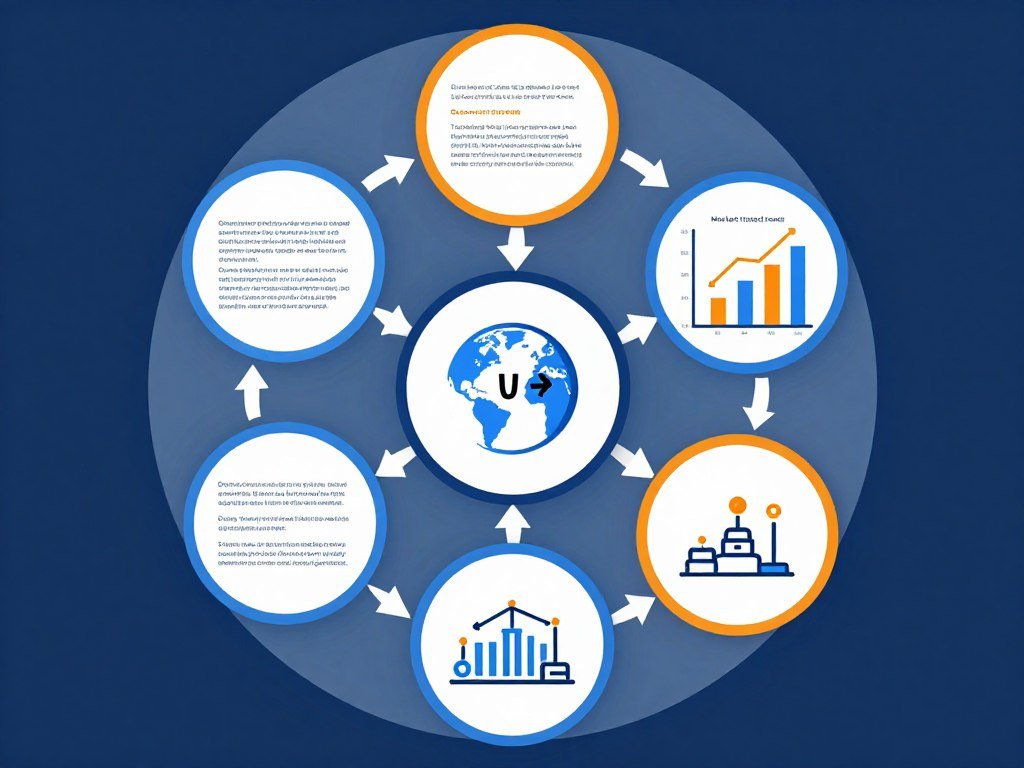
Multiple forces converge to create the current situation. Understanding these root causes helps explain why displacement and inequality accelerate despite economic growth.
Policy Factors
- Insufficient worker protection regulations: Current labor laws were written for industrial-era employment and fail to address AI-driven job changes
- Tax incentives favoring automation: Federal policies allow businesses to deduct capital investments in AI systems, making automation more attractive than hiring workers
- Limited retraining program funding: The Social Security Administration and Department of Labor allocate less than 0.1% of GDP to workforce transition programs
- Intellectual property frameworks: Patent and copyright laws concentrate AI development benefits among large technology corporations
- Education system lag: Public education curricula remain disconnected from emerging skill requirements in the AI economy
Market Trends
- Declining technology costs: AI implementation expenses have dropped 60% since 2018, making adoption economically compelling for businesses
- Competitive pressure: Companies adopting AI gain efficiency advantages, forcing competitors to follow or risk market share loss
- Productivity measurement challenges: Traditional productivity metrics fail to capture the full value of human workers compared to AI systems
- Skill premium expansion: Wage gaps between AI-skilled workers and others have widened by 35% in five years
- Platform economy growth: Digital platforms concentrate economic power and reduce bargaining leverage for individual workers
Global Influences
- International AI race: Competition between nations accelerates development without consideration for employment impacts
- Outsourcing evolution: AI enables new forms of remote work that increase global labor competition
- Supply chain automation: International trade networks increasingly rely on automated systems that reduce human labor requirements
- Investment flows: Capital migrates toward AI-intensive industries, starving traditional sectors of resources for adaptation
- Regulatory arbitrage: Companies relocate AI operations to jurisdictions with minimal worker protections
Structural Economic Changes
- Winner-take-all dynamics: Network effects in AI create monopolistic tendencies that concentrate wealth
- Declining labor share of income: The portion of GDP going to workers versus capital owners has fallen 4% since 2015
- Routine task vulnerability: Jobs involving predictable, repeatable tasks face the highest displacement risk regardless of skill level
- Credentialism increase: Entry requirements for remaining jobs escalate, creating barriers for displaced workers
- Geographic concentration: AI benefits cluster in specific urban centers while other regions experience job loss without replacement opportunities
Impact on the U.S. Economy
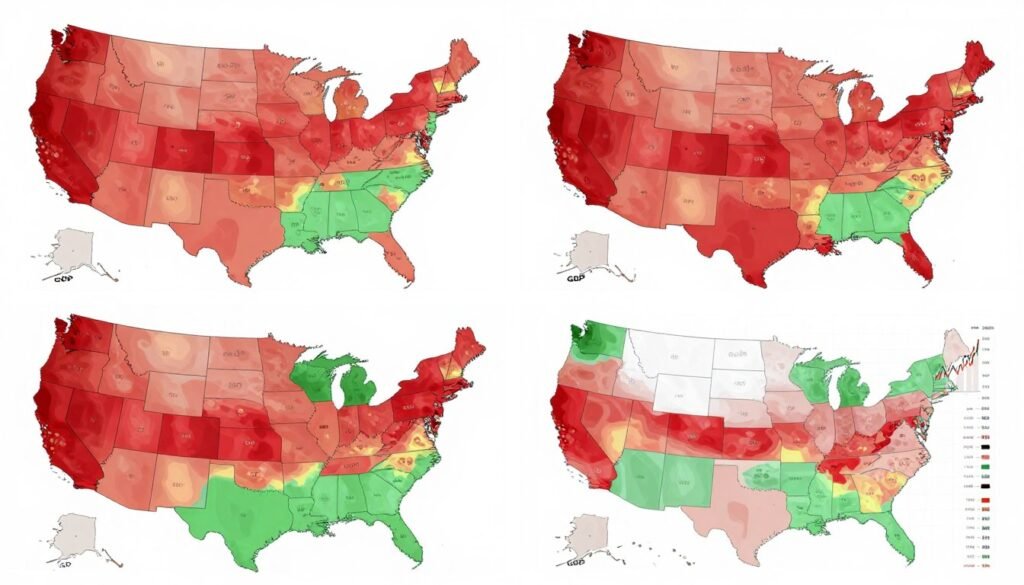
The ripple effects of AI job displacement and economic inequality touch every corner of the American economy. Economists at the Congressional Budget Office track these changes across multiple dimensions.
GDP Growth
Artificial intelligence creates a paradox for economic growth. Overall productivity increases as systems handle more tasks efficiently. The Bureau of Labor Statistics reports that AI-adopting sectors show 3.2% higher productivity growth compared to traditional industries.
However, this growth does not translate evenly across society. GDP figures may rise while median household income stagnates. The disconnect between aggregate economic data and lived experience widens.
Research from the International Monetary Fund suggests that AI could add $15 trillion to global GDP by 2030. Yet this wealth generation concentrates among technology companies and their investors rather than distributing broadly through wage growth.
Inflation
Automation influences price stability in complex ways. Labor cost reductions in AI-automated sectors should theoretically lower prices for consumers. The data shows mixed results.
Some goods become cheaper as production costs fall. Electronics, digital services, and manufactured items show price declines or slower inflation growth. Meanwhile, labor-intensive services like healthcare and education experience accelerating cost increases.
The Federal Reserve faces challenges in managing monetary policy when different sectors respond differently to automation. Traditional inflation metrics may not capture the full picture of economic pressure on households.
Employment
Job displacement affects various occupations differently. The World Bank identifies three categories of employment risk related to artificial intelligence systems.
High-risk roles include data entry clerks, telemarketers, and assembly line workers. These positions involve routine tasks that current AI technologies handle effectively. Medium-risk occupations such as paralegals, radiologists, and accountants face partial automation where AI assists rather than replaces workers.
Low-risk jobs requiring human creativity, emotional intelligence, or physical dexterity in unpredictable environments remain less vulnerable. These include nurses, electricians, and creative professionals.
New job creation in AI-related fields fails to offset losses in other sectors. For every new position in machine learning or AI ethics, multiple traditional roles disappear. The net employment effect trends negative in many industries.
Financial Markets
Stock markets reward companies implementing AI systems with higher valuations. Technology sector indices outperform broader market averages by significant margins. This creates wealth for investors while doing little for workers without substantial stock holdings.
The concentration of market gains among a small number of AI-focused companies increases systemic risk. Five technology corporations now represent over 25% of total S&P 500 market capitalization. This concentration makes the entire economy vulnerable to AI sector volatility.
Bond markets respond to automation-driven deflation pressures with lower yields. The U.S. Department of the Treasury observes unusual yield curve dynamics as investors reassess long-term growth and inflation assumptions.
Consumers and Businesses
Consumer spending patterns shift as job security concerns rise. Households exposed to automation risk increase savings rates and reduce discretionary purchases. This defensive behavior can create self-fulfilling economic slowdowns.
Small businesses face particular challenges. They lack resources to implement advanced AI systems while competing against automated larger firms. This disadvantage accelerates market concentration across industries.
Business investment increasingly flows toward technology and software rather than human capital development. Companies spend more on AI capabilities and less on worker training programs. This reallocation reinforces inequality trends as workforce skills become outdated faster.
Recent Data and Trends
Current statistics reveal acceleration in AI adoption and its economic consequences. Government and research institutions track these developments with increasing urgency.
Latest Employment Statistics
The Bureau of Labor Statistics released concerning data in early 2025. Job openings in routine cognitive work categories declined 18% year-over-year. Positions in customer service, basic accounting, and administrative support show the steepest drops.
Simultaneously, vacancies for AI specialists, data scientists, and machine learning engineers increased 45%. However, these new roles number in thousands while job losses measure in hundreds of thousands. The math does not work in workers’ favor.
Wage data presents a troubling picture. Median hourly earnings in AI-exposed occupations grew just 1.2% in 2024, lagging the 3.1% overall inflation rate. Workers in these roles experienced real income declines despite working full-time.
Productivity and Technology Adoption
Corporate America embraced AI technologies at unprecedented rates during 2024-2025. Survey data from major business organizations indicates that 72% of large corporations now use AI systems in at least one business function. This represents a 40% increase from just two years prior.
Productivity measurements show that AI implementation yields substantial efficiency gains. Output per worker-hour increased 5.8% in highly automated sectors versus 2.1% economy-wide. These gains accrue to shareholders rather than workers in the form of wages.
The Congressional Budget Office projects that if current trends continue, labor productivity could grow 3% annually through 2030 while employment grows only 0.5% per year. This disconnect between productivity and jobs marks a significant departure from historical patterns.
Inequality Measures
Income inequality metrics reached new highs according to U.S. Department of the Treasury analysis. The Gini coefficient, which measures income distribution on a scale from 0 to 1, hit 0.49 in 2024. This represents the highest level recorded since systematic tracking began.
Wealth concentration follows similar patterns. The top 10% of households now control 76% of all wealth, up from 71% in 2020. Much of this increase stems from stock market gains in technology companies implementing AI systems.
Geographic inequality intensifies as AI benefits cluster. Metropolitan areas with strong technology sectors experience income growth while smaller cities and rural regions stagnate. This divide creates political and social tensions beyond purely economic concerns.
Institutional Research Findings
The International Monetary Fund published comprehensive research on AI and inequality in late 2024. Their analysis concludes that without policy intervention, AI will worsen income and wealth gaps across most developed economies.
The World Bank focuses on global implications, noting that developing nations face even more severe displacement risks. Countries relying on low-wage labor for competitive advantage may lose this edge to automation, disrupting development strategies.
The Social Security Administration models indicate that reduced employment growth will stress retirement systems. Fewer workers contributing to programs like Social Security while longer lifespans increase benefit demands creates fiscal challenges within the next decade.
Expert Opinions and Forecasts

Leading economists and researchers offer varying perspectives on AI job displacement and economic inequality. Their projections range from cautiously optimistic to deeply concerning.
Optimistic Projections
Some analysts believe AI will follow historical technology patterns. They argue that initial displacement gives way to new job creation as markets adjust. Previous innovations from electricity to computers ultimately expanded employment opportunities despite short-term disruptions.
These experts point to emerging roles in AI ethics, human-AI collaboration, and creative fields that leverage artificial intelligence as tools rather than replacements. They suggest that productivity gains will generate wealth that funds new industries and services we cannot yet imagine.
Advocates of this view recommend investing in education and retraining rather than restricting AI development. They believe market forces will naturally create equilibrium if workers can adapt their skills to complement intelligent systems.
Pessimistic Forecasts
Other researchers warn that AI differs fundamentally from previous technologies. Unlike machines that replaced physical labor, AI systems can perform cognitive work at scales and speeds impossible for humans. This capability affects knowledge workers who previously felt secure from automation.
Critics note that historical job creation occurred over decades, allowing gradual workforce transitions. AI deployment happens in years or even months. The pace prevents natural labor market adjustments that softened earlier technological shifts.
This camp predicts permanent structural unemployment and widening inequality without major policy changes. They forecast social instability as large populations lose economic relevance in AI-dominated markets.
Mainstream Economic Consensus
The consensus view from institutions like the Congressional Budget Office and International Monetary Fund falls between extremes. These organizations acknowledge both opportunities and risks in AI development.
Mainstream economists project that AI will displace 15-25% of current jobs over the next decade while creating new positions equal to 5-10% of the workforce. The net loss of 10-15% creates significant transition challenges even if some benefits emerge.
They emphasize that distribution matters as much as aggregate outcomes. Even if total GDP grows, concentrated gains among a small elite while millions struggle represents an economic and political crisis.
Sector-Specific Outlooks
Manufacturing faces continued automation pressure. Experts predict that domestic factories will employ fewer workers while producing more goods. Reshoring initiatives may bring production home but not the jobs that left.
Professional services encounter mixed prospects. Routine legal work, basic accounting, and standard medical diagnostics face displacement. However, complex problem-solving, client relationships, and judgment-based decisions remain human domains.
Service industries show the most variation. Food service, personal care, and hands-on healthcare resist automation due to physical and social requirements. Meanwhile, call centers, data processing, and transportation face significant disruption.
Risk Level Assessment
Leading economic institutions evaluate AI displacement and inequality threats across multiple dimensions. The consensus risk rating reflects both likelihood and potential impact severity.
The composite risk assessment indicates a HIGH level of economic threat from AI job displacement and economic inequality. While not an immediate crisis, current trajectories point toward significant disruption within 3-5 years without substantial policy intervention.
Possible Solutions and Policy Responses
Addressing AI job displacement and economic inequality requires coordinated action across government, business, and education sectors. Experts propose multiple intervention strategies, each with different implementation challenges and potential effectiveness.
Government Actions
Federal and state governments possess various tools to shape AI’s economic impact. The U.S. Department of the Treasury can restructure tax policies to discourage excessive automation and encourage human employment.
One proposal involves adjusting capital gains taxation to reduce incentives for replacing workers with machines. Currently, businesses deduct automation investments immediately while labor costs receive no comparable advantage. Rebalancing these incentives could slow displacement without preventing beneficial innovation.
Expanded social safety nets represent another approach. Universal basic income programs, tested in small pilots, could provide income floors as traditional employment becomes scarce. Critics question affordability and work incentive effects, but proponents argue AI-generated productivity makes such programs economically feasible.
The Social Security Administration faces pressure to adapt retirement and disability programs for changing work patterns. Proposals include lowering eligibility ages, expanding definitions of disability to include technological obsolescence, and funding benefits through taxes on AI systems rather than payroll exclusively.
Education policy reforms focus on lifelong learning systems. The Department of Education explores funding models for continuous skill development rather than front-loaded schooling that quickly becomes outdated. Community colleges and vocational programs receive attention as retraining platforms for displaced workers.
Regulatory frameworks for AI development remain minimal. Some policymakers advocate for algorithmic accountability laws requiring companies to assess employment impacts before deploying labor-replacing systems. Others support transparency requirements forcing disclosure of AI use in hiring, firing, and workforce management decisions.
Federal Reserve Policies
Monetary policy influences AI’s economic effects through interest rates and financial system regulation. The Federal Reserve faces difficult tradeoffs in responding to automation-driven changes.
Lower interest rates typically stimulate employment by making business expansion cheaper. However, low rates also reduce the cost of capital for automation investments. The Fed must balance encouraging job creation against inadvertently subsidizing job-replacing technologies.
Bank lending standards could incorporate employment impact assessments. Regulators might require financial institutions to consider workforce effects when financing major automation projects. This approach uses banking oversight to shape AI deployment without direct government mandates.
The Federal Reserve’s dual mandate to maximize employment and stabilize prices becomes more complex when productivity gains from AI decouple output growth from job creation. Traditional relationships between unemployment and inflation may not hold in highly automated economies.
Market Adjustments
Private sector responses play crucial roles in determining AI’s ultimate impact. Some companies voluntarily adopt responsible automation principles that prioritize augmenting rather than replacing workers.
Industry-led retraining initiatives show promise in sectors facing rapid change. Technology firms partner with community organizations to teach AI-relevant skills to displaced workers. While beneficial, these programs reach only a fraction of affected individuals.
New business models emerge that leverage human-AI collaboration. Instead of pure automation, these approaches use intelligent systems to enhance worker productivity and decision quality. Jobs evolve rather than disappear, though skill requirements change substantially.
Labor unions increasingly negotiate AI clauses in contracts. Agreements specify worker consultation before automation implementation, mandatory retraining periods, and severance enhancements for displaced employees. Union membership grew in technology sectors as workers seek collective bargaining power.
Impact investing directs capital toward companies balancing AI adoption with workforce development. Investors increasingly consider employment practices alongside financial returns. This market pressure incentivizes businesses to pursue automation strategies that preserve job quality even if not job quantity.
Universal Basic Income
Provides unconditional cash payments to all citizens regardless of employment status.
- Addresses income loss from automation
- Maintains consumer spending power
- Reduces poverty and inequality
- Requires substantial tax revenue
Wage Subsidies
Government supplements employer payments to make human workers cost-competitive with automation.
- Preserves employment relationships
- Maintains work incentives
- Targets assistance to workers
- May subsidize low wages
Robot Taxes
Levies on automation systems to fund worker transition programs and social benefits.
- Creates revenue for assistance
- Slows excessive automation
- Compensates displaced workers
- Difficult to define and implement
Retraining Programs
Comprehensive education systems helping workers develop skills for AI-era employment.
- Addresses skill mismatches
- Enables career transitions
- Increases workforce adaptability
- Success rates vary widely
What It Means for Americans

Abstract economic trends translate into concrete effects on daily life. Understanding these practical implications helps individuals and families prepare for AI-driven changes.
Cost of Living
AI creates divergent price pressures that affect household budgets unevenly. Goods produced by automated manufacturing become cheaper over time. Electronics, appliances, and consumer products decline in inflation-adjusted prices as robots handle production.
Services requiring human touch experience opposite trends. Healthcare costs continue rising as medical care resists full automation. Education expenses increase as quality teaching remains human-intensive. Housing in desirable locations becomes less affordable as high-earning AI workers compete for limited supply.
Families in middle-income brackets face particular challenges. Their income growth slows while essential services become more expensive. The saving grace of cheaper consumer goods provides limited relief when healthcare and housing dominate budgets.
Geographic variations intensify. Technology hubs with AI industry presence see income growth that offsets or exceeds living cost increases. Communities dependent on automating industries experience income declines while costs remain stable or rise.
Jobs
Career planning becomes more complex and uncertain. Young people entering the workforce face different calculations than previous generations. Choosing occupations with AI-resistance becomes as important as following interests or aptitudes.
Mid-career workers in automating fields confront difficult decisions. Retraining for new careers means lost seniority, reduced income during transition, and uncertainty about whether new skills will themselves become obsolete. Many feel trapped between unsustainable current roles and risky career changes.
Older workers near retirement face age discrimination compounded by technological displacement. Those who lose positions to AI struggle to find new employment as companies prefer younger candidates assumed more adaptable to technology.
Job security becomes a luxury rather than an expectation. Even professionals in traditionally stable fields worry about AI disruption. This uncertainty affects mental health, family planning, and major financial decisions like home purchases.
Investments
Retirement savings strategies require reconsideration in AI-dominated markets. Traditional diversification across stocks and bonds may not protect adequately when technology sector concentration increases systemic risk.
Workers face pressure to invest in companies benefiting from AI while those same companies may eliminate their jobs. This creates ethical and practical dilemmas for 401(k) participants choosing between financial returns and supporting employment-friendly businesses.
Real estate investments become more location-dependent. Properties in AI-hub cities appreciate while those in declining industrial areas lose value. Geographic mobility limits constrain many investors’ ability to shift holdings to favored locations.
Social Security and pension sustainability concerns grow as payroll tax bases shrink with employment. Workers increasingly need private savings to supplement potentially reduced public benefits. This requirement disadvantages those already struggling with current expenses.
Housing
Residential real estate markets reflect underlying economic disparities. Areas attracting AI industries experience housing shortages and price spikes. San Francisco, Seattle, and Austin exemplify this pattern with median home prices rising 40-60% in five years.
Communities losing employment to automation face opposite dynamics. Former manufacturing centers see population declines, falling property values, and reduced tax revenue for public services. This creates downward spirals difficult to reverse.
Renters particularly feel cost pressures in desirable markets. Wage growth lags rent increases in most major cities. The burden falls heavily on service workers who support AI-industry employees but cannot afford housing near their jobs.
Homeownership becomes increasingly difficult for younger generations. Down payment requirements grow faster than savings rates for those in AI-exposed occupations. The American dream of property ownership slips further from reach for many families.
Future Outlook (2026–2030)
Projecting economic outcomes for the remainder of the decade requires acknowledging significant uncertainty. However, current trends and policy trajectories suggest plausible scenarios for AI job displacement and economic inequality.
Short-Term Outlook (2026-2027)
The immediate future likely brings accelerating AI deployment across industries. Companies that delayed automation during pandemic uncertainty now invest heavily in intelligent systems. The Congressional Budget Office projects 2.5% annual job displacement through 2027.
White-collar sectors experience the most visible disruption over these years. Legal services, financial analysis, and media production see significant workforce reductions as AI handles routine cognitive tasks. Professional workers previously insulated from automation anxiety join blue-collar workers in facing displacement concerns.
Income inequality metrics continue worsening. The gap between top earners in AI industries and median workers widens by an estimated 15% by 2027. Regional disparities intensify as technology hubs prosper while manufacturing-dependent areas struggle.
Policy responses remain inadequate during this period. Political gridlock prevents major federal initiatives while state-level programs lack scale to address national challenges. Retraining efforts help some individuals but fail to match displacement pace.
Consumer confidence declines as job security fears spread beyond directly affected sectors. Households increase precautionary savings, reducing spending that could support economic growth. This defensive behavior contributes to sluggish GDP expansion despite productivity gains.
Medium-Term Risks (2028-2030)
The later decade years determine whether AI creates broad prosperity or concentrated wealth alongside mass economic insecurity. Several critical inflection points emerge during this period.
Cumulative job displacement reaches 10-15% of the 2025 workforce by 2030 under current trajectories. This represents 15-20 million American workers experiencing involuntary career changes. Even optimistic scenarios assuming robust new job creation leave millions in permanent transition.
The social safety net faces stress tests from expanded demand and reduced payroll tax revenue. The Social Security Administration warns that trust fund depletion timelines accelerate if employment growth continues lagging productivity gains. Benefit cuts or tax increases become politically unavoidable.
Education systems struggle to keep curricula relevant as skill requirements shift rapidly. Universities and community colleges experiment with new program structures, but standardization and quality control remain elusive. Many workers invest in training for skills that become obsolete before they complete programs.
Political instability risks increase as economic anxiety fuels populist movements. Historical patterns suggest that rapid technological change combined with inequality growth creates conditions for social unrest. Mainstream institutions face legitimacy challenges if they cannot deliver inclusive prosperity.
Positive Scenario Elements
Not all projections trend negative. Several developments could improve outcomes if they gain traction during this period.
Breakthrough policy innovations at federal or state levels might successfully redirect AI benefits toward broader populations. Universal basic income pilots, if successful, could scale nationally. Robot taxation schemes could fund transition assistance at meaningful levels.
New industries and job categories may emerge faster than current forecasts anticipate. Previous technological revolutions eventually generated employment opportunities unimaginable at their onset. Human creativity and adaptability should not be underestimated.
Companies might voluntarily adopt stakeholder capitalism principles that prioritize workforce wellbeing alongside shareholder returns. Growing investor pressure for environmental, social, and governance standards could extend to employment practices around AI.
International cooperation on AI governance could prevent a regulatory race to the bottom. If major economies agree on worker protection standards, individual nations face less competitive pressure to sacrifice employment for automation efficiency.
Scenario Planning Implications
Organizations and individuals should prepare for multiple possible futures rather than betting on single outcomes. The range of plausible scenarios by 2030 spans from broadly shared prosperity to severe inequality and social disruption.
Adaptive strategies that remain viable across different scenarios prove most valuable. Developing diverse skills, maintaining financial flexibility, and cultivating professional networks provide resilience regardless of which future materializes.
Monitoring leading indicators helps identify which scenario becomes reality as events unfold. Tracking employment data, inequality measures, policy developments, and social stability indicators enables course corrections before problems become crises.
Conclusion
AI job displacement and economic inequality represent defining challenges for the American economy over the next decade. The evidence shows that intelligent automation technologies will reshape labor markets, redistribute wealth, and test social institutions in profound ways.
Current trajectories point toward significant workforce disruption. Millions of workers face career transitions as AI systems handle tasks across white-collar and blue-collar occupations. The pace of change exceeds historical technological shifts, leaving less time for natural market adjustments.
Economic inequality will likely intensify without policy intervention. The benefits of AI-driven productivity concentrate among technology companies, their investors, and highly skilled workers who complement intelligent systems. Meanwhile, displaced workers and those in stagnating occupations fall further behind.
Solutions exist but require coordinated action. Government policies around taxation, social safety nets, and education must adapt to AI realities. The Federal Reserve faces new challenges in managing employment alongside price stability. Market forces alone appear insufficient to ensure broadly shared prosperity.
Americans will experience these changes through practical impacts on jobs, costs, and opportunities. Geographic location, skill profiles, and adaptability will increasingly determine economic outcomes. The distance between thriving AI hubs and struggling traditional communities will grow.
The future remains unwritten. Policy choices made over the next few years will substantially influence whether AI creates widespread prosperity or unprecedented inequality. Engagement from citizens, workers, businesses, and policymakers determines which path the nation follows.
Preparation matters for individuals and institutions. Understanding AI’s economic implications enables better personal and organizational decisions. Monitoring developments, building adaptive capabilities, and participating in policy discussions helps shape outcomes rather than simply experiencing them.
The artificial intelligence revolution differs from previous technological changes in speed, scope, and cognitive capabilities. Meeting this moment requires acknowledging both opportunities and threats while working actively toward inclusive economic growth that benefits all Americans, not just a privileged few.