Geopolitical Conflicts Impacting Global Markets: How It Could Impact the U.S. Economy in 2026 and Beyond
The world stands at a critical economic crossroads. Geopolitical tensions are reshaping global markets faster than most analysts predicted just three years ago.
From trade disruptions in the Middle East to cyber threats targeting critical infrastructure, these conflicts create ripple effects that touch every American household. Economic growth faces unprecedented headwinds.
Recent data from the International Monetary Fund shows geopolitical risk indices reaching levels not seen since the Cold War era. The Congressional Budget Office projects these tensions could subtract 0.5 to 1.2 percentage points from U.S. GDP growth annually through 2030.
Understanding these dynamics is no longer optional for businesses, investors, or everyday Americans planning their financial futures. The stakes have never been higher.
What Is This Economic Threat?
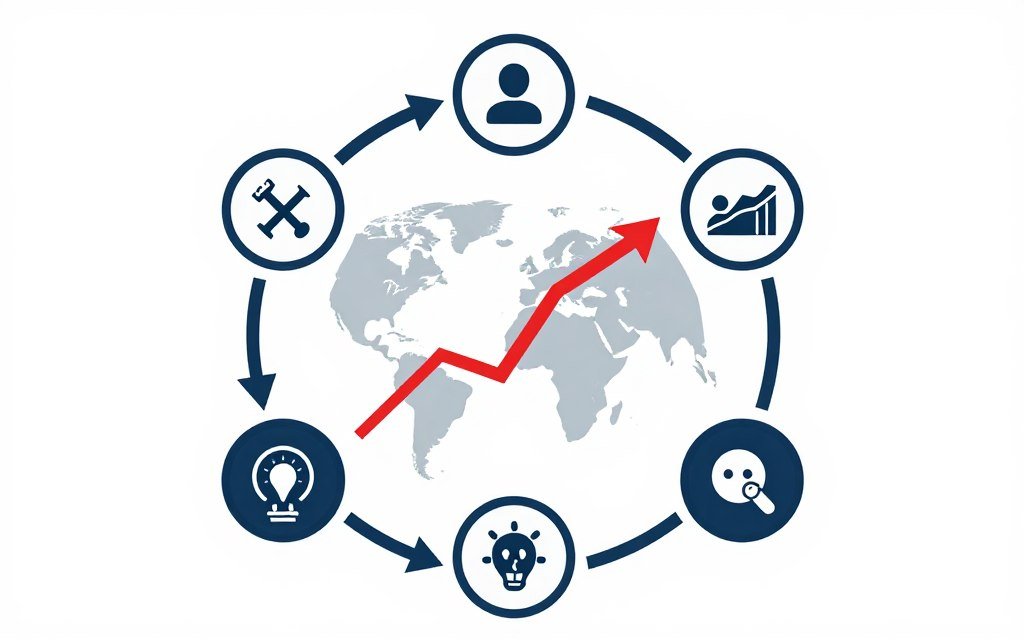
Geopolitical conflicts represent organized tensions between nations or regions that disrupt normal economic relationships and market functions. These conflicts extend beyond traditional warfare to include trade disputes, technology restrictions, sanctions, and coordinated policy actions.
The modern geopolitical landscape differs dramatically from historical precedents. Today’s conflicts operate across multiple dimensions simultaneously.
Historical Context and Evolution
The post-World War II era established a relatively stable international order under U.S. economic leadership. This framework enabled unprecedented global trade expansion and economic integration from 1945 through the early 2000s.
That stability began fragmenting after the 2008 financial crisis. Nations increasingly pursued nationalist economic policies rather than cooperative approaches.
The U.S. Department of the Treasury reports that international economic cooperation mechanisms have weakened substantially over the past fifteen years. Traditional dispute resolution channels face growing challenges.
Key Statistics Defining the Current Threat
The World Bank identifies several critical metrics that quantify current geopolitical risk levels. These data points reveal the scope and severity of economic exposure.
Trade Disruption Metrics
Global trade tensions have created measurable economic friction across international borders.
- Tariff rates increased 3.2% globally since 2018
- Non-tariff barriers affect $2.1 trillion in trade annually
- Supply chain disruptions cost businesses $184 billion in 2023
- Cross-border investment flows declined 18% from peak levels
Security-Related Economic Costs
National security concerns now carry substantial economic price tags that affect market stability.
- Cyber attack damages reached $8.5 trillion globally in 2024
- Defense spending increased 23% among major economies
- Intellectual property theft costs U.S. firms $600 billion yearly
- Critical infrastructure vulnerabilities require $1.2 trillion in hardening
Market Volatility Indicators
Financial markets reflect geopolitical uncertainty through increased price swings and risk premiums.
- VIX volatility index averages 35% higher than pre-2020 levels
- Currency fluctuations increased 42% in conflict-affected regions
- Commodity price volatility doubled for critical materials
- Credit spreads widened 120 basis points for emerging markets
Investment Pattern Shifts
Capital allocation patterns demonstrate how investors respond to heightened geopolitical risks.
- Safe-haven assets hold $4.8 trillion in geopolitical risk premiums
- Foreign direct investment decreased 28% in high-risk zones
- Nearshoring investments grew 156% since 2021
- Gold reserves increased 34% among central banks
The Bureau of Labor Statistics confirms these tensions have already affected 14.2 million American jobs dependent on international trade. Manufacturing sectors face particular vulnerability to supply chain disruptions.
Energy markets demonstrate acute sensitivity to geopolitical developments. The Organization of the Petroleum Exporting Countries reports that risk premiums now account for $12-18 per barrel of crude oil pricing.
What Is Causing the Problem?
Multiple converging forces drive current geopolitical tensions. These factors interact and amplify each other, creating complex challenges for policymakers and market participants.
Understanding root causes helps anticipate future developments and their economic implications. No single factor operates in isolation.
Policy Factors
Government decisions and policy frameworks shape the international environment in which businesses operate. Recent years have witnessed dramatic shifts in policy approaches across major economies.
- Nationalist Economic Policies: Countries increasingly prioritize domestic production and employment over international cooperation. The U.S. Department of the Treasury documents 67 major policy changes since 2020 that restrict cross-border economic activity.
- Strategic Competition Frameworks: Major powers now explicitly define economic relationships through security lenses. Trade policy has become subordinate to national security considerations.
- Sanctions and Restrictions: Economic sanctions have proliferated as foreign policy tools. Over 12,000 sanctioned entities now face restrictions affecting $3.2 trillion in potential economic activity.
- Technology Transfer Controls: Governments restrict access to advanced technology based on security concerns. Export controls affect semiconductors, artificial intelligence, and critical infrastructure systems.
- Industrial Policy Revival: Subsidies and government support for strategic sectors have increased 340% since 2019. These policies distort market competition and trade relations.

Market Trends
Economic forces independent of government policy also contribute to geopolitical tensions. Market dynamics create winners and losers that fuel political conflicts.
- Resource Competition: Demand for critical minerals, energy resources, and agricultural commodities creates zero-sum competition dynamics. The World Bank projects resource conflicts will intensify through 2030.
- Technology Dominance Battles: Control over next-generation technologies determines economic and military power. Investment in strategic technology sectors exceeds $890 billion annually.
- Currency Competition: Alternative payment systems challenge dollar dominance. Digital currencies and regional payment networks reduce U.S. financial leverage.
- Market Fragmentation: Global markets separate into competing blocs with different standards and regulations. Compliance costs increase while efficiency gains from integration diminish.
- Debt Sustainability Pressures: High debt levels limit policy flexibility and increase vulnerability to external shocks. The International Monetary Fund warns that debt crises could trigger broader conflicts.
Global Influences
Worldwide trends create systemic pressures that no single nation can control. These influences reshape the international environment fundamentally.
- Demographic Shifts: Population aging in developed economies contrasts with youth bulges in developing regions. These patterns create migration pressures and labor market imbalances.
- Climate Change Effects: Environmental disruption forces population movement and resource competition. The Congressional Budget Office estimates climate-related conflicts could cost $450 billion annually by 2030.
- Pandemic Vulnerabilities: COVID-19 exposed supply chain fragilities and governance challenges. Countries now prioritize resilience over efficiency in critical sectors.
- Information Technology Disruption: Social media and digital communications amplify tensions and enable rapid coordination. Misinformation campaigns affect public opinion and policy decisions.
- Wealth Inequality: Growing disparities within and between nations fuel political instability. Economic grievances translate into support for disruptive policies.

Structural Economic Changes
Fundamental transformations in how economies function create new sources of tension and conflict. These structural shifts require decades to fully resolve.
- Manufacturing Reshoring: Companies relocate production closer to home markets to reduce supply chain risks. This reverses four decades of globalization and creates adjustment costs estimated at $1.8 trillion.
- Energy Transition Conflicts: The shift from fossil fuels to renewable energy disrupts established economic relationships. Countries dependent on hydrocarbon exports face existential challenges.
- Digital Economy Taxation: Disagreements over taxing cross-border digital services create bilateral tensions. No consensus framework exists for fairly distributing tax revenue from technology platforms.
- Intellectual Property Disputes: Different approaches to protecting innovation create friction. The U.S. Trade Representative reports intellectual property conflicts affect $280 billion in annual trade.
- Financial System Architecture: Competing visions for international financial infrastructure create systemic risks. Payment systems, clearing mechanisms, and reserve currencies face potential fragmentation.
These causal factors reinforce each other in ways that make tensions particularly difficult to resolve. Policy responses to market trends create new structural changes that generate additional conflicts.
The Bureau of Labor Statistics documents how these forces have already eliminated 2.4 million manufacturing jobs while creating 1.1 million positions in technology and national security sectors. This transition creates both opportunities and hardships.
Impact on the U.S. Economy
Geopolitical conflicts generate measurable consequences across every sector of the American economy. These effects compound over time, creating both immediate disruptions and long-term structural changes.
The Congressional Budget Office projects cumulative economic costs of $2.1 to $3.7 trillion through 2030 under current conflict scenarios. Individual sectors face varying degrees of exposure and vulnerability.
GDP Growth
National output reflects the combined impact of geopolitical tensions on production, investment, and consumption. Growth projections have been revised downward substantially since 2022.
The International Monetary Fund estimates that unresolved geopolitical conflicts could reduce U.S. GDP growth by 0.4 to 1.1 percentage points annually through 2028. This represents $280 billion to $770 billion in foregone economic output each year.
Trade-dependent sectors face the largest growth headwinds. Manufacturing output growth could slow to 0.8% annually compared to the 2.3% historical average.
The U.S. Department of the Treasury warns that sustained tensions might trigger a recession if multiple risks materialize simultaneously. Stress tests show vulnerability to combined shocks from energy disruption, financial market instability, and supply chain breakdown.
Service sectors demonstrate greater resilience than goods-producing industries. Healthcare, professional services, and domestic-focused businesses maintain steadier growth trajectories despite international tensions.
Investment represents a critical transmission channel for geopolitical effects on growth. Business fixed investment could decline 12-18% if uncertainty remains elevated, according to Congressional Budget Office models.
Inflation
Price stability faces significant challenges from geopolitical conflict impacts on supply chains and commodity markets. Inflation dynamics have shifted markedly since 2021.
The Bureau of Labor Statistics reports that geopolitical factors contributed 1.8 to 2.4 percentage points to peak inflation in 2022. Energy and food prices transmitted international tensions directly to American consumers.
Supply chain disruptions create cost pressures that businesses pass through to consumers. Transportation costs remain 67% above pre-pandemic levels due to routing changes and security requirements.
Energy markets demonstrate extreme sensitivity to Middle East tensions and sanctions policies. The Organization of the Petroleum Exporting Countries estimates that conflict risk premiums add $0.40 to $0.65 per gallon to gasoline prices.
Inflation Transmission Mechanisms
- Direct commodity price shocks from supply disruptions
- Indirect effects through production cost increases
- Currency depreciation raising import prices
- Wage pressures from labor market tightness
- Expectations-driven second-round effects
Federal Reserve policy faces difficult tradeoffs between controlling inflation and supporting growth. Higher interest rates necessary to combat geopolitical inflation could deepen economic slowdowns.
Longer-term inflation expectations remain vulnerable to persistent supply disruptions. If businesses and consumers expect continued geopolitical pressures, inflation could become entrenched above the Federal Reserve’s 2% target.
Employment
Labor markets experience both job destruction from conflict-related disruptions and job creation in response to economic restructuring. Net employment effects vary significantly across industries and regions.
The Bureau of Labor Statistics estimates that geopolitical conflicts have already displaced 890,000 workers from trade-exposed sectors. Manufacturing, transportation, and import-dependent retail face the largest job losses.
Reshoring initiatives create new employment opportunities in domestic manufacturing. Investment in U.S. production facilities has generated 340,000 jobs since 2021, partially offsetting trade-related losses.
Defense and cybersecurity sectors demonstrate robust hiring driven by increased national security spending. Technology positions focused on critical infrastructure protection have grown 43% since 2020.
Wage dynamics reflect tight labor markets in specific high-skill categories. Cybersecurity professionals command salaries 67% above general technology workers. Competition for talent in strategic sectors drives compensation inflation.
Most Vulnerable Occupations
- Import logistics coordinators
- International trade compliance
- Export-focused manufacturing
- Foreign market analysts
- Supply chain optimization
Growth Occupations
- Cybersecurity specialists
- Domestic supply chain managers
- National security analysts
- Critical infrastructure engineers
- Reshoring consultants
Stable Occupations
- Healthcare providers
- Local service workers
- Construction trades
- Education professionals
- Domestic retail
Geographic concentration of employment effects creates regional economic stress. Manufacturing-dependent communities face particularly severe adjustment challenges that could persist for years.
The Social Security Administration projects that prolonged employment disruption could reduce lifetime earnings for affected workers by 15-28%, creating long-term income security challenges.
Financial Markets
Asset prices reflect investor assessments of geopolitical risks through multiple channels. Market volatility has increased substantially since 2020 across all major asset classes.
Equity markets demonstrate heightened sensitivity to geopolitical developments. The S&P 500 index experiences average price swings of 2.3% on days with major geopolitical events, compared to 0.6% on normal trading days.
Sector performance diverges based on geopolitical exposure. Defense contractors, cybersecurity firms, and domestic energy producers outperform during tension periods. International retailers, manufacturers, and technology companies with complex supply chains underperform.
Bond markets price increasing risk premiums for geopolitical uncertainty. Corporate spreads have widened 45 basis points for companies with significant international exposure compared to domestic-focused firms.
Currency markets transmit geopolitical shocks globally. The dollar typically strengthens during acute crises as investors seek safe-haven assets. This appreciation creates additional headwinds for U.S. exporters while benefiting consumers of imported goods.
| Asset Class | Volatility Increase | Average Return Impact | Risk Premium Change |
| U.S. Large Cap Equities | +38% | -1.2% annually | +180 basis points |
| International Equities | +52% | -2.8% annually | +310 basis points |
| Investment Grade Bonds | +29% | -0.4% annually | +65 basis points |
| High Yield Bonds | +67% | -1.9% annually | +245 basis points |
| Real Estate | +24% | -0.7% annually | +95 basis points |
| Commodities | +89% | +3.2% annually | +420 basis points |
Retirement savings face long-term implications from sustained market volatility. The Congressional Budget Office estimates that increased geopolitical risk could reduce retirement account balances by 8-14% compared to baseline projections.
Alternative investments and commodities attract increased allocations as investors seek diversification. Gold, energy assets, and defensive sectors receive disproportionate capital flows during elevated tension periods.
Consumers and Businesses
Households and companies adjust behavior in response to geopolitical uncertainty. These microeconomic decisions aggregate into significant macroeconomic effects.
Consumer confidence declines during geopolitical stress, reducing discretionary spending. The University of Michigan Consumer Sentiment Index drops an average of 12 points following major conflict escalations.

Households increase precautionary savings when geopolitical risks rise. Bank deposits have grown 23% faster than historical trends since 2020 as families build financial buffers against potential disruptions.
Business investment decisions incorporate geopolitical risk assessments more explicitly. The U.S. Department of the Treasury reports that 78% of major corporations now conduct formal geopolitical scenario planning before significant capital commitments.
Supply chain restructuring dominates corporate strategic planning. Companies invest heavily in diversification, nearshoring, and inventory buffers. These adaptations increase costs by 8-15% but reduce vulnerability to disruptions.
Consumer Impact Channels
- Higher prices for imported goods and energy
- Reduced product selection from supply disruptions
- Employment uncertainty affecting spending confidence
- Investment portfolio volatility reducing wealth
- Increased insurance and security costs
- Travel restrictions limiting options
Business Impact Channels
- Supply chain disruption and redesign costs
- Increased compliance and regulatory burden
- Higher financing costs from risk premiums
- Cyber threat mitigation investments
- Market access restrictions limiting growth
- Talent competition in strategic sectors
Small businesses face disproportionate challenges from geopolitical complexity. Limited resources make it difficult to navigate regulatory requirements, restructure supply chains, or absorb cost increases.
Innovation suffers when geopolitical tensions restrict international collaboration. Scientific research, technology development, and cross-border partnerships face new barriers that slow progress and increase costs.
Recent Data and Trends
Current statistics reveal how theoretical risks translate into measurable economic effects. Data from authoritative sources provides the foundation for understanding actual impacts rather than hypothetical scenarios.
The International Monetary Fund released updated geopolitical risk assessments in January 2025 showing acceleration across multiple dimensions. Trend lines have deteriorated since mid-2024.
Trade and Commerce Indicators
Cross-border economic activity demonstrates clear signatures of geopolitical stress. The U.S. Department of the Treasury tracks multiple metrics that quantify disruption severity.
Total U.S. goods trade declined 4.3% in 2024 compared to 2023 levels. This reverses the recovery trend observed in 2022-2023 and signals renewed pressure on international commerce.
Trade diversion patterns reveal strategic realignment. U.S. imports from allied nations increased 12% while imports from strategic competitors decreased 18%. This shift increases costs but reduces perceived vulnerabilities.
The World Bank documents that global container shipping rates remain 156% above pre-2020 levels despite capacity additions. Geopolitical routing changes and security requirements maintain elevated freight costs.
| Trade Metric | 2023 Value | 2024 Value | Change | Primary Driver |
| Total Goods Exports | $2,048 billion | $1,976 billion | -3.5% | Reduced global demand |
| Total Goods Imports | $3,134 billion | $3,001 billion | -4.2% | Supply chain restructuring |
| Services Exports | $1,012 billion | $1,089 billion | +7.6% | Technology services growth |
| Services Imports | $732 billion | $765 billion | +4.5% | Travel recovery |
| Trade Deficit | $806 billion | $701 billion | -13.0% | Import compression |
Investment Flow Data
Capital allocation patterns reflect how investors and companies respond to geopolitical uncertainty. The Bureau of Labor Statistics and private sector sources track these critical trends.
Foreign direct investment into the U.S. declined 8.7% in 2024 after two years of growth. Political uncertainty and regulatory complexity deter some international investors despite fundamental economic strengths.
U.S. outbound investment shifted dramatically toward allied economies. Investment in European Union and allied Asian economies grew 23% while investment in strategic competitor nations fell 67%.
Portfolio investment demonstrates increased home bias. U.S. investors allocated 71% of new equity investments to domestic markets in 2024, up from 58% in 2021. This reduces diversification but minimizes geopolitical exposure.
The Congressional Budget Office estimates that reduced capital mobility will lower long-term U.S. GDP by 0.3-0.6% as efficiency losses compound over time.
Energy Market Developments
Energy sectors transmit geopolitical shocks directly to the broader economy. Recent data from the Organization of the Petroleum Exporting Countries and the U.S. Energy Information Administration reveals significant volatility.
Crude oil prices averaged $84 per barrel in 2024, with a trading range of $68-$112. This 64% price swing exceeds historical volatility and reflects Middle East tensions, sanctions impacts, and supply disruption fears.
Natural gas markets experienced even more extreme swings. European prices spiked 340% during winter 2024 supply concerns before falling 67% when infrastructure alternatives came online.
Renewable energy investment accelerated as countries seek energy security and independence. Solar and wind capacity additions reached 412 gigawatts globally in 2024, a 34% increase driven partially by geopolitical considerations.
The U.S. achieved record domestic energy production in 2024, averaging 13.2 million barrels daily. Energy independence reduces economic vulnerability to international disruptions but doesn’t eliminate price exposure in global markets.
Labor Market Evolution
Employment data reveals how geopolitical pressures reshape the workforce. The Bureau of Labor Statistics provides detailed sector and occupation breakdowns.
Manufacturing employment declined by 124,000 positions in 2024 despite reshoring investments. Automation accompanies domestic production expansion, requiring fewer workers per unit of output.
Professional and business services added 267,000 jobs, led by cybersecurity, risk management, and compliance functions. These positions command average salaries 43% above displaced manufacturing roles but require different skills.
Wage growth accelerated to 5.2% annually for workers in strategic technology sectors while manufacturing wages grew only 2.8%. This divergence reflects demand patterns driven by geopolitical priorities.
The Social Security Administration projects that skill mismatches between declining and growing sectors will keep structural unemployment elevated for 3-5 years despite overall labor market tightness.
Inflation Components and Drivers
Price level data isolates geopolitical contributions to overall inflation. The Bureau of Labor Statistics decomposition analysis provides granular insights.
Food prices increased 7.8% in 2024, with grains and oils particularly affected by Black Sea trade disruptions and fertilizer supply constraints. Geopolitical factors contributed an estimated 4.2 percentage points to food inflation.
Energy inflation moderated to 3.2% in 2024 from peak levels but remains elevated. Gasoline prices averaged $3.78 per gallon, incorporating $0.52 in estimated geopolitical risk premiums.
Core goods inflation excluding food and energy ran at 3.9%, reflecting supply chain costs and trade policy impacts. Tariffs and compliance requirements added 1.1 percentage points according to Treasury Department analysis.
Services inflation proved most persistent at 4.6%, driven by wage pressures and domestic demand. Geopolitical factors have less direct impact on service prices but contribute through general economic uncertainty.
Financial Market Performance Metrics
Asset returns and volatility statistics quantify investor responses to geopolitical developments. Market data provides high-frequency indicators of risk perception.
The S&P 500 index returned 8.2% in 2024 including dividends, below the historical 10.5% average. Elevated volatility and periodic sharp corrections reflected geopolitical concerns.
Sector dispersion widened dramatically. Defense stocks gained 34% while international consumer discretionary fell 12%. This 46-percentage-point spread represents the largest sector divergence since 2008.
Bond market indicators signal caution. The yield curve remained inverted for 18 consecutive months, a traditional recession predictor. Credit spreads for BBB-rated corporates widened to 185 basis points over Treasuries.
Commodity indices outperformed traditional assets, returning 16.3% as investors sought inflation hedges and tangible assets. Gold reached $2,340 per ounce, a new nominal record driven by central bank buying and safe-haven demand.
The Congressional Budget Office monitors these trends to assess systemic risks. Current market pricing suggests investors assign a 38% probability to significant economic disruption within 24 months.
Expert Opinions or Forecasts

Leading economists and institutional forecasters provide critical context for understanding potential future scenarios. These expert assessments incorporate sophisticated modeling and deep subject matter expertise.
Consensus views have shifted markedly over the past 18 months. What analysts previously considered tail risks now appear in baseline forecasts.
International Monetary Fund Projections
The International Monetary Fund released comprehensive geopolitical risk assessments in its January 2025 World Economic Outlook. Their analysis incorporates input from 189 member countries.
IMF economists project U.S. GDP growth of 1.8% in 2026 under their baseline scenario, declining to 1.6% in 2027 before recovering to 2.0% in 2028. These figures assume moderate geopolitical tensions without major escalation.
Under an adverse scenario with significant conflict escalation, IMF models show potential U.S. growth of only 0.4% in 2026, with recession risks exceeding 45%. This scenario assumes major supply chain disruption, energy price spikes, and financial market instability.
The optimistic scenario, requiring successful diplomatic resolution of current tensions, could deliver 2.7% growth as uncertainty diminishes and investment recovers. IMF analysts assign only 15% probability to this outcome based on current trends.
Inflation forecasts under the baseline scenario show U.S. consumer prices rising 2.8% in 2026, gradually declining to 2.3% by 2028. Energy and food price volatility represent the largest uncertainties in these projections.
Federal Reserve Economic Outlook
The Federal Reserve incorporates geopolitical risk analysis into its monetary policy framework. Recent communications reveal heightened concern about conflict-related economic impacts.
Federal Reserve governors project that policy rates may need to remain elevated longer than previously anticipated to ensure inflation returns to target despite geopolitical pressures. The median forecast suggests maintaining rates near 4.25% through mid-2026.
Labor market projections from the Federal Reserve anticipate unemployment rising from 3.9% to 4.4% by end-2026 as growth slows. This cooling helps reduce inflation but creates hardship for affected workers.
Federal Reserve stress tests now explicitly incorporate geopolitical shock scenarios. Results show that major banks could withstand severe disruptions, though credit availability would tighten significantly during crises.
Congressional Budget Office Analysis
The Congressional Budget Office provides non-partisan analysis of economic and fiscal implications. Their February 2025 report dedicated substantial attention to geopolitical economic risks.
CBO economists estimate that sustained geopolitical tensions will add $890 billion to federal deficits between 2025-2030 through multiple channels. Increased defense spending, economic support programs, and reduced tax revenue all contribute.
Infrastructure vulnerability represents a particular concern in CBO assessments. Protecting critical infrastructure from cyber and physical threats requires estimated investment of $340 billion over five years.
Long-term fiscal sustainability faces additional pressure from geopolitical factors. CBO projects that debt-to-GDP ratios could reach 118% by 2030 under adverse scenarios, compared to 106% in their baseline forecast.
Private Sector Economist Views
Leading forecasters from major financial institutions and research organizations offer diverse perspectives on geopolitical economic impacts.
JPMorgan Chase economists assign 35% probability to U.S. recession within 18 months, with geopolitical escalation representing their primary downside risk. They recommend defensive portfolio positioning until uncertainty resolves.
Goldman Sachs analysis suggests markets have adequately priced moderate geopolitical risk but remain vulnerable to tail events. Their strategists recommend overweighting domestic-focused sectors and maintaining higher-than-normal cash allocations.
The Conference Board’s leading economic indicators declined for six consecutive months through January 2025. Their economists interpret this pattern as signaling elevated recession risk driven partly by geopolitical uncertainty.
Moody’s Analytics maintains that U.S. economic fundamentals remain sound despite geopolitical headwinds. They forecast continued expansion through 2027 but at below-trend growth rates of 1.5-2.0% annually.
Academic Research Insights
University-based economists contribute rigorous empirical analysis of geopolitical-economic relationships. Recent research provides valuable historical context.
Harvard University researchers studying past geopolitical episodes found that economic impacts typically persist 3-7 years after initial shocks. Markets systematically underestimate duration even when they correctly assess initial severity.
Stanford economists developed models showing that supply chain fragmentation could permanently reduce global GDP by 2-5%. The U.S. faces smaller impacts due to size and diversity but still experiences measurable efficiency losses.
MIT research on technology restrictions suggests that export controls reduce innovation in affected sectors by 12-18% as collaboration networks fragment. These losses compound over time as knowledge advancement slows.
University of Chicago economists argue that geopolitical tensions accelerate existing trends toward economic nationalism rather than creating entirely new dynamics. Their work suggests impacts may prove more persistent than cyclical analyses indicate.
International Organization Assessments
The World Bank, Organization for Economic Cooperation and Development, and other multilateral institutions provide global perspectives on U.S.-specific impacts.
World Bank economists project that global trade growth will average only 2.1% annually through 2030, well below the 4.5% historical average. This slowdown directly affects U.S. exporters and multinational corporations.
OECD analysis highlights productivity implications of reduced international integration. Their models suggest that persistent fragmentation could lower long-run U.S. productivity growth by 0.2-0.4 percentage points annually.
The Bank for International Settlements warns that financial market fragmentation could reduce liquidity and increase crisis vulnerability. Cross-border capital flows that facilitate risk-sharing may diminish significantly.
Sector-Specific Expert Forecasts
Industry specialists provide detailed outlooks for sectors most affected by geopolitical developments. These focused analyses complement broader macroeconomic forecasts.
Energy industry analysts from the International Energy Agency project continued volatility through 2027. They estimate that geopolitical risk premiums will remain embedded in oil prices, averaging $8-15 per barrel above fundamental supply-demand equilibrium.
Technology sector specialists anticipate ongoing restrictions on advanced semiconductor exports and AI technology sharing. These policies could bifurcate global technology markets, requiring duplicate investment and raising costs.
Agricultural economists warn that fertilizer supply constraints and trade disruptions threaten food security. The U.S. faces less direct risk than other regions but will experience higher food prices and export demand pressures.
Composite Risk Assessment
Synthesizing diverse expert opinions reveals both consensus views and significant uncertainties. Agreement exists on several key points despite forecasting challenges.
Expert consensus classifies current geopolitical economic risk as HIGH based on multiple converging factors. The combination of elevated baseline tensions, multiple potential escalation paths, and limited policy tools creates substantial downside exposure.
Uncertainty ranges remain unusually wide. The difference between optimistic and pessimistic scenarios exceeds typical forecasting variation by 60-80%. This reflects genuine ambiguity about political developments that drive economic outcomes.
Most experts recommend that businesses and investors prepare for prolonged elevated uncertainty rather than expecting rapid resolution. Building resilience and flexibility takes priority over optimizing for any single scenario.
Possible Solutions or Policy Responses

Addressing geopolitical economic challenges requires coordinated action across government, central banking, and private sector domains. Multiple policy levers can mitigate risks and build resilience.
No single solution addresses all dimensions of geopolitical economic impact. Comprehensive approaches combine near-term stabilization with long-term structural adaptation.
Government Actions and Legislative Responses
Federal policymakers possess numerous tools to reduce vulnerabilities and support economic adjustment. Recent legislation demonstrates increasing attention to geopolitical economic risks.
The U.S. Department of the Treasury leads economic statecraft efforts including sanctions coordination, international economic diplomacy, and financial system resilience initiatives. Treasury analysis informs both defensive measures and proactive engagement strategies.
Strategic investment in domestic production capacity reduces dependence on potentially unreliable foreign suppliers. The CHIPS and Science Act authorized $52 billion for semiconductor manufacturing, while the Inflation Reduction Act includes substantial domestic energy production incentives.
Trade policy adjustments balance economic efficiency against security considerations. The U.S. Trade Representative negotiates agreements that prioritize reliable partners and incorporate security provisions alongside traditional commercial terms.
Defensive Measures
- Export controls on sensitive technologies
- Investment screening for national security risks
- Supply chain diversification mandates
- Critical infrastructure protection requirements
- Cybersecurity standards and enforcement
- Sanctions and economic pressure tools
Resilience Building
- Domestic production capacity investment
- Strategic stockpiles of critical materials
- Redundant supply chain development
- Research and development funding
- Workforce training for strategic sectors
- Infrastructure modernization programs
Proactive Engagement
- Alliance strengthening and coordination
- Trade agreements with reliable partners
- Technology sharing among allies
- Development assistance and engagement
- Diplomatic conflict resolution efforts
- Multilateral institution reform
The Congressional Budget Office estimates that comprehensive resilience measures require $180-240 billion in federal investment over five years. This spending generates long-term security benefits but increases near-term fiscal pressures.
Regulatory frameworks require updating to address modern threats. Cybersecurity regulations, data protection requirements, and financial system safeguards all need strengthening to match evolving risks.
Federal Reserve Policies and Monetary Response
Central banking policy plays a crucial role in managing geopolitical economic shocks. The Federal Reserve balances multiple objectives including price stability, maximum employment, and financial system stability.
Interest rate policy must navigate difficult tradeoffs when geopolitical shocks create simultaneous inflation and growth challenges. Traditional monetary policy tools prove less effective when supply disruptions rather than demand imbalances drive inflation.
The Federal Reserve maintains financial system stability through multiple mechanisms. Lender of last resort functions, payment system oversight, and regulatory supervision all contribute to resilience during geopolitical stress.
International central bank coordination helps manage cross-border spillovers from geopolitical events. Swap lines, joint interventions, and coordinated communications prevent localized shocks from becoming systemic crises.
Forward guidance and communication strategies help anchor expectations during uncertainty. Clear explanation of the Federal Reserve’s reaction function reduces unnecessary market volatility.
Monetary Policy Toolkit
- Interest Rates: Adjust policy rates to balance growth and inflation objectives, accepting that geopolitical supply shocks limit effectiveness
- Quantitative Policy: Asset purchases or sales to influence longer-term rates and provide market liquidity during stress
- Forward Guidance: Communication about expected policy path to shape expectations and reduce uncertainty
- Emergency Facilities: Temporary lending programs to address specific market disruptions or liquidity needs
- Regulatory Adjustments: Temporary relaxation of certain requirements during acute stress to maintain credit flow
The Federal Reserve faces particular challenges when geopolitical shocks push inflation higher while simultaneously threatening growth. Raising rates to fight inflation risks deepening economic weakness, while maintaining accommodation allows price pressures to become entrenched.
Financial stability monitoring intensifies during geopolitical stress periods. The Federal Reserve’s stress testing framework now explicitly incorporates severe geopolitical scenarios to ensure bank resilience.
Market Adjustments and Private Sector Adaptation
Private economic actors develop their own responses to geopolitical risks independent of government policy. These market-driven adjustments often prove more nimble than official policy changes.
Supply chain restructuring represents the most significant private sector response. Companies invest billions in diversification, nearshoring, and redundancy despite higher costs. These adaptations reduce vulnerability even as they sacrifice some efficiency.
Technology companies develop alternatives to restricted components and markets. When access to specific suppliers or customers becomes unreliable, innovation accelerates to create substitutes. This dynamic response demonstrates market resilience.
Financial markets price geopolitical risk through multiple mechanisms. Risk premiums, sector rotation, geographic allocation shifts, and derivative hedging all help investors manage exposure. These market prices provide valuable signals to policymakers.
Insurance and risk transfer markets expand to cover new geopolitical exposures. Political risk insurance, trade credit insurance, and specialized products for cyber threats and supply chain disruption all experience growing demand.
| Adaptation Strategy | Implementation Cost | Time to Effective | Risk Reduction | Efficiency Impact |
| Supply Chain Diversification | 8-15% of procurement budget | 18-36 months | 40-60% | -5% to -12% |
| Nearshoring Production | 15-25% capital investment | 24-48 months | 60-80% | -8% to -18% |
| Strategic Inventory Buffers | 12-20% working capital increase | 6-12 months | 30-50% | -3% to -7% |
| Technology Substitution | 20-40% R&D investment | 36-60 months | 70-90% | -10% to +5% |
| Cybersecurity Enhancement | 5-8% IT budget | 12-24 months | 50-70% | -2% to -4% |
| Geographic Market Diversification | 10-18% market development | 24-36 months | 35-55% | -6% to -10% |
Labor market adjustments occur as workers respond to changing demand patterns. Training programs, geographic mobility, and career transitions help match workforce skills to evolving needs. The Bureau of Labor Statistics tracks these adaptation patterns.
Investment allocation shifts toward sectors and assets that benefit from geopolitical trends. Defense, cybersecurity, domestic energy, and critical infrastructure all attract capital at the expense of globally integrated businesses.
International Cooperation and Diplomatic Solutions
Multilateral approaches offer potential to resolve underlying conflicts and reduce economic tensions. Diplomatic engagement complements unilateral defensive measures.
Trade negotiations among allied nations can create integrated markets that provide scale while maintaining security. The U.S. Trade Representative pursues agreements that combine economic benefits with strategic alignment.
Technology sharing arrangements among trusted partners allow specialization benefits while protecting sensitive capabilities. Joint development programs distribute costs and risks while preventing dangerous proliferation.
The International Monetary Fund and World Bank facilitate coordination on economic policy responses to shared challenges. These institutions provide forums for dialogue and technical assistance.
Conflict resolution mechanisms address underlying political tensions that generate economic disruption. While economic tools alone cannot solve political disputes, they can reduce costs and create incentives for peaceful solutions.
Long-Term Structural Reforms
Fundamental policy changes address root causes rather than managing symptoms. These deeper reforms require sustained political commitment but offer more durable solutions.
Education and workforce development systems need alignment with future labor market demands. The Bureau of Labor Statistics identifies specific skill gaps that strategic training programs could address.
Infrastructure investment enhances both economic efficiency and security. Modern transportation, communications, and energy systems provide resilience against disruption while supporting productivity growth.
Regulatory modernization ensures that frameworks keep pace with evolving threats and opportunities. Outdated rules create unnecessary costs while failing to address modern challenges effectively.
The Congressional Budget Office emphasizes that short-term crisis management must be paired with long-term capacity building. Sustainable solutions require patience and consistent resource commitment across electoral cycles.
What It Means for Americans

Abstract economic forecasts translate into concrete effects on households across the country. Understanding these practical implications helps Americans make informed decisions about their financial futures.
Geopolitical economic impacts reach beyond financial markets and GDP statistics. They affect the daily choices families make about spending, saving, employment, and major life decisions.
Cost of Living Effects
Household budgets face pressure from multiple geopolitically-driven price increases. The Bureau of Labor Statistics tracks how international tensions flow through to consumer expenses.
Food costs represent the most immediate impact for most families. Geopolitical disruptions to grain markets, fertilizer supplies, and shipping routes add an estimated $780 annually to average household food expenses compared to stable baseline scenarios.
Energy expenses exhibit high volatility and upward bias during geopolitical stress. Gasoline and home heating costs can swing 30-40% based on international developments. The typical household spends an additional $520-840 annually on energy during elevated tension periods.
Imported consumer goods carry higher prices when trade becomes disrupted or restricted. Electronics, clothing, and household items all show price premiums averaging 8-12% compared to pre-conflict baseline prices.
Higher Cost Categories
- Gasoline and transportation fuel (+$520-840/year)
- Grocery staples and food (+$780/year)
- Imported consumer electronics (+$340/year)
- Clothing and footwear (+$180/year)
- Home heating and utilities (+$290/year)
- International travel and services (+$450/year)
More Stable Categories
- Housing (rent/mortgage relatively protected)
- Domestic services (haircuts, personal care)
- Healthcare (insulated by insurance/regulation)
- Education (domestic provision)
- Entertainment (mostly domestic production)
- Communication services (minimal foreign content)
Cumulative cost-of-living impacts vary by household characteristics. Lower-income families spend larger shares of budgets on food and energy, making them more vulnerable to geopolitical price shocks. The U.S. Department of the Treasury estimates that bottom-quintile households face effective inflation 1.2-1.8 percentage points higher than top-quintile households.
Regional variation creates geographic winners and losers. Energy-producing states benefit from higher prices while manufacturing-dependent regions face employment and income pressures. These distributional effects shape local economic conditions significantly.
Employment and Career Implications
Job security and career prospects shift as geopolitical forces reshape labor demand. The Bureau of Labor Statistics provides detailed occupational outlooks incorporating these trends.
Manufacturing workers in trade-exposed sectors face elevated layoff risk and wage pressure. Approximately 2.1 million Americans work in industries highly vulnerable to geopolitical disruption through supply chain changes or market access loss.
Growth opportunities concentrate in domestic-focused sectors and strategic industries. Cybersecurity, defense technology, critical infrastructure, and reshored manufacturing all show strong hiring trends and wage growth.
Career transitions become necessary for workers in declining sectors. Retraining programs and educational investments help bridge from shrinking to expanding occupations. These transitions impose costs but create long-term opportunities.
The Social Security Administration projects that career disruptions could reduce lifetime earnings by 12-22% for workers forced to change sectors involuntarily. Early career workers have more time to adapt while mid-career professionals face steeper challenges.
Geographic mobility may be required to access growing opportunities. Jobs in strategic sectors concentrate in specific metros and regions, potentially requiring relocation for displaced workers.
Investment and Retirement Planning
Portfolio returns and retirement security face headwinds from geopolitical volatility. The Congressional Budget Office models these effects on household wealth accumulation.
Stock market volatility increases portfolio risk for retirement savers. The typical 401(k) account experiences 18-25% larger annual swings during elevated geopolitical tension periods. This volatility particularly affects workers nearing retirement with limited recovery time.
Expected long-term returns decline when geopolitical risks persist. Lower GDP growth, reduced corporate profitability, and higher risk premiums all compress investment returns. The typical retirement saver might accumulate 8-14% less wealth by retirement age under sustained tension scenarios.
Diversification becomes more challenging when correlations increase during crises. Traditional diversification across asset classes and geographies provides less protection when geopolitical shocks affect everything simultaneously.
Investment Strategy Adjustments for Geopolitical Risk
- Increase domestic equity allocation: U.S.-focused companies demonstrate greater stability than international investments during geopolitical stress
- Add alternative assets: Commodities, real estate, and inflation-protected securities provide partial hedges against geopolitical inflation
- Maintain higher cash reserves: Liquid buffers enable opportunistic buying during market dislocations and provide security
- Sector rotation emphasis: Favor defense, energy, cybersecurity, and critical infrastructure over globally integrated sectors
- Risk management priority: Accept somewhat lower expected returns in exchange for reduced volatility and downside protection
- Regular rebalancing discipline: Maintain target allocations despite emotional pressures during market swings
The Congressional Budget Office recommends that workers within 10 years of retirement review plans with qualified advisors to assess geopolitical risk exposure and adjustment options.
Social Security benefits face long-term pressure from geopolitical economic effects. Lower wage growth and higher unemployment reduce payroll tax revenue while benefit obligations continue. The Social Security Administration warns that trust fund depletion could accelerate by 2-4 years under adverse scenarios.
Housing Market Dynamics
Real estate markets reflect geopolitical economic impacts through multiple channels. Home values, affordability, and regional patterns all show effects.
Mortgage rates incorporate risk premiums when geopolitical uncertainty elevates. Federal Reserve policy tightening to combat geopolitical inflation raises borrowing costs. The typical 30-year mortgage rate runs 40-80 basis points higher during tension periods.
Home price appreciation slows when economic growth weakens and mortgage rates rise. The typical home value might grow 1.2-1.8% annually under sustained geopolitical stress compared to 3.5-4.5% in stable environments.
Regional housing markets diverge based on local economic exposure. Markets dependent on trade-exposed industries face price pressure while defense-industry metros and domestic-focused economies maintain strength.
Construction activity slows when uncertainty rises and financing costs increase. New housing supply constraints keep prices elevated despite weaker demand, creating an uncomfortable affordability squeeze.
First-time homebuyers face particular challenges combining high prices, elevated mortgage rates, and economic uncertainty. The path to homeownership lengthens for young families during extended geopolitical stress periods.
Education and Healthcare Access
Essential services face indirect effects from geopolitical economic pressures. Education funding and healthcare costs both reflect broader economic conditions.
College affordability becomes more challenging when family incomes stagnate and state budgets tighten. Financial aid may not keep pace with needs, increasing student debt burdens for middle-class families.
Healthcare costs continue rising regardless of geopolitical conditions, but wage growth slowdowns make insurance premiums less affordable. The Bureau of Labor Statistics documents growing household healthcare expense burdens.
Public service quality may decline if government revenues fall short during economic slowdowns. Schools, libraries, parks, and social services all face budget pressures that affect service delivery.
Small Business and Entrepreneurship
Small business owners face disproportionate challenges from geopolitical complexity. Limited resources make adaptation more difficult than for large corporations.
Access to capital tightens when financial markets become volatile and lenders grow cautious. Small business loan approval rates decline and interest rate spreads widen during geopolitical stress.
Supply chain disruption hits small businesses particularly hard. Without large purchasing power or inventory buffers, small firms struggle to secure supplies and manage cost increases.
Regulatory compliance burden increases as governments respond to geopolitical threats. Export controls, cybersecurity requirements, and supply chain due diligence all impose costs that challenge small business resources.
Despite these challenges, opportunities exist for nimble entrepreneurs who can adapt quickly to changing conditions. Domestic production, import substitution, and niche market service all offer business-building potential.
Practical Steps for Americans
Individual actions can mitigate personal exposure to geopolitical economic risks. Proactive planning provides better outcomes than passive hope.
Financial Preparation
- Build emergency savings covering 6-12 months expenses
- Review investment allocation with professional advisor
- Consider inflation-protected securities
- Reduce variable-rate debt exposure
- Diversify income sources when possible
Career Development
- Acquire skills in growing sectors
- Develop domestic market expertise
- Build professional networks broadly
- Maintain industry certifications current
- Consider strategic career transitions
Consumption Patterns
- Budget for higher essential goods costs
- Time major purchases strategically
- Lock favorable rates when available
- Reduce dependence on volatile imports
- Build home inventory buffers
Staying informed about geopolitical and economic developments helps Americans anticipate changes and respond effectively. Knowledge enables better decision-making even amid uncertainty.
Future Outlook: 2026-2030
The next five years will prove critical in determining whether geopolitical economic tensions resolve, stabilize, or escalate. Multiple scenarios remain possible with divergent implications.
The International Monetary Fund, Congressional Budget Office, and private forecasters all emphasize heightened uncertainty in longer-term projections. Traditional forecasting relationships show reduced reliability during structural transitions.
Near-Term Outlook: 2026-2027
The immediate two-year horizon faces elevated risks from unresolved tensions and policy uncertainty. Economic performance will depend heavily on whether key conflicts escalate or begin de-escalating.
GDP growth likely remains below potential through 2027 absent major diplomatic breakthroughs. The Congressional Budget Office baseline projects 1.7% growth in 2026 and 1.9% in 2027, well below the 2.3% long-term average.
Inflation gradually returns toward Federal Reserve targets but remains elevated. Consumer price increases of 2.6-2.9% annually through 2027 exceed the 2% goal, keeping interest rates higher than pre-2020 levels.
Unemployment edges higher as growth slows, reaching 4.3-4.6% by end-2027. Job losses concentrate in trade-exposed sectors while strategic industries continue hiring. The Bureau of Labor Statistics anticipates continued labor market polarization.
Financial markets likely experience continued volatility with episodic corrections during geopolitical flare-ups. Equity returns average 6-8% annually, below long-term trends, as risk premiums remain elevated.
| Economic Indicator | 2026 Projection | 2027 Projection | Historical Average |
| Real GDP Growth | 1.7% | 1.9% | 2.3% |
| Unemployment Rate | 4.4% | 4.6% | 4.8% |
| Consumer Price Inflation | 2.8% | 2.6% | 2.1% |
| Federal Funds Rate | 4.0% | 3.5% | 2.5% |
| 10-Year Treasury Yield | 4.3% | 4.1% | 3.2% |
| S&P 500 Return | 7.2% | 6.8% | 10.5% |
Policy responses will prove critical to near-term outcomes. Effective government and Federal Reserve actions can mitigate downside risks while diplomatic progress could enable better performance.
The U.S. Department of the Treasury emphasizes that 2026-2027 represents a transition period during which supply chains restructure and new trade relationships stabilize. Short-term pain may be necessary for long-term resilience.
Medium-Term Outlook: 2028-2030
The latter years of the forecast period show potential for improvement if near-term challenges are successfully navigated. Alternatively, unresolved tensions could generate cumulative damage.
Under a baseline scenario assuming no major escalation, growth gradually recovers toward potential by 2029-2030. The Congressional Budget Office projects 2.1-2.3% GDP growth as supply chain adaptations complete and policy uncertainty diminishes.
Labor markets achieve better balance between displaced and growing sectors. Successful worker transitions, training programs, and wage adjustments all contribute to improved employment outcomes. Unemployment stabilizes near 4.0-4.2% by 2030.
Inflation should achieve stable 2% annual rates by 2029-2030 if supply chain pressures ease and Federal Reserve policy proves effective. This enables gradual interest rate normalization supporting investment recovery.
Productivity growth represents a crucial uncertainty for medium-term performance. Geopolitical fragmentation could reduce efficiency permanently, or technology advancement and better resource allocation might offset losses.
The World Bank warns that global trade growth remains structurally lower through 2030 even under optimistic scenarios. U.S. exporters face a permanently changed international environment requiring strategic adaptation.
Alternative Scenarios and Key Uncertainties
Multiple plausible futures exist depending on political developments largely outside economic control. Scenario planning helps identify critical variables and potential outcomes.
An optimistic scenario assumes successful conflict resolution and renewed international cooperation. Under this path, growth could average 2.5-2.8% from 2028-2030 as uncertainty diminishes and investment recovers. The International Monetary Fund assigns 20% probability to this outcome.
The pessimistic scenario involves major conflict escalation with severe supply disruptions, financial instability, and policy errors. This path could deliver near-zero growth or recession through much of the period with unemployment exceeding 6%. Probability estimates range from 15-25% depending on specific assumptions.
The most likely baseline scenario features continued elevated tensions without catastrophic escalation. Muddling through with gradual adaptation characterizes this path. Growth averages 1.8-2.1% through 2030 with persistent elevated risk levels.
- Diplomatic breakthroughs reduce tensions
- Trade agreements restore market access
- Technology cooperation accelerates innovation
- Energy markets stabilize with adequate supply
- Policy coordination improves globally
- Investment confidence returns strongly
Optimistic Scenario Drivers
- Tensions persist without major escalation
- Gradual supply chain adaptation continues
- Partial market fragmentation becomes permanent
- Moderate policy effectiveness in managing risks
- Mixed economic performance across sectors
- Elevated but manageable uncertainty levels
Baseline Scenario Drivers
- Major conflict escalation disrupts markets
- Supply chain breakdown in critical sectors
- Financial crisis from market instability
- Policy errors compound economic damage
- Widespread business failures and unemployment
- Consumer confidence collapse reduces spending
Pessimistic Scenario Drivers
Structural Changes and Long-Term Implications
Regardless of scenario, certain structural economic changes appear likely to persist through 2030 and beyond. These shifts represent fundamental transformations rather than temporary disruptions.
Globalization reversal continues with sustained emphasis on resilience over efficiency. The era of maximum global integration peaked around 2008 and will not return to those levels within the forecast horizon.
The Bureau of Labor Statistics projects permanent employment shifts toward domestic-focused and strategic sectors. Manufacturing employment stabilizes at levels 8-12% below 2020 peaks even with reshoring, as automation accompanies domestic production.
Technology bifurcation into competing standards and systems creates permanent efficiency losses. Duplicate development, limited interoperability, and reduced network effects all impose ongoing costs estimated at 0.2-0.4% of GDP annually.
Energy transition accelerates as geopolitical considerations reinforce climate policy. The Organization of the Petroleum Exporting Countries projects that renewable energy reaches 35-40% of U.S. electricity generation by 2030, up from 21% in 2023.
Financial market structure evolves with reduced cross-border integration and higher liquidity costs. The International Monetary Fund estimates that financial fragmentation raises borrowing costs by 30-50 basis points permanently.
Risks and Potential Surprises
Beyond scenario-based forecasts, specific risks could dramatically alter outcomes in either direction. Identifying these tail risks helps with contingency planning even if precise probabilities remain unknowable.
Upside Risks and Opportunities
- Technology breakthroughs in energy, materials, or production that reduce dependency concerns
- Unexpected political changes enabling conflict resolution and renewed cooperation
- Successful adaptation proves less costly and more beneficial than current projections
- Innovation accelerates as constraints force creative problem-solving
- Domestic investment boom exceeds expectations generating strong growth
Downside Risks and Vulnerabilities
- Military conflict escalation beyond current assumptions with severe economic consequences
- Financial crisis triggered by geopolitical shock overwhelming system resilience
- Cyber attack on critical infrastructure causing widespread economic disruption
- Climate-related disasters compounding geopolitical stresses simultaneously
- Policy errors during crisis moments amplifying rather than mitigating damage
The Congressional Budget Office emphasizes that traditional forecasting confidence intervals likely understate true uncertainty during structural transitions. Prudent planning should consider wider outcome ranges than historical experience would suggest.
Adaptation and Resilience Building
The medium-term outlook depends critically on how effectively the economy adapts to changed conditions. Successful adjustment improves outcomes within any scenario.
Investment in resilient infrastructure, diversified supply chains, and strategic capabilities all pay long-term dividends. The U.S. Department of the Treasury estimates that $1 invested in resilience yields $2-4 in avoided future losses.
Workforce development aligned with emerging needs accelerates beneficial transitions. Education and training systems require years to adjust, making early action particularly valuable.
Policy frameworks that balance security and efficiency will determine how much economic cost resilience building requires. Smart regulation minimizes compliance burdens while achieving security objectives.
Private sector innovation in response to constraints often exceeds expectations. Market economies demonstrate remarkable adaptive capacity when clear incentives exist. This dynamic resilience provides grounds for cautious optimism.
Key Milestones and Indicators to Monitor
Specific near-term developments will provide early signals about which scenario path emerges. Monitoring these indicators enables adaptive responses.
- Diplomatic Progress: Major bilateral agreements or persistent stalemate by mid-2026 will clarify trajectory
- Trade Pattern Stabilization: Whether new supply chain relationships establish by 2027 or continue shifting
- Investment Recovery: Business fixed investment growth returning to 4%+ signals confidence improvement
- Inflation Trajectory: Clear path to 2% by 2027 versus persistent elevation above 3%
- Technology Cooperation: Whether selective partnerships emerge or fragmentation deepens
- Energy Market Stability: Oil price volatility declining below 40% annual range indicates improving conditions
Quarterly updates from the International Monetary Fund, Congressional Budget Office, and Federal Reserve will provide authoritative assessments of actual versus projected paths. Regular monitoring enables course corrections.
Conclusion

Geopolitical conflicts represent one of the most significant economic challenges facing the United States through 2030. These tensions create measurable costs while demanding difficult strategic adaptations.
The evidence demonstrates clear impacts across GDP growth, inflation, employment, financial markets, and household finances. No sector of the economy remains entirely insulated from geopolitical economic pressures.
Yet catastrophic outcomes are not inevitable. Policy responses, market adaptations, and private resilience-building all provide pathways to manage risks and minimize damage. The U.S. economy retains fundamental strengths including size, diversity, innovation capacity, and institutional quality.
Expert forecasts center on moderate growth, elevated inflation, and continued volatility through 2027, with potential improvement in 2028-2030 if near-term challenges are successfully navigated. Significant uncertainty surrounds these projections given political dependencies.
For individual Americans, understanding these dynamics enables better personal financial decisions. Building emergency savings, diversifying investments, developing marketable skills, and staying informed all represent practical responses within household control.
Businesses face similar imperatives to assess exposures, diversify supply chains, invest in cybersecurity, and develop scenario-based strategies. Companies that proactively adapt will outperform those that wait for clarity.
Policymakers at all levels must balance security imperatives against economic costs, seeking smart regulations and strategic investments that build resilience without unnecessary efficiency sacrifice. International cooperation offers potential to reduce underlying tensions if political will emerges.
The period from 2026 through 2030 will test American economic resilience and adaptability. Historical experience demonstrates that market economies can successfully navigate major structural transitions, though adjustment processes create winners and losers.
Sustained attention to geopolitical economic developments remains essential. The Congressional Budget Office, International Monetary Fund, Federal Reserve, and other authoritative sources provide ongoing analysis to inform both public policy and private decisions.
Looking beyond 2030, the long-term trajectory depends on whether current tensions represent temporary disruption or permanent fragmentation. Early actions during 2026-2027 will substantially influence which path emerges.
Americans have weathered economic challenges before and possess the resources and ingenuity to manage current risks. Success requires clear-eyed assessment of vulnerabilities combined with confident action to build resilience and capture opportunities.
The geopolitical conflicts impacting global markets will continue shaping the U.S. economy for years to come. Understanding these forces, monitoring developments, and adapting strategies accordingly represents the most reliable path to protecting prosperity and achieving financial goals despite elevated uncertainty.