
Dependence on Foreign Energy Supply: How It Could Impact the U.S. Economy in 2026 and Beyond
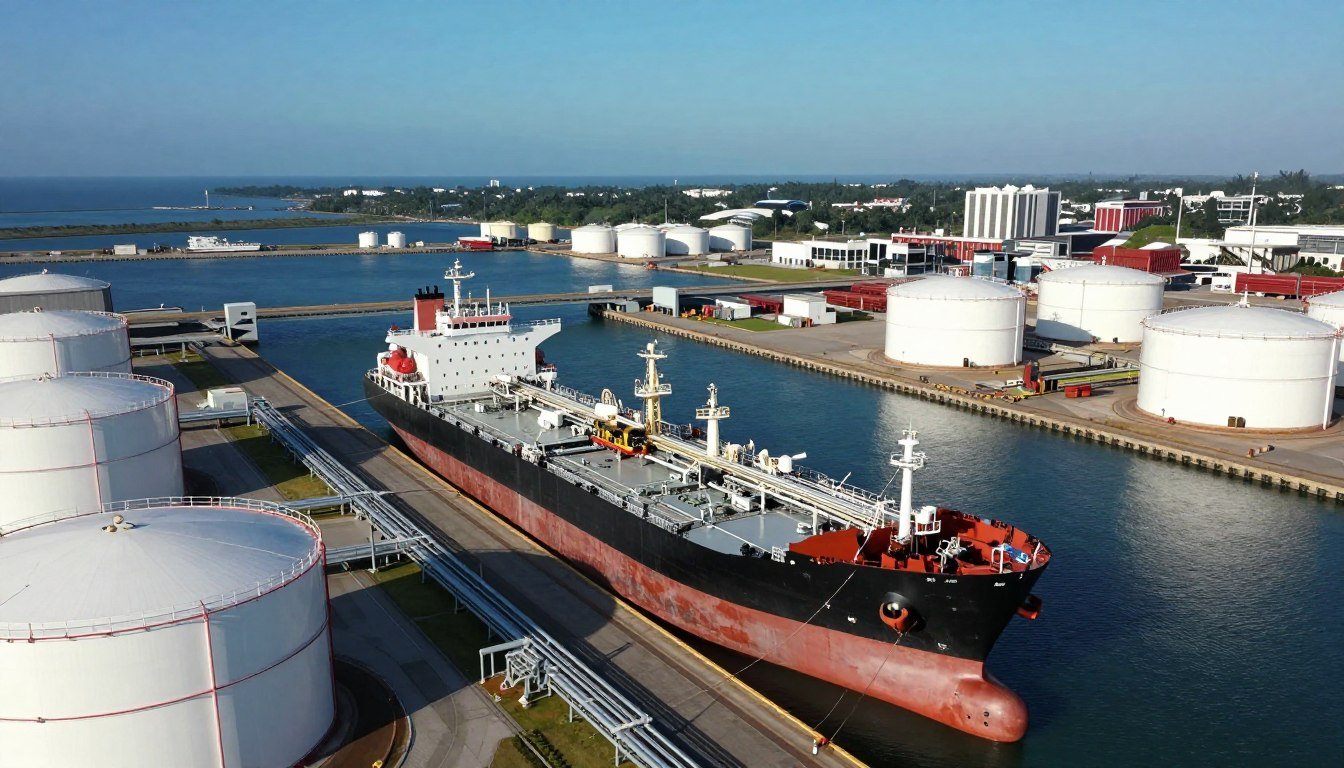
America faces a critical crossroads in energy security. Despite significant advances in domestic production, the United States still relies heavily on foreign energy supply for nearly 20% of its total energy consumption. This dependence creates economic vulnerabilities that could reshape the financial landscape by 2026.
Energy costs ripple through every sector. When foreign energy supply chains face disruption, American families pay more at the pump. Businesses watch profit margins shrink. Inflation accelerates across the economy.
Recent data from the U.S. Energy Information Administration reveals a concerning trend. In 2023, petroleum imports reached 8.5 million barrels per day. Natural gas imports climbed to record levels. These numbers signal ongoing vulnerability to global energy market shocks.
The stakes extend beyond simple economics. Energy security connects directly to national security. Trade balances shift with energy prices. Employment numbers fluctuate based on energy costs. Understanding these connections matters now more than ever.
What Is This Economic Threat?
Foreign energy supply dependence represents America’s reliance on imported energy resources to meet domestic consumption needs. This creates economic exposure to international market volatility, geopolitical conflicts, and supply chain disruptions beyond U.S. control.
The concept extends beyond simple import statistics. True energy dependence measures how quickly the economy would suffer if foreign energy supply were suddenly reduced or eliminated. It encompasses oil, natural gas, coal, and increasingly, components for renewable energy infrastructure.
Historical Background
America’s energy relationship with foreign suppliers has evolved dramatically. In 1973, the Organization of the Petroleum Exporting Countries oil embargo shocked the nation. Gas lines stretched for blocks. The economy plunged into recession.
That crisis sparked decades of policy responses. The Strategic Petroleum Reserve was created in 1975. Fuel efficiency standards emerged. Domestic exploration expanded.
By 2008, the shale revolution transformed American energy production. Hydraulic fracturing unlocked vast domestic reserves. By 2019, the United States briefly became a net energy exporter for the first time since 1952.
Yet dependence persists in crucial areas. Specific petroleum products remain heavily imported. Natural gas flows across borders in growing volumes. Global energy markets stay interconnected regardless of domestic production levels.
Key Statistics on Foreign Energy Supply
| Energy Source | Import Volume (2023) | Primary Origins | Economic Value |
| Crude Oil & Petroleum | 8.5 million barrels/day | Canada, Mexico, Saudi Arabia | $285 billion annually |
| Natural Gas | 2.8 trillion cubic feet | Canada via pipeline | $42 billion annually |
| Coal | 4.8 million short tons | Colombia, Canada | $1.2 billion annually |
| Refined Products | 1.9 million barrels/day | Canada, Europe, Asia | $68 billion annually |
These figures from the U.S. Energy Information Administration illustrate the scale of foreign energy supply flowing into American markets. While domestic energy production has increased substantially, the United States remains integrated into global energy consumption patterns.
The energy mix shows important nuances. Petroleum dominates import volumes and economic impact. Natural gas dependence centers on Canadian supplies through established pipeline infrastructure. Coal imports have declined as domestic production meets most demand and clean energy transitions accelerate.
What Is Causing the Problem?
Foreign energy supply dependence stems from multiple interconnected factors. No single cause explains America’s continued reliance on imported energy. Instead, policy decisions, market dynamics, global forces, and structural economic realities combine to maintain import flows.
Policy Factors
- Environmental Regulations: Federal and state policies restrict new drilling permits on public lands. Offshore exploration faces lengthy approval processes. These rules limit domestic energy production expansion even when economically viable.
- Infrastructure Constraints: Pipeline construction encounters regulatory hurdles and local opposition. Refinery capacity has not kept pace with consumption needs. Transportation bottlenecks prevent efficient distribution of domestically produced energy.
- Trade Agreements: International treaties govern energy flows across borders. USMCA provisions affect petroleum trade with Canada and Mexico. These agreements create legal frameworks that encourage continued imports.
- Strategic Reserve Policies: Government decisions to tap or refill the Strategic Petroleum Reserve influence import demand. Recent drawdowns increased reliance on foreign sources to rebuild stockpiles.
- Renewable Energy Transition: Clean energy policies shift investment away from fossil fuel infrastructure. This transition period creates temporary gaps where domestic production cannot fully replace foreign energy supply.
Market Trends
- Price Competitiveness: Foreign energy supply often costs less than domestic alternatives when transportation is factored in. Refineries on the Gulf Coast find imported crude oil economically attractive compared to transporting domestic production from distant fields.
- Quality Specifications: Different crude oil grades suit different refinery configurations. U.S. refineries built to process heavy crude oil from foreign sources cannot easily switch to lighter domestic shale oil without expensive modifications.
- Investment Patterns: Energy companies allocate capital based on long-term return projections. Uncertainty about future policy directions causes hesitation in major domestic infrastructure investments, perpetuating reliance on existing foreign supply channels.
- Refining Economics: U.S. refinery capacity optimizes for export markets. Gasoline and diesel produced domestically often gets exported while finished products get imported, creating apparent dependence despite strong domestic energy production.
Global Influences
- OPEC Production Decisions: The Organization of the Petroleum Exporting Countries coordinates output among member nations. Production cuts raise prices and affect global energy consumption patterns. Expansion increases supply and can undercut domestic producers.
- Geopolitical Tensions: Conflicts in energy-producing regions create supply uncertainty. Sanctions against major producers like Russia redirect global energy flows. These disruptions force adjustments in foreign energy supply sources.
- Emerging Market Demand: China and India consume growing shares of global energy production. Competition for fossil fuels intensifies. This dynamic affects pricing and availability for all importing countries including the United States.
- Climate Change Commitments: International agreements influence energy policy across nations. Countries transitioning away from fossil fuels affect global supply and demand balances. These shifts create both opportunities and challenges for energy security.
Key Insight: Foreign energy supply dependence persists not from a single cause but from the interaction of domestic policy constraints, market economics, global political dynamics, and structural features of the American energy system. Addressing the challenge requires coordinated action across multiple fronts rather than simple solutions.
Structural Economic Changes
- Refinery Specialization: American refineries invested billions in equipment designed for specific crude oil types. Switching sources requires costly retooling. This specialization locks in demand for certain foreign energy supply streams.
- Geographic Mismatch: Domestic energy production concentrates in specific regions. Major consumption centers exist elsewhere. Transportation costs and infrastructure gaps make foreign imports economically rational for many markets.
- Seasonal Demand Fluctuations: Energy consumption varies throughout the year. Winter heating needs spike in northern states. Summer cooling drives electricity demand. Foreign energy supply helps smooth these variations when domestic production cannot flex quickly enough.
- Product Mix Imbalances: Refineries produce multiple products from crude oil in fixed ratios. Domestic demand ratios do not always match production ratios. Importing certain products while exporting others optimizes economic returns despite seeming inefficient.
- Long-Term Contracts: Energy companies sign multi-year purchase agreements with foreign suppliers. These commitments provide price stability but also lock in import volumes regardless of changes in domestic production capacity.
Impact on the U.S. Economy
Foreign energy supply dependence creates ripples throughout the American economy. These effects touch every sector and influence the financial well-being of businesses and families alike. Understanding these connections helps explain why energy security matters for economic stability.
GDP Growth
Gross Domestic Product growth shows sensitivity to energy price shocks originating in foreign markets. When imported energy costs spike, economic expansion slows as businesses and consumers redirect spending toward higher fuel bills.
The Congressional Budget Office estimates that sustained 20% increases in foreign energy supply costs reduce GDP growth by approximately 0.3 to 0.5 percentage points annually. This translates to tens of billions of dollars in lost economic output.
Energy-intensive industries feel immediate pressure. Manufacturing facilities face higher operating costs. Transportation companies struggle with fuel expenses. These sectors often reduce output or investment in response to foreign energy supply price increases.
Service industries experience secondary effects. Consumers with less discretionary income after paying energy bills reduce spending on restaurants, entertainment, and retail. This dampens overall economic activity and slows GDP growth.
The energy trade deficit drains resources from the domestic economy. Dollars spent on foreign energy supply represent wealth transferred abroad rather than circulating within American markets. This outflow reduces the multiplier effect of economic activity.
Conversely, periods of low foreign energy supply prices can stimulate growth. Reduced import costs free up capital for other investments. Consumer confidence rises. Economic expansion accelerates when energy security concerns diminish.
Inflation
Energy prices drive inflation more powerfully than most other factors. The Bureau of Labor Statistics tracks energy as a separate component in the Consumer Price Index because of its significant impact on overall price levels.
Foreign energy supply disruptions trigger immediate price increases at gas stations. These costs quickly spread through the economy. Transportation expenses rise for all goods. Shipping companies pass costs to retailers. Retailers raise consumer prices.
- Direct Effects: Gasoline and heating fuel prices jump immediately when foreign energy supply costs increase. Households feel the impact within days. The energy component of CPI can swing by 10-30% annually during volatile periods.
- Indirect Effects: Manufacturing input costs rise as electricity and fuel expenses increase. These higher production costs eventually appear in consumer goods prices. Food prices climb as agricultural operations pay more for diesel fuel and fertilizer.
- Wage-Price Spirals: Workers demand higher wages to offset increased energy costs. Businesses raise prices to cover higher labor costs. This cycle can become self-reinforcing during sustained foreign energy supply price increases.
- Expectations Impact: Anticipated future energy price increases influence current inflation. Businesses and consumers adjust behavior based on expectations. These psychological factors amplify the inflationary impact of foreign energy supply dependence.
The Federal Reserve faces difficult tradeoffs when foreign energy supply shocks drive inflation. Raising interest rates to combat inflation can slow economic growth. Maintaining lower rates risks allowing inflation to become entrenched. Energy price volatility complicates monetary policy decisions.
Employment
Job markets respond to foreign energy supply conditions in complex ways. Energy sector employment represents only a small fraction of total jobs, but energy costs affect hiring decisions across all industries.
| Sector | Employment Impact | Sensitivity to Foreign Energy Supply |
| Energy Production | Direct job gains from high prices | High – domestic production increases when imports become expensive |
| Manufacturing | Job losses from higher costs | High – energy-intensive operations face margin pressure |
| Transportation | Reduced hiring and hours | Very High – fuel costs directly impact profitability |
| Retail & Services | Decreased demand reduces staffing | Medium – indirect effects through consumer spending |
| Construction | Project delays and cancellations | Medium – materials and equipment costs increase |
The Bureau of Labor Statistics data shows employment in domestic energy production rises when foreign energy supply prices increase sustainably. Oil and gas extraction added 50,000 jobs between 2020 and 2023 as prices recovered. These gains partially offset job losses in energy-consuming industries.
Small businesses prove particularly vulnerable to foreign energy supply cost increases. Limited financial buffers mean sudden energy expense spikes can force layoffs or closures. These businesses employ nearly half of private sector workers, magnifying the employment impact of energy insecurity.
Financial Markets
Stock markets react swiftly to foreign energy supply news. Energy sector equities gain when oil prices rise. Airlines, transportation companies, and manufacturing stocks decline. The overall market direction depends on whether investors view energy price changes as temporary or sustained.

Bond markets factor energy prices into inflation expectations. Rising foreign energy supply costs typically push bond yields higher as investors demand compensation for anticipated inflation. This increases borrowing costs for businesses and governments.
Currency values fluctuate based on energy trade balances. Countries importing large amounts of foreign energy supply see their currencies weaken as they exchange domestic currency for foreign energy. The dollar’s reserve currency status partially shields the United States from this effect, but not entirely.
Commodity markets beyond energy feel secondary impacts. Metals, agricultural products, and other raw materials often move in correlation with energy prices. This interconnection amplifies financial market volatility during foreign energy supply disruptions.
Consumers and Businesses
American households dedicate roughly 7% of total spending to energy costs in normal times. This percentage rises quickly when foreign energy supply prices spike. For lower-income families, energy expenses can consume 15-20% of budgets during high-price periods.
Consumer behavior shifts in response to energy costs. High gasoline prices reduce driving and vacation travel. Expensive heating fuel forces families to lower thermostats. These adjustments ripple through the economy as spending patterns change.
- Reduced Discretionary Spending: Families prioritize essential expenses when energy costs rise. Restaurant visits decline. Entertainment spending drops. Retail sales slow as consumers redirect budgets toward fuel and utilities.
- Delayed Major Purchases: Vehicle sales fall when gasoline prices increase. Consumers postpone replacing appliances and making home improvements. These big-ticket items drive significant economic activity when delayed.
- Geographic Mobility: Job seekers become less willing to relocate when moving costs rise. Long commutes become less viable. This reduces labor market efficiency and can contribute to regional economic imbalances.
- Savings Rate Changes: Uncertainty about future foreign energy supply costs causes some households to increase savings. Others deplete savings to maintain consumption. Both responses affect overall economic demand.
Businesses face operational challenges beyond simple cost increases. Supply chain planning becomes more difficult when foreign energy supply prices fluctuate unpredictably. Companies may reduce inventory levels or shift sourcing strategies to minimize energy-related risks.
Long-term investment decisions incorporate energy security considerations. Manufacturing operations evaluate whether domestic production remains competitive if foreign energy supply costs rise. Some companies reshore production to reduce exposure to international energy price volatility.
Recent Data and Trends
Current statistics reveal evolving patterns in America’s foreign energy supply relationships. The data shows both progress toward greater energy independence and persistent vulnerabilities that could affect economic stability through 2026 and beyond.
Latest Import Statistics
The U.S. Energy Information Administration reported that in 2023, the United States imported approximately 8.5 million barrels per day of crude oil and petroleum products. This represents a 12% increase from 2022 levels.
Canada remains the dominant foreign energy supply source. Canadian crude oil and natural gas account for more than 60% of total U.S. energy imports. This concentration creates both security through proximity and risk through over-reliance on a single source.
Petroleum Import Sources (2023)
- Canada: 4.3 million barrels per day
- Mexico: 0.7 million barrels per day
- Saudi Arabia: 0.5 million barrels per day
- Iraq: 0.3 million barrels per day
- Colombia: 0.3 million barrels per day
- Other countries: 2.4 million barrels per day
Natural Gas Trade (2023)
- Imports: 2.8 trillion cubic feet
- Primarily from Canada via pipeline
- LNG imports: 0.1 trillion cubic feet
- Exports: 4.2 trillion cubic feet
- Net exporter status maintained
- Growing LNG export capacity
Energy Consumption Patterns
Total U.S. primary energy consumption reached 100.4 quadrillion British thermal units in 2023. Fossil fuels continue to dominate the energy mix despite renewable energy growth.
| Energy Source | Share of Total Consumption | Year-over-Year Change | Primary Use Sector |
| Petroleum | 36% | +2.1% | Transportation |
| Natural Gas | 33% | +1.8% | Electricity, Industrial |
| Coal | 10% | -3.5% | Electricity |
| Renewable Energy | 13% | +8.2% | Electricity |
| Nuclear | 8% | +0.5% | Electricity |
These figures from the U.S. Energy Information Administration demonstrate that fossil fuels still provide 79% of American primary energy consumption. This high percentage explains continued foreign energy supply dependence despite domestic production growth.
Renewable Energy Growth Trends
Clean energy sources show rapid expansion. Wind and solar electricity generation increased by 15% in 2023. These renewable energy sources now provide approximately 14% of total electricity generation.
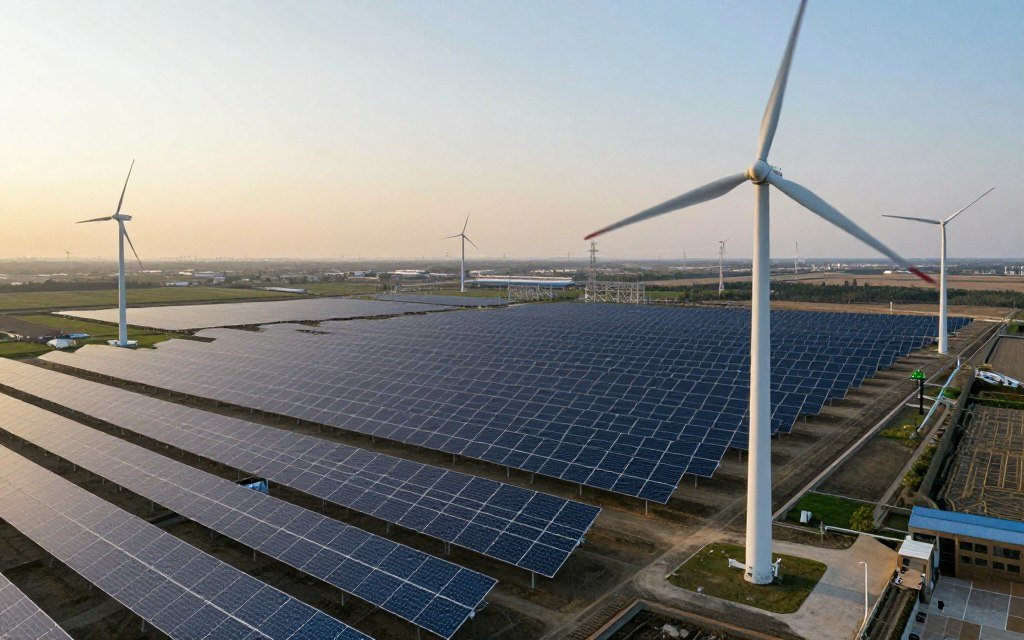
The shift toward renewable energy affects foreign energy supply needs in complex ways. Electricity generation from wind and solar reduces natural gas and coal consumption. However, transportation remains heavily dependent on petroleum. Electric vehicle adoption must accelerate significantly to reduce transportation sector foreign oil dependence.
Battery storage capacity doubled in 2023 compared to 2022. This infrastructure development helps integrate variable renewable energy sources into the electrical grid. Improved storage reduces the need for fossil fuel backup power, gradually decreasing overall fossil fuel consumption.
Global Energy Context
World energy consumption continues rising despite climate change concerns. The International Energy Agency reports global energy demand increased 2.3% in 2023. This growth strains fossil fuel supplies and affects prices in international markets.
Developing countries drive much of the consumption growth. China and India together accounted for 40% of increased global energy consumption in recent years. Their demand for fossil fuels competes with U.S. purchases of foreign energy supply, potentially driving prices higher.
Key Trend: Global energy markets increasingly compete for available fossil fuel supplies as developing nations industrialize. This competition may keep foreign energy supply prices elevated even as U.S. domestic production expands, maintaining economic vulnerability to international market dynamics.
Climate Change Impact on Energy
Greenhouse gas emissions from energy use reached 36.8 billion tonnes of CO2 globally in 2023. The energy sector accounts for approximately 73% of total greenhouse gas emissions worldwide. These emissions drive climate change that creates additional economic risks.
Extreme weather events linked to climate change disrupt energy infrastructure. Hurricanes damage offshore drilling platforms and coastal refineries. Droughts reduce hydroelectric power generation. Heat waves strain electricity grids. These disruptions can increase dependence on foreign energy supply when domestic sources face weather-related interruptions.
The transition away from fossil fuels accelerates as governments and businesses respond to climate change pressures. However, this transition creates a challenging interim period. Investment in new fossil fuel infrastructure declines while renewable energy capacity has not yet fully replaced fossil fuel energy sources. This gap may temporarily increase foreign energy supply dependence.
Energy Price Volatility
Oil prices fluctuated between $70 and $95 per barrel throughout 2023. Natural gas prices showed even greater volatility, ranging from $2 to $7 per million British thermal units. This price instability complicates economic planning for businesses and households.
Geopolitical events continue driving price swings. Production cuts by the Organization of the Petroleum Exporting Countries influenced oil markets. Pipeline disputes affected natural gas flows. These international factors demonstrate how foreign energy supply dependence creates exposure to events beyond U.S. control.
Expert Opinions or Forecasts
Leading economists and energy analysts offer varied perspectives on how foreign energy supply dependence will affect the U.S. economy through 2026 and beyond. Their forecasts reflect different assumptions about policy changes, technological development, and global market conditions.

International Monetary Fund Outlook
The International Monetary Fund projects that energy price volatility will remain elevated through 2026. Their economists anticipate that foreign energy supply disruptions could reduce U.S. GDP growth by 0.2 to 0.6 percentage points annually if oil prices spike above $110 per barrel sustained.
IMF analysis emphasizes the interconnection between energy security and financial stability. Countries with high foreign energy supply dependence face greater risks of current account deficits. These imbalances can trigger currency volatility and capital flight during crisis periods.
“Energy transition creates a paradox where short-term vulnerability may increase even as long-term sustainability improves. The U.S. must navigate this challenging period carefully to maintain economic stability.”
U.S. Department of the Treasury Assessment
The U.S. Department of the Treasury released analysis in early 2024 examining fiscal impacts of energy price shocks. Their models suggest that sustained high foreign energy supply costs could reduce federal tax revenues while simultaneously increasing spending on energy assistance programs.
Treasury economists note that energy price impacts vary significantly across regions. States heavily dependent on energy-intensive industries face greater economic stress. Coastal regions with access to imported energy through ports may experience different price dynamics than interior regions relying on pipeline infrastructure.
Optimistic Scenario
- Renewable energy deployment accelerates faster than expected
- Domestic fossil fuel production remains stable
- International markets stay relatively calm
- Energy efficiency improvements reduce consumption
- Result: Foreign energy supply dependence gradually declines
- Economic impact: Minimal disruption, steady GDP growth
Pessimistic Scenario
- Geopolitical conflicts disrupt major energy exporters
- Climate disasters damage energy infrastructure
- Renewable energy transition faces technical challenges
- OPEC production cuts tighten global markets
- Result: Foreign energy supply becomes more expensive and volatile
- Economic impact: Recession risk increases significantly
Federal Reserve Perspective
Federal Reserve officials acknowledge that foreign energy supply price volatility complicates monetary policy. When energy costs drive inflation higher, the central bank faces difficult choices between fighting inflation through interest rate increases or supporting employment and growth.
Fed economists distinguish between temporary energy price spikes and sustained increases. Temporary shocks typically do not trigger policy responses. However, persistent high foreign energy supply costs that begin affecting wage negotiations and inflation expectations may force the Federal Reserve to tighten monetary policy even if it slows economic growth.
Energy Information Administration Projections
The U.S. Energy Information Administration publishes annual energy outlook reports extending to 2050. Their reference case scenario projects that foreign energy supply will provide approximately 15-18% of total U.S. energy consumption through 2030.
EIA analysts expect petroleum imports to decline gradually as electric vehicle adoption increases. However, they note that transportation sector transformation requires decades. Gasoline and diesel will remain dominant transportation fuels through at least 2035 under current policy assumptions.
| Projection Element | 2026 Forecast | 2030 Forecast | Confidence Level |
| Oil Price (WTI) | $75-95 per barrel | $80-100 per barrel | Medium |
| Import Dependence | 18% of consumption | 15% of consumption | Medium |
| Renewable Share | 16% of consumption | 22% of consumption | High |
| Natural Gas Imports | 2.5 trillion cubic feet | 2.2 trillion cubic feet | Medium |
World Bank Analysis
The World Bank emphasizes that energy transitions in developing countries will significantly impact global markets. Their researchers project that world energy consumption will increase by 25% between 2024 and 2035, with fossil fuels still providing the majority of this energy.
This global context means that even as the United States reduces foreign energy supply dependence, competition for available resources will intensify. Emerging markets in Asia and Africa will consume growing shares of global oil and gas production. Price pressure from this demand growth may offset benefits of reduced U.S. import volumes.
Private Sector Forecasts
Energy industry analysts offer perspectives shaped by market expectations. Most major forecasting firms expect oil prices to remain in the $70-100 per barrel range through 2026 under normal conditions. Geopolitical disruptions could push prices significantly higher for temporary periods.
Industry Consensus: Energy market analysts surveyed by Bloomberg in early 2024 showed the following median expectations: Brent crude oil averaging $85/barrel in 2026, U.S. natural gas averaging $3.50/MMBtu, renewable energy providing 20% of electricity generation, and electric vehicles comprising 12% of new car sales.
Risk Assessment
Synthesizing these expert opinions suggests a medium-to-high risk outlook for foreign energy supply impacts on the U.S. economy through 2026 and beyond.
The risk assessment reflects significant uncertainty. Optimistic scenarios where renewable energy deployment accelerates and geopolitical tensions ease could reduce risks substantially. Pessimistic scenarios involving major supply disruptions or rapid fossil fuel demand growth could elevate risks to critical levels.
Most experts agree that the 2025-2030 period represents a particularly challenging transition phase. Foreign energy supply dependence may not decline as quickly as hoped while global competition for resources intensifies. This combination creates elevated economic vulnerability during the remainder of this decade.
Possible Solutions or Policy Responses
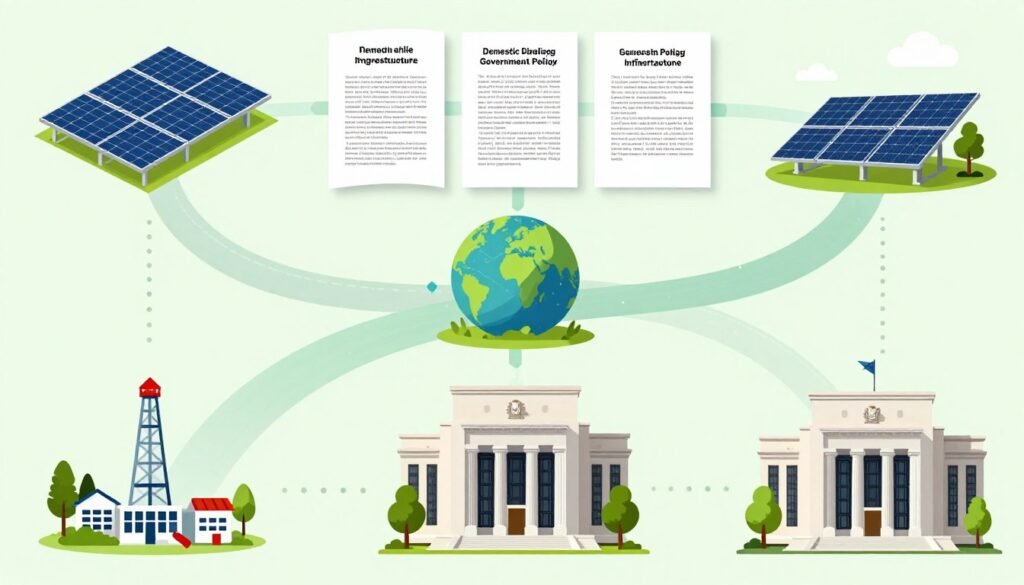
Reducing foreign energy supply dependence and mitigating its economic impacts requires coordinated action across government, business, and consumer sectors. Multiple policy approaches can work together to enhance energy security while supporting economic stability.
Government Actions
Federal and state governments possess numerous tools to address foreign energy supply challenges. Policy interventions can accelerate energy transition, support domestic production, improve efficiency, and strengthen infrastructure resilience.
Accelerating Clean Energy Deployment
The Inflation Reduction Act of 2022 provides substantial tax incentives for renewable energy development. These policies support wind and solar electricity generation, energy storage systems, and electric vehicle infrastructure. Expanding and extending these incentives could speed the transition away from fossil fuels.
- Production Tax Credits: Extended credits for wind and solar electricity generation encourage private investment in clean energy capacity. These incentives reduce the cost disadvantage compared to fossil fuel electricity.
- Investment Tax Credits: Direct credits for installing renewable energy systems help businesses and homeowners adopt clean energy. Residential solar installations increase substantially when these credits are available.
- Electric Vehicle Support: Purchase incentives for EVs accelerate transportation sector transition. Combined with charging infrastructure investments, these policies can reduce petroleum consumption significantly over time.
- Grid Modernization: Federal funding for transmission infrastructure enables renewable energy delivery from generation sites to consumption centers. Grid improvements also enhance reliability and reduce energy waste.
Strategic Domestic Production Policies
Balanced approaches to domestic fossil fuel production can reduce foreign energy supply dependence during the transition period to renewable energy dominance. These policies must navigate environmental concerns while maintaining energy security.
Streamlining permitting processes for energy projects on federal lands could increase domestic production. Current approval timelines often stretch years, delaying projects and discouraging investment. Faster decisions while maintaining environmental protections could boost supply.
Strategic Petroleum Reserve management provides tools for moderating price spikes. Releasing reserves during supply disruptions stabilizes markets. Refilling reserves during low-price periods supports domestic producers while building strategic stockpiles.
Export policies for liquefied natural gas affect domestic markets. The United States has become a major LNG exporter. Balancing export growth with domestic supply needs ensures that foreign energy supply dependence does not shift from imports to export-driven domestic shortages.
Pipeline and refinery infrastructure investments improve efficiency of domestic energy distribution. Regulatory frameworks that enable critical infrastructure development while protecting communities and environment help optimize the existing energy system during the transition period.
Energy Efficiency Programs
Reducing energy consumption through efficiency improvements decreases overall foreign energy supply needs. Government standards and incentive programs drive adoption of efficient technologies across residential, commercial, and industrial sectors.
- Building Codes: Updated standards requiring better insulation, efficient heating and cooling systems, and smart energy management reduce consumption in new construction. Retrofit programs help existing buildings improve efficiency.
- Appliance Standards: Minimum efficiency requirements for appliances, lighting, and equipment eliminate the least efficient products from markets. These standards generate substantial energy savings over time with minimal consumer inconvenience.
- Industrial Efficiency: Technical assistance and tax incentives help manufacturers adopt energy-saving processes and equipment. Industrial sector represents roughly one-third of total energy consumption, making efficiency gains particularly impactful.
- Transportation Efficiency: Fuel economy standards for vehicles reduce petroleum consumption. Supporting public transportation, walking, and cycling infrastructure decreases per-capita transportation energy needs.
Federal Reserve Policies
Monetary policy provides limited but important tools for managing economic impacts of foreign energy supply shocks. The Federal Reserve cannot control energy prices directly but can influence how those price changes affect broader economic conditions.

Interest rate adjustments represent the Fed’s primary policy tool. When foreign energy supply price increases drive inflation higher, raising interest rates can prevent inflation from becoming entrenched in wage and price-setting behavior. However, these rate increases also slow economic growth and can increase unemployment.
The Federal Reserve faces particularly difficult tradeoffs during energy-driven inflation. Unlike demand-driven inflation which responds directly to interest rate changes, energy price increases reflect supply factors largely outside Fed control. Raising rates cannot increase oil production or reduce geopolitical risks.
Policy Dilemma: Aggressive Federal Reserve responses to energy-driven inflation risk causing unnecessary economic damage. However, insufficient responses risk allowing temporary energy price shocks to generate sustained inflation through changed expectations and wage-price spirals. This balance requires careful judgment and communication.
Forward guidance helps shape market expectations. Clear Fed communication about how it will respond to various energy price scenarios reduces uncertainty. This transparency helps businesses and consumers make better planning decisions despite energy market volatility.
Financial stability monitoring becomes particularly important during energy price volatility. The Federal Reserve watches for signs that energy company debt, derivatives positions, or other financial exposures could trigger broader financial system stress. Regulatory oversight helps prevent energy market disruptions from spreading to banking and credit markets.
Market Adjustments
Private sector responses to foreign energy supply challenges often prove more powerful than government policies. Market forces drive innovation, investment, and behavioral changes that reduce dependence and improve efficiency.
Business Sector Adaptations
Companies across all industries adapt operations to reduce energy costs and risks. These market-driven changes accumulate into substantial impacts on overall foreign energy supply dependence.
- Supply Chain Reconfiguration: Businesses redesign logistics to minimize transportation costs. Nearshoring and reshoring manufacturing reduces dependence on long-distance shipping. Regional sourcing strategies become more attractive as foreign energy supply costs increase freight expenses.
- Energy Procurement Strategies: Large energy consumers negotiate long-term contracts to lock in prices. Some companies invest directly in renewable energy projects to secure stable electricity costs. On-site generation through solar panels or combined heat and power systems reduces grid dependence.
- Process Innovations: Manufacturing efficiency improvements reduce energy consumption per unit of output. New technologies and optimized processes generate competitive advantages when energy prices rise. These innovations often deliver benefits beyond energy savings through improved quality and productivity.
- Product Redesign: Companies develop less energy-intensive products in response to market demand. Lightweight materials reduce transportation costs. Energy-efficient designs attract environmentally conscious consumers while reducing operating costs.
Consumer Behavior Changes
Individual choices about transportation, housing, and consumption collectively shape energy demand. Market signals through energy prices guide these decisions toward greater efficiency and reduced foreign energy supply dependence.
Transportation Choices
Consumers increasingly select fuel-efficient vehicles. Electric vehicle adoption accelerates as prices decline and charging infrastructure expands. Public transportation use increases in urban areas when gasoline prices rise substantially.
Housing Decisions
Energy efficiency becomes more important in home purchase decisions. Buyers value good insulation, efficient HVAC systems, and solar panels. Location choices factor in commuting costs more heavily when fuel prices remain elevated.
Consumption Patterns
Shopping habits shift toward local products with lower transportation costs. Energy-intensive discretionary purchases decline during high-price periods. Consumers become more conscious of embedded energy in products and services.
Investment and Innovation
Capital flows toward energy solutions accelerate when foreign energy supply dependence creates clear market opportunities. Private investment complements government programs and often moves faster in response to emerging technologies and changing conditions.
Venture capital funding for clean energy startups reached record levels in recent years. Battery technology, hydrogen fuel, advanced nuclear designs, and carbon capture systems attract billions in private investment. These technologies could dramatically reduce fossil fuel consumption if successfully scaled.
Energy storage represents a particularly crucial innovation area. Better batteries enable broader renewable energy adoption by solving intermittency challenges. Grid-scale storage allows wind and solar electricity to replace fossil fuel power plants even when the sun is not shining and wind is not blowing.
What It Means for Americans
Foreign energy supply dependence affects everyday life for American families in concrete, measurable ways. Understanding these practical impacts helps individuals make informed decisions about their finances, careers, and major purchases.

Cost of Living
Energy expenses touch every aspect of household budgets. When foreign energy supply costs rise, families feel the impact quickly through multiple channels.
Transportation costs represent the most visible impact. Gasoline prices respond rapidly to changes in global oil markets. A $20 per barrel increase in crude oil prices typically translates to roughly 50 cents per gallon higher gasoline prices. For a family driving 20,000 miles annually in a vehicle getting 25 miles per gallon, this means an extra $400 in fuel costs each year.
Direct Energy Costs
- Home Heating and Cooling: Natural gas and electricity prices follow foreign energy supply trends. Winter heating bills can increase by 20-40% during cold snaps when natural gas prices spike. Summer air conditioning costs rise when electricity generation depends on expensive fossil fuels.
- Gasoline: Pump prices fluctuate daily based on global oil markets. Commuters and families with multiple vehicles feel significant budget pressure during high-price periods. Rural residents often suffer more because longer distances offer fewer alternatives to driving.
- Utilities: Electricity rates incorporate fuel costs for power generation. Regions depending heavily on natural gas power plants see bigger rate swings than areas with diverse generation mixes including nuclear and renewable energy.
Indirect Costs
- Food Prices: Agricultural production depends heavily on diesel fuel for equipment and transportation. Fertilizer costs link directly to natural gas prices. These factors flow through to grocery store prices with a lag of several months.
- Consumer Goods: Manufacturing and shipping costs increase with energy prices. Retailers pass these costs to consumers gradually. The impact appears across all product categories from clothing to electronics to household items.
- Services: Businesses with high energy costs like restaurants, dry cleaners, and gyms raise prices when their utility and fuel bills increase. Service inflation often persists even after energy prices stabilize because businesses hesitate to reduce prices frequently.
The Bureau of Labor Statistics Consumer Price Index shows energy costs averaging 7-8% of total household spending. However, this percentage varies dramatically by income level. Lower-income families often spend 15-20% of budgets on energy. These households suffer disproportionately when foreign energy supply prices increase.
Geographic variation also matters significantly. Families in cold climates face higher heating costs. Rural residents drive more miles. Regions without natural gas pipeline access pay more for electricity. These factors mean that national average energy costs mask substantial variation in individual family experiences.
Jobs
Employment security and wage growth connect to foreign energy supply conditions through multiple channels. Some sectors benefit from high energy prices while others suffer, creating winners and losers in the labor market.

Energy Sector Employment
Domestic energy production jobs increase when foreign energy supply becomes expensive. Oil and gas companies expand drilling when prices justify development costs. Renewable energy employment grows steadily regardless of fossil fuel prices as clean energy transitions advance.
The Bureau of Labor Statistics tracks roughly 1.8 million jobs directly in energy production and distribution. These positions typically pay well above median wages. Growth in this sector during high-price periods provides good opportunities for workers with appropriate skills.
Energy-Consuming Industries
Manufacturing employment becomes vulnerable when foreign energy supply costs rise substantially. Energy-intensive industries like steel, aluminum, chemicals, and paper products face margin pressure. Companies may reduce shifts, delay expansions, or in extreme cases close facilities.
Transportation and logistics employment shows mixed effects. Higher fuel costs reduce demand for shipping services as businesses seek to minimize transportation. However, companies also expand fleet maintenance and efficiency improvement efforts, creating some offsetting job opportunities.
- Oil and gas extraction
- Renewable energy installation
- Energy efficiency services
- Public transportation
- Local food production
- Insulation and weatherization
Industries That Benefit
- Long-haul trucking
- Airlines and aviation
- Energy-intensive manufacturing
- Conventional auto manufacturing
- Petrochemical production
- Global supply chain logistics
Vulnerable Industries
Wage Pressures
Workers demand higher wages to offset increased cost of living when energy prices remain elevated. These wage pressures can trigger inflation spirals if businesses raise prices to cover higher labor costs. The Federal Reserve watches this dynamic closely when setting monetary policy.
Career planning increasingly factors in energy cost trends. Young workers entering the labor market consider which industries offer resilience against fossil fuel price volatility. Clean energy careers attract growing interest. Traditional energy sector jobs remain attractive due to high wages but face long-term transition uncertainty.
Investments
Foreign energy supply dependence creates both risks and opportunities for investors. Portfolio performance depends significantly on energy market conditions and how companies adapt to energy cost pressures.
Stock Market Impacts
Energy sector stocks typically perform well during high price periods. Oil and gas company profits increase substantially when crude oil trades above $80-90 per barrel. Investors seeking to benefit from energy price increases or hedge against inflation often allocate funds to energy equities.
Conversely, many other sectors underperform during energy price spikes. Airlines suffer from fuel costs. Retailers face margin pressure from higher transportation expenses. Manufacturing companies with energy-intensive operations see profitability decline. Broad market indices often stagnate or decline during sustained energy price increases.
| Investment Category | Typical Performance During High Energy Prices | Portfolio Strategy Consideration |
| Energy Stocks | Strong positive correlation with oil/gas prices | Natural hedge against energy cost inflation |
| Renewable Energy | Long-term growth, less price sensitivity | Positions for energy transition |
| Transportation | Negative correlation with fuel prices | Vulnerable to energy cost shocks |
| Utilities | Mixed, depends on generation mix | Defensive but with energy exposure |
| Manufacturing | Negative for energy-intensive industries | Assess individual company efficiency |
Retirement Accounts
Long-term investors saving for retirement must consider energy transition trends. Fossil fuel companies face uncertain futures as climate policies and renewable energy growth threaten their business models. However, these companies often pay substantial dividends currently, making them attractive for income-focused investors.
Diversification helps manage energy-related portfolio risks. Balanced exposure across energy sources and economic sectors reduces vulnerability to any single outcome. Index funds provide automatic diversification but may have significant energy sector exposure depending on market capitalizations.
Real Estate
Property values reflect energy cost considerations increasingly. Energy-efficient homes command premium prices. Properties in walkable neighborhoods near public transportation maintain value better during high gasoline price periods. Solar panels and efficient HVAC systems improve both operating costs and resale values.
Commercial real estate faces similar dynamics. Warehouse and distribution center locations must account for transportation costs. Manufacturing facilities evaluate energy infrastructure when selecting sites. Office buildings compete partly on energy efficiency and operating costs.
Housing
Housing affordability and location choices connect strongly to foreign energy supply costs. Transportation expenses factor significantly in total housing cost calculations, especially in sprawling metropolitan areas.

The U.S. Department of Housing and Urban Development recognizes transportation costs as a critical housing affordability factor. A home may appear affordable based on mortgage costs alone, but long commutes in areas with limited public transportation can make total housing plus transportation costs unsustainable during high energy price periods.
Home energy efficiency improvements provide multiple benefits. Lower utility bills improve cash flow. Reduced dependence on foreign energy supply through lower consumption provides insulation against price volatility. Many efficiency upgrades also improve comfort and home value.
- Insulation and Air Sealing: Proper insulation and eliminated air leaks reduce heating and cooling needs by 20-40%. These improvements typically pay for themselves within 5-10 years through lower utility bills.
- Efficient HVAC Systems: Modern heating and cooling equipment uses substantially less energy than older models. Heat pumps can reduce energy consumption by 50% compared to traditional systems in many climates.
- Solar Panels: Residential solar installations have declined in cost by more than 70% over the past decade. Many homeowners can now generate electricity cheaper than utility rates, eliminating exposure to electricity price volatility.
- Energy-Efficient Appliances: Refrigerators, water heaters, washers, and dryers with high efficiency ratings reduce electricity consumption. LED lighting uses 75% less energy than incandescent bulbs.
- Smart Home Technology: Programmable thermostats and energy monitoring systems help homeowners optimize consumption. These tools can reduce energy use by 10-15% through better management without sacrificing comfort.
Location decisions increasingly weigh energy considerations. Urban areas with good public transportation offer alternatives to driving. Proximity to employment centers reduces commuting costs. These factors become more valuable when gasoline prices remain elevated, supporting property values in well-located neighborhoods.
New construction emphasizes energy efficiency more than older housing stock. Building codes require better insulation and efficient systems. Buyers increasingly demand these features. The gap in operating costs between old and new homes widens as energy prices rise, affecting relative values.
Future Outlook (2026–2030)
The period from 2026 through 2030 represents a critical transition phase for American energy security. Multiple trends will converge during these years, creating both challenges and opportunities for reducing foreign energy supply dependence while maintaining economic stability.

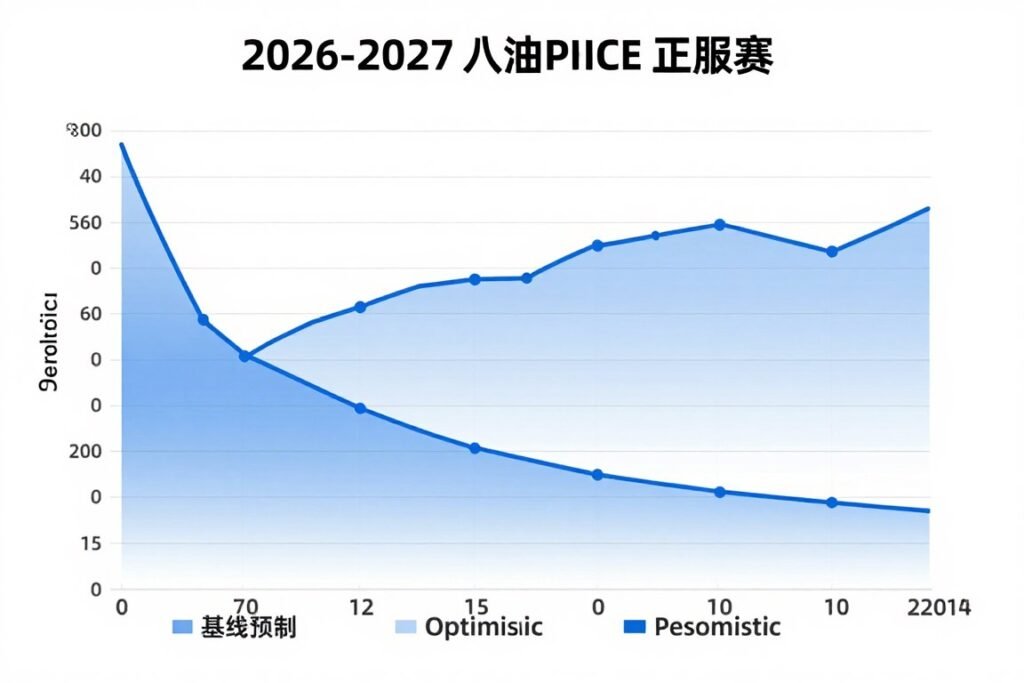
Short-Term Outlook (2026-2027)
The immediate future likely brings continued volatility in foreign energy supply markets. Geopolitical uncertainties, OPEC production decisions, and global economic growth patterns will drive price fluctuations. The U.S. economy must navigate this instability while clean energy transitions gradually accelerate.
Petroleum consumption will likely peak during this period. Transportation sector dominates oil use, and electric vehicle adoption requires years to substantially impact overall gasoline demand. The Energy Information Administration projects U.S. petroleum consumption remaining near 20 million barrels per day through 2027.
Natural gas consumption may continue growing slightly as coal-fired power plants retire. However, renewable energy expansion will begin constraining gas growth. Wind and solar electricity generation will capture increasing shares of new demand, limiting fossil fuel consumption growth.
Foreign energy supply volumes likely remain stable in the near term. Import reductions require either significant domestic production increases or major consumption decreases. Neither seems probable by 2027. Policy changes and infrastructure investments need time to generate substantial effects.
Economic impacts during 2026-2027 depend heavily on oil price paths. Prices remaining in the $70-90 per barrel range would allow steady growth. Spikes above $110 could trigger recession concerns. The Federal Reserve will adjust monetary policy based on how energy prices affect overall inflation.
Medium-Term Trends (2028-2030)
The late 2020s should show accelerating progress toward reduced foreign energy supply dependence. Multiple factors converge to enable more rapid transitions than the near term permits.
Renewable Energy Dominance in Power Sector
Wind and solar electricity generation costs continue declining. Battery storage improves in both capability and economics. These trends enable renewable energy to capture most new electricity demand and begin displacing existing fossil fuel generation.
The Energy Information Administration projects renewable energy providing 25-30% of total U.S. electricity generation by 2030. Some independent analysts forecast even higher shares if cost declines continue and policy support remains strong. This growth directly reduces natural gas and coal consumption.
Transportation Sector Transformation Begins
Electric vehicles should reach 15-20% of new car sales by 2030 under current policy trajectories. This penetration starts generating measurable impacts on gasoline consumption. However, the vehicle fleet turns over slowly. Most cars on the road in 2030 will still burn gasoline.
Passenger Vehicles
EV market share grows from 7% in 2024 to potentially 20% by 2030. Improved batteries extend range and reduce costs. Charging infrastructure expands substantially. Consumer acceptance increases as product options diversify.
Commercial Vehicles
Delivery vans and urban trucks begin electrifying. Amazon, UPS, and FedEx commit to large electric fleets. These commercial applications reduce diesel consumption in urban areas significantly by 2030.
Long-Haul Transportation
Heavy trucks and aviation remain largely dependent on fossil fuels through 2030. Battery technology cannot yet provide sufficient range for these applications economically. Sustainable aviation fuel and hydrogen offer long-term alternatives but remain in early development.
Energy Efficiency Improvements
Cumulative efficiency gains across all sectors reduce energy consumption per dollar of GDP. Building retrofits, industrial process improvements, and more efficient appliances and equipment cut overall primary energy consumption even as the economy grows.
The Congressional Budget Office projects energy intensity (energy consumed per unit of economic output) declining by approximately 1.5-2% annually through 2030. This efficiency improvement helps reduce foreign energy supply needs without requiring production increases or lifestyle changes.
Long-Term Risks
Despite progress toward energy independence, significant risks persist through 2030 and beyond. Understanding these challenges helps policymakers, businesses, and individuals prepare appropriate responses.
Geopolitical Uncertainties
Global energy markets remain vulnerable to political instability in major producing regions. Middle East conflicts could disrupt oil supplies. Russian energy policy affects global natural gas markets. Chinese demand growth influences prices worldwide. These factors stay largely beyond U.S. control regardless of domestic energy progress.
The Organization of the Petroleum Exporting Countries retains substantial market power. Production decisions by OPEC members can swing oil prices by $20-30 per barrel within months. This influence will persist through 2030 even as renewable energy grows, because petroleum remains dominant in transportation.
Climate Change Impacts
Extreme weather events threaten energy infrastructure. Hurricanes damage offshore drilling platforms and coastal refineries. Droughts reduce hydroelectric generation. Heat waves strain electrical grids. These climate-related disruptions may intensify through 2030, potentially increasing temporary dependence on foreign energy supply when domestic sources face weather damage.
Greenhouse gas emissions from global energy consumption continue rising despite growing renewable energy. The world remains far from climate targets. Without dramatic acceleration in clean energy adoption worldwide, climate change will worsen, creating additional economic risks beyond energy security concerns.
Technology and Infrastructure Challenges
The energy transition requires massive infrastructure investments. Electrical grids need modernization to handle variable renewable generation. EV charging networks must expand dramatically. These capital-intensive projects face financing challenges, permitting delays, and construction constraints.
Technology breakthroughs could accelerate or impede progress. Advanced battery chemistry might enable faster EV adoption. Alternatively, technical problems could slow deployment. Hydrogen fuel technology, advanced nuclear designs, and carbon capture systems all show promise but face uncertain development timelines.
Economic Transition Stresses
Moving away from fossil fuels creates winners and losers. Energy-producing regions face economic challenges as demand for coal, oil, and gas gradually declines. Workers in fossil fuel industries need retraining and new opportunities. These transition costs could generate political resistance that slows progress.
Critical Period Ahead: The 2026-2030 timeframe represents a vulnerable transition phase. Fossil fuel infrastructure ages and investment declines, but renewable energy and electric transportation have not yet fully scaled to replace it. This gap creates risks of supply shortages and price spikes that could significantly impact the U.S. economy.
Global Competition for Resources
The clean energy transition ironically creates new dependencies. Solar panels, batteries, and wind turbines require rare earth elements, lithium, cobalt, and other minerals. China currently dominates production and processing of many critical materials. Shifting from foreign oil dependence to foreign mineral dependence would not necessarily improve energy security.
Building domestic supply chains for clean energy materials and manufacturing takes time and investment. The United States lags behind China in many crucial clean energy industries. Closing these gaps by 2030 requires sustained policy focus and private sector commitment.
Reasons for Optimism
Despite significant challenges, multiple factors support optimism that foreign energy supply dependence will decline materially by 2030 and continue improving thereafter.
- Technology Cost Curves: Solar and wind electricity costs have fallen 90% over the past decade. Battery prices dropped 97% since 1990. If these trends continue, clean energy will become economically superior to fossil fuels across most applications by 2030.
- Market Momentum: Private sector investment in clean energy reached record levels. Major corporations commit to renewable energy and electric vehicle production. Market forces increasingly drive the transition independent of government policy.
- Policy Alignment: Federal, state, and local governments increasingly coordinate on energy transition goals. The Inflation Reduction Act provides long-term policy certainty. This stability encourages the massive investments needed for transformation.
- Innovation Acceleration: Research and development spending on energy technologies continues growing. Breakthroughs in storage, hydrogen, advanced nuclear, and other areas could dramatically accelerate transitions.
- Domestic Resources: The United States possesses abundant renewable energy resources. Solar potential in the Southwest, wind resources in the Great Plains, and offshore wind along coasts provide sufficient clean energy to meet all national needs many times over.
Most expert projections show foreign energy supply providing 12-15% of total U.S. energy consumption by 2030, down from current levels near 18-20%. This represents meaningful progress toward energy independence. Continued improvement through the 2030s could reduce import dependence to minimal levels.
The path forward requires sustained effort across government, business, and individual action. No single solution solves all challenges. However, the combination of policy support, market forces, technological progress, and growing public awareness creates conditions for substantial advancement toward energy security and economic resilience.
Conclusion
Dependence on foreign energy supply represents a significant but manageable challenge for the U.S. economy through 2026 and beyond. The economic impacts touch every American through energy costs, employment conditions, investment returns, and housing affordability. Understanding these connections empowers better decision-making at individual, business, and policy levels.
Current import levels of approximately 18-20% of total energy consumption create vulnerability to international market disruptions and price volatility. This dependence manifests economically through inflation pressures, GDP growth constraints, and financial market instability during energy price spikes. However, the situation is far from hopeless.
Multiple pathways exist for reducing foreign energy supply dependence while supporting economic growth and prosperity. Accelerating clean energy deployment offers the most sustainable long-term solution. Renewable electricity generation, electric transportation, and improved energy efficiency collectively can eliminate most fossil fuel imports over the coming decades.
The transition period through 2030 requires careful management. Renewable energy and electric vehicles have not yet scaled sufficiently to fully replace fossil fuels. During this phase, balanced domestic fossil fuel development can provide bridge capacity while clean energy infrastructure expands. Strategic policies that support both transition and security serve the national interest.
Key Takeaways
- Foreign energy supply dependence affects all Americans through costs, jobs, and economic stability
- Current import levels create meaningful vulnerability but do not constitute a crisis
- Multiple solutions exist across government policy, business action, and individual choices
- The 2026-2030 period represents both challenge and opportunity for energy transition
- Technology trends strongly favor renewable energy economics over time
- Sustained effort can achieve substantial energy independence by the 2030s
Forward-Looking Perspective
America stands at an energy crossroads. Decisions made now will shape economic security for decades. The transition from fossil fuel dependence to renewable energy abundance requires investment, innovation, and commitment.
Global energy markets will remain interconnected regardless of domestic production levels. Complete energy isolation is neither possible nor desirable. However, reducing vulnerability to foreign supply disruptions enhances economic resilience and strengthens national security.
The path forward demands cooperation across traditional political divides. Energy security and climate progress are not opposing goals. Thoughtful policies can advance both objectives simultaneously, creating a more prosperous and sustainable future.
Individual Americans can contribute to energy security while improving their personal financial situations. Energy-efficient homes reduce both costs and vulnerability to price spikes. Electric vehicles eliminate gasoline expenses. Solar panels provide energy independence at household level. These choices collectively reshape the national energy landscape.
Businesses that embrace energy transition position themselves for long-term success. Companies reducing energy consumption improve competitiveness regardless of price trends. Investment in renewable energy locks in stable long-term costs. Innovation in energy efficiency and clean technology creates new market opportunities.
Policymakers must maintain focus on long-term energy transformation while managing short-term economic impacts. Support for clean energy deployment, efficiency improvements, and infrastructure modernization requires sustained commitment through multiple election cycles. International cooperation on climate and energy security enhances global stability that benefits all nations.
The challenge of foreign energy supply dependence is serious but solvable. Technology, economics, and growing societal commitment to sustainability align to enable dramatic progress. The next five years will prove critical in determining whether the United States achieves genuine energy security or remains vulnerable to international market forces.
Americans have overcome greater challenges in the past. The same innovative spirit, technological prowess, and determination that built the nation can solve this challenge. Energy independence by the 2030s is achievable if the commitment and resources flow toward that goal consistently.
Take Action on Your Energy Future
Don’t let foreign energy supply uncertainty derail your financial plans. Get the tools and insights you need to protect your family and business.
Frequently Asked Questions
How much does the U.S. currently depend on foreign energy supply?
The United States imports approximately 18-20% of its total energy consumption, with petroleum representing the largest component at about 8.5 million barrels per day. However, this varies significantly by energy source. The U.S. is a net exporter of natural gas and coal, but remains dependent on imported crude oil and refined petroleum products. Canada supplies over 60% of energy imports, with Mexico, Saudi Arabia, and other countries providing the remainder.
What causes gasoline prices to change so quickly?
Gasoline prices respond rapidly to global oil markets because crude oil represents 50-60% of the pump price. When international events affect oil supply or demand expectations, traders adjust prices immediately. Refinery capacity, seasonal demand changes, and regional supply factors also influence prices. The Organization of the Petroleum Exporting Countries production decisions, geopolitical tensions, and natural disasters can trigger sudden price movements that reach gas stations within days.
Will renewable energy eliminate foreign energy supply dependence?
Renewable energy can substantially reduce foreign energy supply dependence over time, particularly in electricity generation. However, complete elimination requires addressing transportation sector petroleum use through electric vehicles, which takes decades for full fleet turnover. Additionally, renewable energy manufacturing depends on imported materials like lithium and rare earth elements, potentially creating new dependencies. A comprehensive strategy combining renewable energy, efficiency, and domestic mineral development offers the best path toward true energy independence.
How do energy costs affect inflation?
Energy prices impact inflation directly through gasoline, heating, and electricity costs that consumers pay, and indirectly through transportation and manufacturing expenses that businesses pass along in product prices. The Bureau of Labor Statistics estimates energy represents 7-8% of the Consumer Price Index. However, energy’s influence exceeds its direct weight because it affects nearly all other prices. A 20% increase in oil prices typically adds 0.5-1.0 percentage points to overall inflation over several months as indirect effects spread through the economy.
What can individuals do to reduce personal energy dependence?
Individuals can reduce personal foreign energy supply exposure through home energy efficiency improvements like insulation and efficient HVAC systems, installing solar panels, purchasing electric or highly efficient vehicles, choosing housing near employment to minimize commuting, using public transportation when available, and adjusting thermostats and consumption habits. These actions both reduce costs and provide insulation from energy price volatility. Many efficiency improvements pay for themselves through lower utility bills within 5-10 years.
How does energy security affect national security?
Energy security directly impacts national security by affecting military fuel supplies, economic strength that supports defense capabilities, and freedom to conduct foreign policy without energy supply blackmail. Countries dependent on foreign energy supply face pressure from supplier nations. Energy disruptions can trigger economic crises that threaten political stability. The U.S. military consumes substantial fuel, making reliable energy access crucial for defense readiness. Reducing foreign dependence enhances strategic flexibility and national resilience.