
U.S. Government Shutdown: What’s Open, Closed, and the Impact
A U.S. government shutdown occurs when Congress fails to pass funding legislation to finance federal operations and agencies. With another potential shutdown looming, Americans face uncertainty about essential services, economic consequences, and daily disruptions. The current political standoff centers around Department of Homeland Security funding, with Democrats demanding reforms to immigration enforcement following controversial incidents in Minneapolis. This comprehensive guide explains what happens during a shutdown, which services continue, and how it affects both American citizens and global interests.
Understanding Government Shutdowns
A government shutdown occurs when Congress fails to pass appropriations bills or continuing resolutions that fund federal government operations. When funding expires, the Antideficiency Act prohibits federal agencies from spending money they don’t legally have, forcing them to cease non-essential functions and furlough affected employees.
The current situation stems from a political impasse over Department of Homeland Security (DHS) funding. Senate Democrats are refusing to support the funding package unless it includes reforms to immigration enforcement agencies following controversial incidents in Minneapolis involving federal agents. The most recent shutdown in late 2025 lasted a record-breaking 43 days, causing significant disruption to government services and the economy.
If lawmakers cannot reach an agreement by January 30, 2026, the government will partially shut down at 12:01 a.m. on January 31. Unlike previous shutdowns, this one would be partial because funding for some agencies has already been secured through September 2026.
What Stays Open and What Closes During a Shutdown
Essential Services (Remain Open)
- Law enforcement and public safety operations
- Air traffic control and TSA security
- Border protection and military operations
- Social Security, Medicare, and Medicaid payments
- Veterans hospitals and medical care
- Postal Service (self-funded)
- Federal courts (for approximately three weeks using fees)
Non-Essential Services (Close)
- National parks, museums, and monuments
- Most federal regulatory agencies
- IRS tax processing and refunds
- Loan processing (FHA, SBA, etc.)
- Federal grant processing
- New clinical trials and medical research
- Most federal statistical reporting
According to the Office of Management and Budget, agencies must classify their employees as either “excepted” (essential) or “non-excepted” (non-essential). Excepted employees continue working without pay during a shutdown, while non-excepted employees are furloughed. Both groups receive back pay once funding is restored, as mandated by the Government Employee Fair Treatment Act.

Economic Impact of a Government Shutdown
The Congressional Budget Office estimated that the 43-day shutdown in 2025 cost the U.S. economy approximately $11 billion, with $3 billion representing permanent economic loss.
Government shutdowns create significant ripple effects throughout the economy. The Congressional Budget Office analysis of previous shutdowns reveals several key economic impacts:
Direct Economic Costs
- GDP Reduction: Each week of a shutdown typically reduces quarterly GDP growth by 0.1-0.2 percentage points
- Federal Contractor Losses: Private companies with government contracts lose approximately $200 million per day
- Federal Worker Spending: Reduced consumer spending by furloughed workers affects local economies
- Administrative Costs: Shutting down and restarting operations costs millions in lost productivity
Market and Confidence Effects

Beyond direct costs, shutdowns create uncertainty that affects financial markets and business confidence. The Federal Reserve has noted that extended shutdowns can lead to:
- Stock market volatility and potential declines
- Delayed business investments due to uncertainty
- Reduced consumer confidence and spending
- Higher borrowing costs if credit rating agencies downgrade U.S. debt
A partial shutdown in 2026 would likely have less severe economic consequences than the full shutdown of 2025, as many agencies already have secured funding. However, the Treasury Department would be affected, potentially disrupting tax refund processing during tax season.
Possibilities for Avoiding a Shutdown

Several pathways exist to avoid a shutdown before the January 30 deadline:
Continuing Resolution (CR)
The most likely scenario involves passing a short-term continuing resolution for DHS while approving full funding for other agencies. This approach would allow more time for negotiating DHS reforms while keeping the rest of the government operational. Senate Majority Leader John Thune has indicated openness to this approach, stating negotiations are “trending in the right direction.”
Compromise on DHS Reforms
Democrats are seeking specific reforms to immigration enforcement, including:
- Ending the use of masks by federal agents
- Implementing a code of conduct with independent investigations
- Requiring warrants for certain arrests
- Ending “roving patrols” for immigration checks
The White House has shown willingness to negotiate on these points, with President Trump stating, “I think we’re getting close” and “Hopefully we won’t have a shutdown.”
Clean Funding Bill
Though less likely, Congress could pass a “clean” funding bill without the contested DHS provisions, addressing those issues separately. This would require significant compromise from Democrats who have taken a firm stance on immigration enforcement reforms.
According to the Senate’s official website, any agreement would need to pass both chambers of Congress and receive the President’s signature. With the House of Representatives out of session until Monday, a weekend shutdown appears increasingly likely even if a Senate agreement is reached.
Political Dynamics and Presidential Role
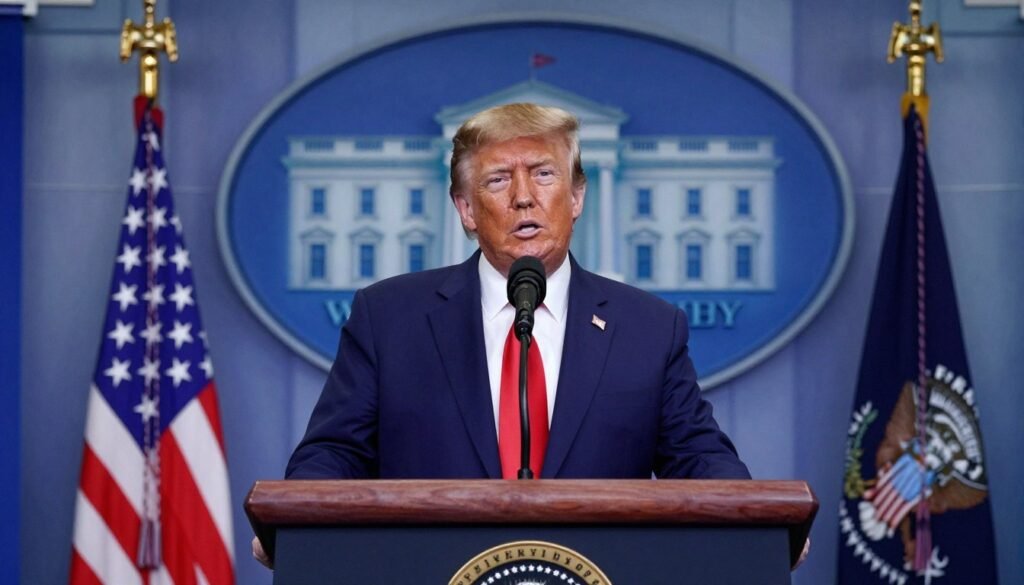
The current shutdown threat involves complex political dynamics between the executive and legislative branches:
Presidential Authority
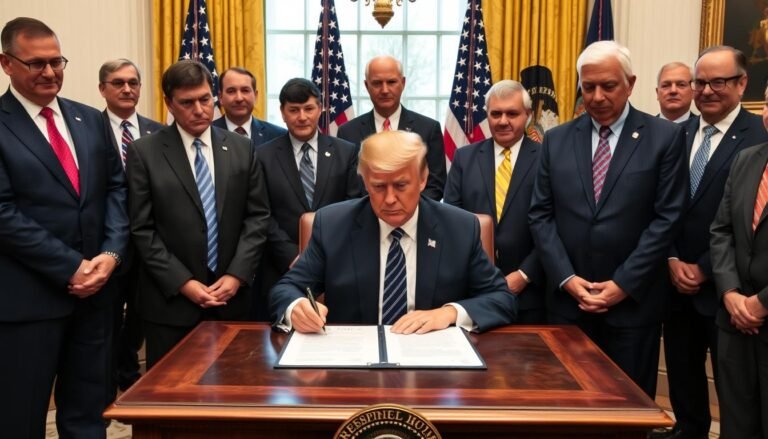
While the President cannot directly pass funding legislation, the executive branch holds significant influence in the process. President Trump has publicly stated his desire to avoid a shutdown, saying at a recent Cabinet meeting: “Hopefully we won’t have a shutdown. We’re working on that right now. I think we’re getting close.”
The White House has been actively engaged in negotiations with Senate Democrats, with a White House official stating that “the president wants the government to remain open, and the administration has been working with both parties to ensure the American people don’t have to endure another shutdown.”
Congressional Authority
The U.S. Congress holds the “power of the purse” and is ultimately responsible for passing appropriations bills. The current situation is complicated by:
- Republican control of both chambers of Congress
- Democratic leverage in the Senate, where 60 votes are needed to overcome a filibuster
- The House of Representatives being out of session until Monday
- Differing priorities between Republican leadership and the White House
Any compromise reached in the Senate would still need House approval, making a weekend shutdown increasingly likely even if negotiators reach an agreement in principle.
Impact on Daily Life for Citizens
U.S. Citizens
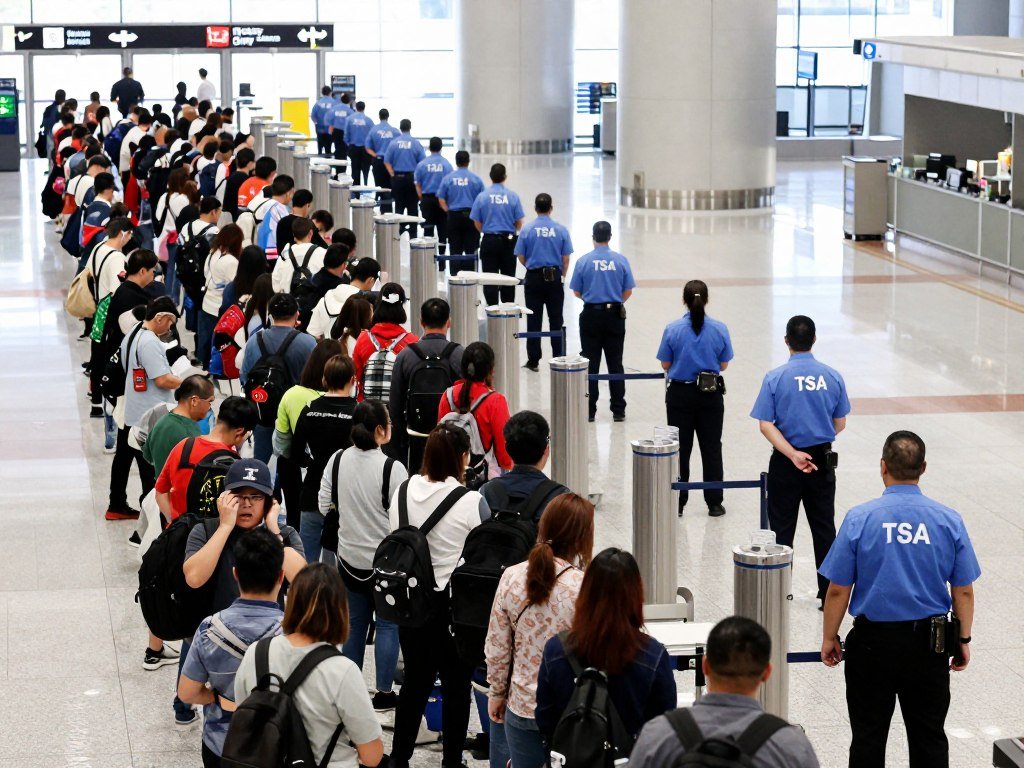
A partial government shutdown would affect Americans in various ways:
- Travel: Longer TSA security lines at airports as agents work without pay
- Tax Refunds: Potential delays in processing tax returns and refunds
- Loans: Halted processing of FHA mortgages and SBA business loans
- Recreation: Closure of national parks, museums, and monuments
- Food Safety: Reduced FDA food inspections
- Financial Assistance: Potential delays in new SNAP (food stamp) applications
Global Impact
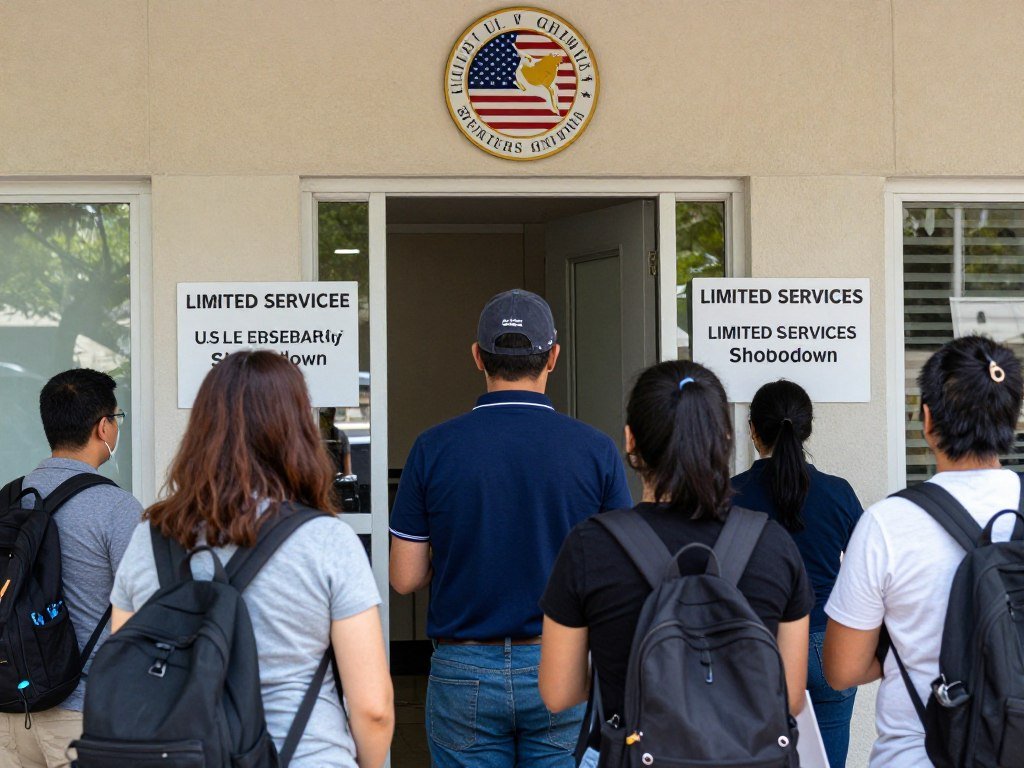
The effects extend beyond U.S. borders:
- Travel to U.S.: Visa processing delays for international visitors
- Global Markets: Potential stock market volatility worldwide
- Diplomatic Functions: Limited consular services and diplomatic operations
- International Trade: Delays in customs processing and trade negotiations
- Global Perception: Diminished confidence in U.S. government stability
According to the Government Accountability Office, previous shutdowns have caused significant disruptions to everyday services that citizens rely on. While essential services continue, they often operate with reduced staff and efficiency, creating backlogs that persist long after funding is restored.
Health and Immigration Impacts
Health Impacts

A shutdown would significantly affect public health operations:
- CDC Operations: The Centers for Disease Control and Prevention would maintain emergency response capabilities but reduce disease surveillance and prevention programs
- NIH Research: The National Institutes of Health would stop accepting new patients for clinical trials and delay grant processing
- FDA Inspections: Routine food safety inspections would be reduced, though critical safety activities would continue
- Mental Health Services: New grants for community mental health programs would be delayed
Immigration Impacts
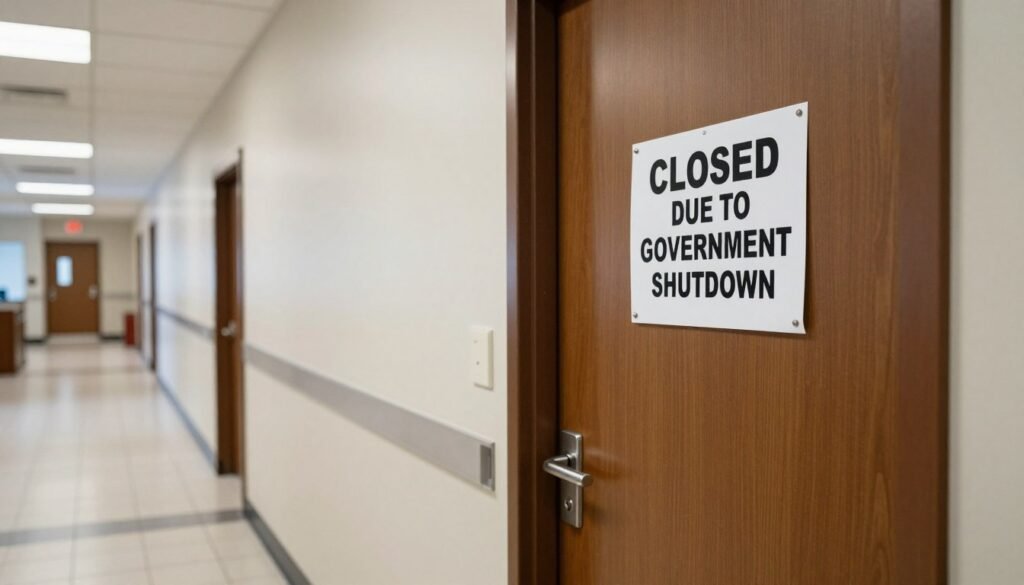
The shutdown’s central issue—DHS funding—directly affects immigration services:
- Border Operations: Border Patrol and ICE agents would continue working without pay as “essential” employees
- Immigration Courts: Non-detained case hearings would be postponed, increasing the existing backlog of over 2 million cases according to the Executive Office for Immigration Review
- USCIS Processing: Most USCIS operations would continue as they’re funded by application fees, but coordination with other agencies would be affected
- Refugee Processing: New refugee admissions could face delays
Ironically, while the shutdown centers on DHS funding and immigration enforcement reforms, most immigration enforcement operations would continue during a shutdown, as they’re classified as essential for national security.
External Perspectives on the Shutdown

Congressional Leadership
Key congressional figures have expressed varying positions:
- Senate Majority Leader John Thune (R): “We’re anxious to hear what their demands are, what their requests are, what their asks are. I think the administration is willing to sit down with them and have a discussion.”
- Senate Minority Leader Chuck Schumer (D): “Republicans in Congress cannot allow this violent status quo to continue. They must work with Democrats on legislation, real legislation, strong legislation to rein ICE in.”
- Senator John Cornyn (R-Texas): “Any changes must not come at the expense of shutting down the government.”
Economic Experts
Financial and economic analysts have warned about potential consequences:
- The Moody’s Analytics chief economist Mark Zandi has estimated that each week of a partial shutdown could reduce GDP growth by 0.1 percentage points
- Wall Street analysts have cautioned about market volatility if the shutdown extends beyond a few days
- Small business advocates have highlighted the impact of delayed SBA loans on entrepreneurs
International Reaction
Global leaders and organizations are monitoring the situation closely:
- International Monetary Fund officials have expressed concern about potential global economic ripple effects
- Trading partners are preparing for possible delays in customs processing and trade negotiations
- Diplomatic missions are making contingency plans for limited consular services
The World Trade Organization and other international bodies have noted that repeated U.S. government shutdowns create uncertainty in global markets and can undermine confidence in American institutions.
Conclusion: The Path Forward
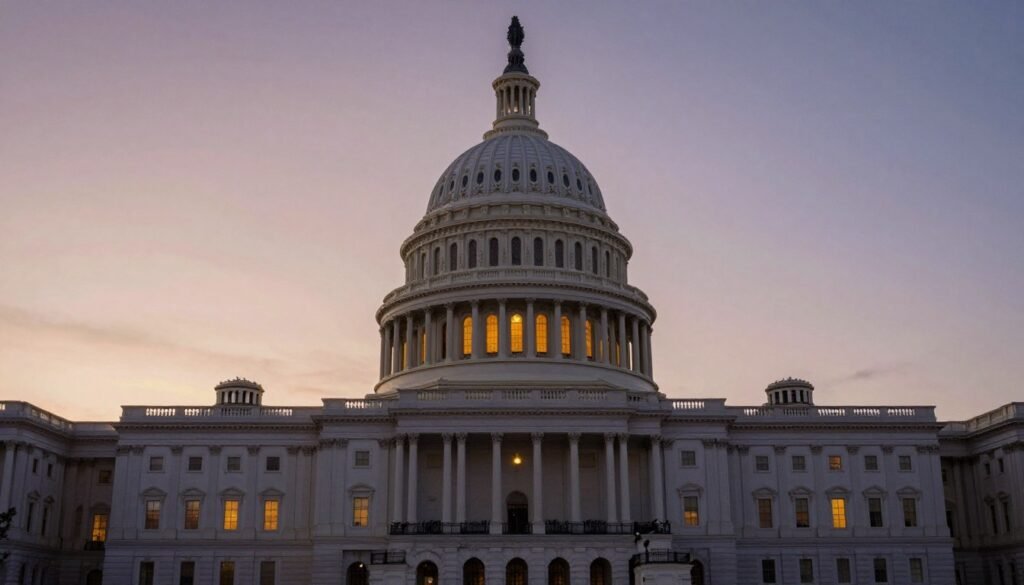
As the January 30 deadline approaches, the possibility of another U.S. government shutdown looms large. While negotiations between Senate Democrats and the White House show signs of progress, the absence of the House of Representatives until Monday makes at least a weekend shutdown increasingly likely.
The central dispute—reforms to immigration enforcement following controversial incidents in Minneapolis—highlights the complex intersection of policy, politics, and governance. Even a partial shutdown would have significant impacts on government services, the economy, and daily life for millions of Americans.
Citizens should prepare for potential disruptions while staying informed through official government websites and reliable news sources. As with previous shutdowns, essential services will continue, but many government functions will be suspended until funding is restored.
The coming days will reveal whether lawmakers can bridge their differences to keep the government fully operational or whether Americans will face yet another period of reduced government services and economic uncertainty.