

How Federal Tax Policy Shapes the Economy, According to the U.S. Department of the Treasury
Every dollar you pay in federal income tax does more than fund government programs. It shapes job creation, influences business decisions, and determines economic growth across the country.
Understanding federal tax policy helps you make smarter financial choices. The U.S. Department of the Treasury guides how taxes affect both your wallet and the broader economy.
This guide breaks down complex tax policy into simple terms. You’ll learn how current federal tax rules impact individuals, families, and businesses in 2024.
Tax policy changes can cost you money or save you thousands. Let’s explore how these policies work and what they mean for your financial future.
What Federal Tax Policy Means for Your Money

Federal tax policy represents the rules government creates about collecting revenue from citizens and businesses. These rules determine who pays taxes, how much they pay, and when payment occurs.
The Internal Revenue Service enforces federal tax policy based on laws Congress passes. The Treasury Department provides guidance on implementing these laws.
Key Federal Tax Terms You Need to Know
Tax brackets divide income into ranges with different tax rates. Your income level determines which bracket applies to you.
Tax credits reduce your tax bill dollar-for-dollar. They provide more savings than deductions in most cases.
Tax deductions lower your taxable income before calculating what you owe. Common deductions include mortgage interest and charitable donations.
Progressive Tax System
The United States uses a progressive federal income tax structure where higher earners pay larger percentages.
- Lower income pays lower rates
- Income divided into brackets
- Only portion in each bracket taxed at that rate
- Encourages wealth redistribution
Marginal Tax Rate
Your marginal rate represents the percentage paid on your last dollar of income earned.
- Different from effective tax rate
- Applies only to top income portion
- Changes as income increases
- Influences financial planning decisions
Standard Deduction
This automatic deduction reduces taxable income without requiring itemization of expenses.
- Simplifies tax filing process
- Adjusted annually for inflation
- Varies by filing status
- Used by most taxpayers
Tax Credits vs Deductions
Credits and deductions both lower tax burden but work through different mechanisms.
- Credits reduce actual tax owed
- Deductions reduce taxable income
- Credits provide greater savings
- Some credits are refundable
Simple Example: How Tax Brackets Work
Imagine you earn $60,000 as a single filer in 2024. Your income doesn’t get taxed entirely at one rate.
The first $11,600 gets taxed at 10 percent. The next portion up to $47,150 gets taxed at 12 percent. Only the remaining amount faces the 22 percent bracket.
This system ensures you never lose money by earning more income. Moving to a higher bracket only affects the dollars above that threshold.
Current Federal Tax Rules for 2024
The Internal Revenue Service adjusted tax brackets for 2024 to account for inflation. These changes affect how much you pay in federal income tax.
Understanding current tax policy helps you plan deductions and estimate your tax liability. The Treasury Department provides official guidance on these rules.
2024 Federal Income Tax Brackets
Tax brackets increased by approximately 5.4 percent from 2023 levels. This adjustment prevents bracket creep where inflation pushes taxpayers into higher rates.
| Tax Rate | Single Filers | Married Filing Jointly | Head of Household |
| 10% | $0 to $11,600 | $0 to $23,200 | $0 to $16,550 |
| 12% | $11,601 to $47,150 | $23,201 to $94,300 | $16,551 to $63,100 |
| 22% | $47,151 to $100,525 | $94,301 to $201,050 | $63,101 to $100,500 |
| 24% | $100,526 to $191,950 | $201,051 to $383,900 | $100,501 to $191,950 |
| 32% | $191,951 to $243,725 | $383,901 to $487,450 | $191,951 to $243,700 |
| 35% | $243,726 to $609,350 | $487,451 to $731,200 | $243,701 to $609,350 |
| 37% | $609,351 or more | $731,201 or more | $609,351 or more |
Standard Deduction Amounts
The standard deduction reduces your taxable income automatically. Most taxpayers claim this instead of itemizing deductions.
- Single filers and married filing separately: $14,600
- Married couples filing jointly: $29,200
- Head of household filers: $21,900
- Additional deduction for those 65 or older: $1,950 (single) or $1,550 (married)

Key Tax Credits Available in 2024
Tax credits provide direct reductions to your tax bill. The child tax credit remains one of the most valuable credits for families.
The earned income tax credit helps working families with lower incomes. This credit can result in a refund even if you owe no tax.
Child Tax Credit
Families receive up to $2,000 per qualifying child under age 17. Up to $1,600 may be refundable through the Additional Child Tax Credit.
Income limits apply based on filing status. The credit phases out for higher earners.
Earned Income Tax Credit
This credit ranges from $600 to $7,430 depending on income and family size. Workers without children can still qualify for smaller amounts.
The earned income tax credit encourages work while supporting low to moderate income families.
Corporate Income Tax Rates
The Tax Cuts and Jobs Act set the corporate income tax rate at 21 percent. This rate applies to business profits earned by corporations.
Small businesses often operate as pass-through entities. Their income flows to owners and gets taxed at individual income tax rates instead.
State and Local Tax Deduction Limits
Federal tax policy caps state and local tax deductions at $10,000 annually. This limit affects taxpayers in high-tax states significantly.
The state local taxes deduction includes property taxes and either income or sales tax. Choosing which state taxes to deduct requires strategic planning.
Who Federal Tax Policy Affects Most

Federal tax policy impacts every American differently based on income level, family status, and financial circumstances. Understanding these effects helps you plan better.
Tax policy changes can shift thousands of dollars between different groups. The Treasury Department analyzes these distributional effects when proposing new policies.
Individual Taxpayers
Single filers face different brackets and deduction limits than married couples. Your filing status significantly affects your tax burden under federal tax policy.
Workers who earn wages see taxes withheld from each paycheck. Self-employed individuals must calculate and pay estimated taxes quarterly.
- Standard deduction simplifies filing for most single taxpayers
- Higher earners lose eligibility for certain tax credits
- Investment income faces different tax rates than wages
- Retirement account contributions reduce current taxable income
- State income tax rates add to overall tax burden

Families with Children
The child tax credit provides substantial savings for qualifying families. Each child under 17 can reduce your tax bill by up to $2,000.
Dependent care credits help offset childcare costs while parents work. Education credits reduce taxes when paying for college expenses.
Families benefit most when they understand how to maximize available credits. The Tax Cuts and Jobs Act expanded some family benefits while eliminating others.
- Child tax credit up to $2,000 per child
- Earned income tax credit for working families
- Dependent care flexible spending accounts
- Education tax credits for college costs
- Adoption tax credit for qualifying expenses
- Health insurance premium tax credits
Family Tax Benefits
- Personal exemptions eliminated in 2018
- Dependent exemptions no longer available
- Moving expense deduction removed for most
- Miscellaneous itemized deductions suspended
- Home equity loan interest limits tightened
- Entertainment expense deductions eliminated
Lost Family Deductions
Small Business Owners
Federal tax policy treats business income differently based on entity structure. Sole proprietors report business income on personal tax returns.
The Tax Cuts and Jobs Act created a 20 percent deduction for qualified business income. This benefit helps small businesses compete with corporations.
Business owners can deduct ordinary and necessary expenses. Home office deductions, vehicle expenses, and equipment purchases all reduce taxable income.

Payroll taxes add significant costs beyond income tax. Employers pay Social Security and Medicare taxes on employee wages.
Sales tax collection requirements vary by state and business type. Online businesses face complex state local tax obligations across multiple jurisdictions.
Investors and Retirees
Capital gains face preferential tax rates compared to ordinary income. Long-term investments held over one year qualify for these lower rates.
Dividend income gets taxed at either ordinary or qualified rates. Qualified dividends receive the same favorable treatment as long-term capital gains.
- Tax-deferred retirement accounts delay income tax until withdrawal
- Roth accounts offer tax-free growth and distributions
- Required minimum distributions begin at age 73
- Social Security benefits may face federal income tax
- State taxes on retirement income vary significantly

Investment tax planning requires understanding how different account types work. The Tax Policy Center provides comprehensive research on optimal investment tax strategies.
Common Federal Tax Policy Mistakes That Cost You Money
Taxpayers lose billions annually through preventable errors. Understanding common mistakes helps you keep more of your hard-earned money.
The Internal Revenue Service reports that errors delay refunds and trigger audits. Many mistakes stem from misunderstanding federal tax policy rules.
Filing Status Errors
Choosing the wrong filing status costs taxpayers money every year. Head of household status offers better tax brackets than single filing.
Married couples sometimes benefit from filing separately despite the usual joint filing advantage. State income tax considerations may drive this decision.
Qualifying widow or widower status provides tax relief for two years after a spouse dies. Many eligible taxpayers miss this valuable filing option.
Missing Valuable Tax Credits
The earned income tax credit goes unclaimed by millions of eligible workers annually. This refundable credit can exceed $7,000 for qualifying families.
Education credits reduce tax bills for students and parents paying tuition. The American Opportunity Tax Credit offers up to $2,500 per eligible student.
Retirement savings contribution credits reward low to moderate income taxpayers. This credit applies when contributing to IRAs or employer retirement plans.

Inadequate Record Keeping
The IRS requires documentation to support deductions and credits. Missing receipts can disqualify legitimate tax breaks during audits.
Charitable donation records must include proof of payment and organization details. Donations over $250 require written acknowledgment from the charity.
Business expense tracking prevents lost deductions throughout the year. Digital tools simplify organizing receipts and mileage logs.
- Keep tax records for at least three years after filing
- Store documents proving major purchases and home improvements
- Track medical expenses even if below deduction threshold
- Document all state and local tax payments carefully
- Maintain separate records for business and personal expenses
Misunderstanding Tax Brackets
Many taxpayers believe moving to a higher bracket taxes all income at that rate. Only the dollars above the threshold face the higher percentage.
This misconception leads people to refuse raises or decline overtime. Federal tax policy uses marginal rates that never penalize earning more.
Understanding effective tax rates versus marginal rates improves financial planning. Your effective rate represents total tax divided by total income.
Ignoring State and Local Tax Changes
State income tax rules differ significantly from federal requirements. Some states tax retirement income while others exempt it completely.
The state local taxes deduction cap affects planning for property taxes. Paying property taxes early no longer provides unlimited federal benefits.
Sales tax rates vary dramatically across jurisdictions. Remote workers may face tax obligations in multiple states simultaneously.

Missing Quarterly Estimated Payments
Self-employed individuals and investors must pay taxes quarterly. Missing these payments triggers penalties and interest charges.
The IRS expects payment as you earn income throughout the year. Waiting until April 15 to pay all taxes results in underpayment penalties.
Estimated tax calculations should account for both federal income tax and self-employment tax. State estimated payments may also apply.
Overlooking Retirement Account Opportunities
Traditional IRA contributions can reduce current year taxes. The deduction phases out at higher income levels for those with workplace plans.
Employer 401(k) matches represent free money many workers leave unclaimed. Contributing at least enough to capture the full match should be a priority.
Health Savings Accounts offer triple tax benefits when used correctly. Contributions reduce taxable income, growth is tax-free, and qualified medical withdrawals avoid tax.
Claiming Ineligible Dependents
Dependent claiming rules confuse many taxpayers filing returns. Children over 18 must meet specific criteria to qualify as dependents.
Only one person can claim each dependent on tax returns. Divorced parents must coordinate who claims children each year.
The child tax credit requires dependents under age 17. Older dependents may still provide other tax benefits without qualifying for this credit.
Download Your Free 2024 Tax Mistake Prevention Guide
Get our comprehensive checklist covering the most common federal tax errors and how to avoid them. Includes worksheets for tracking deductions and planning quarterly payments.
Proven Strategies to Lower Your Federal Tax Bill
Smart tax planning keeps more money in your pocket legally. The federal tax system includes numerous ways to reduce your tax burden.
These strategies work within current IRS rules and Treasury guidance. Understanding tax policy helps you identify opportunities specific to your situation.
Maximize Retirement Account Contributions
Contributing to tax-deferred retirement accounts reduces your current taxable income. Traditional 401(k) and IRA contributions lower taxes in the year you make them.
The 2024 contribution limits increased to $23,000 for 401(k) plans. Workers age 50 and older can add $7,500 in catch-up contributions.
IRA contribution limits reached $7,000 for 2024. The additional catch-up amount for those 50+ remains at $1,000.
Roth accounts offer different tax benefits than traditional retirement accounts. You pay taxes on contributions now but enjoy tax-free growth and withdrawals later.
The choice between traditional and Roth depends on current versus expected future tax rates. Younger workers in lower brackets often benefit more from Roth options.
Employer matches count as free money toward retirement. Always contribute enough to capture the full company match before other investments.
Leverage Health Savings Accounts
Health Savings Accounts provide triple tax advantages. Contributions reduce taxable income, earnings grow tax-free, and qualified medical withdrawals avoid taxation.
You must have a high-deductible health plan to contribute to an HSA. The 2024 contribution limits are $4,150 for individuals and $8,300 for families.
HSAs can function as additional retirement accounts. After age 65, you can withdraw funds for any purpose and pay only ordinary income tax.

Optimize Charitable Giving
Charitable donations reduce taxable income when you itemize deductions. Cash donations require receipts for any amount.
Donating appreciated stock avoids capital gains tax while providing full deduction. This strategy works well for long-term investments with significant gains.
Bunching donations into alternating years can maximize tax benefits. Contributing two years of donations in one year may push you above the standard deduction threshold.
- Donor-advised funds allow immediate deduction while spreading gifts over time
- Qualified charitable distributions from IRAs benefit those over 70½
- Volunteer mileage deduction applies at 14 cents per mile
- Donation limits cap at 60% of adjusted gross income for cash
- Carry forward excess donations to future tax years
Take Advantage of Business Deductions
Self-employed individuals deduct ordinary and necessary business expenses. Home office deductions apply when you use space exclusively for business.
Vehicle expenses can be calculated using actual costs or standard mileage rate. The 2024 business mileage rate is 67 cents per mile.
Section 179 allows immediate expensing of equipment purchases up to $1,220,000. This beats depreciating assets over multiple years.

The qualified business income deduction provides 20% deduction on pass-through income. Phase-outs apply at higher income levels and for certain service businesses.
Retirement plans for self-employed offer both tax deductions and future security. SEP IRAs require minimal paperwork compared to other options.
Understand Capital Gains Planning
Long-term capital gains rates remain lower than ordinary income tax rates. Holding investments over one year qualifies for this preferential treatment.
Tax-loss harvesting offsets gains with investment losses. You can deduct up to $3,000 in net losses against ordinary income annually.
The 0% capital gains bracket applies to lower-income taxpayers. Singles with taxable income under $47,025 pay no tax on long-term gains.
| Taxable Income (Single) | Taxable Income (Married) | Long-Term Capital Gains Rate |
| Up to $47,025 | Up to $94,050 | 0% |
| $47,026 to $518,900 | $94,051 to $583,750 | 15% |
| Over $518,900 | Over $583,750 | 20% |
Maximize Education Tax Benefits
The American Opportunity Tax Credit offers up to $2,500 per eligible student. This credit applies to the first four years of undergraduate education.
The Lifetime Learning Credit provides up to $2,000 per tax return. Graduate students and those taking professional courses qualify.
Student loan interest deduction reduces income by up to $2,500 annually. This above-the-line deduction works even if you take the standard deduction.

529 college savings plans grow tax-free for education expenses. Some states offer additional state income tax deductions for contributions.
Strategic Tax Withholding and Estimated Payments
Adjusting withholding prevents large refunds that represent interest-free loans to government. Use the IRS withholding calculator to optimize.
Quarterly estimated payments avoid underpayment penalties. Calculate these based on current year income projections.
Safe harbor rules protect against penalties if you pay 90% of current year tax or 100% of prior year. High earners must pay 110% of prior year tax.
Real-World Example: Federal Tax Policy Impact
Understanding how federal tax policy works becomes clearer through concrete examples. Let’s examine a typical American family’s tax situation.
This scenario demonstrates how tax brackets, deductions, and credits interact. The calculations follow current IRS rules and Treasury guidelines.
The Martinez Family Tax Situation
Carlos and Maria Martinez file jointly with two children ages 12 and 15. Carlos earns $75,000 as an engineer while Maria makes $45,000 as a teacher.
Their combined gross income totals $120,000. They contribute $8,000 to Carlos’s 401(k) and $3,000 to Maria’s 403(b) retirement account.
The couple paid $12,000 in mortgage interest and $8,500 in property taxes. They donated $2,500 to qualifying charities during the year.
Calculating Adjusted Gross Income
The Martinez family starts with $120,000 in total wages. Retirement contributions of $11,000 reduce this amount.
Their adjusted gross income equals $109,000 after subtracting pre-tax retirement savings. This number determines eligibility for various tax benefits.
Standard Deduction vs Itemizing
The 2024 standard deduction for married filing jointly equals $29,200. The Martinez family must compare this to potential itemized deductions.
Their itemized deductions include mortgage interest ($12,000), property taxes ($8,500 capped at $10,000 for state local taxes), and charitable gifts ($2,500).
Total potential itemized deductions equal $24,500. The standard deduction provides $4,700 more in tax savings, making it the better choice.

Itemized Deductions Total
- Mortgage interest: $12,000
- Property taxes (capped): $10,000
- Charitable donations: $2,500
- Total itemized: $24,500
Standard Deduction Benefit
- Standard deduction 2024: $29,200
- Advantage over itemizing: $4,700
- No record keeping required
- Simpler tax filing process
Determining Taxable Income
Subtracting the standard deduction from adjusted gross income yields taxable income. The Martinez family’s taxable income equals $79,800.
This amount gets divided across tax brackets to calculate total tax. Remember that only portions falling in each bracket get taxed at that rate.
Calculating Income Tax Using Brackets
The first $23,200 of their taxable income gets taxed at 10 percent equaling $2,320. The next $71,100 (up to $94,300) gets taxed at 12 percent.
Only $79,800 falls within the 12 percent bracket, so the calculation uses the difference: $79,800 minus $23,200 equals $56,600.
| Income Portion | Tax Rate | Tax Amount |
| $0 to $23,200 | 10% | $2,320 |
| $23,200 to $79,800 | 12% | $6,792 |
| Total Income Tax | $9,112 | |

Applying Tax Credits
The Martinez family qualifies for the child tax credit for both children. Each child under 17 provides a $2,000 credit.
Total child tax credit equals $4,000. This amount directly reduces their tax bill dollar-for-dollar.
Final Tax Outcome
The Martinez family owes $5,112 in federal income tax. Their effective tax rate equals 4.7 percent of their $109,000 adjusted gross income.
This effective rate stays much lower than their 12 percent marginal rate. The combination of standard deduction and child tax credit significantly reduced their burden.
If they had $6,000 withheld throughout the year, they would owe an additional $888 when filing. Proper withholding adjustment would prevent this balance due.
Key Takeaway: This example shows how federal tax policy uses progressive brackets, standard deductions, and tax credits to determine actual tax owed. The Martinez family’s situation demonstrates that effective tax rates typically fall well below marginal bracket rates.
Future Federal Tax Policy Changes on the Horizon

Federal tax policy faces significant changes in coming years. Several provisions from the Tax Cuts and Jobs Act expire after 2025.
Understanding potential changes helps you plan long-term financial strategies. The Treasury Department and Tax Policy Center both publish analyses of proposed modifications.
Tax Cuts and Jobs Act Expiration
Many individual tax provisions sunset on December 31, 2025. Without Congressional action, tax brackets will revert to pre-2018 levels.
The standard deduction will decrease substantially when current law expires. Taxpayers may need to resume itemizing deductions after 2025.
Personal exemptions could return after their elimination in 2018. The child tax credit might drop from $2,000 back to $1,000 per child.
- Top individual tax rate increases from 37% to 39.6%
- Standard deduction cuts approximately in half
- State and local tax deduction cap may be removed
- Qualified business income deduction disappears
- Alternative Minimum Tax affects more taxpayers

Potential Revenue-Raising Proposals
Some lawmakers propose increasing taxes on higher earners to fund spending programs. Capital gains tax rates face potential increases under various proposals.
Corporate income tax rate changes appear in multiple legislative discussions. Some proposals would raise the rate from 21% to 28%.
Estate tax exemptions may decrease from current historically high levels. The current $13.61 million exemption could drop significantly.
Clean Energy and Climate Incentives
Tax credits for residential energy improvements expanded under recent legislation. Heat pumps, solar panels, and energy-efficient windows qualify for credits.
Electric vehicle tax credits continue evolving with new requirements. Manufacturing location and battery sourcing affect credit eligibility.
These credits aim to influence economic behavior toward cleaner energy. The Tax Policy Center studies how such incentives affect both revenue and environmental outcomes.

State and Local Tax Policy Trends
Many states adjusted income tax rates in recent years. Some eliminated income taxes entirely while others increased rates on high earners.
Remote work created new state tax challenges for individuals and businesses. Multiple states may claim taxing authority on the same income.
Sales tax expansion to online purchases continues across states. The economic nexus rules require businesses to collect sales tax in states where they have sufficient activity.
Retirement Account Modifications
SECURE 2.0 legislation changed numerous retirement rules. Required minimum distribution ages increased to 73 in 2023 and will reach 75 by 2033.
New rules allow emergency withdrawals from retirement accounts without penalties. Student loan payments can now count toward employer 401(k) matching.
Catch-up contribution amounts will increase faster for those aged 60-63. These changes reflect evolving federal tax policy around retirement security.
International Tax Competition
Global minimum tax proposals affect multinational corporations. The United States participates in international efforts to prevent tax base erosion.
These changes could influence where companies locate operations and report income. The Urban Institute researches how international tax policy affects domestic economic growth.
Trade policies intersect with tax policy in complex ways. Tariffs function similarly to taxes by raising prices on imported goods.
What You Should Do Now
Monitor proposed tax legislation that could affect your situation. Major changes often include transition periods allowing planning opportunities.
Maximize benefits from expiring provisions before they sunset. Contributing to retirement accounts and using available credits makes sense under any scenario.
Consult tax professionals about multi-year planning strategies. Some techniques work better when implemented before law changes take effect.
Planning Alert: If current tax cuts expire as scheduled in 2026, many taxpayers will face significant tax increases. Consider accelerating income into 2025 or deferring deductions until 2026 when rates may be higher and deductions more valuable.
Taking Control of Your Federal Tax Strategy

Federal tax policy shapes both the national economy and your personal finances. Understanding how these policies work helps you make informed decisions.
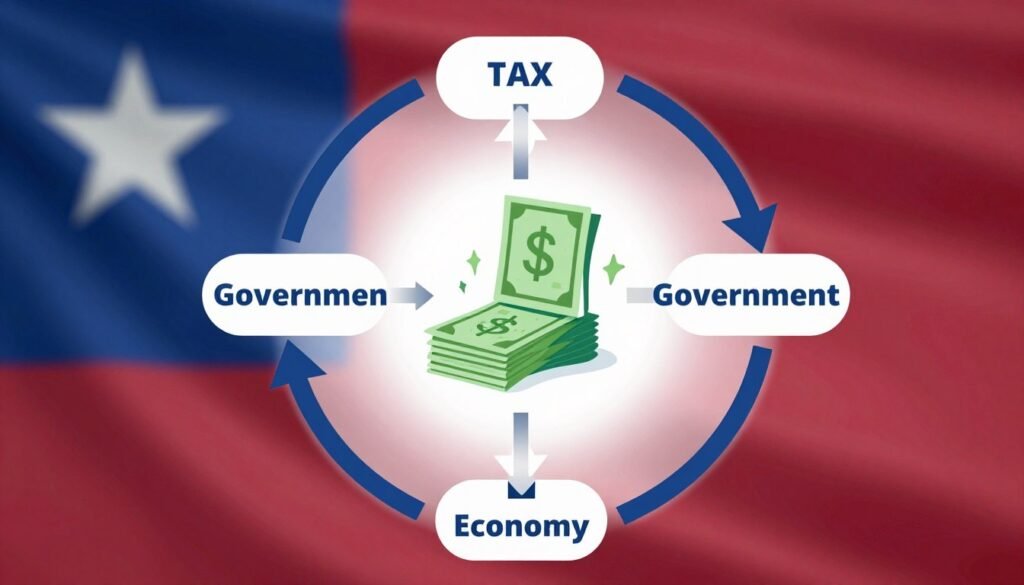
The relationship between tax policy and economic growth affects job creation, business investment, and government revenue. Your tax planning decisions contribute to these broader economic patterns.
Tax rules change regularly through Congressional action and IRS guidance. Staying informed protects you from costly mistakes and reveals money-saving opportunities.
Key Takeaways for Taxpayers
Progressive tax brackets mean you never lose money by earning more. Only income above each threshold gets taxed at higher rates.
Tax credits provide more value than deductions by reducing actual tax owed. The child tax credit and earned income tax credit deliver substantial savings for qualifying families.
Strategic planning around retirement contributions, charitable giving, and business expenses legally reduces your tax burden. These strategies work within the federal tax system Congress designed.
- Review your withholding annually to avoid surprises at tax time
- Maximize retirement contributions for current tax savings and future security
- Track deductible expenses throughout the year, not just at filing time
- Understand which tax credits apply to your situation
- Plan for upcoming tax law changes affecting your finances
- Consider both federal income tax and state income tax in planning
- Consult tax professionals for complex situations
The Bigger Economic Picture
Federal tax policy influences economic decisions at every level. Businesses adjust hiring and investment based on tax incentives and corporate income tax rates.
The Tax Cuts and Jobs Act demonstrated how major policy changes affect economic growth, federal budget deficits, and income distribution. Research from the Tax Policy Center and Urban Institute provides data on these effects.
State and local tax policies interact with federal rules in complex ways. The $10,000 cap on state local taxes deduction significantly affects residents of high-tax states.
Preparing for Your Financial Future
Tax policy changes create both challenges and opportunities. The scheduled expiration of Tax Cuts and Jobs Act provisions in 2025 requires proactive planning.
Building tax-efficient wealth involves understanding how different account types get taxed. Balancing traditional and Roth retirement accounts provides flexibility for future tax situations.
Education about federal tax policy empowers better financial decisions. Resources from the Treasury Department and IRS provide authoritative guidance.
Your tax situation reflects unique circumstances that generic advice cannot fully address. Working with qualified tax professionals ensures you optimize strategies for your specific needs.
Federal tax policy and economy remain interconnected through countless mechanisms. The taxes you pay fund essential services while influencing economic opportunity and growth.
Start planning today for the tax landscape of tomorrow. Understanding these policies positions you to thrive regardless of how tax laws evolve.