Construction Slowdown Impact on GDP: How It Could Impact the U.S. Economy in 2026 and Beyond
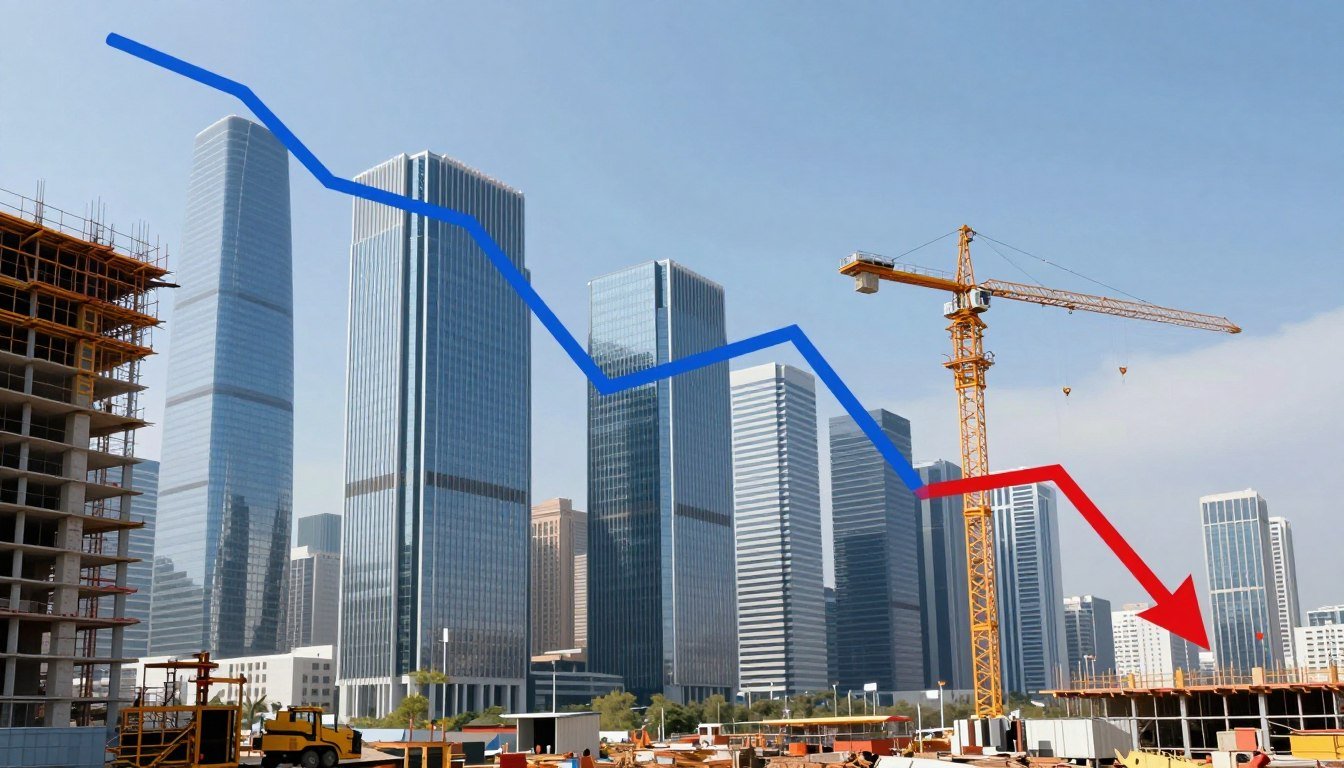
The U.S. construction sector stands at a critical crossroads. Recent data from the Bureau of Labor Statistics reveals a concerning trend that has economists and industry leaders on high alert. Construction activity declined by 3.2 percent in the final quarter of 2024, marking the steepest quarterly drop in over five years. This slowdown carries profound implications that extend far beyond building sites and construction firms.
The construction industry represents approximately 4.3 percent of U.S. GDP. When this vital sector contracts, ripple effects cascade through the broader economy. Construction companies employ over 7.8 million workers directly. Millions more depend on related industries for their livelihoods. The current slowdown threatens not just economic growth projections but the financial stability of countless American families.
Understanding the Construction Slowdown Impact on GDP becomes essential for business leaders, policymakers, and citizens alike. Economic forecasters now project that continued weakness in the construction sector could shave 0.6 to 1.1 percentage points from GDP growth in 2026. This analysis examines the forces driving this slowdown, its measurable economic consequences, and potential pathways forward for the U.S. economy through 2030.
What Is This Economic Threat?
The construction slowdown represents a sustained decline in building activity across residential, commercial, and infrastructure projects. This economic threat manifests through reduced construction starts, lower spending on projects, and decreased employment in the sector. Unlike temporary seasonal variations, this slowdown reflects fundamental shifts in market conditions and economic forces.
Construction activity serves as a leading economic indicator. When construction firms scale back operations, it signals broader economic uncertainty. The sector’s unique position means its health directly impacts manufacturing, materials production, professional services, and financial markets. A construction slowdown creates a multiplier effect throughout the economy.
Historical Context of Construction Cycles
The construction industry has weathered multiple downturns throughout American economic history. The 2008 financial crisis triggered the most severe construction recession since the Great Depression. Total construction spending plummeted 23 percent between 2007 and 2011. The sector required nearly a decade to return to pre-crisis levels.
Previous slowdowns in the early 1990s and early 2000s demonstrated similar patterns. Each downturn lasted an average of 18 to 36 months. Recovery periods typically extended three to five years beyond the initial trough. Historical data reveals that construction slowdowns often precede or coincide with broader economic recessions.
The current situation differs from past cycles in several key aspects. Supply chain disruptions persist longer than in previous downturns. Labor shortages have reached unprecedented levels. Immigration policy changes have constrained the available worker pool. These factors combine to create unique challenges for the construction sector and the broader economy.
Key Statistics Defining the Current Slowdown
Total construction spending declined to $1.89 trillion in late 2024, down from $1.95 trillion in the previous year. Residential construction starts fell 14 percent year-over-year. Commercial construction projects dropped 8 percent during the same period. These numbers represent the steepest declines outside of recession periods in the last decade.
The construction sector shed 87,000 jobs in the second half of 2024. This represented a 1.1 percent decrease in total construction employment. Construction firms reported project delays affecting 43 percent of planned developments. Bidding activity for new projects contracted by 19 percent compared to the previous year.
Housing units under construction totaled 1.35 million in December 2024, the lowest level since early 2020. Multifamily construction starts plummeted 28 percent. Single-family construction activity decreased 11 percent. These figures paint a concerning picture of reduced construction activity across all major categories.
| Construction Metric | 2023 Baseline | 2024 Current | Percent Change | Economic Impact |
| Total Construction Spending | $1.95 trillion | $1.89 trillion | -3.1% | High |
| Residential Starts | 1.42 million units | 1.22 million units | -14.1% | Critical |
| Commercial Projects | $487 billion | $448 billion | -8.0% | Moderate |
| Construction Employment | 7.89 million | 7.80 million | -1.1% | High |
| Infrastructure Spending | $412 billion | $398 billion | -3.4% | Moderate |
What Is Causing the Problem?
Multiple converging forces drive the current construction slowdown. Economic pressures, policy decisions, market dynamics, and structural changes all contribute to reduced construction activity. Understanding these causes provides essential context for evaluating potential solutions and forecasting future trends.
Policy Factors Constraining Construction Growth
- Immigration Policy Restrictions: Stricter immigration policies have significantly reduced the available construction workforce. Ken Simonson, chief economist for the Associated General Contractors of America, notes that construction companies face acute labor shortages directly tied to immigration policy changes. The construction industry historically relied on immigrant workers to fill critical positions across all skill levels.
- Monetary Policy Tightening: The Federal Reserve raised interest rates aggressively to combat inflation. Higher borrowing costs have made construction projects less financially viable. Developers face increased financing expenses that render marginal projects unprofitable. This policy response to inflation has created a challenging environment for construction activity.
- Regulatory Compliance Burdens: Environmental regulations, zoning restrictions, and permitting processes have become more complex and time-consuming. Construction firms report that regulatory compliance costs have increased 23 percent over the past three years. These additional requirements delay projects and increase overall development costs.
- Tax Policy Uncertainty: Changes to depreciation schedules and investment incentives have created planning challenges for construction companies. Uncertainty about future tax treatment of construction projects makes long-term planning difficult. This policy volatility contributes to delayed investment decisions.
Market Trends Reducing Construction Demand
- Housing Affordability Crisis: Rising home prices combined with elevated mortgage rates have pushed homeownership out of reach for many Americans. The median home price reached $417,000 in late 2024 while mortgage rates hovered near 7 percent. This affordability crisis has dampened demand for new residential construction.
- Commercial Real Estate Transformation: Remote work trends have fundamentally altered commercial office space demand. Office vacancy rates in major metropolitan areas reached 18.7 percent in 2024. Reduced demand for traditional office space has led to fewer commercial construction projects in many urban areas.
- Material Price Volatility: Construction materials experienced significant price swings over the past several years. Lumber prices fluctuated between $350 and $1,200 per thousand board feet. Steel, concrete, and other essential materials saw similar volatility. This uncertainty makes project budgeting extremely challenging.
- Shifting Investment Priorities: Capital has flowed away from traditional construction projects toward technology and alternative investments. Institutional investors have reduced allocations to real estate development. This shift in investment patterns has reduced available funding for construction projects.
Global Influences Affecting U.S. Construction
- Supply Chain Disruptions: International supply chains continue to experience disruptions affecting construction materials availability. Lead times for critical components have extended from weeks to months. These delays increase project costs and create scheduling uncertainty for construction firms.
- Energy Price Fluctuations: Global energy markets directly impact construction costs through transportation and materials production. OPEC production decisions and geopolitical tensions create energy price volatility. These fluctuations make cost estimation difficult for long-term construction projects.
- International Trade Tensions: Tariffs and trade disputes have increased costs for imported construction materials and equipment. Steel tariffs alone added an estimated $9 billion to construction costs between 2018 and 2024. Trade policy uncertainty complicates strategic planning for construction companies.
- Global Economic Slowdown: Weakness in major international economies reduces demand for U.S. construction exports and affects multinational projects. The International Monetary Fund projects global growth of just 2.9 percent for 2026. This sluggish global economy creates headwinds for construction sector growth.
Structural Economic Changes Reshaping Construction
- Aging Workforce Demographics: The construction industry faces a retirement wave as experienced workers leave the workforce. The average age of construction workers has increased to 42.5 years. Insufficient younger workers are entering the industry to replace retiring professionals. This demographic shift creates persistent labor shortages.
- Technology Adoption Gaps: Construction lags other industries in technology adoption and productivity improvements. While manufacturing productivity has increased 47 percent since 2000, construction productivity has remained essentially flat. This productivity gap makes construction less competitive economically.
- Skills Mismatch Challenges: Available workers often lack the specialized skills required for modern construction projects. Data centers and advanced infrastructure require expertise that many construction workers do not possess. This skills gap limits the industry’s capacity to pursue high-value projects.
- Regional Market Imbalances: Construction activity concentrates in specific geographic areas while other regions experience minimal growth. Sunbelt states continue to see construction activity while Midwest and Northeast regions decline. These regional imbalances create inefficiencies and limit overall sector growth.
The construction industry faces a perfect storm of challenges. Policy constraints limit available labor. Market dynamics reduce demand for traditional projects. Global disruptions increase costs and uncertainty. Structural changes require fundamental industry transformation. These combined forces create the current construction slowdown and its impact on GDP growth.
Impact on the U.S. Economy
The Construction Slowdown Impact on GDP extends far beyond the immediate effects on building sites and construction firms. This sector’s unique position in the economic ecosystem means that reduced construction activity creates cascading consequences throughout multiple economic dimensions. The following analysis examines specific impacts across key economic indicators.
GDP Growth Implications
Construction spending directly contributes approximately 4.3 percent to U.S. GDP. The current 3.2 percent decline in total construction activity translates to a direct GDP reduction of roughly 0.14 percentage points. However, multiplier effects amplify this initial impact significantly. For every dollar reduction in construction spending, the economy experiences an additional $1.50 to $2.00 in indirect economic losses.
The Congressional Budget Office projects that sustained construction weakness could reduce GDP growth by 0.6 to 1.1 percentage points in 2026. If baseline GDP growth projections estimate 2.3 percent expansion, the construction slowdown could limit actual growth to just 1.2 to 1.7 percent. This represents a substantial drag on economic performance during a critical recovery period.
Construction sector multipliers affect GDP through several channels. Reduced construction activity decreases demand for building materials, cutting manufacturing output. Lower construction employment reduces consumer spending across the economy. Decreased property development limits local tax revenues, constraining government spending. These interconnected effects magnify the initial construction decline.
Different construction categories impact GDP with varying intensities. Residential construction carries a multiplier of approximately 2.1, meaning each dollar of residential construction generates $2.10 in total economic activity. Commercial construction shows a slightly lower multiplier of 1.8. Infrastructure spending demonstrates the highest multiplier at 2.3, reflecting its broad economic benefits and long-term productivity enhancements.
Inflation Dynamics and Price Pressures
The construction slowdown creates complex and sometimes contradictory effects on inflation. Reduced construction activity typically lowers demand for materials, potentially easing price pressures in commodity markets. Lumber prices have declined 31 percent from their 2024 peaks as construction demand weakened. Steel and concrete prices show similar moderating trends.
However, the slowdown simultaneously constrains housing supply, maintaining upward pressure on home prices and rents. Housing costs represent approximately 32 percent of the Consumer Price Index. When construction activity fails to meet population growth and household formation rates, housing affordability deteriorates. This supply-demand imbalance keeps housing-related inflation elevated even as construction slows.
Labor market dynamics add another dimension to inflation impacts. Construction worker shortages push wages higher even as total employment declines. Average hourly earnings for construction workers increased 5.3 percent in 2024 despite reduced overall employment. These wage pressures flow through to project costs and consumer prices for construction-related services.
The Federal Reserve faces difficult policy trade-offs resulting from construction sector dynamics. Slowing construction activity suggests economic weakness that might warrant rate cuts. Yet persistent housing inflation argues for maintaining restrictive policy. This tension complicates monetary policy decision-making and creates uncertainty for economic forecasting.
Disinflationary Effects
- Reduced materials demand lowers commodity prices
- Decreased construction activity signals economic weakness
- Lower project volumes reduce pricing power for contractors
- Supply chain normalization eases delivery cost pressures
Inflationary Pressures
- Housing supply constraints maintain elevated prices
- Worker shortages drive construction wage inflation
- Reduced competition allows remaining firms to raise prices
- Shelter costs continue rising in Consumer Price Index
Employment Consequences Across Industries
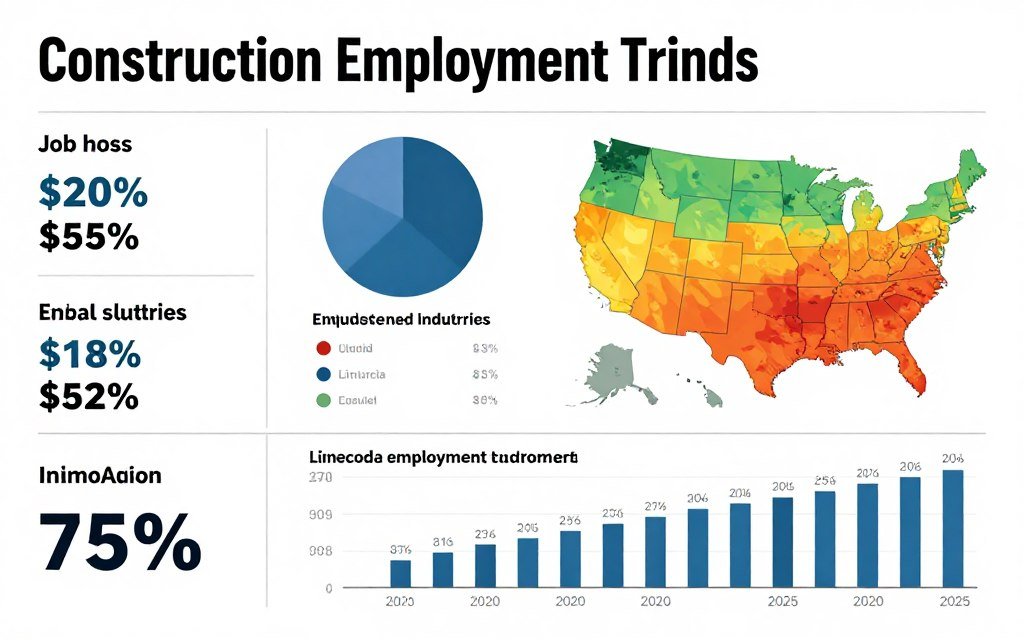
The construction industry directly employed 7.8 million workers in early 2024. The sector lost 87,000 jobs through the year’s latter half, representing a concerning employment trend. These direct job losses tell only part of the employment story. Construction sector weakness ripples through interconnected industries that depend on construction activity.
Manufacturing sectors producing building materials face reduced demand. Lumber mills, steel fabricators, cement producers, and equipment manufacturers all reduce production and employment when construction slows. The Bureau of Labor Statistics estimates that construction-related manufacturing employs an additional 2.1 million workers whose jobs depend on construction sector health.
Professional services tied to construction also experience employment pressure. Architects, engineers, surveyors, and construction managers see reduced demand for their services. Financial services professionals specializing in construction lending face diminished opportunities. Real estate professionals experience lower transaction volumes and commissions. These indirect employment effects expand the total impact significantly.
Regional employment impacts vary substantially based on local construction market conditions. Sunbelt states with ongoing population growth maintain relatively stronger construction employment despite national trends. Midwest and Northeast regions experience sharper employment declines as construction activity contracts. This geographic variation creates uneven economic conditions across the country.
Worker displacement from construction creates broader labor market challenges. Construction workers possess specialized skills not easily transferable to other industries. Displaced construction workers face longer unemployment durations and often accept positions paying 15 to 25 percent less than their previous construction wages. This income reduction affects household consumption and economic growth.
Financial Market Ramifications
Construction sector weakness affects financial markets through multiple transmission mechanisms. Publicly traded construction companies, homebuilders, and building materials manufacturers experience stock price pressure. The Dow Jones U.S. Construction & Materials Index declined 18 percent in 2024, underperforming the broader market by 12 percentage points. This underperformance reflects investor concerns about sector prospects.
Commercial real estate values face downward pressure as reduced construction activity signals weaker demand fundamentals. Commercial mortgage-backed securities spreads widened 140 basis points during 2024. Real Estate Investment Trusts focused on development projects saw share prices decline an average of 23 percent. These valuation adjustments reflect deteriorating expectations for construction sector returns.
Banking sector exposure to construction loans creates financial stability concerns. Construction and land development loans totaled $587 billion across U.S. commercial banks in 2024. Regional and community banks show particularly high concentrations of construction lending. Loan performance deterioration in this portfolio segment could stress bank balance sheets and limit credit availability.
Municipal bond markets experience indirect effects from construction slowdown. Reduced property development limits growth in local tax bases. Construction-related fees and permitting revenues decline. These fiscal pressures can affect municipal credit quality, particularly for smaller jurisdictions dependent on development activity for revenue growth.
Effects on Consumers and Businesses
Consumers face multiple consequences from the construction slowdown. Housing affordability continues deteriorating as new supply fails to meet demand. The median home price-to-income ratio reached 5.8 in 2024, well above the historical average of 4.2. First-time homebuyers find themselves increasingly priced out of markets. This affordability crisis affects household formation and family planning decisions.
Rental housing markets experience similar pressures. Multifamily construction starts declined 28 percent in 2024. This supply constraint maintains upward pressure on rents. Average apartment rents increased 6.7 percent year-over-year despite economic weakness. Housing costs consume an increasing share of household budgets, reducing discretionary spending capacity.
Businesses depending on construction activity face revenue and profitability challenges. Building materials suppliers experience reduced sales volumes. Construction equipment rental companies see lower utilization rates. Professional service firms serving construction clients lose billable hours. These business impacts extend the economic consequences beyond the construction sector itself.
Commercial tenants benefit from increased availability and softer lease terms as construction slowdown combines with elevated vacancy rates. Office space lease rates declined 4.3 percent in major markets during 2024. Retail space availability increased, providing opportunities for businesses seeking physical locations. These dynamics create mixed effects across different business categories.
Consumer Impact Summary: The construction slowdown creates a housing affordability paradox. While reduced construction activity signals economic weakness, it simultaneously constrains housing supply. This dynamic keeps housing costs elevated, consuming larger portions of household budgets. The median American household now spends 34 percent of gross income on housing, well above the 30 percent threshold considered affordable.
Recent Data and Trends
Current economic data provides essential context for understanding the construction slowdown’s trajectory and potential future developments. Analysis of recent statistics from authoritative government and institutional sources reveals important trends shaping the Construction Slowdown Impact on GDP through 2026 and beyond.
Latest Construction Activity Indicators
The U.S. Census Bureau reported total construction spending at $1.89 trillion in December 2024, representing a 3.1 percent decline from the previous year. This marks the first sustained annual decline outside of recession periods since 2011. Monthly construction spending data shows particular weakness in the private sector, which accounts for approximately 73 percent of total construction activity.
Construction starts data from the Bureau of Labor Statistics reveals concerning trends across all major categories. Housing units under construction totaled 1.35 million in December 2024, down 11 percent from the previous year. Single-family construction starts declined to 892,000 units annually. Multifamily starts plummeted to 358,000 units, the lowest level since 2019.
Commercial construction activity shows mixed patterns across different property types. Data centers represent a bright spot, with construction spending increasing 43 percent year-over-year. Manufacturing facility construction gained 17 percent, driven by reshoring trends and infrastructure legislation. Office construction declined 31 percent. Retail construction dropped 19 percent. These divergent trends reflect fundamental shifts in commercial real estate demand.
Infrastructure spending supported by the Infrastructure Investment and Jobs Act provided partial offset to private sector weakness. Public construction spending increased 5.8 percent in 2024. However, this government investment proved insufficient to counterbalance the 5.9 percent decline in private construction activity. Total construction spending still contracted despite infrastructure support.
Employment and Wage Trends
Construction sector employment peaked at 7.89 million workers in June 2024 before declining to 7.80 million by December. This 87,000-worker reduction represents a 1.1 percent employment decline during the second half of the year. The Bureau of Labor Statistics reports that construction unemployment increased from 3.8 percent to 4.7 percent during the same period.
Despite employment declines, construction worker wages continued rising. Average hourly earnings for construction workers reached $34.27 in December 2024, representing 5.3 percent year-over-year growth. This wage growth outpaced overall private sector wage gains of 4.1 percent. The combination of declining employment and rising wages indicates persistent labor shortages in the sector.
Job openings in construction decreased 23 percent from their 2023 peak but remained elevated relative to available workers. The construction industry reported 342,000 open positions in December 2024. The ratio of job openings to unemployed construction workers stood at 0.93, suggesting continued labor market tightness despite reduced overall activity.
Immigration policy changes significantly affected construction labor supply. Ken Simonson, chief economist for construction industry associations, notes that restrictive immigration policies have constrained workforce availability. Foreign-born workers represent approximately 25 percent of the construction workforce. Policy-driven reductions in this labor pool contribute to ongoing worker shortages and wage pressures.
| Employment Metric | Q1 2024 | Q2 2024 | Q3 2024 | Q4 2024 | Annual Change |
| Total Construction Employment | 7.83M | 7.89M | 7.85M | 7.80M | -0.4% |
| Average Hourly Earnings | $32.89 | $33.45 | $33.91 | $34.27 | +5.3% |
| Construction Unemployment Rate | 4.2% | 3.8% | 4.3% | 4.7% | +0.5pp |
| Job Openings (thousands) | 412 | 445 | 378 | 342 | -23% |
Regional Variation in Construction Activity
Construction trends vary dramatically across different U.S. regions. Sunbelt states continue experiencing population growth that drives construction demand. Texas, Florida, Arizona, and North Carolina show construction activity levels 8 to 15 percent above national averages. These states benefit from in-migration, favorable business climates, and relative housing affordability.
Northeast and Midwest regions face more challenging construction environments. New York, Illinois, and Michigan experienced construction spending declines of 7 to 12 percent in 2024. These regions confront population stagnation or decline, higher construction costs, and more restrictive regulatory environments. The regional divergence creates vastly different economic conditions across the country.
Metropolitan areas show particularly stark contrasts. Austin, Dallas, Phoenix, and Charlotte rank among the strongest construction markets with double-digit growth in certain categories. San Francisco, Chicago, and Detroit face construction contractions exceeding 10 percent. These metropolitan variations reflect different economic fundamentals, demographic trends, and policy environments.
Rural construction markets generally underperform urban areas. Infrastructure spending provides some support for rural construction activity. However, population decline in many rural areas limits residential and commercial construction demand. The urban-rural construction divide contributes to broader economic disparities between these different types of communities.
Materials Costs and Supply Chain Conditions
Construction materials prices showed significant volatility throughout 2024. The Producer Price Index for construction materials declined 2.8 percent year-over-year after sharp increases in previous years. Lumber prices fell 31 percent from 2024 peaks. Copper prices decreased 8 percent. These price declines reflect weakening construction demand and supply chain normalization.
However, not all materials experienced price relief. Concrete prices increased 4.7 percent in 2024. Skilled labor costs rose 5.3 percent. Specialty materials for advanced construction projects maintained elevated prices. The mixed materials price environment creates planning challenges for construction firms bidding on long-term projects.
Supply chain conditions improved substantially compared to 2021-2022 disruptions. Lead times for most construction materials returned to near-normal levels. The Federal Reserve’s Logistics Managers Index reached 58.3 in December 2024, indicating improved supply chain performance. However, certain specialized components still face extended delivery times of 12 to 16 weeks.
The World Bank’s commodity price forecasts project continued moderation in construction materials costs through 2026. This outlook reflects expectations of sustained weak construction demand combined with normalized supply chains. Lower materials costs could improve project economics, but weak end-market demand limits the positive impact on overall construction activity.
Financing Conditions and Interest Rate Environment
The Federal Reserve maintained the federal funds rate in the 5.25 to 5.50 percent range throughout late 2024. This restrictive monetary policy stance significantly impacts construction financing costs. Commercial construction loan rates averaged 7.8 percent in December 2024. Residential mortgage rates hovered near 7.0 percent. These elevated borrowing costs constrain construction project viability.
Construction loan availability tightened as financial institutions reduced risk appetite. The Federal Reserve’s Senior Loan Officer Opinion Survey revealed that 48 percent of banks tightened standards for commercial real estate loans in the second half of 2024. Construction and land development loans faced particularly stringent underwriting standards. This credit tightening limits projects that can secure financing.
The U.S. Department of the Treasury reports that construction-related bond issuance declined 34 percent in 2024 compared to the previous year. Higher interest rates make debt financing more expensive for large development projects. This reduced bond market activity reflects deteriorating project economics under current interest rate conditions.
Private equity and institutional investment in construction projects decreased 28 percent year-over-year. Investors shifted capital toward higher-yielding fixed income securities as interest rates rose. Construction projects must now compete with 5-percent-plus yields available in money market funds and short-term government bonds. This competition for capital further constrains construction funding availability.
Policy Support and Government Initiatives
The Infrastructure Investment and Jobs Act continued providing support for public construction projects in 2024. Federal infrastructure spending increased to $145 billion, up from $127 billion in 2023. This 14 percent increase partially offset weakness in private construction activity. Infrastructure projects focus on transportation, water systems, broadband, and energy grid improvements.
However, state and local government construction budgets faced pressures. Property tax revenue growth slowed as housing market activity declined. Development fee collections dropped with reduced construction activity. Thirty-two states reported budget challenges affecting planned construction projects. This fiscal stress at state and local levels limits public sector construction support.
Housing policy initiatives aimed at improving affordability showed limited implementation progress. Proposed down payment assistance programs and first-time homebuyer incentives remained largely unfunded. Zoning reform efforts faced local opposition in many jurisdictions. The gap between policy proposals and actual implementation limited their impact on construction activity.
The Congressional Budget Office projects federal infrastructure spending will peak in 2025-2026 before declining in subsequent years. This spending trajectory provides temporary support for construction sector but does not represent a permanent demand driver. Construction firms cannot rely on sustained public sector support to offset private market weakness.
Expert Opinions or Forecasts
Leading economists and industry analysts provide diverse perspectives on the construction slowdown’s trajectory and its broader economic implications. These expert forecasts help contextualize current trends and inform expectations for future developments affecting the Construction Slowdown Impact on GDP through 2030.

Federal Reserve Economic Outlook
The Federal Reserve’s Summary of Economic Projections released in December 2024 incorporated construction sector weakness into GDP forecasts. Fed economists project real GDP growth of 1.8 percent for 2026, down from earlier estimates of 2.3 percent. Construction sector drag accounts for approximately half of this downward revision. Fed officials acknowledge that residential investment will likely subtract from GDP growth through mid-2026.
Federal Reserve Chair testimony before Congress highlighted construction sector challenges as a key economic concern. Policymakers recognize the tension between maintaining restrictive policy to control inflation and the negative impacts on interest-rate-sensitive sectors like construction. The Fed’s dual mandate creates difficult trade-offs in the current environment.
Regional Federal Reserve Bank research provides additional insights. The Richmond Federal Reserve’s economic brief analyzes how construction weakness affects local economies differently. The Dallas Fed’s research highlights construction labor market challenges in high-growth regions. These regional perspectives demonstrate the varying impacts across different parts of the country.
Fed economists project that construction activity will stabilize in late 2026 as interest rates decline from current levels. However, they emphasize that recovery to previous peak levels may require several years. The central bank’s baseline forecast assumes gradual construction sector improvement rather than rapid recovery.
Industry Association Perspectives
Ken Simonson, chief economist for the Associated General Contractors of America, provides particularly detailed construction sector analysis. Simonson emphasizes that labor shortages represent the most significant long-term challenge facing the industry. He projects that construction employment will remain below 2024 peaks through 2027 despite potential demand recovery. Immigration policy changes have fundamentally altered workforce availability.
Michael Guckes, senior economist at the National Association of Home Builders, focuses on residential construction outlook. Guckes notes that housing affordability has reached the worst levels in over 30 years. He projects that single-family construction starts will remain depressed until mortgage rates decline below 6 percent. His analysis suggests residential construction recovery depends primarily on Federal Reserve policy decisions.
Commercial construction forecasters highlight divergent trends across property types. Data centers continue experiencing robust construction activity driven by artificial intelligence infrastructure needs. Data center construction spending could increase 35 percent in 2026 according to industry projections. However, traditional office construction will likely remain depressed for multiple years as remote work patterns persist.
Construction materials industry analysts project continued price moderation through 2026. However, they warn that any construction demand recovery could quickly reverse recent price declines. Supply chain capacity has adjusted downward to match current demand levels. Rapid demand increases would strain production capacity and push prices higher.
Academic Economist Assessments
University research centers provide additional analytical perspectives. The UCLA Anderson Forecast projects that construction sector weakness will reduce U.S. GDP growth by 0.7 percentage points in 2026. Their models incorporate construction sector multiplier effects across interconnected industries. They characterize the current slowdown as a significant drag on economic performance but not severe enough to trigger recession absent other negative shocks.
Harvard’s Joint Center for Housing Studies released research examining long-term construction sector trends. Their analysis emphasizes demographic factors supporting eventual construction recovery. Millennial household formation will drive housing demand through the decade despite current affordability challenges. However, near-term construction activity faces continued headwinds from financing costs and policy constraints.
The National Bureau of Economic Research published working papers analyzing construction cycles and economic growth. Academic research indicates that construction slowdowns typically persist 18 to 36 months. Recovery periods extend 40 to 60 months on average. Historical patterns suggest the current slowdown that began in mid-2023 could continue affecting GDP through 2026-2027.
Economists emphasize that construction sector health serves as an important leading indicator. Sustained construction weakness often precedes broader economic slowdowns. However, current conditions differ from historical patterns due to strong labor markets outside construction and government infrastructure support. These factors may limit spillover effects to other sectors.
“The construction industry faces challenges unlike any we’ve seen in previous cycles. Immigration policy has constrained labor supply at precisely the moment when infrastructure legislation should be driving demand. This mismatch creates persistent inefficiencies that will take years to resolve.”
International Institution Forecasts
The International Monetary Fund’s World Economic Outlook includes analysis of U.S. construction sector impacts on global economic growth. IMF economists project that U.S. construction weakness will reduce global GDP by approximately 0.08 percentage points in 2026. While seemingly modest, this represents significant economic output given the U.S. economy’s size and global interconnections.
The World Bank’s commodity markets outlook incorporates construction demand projections in forecasting materials prices. Their analysis suggests construction sector weakness will keep commodity prices subdued through 2026. However, they identify potential upside price risks if construction activity recovers more rapidly than baseline forecasts anticipate.
The Organization for Economic Cooperation and Development published research on construction productivity challenges. OECD analysis highlights that construction sector productivity has stagnated across developed economies for decades. Addressing these productivity challenges requires technological adoption and workforce skill development. Without productivity improvements, construction sector growth faces fundamental constraints.
International institutions emphasize that U.S. construction challenges reflect broader global patterns. Many developed economies face similar labor shortages, affordability crises, and financing constraints. These common challenges suggest systemic issues requiring coordinated policy responses rather than isolated interventions.
Risk Level Assessment: Medium to High
Expert consensus characterizes the construction slowdown risk to GDP growth as Medium to High for the 2026-2027 period. This assessment reflects several factors. Construction sector direct contribution to GDP remains significant at 4.3 percent. Multiplier effects amplify initial impacts substantially. However, offsetting factors include infrastructure spending support and strong labor markets in other sectors.
Economists assign approximately 60 percent probability to the scenario where construction slowdown reduces GDP growth by 0.6 to 1.1 percentage points in 2026. A more severe scenario with 1.2 to 1.8 percentage point GDP reduction carries roughly 25 percent probability. A mild scenario with less than 0.5 percentage point impact has 15 percent probability in expert forecasts.
Key uncertainties affecting risk assessment include Federal Reserve policy trajectory, immigration policy changes, and global economic conditions. Interest rate cuts could improve construction financing conditions substantially. Immigration policy reforms could ease labor shortages. Global economic strength would support materials demand and construction activity. Conversely, negative developments in these areas could worsen outcomes.
The extended time horizon to 2030 increases forecast uncertainty. Most economists expect eventual construction recovery as interest rates normalize and demographic pressures drive housing demand. However, the recovery timing and strength remain highly uncertain. Structural challenges including labor shortages and productivity constraints may limit the sector’s growth potential even after cyclical headwinds diminish.
Possible Solutions or Policy Responses
Addressing the construction slowdown requires coordinated action across government policy, Federal Reserve monetary decisions, and market-driven adjustments. Multiple potential solutions exist, though each carries trade-offs and implementation challenges. The following analysis examines policy responses that could mitigate the Construction Slowdown Impact on GDP.
Government Policy Interventions
Federal government actions could address multiple construction sector constraints. Comprehensive immigration reform represents perhaps the most impactful potential intervention. Construction companies face acute labor shortages directly tied to restrictive immigration policies. Legislation creating legal pathways for construction workers would expand the available workforce substantially.
A guest worker program specifically designed for construction trades could provide near-term relief. Such programs successfully operated in previous decades before policy changes eliminated them. Modern versions could include prevailing wage protections and pathway-to-citizenship provisions. Ken Simonson estimates that immigration reform could add 300,000 to 500,000 workers to construction labor supply within two years.
Housing affordability initiatives could stimulate residential construction demand. First-time homebuyer tax credits would improve purchasing power for entry-level buyers. Down payment assistance programs reduce barriers to homeownership. The Congressional Budget Office estimates that a $15,000 first-time buyer credit would increase annual home sales by 400,000 to 600,000 transactions, driving additional construction activity.
Regulatory streamlining could reduce construction costs and project timelines. Environmental review process reforms would accelerate project approvals. Zoning regulation updates allowing higher density development would increase housing supply. Building code harmonization across jurisdictions would reduce compliance costs. These regulatory improvements could reduce construction costs by 8 to 12 percent according to industry estimates.
- Workforce Development Funding: Federal grants supporting construction trade education and apprenticeship programs could address skills shortages. The U.S. Department of Labor estimates that $2 billion in annual funding could train 150,000 new construction workers yearly. These programs require several years to produce results but address fundamental workforce constraints.
- Infrastructure Investment Expansion: Accelerating infrastructure spending beyond current legislation levels would support construction sector demand. The American Society of Civil Engineers identifies $2.6 trillion in infrastructure needs through 2030. Additional federal investment would create construction jobs while improving economic productivity long-term.
- Tax Incentive Restructuring: Expanded depreciation schedules for construction equipment and structures could improve project economics. Opportunity zone programs targeting underserved areas could redirect investment toward high-need communities. These tax policies would reduce construction costs and improve financial returns.
- Affordable Housing Production Incentives: Low-Income Housing Tax Credits expansion would stimulate multifamily construction for workforce housing. Direct federal financing for affordable projects could supplement private market activity. The National Low Income Housing Coalition estimates that $70 billion in additional annual funding could address affordable housing shortfalls.
Federal Reserve Monetary Policy Adjustments
The Federal Reserve faces difficult policy trade-offs affecting construction sector conditions. Interest rate reductions would improve construction financing costs and project viability. However, premature rate cuts risk reigniting inflation that monetary policy successfully reduced. The Fed must balance these competing considerations in policy decisions.
A gradual rate reduction path appears most likely in expert forecasts. Federal funds rate cuts totaling 100 to 150 basis points during 2026 would reduce construction financing costs meaningfully without abandoning inflation control. This measured approach allows assessment of inflation trends while providing some relief to interest-sensitive sectors including construction.
Forward guidance clarifying the Fed’s rate trajectory could help construction firms plan long-term projects. Uncertainty about future interest rates creates investment hesitation. Clear communication about policy intentions reduces uncertainty and supports investment decisions. The Fed has successfully employed forward guidance in previous economic cycles.
Targeted liquidity programs for construction lending could address credit availability constraints. During the 2008 financial crisis, the Fed created facilities supporting specific credit markets. Similar programs could ensure construction projects can access financing even if broad credit conditions remain tight. However, targeted interventions require careful design to avoid market distortions.
Potential Fed Policy Actions
- Gradual federal funds rate reductions beginning mid-2026
- Enhanced forward guidance on policy trajectory
- Targeted liquidity facilities for construction lending
- Adjustment of bank regulatory capital requirements
- Communication emphasizing construction sector importance
Expected Impacts
- Lower construction financing costs by 75-125 basis points
- Improved project economics and development viability
- Increased bank lending capacity for construction projects
- Reduced uncertainty supporting investment decisions
- Gradual construction activity recovery over 18-24 months
Market-Driven Adjustments and Innovations
Market forces will drive adjustments independent of government policy. Construction firms are already adapting to changed conditions through multiple strategies. Technology adoption represents a key adjustment mechanism. Construction companies increasingly employ prefabrication, modular building techniques, and automation to address labor shortages and improve productivity.
Prefabrication and modular construction reduce on-site labor requirements while improving quality and speed. Projects using these techniques show 20 to 30 percent labor productivity improvements compared to traditional methods. Wider adoption could partially offset workforce constraints. However, significant capital investment requirements limit rapid implementation across the industry.
Alternative building materials and techniques offer cost reduction potential. Cross-laminated timber provides sustainable alternatives to steel and concrete for mid-rise structures. 3D printing technologies show promise for certain construction applications. These innovations require code approvals and market acceptance but could transform construction economics over time.
Business model evolution allows construction companies to operate more efficiently. Design-build delivery methods integrate design and construction services, reducing project timelines and costs. Public-private partnerships spread risk and access diverse funding sources. These organizational innovations improve project economics even in challenging market conditions.
Labor market adjustments will gradually address worker shortages. Rising construction wages attract workers from other industries. Younger workers increasingly recognize construction trades offer strong career prospects without requiring four-year college degrees. These market-driven workforce flows will partially address labor constraints over multi-year periods.

Geographic market rebalancing continues as construction activity shifts toward growing regions. Sunbelt states with favorable demographic and policy environments attract construction firms and workers. This regional reallocation improves efficiency by matching construction capacity with demand. However, it creates challenges for declining regions losing construction industry presence.
Coordination Challenges and Implementation Barriers
Effective policy responses require coordination across multiple government levels and private sector stakeholders. Federal policies must align with state and local regulations. Immigration reform requires Congressional action unlikely in politically divided government. Infrastructure spending faces appropriations constraints. These coordination challenges limit implementation speed.
Political obstacles constrain many potential solutions. Immigration reform remains politically controversial despite strong economic arguments. Housing policy faces local opposition to density increases and regulatory changes. Infrastructure spending competes with other budget priorities. Political realities often prevent economically optimal policies from implementation.
Market adjustments require time to produce results. Technology adoption demands capital investment and workforce training. Labor market rebalancing occurs gradually through wage signals. New construction techniques need regulatory approvals and market acceptance. These inherent time lags mean that even effective solutions produce benefits slowly.
Unintended consequences complicate policy design. Subsidies for construction could reignite inflation in materials markets. Immigration policy changes affect other labor markets beyond construction. Interest rate reductions impact all economic sectors, not just construction. Policymakers must consider broader effects of targeted interventions.
What It Means for Americans
The construction slowdown creates concrete impacts on American households beyond abstract economic statistics. Understanding these practical effects helps individuals make informed decisions about housing, employment, investments, and financial planning. The following analysis translates the Construction Slowdown Impact on GDP into terms affecting everyday life.

Housing Costs and Homeownership Challenges
The construction slowdown paradoxically worsens housing affordability despite economic weakness. Reduced construction activity constrains new housing supply precisely when demographic factors drive demand higher. This supply-demand imbalance pushes home prices and rents upward even as construction sector employment declines.
Median home prices reached $417,000 in late 2024, representing 5.8 times median household income. Historical norms suggest a sustainable ratio of approximately 4.2 times income. The current affordability gap means that homeownership remains out of reach for millions of American families. First-time buyers face particularly acute challenges entering the housing market.
Mortgage payment calculations reveal the affordability crisis severity. A $417,000 home with 20 percent down payment and 7 percent mortgage rate requires monthly principal and interest payments of $2,217. Adding property taxes, insurance, and maintenance brings total housing costs to approximately $3,200 monthly. This requires annual household income of $115,000 to maintain the 30 percent affordability threshold. Median household income stands at just $74,000.
Rental housing faces similar pressures. Average apartment rents increased 6.7 percent year-over-year in 2024 despite economic headwinds. Multifamily construction starts declined 28 percent, constraining future rental supply. Rental affordability has deteriorated to levels where 48 percent of renter households spend more than 30 percent of income on housing. Severe cost burdens affect 24 percent of renters who spend over half their income on housing.
Geographic variation in housing impacts affects Americans differently based on location. Sunbelt states maintaining construction activity show relatively more stable housing costs. Northeast and Midwest regions with construction declines experience tighter supply constraints and sharper price increases. These regional differences create economic mobility barriers as Americans cannot easily relocate to more affordable areas due to housing supply limitations.
Employment and Income Implications
Construction sector job losses directly affect 87,000 workers who lost positions in the second half of 2024. However, indirect employment impacts extend to several million additional workers in related industries. Manufacturing workers producing building materials, professional service providers, and retail employees serving construction workers all face reduced economic opportunities.
Displaced construction workers experience particularly difficult transitions. Construction trades require specialized skills not easily transferable to other industries. Workers forced to change sectors typically accept 15 to 25 percent wage reductions. A construction worker earning $34.27 hourly might find alternative employment paying just $26 to $29 hourly. This income reduction substantially affects household finances and living standards.
Unemployment duration for construction workers exceeds other industries. The specialized nature of construction work limits alternative employment options. Construction workers average 23 weeks of unemployment compared to 19 weeks for workers in other sectors. Extended joblessness depletes savings and creates financial stress for affected families.
Young workers and new labor market entrants face reduced opportunities. Construction historically provided accessible entry-level positions for workers without college degrees. The sector offered pathways to middle-class incomes through apprenticeships and skill development. Construction slowdown limits these opportunities, affecting economic mobility for younger Americans.
Regional employment impacts create geographic economic disparities. Areas heavily dependent on construction face broader economic weakness. Construction workers represent 5 to 8 percent of total employment in growth regions. Slowdowns in these areas ripple through entire local economies. Communities lose not just construction jobs but supporting positions in retail, services, and other sectors.
Investment Portfolio Effects
American investors face construction slowdown impacts through multiple portfolio exposures. Stock holdings in construction companies, homebuilders, and building materials manufacturers experienced significant declines in 2024. The Dow Jones U.S. Construction & Materials Index fell 18 percent, creating losses for investors holding these securities.
Real Estate Investment Trusts focused on development and construction activities showed particularly poor performance. Development-oriented REITs declined an average of 23 percent in 2024. Investors seeking income from real estate investments saw both price declines and reduced dividend growth. These losses affect retirement accounts and savings accumulated over years.
Broader stock market indices show construction sector drag. S&P 500 companies with significant construction exposure underperformed the overall market. Even diversified index fund investors experienced some negative impact from construction sector weakness. The magnitude of individual investor losses depends on portfolio construction and sector exposures.
Fixed income investments face mixed impacts. Higher interest rates benefited bond holders through increased yields. However, construction-related bonds showed wider credit spreads and higher default risks. Municipal bonds from jurisdictions dependent on construction-related revenue faced credit downgrades. Fixed income investors must carefully evaluate credit quality in construction-exposed securities.
Real estate investment values declined in many markets. Reduced construction activity signals weaker property demand fundamentals. Commercial real estate particularly faces valuation pressure as office vacancy rates increase. Homeowners saw appreciation slow or reverse in some markets. These wealth effects reduce household net worth and financial security.
| Investment Category | 2024 Performance | Impact Level | Risk Outlook |
| Construction Stocks | -18% | High Negative | Elevated Risk |
| Homebuilder Securities | -22% | High Negative | Elevated Risk |
| Development REITs | -23% | Very High Negative | High Risk |
| Building Materials Stocks | -15% | Moderate Negative | Moderate Risk |
| Residential Real Estate | -2% to +3% | Mixed | Market Dependent |
| Commercial Real Estate | -8% | Moderate Negative | Elevated Risk |
Cost of Living Pressures
Housing costs represent the largest component of most household budgets. Construction slowdown-driven housing price increases directly impact cost of living. The median American household now spends 34 percent of gross income on housing, well above the 30 percent affordability threshold. This elevated housing cost burden reduces available income for other necessities and discretionary spending.
Renters face particularly acute cost pressures. Rental cost increases of 6.7 percent annually outpace wage growth for many workers. Households earning median incomes struggle to afford even modest rental housing in many markets. This cost burden forces difficult choices between housing and other essential expenses including food, healthcare, and transportation.
Hidden costs from construction slowdown affect broader consumer prices. Reduced construction activity limits new retail space, maintaining high commercial rents. These costs pass through to consumer goods prices. Restaurant and service business expansion slows without available commercial space. Limited competition allows existing providers to maintain higher prices.
Infrastructure deterioration accelerates when construction activity slows. Delayed maintenance and replacement of aging systems creates future cost burdens. Water system failures, road deterioration, and utility infrastructure problems become more common. Americans ultimately pay through higher taxes, fees, and direct costs from infrastructure deficiencies.
Economic uncertainty from construction sector weakness affects consumer confidence and spending behavior. Households reduce discretionary spending and increase precautionary savings when economic conditions appear uncertain. This behavioral response reinforces economic weakness beyond the direct construction sector impacts. Consumer spending represents 68 percent of GDP, so these confidence effects meaningfully influence overall economic growth.
Practical Financial Planning Considerations
Americans should adjust financial planning strategies to account for construction slowdown impacts. Prospective homebuyers may benefit from delaying purchases if possible until interest rates decline and affordability improves. However, continued housing supply constraints mean that waiting carries risks of further price increases. This creates difficult timing decisions for households.
Renters should prioritize lease negotiation and consider longer-term lease commitments if favorable terms are available. Locking in current rents protects against future increases as construction slowdown constrains supply. Building emergency funds becomes particularly important given employment uncertainty in construction and related industries.
Investors should carefully evaluate construction sector exposures in portfolios. Diversification remains essential to manage sector-specific risks. However, some construction-related investments may offer attractive valuations after 2024 declines. Long-term investors might consider selective positions in quality companies trading at discounts to historical valuations.
Workers in construction and related industries should explore skill development opportunities enhancing employability. Certifications in specialized trades or emerging construction technologies improve job security. Building financial reserves helps weather potential employment disruptions. Networking and maintaining industry connections facilitates job transitions if necessary.
Small business owners serving construction markets should diversify customer bases and revenue sources. Dependence on construction sector clients creates vulnerability to continued slowdown. Exploring adjacent markets and alternative service offerings reduces concentration risk. Maintaining strong balance sheets provides flexibility to navigate challenging conditions.
Future Outlook (2026–2030)
The construction sector’s trajectory through 2030 depends on multiple evolving factors including monetary policy, demographic trends, technological adoption, and policy responses. Expert forecasts provide frameworks for understanding potential scenarios, though uncertainty increases substantially over longer time horizons. This analysis examines both near-term prospects and longer-term structural trends affecting construction and GDP growth.
Short-Term Outlook: 2026-2027
The near-term construction outlook remains challenging but shows potential for gradual improvement. Most economists expect construction activity to stabilize in late 2026 as interest rates begin declining from current levels. Federal Reserve projections suggest 100 to 150 basis points of rate cuts during 2026. These reductions would lower mortgage rates toward 6 percent and improve construction financing costs meaningfully.
Residential construction likely remains depressed through most of 2026 before showing modest recovery in 2027. Housing starts may decline further to 1.15 million units in early 2026 before gradually recovering toward 1.3 million units by late 2027. This trajectory reflects improving financing conditions partially offset by persistent affordability challenges and demographic headwinds.
Commercial construction faces divergent trends across property types. Data centers continue robust growth driven by artificial intelligence infrastructure needs. Construction spending on data centers could reach $85 billion annually by 2027. Manufacturing facility construction benefits from reshoring trends and government incentives. However, traditional office construction remains depressed for several years as remote work patterns persist and existing vacancy rates require absorption.
Infrastructure construction maintains relatively stable activity supported by the Infrastructure Investment and Jobs Act. Federal infrastructure spending peaks in 2025-2026 before declining modestly in subsequent years. State and local infrastructure investment depends on fiscal conditions and revenue performance. Overall infrastructure construction provides partial offset to weakness in private construction sectors.
Construction employment likely continues modest decline through mid-2026 before stabilizing. Total construction sector jobs may bottom near 7.65 million before recovering slowly toward 7.75 million by end of 2027. This trajectory reflects delayed employment response to activity changes and persistent labor shortage constraints limiting hiring even as demand improves.
Medium-Term Outlook: 2027-2029
The medium-term outlook shows gradual construction recovery constrained by structural challenges. Demographic forces increasingly support housing demand as millennial household formation accelerates. The largest millennial cohorts reach prime homebuying ages between 2027 and 2030. This demographic tailwind could drive annual housing demand to 1.6 to 1.7 million units by 2029.
However, supply constraints limit the sector’s ability to meet this demand. Labor shortages persist absent significant immigration policy reform. Construction workforce demographics show continuing retirement of experienced workers. Technology adoption and productivity improvements occur gradually. These supply constraints mean that demographic demand increases translate primarily into price pressures rather than construction volume growth.
Commercial construction recovery depends heavily on economic growth and space utilization trends. Office sector recovery requires fundamental changes in remote work patterns or significant building repurposing. Retail construction faces ongoing challenges from e-commerce trends. Industrial and logistics construction shows more promising outlook driven by supply chain reconfiguration and nearshoring trends.
Infrastructure investment trajectory depends on future policy decisions beyond current legislation. The Infrastructure Investment and Jobs Act funding declines after 2026. Additional infrastructure investment requires new Congressional appropriations unlikely in fiscally constrained environment. Infrastructure construction may decline 8 to 12 percent between 2027 and 2029 without policy intervention.
Materials costs likely remain relatively stable in this period assuming moderate construction demand growth. Supply chains have adjusted capacity to current demand levels. Gradual activity increases can be accommodated without triggering sharp price spikes. However, rapid demand acceleration would quickly strain capacity and push materials prices higher.
Optimistic Scenario
- Immigration reform passes by 2027
- Fed cuts rates aggressively to 3.5%
- Housing starts reach 1.5M by 2029
- GDP growth averages 2.8% annually
- Construction adds 0.3pp to GDP growth
Probability: 20%
Baseline Scenario
- Limited policy changes
- Fed cuts rates gradually to 4.0%
- Housing starts reach 1.35M by 2029
- GDP growth averages 2.1% annually
- Construction neutral to GDP growth
Probability: 55%
Pessimistic Scenario
- Policy gridlock continues
- Rates remain elevated above 4.5%
- Housing starts stagnate at 1.2M
- GDP growth averages 1.5% annually
- Construction subtracts 0.2pp from GDP
Probability: 25%
Long-Term Structural Trends Through 2030
Structural forces reshape the construction industry through the remainder of the decade. Technology adoption accelerates driven by labor shortage necessity. Prefabrication and modular construction gain market share, potentially reaching 25 to 30 percent of residential construction by 2030. These techniques improve productivity but require substantial capital investment and workforce retraining.
Automation and robotics increasingly supplement human labor in construction. Bricklaying robots, autonomous equipment, and 3D printing technologies move from experimental to commercial applications. However, construction automation lags other industries due to project variability and regulatory constraints. Full automation remains decades away, but partial automation improves productivity incrementally.
Sustainability requirements fundamentally alter construction practices and materials. Building codes increasingly mandate energy efficiency and emissions reductions. Carbon-intensive materials like concrete and steel face regulatory pressures and market preferences for alternatives. Green building techniques become standard practice rather than premium options. These transitions create adaptation costs but improve long-term environmental sustainability.
Geographic patterns of construction activity continue evolving. Sunbelt population growth drives construction demand in Southern and Western states. Climate change considerations increasingly influence location decisions. Coastal areas face flooding risks affecting development patterns. Water availability constraints limit construction in some rapidly growing regions. These geographic shifts create winners and losers across different markets.
Workforce demographics require fundamental industry transformation. Construction must attract younger workers to replace retiring professionals. Industry efforts to improve working conditions, increase compensation, and enhance career pathways show some success. However, competition from other industries for workers intensifies. Construction’s ability to adapt its employment model determines long-term growth capacity.
GDP Impact Trajectory Through 2030
The Construction Slowdown Impact on GDP likely follows a U-shaped pattern through 2030. Near-term GDP drag of 0.6 to 1.1 percentage points in 2026 gradually diminishes through 2027-2028. By 2029-2030, construction potentially shifts from GDP drag to modest contributor, adding 0.1 to 0.3 percentage points to growth under baseline scenarios.
This recovery trajectory assumes gradual improvement in financing conditions, partial resolution of labor constraints through market adjustments, and stable policy environment. However, significant uncertainty surrounds these assumptions. Policy changes, economic shocks, or financial market disruptions could substantially alter outcomes in either direction.
The Congressional Budget Office’s long-term projections incorporate construction sector headwinds into baseline GDP forecasts. CBO projects potential GDP growth averaging 1.8 percent annually through 2030, down from 2.2 percent in previous projections. Construction sector constraints account for approximately 0.2 percentage points of this downward revision. Actual growth depends on how effectively policy responses address identified challenges.
International comparisons provide perspective on U.S. construction outlook. Many developed economies face similar demographic, labor, and productivity challenges in construction. Countries implementing more aggressive policy responses show modestly better construction sector performance. These international experiences suggest that U.S. outcomes depend significantly on policy choices made over coming years.
Key Uncertainties and Risk Factors
Multiple uncertainties cloud longer-term construction forecasts. Immigration policy remains politically contentious with unpredictable outcomes. Comprehensive reform could dramatically ease labor constraints. Continued restrictive policies perpetuate workforce shortages. The policy path chosen fundamentally alters construction sector capacity.
Climate change impacts on construction remain uncertain. Extreme weather events disrupt construction activity and damage existing structures. Rising insurance costs and building code changes increase construction expenses. However, climate adaptation and resilience spending could drive new construction demand. The net effect depends on how these offsetting forces balance.
Technology disruption could occur more rapidly than baseline forecasts assume. Breakthrough construction technologies might dramatically improve productivity. However, regulatory barriers and industry conservatism typically slow construction technology adoption. The pace of technological change represents significant uncertainty in long-term forecasts.
Global economic conditions affect U.S. construction through multiple channels. International recessions reduce export demand and affect materials costs. Geopolitical tensions disrupt supply chains and increase uncertainty. Currency fluctuations impact import costs for construction materials and equipment. These global factors add volatility to domestic construction forecasts.
Financial market developments could significantly affect construction. Another financial crisis would devastate construction financing availability. Credit market innovations might improve project funding access. Interest rate paths depend on inflation outcomes and Federal Reserve responses. Financial conditions represent perhaps the largest short-term uncertainty affecting construction outlook.
Conclusion
The Construction Slowdown Impact on GDP represents a significant economic challenge extending through 2026 and potentially beyond. This analysis demonstrates that construction sector weakness creates far-reaching consequences affecting economic growth, employment, inflation dynamics, and household finances. The slowdown results from converging forces including restrictive monetary policy, immigration constraints, affordability challenges, and structural industry transformations.
Current data reveals construction activity declining 3.2 percent with 87,000 job losses in the latter half of 2024. These direct impacts amplify through economic multipliers to reduce GDP growth by an estimated 0.6 to 1.1 percentage points in 2026. Housing supply constraints worsen affordability even as construction employment declines. This creates economic paradoxes where construction weakness simultaneously signals economic problems while constraining solutions to those problems.
Expert forecasts assign medium-to-high risk ratings to construction-related GDP impacts. The sector’s 4.3 percent direct GDP contribution combined with substantial multiplier effects creates meaningful economic drag. However, offsetting factors including infrastructure spending and strong labor markets outside construction limit downside risks. The baseline outlook anticipates gradual construction recovery beginning late 2026 as interest rates decline and market conditions normalize.
Policy responses could substantially improve outcomes. Immigration reform addressing workforce constraints represents the highest-impact potential intervention. Federal Reserve rate reductions would improve project financing conditions. Regulatory streamlining could reduce construction costs. However, political obstacles and coordination challenges limit the likelihood of comprehensive policy solutions. Market-driven adjustments including technology adoption and geographic reallocation will likely prove more important than policy interventions.
For American families, the construction slowdown manifests through persistent housing affordability challenges, employment uncertainty in affected industries, and investment portfolio impacts. Housing costs consume increasing shares of household budgets as construction fails to meet demographic demand. Construction workers and related industry employees face job losses and income reductions. Investors holding construction-sector securities experienced substantial losses in 2024.
The outlook through 2030 shows potential for gradual improvement but substantial uncertainty remains. Demographic forces support housing demand growth. Technology adoption may improve productivity. Interest rate normalization would enhance project economics. However, labor constraints, policy uncertainties, and structural challenges limit recovery pace. The construction sector likely transitions from GDP drag to modest contributor by decade’s end under baseline scenarios.
Understanding these dynamics proves essential for businesses, policymakers, and households making economic decisions. Construction sector health affects economic growth, inflation, employment, and financial markets. The current slowdown creates challenges requiring years to fully resolve. Monitoring construction trends and adapting strategies accordingly represents prudent economic planning for all stakeholders.
The construction industry will ultimately recover, driven by demographic needs and economic growth. However, the path forward appears gradual rather than rapid. Structural transformations including workforce development, technology adoption, and productivity improvements require sustained effort over multiple years. The U.S. economy must navigate this transition period while managing broader economic challenges. Success requires realistic expectations, adaptive strategies, and persistent focus on addressing fundamental constraints limiting construction sector growth.