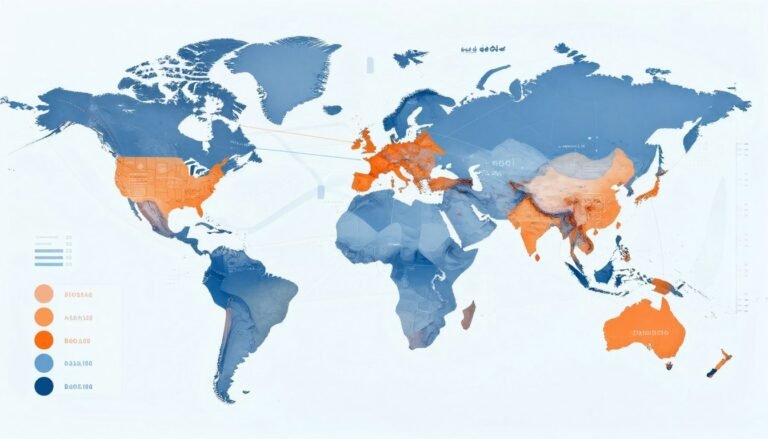

Critical Mineral Supply Chain Risks: How It Could Impact the U.S. Economy in 2026 and Beyond
The global race for critical minerals has intensified into what experts now call the defining economic security challenge of our generation. These essential materials power everything from smartphones to electric vehicles to advanced defense systems. Yet the United States faces unprecedented vulnerability in accessing them.
Recent data from the Department of Energy reveals a stark reality. The United States depends on imports for more than fifty percent of its mineral needs. For certain critical minerals, that dependency reaches one hundred percent. China controls processing for seventy percent of global lithium and ninety percent of rare earth elements.
This concentration of supply creates profound economic risks. A single disruption in mineral supply chains could cascade through manufacturing sectors, delay infrastructure projects, and spike consumer prices. The implications extend far beyond industrial concerns into national security, technological advancement, and economic competitiveness.
Understanding these risks matters now more than ever. Supply chain disruptions during recent years demonstrated how quickly shortages translate into economic pain. Critical mineral vulnerabilities represent a slower-burning but potentially more consequential threat. The decisions made in the next eighteen months will shape American economic resilience for decades.
What Is This Economic Threat?
Critical mineral supply chain risks represent the vulnerability created when essential raw materials face potential disruption, restricted access, or price volatility that threatens economic stability and industrial capacity. These minerals include lithium, cobalt, nickel, rare earth elements, graphite, and dozens of other materials fundamental to modern technology and energy infrastructure.
The Foundation of Modern Economy
Critical minerals form the backbone of twenty-first century economic activity. Lithium powers batteries in electric vehicles and grid storage systems. Rare earth elements enable wind turbines, defense systems, and consumer electronics. Cobalt supports rechargeable battery technology. Graphite serves as a crucial component in battery anodes and industrial applications.
Without steady access to these materials, entire industries grind to a halt. Automotive manufacturers cannot build electric vehicles. Renewable energy deployment stalls. Semiconductor production faces constraints. Defense contractors struggle to fulfill contracts. The ripple effects touch virtually every sector of the economy.
Historical Context and Evolution
The concept of critical minerals emerged during World War II when nations recognized certain materials as essential for national defense. The United States maintained robust domestic mining and processing capacity through the Cold War era. Strategic stockpiles buffered against supply disruptions.
That strategic independence eroded over subsequent decades. Cheaper overseas production shifted mining operations abroad. Environmental regulations and permitting challenges made domestic projects difficult. Processing capacity migrated to countries with lower labor costs and less stringent environmental standards.
By the early twenty-first century, the United States had largely exited critical mineral mining and processing. China systematically built dominant market positions through strategic investments, subsidies, and vertical integration. Other countries concentrated on specific minerals based on geological advantages and industrial policy.
Key Statistics Defining the Threat
The numbers paint a sobering picture of American vulnerability. The United States Geological Survey tracks import dependence for critical minerals. The data reveals troubling concentration:
- Rare earth elements: eighty percent import dependence, primarily from China
- Graphite: one hundred percent import dependence for natural graphite
- Cobalt: seventy-six percent import dependence, with significant supply from the Democratic Republic of Congo
- Lithium: over fifty percent import dependence despite domestic resources
- Nickel: forty-eight percent import dependence for refined nickel
- Manganese: one hundred percent import dependence for manganese ore
Processing concentration magnifies mining concentration. Even when minerals come from diverse sources, China processes the vast majority. Chinese facilities refine seventy percent of cobalt globally. Chinese companies control sixty percent of lithium processing. For rare earths, Chinese dominance in processing exceeds ninety percent.
Market share statistics tell only part of the story. Lead times for new mines average seven to ten years in the United States compared to two to three years in countries with streamlined permitting. Domestic mineral processing barely exists for many critical materials. Reserve estimates show abundant domestic resources that remain undeveloped.
Current Import Dependencies
The United States relies heavily on foreign sources for most critical minerals. This dependence creates economic vulnerability and limits policy flexibility during international tensions.
Processing Bottlenecks
Even domestically mined minerals often ship overseas for processing before returning as refined materials. This adds cost, time, and supply chain complexity while creating additional vulnerability points.
The Strategic Minerals Definition
Not all minerals qualify as critical. The Department of Energy and Department of the Interior jointly maintain a list of critical minerals based on specific criteria. Materials must be essential to economic or national security. They must face supply chain vulnerabilities through import dependence or concentration. No suitable substitutes can exist at comparable cost and performance.
The critical minerals list evolves as technologies change and supply chains shift. Recent updates added several minerals related to battery production and renewable energy. Future revisions will likely include materials essential for advanced semiconductors and emerging technologies.
Understanding which minerals are critical helps prioritize policy responses and investment decisions. High-criticality minerals with severe import dependence demand immediate attention. Lower-criticality materials with diverse supply chains pose less urgent threats. The classification system guides strategic planning across government and industry.
What Is Causing the Problem?
Critical mineral supply chain risks stem from multiple reinforcing factors that have accumulated over decades. Understanding these root causes is essential for developing effective solutions and anticipating future vulnerabilities.
Policy Factors Driving Mineral Dependency
United States policy choices systematically reduced domestic mineral capacity over the past forty years. These decisions reflected broader economic and environmental priorities but created strategic vulnerabilities:
- Permitting complexity: Mining projects face lengthy environmental review processes averaging seven to ten years, compared to two to three years in major competitor nations like Australia and Canada
- Regulatory uncertainty: Changing interpretations of environmental laws create investment risk that discourages domestic mining projects and processing facilities
- Lack of industrial policy: Unlike strategic competitors, the United States historically avoided direct support for critical mineral development, allowing market forces alone to shape supply chains
- Trade agreements: International trade frameworks prioritized cost efficiency over supply security, accelerating the shift of production to lowest-cost jurisdictions
- Defense priorities: Post-Cold War drawdown included reduced emphasis on mineral stockpiles and domestic sourcing for defense applications
- Investment incentives: Tax and regulatory structures favored service industries and technology over heavy industry and resource extraction
These policy factors interacted to make domestic mineral production increasingly difficult. Companies found easier paths to profits in other sectors or other countries. Knowledge and capacity atrophied as experienced workers retired without replacement. Equipment manufacturers and specialized service providers closed or moved operations abroad.
Market Trends Reshaping Mineral Demand
Simultaneous demand surges are straining global mineral supply chains. Multiple transformative trends converge to create unprecedented pressure:
- Electric vehicle adoption: Each electric vehicle requires six times more mineral content than conventional vehicles, with lithium, nickel, cobalt, and graphite seeing explosive demand growth
- Renewable energy deployment: Wind turbines, solar panels, and grid storage systems consume massive quantities of critical minerals, with demand projected to increase four hundred to six hundred percent by twenty thirty
- Digital infrastructure expansion: Data centers, telecommunications networks, and computing devices drive rare earth and specialty mineral consumption
- Defense modernization: Advanced weapons systems, aircraft, and communication equipment require increasing amounts of specialized critical minerals
- Consumer electronics growth: Smartphones, laptops, and smart home devices continue expanding globally, particularly in emerging markets
These demand trends outpace supply development. New mines take seven to fifteen years from discovery to production. Processing facilities require similar timeframes and massive capital investment. The gap between demand growth and supply response widens each year.
Global Influences and Geopolitical Competition
International dynamics increasingly shape critical mineral supply chains. Several global factors intensify supply chain risks:
- Chinese industrial policy: China implemented deliberate strategies over two decades to dominate critical mineral mining, processing, and manufacturing, viewing mineral control as strategic advantage
- Resource nationalism: Countries with mineral deposits increasingly impose export restrictions, processing requirements, or ownership mandates to capture more value domestically
- Geopolitical tensions: Rising international conflicts create supply chain uncertainty, with minerals becoming tools of economic statecraft and potential sanctions targets
- Investment concentration: Chinese companies control significant stakes in overseas mining operations, particularly in Africa and South America, extending Beijing’s influence over global supply
- Technology transfer requirements: Some mineral-rich countries demand technology sharing or joint venture structures that complicate Western company participation
- Infrastructure bottlenecks: Many mineral-rich regions lack transportation, power, and water infrastructure needed for modern mining operations
The Democratic Republic of Congo illustrates these dynamics. The country holds seventy percent of global cobalt reserves. Political instability, infrastructure challenges, and governance concerns plague the mining sector. Chinese companies dominate cobalt mining operations and processing. Western companies struggle to establish secure, ethical supply chains despite enormous reserves.
Similar patterns emerge across mineral supply chains. Indonesia controls significant nickel resources but restricts exports of unprocessed ore. Chile and Argentina hold vast lithium reserves in regions with water scarcity and indigenous land rights complexities. Australia maintains stable mining operations but limited processing capacity.
Structural Economic Changes
Fundamental shifts in the global economy have restructured mineral supply chains in ways that concentrate risk:
- Manufacturing migration: As manufacturing shifted to Asia, particularly China, mineral processing and refining followed to locate near end-use customers and reduce transportation costs
- Capital intensity: Modern mineral processing requires enormous upfront investment in specialized facilities, creating barriers to new market entrants and favoring established players with access to patient capital
- Economies of scale: Processing facilities achieve cost efficiency only at massive scale, leading to concentration in a few large plants rather than distributed capacity
- Vertical integration: Chinese companies often control mines, processing facilities, and manufacturing operations in integrated supply chains that lock out competitors and maximize control
- Knowledge concentration: As United States capacity declined, technical expertise in mineral processing relocated abroad, making reconstruction difficult even with financial resources
- Supply chain optimization: Just-in-time manufacturing and lean inventory practices reduced buffers that previously absorbed supply disruptions
These structural factors create path dependence that resists quick fixes. Building new processing capacity requires not just capital but specialized knowledge, trained workers, and proven technology. Developing these capabilities from scratch takes years even with unlimited funding.
The combination of policy choices, market trends, geopolitical competition, and structural changes created the current vulnerability. No single factor drives the problem. Solutions must address multiple causes simultaneously to reduce risks meaningfully. Partial measures that tackle only one dimension will fall short of securing critical mineral supply chains.
Impact on the U.S. Economy
Critical mineral supply chain disruptions would ripple through the American economy with effects ranging from immediate price shocks to long-term competitiveness erosion. The interconnected nature of modern supply chains means vulnerabilities in mineral access threaten multiple economic sectors simultaneously.
GDP Growth and Economic Output
Gross domestic product faces both direct and indirect threats from critical mineral supply chain risks. Economic modeling suggests significant GDP impacts under various disruption scenarios.
Manufacturing represents eleven percent of United States GDP. Critical mineral shortages would hit this sector hardest. Automotive production alone contributes three percent of GDP. Electric vehicle manufacturing depends entirely on lithium, cobalt, nickel, and graphite availability. A sustained shortage of any critical battery mineral could reduce automotive output by twenty to forty percent.
The Congressional Budget Office analyzed supply chain disruption scenarios in recent economic forecasts. A moderate critical mineral supply shock lasting twelve to eighteen months could reduce GDP growth by zero point three to zero point seven percentage points annually. Severe disruptions extending beyond two years might subtract one to two percentage points from GDP growth.
These GDP impacts reflect multiple transmission channels. Direct manufacturing curtailment reduces output immediately. Delayed infrastructure projects compound effects over time. Investment uncertainty causes businesses to postpone expansion plans. Consumer spending retreats as prices rise and economic confidence weakens.
Short-Term GDP Effects
Immediate supply disruptions force production cuts in affected industries. Manufacturers scramble for alternative materials or reduce output. Service sectors dependent on manufactured goods face secondary impacts. Overall economic growth slows as supply constraints bind.
Long-Term Competitiveness
Sustained mineral access challenges push advanced manufacturing overseas. Innovation migrates to countries with secure mineral supplies. The United States loses ground in critical technology sectors. GDP composition shifts toward less productive service activities.
Renewable energy deployment represents another GDP channel. Federal infrastructure legislation allocates hundreds of billions for clean energy. These projects require enormous quantities of critical minerals. Delays or cost overruns from mineral shortages would reduce the economic multiplier from infrastructure spending.
The International Monetary Fund projects global GDP growth averaging three point two percent annually through twenty thirty. United States growth forecasts range from two to two point five percent. Critical mineral constraints could reduce these projections by twenty-five to fifty percent, translating to hundreds of billions in lost annual output.
Inflation and Price Pressures
Critical mineral supply chain risks create inflationary pressure through multiple mechanisms. Price volatility in mineral markets transmits directly to consumer goods and indirectly through production costs.
Lithium prices demonstrate the inflation transmission mechanism. Between twenty twenty and twenty twenty-two, lithium carbonate prices increased over five hundred percent. Battery costs rose proportionally. Electric vehicle prices increased by eight to twelve thousand dollars on average. Consumers faced higher transportation costs just as gasoline prices also surged.
The Bureau of Labor Statistics tracks mineral price indexes as inflation indicators. Critical mineral prices show much higher volatility than broader commodity indexes. Standard deviation of monthly price changes averages two to three times higher for critical minerals than for traditional commodities like copper or aluminum.
This price volatility complicates inflation management. The Federal Reserve targets two percent annual inflation. Mineral price spikes can push headline inflation above target even when underlying economic conditions remain stable. Policymakers face difficult choices between accommodating temporary price surges or tightening policy and risking recession.
Consumer price impacts extend beyond direct mineral costs. Electronics, appliances, vehicles, and renewable energy systems all incorporate critical minerals. A twenty percent increase in mineral costs might translate to five to fifteen percent higher consumer prices depending on the product. Compound effects across multiple goods create broader inflationary pressure.
Producer price indexes show even larger swings. Manufacturers face mineral cost increases before they fully pass costs to consumers. Profit margins compress during price surges. Some businesses exit markets entirely if they cannot maintain profitability. Market concentration increases as smaller competitors fail.
Wage pressure represents another inflation channel. Workers demand higher compensation to offset rising costs of living. Labor market tightness gives workers bargaining power. Wage increases feed back into production costs and consumer prices. A wage-price spiral becomes possible if mineral-driven inflation persists.
Employment and Labor Market Effects
Critical mineral supply chain disruptions would reshape employment across multiple dimensions. Job losses in affected industries contrast with potential gains in domestic mineral development.
Manufacturing employment stands most at risk. The sector employs twelve point eight million Americans according to Bureau of Labor Statistics data. Industries heavily dependent on critical minerals account for approximately four million jobs. Automotive manufacturing alone employs one million workers directly plus two million in related supply chains.
Electric vehicle production creates more manufacturing jobs than conventional vehicles due to battery complexity and domestic content requirements. Federal incentives encourage domestic battery production. But these jobs depend entirely on mineral access. Disrupted supply chains would prevent planned employment growth and potentially eliminate existing positions.
The renewable energy sector employs over three million Americans in installation, manufacturing, and operations. Solar panel installation, wind turbine manufacturing, and grid storage projects all require critical minerals. Supply constraints would slow renewable deployment and job creation. The Department of Energy projects clean energy employment growth of forty percent by twenty thirty, but mineral shortages could cut this expansion in half.
| Industry Sector | Current Employment | Mineral Dependence | Risk Level | Potential Job Impact |
| Automotive Manufacturing | 1.0 million direct | High (lithium, cobalt, nickel) | High | 200k-400k jobs at risk |
| Renewable Energy | 3.2 million total | Very High (rare earths, copper) | Very High | 500k-800k jobs at risk |
| Electronics Manufacturing | 1.1 million direct | High (rare earths, cobalt) | High | 150k-300k jobs at risk |
| Defense Manufacturing | 2.5 million total | Medium (specialty minerals) | Medium | 100k-250k jobs at risk |
| Domestic Mining Potential | 50k current mineral mining | N/A | Opportunity | 200k-500k potential new jobs |
Domestic mineral development offers employment opportunities. Mining and processing operations create high-wage jobs in rural communities. The National Mining Association estimates each direct mining job supports three indirect jobs in local economies. Developing robust domestic critical mineral capacity could create two hundred thousand to five hundred thousand new jobs.
However, job creation in mining cannot fully offset manufacturing losses. Geographic mismatch presents challenges. New mines locate where geology permits. Manufacturing clusters exist in different regions. Workers cannot easily relocate between displaced manufacturing jobs and new mining opportunities. Retraining programs would need massive scale and funding.
Skill requirements differ significantly. Manufacturing workers need technical training in production processes, quality control, and equipment operation. Mining requires different expertise in geology, extraction techniques, and heavy equipment. Processing facilities demand chemical engineering knowledge. The transition would require extensive workforce development.
Financial Markets and Investment Flows
Financial markets price critical mineral supply chain risks into asset valuations and investment decisions. Stock prices, bond yields, and capital allocation all reflect mineral vulnerability perceptions.
Equity markets show high sensitivity to supply chain news. Automotive stocks decline sharply on reports of battery mineral shortages. Renewable energy companies see valuations compress when mineral prices spike. Conversely, mining company stocks surge on supply tightness. Market volatility increases as investors struggle to assess long-term supply security.
The World Bank tracks mineral price indexes used in commodity trading. Critical mineral futures markets have grown significantly in recent years. Lithium futures contracts now trade actively on major exchanges. Rare earth element contracts attract hedge fund speculation. Increased financialization can amplify price volatility beyond fundamental supply and demand.
Bond markets reflect supply chain risks through credit spreads. Companies dependent on critical minerals face higher borrowing costs as investors demand premium yields for supply uncertainty. Manufacturing firms see credit ratings pressure. Project finance for mineral-dependent infrastructure becomes more expensive and difficult to arrange.
Investment flows into domestic mineral development remain limited despite growing risks. Venture capital and private equity largely avoid mining due to long development timelines, regulatory uncertainty, and capital intensity. Public markets provide insufficient patient capital for decade-long mine development projects. Government support and risk-sharing will likely prove necessary to mobilize adequate investment.
International investment patterns compound United States vulnerabilities. Chinese investors acquire stakes in global mining operations while United States capital sits on the sidelines. Strategic competitors gain influence over supply chains through systematic investment. American firms lose access to mineral resources as Chinese companies lock up supplies through long-term contracts and ownership stakes.
Impacts on Consumers and Businesses
Critical mineral supply chain risks translate into tangible effects on consumer purchasing power and business operations. Price impacts, product availability, and strategic planning all feel pressure from mineral vulnerabilities.
Consumer electronics prices reflect mineral cost volatility. Smartphones, laptops, and tablets all incorporate critical minerals. A twenty to thirty percent increase in cobalt and rare earth prices might add fifty to one hundred dollars to device costs. Consumers delay purchases or choose lower-quality alternatives. Demand destruction reduces sales and economic activity.
Electric vehicles represent the most significant consumer impact. Battery costs account for thirty to forty percent of electric vehicle prices. Mineral price spikes translate directly to higher vehicle costs. The Congressional Budget Office projects electric vehicles reaching price parity with gasoline vehicles by twenty twenty-seven. Mineral shortages could delay this timeline by three to five years, slowing transportation electrification.
Home energy systems face similar pressures. Residential solar panels with battery storage cost fifteen thousand to thirty thousand dollars for typical installations. Critical mineral shortages could increase costs by twenty to thirty percent. Adoption rates would slow. Federal incentives designed to accelerate clean energy deployment would deliver less impact.
Businesses confront operational challenges beyond direct cost increases. Supply uncertainty forces companies to hold larger inventories, tying up working capital. Long-term planning becomes difficult when mineral availability remains unclear. Some businesses abandon products or markets entirely rather than manage supply chain complexity.
Small and medium businesses face disproportionate impacts. Large corporations can hedge mineral price risk through futures contracts and maintain diverse supplier relationships. Smaller companies lack these capabilities. They pay spot prices and depend on single suppliers. Supply disruptions hit them hardest.
Service businesses feel indirect effects. Consulting firms, software companies, and financial services all depend on manufactured goods incorporating critical minerals. Data centers require enormous quantities of electronics and backup power systems. Cloud computing costs rise when underlying hardware becomes more expensive. Digital transformation initiatives slow or stall.
The cumulative impact across consumers and businesses reduces economic dynamism. Innovation slows when critical inputs become scarce and expensive. Entrepreneurs focus on opportunities with secure supply chains rather than breakthrough technologies. The economy shifts toward lower productivity activities with fewer mineral dependencies. Long-term growth potential diminishes.
Recent Data and Trends
Current statistics and emerging trends reveal accelerating critical mineral supply chain pressures. Government agencies, international organizations, and industry analysts track key indicators that signal growing vulnerabilities and potential disruption points.
United States Geological Survey Import Dependence Data
The United States Geological Survey publishes annual Mineral Commodity Summaries tracking import reliance for critical minerals. The twenty twenty-four edition shows increasing dependence across multiple materials.
Rare earth elements import dependence reached eighty percent in twenty twenty-three, up from seventy-eight percent the previous year. China supplied seventy-four percent of United States rare earth imports. Myanmar and Estonia provided most remaining supplies. Domestic production at the Mountain Pass facility in California represents the only significant United States rare earth mining operation.
Natural graphite import dependence remains at one hundred percent. The United States has no domestic natural graphite production despite significant deposits. China dominates global graphite processing with over seventy percent market share. Processing requires specialized expertise and creates environmental challenges that have discouraged United States investment.
Cobalt import dependence measured seventy-six percent in twenty twenty-three. The Democratic Republic of Congo produces seventy percent of global cobalt. Chinese companies control most Congolese cobalt mining operations. United States cobalt consumption increased fifteen percent year-over-year driven by battery demand.
Lithium import dependence exceeded fifty percent for the first time in twenty twenty-three. Domestic lithium production from Nevada brine operations cannot meet surging demand. Chile and Argentina supply most United States lithium imports. Australia exports lithium ore but lacks processing capacity. China processes most global lithium despite limited domestic resources.
Nickel import dependence measured forty-eight percent for refined nickel products. Canada and Norway supply most United States nickel imports. Nickel prices show high volatility based on electric vehicle demand forecasts. Indonesia holds vast nickel reserves but restricts ore exports to capture processing value domestically.
Department of Energy Critical Mineral Assessments
The Department of Energy released updated critical mineral strategy documents in twenty twenty-three highlighting supply chain vulnerabilities and response priorities. The analysis identifies specific chokepoints and recommends policy interventions.
Battery supply chains receive particular attention. The Department of Energy projects United States battery demand increasing ten-fold by twenty thirty to support electric vehicle adoption and grid storage deployment. Domestic battery production capacity plans cannot meet this demand without significant mineral supply expansion.
Lithium supply faces the most acute shortfall. Department of Energy models suggest United States lithium demand reaching three hundred thousand metric tons lithium carbonate equivalent by twenty thirty. Current domestic production provides only twenty thousand metric tons annually. Planned mine expansions would add another eighty thousand tons, leaving enormous gaps.
Cobalt presents similar challenges. United States cobalt demand could reach forty thousand metric tons by twenty thirty. Domestic production provides virtually zero cobalt. Planned domestic projects might contribute five thousand tons if all proceed on schedule. Import dependence will persist absent major policy interventions.
Rare earth element supply chains show particular concentration risk. The Department of Energy identifies rare earth permanent magnets as the highest priority vulnerability. These magnets enable electric vehicle motors and wind turbine generators. China controls ninety percent of global rare earth magnet production. A single Chinese company produces forty percent of global output.
The department’s analysis recommends tripling domestic critical mineral production by twenty thirty and establishing processing capacity for all priority minerals. Achieving these targets requires permitting reform, financial support for mine development, and workforce training programs. Current policy trajectories fall short of recommendations.
Congressional Budget Office Economic Forecasts
The Congressional Budget Office incorporates supply chain risks into economic projections and budget estimates. Recent baseline forecasts include scenario analysis examining critical mineral disruption impacts.
The main baseline forecast projects real GDP growth averaging two point one percent annually through twenty thirty-four. Inflation stabilizes near the Federal Reserve’s two percent target by twenty twenty-six. Unemployment remains between four and four point five percent. These projections assume no major supply chain disruptions.
Alternative scenarios model critical mineral supply shocks. A moderate disruption lasting two years could reduce GDP growth by zero point four percentage points annually during the shock period. Cumulative output losses might reach four hundred billion dollars. Recovery to baseline growth takes an additional two years.
Severe disruption scenarios show more dramatic impacts. A sustained shortage of multiple critical minerals simultaneously could subtract one to one point five percentage points from annual GDP growth. Inflation might exceed four percent temporarily. Unemployment could rise to five point five or six percent as manufacturing contracts. Cumulative losses could exceed one trillion dollars over a five-year period.
The Congressional Budget Office analysis emphasizes uncertainty around these estimates. Supply chain disruptions create complex second-order effects difficult to model precisely. Behavioral responses from businesses and consumers amplify or dampen initial shocks. Policy interventions alter trajectories. The range of potential outcomes spans from minimal impact to severe recession depending on disruption severity and response effectiveness.
International Monetary Fund Global Commodity Outlook
The International Monetary Fund publishes quarterly commodity market outlooks including dedicated analysis of critical mineral markets. Recent editions highlight tightening supply-demand balances and price volatility risks.
Lithium market projections show persistent tightness through twenty twenty-eight. The IMF forecasts lithium demand growing at twenty-five percent annually while supply expands only fifteen percent annually. This supply-demand imbalance keeps prices elevated despite recent corrections from twenty twenty-two peaks. Lithium carbonate prices averaged thirty thousand dollars per metric ton in twenty twenty-three, down from peak levels above eighty thousand dollars but still triple pre-pandemic prices.
Cobalt markets face similar dynamics. The IMF projects cobalt demand increasing eighteen percent annually driven by battery applications. New supply from the Democratic Republic of Congo barely keeps pace with demand growth. Cobalt prices averaged thirty-five thousand dollars per metric ton in twenty twenty-three. Price forecasts suggest forty to fifty thousand dollars by twenty twenty-six as electric vehicle production accelerates.
Rare earth element markets show the highest price volatility among critical minerals. Individual rare earth prices vary dramatically based on specific applications and substitution possibilities. Neodymium and praseodymium prices doubled between twenty twenty and twenty twenty-two before declining thirty percent. The IMF warns concentrated Chinese supply creates manipulation risks and potential export restriction scenarios.
Nickel markets demonstrate the complexity of mineral forecasting. Indonesian nickel production surged in recent years, creating temporary oversupply. Prices declined from peak levels. But the IMF notes most Indonesian production consists of lower-grade nickel pig iron unsuitable for batteries. Battery-grade nickel supply remains tight. Class one nickel prices command significant premiums over lower grades.
World Bank Mineral Market Developments
The World Bank tracks mineral production trends and investment flows in developing economies. Recent analysis documents shifting patterns in global mineral supply chains with implications for United States access.
Chinese investment in African mining operations totaled over fifteen billion dollars in twenty twenty-three according to World Bank data. These investments target cobalt in the Democratic Republic of Congo, copper in Zambia, and lithium across multiple countries. Chinese financing typically includes long-term offtake agreements securing mineral supplies for Chinese processors and manufacturers.
Resource nationalism trends show acceleration. The World Bank documents over thirty new mineral export restrictions or processing requirements implemented by resource-rich countries since twenty twenty. Indonesia banned nickel ore exports. Zimbabwe restricted lithium ore exports. Namibia imposed local processing requirements for rare earth elements. These policies aim to capture more value domestically but complicate global supply chains.
Mining sector investment flows remain concentrated in established jurisdictions like Australia, Canada, and Chile. These countries receive over sixty percent of global mining investment despite holding less than thirty percent of critical mineral reserves. Political stability and clear regulatory frameworks attract capital. Resource-rich but institutionally weak countries struggle to attract legitimate investment outside Chinese state-backed projects.
The World Bank estimates global critical mineral investment needs at over two hundred billion dollars annually to meet energy transition demands. Current investment runs at approximately one hundred billion dollars annually. The financing gap persists despite high mineral prices. Long development timelines, regulatory uncertainty, and ESG concerns deter private capital. Public finance and multilateral support will likely prove necessary to close gaps.
Supply Indicators Tightening
Multiple metrics signal growing supply constraints. Mine development pipelines fall short of demand projections. Processing capacity investments lag mining expansion. Inventory levels decline across critical minerals. Lead times for mineral deliveries extend. Spot prices disconnect from long-term contract prices, indicating physical shortages.
Demand Acceleration Continuing
Electric vehicle sales exceeded fourteen million units globally in twenty twenty-three, up thirty-five percent year-over-year. Renewable energy installations reached record levels. Grid storage deployments doubled. Electronics demand rebounded from pandemic disruptions. All major demand drivers continue strengthening, outpacing supply development.
Industry Data and Market Intelligence
Private sector research firms and industry associations compile detailed market data complementing government statistics. These sources provide granular insights into specific mineral markets and supply chain dynamics.
Benchmark Mineral Intelligence tracks lithium supply chains with facility-level detail. Their analysis shows global lithium production capacity reached eight hundred thousand metric tons lithium carbonate equivalent in twenty twenty-three. Announced expansion projects could add six hundred thousand tons capacity by twenty twenty-eight. But demand forecasts exceed two million tons by twenty twenty-eight, leaving substantial deficits even if all planned projects complete on schedule.
Roskill metal research analyzes rare earth element supply chains. Their data indicates Chinese rare earth production reached two hundred forty thousand metric tons in twenty twenty-three, representing seventy percent of global output. United States production from Mountain Pass totaled forty-three thousand tons. Myanmar supplied another thirty-five thousand tons. No other country produced more than ten thousand tons. Processing concentration exceeds mining concentration, with China handling over ninety percent of global rare earth refining.
CRU Group publishes extensive cobalt market analysis. They document Democratic Republic of Congo production reaching one hundred fifty thousand metric tons in twenty twenty-three, comprising seventy-three percent of global supply. Chinese companies own or control approximately eighty percent of Congolese cobalt output through mine ownership, joint ventures, or offtake agreements. This vertical integration extends through processing stages. China refines over seventy percent of global cobalt into battery-grade chemicals.
Wood Mackenzie energy consultancy tracks nickel markets with focus on battery-grade material. Their research shows class one nickel production totaling three million metric tons in twenty twenty-three. Indonesia produced nine hundred thousand tons, primarily lower-grade nickel pig iron. Battery sector demand reached six hundred thousand tons class one nickel, projected to triple by twenty thirty. Supply expansions focus on lower-grade production unsuitable for batteries, creating battery-grade shortages despite overall nickel surpluses.
These industry analyses consistently show similar patterns. Demand growth outpaces supply development across critical minerals. Production and processing concentrate in limited countries and companies. Investment in new capacity falls short of requirements. Price volatility creates planning difficulties. Supply security concerns intensify as electrification accelerates.
Expert Opinions and Forecasts
Leading economists, policy analysts, and industry experts provide varied perspectives on critical mineral supply chain risks. Their forecasts range from manageable challenges to potential economic crises depending on policy responses and market developments.
Economist Projections on Economic Impact
Mainstream economists generally view critical mineral supply chains as manageable risks that require proactive policy but unlikely to trigger major economic crises. However, expert opinions diverge on timeline, severity, and appropriate responses.
Dr. Janet Yellen, United States Treasury Secretary, characterized critical mineral supply chains as national security priorities requiring government intervention in markets. Treasury analysis suggests mineral supply constraints could reduce GDP growth by zero point three to zero point eight percentage points annually if unaddressed. Secretary Yellen advocates strategic mineral reserves, domestic production incentives, and international partnerships to diversify supply.
Former Federal Reserve Chair Ben Bernanke emphasized supply chain resilience in recent academic papers. His analysis treats critical mineral risks as similar to oil supply shocks of the nineteen seventies. Market mechanisms eventually resolve shortages through higher prices spurring supply and conservation. But adjustment periods create significant economic pain. Policy interventions can smooth transitions and reduce peak impacts.
International Monetary Fund Chief Economist Pierre-Olivier Gourinchas highlighted critical minerals as a major uncertainty in global growth forecasts. IMF scenarios model supply disruptions reducing global GDP by zero point five to one point five percent depending on severity and duration. Emerging markets face larger impacts due to manufacturing concentration. Advanced economies experience inflation pressure and reduced investment.
Professor Adam Tooze of Columbia University takes a more pessimistic view. His research argues critical mineral supply chains represent fundamental contradictions in climate policy. Rapid decarbonization requires massive mineral supply expansion. But mining development timelines extend seven to fifteen years. This temporal mismatch creates unavoidable shortages and price spikes that could derail energy transitions and trigger recessions.
Harvard economist Kenneth Rogoff focuses on geopolitical dimensions. His analysis suggests critical mineral concentration in China creates strategic vulnerabilities beyond pure economics. Export restrictions or supply cutoffs could serve as economic weapons during international conflicts. The United States must develop independent supply chains regardless of cost to ensure economic security and policy autonomy.
Industry Analyst Market Outlooks
Mining industry analysts and commodity specialists provide detailed forecasts for specific mineral markets. Their outlooks generally project sustained tightness and price volatility through the remainder of the decade.
Simon Moores, Managing Director of Benchmark Mineral Intelligence, forecasts lithium markets remaining in deficit through twenty twenty-nine despite aggressive capacity expansion. His analysis shows lithium demand growing faster than even optimistic supply projections. Prices will likely stay elevated, averaging forty to sixty thousand dollars per metric ton lithium carbonate equivalent. Only a major demand collapse from recession or technological disruption would bring sustained oversupply.
Jack Lifton, rare earth elements expert and market analyst, predicts permanent Chinese dominance in rare earth processing absent massive Western government investment. His research indicates building competitive rare earth separation capacity requires ten to fifteen years and several billion dollars investment per facility. Current market prices cannot justify these investments. Prices must triple or governments must subsidize operations to enable Western rare earth supply chains.
Andrew Mitchell, cobalt market specialist at Benchmark Mineral Intelligence, forecasts tight cobalt markets through twenty thirty even with Democratic Republic of Congo production growth. Battery demand will consume increasing shares of cobalt output. Industrial and aerospace applications must compete for limited supplies. Cobalt prices could reach fifty to seventy thousand dollars per metric ton by late decade, double current levels.
Chris Berry, founder of House Mountain Partners focused on battery materials, emphasizes nickel market complexity. His outlook distinguishes battery-grade class one nickel from lower-grade materials. Battery-grade nickel faces sustained deficits while overall nickel markets balance or enter surplus. This two-tier market structure keeps battery-grade prices elevated at premiums of thirty to fifty percent over lower grades.
These industry forecasts consistently project extended periods of supply tightness, high prices, and market volatility. Analysts generally express skepticism that supply can expand fast enough to meet aggressive electrification timelines without major price increases, technological breakthroughs, or demand moderation.
Policy Expert Risk Assessments
National security and policy specialists evaluate critical mineral risks through strategic lenses emphasizing resilience, security, and geopolitical competition rather than pure economics.
Experts at the Atlantic Council assess critical mineral supply chains as high national security risks requiring comprehensive government response. Their framework analyzes vulnerabilities across mining, processing, manufacturing, and end-use applications. The assessment concludes Chinese supply chain dominance creates unacceptable strategic dependence. Policy recommendations include domestic production mandates, processing capacity investments, strategic partnerships with allies, and trade restrictions on adversary nations.
Resources for the Future scholars examine resource nationalism trends and supply chain resilience. Their research documents increasing export restrictions and local content requirements across mineral-producing countries. This fragmentation of global markets raises costs and reduces efficiency but also creates opportunities for diversification. The United States should leverage resource nationalism in allied countries to reduce Chinese dominance while avoiding excessive protectionism that limits market access.
Center for Strategic and International Studies analysts highlight defense implications. Their assessments note that advanced weapons systems, aircraft, and communication equipment depend on critical minerals with concentrated supply chains. A Chinese export cutoff of rare earth elements could cripple United States defense production within months. Strategic stockpiles provide only temporary buffers. Establishing secure defense industrial supply chains requires priority government investment regardless of commercial viability.
Brookings Institution researchers focus on international cooperation mechanisms. Their policy proposals emphasize multilateral approaches including allied purchasing consortia, coordinated investment in processing capacity, and technology sharing to accelerate supply development. Pure national approaches prove inefficient and geopolitically destabilizing. Collaborative frameworks with trusted partners optimize resource allocation and reduce China’s strategic leverage.
Technology and Innovation Perspectives
Technology experts and materials scientists offer different perspectives emphasizing innovation, substitution, and efficiency improvements as responses to supply constraints.
Battery researchers highlight rapid technological evolution. Next-generation battery chemistries could reduce or eliminate some critical mineral dependencies. Sodium-ion batteries use abundant materials instead of lithium and cobalt. Solid-state batteries might require less lithium per unit energy. Improved recycling could provide thirty to forty percent of mineral needs by twenty thirty-five. However, these technologies remain years from commercial scale. Supply constraints will persist through the crucial transition period.
Materials scientists emphasize substitution possibilities. Rare earth permanent magnets could give way to rare-earth-free motor designs. Cobalt-free battery cathodes show promising performance. Synthetic graphite can replace natural graphite in many applications. But substitution creates tradeoffs in performance, cost, or manufacturing complexity. Most alternatives currently cost more or perform worse than incumbent technologies. Market adoption requires either higher mineral prices or breakthrough innovations.
Mining technology innovators argue new extraction and processing methods can dramatically expand supply. In-situ leaching reduces mining costs and environmental impacts. Direct lithium extraction from brines accelerates production timelines. Rare earth element separation using new chemical processes cuts costs and environmental damage. Deploying these technologies at scale could add substantial supply capacity within five to seven years, faster than conventional mine development.
However, technology optimists face skepticism from industry practitioners. Mining executives note that novel technologies often encounter unexpected challenges during scaling. Regulatory approval adds years to deployment timelines. Capital requirements for new processing facilities remain enormous regardless of technological approach. While innovation will help, technology alone cannot solve supply challenges without supportive policy and massive investment.
Composite Risk Level Assessment
Synthesizing these diverse expert perspectives yields a composite risk assessment for critical mineral supply chain vulnerabilities:
This composite assessment rates overall critical mineral supply chain risk as HIGH based on convergent expert analysis across economic, security, and technical dimensions. While opinions differ on specific timelines and solutions, broad consensus exists that current supply chains create significant vulnerabilities requiring urgent policy attention and substantial investment.
The highest risk factors include geopolitical concentration, particularly Chinese dominance in processing, and structural challenges from long development timelines and capital requirements. Medium-term supply constraints rated particularly high as demand growth accelerates before new supply comes online.
Lower but still significant risk attaches to near-term economic impacts. Existing buffers, inventory, and market flexibility provide some resilience against immediate disruptions. However, these buffers deplete over time without supply expansion. Risk escalates sharply in the twenty twenty-six to twenty thirty timeframe as critical transition technologies scale production.
Possible Solutions or Policy Responses
Addressing critical mineral supply chain risks requires coordinated action across government, industry, and international partners. Effective solutions must tackle multiple dimensions simultaneously including domestic production, processing capacity, recycling, substitution, and strategic partnerships.
Government Actions and Legislative Initiatives
Federal and state governments possess multiple policy tools to strengthen critical mineral supply chains. Recent legislation provides frameworks and funding, but implementation determines ultimate effectiveness.
The Infrastructure Investment and Jobs Act allocated six billion dollars for critical mineral supply chain development. These funds support domestic mining projects, processing facilities, recycling operations, and workforce training. The Department of Energy administers grant programs for battery material processing and manufacturing. The Department of Defense funds projects critical for defense applications.
However, six billion dollars falls far short of estimated investment needs exceeding one hundred billion dollars. Additional appropriations will likely prove necessary. Congress considers expanded tax credits for critical mineral production similar to renewable energy incentives. Proposals include investment tax credits of thirty to forty percent for qualifying mining and processing projects.
Permitting reform represents another crucial policy lever. The average timeline for mine permitting in the United States extends seven to ten years compared to two to three years in Australia and Canada. Legislative proposals aim to streamline reviews, establish firm timelines, and coordinate across agencies. Environmental groups resist changes they view as weakening protections. Finding balance between environmental stewardship and expedited development remains politically contentious.
Strategic stockpiles offer another tool. The Defense National Stockpile holds critical materials for emergency use. But current stockpile levels fall below targets for many minerals. Congress appropriated additional funds to purchase lithium, cobalt, and rare earth elements. However, stockpiles provide only temporary buffers. They cannot substitute for sustainable domestic supply chains.
Trade policy and export controls factor into comprehensive strategies. The United States restricts exports of certain critical technologies to China and other strategic competitors. These controls aim to slow adversary technological advancement. Conversely, import restrictions on Chinese critical minerals could incentivize domestic production but risk near-term shortages and price spikes. Calibrating trade policy to balance competing objectives proves challenging.
Research and development funding accelerates technology solutions. The Department of Energy sponsors research into battery recycling, alternative chemistries, and efficient extraction methods. The National Science Foundation supports materials science advancing substitutes and efficiency. Annual federal research spending on critical mineral technologies exceeds one billion dollars. Industry groups advocate doubling or tripling these investments to match the scale of Chinese government research support.
Federal Reserve Policies and Economic Levers
The Federal Reserve’s monetary policy tools provide limited direct influence over critical mineral supply chains. However, the Fed’s decisions affect investment flows, inflation expectations, and broader economic conditions that shape mineral market dynamics.
Interest rate policy impacts mining investment economics. Higher rates increase capital costs for long-term mining projects. The Federal Reserve raised rates aggressively in twenty twenty-two and twenty twenty-three to combat inflation. These increases made mining projects harder to finance. Conversely, lower rates when the Fed eventually eases policy will improve project economics and attract investment.
The Fed’s regulatory role extends to bank lending standards. Encouraging financial institutions to view critical mineral projects favorably could increase available capital. However, the Fed must balance this with prudent risk management. Mining projects carry genuine financial risks from long timelines, commodity price volatility, and regulatory uncertainty.
Financial stability monitoring represents another Fed responsibility. Severe critical mineral supply disruptions could create systemic financial risks if major industries face simultaneous stress. The Federal Reserve includes supply chain resilience in financial stability assessments. These evaluations inform both monetary policy and regulatory oversight.
The Federal Reserve Bank system’s research divisions analyze economic impacts of supply chain disruptions. Regional Federal Reserve Banks publish reports on local economic effects. These analyses inform policymakers about geographic distribution of risks and opportunities from critical mineral development.
Market-Driven Adjustments and Private Sector Responses
Market mechanisms drive significant adaptation to supply constraints even without government intervention. Higher prices incentivize supply expansion, demand conservation, substitution, and efficiency improvements.
Mining companies respond to high mineral prices by developing new projects and expanding existing operations. Global mining investment increased forty percent between twenty twenty and twenty twenty-three according to S&P Global Market Intelligence. Major mining companies including BHP, Rio Tinto, and Glencore announced multibillion-dollar investments in lithium, nickel, and copper projects.
Automotive manufacturers integrate backward into battery supply chains to secure critical minerals. Tesla invested in lithium mining projects and built battery recycling facilities. Ford and General Motors formed joint ventures with mining companies for direct mineral sourcing. These vertical integration strategies bypass traditional market mechanisms to ensure supply security.
Technology companies pursue similar approaches. Apple launched a carbon-free aluminum smelting venture and invests in cobalt supply chain traceability. Major tech manufacturers cooperate on responsible minerals sourcing initiatives. These programs aim to secure ethical, sustainable supplies while reducing dependence on problematic sources like artisanal mining in conflict zones.
Recycling businesses scale operations in response to high mineral prices and supply concerns. Battery recycling companies including Redwood Materials and Li-Cycle raised billions in venture capital and announced major facility expansions. Recycling could provide twenty to thirty percent of critical mineral supply by twenty thirty if infrastructure develops as planned.
Materials innovation accelerates in laboratories and startups worldwide. Companies develop cobalt-free battery cathodes, rare-earth-free electric motors, and alternative materials for various applications. Venture capital investment in materials technology exceeded fifteen billion dollars in twenty twenty-three. Not all innovations will succeed commercially, but the innovation pipeline appears robust.
Supply-Side Market Response
High prices attract mining investment and expansion. New projects advance through development pipelines. Existing mines increase output. Marginal deposits become economic. However, long development timelines mean supply response lags demand growth by years.
Demand-Side Adaptation
Users seek alternatives, improve efficiency, and reduce consumption. Manufacturers redesign products to minimize critical mineral content. Consumers delay purchases or choose less mineral-intensive options. Substitution accelerates where technically feasible.
Financial Innovation
New financial instruments emerge to manage mineral price risk and facilitate investment. Futures markets expand. Streaming and royalty companies provide alternative financing. Public-private partnerships structure complex projects.
International Cooperation and Strategic Partnerships
No single country can independently secure critical mineral supply chains. International cooperation with allied nations offers pathways to diversify supply and share technological capabilities.
The Minerals Security Partnership brings together the United States, European Union, Japan, South Korea, Australia, Canada, and other allies to coordinate critical mineral investments. Partner countries jointly fund mining projects in third countries, share geological data, and coordinate export credit financing. The partnership aims to provide alternatives to Chinese investment in mineral-rich developing nations.
Bilateral agreements facilitate mineral trade and investment between the United States and specific partners. The United States-Australia agreement on critical minerals establishes framework for cooperation on mining projects, technology sharing, and supply chain integration. Similar agreements with Canada, Japan, and European nations create networks reducing dependence on any single source.
Development finance institutions including the United States Development Finance Corporation invest in mining projects in developing countries. These investments aim to establish responsible, transparent supply chains as alternatives to Chinese-controlled operations. Projects must meet environmental and social standards often ignored in Chinese developments.
Technology sharing agreements allow partners to jointly develop processing capabilities. The United States and European Union cooperate on rare earth separation technology. Australia and the United States collaborate on lithium processing innovations. Sharing development costs and technical knowledge accelerates capability building across allied nations.
Trade agreements increasingly incorporate critical mineral provisions. The United States-Mexico-Canada Agreement includes language on mineral supply chain security. Future trade negotiations will likely emphasize mineral access, processing capacity, and supply chain resilience as core elements alongside traditional trade topics.
State and Local Initiatives
State governments complement federal efforts with their own programs supporting critical mineral development. States with significant mineral resources implement policies to attract investment and streamline projects.
Nevada, home to substantial lithium deposits, created expedited permitting tracks for critical mineral projects. The state also funds workforce training programs for mining and processing operations. Tax incentives reduce costs for companies developing lithium extraction and processing facilities.
Wyoming established a rare earth element research center and provides grants for processing technology development. The state possesses significant rare earth deposits but lacks processing infrastructure. State programs aim to build complete supply chains from mining through final products.
Arizona, a major copper producer, expanded programs to include critical mineral by-products. Copper mining operations often produce cobalt, nickel, and other critical minerals as secondary output. State policies encourage recovering and processing these materials rather than discarding them as waste.
California invests heavily in battery recycling and circular economy initiatives. The state provides subsidies for recycling facilities and mandates battery collection programs. These efforts aim to reduce primary mining needs while creating green jobs and reducing waste.
Local governments in mining regions face tensions between economic opportunities and community concerns. Property tax revenues from mining support schools and infrastructure. High-wage jobs benefit local economies. But mining creates environmental impacts and changes community character. Successful projects require genuine community engagement and benefit sharing arrangements that address local concerns.
Comprehensive Policy Frameworks
Effective solutions require integrating multiple policy tools into coherent frameworks addressing the full complexity of critical mineral supply chains. Piecemeal approaches prove insufficient given the scale of challenges.
A comprehensive approach should include:
- Permitting reform reducing timelines to three years for priority projects while maintaining environmental protections through streamlined reviews and firm deadlines
- Financial incentives including investment tax credits, loan guarantees, and grant programs totaling twenty to thirty billion dollars over five years
- Research and development funding doubled to two billion dollars annually for extraction technologies, processing innovations, substitution materials, and recycling methods
- Strategic stockpiles expanded and regularly rotated to buffer short-term disruptions while supporting market prices for domestic producers
- International partnerships formalized through treaties and institutions coordinating allied investment and reducing collective dependence on strategic competitors
- Workforce development programs training fifty thousand workers in mining, processing, and recycling occupations over five years
- Environmental standards ensuring domestic production meets high sustainability benchmarks that differentiate from destructive practices in competitor countries
- Market development support creating demand for domestically produced materials through procurement preferences and regulatory standards
Implementation timelines matter as much as policy content. Supply chains take years to establish. Policies enacted in twenty twenty-five might show significant effects only by twenty thirty or later. This temporal mismatch between problem urgency and solution timelines creates political challenges. Sustaining commitment across multiple election cycles and administrations requires broad bipartisan consensus that currently remains elusive.
What It Means for Americans
Critical mineral supply chain risks translate into concrete effects on American households and workers. Understanding these practical implications helps individuals and families prepare for potential disruptions and adapt to changing economic conditions.
Cost of Living and Consumer Prices
Household budgets will feel pressure from critical mineral supply constraints through multiple channels. Transportation costs, home energy expenses, and consumer electronics all face potential price increases.
Electric vehicles represent the most visible consumer impact. The average new electric vehicle cost approximately sixty thousand dollars in twenty twenty-three. Battery packs account for twelve to fifteen thousand dollars of this cost. A thirty percent increase in critical mineral prices could add three to five thousand dollars to electric vehicle prices.
For families planning to purchase electric vehicles, this means either paying more or delaying transitions from gasoline vehicles. Federal tax credits of up to seventy-five hundred dollars offset some costs. But mineral price increases could exceed tax credit benefits. The Congressional Budget Office projects electric vehicle adoption reaching fifteen million annual sales by twenty thirty. Price increases could reduce adoption by twenty to thirty percent, slowing transportation electrification.

Home energy costs face similar pressures. Residential solar panel systems with battery storage cost twenty to thirty thousand dollars for typical installations. Critical mineral shortages could increase costs by five to eight thousand dollars. Families considering solar investments might delay projects or choose smaller systems without storage.
Consumer electronics prices will likely increase modestly but persistently. Smartphones, laptops, tablets, and gaming systems all incorporate critical minerals. A new smartphone might cost fifty to one hundred dollars more than current prices if mineral costs surge. These increases seem small individually but accumulate across multiple device purchases over time.
Home appliances including refrigerators, washing machines, and HVAC systems increasingly incorporate advanced electronics and motors using critical minerals. Replacement costs could increase by one hundred to three hundred dollars per appliance. For households replacing multiple appliances, cumulative impacts reach into thousands of dollars.
The broader inflationary effects compound these specific price increases. Critical mineral shortages contribute to overall inflation that erodes purchasing power. Real wages decline when nominal pay increases lag inflation. Middle-class families face squeezed budgets as costs rise faster than incomes. Lower-income households suffer disproportionately since they spend larger shares of income on goods affected by mineral price increases.
Employment and Career Opportunities
Critical mineral supply chain developments will reshape American labor markets creating both risks and opportunities across industries and regions.
Manufacturing workers face the most direct employment risks. Automotive assembly plants, electronics manufacturers, and renewable energy equipment producers all depend on critical mineral inputs. Supply disruptions force production cuts and potential layoffs. An estimated four million American workers hold jobs directly dependent on critical mineral supply chains.
However, domestic mineral development creates substantial employment opportunities. Mining operations provide high-wage jobs in rural communities. The average mining sector wage exceeds seventy thousand dollars annually compared to fifty-six thousand dollars for all industries. Processing facilities offer similar compensation. Developing robust domestic critical mineral capacity could create two hundred thousand to five hundred thousand new jobs.
These opportunities require specific skills. Mining engineering, geology, chemical engineering, and heavy equipment operation demand technical training. Community colleges and trade schools in mining regions should expand programs in these fields. Workers displaced from other industries could retrain for mining careers but need accessible, affordable education pathways.
Regional economic development patterns will shift. Western states including Nevada, Wyoming, and Arizona hold significant critical mineral deposits. Economic activity and population growth could accelerate in these regions as mining expands. Traditional manufacturing regions in the Midwest and South might decline relatively if production migrates overseas due to supply chain constraints.
Young workers entering the labor market should consider critical mineral supply chain careers. Mining engineers, materials scientists, and recycling specialists will find strong demand for their skills. The industry faces workforce shortages as experienced professionals retire. Opportunities exist for those willing to pursue technical education and potentially relocate to mining regions.
Investment Portfolio Implications
Critical mineral supply chain risks affect investment portfolios through sector performance, commodity exposure, and broader market volatility. Individual investors should understand these dynamics for informed decision-making.
Mining stocks offer direct exposure to critical mineral price movements. Companies producing lithium, rare earths, cobalt, and nickel have delivered strong returns in recent years. Albemarle Corporation, a leading lithium producer, appreciated over three hundred percent between twenty twenty and twenty twenty-two. However, mining stocks show high volatility. The same companies declined forty to sixty percent from peaks as mineral prices corrected.
Investors must carefully evaluate mining company fundamentals. Strong companies possess high-quality deposits, low production costs, and expansion pipelines. Weaker companies hold marginal projects with higher costs and limited growth prospects. Geographic diversification matters since political risks vary dramatically across jurisdictions. Professional guidance helps navigate complex sector dynamics.
Automotive and technology stocks face different risk profiles. Established automakers transitioning to electric vehicles confront higher input costs but also participate in growing markets. Tesla and traditional manufacturers like Ford and General Motors show divergent strategies for managing mineral supply risks. Investors should assess each company’s supply chain resilience and vertical integration efforts.
Broad market index funds provide diversified exposure limiting single-sector risks. The S&P 500 index includes mining companies, manufacturers, and technology firms with varying mineral dependencies. Index fund investors capture overall economic growth while individual holdings offset sector-specific volatility. This approach suits investors seeking general market exposure without concentrated commodity bets.
Bond investors face different considerations. Corporate bonds from companies with critical mineral dependencies carry credit risk if supply disruptions impair business operations. Investment-grade manufacturers generally maintain resilience, but high-yield bonds from smaller companies show elevated risk. Municipal bonds from mining regions could benefit from expanded tax bases but face environmental liability concerns.
Retirement accounts require particular attention given long-term investment horizons. Workers decades from retirement can tolerate short-term volatility for long-term growth. Target-date funds automatically adjust allocations becoming more conservative as retirement approaches. However, critical mineral supply chain developments create structural changes beyond normal business cycles. Periodic portfolio reviews ensure alignment with changing economic landscape.
Investment Considerations for Critical Mineral Supply Chains
Higher Risk, Higher Potential Return: Direct mining stocks and mineral commodity funds offer significant upside if supply tightness persists but carry substantial downside risk from price volatility and operational challenges.
Moderate Risk, Balanced Exposure: Diversified sector funds covering materials, industrials, and technology provide exposure to supply chain themes while spreading risks across multiple industries.
Lower Risk, Indirect Benefits: Broad market index funds and diversified bond portfolios capture general economic effects from critical mineral developments without concentrated commodity exposure.
Housing Market Effects
Critical mineral supply chains connect to housing markets through construction costs, energy efficiency investments, and regional economic development patterns.
New home construction incorporates increasing amounts of advanced materials and systems using critical minerals. Solar panels, battery storage, electric vehicle charging equipment, and advanced HVAC systems enhance home efficiency and appeal to buyers. Critical mineral shortages could increase new home prices by ten to twenty thousand dollars for homes with full efficiency packages.
Existing homeowners face renovation cost pressures. Upgrading to energy-efficient appliances, installing solar panels, or adding electric vehicle charging all become more expensive with critical mineral constraints. These higher costs could slow home improvement spending and reduce residential investment contributions to GDP growth.
Regional housing markets will diverge based on critical mineral development patterns. Communities near new mines and processing facilities could see housing demand surge as workers relocate for high-wage jobs. Limited housing supply in rural mining regions often creates price spikes and affordability challenges. Communities must plan for infrastructure expansion to accommodate growth.
Conversely, manufacturing-dependent regions could see housing demand weaken if production migrates overseas due to supply chain constraints. Rust Belt cities and industrial communities already face demographic decline. Further manufacturing losses would compound housing market challenges in these areas.
Housing affordability pressures intensify from multiple directions. Higher construction costs reduce new supply. Mineral-driven inflation erodes purchasing power. Interest rate volatility affects mortgage costs. First-time homebuyers struggle most with these compounding challenges. Housing policy must address supply constraints and affordability simultaneously.
Practical Preparation Strategies
American households can take concrete steps to prepare for critical mineral supply chain risks and mitigate potential impacts on personal finances.
- Consider timing of major purchases: Families planning electric vehicle or solar panel purchases might accelerate decisions before costs rise further, or delay if expecting market corrections
- Diversify transportation options: Maintaining flexibility between electric, hybrid, and efficient gasoline vehicles provides hedges against any single technology’s cost fluctuations
- Invest in energy efficiency: Reducing overall energy consumption provides buffer against price volatility regardless of specific technology choices
- Build emergency savings: Financial reserves help weather temporary income disruptions or unexpected cost increases from supply chain shocks
- Develop marketable skills: Workers should cultivate expertise adaptable across industries rather than depending on single sectors vulnerable to supply disruptions
- Monitor policy developments: Government incentives and programs can significantly offset costs of energy-efficient investments if taxpayers claim available credits
- Evaluate investment portfolios: Ensure retirement accounts and other investments appropriately balance growth opportunities against supply chain risks
Individual actions cannot eliminate systemic risks but can reduce household vulnerability. Informed decision-making based on understanding supply chain dynamics positions families to navigate challenges more effectively than reactive responses to crisis events.
Future Outlook (2026–2030)
The next five years represent a critical period determining whether the United States successfully addresses critical mineral supply chain vulnerabilities or experiences escalating economic and security risks. Multiple scenarios remain possible depending on policy choices, market developments, and geopolitical events.
Short-Term Outlook (2026-2027)
The immediate future presents intensifying supply-demand imbalances before new capacity comes online. This period likely features the highest supply chain stress and price volatility.
Electric vehicle production will accelerate dramatically. Global sales could reach twenty-five million units in twenty twenty-six, up from fourteen million in twenty twenty-three. United States production might reach four million annual units. This surge consumes enormous quantities of lithium, cobalt, nickel, and graphite. Existing supply chains will struggle to keep pace.
Battery mineral prices will likely remain elevated and volatile. Lithium prices might trade between forty and seventy thousand dollars per metric ton lithium carbonate equivalent. Cobalt could reach fifty to sixty thousand dollars per metric ton. Price spikes above these ranges remain possible if unexpected disruptions occur. Only a sharp recession reducing demand would bring sustained price declines.
Domestic mining projects will begin production but at limited scale. Several lithium projects in Nevada might start operations in twenty twenty-six and twenty twenty-seven. Combined output could reach fifty thousand metric tons annually by twenty twenty-seven. However, United States lithium demand might exceed two hundred thousand tons by that point. Import dependence will persist despite production growth.
Rare earth element processing remains the most acute bottleneck. Only one significant domestic rare earth separation facility exists. Planned facilities might begin construction but won’t reach full operation until late in the period. The United States will remain nearly entirely dependent on Chinese rare earth processing through twenty twenty-seven.
Policy implementation continues with mixed effectiveness. Permitting reform faces legislative gridlock and legal challenges. Some projects receive expedited approval while others remain mired in process. Financial incentives begin flowing to mining and processing projects but fall short of comprehensive needs. International partnerships formalize but produce limited near-term supply additions.
Manufacturers adapt through multiple strategies. Some companies secure long-term supply contracts at premium prices. Others invest directly in mining projects despite non-core competencies. Automakers redesign vehicles to reduce critical mineral content where technically feasible. However, these adaptations happen incrementally without solving fundamental supply constraints.
Geopolitical tensions remain elevated creating supply uncertainty. United States-China relations continue deteriorating over Taiwan, technology competition, and human rights. Export control risks persist. Any severe crisis could trigger Chinese restrictions on rare earth exports creating immediate defense and manufacturing impacts. Allied cooperation intensifies but cannot replace Chinese supply chain dominance in the short term.
Medium-Term Developments (2028-2030)
The late decade period could see meaningful supply expansion if current investments proceed on schedule. However, demand growth might still outpace supply additions leaving markets tight.
Domestic mining capacity could reach more significant scale. Multiple lithium projects in Nevada, North Carolina, and Arkansas might achieve full production. Combined United States lithium output could approach one hundred fifty thousand metric tons annually by twenty thirty. This represents major improvement from current levels but still falls short of projected demand exceeding three hundred thousand tons.
Processing capacity represents the crucial variable. If planned facilities complete construction and reach operational targets, the United States might process fifty to seventy percent of domestically mined lithium by twenty thirty. Similar progress in cobalt and nickel processing would significantly reduce import dependence. However, construction delays, cost overruns, or technical problems could prevent facilities from meeting targets.
Rare earth element supply chains show potential breakthroughs. The Mountain Pass mine in California could double production capacity. New rare earth separation facilities in Texas and other locations might process domestic and imported rare earth concentrates. Combined domestic capacity could meet forty to sixty percent of United States rare earth needs by twenty thirty. This would represent dramatic improvement from current near-total import dependence.
Recycling operations scale significantly by the end of the decade. Battery recycling facilities coming online in twenty twenty-five through twenty twenty-seven will process growing volumes of end-of-life batteries. Recycled materials could provide twenty percent of United States cobalt and nickel needs by twenty thirty. Lithium recycling proves more technically challenging but emerging processes show promise.
Technology evolution offers partial solutions. Next-generation battery chemistries might reduce critical mineral intensity per unit energy storage. Sodium-ion batteries could serve some applications currently using lithium-ion technology. However, these alternatives remain in early commercial stages. Widespread adoption likely extends beyond twenty thirty.
International supply chains diversify moderately. Mining projects in Australia, Canada, and allied countries increase output. Processing capacity expands in Europe, Japan, and South Korea reducing but not eliminating Chinese dominance. The United States and allies collectively might source fifty to sixty percent of critical minerals outside Chinese control by twenty thirty compared to thirty to forty percent currently.
Optimistic Scenario Elements
Strong policy implementation with bipartisan support, accelerated permitting approvals, robust investment flows into domestic capacity, successful technology deployment, stable geopolitical environment allowing international cooperation, higher than expected recycling rates, and moderate demand growth from economic headwinds.
Pessimistic Scenario Elements
Policy gridlock delaying critical initiatives, permitting challenges blocking projects, insufficient investment due to risk perceptions, technology setbacks and delays, major geopolitical crisis disrupting international supply, slower recycling adoption, and accelerated demand from aggressive electrification policies.
Long-Term Structural Risks Beyond 2030
Even if near-term supply-demand balance improves, structural vulnerabilities in critical mineral supply chains will persist absent fundamental changes in geology, politics, and technology.
Geological concentration of mineral deposits creates inherent constraints. High-grade, easily accessible deposits exist in limited locations globally. As easily exploited resources deplete, mining must turn to lower-grade deposits requiring more energy, water, and processing. Costs rise structurally over time. Technological improvements partially offset declining ore grades but cannot eliminate the constraint.
Political geography compounds geological concentration. Many mineral-rich regions face governance challenges including corruption, conflict, weak institutions, and authoritarian regimes. Democratic countries with strong rule of law control minority shares of global critical mineral reserves. This mismatch between geological endowment and political alignment creates permanent supply vulnerability for Western nations.
Climate change impacts mineral supply chains through multiple mechanisms. Water scarcity affects mining operations in arid regions including lithium brine deposits in Chile and Argentina. Extreme weather events disrupt mining and transportation. Environmental regulations tighten as climate concerns intensify. Mining companies face growing pressure to reduce carbon emissions from energy-intensive processing. These climate-related constraints increase costs and limit production growth.
Demand trajectory remains uncertain but directionally upward. Transportation electrification might plateau after initial transitions but electrification of other sectors continues. Industrial processes, aviation, shipping, and heating gradually electrify. Grid storage needs expand with renewable energy penetration. Each wave of electrification creates new mineral demand.
Substitution and circular economy models offer partial solutions. Recycling rates might reach fifty to sixty percent for some minerals by twenty forty. Material science could develop alternatives for some applications. However, complete circular economy remains unlikely. New production continuously expands to serve growing applications. Recycling supplements rather than replaces primary mining.
Geopolitical competition over critical minerals will likely intensify rather than diminish. As minerals become recognized as strategic assets, resource nationalism increases. Countries restrict exports and impose local processing requirements. Strategic competitors attempt to lock up supplies. This fragmentation of global markets reduces efficiency and increases costs for all participants.
Scenario Planning for Multiple Futures
Given profound uncertainties, considering multiple scenarios helps prepare for various potential futures rather than fixating on single forecasts.
Scenario One: Managed Transition – Strong policy implementation, robust investment, and international cooperation successfully diversify supply chains. United States achieves fifty percent domestic production and processing by twenty thirty-five. Prices stabilize at elevated but manageable levels. Economic impacts remain moderate. This represents the optimistic case requiring sustained commitment and favorable conditions.
Scenario Two: Muddling Through – Incremental progress occurs but falls short of comprehensive solutions. United States achieves thirty to forty percent domestic capacity. Import dependence persists for critical minerals. Prices remain volatile with periodic spikes. Economic impacts prove manageable but persistent. This represents the middle ground requiring adaptation and resilience.
Scenario Three: Crisis and Restructuring – Policy failures, investment shortfalls, or geopolitical disruptions create severe shortages. Major economic impacts force emergency responses. Government intervenes dramatically through mandates, subsidies, and potential nationalization. Restructuring proves painful but ultimately establishes more secure supply chains. This represents the pessimistic case spurring reactive rather than proactive solutions.
Scenario Four: Technology Breakthrough – Unexpected innovations transform mineral requirements. New battery chemistries eliminate cobalt dependence. Breakthrough processing methods slash costs. Artificial intelligence optimizes exploration and extraction. These technologies emerge faster than anticipated solving supply constraints through substitution and efficiency. This represents the optimistic wild card scenario.
Prudent planning considers all scenarios rather than betting on single outcomes. Households should maintain flexibility in transportation and energy choices. Businesses should develop supply chain resilience and alternative sourcing. Policymakers should pursue robust strategies effective across multiple scenarios rather than optimizing for single forecasts.
Critical Inflection Points
Several key developments will determine which scenario unfolds:
- Permitting reform success: If major reform legislation passes and withstands legal challenges, domestic capacity could accelerate dramatically. Failure condemns projects to decade-long timelines.
- Processing facility construction: Multiple facilities under development must complete on schedule and reach operational targets. Even modest delays compound supply constraints.
- Geopolitical stability: A major crisis with China could trigger export restrictions forcing emergency responses. Stable relations allow gradual supply chain adjustments.
- Investment flows: Private capital must mobilize at scale beyond government incentives. Insufficient investment dooms efforts to marginal impact.
- Technology deployment: Next-generation batteries, recycling systems, and extraction methods must transition from laboratory to commercial operation successfully.
- International partnerships: Allied cooperation must translate from agreements to operational capacity additions sharing investment and expertise.
These inflection points will largely resolve within the twenty twenty-six to twenty twenty-eight window. Outcomes during this period will set trajectories for the remainder of the decade and beyond. Close monitoring of developments against these critical factors will provide early indicators of which scenario materializes.
Conclusion
Critical mineral supply chain risks represent one of the most significant economic and security challenges facing the United States in the coming decade. The convergence of surging demand from electrification, concentrated supply in strategic competitor nations, and long development timelines for new capacity creates vulnerabilities across multiple dimensions of American economic life.
The economic impacts will be substantial regardless of policy responses. GDP growth faces headwinds from supply constraints. Inflation pressures persist from mineral price volatility. Employment shifts between declining manufacturing and expanding domestic mining. Financial markets price growing uncertainty. Consumers confront higher costs for vehicles, electronics, and energy systems. These effects are not theoretical futures but emerging realities already visible in current market dynamics.
However, the severity and duration of impacts remain uncertain and subject to policy choices. Comprehensive government action, substantial private investment, international cooperation, and technological innovation can significantly mitigate risks. The United States possesses abundant domestic mineral resources, technological capabilities, and financial resources to establish more secure supply chains. What remains uncertain is political will to sustain commitment through implementation challenges and across electoral cycles.

The twenty twenty-six to twenty thirty period represents a critical window. Decisions and investments made now will shape supply chain resilience for decades. Delay compounds problems as demand accelerates faster than new supply can develop. The difference between acting decisively now versus waiting for crisis to force reactions could mean hundreds of billions of dollars in economic costs and years of vulnerability.
For individual Americans, these macro-level challenges translate into practical decisions about transportation, housing, energy, employment, and investments. Informed citizens should understand the dynamics shaping these markets and plan accordingly. Flexibility, financial resilience, and adaptability will serve households well navigating uncertain transitions.
For businesses, critical mineral supply chains demand strategic attention at the highest levels. Companies dependent on these materials must develop robust risk management approaches including supply diversification, vertical integration where appropriate, technology innovation, and policy engagement. Supply chain resilience represents competitive advantage in the coming decade.
For policymakers, the imperative is clear even if the path forward generates debate. The United States cannot afford continued strategic dependence on potential adversaries for materials essential to economic and national security. Building domestic capacity requires overcoming entrenched political divisions, reconciling environmental protection with mineral development, and mobilizing investment at unprecedented scale. The challenge is profound but the consequences of failure are unacceptable.
The story of critical mineral supply chains ultimately reflects broader questions about American industrial capacity, technological leadership, and economic resilience in an increasingly competitive global environment. Success requires combining market dynamism with strategic government action, environmental stewardship with resource development, and international cooperation with domestic capability. These tensions admit no easy resolutions but demand serious engagement.
Looking ahead to twenty thirty and beyond, the United States faces a choice between proactive supply chain development or reactive crisis management. The former path requires difficult decisions, substantial resources, and sustained commitment. The latter path courts economic disruption, strategic vulnerability, and competitive decline. The choice seems clear even if implementation proves challenging.
Critical minerals matter because they enable the technologies defining twenty-first century prosperity and security. Securing access to these materials represents not narrow industrial policy but fundamental economic strategy. How America addresses this challenge will significantly determine whether the nation maintains technological leadership, manufacturing strength, and economic vitality through the energy transition and beyond.
The moment for comprehensive action is now. The economic stakes are measured in trillions of dollars. The security implications are profound. The competitive dynamics are intensifying. Delay increases risks and narrows options. But with clear-eyed assessment, bipartisan cooperation, and sustained investment, the United States can build the supply chain resilience necessary for long-term prosperity and security. The question is whether we will choose to act decisively or wait until crisis forces our hand.