
Currency Competition Against the U.S. Dollar: How It Could Impact the U.S. Economy in 2026 and Beyond
The dollar faces unprecedented challenges from rival currencies. Nations worldwide are reducing their reliance on the greenback. This shift threatens America’s economic dominance.
Recent data shows central banks dumping dollar reserves at historic rates. China and Russia lead the charge. The euro, yuan, and even gold are gaining ground.
Understanding this trend matters for every American. Your savings, job prospects, and daily expenses hang in the balance. The coming years will test the dollar’s global status.
This article examines the currency competition threat from all angles. We explore causes, impacts, expert forecasts, and potential solutions. By the end, you’ll grasp what this means for your financial future.
What Is This Economic Threat?
Currency competition against the U.S. dollar represents a global shift. Countries and central banks are diversifying away from dollar-dominated reserves. They’re embracing alternative currencies for international trade and capital flows.
The dollar has enjoyed reserve currency status since World War II. Central banks worldwide hold dollars as their primary foreign exchange reserves. This dominance gives America unique economic advantages.
Historical Dollar Dominance
The Bretton Woods system established dollar supremacy in 1944. Other currencies pegged their value to the greenback. The dollar became the world’s primary medium of exchange.
- Post-war reconstruction relied on dollar financing
- Oil trades conducted exclusively in dollars since the 1970s
- International monetary system centered on U.S. currency
- Dollar holdings provided stability for global economy
Current Reserve Status
Today, the dollar still dominates but faces erosion. Central bank reserves show the changing landscape. The trend accelerated after 2020.
- Dollar share of global reserves dropped from 71% in 1999 to 58% in 2024
- Euro accounts for 20% of central bank reserves
- Yuan holdings increased 400% since 2016
- Gold purchases by central banks reached 50-year highs
De-Dollarization Movement
Nations actively reduce dollar dependence. This process affects trade, reserves, and financial markets. The rest of the world seeks alternatives.
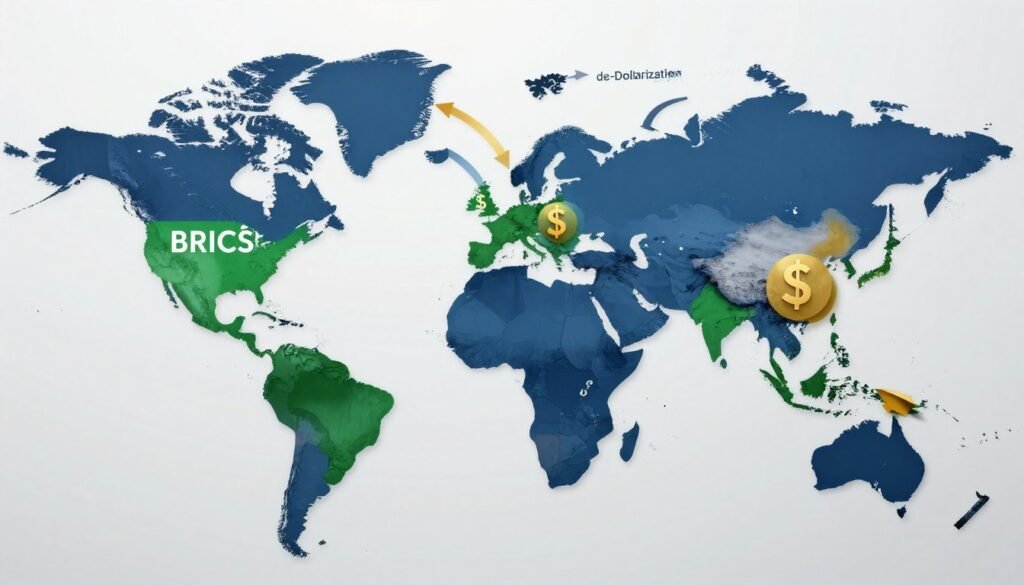
- BRICS nations developing alternative payment systems
- Bilateral trade agreements bypass dollar transactions
- Digital currencies challenge dollar dominance
- Countries diversifying reserve holdings across multiple currencies
Key Statistics
Numbers reveal the magnitude of this shift. Data from the International Monetary Fund and central banks paint a clear picture.
- 60% of global foreign exchange transactions still use dollars
- 88% of foreign exchange trades involve the dollar
- Central banks sold $200 billion in U.S. Treasury securities in 2023
- Alternative currency transactions grew 35% year-over-year
The dollar’s role as the dominant global currency stems from U.S. economic power. America’s deep capital markets provide unmatched liquidity. No other currency offers comparable safety and accessibility.
However, geopolitical tensions accelerate the search for alternatives. Countries fear dollar-based sanctions. They want financial systems independent of U.S. influence.
What Is Causing the Problem?
Multiple forces drive currency competition against the U.S. dollar. These factors range from policy decisions to fundamental market shifts. Understanding the causes helps predict future developments.
Policy Factors
- Sanctions Weaponization: The U.S. government increasingly uses dollar access as a foreign policy tool. Over 9,000 entities face sanctions. Countries fear sudden exclusion from dollar-based financial systems. This drives them toward alternative payment networks.
- Monetary Policy Volatility: Federal Reserve rate changes affect the entire world. Aggressive rate hikes in 2022-2023 caused global disruption. Emerging markets suffered capital flight. Central banks seek currencies with more predictable monetary policy.
- Fiscal Deficits: U.S. government debt exceeds $34 trillion. Annual deficits remain above $1 trillion. Foreign central banks worry about long-term dollar value. High debt levels undermine confidence in reserve currency status.
- Trade Policy Uncertainty: Shifting U.S. trade policies create instability. Tariffs and trade restrictions fluctuate. Countries prefer conducting trade in currencies controlled by more predictable partners.
Market Trends
- Digital Currency Development: Central banks worldwide develop digital currencies. Over 130 countries explore CBDCs. These technologies bypass traditional dollar-based payment systems. China’s digital yuan already processes billions in transactions.
- Alternative Payment Systems: New financial infrastructure reduces dollar dependence. Russia’s SPFS and China’s CIPS offer alternatives to SWIFT. These systems facilitate non-dollar transactions. Usage increased 200% since 2020.
- Gold Accumulation: Central banks purchased record gold volumes. Purchases reached 1,037 tons in 2023. Gold provides a neutral reserve asset. Countries diversify away from any single currency risk.
- Regional Currency Agreements: Nations establish local currency trade deals. ASEAN countries settle transactions in regional currencies. The euro serves 27 European nations. These arrangements reduce dollar transaction volumes.
Global Influences
- Geopolitical Fragmentation: The world splits into competing blocs. BRICS nations represent 40% of global GDP. They actively promote non-dollar trade. Multipolar power dynamics challenge U.S.-centric financial systems.
- Energy Market Shifts: Oil trades traditionally required dollars. Saudi Arabia now accepts yuan for Chinese oil purchases. Russia sells energy in rubles and yuan. These changes undermine the petrodollar system.
- Rising Asian Economic Power: China became the world’s largest trading nation. Asian economies drive global growth. Regional trade increasingly settles in local currencies. The rest of the world’s economic center shifts eastward.
- European Integration: The euro zone represents a $15 trillion economy. The euro offers deep, liquid capital markets. It provides a credible alternative for central bank reserves. Euro-denominated assets grow more attractive.
Structural Economic Changes
- Declining U.S. Trade Share: America’s portion of world trade decreased to 11%. Other countries dominate manufacturing and exports. Dollar demand for trade settlement naturally declines. This structural shift proves difficult to reverse.
- Financial Market Development: Emerging markets built sophisticated financial systems. Deep bond markets exist outside the U.S. Investors find adequate liquidity elsewhere. The dollar’s unique advantage diminishes over time.
- Technology Democratization: Blockchain and fintech reduce transaction costs. Cross-border payments no longer require dollar intermediation. New technologies enable direct currency exchanges. Traditional dollar advantages in international payments erode.
- Demographic and Economic Shifts: Global economic power disperses across regions. No single country dominates like post-war America. This naturally leads to multiple reserve currencies. The international monetary system reflects new realities.
These factors reinforce each other. Policy decisions trigger market responses. Market trends influence policy choices. The cumulative effect accelerates de-dollarization.
No single cause drives this trend. Rather, multiple pressures converge simultaneously. This makes reversal extremely challenging. The dollar faces structural headwinds, not temporary setbacks.
Impact on the U.S. Economy
Currency competition threatens America’s economic advantages. Dollar dominance provides unique benefits. Losing reserve status would fundamentally alter the U.S. economy.
GDP Growth
Reserve currency status boosts economic output. The dollar’s role generates significant GDP contributions. Economists estimate this “exorbitant privilege” adds 0.3-0.5% to annual growth.
Financial services benefit enormously from dollar dominance. Wall Street serves as the world’s financial hub. International transactions flow through U.S. banks. This generates hundreds of billions in revenue annually.
Reduced dollar usage would shrink the financial sector. U.S. banks would lose international business. The country’s GDP could decline by $150-200 billion yearly. This represents real economic loss, not just theoretical concerns.
Trade advantages also contribute to growth. Dollar invoicing benefits U.S. exporters. Companies avoid exchange rate risk. Domestic firms enjoy cost advantages over foreign competitors.
Inflation
Dollar dominance keeps inflation lower than otherwise possible. The world’s demand for dollars allows deficit spending. Other countries would face immediate inflation from similar policies.
Foreign central banks hold $7 trillion in U.S. Treasury securities. This demand keeps interest rates low. The government borrows at favorable terms. American consumers benefit from cheaper credit.
Current Inflation Advantages
- Lower borrowing costs reduce consumer price pressures
- Strong dollar makes imports cheaper
- Oil priced in dollars benefits U.S. consumers
- Monetary policy flexibility without immediate inflation consequences
Risks from Currency Competition
- Reduced foreign demand could spike interest rates 2-3 percentage points
- Weaker dollar increases import costs immediately
- Energy prices could rise 15-20% in dollar terms
- Inflation expectations might become unanchored
Loss of reserve status would force fiscal discipline. The government couldn’t run unlimited deficits. Spending cuts or tax increases would become necessary. These adjustments carry economic and political costs.
Employment
Financial sector jobs depend on dollar dominance. Banking, insurance, and investment services employ millions. New York, Chicago, and other financial centers rely on international dollar flows.
The Bureau of Labor Statistics reports 6.5 million financial services jobs. Many exist because of the dollar’s global role. Industry estimates suggest 15-20% depend directly on international operations.
Technology companies also benefit from dollar strength. They invoice in dollars globally. Competitors face exchange rate disadvantages. This supports high-paying tech jobs across America.
Manufacturing employment faces complex effects. A weaker dollar helps exporters. But higher input costs from imports create challenges. The net employment effect remains unclear and sector-dependent.
Financial Markets
U.S. capital markets are the world’s deepest and most liquid. This status stems from the dollar’s reserve role. Foreign investors hold $30 trillion in U.S. assets.
Stock markets benefit from consistent foreign capital inflows. Pension funds worldwide allocate to U.S. equities. This demand supports higher valuations. American retirement accounts depend on these inflows.
Bond markets would face severe disruption from de-dollarization. Treasury yields could spike dramatically. Estimates suggest rates might rise 1-2 percentage points permanently. This would crash bond portfolios and increase government borrowing costs.
Market Risk Assessment: Financial stability depends on continued dollar demand. A sudden shift would trigger market turmoil. The 2008 crisis demonstrated interconnection risks. Currency competition multiplies these systemic dangers.
Real estate markets also face exposure. Foreign buyers hold significant U.S. property. Reduced dollar demand could decrease foreign real estate investment. Property values in major cities might decline 10-15%.
Consumers and Businesses
American consumers enjoy significant advantages from dollar dominance. Import prices remain lower. Consumer goods cost less than in other countries. This directly affects living standards.
Travel becomes more expensive with a weaker dollar. Americans pay more for foreign vacations. International education costs rise. These lifestyle impacts affect millions of families.
| Consumer Impact Category | Current Benefit | Risk from De-dollarization |
| Electronics & Technology | 20-30% lower prices vs. other countries | Prices increase 15-25% |
| Gasoline & Energy | Stable pricing despite global volatility | 10-20% price spikes likely |
| International Travel | Strong purchasing power abroad | 30-40% cost increase |
| Imported Goods | Wide selection at competitive prices | Reduced variety, higher costs |
Businesses face currency risk management challenges. Currently, many operate without hedging strategies. Dollar invoicing simplifies international operations. Loss of this advantage increases costs and complexity.
Small businesses would suffer disproportionately. Large corporations maintain treasury departments. Small firms lack sophisticated financial expertise. They would struggle with multi-currency operations.
The cumulative impact across all sectors proves substantial. Conservative estimates suggest 2-3% GDP loss over time. Some economists project even larger effects. Either way, the economic consequences would reshape American life.
Protect Your Portfolio from Currency Risk
Download our comprehensive guide on navigating currency competition. Learn practical strategies to safeguard your investments and purchasing power in an evolving monetary landscape.
Instant access. No credit card required. 42 pages of actionable insights.
Recent Data and Trends
Current statistics reveal accelerating de-dollarization trends. Central banks, governments, and markets demonstrate shifting preferences. The data tells a consistent story across multiple indicators.
Central Bank Reserve Changes
The International Monetary Fund tracks global reserve holdings quarterly. Recent data shows dramatic shifts in central bank preferences. These institutions manage over $12 trillion in foreign exchange reserves.
Dollar reserves declined to 58% of the total in Q3 2024. This continues a steady downward trend. Just five years ago, dollars comprised 62% of holdings. The decline accelerated after 2022.
Gold purchases reached unprecedented levels. Central banks bought 1,037 tons in 2023. This represents a 50-year high. China, Russia, Turkey, and India lead acquisitions. Gold offers a neutral alternative to any single currency.
Euro holdings increased marginally to 20% of reserves. The European Central Bank maintains credibility. Euro-zone bonds provide adequate liquidity. Some analysts predict further euro gains as countries diversify.
Yuan reserves grew from near zero to 3% since 2016. China actively promotes yuan internationalization. Bilateral swap agreements expand yuan usage. The currency’s role will likely increase as China’s economy grows.
Emerging market currencies also gained share. The Australian dollar, Canadian dollar, and Swiss franc attract reserve managers. Combined, these currencies now represent 9% of holdings.
Key Reserve Metrics
- Total global reserves: $12.4 trillion
- Dollar share: 58% ($7.2T)
- Euro share: 20% ($2.5T)
- Yuan share: 3% ($370B)
- Gold: 15% of total reserves
Trade Settlement Patterns
Foreign exchange transactions provide another key indicator. SWIFT tracks international payment messages. Recent data reveals changing transaction patterns.
Dollar use in foreign exchange transactions remains high at 88%. However, this declined from 92% a decade ago. The trend suggests gradual erosion rather than sudden collapse.
Alternative payment systems grew rapidly. China’s Cross-Border Interbank Payment System processed $50 trillion in 2023. This represents 35% annual growth. Russia’s SPFS handles increasing volumes after sanctions.
Oil trade diversification accelerated notably. Saudi Arabia accepted yuan for oil sales to China. Russia demands rubles or yuan from certain buyers. These developments threaten the petrodollar system’s foundations.
Treasury Securities Holdings
Foreign holdings of U.S. Treasury securities declined significantly. The U.S. Department of the Treasury reports holdings monthly. Recent data shows concerning trends for dollar demand.
Total foreign holdings peaked at $7.6 trillion in 2021. By late 2024, holdings fell to $7.2 trillion. Major holders like China and Japan reduced positions substantially.
China’s Treasury holdings dropped below $800 billion. This represents a $300 billion decline from peak levels. Japan also trimmed holdings amid yen weakness. These two countries historically dominated foreign Treasury ownership.
| Country/Region | 2020 Holdings | 2024 Holdings | Change |
| China | $1.1 trillion | $775 billion | -29% |
| Japan | $1.3 trillion | $1.1 trillion | -15% |
| European Union | $1.4 trillion | $1.5 trillion | +7% |
| OPEC Nations | $340 billion | $285 billion | -16% |
Market Volatility Indicators
Currency markets show increased dollar volatility. Exchange rate fluctuations affect international trade and capital flows. Recent data demonstrates growing uncertainty about dollar strength.
The dollar index measures the greenback against major currencies. It fluctuated between 100 and 107 in 2024. This represents significant swings compared to historical stability.
Emerging market currencies experienced unusual strength periods. The Brazilian real, Indian rupee, and others gained against the dollar. This reversed long-term depreciation trends. Central bank interventions decreased as dollar demand weakened.
Government and Institutional Sources
Multiple authoritative sources confirm these trends. The Congressional Budget Office projects long-term fiscal challenges. They note that foreign Treasury demand proves critical for sustainable deficits.
The World Bank published research on de-dollarization impacts. Their analysis suggests gradual transitions rather than abrupt shifts. However, they acknowledge momentum toward currency diversification.
The Organization of the Petroleum Exporting Countries discusses payment currency flexibility. Members increasingly accept non-dollar settlements. This represents a fundamental change from historical practices.
These data points collectively demonstrate real momentum. The trends are not temporary fluctuations. They represent structural changes in the global economy and international monetary system. The dollar’s role continues to evolve as other currencies gain prominence.
Expert Opinions or Forecasts
Leading economists offer varying perspectives on currency competition. Their forecasts range from gradual decline to maintained dominance. Understanding expert views helps assess likely scenarios.

Economist Projections
Former Treasury officials predict continued dollar strength. They argue no alternative offers comparable liquidity. The euro lacks fiscal integration. The yuan lacks convertibility. Gold cannot facilitate modern transactions at scale.
These optimists note America’s advantages. Deep capital markets remain unmatched. The rule of law protects investors. Innovation drives productivity growth. These factors support long-term dollar demand despite challenges.
However, other prominent economists see inevitable decline. They point to historical precedents. The British pound lost reserve status gradually. Similar dynamics now affect the dollar. The process may take decades but appears irreversible.
“The dollar won’t collapse overnight, but its dominance will erode steadily. By 2035, we’ll operate in a multi-currency world. No single reserve currency will dominate like the dollar did from 1950-2020.”
Quantitative forecasts vary significantly. Conservative estimates suggest dollar reserves falling to 50% by 2030. More aggressive projections show 40-45% by that time. The actual outcome depends on numerous unpredictable factors.
Market Outlook
Currency traders maintain mixed positions on dollar strength. Short-term factors like interest rate differentials dominate daily trading. Long-term structural concerns influence strategic positioning.
Investment banks publish regular currency forecasts. Most project moderate dollar weakness through 2026. They cite several factors driving this outlook.
- Federal Reserve maintains credibility and independence
- U.S. economy shows resilient growth despite challenges
- Technology sector innovation continues attracting capital
- No viable alternative matches dollar liquidity
- Safe-haven demand during crises benefits dollar
Bullish Dollar Factors
- Unsustainable fiscal deficits undermine long-term confidence
- Geopolitical fragmentation reduces dollar network effects
- Alternative payment systems gain traction rapidly
- Foreign central bank selling pressure continues
- Political uncertainty damages institutional credibility
Bearish Dollar Factors
Bond market participants watch Treasury demand closely. Auction results determine whether foreign buyers maintain appetite. Recent auctions show adequate demand but at higher yields. This suggests price-sensitive rather than strategic buying.
Equity markets largely ignore currency competition risks. Stock valuations reflect corporate earnings expectations. Currency effects receive limited attention unless dramatic. This may represent complacency or rational long-term confidence.
Risk Level Assessment
Experts assess the overall threat level from currency competition. Risk evaluations consider likelihood and potential impact. These assessments guide policy recommendations and investment strategies.
Most analysts assign medium to high risk levels. The consensus view recognizes genuine threats. However, opinions diverge on timing and severity. Some see manageable transitions. Others warn of potential crises.
Consensus Expert Warning: While catastrophic dollar collapse remains unlikely in the next 5 years, gradual erosion appears almost certain. The combination of fiscal imbalances, geopolitical tensions, and technological changes creates sustained pressure. Prudent planning assumes reduced but not eliminated dollar dominance by 2030.
Institutional Perspectives
The Congressional Budget Office expresses concern about fiscal sustainability. Their long-term projections assume continued foreign Treasury demand. If this assumption proves wrong, deficit financing becomes extremely difficult.
Federal Reserve officials acknowledge de-dollarization trends. They monitor foreign central bank behavior closely. Public statements maintain confidence while private discussions reportedly show more concern.
The International Monetary Fund promotes orderly international monetary system evolution. They study multi-currency reserve scenarios. Their research suggests transition need not prove disruptive if managed properly.
These expert perspectives reveal no consensus. The dollar faces real challenges without certain doom. The outcome depends on policy choices, market developments, and unforeseen events. Uncertainty itself represents a significant change from past decades of unquestioned dollar supremacy.
Possible Solutions or Policy Responses
Addressing currency competition requires coordinated action across multiple fronts. Government policies, central bank decisions, and market adjustments all play crucial roles. Effective responses must tackle both immediate pressures and structural challenges.
Government Actions
Fiscal policy reforms represent the most critical government response. Reducing deficits would restore confidence in long-term dollar value. The Congressional Budget Office recommends specific measures to achieve sustainability.
Spending reductions face political obstacles. Entitlement programs like Social Security consume growing budget shares. Defense spending remains substantial. Discretionary spending cuts alone cannot solve the problem. Comprehensive reform requires difficult choices.
Potential Fiscal Measures
- Gradual entitlement reform to control long-term costs
- Tax revenue increases through broadened bases or higher rates
- Defense spending rationalization and efficiency improvements
- Infrastructure investment to boost productivity and growth
- Regulatory reforms to enhance economic competitiveness
International Cooperation
- Coordinate with allies on currency stability mechanisms
- Negotiate trade agreements reducing currency frictions
- Engage China on monetary system evolution
- Support International Monetary Fund reform initiatives
- Develop crisis response frameworks with central banks
Trade policy adjustments could support dollar demand. Agreements promoting dollar-denominated trade help maintain network effects. However, excessive pressure risks accelerating de-dollarization as countries resist.
Sanctions policy requires reassessment. Overuse of financial restrictions drives countries toward alternatives. More targeted, multilateral approaches preserve dollar system integrity while maintaining foreign policy tools.
The U.S. Department of the Treasury must engage proactively with foreign governments. Understanding their concerns helps address legitimate issues. Dismissing de-dollarization as impossible ensures it becomes reality.
Federal Reserve Policies
Monetary policy credibility remains essential for dollar confidence. The Federal Reserve must maintain independence and focus on price stability. Inflation control reassures foreign central banks holding dollar assets.
Interest rate policy affects currency competition dynamics. Higher rates attract capital inflows and support the dollar. However, domestic economic considerations limit rate flexibility. The Fed cannot set policy solely to maintain reserve status.
Fed Policy Balance: Central bankers face competing pressures. Domestic employment and inflation goals may conflict with currency support. Clear communication about priorities helps markets adjust expectations. Transparency reduces uncertainty that drives diversification.
Digital currency development requires Fed attention. A digital dollar could modernize payment systems. It might counter private cryptocurrencies and foreign CBDCs. However, implementation challenges remain substantial.
The Fed’s balance sheet policies influence dollar liquidity. Quantitative tightening reduces global dollar supply. This can increase demand but also creates market stress. Careful calibration proves essential.
Swap line arrangements with foreign central banks provide crisis support. These facilities supply dollars during market stress. Maintaining and potentially expanding these arrangements reinforces the dollar’s global role.
Market Adjustments
Private markets will adapt to changing currency dynamics regardless of policy. Financial institutions develop products for multi-currency operations. These market-driven adjustments may proceed faster than government responses.
Banks already offer enhanced currency hedging services. Businesses increasingly manage exposure across multiple currencies. This expertise reduces dependence on dollar dominance. It also reflects and accelerates diversification trends.
Payment technology innovation enables efficient multi-currency transactions. Blockchain and fintech reduce conversion costs. Real-time settlement across currencies becomes feasible. These developments diminish the dollar’s technological advantages.
Financial Market Infrastructure
Enhance U.S. market depth, efficiency, and accessibility. Maintain regulatory advantages attracting global capital. Invest in technology ensuring markets remain world-class.
Private Sector Innovation
Support fintech development strengthening dollar utility. Encourage blockchain applications for efficient settlements. Foster innovation maintaining dollar relevance in modern finance.
International Banking Services
U.S. banks expand multi-currency capabilities. Provide superior service across all major currencies. Maintain client relationships even as currency preferences shift.
Asset managers adjust portfolio allocations reflecting new realities. Diversification across currencies becomes standard practice. This doesn’t necessarily harm U.S. markets if returns remain competitive.
Corporate treasurers develop sophisticated currency strategies. They optimize working capital across currencies. Supply chain finance evolves to accommodate multi-currency operations. These adaptations make businesses less dependent on dollar dominance.
Real estate and alternative investments attract international capital seeking dollar exposure. These flows partially offset reduced reserve demand. Market participants find ways to maintain dollar engagement despite changing official preferences.
Comprehensive Strategy Requirements
No single solution addresses currency competition adequately. Effective responses require integrated strategies combining fiscal, monetary, and structural reforms. Coordination across government branches and with private sector proves essential.
Time urgency increases as trends accelerate. Delayed action makes eventual adjustments more painful. Early recognition and gradual reforms prove less disruptive than crisis-driven changes.
International cooperation offers significant benefits. The global economy functions better with stable currency arrangements. Multilateral frameworks can manage transitions smoothly. Unilateral approaches risk accelerating the very trends they aim to counter.
Ultimately, maintaining dollar relevance requires demonstrating U.S. economic strength. Productivity growth, innovation leadership, and institutional quality matter more than any specific policy intervention. These fundamentals determine whether the dollar retains significant global role.
What It Means for Americans
Currency competition impacts everyday American life in concrete ways. Understanding these effects helps families prepare for changing economic conditions. The consequences extend far beyond financial markets.

Cost of Living
Import prices directly affect household budgets. Americans purchase significant amounts of foreign-made goods. Electronics, clothing, toys, and household items often come from abroad. A weaker dollar makes these items more expensive.
Gasoline prices respond to dollar strength. Oil trades in dollars globally. When the dollar weakens, oil costs more in nominal terms. Americans could see fuel prices rise 10-15% purely from currency effects.
Food costs also carry import exposure. Coffee, cocoa, tropical fruits, and other products come from overseas. Agricultural inputs like fertilizer depend on global markets. Currency weakness flows through to grocery bills.
| Expense Category | Import Dependence | Estimated Price Impact |
| Electronics | 85%+ | 15-25% increase |
| Clothing & Apparel | 70%+ | 10-20% increase |
| Gasoline & Energy | 40% | 10-15% increase |
| Automobiles | 45% | 8-12% increase |
| Food Products | 15% | 3-7% increase |
Healthcare costs may increase if medical equipment and pharmaceutical inputs cost more. Many medications and devices come from abroad. Currency effects compound existing medical inflation pressures.
The cumulative impact on household budgets proves significant. Average families spend $60,000 annually. Even a 5% increase from currency effects means $3,000 in additional costs. This represents real purchasing power loss.
Jobs
Employment effects vary by sector and region. Some industries benefit from dollar weakness. Others face challenges. Understanding these dynamics helps workers anticipate changes.
Export-oriented manufacturing gains competitiveness. A weaker dollar makes American products cheaper abroad. Factories producing aircraft, machinery, and industrial goods might add jobs. The Bureau of Labor Statistics estimates 200,000-300,000 potential manufacturing jobs from significant dollar decline.
Job Sectors That May Benefit
- Export-focused manufacturing and production
- Tourism and hospitality serving foreign visitors
- Agriculture and food exports
- Domestic alternatives to imports
- Currency trading and risk management services
Job Sectors at Risk
- International banking and finance operations
- Import-dependent retail and distribution
- Companies with foreign supply chains
- Dollar-based financial services
- International travel and education industries
Financial services face the greatest employment risk. New York, Chicago, Boston, and San Francisco rely heavily on financial sector jobs. Reduced international dollar business could eliminate 100,000+ positions over several years.
Technology sector impacts remain unclear. Tech companies generate significant export revenue. However, they also depend on global supply chains. The net effect depends on specific business models and currency exposure.
Service sector jobs show mixed prospects. Tourism benefits as America becomes cheaper for foreign visitors. However, import-dependent retailers struggle with higher costs. The service economy’s complexity makes prediction difficult.
Investments
Retirement accounts and investment portfolios face significant currency exposure. Most Americans hold dollar-denominated assets exclusively. Currency competition creates both risks and opportunities for investors.
Stock market impacts prove complex and sector-dependent. Companies with international revenue benefit from dollar weakness. Their foreign earnings translate to more dollars. Domestic-focused companies face margin pressure from import costs.
Bond portfolios face substantial risks. Treasury securities dominate many retirement accounts. Reduced foreign demand could decrease bond values. Interest rates rising 1-2 percentage points would cause 10-15% bond price declines.
International investments provide natural hedging. Foreign stocks and bonds offset dollar weakness. Advisors increasingly recommend 20-30% international allocation. This diversification protects against currency-specific risks.
Real estate investment trusts may benefit from foreign capital seeking dollar exposure. International buyers view U.S. property as attractive despite currency concerns. However, reduced foreign demand could pressure certain markets.
Gold and alternative investments attract attention as dollar hedges. Precious metals traditionally move opposite to currency strength. Cryptocurrency advocates tout digital assets as dollar alternatives. Portfolio diversification across asset classes gains importance.
Housing
Real estate markets face multi-faceted currency impacts. Housing represents most Americans’ largest asset. Understanding currency effects helps homeowners and buyers make informed decisions.
Foreign buying activity influences certain markets significantly. Miami, Los Angeles, New York, and San Francisco see substantial international purchases. Reduced dollar strength might decrease this demand. Prices in these markets could decline 5-10%.
Mortgage rates reflect broader interest rate movements. If reduced foreign Treasury demand increases rates, mortgage costs rise correspondingly. A 1% rate increase adds $200+ to monthly payments on typical homes. This reduces affordability significantly.
Construction costs incorporate imported materials. Lumber, steel, and fixtures often come from abroad. Currency weakness increases building expenses. New home prices would rise, affecting first-time buyers especially.
However, reduced foreign competition benefits domestic buyers in some markets. International buyers often pay cash above asking price. Less foreign demand creates opportunities for local purchasers. This effect concentrates in high-price coastal markets.
Rental markets show complex dynamics. Higher homeownership costs may increase rental demand. However, economic uncertainty could reduce household formation. Regional variations make national predictions difficult.
These practical impacts affect millions of American families daily. Currency competition transcends abstract economic theory. It reaches into household budgets, career prospects, retirement security, and homeownership dreams. Understanding these connections helps individuals prepare for evolving conditions.
Get Personalized Currency Strategy Guidance
Concerned about how currency competition might affect your financial situation? Our economic advisors provide free 30-minute consultations to help you understand your specific risks and opportunities.
- Personalized portfolio risk assessment
- Currency exposure analysis
- Practical hedging strategies
- No-obligation expert advice
Future Outlook (2026–2030)
The next several years will prove critical for currency competition dynamics. Near-term developments set trajectories extending decades. Both optimistic and pessimistic scenarios remain plausible.
Short-Term Outlook (2026-2027)
The immediate future likely features continued gradual dollar erosion. Central banks will maintain diversification strategies. No sudden collapse appears imminent, but steady pressure persists.
Dollar reserves may decline to 55-56% by 2027. This represents manageable change rather than crisis. Markets would adjust to new equilibrium. Volatility increases during transitions but stabilizes afterward.
U.S. fiscal policy choices in 2026 prove especially important. Election outcomes influence deficit trajectories. Serious fiscal reform would reassure markets. Continued deficits accelerate diversification trends.
Baseline Scenario Assumptions
- U.S. economy maintains 2-2.5% annual growth
- Federal Reserve controls inflation near 2% target
- Fiscal deficits continue at $1.5-2 trillion annually
- China economy slows but avoids crisis
- No major geopolitical shocks disrupt markets
- Technology continues improving payment systems
Interest rates likely range between 3.5-5% on ten-year Treasuries. This represents modest increase from current levels. Foreign central banks reduce but don’t eliminate Treasury purchases.
Currency markets show increased volatility. Dollar strength fluctuates more than historical norms. Trading ranges widen as structural uncertainty persists. This volatility itself encourages diversification.
Alternative payment systems gain market share steadily. SWIFT maintains dominance but faces growing competition. China’s CIPS processes increasing transaction volumes. Regional payment networks expand capabilities.
Gold prices likely continue upward trajectory. Central bank demand remains strong. Prices could reach $2,500-3,000 per ounce by 2027. This reflects ongoing currency system uncertainty.
Digital currencies reach inflection point. Several major central banks launch CBDCs. These systems begin handling significant transaction volumes. The technology proves viable for international settlements.
Medium-Term Risks (2027-2030)
The 2027-2030 period carries elevated risk of disruptive events. Longer time horizons increase uncertainty. Multiple scenarios deserve consideration for prudent planning.
Optimistic scenarios envision managed dollar transition. International cooperation produces stable multi-currency system. The dollar retains significant but reduced role. Markets adapt smoothly to new arrangements.
Under optimistic assumptions, dollar reserves stabilize around 45-50%. The euro, yuan, and gold share reserve status. No single currency dominates. International trade operates efficiently across multiple currencies.
U.S. economy adjusts through productivity growth and innovation. Technology leadership attracts continued capital inflows. Financial sector adapts to multi-currency operations. GDP growth maintains 2-2.5% annually despite structural changes.
Pessimistic Scenario Warning: Crisis-driven transitions remain possible. A fiscal emergency, major geopolitical conflict, or financial shock could trigger rapid de-dollarization. Sudden shifts would prove far more disruptive than gradual evolution. This low-probability but high-impact scenario deserves serious contingency planning.
Pessimistic scenarios feature accelerated dollar decline. Reserves fall to 35-40% by 2030. Foreign Treasury demand collapses. Interest rates spike to 7-8%. Recession ensues as adjustment costs overwhelm economy.
Under stress scenarios, inflation surges above 5% for extended periods. Import prices jump sharply. Consumer purchasing power erodes. Unemployment rises to 6-7%. Social Safety Administration benefits face pressure as revenues decline.
Most analysts consider intermediate outcomes most likely. Some disruption occurs but proves manageable. The dollar weakens significantly but retains major role. Americans experience real but non-catastrophic impacts.
Key Uncertainties and Variables
Several factors will determine which scenario materializes. These uncertainties make confident predictions impossible. Monitoring these variables helps assess trajectory.
U.S. Policy Response
Fiscal discipline and structural reforms could stabilize dollar confidence. Continued dysfunction accelerates decline. Political will determines outcomes more than technical capabilities.
Chinese Economic Performance
China’s growth trajectory affects yuan viability. Continued development supports reserve currency ambitions. Economic crisis would delay multi-currency transition significantly.
Geopolitical Stability
Major conflicts could either strengthen dollar safe-haven appeal or accelerate diversification. Taiwan situation represents particular risk. Outcomes remain highly unpredictable.
Technology Evolution
Payment system innovations enable multi-currency operations. Blockchain and CBDCs reduce dollar’s technical advantages. Technology trajectory influences transition speed significantly.
European Integration
Deeper fiscal union would strengthen euro as alternative. Continued fragmentation limits euro’s reserve potential. European political dynamics matter for global currency system.
Energy Market Developments
Renewable energy transition affects petrodollar system. Alternative energy sources reduce oil’s currency implications. This structural shift continues regardless of policy choices.
Long-Term Structural Changes
Beyond 2030, the international monetary system will differ fundamentally from the past century. The dollar will remain important but not dominant. This represents historic transformation.
Future generations will operate in truly multi-currency world. Individuals and businesses routinely transact across several currencies. Technology makes this seamless and efficient. The concept of single reserve currency becomes obsolete.
America retains substantial economic influence despite reduced monetary privilege. Innovation, productivity, and market size continue mattering. The country adapts to new realities rather than collapses.
Global economy potentially benefits from reduced dollar dependence. Systemic risks decrease when no single currency dominates. International imbalances prove easier to manage. The transition period proves challenging, but eventual outcomes may improve stability.
The 2026-2030 period represents inflection point. Decisions made and trends established during these years shape outcomes for decades. Americans should pay attention to these developments. The future arrives faster than expected, and preparation proves valuable.
Conclusion
Currency competition against the U.S. dollar represents one of the most significant economic developments of our era. The trends discussed throughout this article demonstrate real momentum toward reduced dollar dominance. This transformation will reshape American economic life in fundamental ways.
The evidence points clearly to gradual dollar erosion rather than sudden collapse. Central banks steadily diversify reserves away from dollars. Alternative payment systems gain traction. Countries reduce dollar dependence systematically. These trends will continue regardless of short-term fluctuations.
Americans will experience concrete impacts on daily life. Import costs will rise. Some jobs will disappear while others emerge. Investment returns will vary by sector and asset class. Housing markets will face new dynamics. These effects demand attention and preparation.
However, catastrophic scenarios remain unlikely. The dollar retains substantial advantages. U.S. capital markets offer unmatched depth. The rule of law protects investors. Innovation continues driving productivity. These strengths ensure the dollar maintains significant global role.
Policy responses prove crucial for managing this transition. Fiscal discipline would restore confidence and slow de-dollarization. Monetary policy credibility remains essential. International cooperation can produce stable multi-currency arrangements. The choices made in coming years determine whether adjustment proves smooth or traumatic.
Key Takeaways: Currency competition represents structural change, not temporary fluctuation. The dollar’s reserve status will decline but not disappear. Americans should diversify investments, monitor policy developments, and prepare for gradual economic adjustment. Understanding these dynamics enables better personal and business planning.
Individuals can take practical steps to protect themselves. Portfolio diversification across currencies and asset classes reduces risk. International investments provide natural hedging. Professional financial advice helps navigate complexity. Staying informed about developments enables timely adjustments.
Businesses must develop multi-currency capabilities. Treasury management grows more sophisticated. Supply chain strategies account for currency volatility. Export opportunities may emerge from dollar weakness. Adaptation proves essential for competitive success.
The outlook for 2026 and beyond combines challenge and opportunity. Yes, Americans will lose some economic privileges. Import costs will rise and fiscal constraints will tighten. However, the economy will adapt and find new competitive advantages. Innovation and productivity matter more than currency status alone.
The global economy may ultimately benefit from reduced single-currency dependence. A multi-currency system distributes risk more evenly. International imbalances become easier to manage. The transition period proves difficult, but eventual stability may improve.
This remains a developing story. Outcomes depend on choices not yet made. Monitoring these trends helps individuals and businesses prepare appropriately. The currency competition challenge represents both warning and opportunity for those willing to engage seriously with changing realities.
America’s economic future depends less on currency status than fundamental strengths. Innovation, education, infrastructure, and institutions determine long-term prosperity. Maintaining these advantages ensures continued success regardless of dollar’s precise global role. The work begins now to secure that future.