
Employer Sponsored Immigration: Complete 2026 Guide for Workers and Employers
Finding a pathway to lawful permanent resident status in the United States remains a top priority for millions of skilled workers worldwide. Employer sponsored immigration offers one of the most reliable routes to achieving this goal.
In 2026, the demand for employment-based immigrant visas continues to grow. Companies across the United States seek talented professionals from around the world. At the same time, workers search for opportunities to build permanent careers in America.
This comprehensive guide explains everything you need to know about employer sponsored immigration. You will learn about eligibility requirements, the step-by-step process, costs, timelines, and strategies to increase your approval chances.
Whether you are a worker hoping for green card sponsorship or an employer considering hiring immigrant workers, this article provides the clarity you need to navigate the complex immigration process successfully.
What Employer Sponsored Immigration Means
Employer sponsored immigration refers to the process where a U.S. employer petitions the government to grant an immigrant worker permission to live and work permanently in the United States. This pathway leads to obtaining a green card, which grants lawful permanent resident status.
The U.S. immigration system allocates employment-based immigrant visas across five preference categories. Each category targets different types of workers based on their skills, education, and job roles.
Key Immigration Terms Explained
Employer sponsorship: When a U.S. company formally supports a foreign worker’s application for permanent residence by filing petitions with government agencies.
Labor certification (PERM): A Department of Labor process that requires employers to prove no qualified U.S. workers are available for the position before sponsoring an immigrant.
Immigrant visa: A visa that allows foreign nationals to enter the United States with the intention of becoming lawful permanent residents.
Green card: An identification card proving that a person has lawful permanent resident status in the United States and can live and work here indefinitely.
Priority date: The date when an employer files the initial petition or labor certification application. This date determines your place in line for visa availability.
Who Qualifies for Employer Sponsorship

Not every worker or employer can participate in employer sponsored immigration. Both parties must meet specific requirements.
For Workers
- Possess skills, education, or experience matching one of five preference categories
- Have a genuine job offer from a U.S. employer willing to sponsor
- Meet health and character requirements
- Maintain valid immigration status if already in the United States
- Not have immigration violations or criminal history that bars admission
For Employers
- Operate a legitimate business in the United States
- Demonstrate financial ability to pay the offered wage
- Complete labor certification proving no qualified U.S. workers available
- Offer a permanent, full-time position
- Comply with wage and working condition requirements
Five Employment-Based Preference Categories
The U.S. immigration system divides employment-based immigrant visas into five categories. Understanding these categories helps you identify which path applies to your situation.
First preference (EB-1): Reserved for workers with extraordinary ability in sciences, arts, education, business, or athletics. Also includes outstanding professors and researchers, and multinational executives or managers. This category does not require labor certification.
Second preference (EB-2): Covers professionals with advanced degrees (master’s or higher) or persons with exceptional ability in sciences, arts, or business. Most EB-2 applicants need labor certification unless they qualify for a National Interest Waiver.
Third preference (EB-3): Includes skilled workers with at least two years of training or experience, professionals with bachelor’s degrees, and other workers performing unskilled labor. All third preference cases require labor certification.
Fourth preference (EB-4): Designed for special immigrants, including religious workers, certain international organization employees, and other specific groups defined by immigration law.
Fifth preference (EB-5): For immigrant investors who invest substantial capital in U.S. businesses that create jobs. This category follows different rules and is not typically considered employer sponsorship.
Free Resource Available: Not sure which employment category matches your qualifications? Download our comprehensive eligibility checklist that covers all five preference categories with detailed requirements, document lists, and self-assessment questions.
Requirements and Eligibility for Employer Sponsored Immigration
Meeting the eligibility criteria is the foundation of a successful employer sponsored immigration application. Both the employer and the employee must satisfy specific requirements set by U.S. immigration law.
General Eligibility Requirements for Workers

All applicants for employment-based immigrant visas must meet these basic requirements:
- Valid passport from your home country
- Job offer from a U.S. employer willing to sponsor your green card
- Qualifications matching the position requirements (education, experience, licenses)
- Medical examination showing you meet U.S. health requirements
- Clean criminal record with no bars to admission
- Ability to support yourself financially or employer commitment to pay wages
- Intent to work in the offered position permanently
Category-Specific Requirements
Each preference category has additional specialized requirements. Your qualifications must match the category under which your employer files the petition.
| Category | Education/Experience | Special Requirements | Labor Certification |
| EB-1 (First Preference) | Extraordinary ability or advanced achievements | International recognition, major awards, sustained acclaim | Not required |
| EB-2 (Second Preference) | Advanced degree (Master’s+) or Bachelor’s + 5 years experience | Exceptional ability in field or National Interest Waiver eligibility | Required (unless NIW) |
| EB-3 Skilled Workers | Minimum 2 years training or experience | Job requires minimum 2 years training | Required |
| EB-3 Professionals | U.S. Bachelor’s degree or foreign equivalent | Job requires Bachelor’s degree | Required |
| EB-3 Other Workers | Less than 2 years training or experience | Performs unskilled labor | Required |
| EB-4 (Special Immigrants) | Varies by subcategory | Religious worker, international employee, etc. | Not required |
Employer Requirements and Obligations
U.S. employers who sponsor immigrant workers must fulfill important obligations throughout the immigration process and after the worker obtains lawful permanent resident status.
Financial requirements: The employer must prove ability to pay the offered wage from the priority date until the worker receives the green card. This typically requires tax returns, annual reports, or audited financial statements.
Job requirements: The position must be permanent and full-time. Temporary or seasonal jobs do not qualify for green card sponsorship. The employer must offer wages that meet or exceed the prevailing wage for the occupation in the geographic area.
Recruitment obligations: For positions requiring labor certification, employers must conduct good-faith recruitment of U.S. workers. This includes posting job advertisements, interviewing applicants, and documenting reasons for not hiring qualified U.S. candidates.
Ongoing compliance: Employers must maintain business operations and continue offering the sponsored position. If business circumstances change significantly, it may affect the immigration application.
Essential Documents Needed
Gathering the right documentation early in the process helps avoid delays. The specific documents vary by category, but most applications require the following:
Employee Documents
- Valid passport with biographical page copy
- Birth certificate with English translation
- Educational credentials (diplomas, transcripts, degrees)
- Educational credential evaluation for foreign degrees
- Professional licenses or certifications
- Letters from previous employers verifying experience
- Resume or curriculum vitae
- Passport-style photographs
- Police certificates from countries of residence
- Medical examination results (Form I-693)
Employer Documents
- Business tax returns for past year
- Annual reports or audited financial statements
- Job offer letter specifying position and salary
- Organizational chart showing position structure
- Evidence of ability to pay the proffered wage
- Prevailing wage determination from Department of Labor
- Recruitment documentation (for PERM cases)
- Business license or incorporation documents
- Federal Employer Identification Number (FEIN)
Understanding Country Quotas and Priority Dates
The U.S. immigration system limits the number of immigrant visas issued annually. Employment-based categories receive approximately 140,000 visas per year. No single country can receive more than seven percent of the total in any category.
This creates significant wait times for applicants from countries with high demand, particularly India and China. Workers from these countries may face priority date backlogs extending several years, even after approval of their petitions.
Your priority date establishes your place in the visa queue. You cannot proceed to the final green card stage until your priority date becomes current based on the monthly Visa Bulletin published by the Department of State.
Applicants from countries with shorter wait times, including most European, African, and South American nations, typically experience faster processing once their petitions are approved.
Step-by-Step Employer Sponsored Immigration Process
The employer sponsored immigration process involves multiple stages and requires coordination between the employer, employee, and several government agencies. Understanding each step helps you prepare properly and avoid costly delays.
The complete process typically follows this sequence: labor certification, immigrant petition, and adjustment of status or consular processing. Some categories skip labor certification, moving directly to the petition stage.
Step 1: Prevailing Wage Determination
For positions requiring labor certification, the employer must first obtain a prevailing wage determination from the Department of Labor. This establishes the minimum wage the employer must offer to ensure it does not undercut U.S. worker wages.
The employer submits Form ETA-9141 with details about the job position, duties, requirements, and work location. The Department of Labor reviews the application and issues a prevailing wage based on occupation, skill level, and geographic area.
This determination remains valid for the labor certification process and establishes the wage that must be offered throughout the immigration case. Processing time typically ranges from two to eight months depending on the service center.
Step 2: PERM Labor Certification
The Program Electronic Review Management (PERM) process requires employers to test the U.S. labor market and prove no qualified U.S. workers are available for the position. This step applies to most second preference and all third preference cases.
Recruitment requirements: Employers must conduct extensive recruitment following Department of Labor guidelines. This includes placing job advertisements in newspapers and professional journals, posting notices at the worksite, and using additional recruitment methods specific to the job type.
Timeline: The recruitment period lasts 30 to 180 days depending on the methods used. Employers must document all recruitment efforts and maintain records of applicants considered.
Application filing: After completing recruitment, the employer files Form ETA-9089 electronically. The form includes detailed information about the job, recruitment efforts, and why U.S. applicants were not hired.
Processing: The Department of Labor reviews the application. Most cases receive approval within six to twelve months. Some applications undergo audit, requiring submission of recruitment documentation and potentially extending the timeline.
Step 3: File Immigrant Petition (Form I-140)
Once labor certification is approved (or for categories that skip this step), the employer files Form I-140, Immigrant Petition for Alien Worker, with U.S. Citizenship and Immigration Services. This petition formally requests classification of the employee in a specific employment-based category.
The petition must include:
- Approved PERM labor certification (if applicable)
- Evidence that employee meets job requirements
- Proof of employer’s ability to pay the offered wage
- Documentation supporting the preference category
- Required filing fees
USCIS reviews the petition and supporting evidence. Standard processing takes approximately four to eight months. Premium processing is available for an additional fee, providing a 15-day processing guarantee for most categories.
If approved, USCIS sends Form I-797, Notice of Action, confirming approval and establishing the priority date (typically the date the labor certification was filed).
Step 4: Wait for Priority Date to Become Current
After I-140 approval, applicants must wait until their priority date becomes current according to the monthly Visa Bulletin published by the Department of State. This waiting period varies significantly by country and preference category.
Applicants from countries without backlogs may proceed immediately. Workers from countries with high demand, particularly India and China, may wait several years before their priority dates become current.
During this waiting period, applicants typically maintain their current status. H-1B visa holders can continue working, and their H-1B status may be extended beyond the normal six-year limit because of the pending green card application.
Step 5: Adjustment of Status or Consular Processing

The final stage involves either adjusting status if you are in the United States or consular processing if you are outside the country.
Adjustment of Status (Form I-485): Applicants physically present in the United States file Form I-485, Application to Register Permanent Residence or Adjust Status. This application requests the change from temporary status to lawful permanent resident.
The I-485 package includes:
- Completed I-485 form with supporting documents
- Medical examination (Form I-693)
- Employment authorization and travel document applications (optional)
- Police certificates and court records if required
- Two passport-style photographs
- Filing fees and biometrics fee
USCIS schedules biometrics collection to capture fingerprints and photographs. Most applicants attend an interview at a local USCIS office where an officer reviews the application and asks questions about eligibility.
Consular Processing: Applicants outside the United States complete processing through the National Visa Center and U.S. embassy or consulate in their home country. This involves submitting similar documentation and attending an interview at the consulate.
Decision and approval: If approved, adjustment of status applicants receive their green card by mail within two to four weeks. Consular processing applicants receive an immigrant visa stamp in their passport, allowing them to enter the United States and receive their green card after arrival.
Dependent Family Members
The principal applicant’s spouse and unmarried children under 21 can accompany or follow to join as derivative beneficiaries. They file their own adjustment of status applications or attend consular interviews at the same time.
Derivative family members receive the same immigrant classification as the principal applicant. They obtain green cards authorizing them to live and work permanently in the United States without separate employer sponsorship.
Children who turn 21 during the process may still qualify under the Child Status Protection Act, which can freeze their age for immigration purposes under certain circumstances.
Processing Time and Costs for Employer Sponsored Immigration
Understanding the timeline and financial investment required for employer sponsored immigration helps both workers and employers plan appropriately. Costs and processing times vary significantly based on the specific category and individual circumstances.
Estimated Processing Timelines
The total time from starting the process to receiving a green card ranges from one year to over a decade, depending on multiple factors including preference category, country of birth, and whether priority date backlogs exist.
| Process Stage | Estimated Time | Notes |
| Prevailing Wage Determination | 2-8 months | Varies by Department of Labor service center |
| PERM Labor Certification | 6-12 months | Longer if audit is selected |
| Form I-140 Processing | 4-8 months | 15 days with premium processing |
| Priority Date Wait (if applicable) | 0-10+ years | Depends on country and category; India and China face longest waits |
| Adjustment of Status (I-485) | 8-18 months | Varies by USCIS field office workload |
| Consular Processing | 3-6 months | After National Visa Center processing |
First preference cases without labor certification requirements typically move fastest, potentially completing in 12 to 18 months for applicants from countries without backlogs. Second and third preference cases requiring PERM add significant time, usually two to three years minimum even without priority date delays.
Applicants from India face the longest waits, particularly in second and third preference categories. Current backlogs extend over a decade for some Indian EB-3 applicants. Chinese applicants also experience substantial delays, though typically shorter than India.
Workers from most other countries see much shorter wait times, often proceeding directly to the final stage once their I-140 petition is approved.
Government Filing Fees
The U.S. government charges fees at multiple stages of the immigration process. These fees change periodically, so verify current amounts on official government websites before filing.
PERM Labor Certification: No filing fee. The Department of Labor does not charge for PERM applications, though employers incur costs for recruitment activities and prevailing wage determinations.
Form I-140: The filing fee is $715 as of 2026. Premium processing, which guarantees 15-day processing, costs an additional $2,500. Employers typically pay these fees.
Form I-485: The filing fee varies by age. Adults pay $1,440, which includes the $85 biometrics fee. Children under 14 filing with at least one parent pay $950. Children under 14 filing alone pay $1,440. Each family member files separately with individual fees.
Medical Examination: Applicants must complete Form I-693 with a USCIS-approved civil surgeon. Costs range from $200 to $500 depending on location and required vaccinations.
Additional applications: Employment authorization (Form I-765) costs $520. Advance parole travel document (Form I-131) costs $630. Many applicants file these concurrently with I-485 at no extra charge when using the combined filing option.
Attorney and Professional Service Costs

Most employers and employees hire immigration attorneys to handle the complex process. Legal fees vary widely based on case complexity, attorney experience, and geographic location.
PERM labor certification: Attorney fees typically range from $3,000 to $7,000. This includes preparing the application, conducting recruitment, and responding to any audits.
Form I-140: Legal fees range from $2,000 to $5,000 depending on the preference category. First preference cases requiring extensive documentation of extraordinary ability may cost more.
Adjustment of status: Attorney fees for I-485 preparation typically range from $2,500 to $5,000 per person. Family members usually receive reduced rates.
Total legal costs: Complete representation from start to finish typically costs between $8,000 and $15,000 for the primary applicant, plus additional fees for family members.
Some employers cover all legal costs as part of the sponsorship. Others split costs with employees or require employees to pay their own adjustment of status fees.
Additional Costs to Consider
Beyond government fees and attorney costs, applicants should budget for several additional expenses:
- Document translation fees: $20-$50 per page for official translations
- Educational credential evaluations: $100-$300 per degree
- Passport photographs: $15-$30
- Travel to USCIS interviews or embassy appointments: Varies
- Police certificates from foreign countries: $20-$100 per country
- Document courier and copying costs: $100-$300
- Vaccinations for medical exam: $100-$400 if needed
Total Cost Summary
The complete financial investment for employer sponsored immigration typically ranges as follows:
Minimum Scenario
- No PERM required (EB-1 case)
- Self-represented or minimal legal help
- No family members
- Standard processing
- Total: $3,000-$5,000
Typical Scenario
- PERM required (EB-2 or EB-3)
- Full attorney representation
- Spouse and one child included
- Premium processing on I-140
- Total: $15,000-$25,000
Who Pays the Costs
Immigration law prohibits certain practices regarding who pays immigration costs. Understanding these rules protects both employers and employees.
Employer obligations: By law, employers must pay for PERM labor certification costs, prevailing wage determinations, and Form I-140 filing fees. Employers cannot require employees to reimburse these costs.
Negotiable costs: Employers and employees can negotiate who pays for adjustment of status fees, medical examinations, and attorney fees for the employee’s personal immigration applications. Many employers cover all costs, while others split expenses or require employees to pay their own final-stage fees.
Premium processing: Either party can pay for premium processing services. Some employers use premium processing to expedite the process, while others leave this optional expense to employees.
Common Mistakes to Avoid in Employer Sponsored Immigration
Even small errors in the employer sponsored immigration process can lead to delays, denials, or even permanent bars to immigration. Learning from common mistakes helps you avoid costly problems.
Mistake 1: Starting the Process Too Late
Many employers and employees underestimate how long employer sponsored immigration takes. Waiting until visa status is about to expire or business needs become urgent creates unnecessary stress and limits options.
The problem: Complex cases requiring PERM can take three to five years from start to finish, even without priority date backlogs. Starting late may force workers to leave the United States or employers to lose valuable talent.
The solution: Begin the green card process as soon as possible after hiring. For H-1B workers, many employers start immediately after the H-1B is approved. Early filing preserves maximum flexibility and reduces pressure.
Planning tip: If you are on a temporary visa with limited time remaining, consult an immigration professional immediately to understand your timeline and options. Extensions may be possible, but require advance planning.
Mistake 2: Inaccurate or Incomplete Job Descriptions
The job description forms the foundation of the entire case. Inconsistencies between the job description, recruitment materials, and final petition create red flags that can trigger audits or denials.
The problem: Employers sometimes inflate job requirements to match an employee’s qualifications or provide vague descriptions that don’t align with the employee’s actual duties. USCIS and the Department of Labor scrutinize job descriptions carefully.
The solution: Create accurate, detailed job descriptions that match both the actual position and the employee’s qualifications. Ensure consistency across all documents including the prevailing wage request, PERM application, and I-140 petition.
Best practice: Work with HR professionals and legal counsel to draft job descriptions before starting the process. The description should reflect genuine business needs, not just the employee’s resume.
Mistake 3: Poor Documentation of Recruitment Efforts
PERM labor certification requires employers to prove they conducted good-faith recruitment of U.S. workers. Inadequate documentation is one of the most common reasons for PERM denials and audits.
The problem: Employers fail to maintain complete records of advertisements, applicant resumes, interview notes, and reasons for rejecting U.S. candidates. When the Department of Labor audits the case, missing documentation leads to denial.
The solution: Document every aspect of recruitment meticulously. Keep copies of all advertisements with publication dates, all resumes received, detailed interview notes, and specific lawful reasons why applicants were not qualified.
Critical requirement: Reasons for rejecting U.S. applicants must be job-related and consistent with the job description. You cannot reject applicants for minor reasons or preferences unrelated to actual job requirements.
Mistake 4: Failing to Prove Ability to Pay
Employers must demonstrate financial capacity to pay the offered wage from the priority date forward. Insufficient financial evidence causes I-140 denials even when all other requirements are met.
The problem: Small businesses and startups sometimes struggle to show adequate financial resources. Using incomplete financial documents or waiting until the last minute to gather evidence creates problems.
The solution: Gather comprehensive financial evidence early. This includes tax returns, audited financial statements, or annual reports showing net income or net current assets exceeding the proffered wage.
Alternative evidence: If standard evidence is insufficient, employers may submit additional proof such as bank statements, profit and loss statements, or evidence of other employees in similar positions with comparable wages.
Mistake 5: Changing Jobs or Employers During the Process
Employment-based green cards are tied to the sponsoring employer and specific job position. Changing employment during the process creates complications that can jeopardize the entire application.
The problem: If an employee leaves the sponsoring employer before adjustment of status is approved, the case typically becomes invalid. The new employer must start the process from the beginning.
The solution: Maintain employment with the sponsoring employer through the entire process. If you must change jobs, consult an immigration attorney about using AC21 portability provisions, which may allow job changes after certain milestones.
AC21 portability: If your I-485 has been pending for 180 days or more, you may be able to change to a similar job without restarting the green card process, provided you meet specific requirements.
Mistake 6: Not Maintaining Valid Immigration Status
Applicants already in the United States must maintain valid status throughout the process. Falling out of status can disqualify you from adjusting status and require consular processing instead.
The problem: Some applicants assume that having an approved I-140 protects them even if their work visa expires. This is incorrect. You must maintain valid status until filing adjustment of status.
The solution: Track visa expiration dates carefully and file timely extensions. H-1B holders with approved I-140 petitions may qualify for H-1B extensions beyond the normal six-year limit, providing crucial time while waiting for priority dates.
Grace periods: Understand grace periods for your visa category. Most work visas provide short grace periods after employment ends, but these are limited and don’t extend status indefinitely.
Mistake 7: Ignoring Request for Evidence (RFE) Deadlines
USCIS often issues Requests for Evidence asking for additional documentation or clarification. Missing RFE deadlines or providing inadequate responses leads to automatic denials.
The problem: Applicants underestimate RFE complexity or wait too long to gather documents. The standard response deadline is only 87 days, and USCIS grants few extensions.
The solution: Respond to RFEs immediately. Gather all requested evidence and provide thorough, well-organized responses. If you need help, consult an immigration attorney as soon as you receive the RFE.
Response strategy: Address every point raised in the RFE specifically. Include a cover letter that responds point-by-point, followed by organized evidence tabs. Submit responses well before the deadline to ensure timely receipt.
Mistake 8: Providing Inconsistent Information Across Applications
Immigration applications span multiple years and various forms. Inconsistencies between documents raise credibility concerns and can lead to denials or even fraud findings.
The problem: Employment dates, addresses, travel history, or other biographical information differs across forms filed at different times. USCIS maintains comprehensive files and notices discrepancies.
The solution: Maintain accurate personal records throughout the process. Before filing any application, review all previous submissions to ensure consistency. If information has changed, explain the change clearly.
Common inconsistencies: Employment start and end dates, job titles, salary information, residential addresses, and travel dates frequently vary across applications. Double-check these details carefully.
Tips to Improve Your Approval Chances
While meeting basic eligibility requirements is essential, strategic planning and careful preparation significantly improve your chances of approval. These proven strategies help strengthen your case.
Choose the Right Preference Category
Some applicants qualify for multiple preference categories. Choosing strategically can reduce wait times and improve approval odds.
Consider EB-2 National Interest Waiver: If you work in a field that benefits the United States national interest (healthcare, STEM research, education), you might qualify for an EB-2 National Interest Waiver. This eliminates the PERM requirement and allows self-petitioning without employer sponsorship.
Evaluate EB-1 possibilities: First preference categories process faster and have shorter backlogs. If you have significant achievements in your field, extraordinary ability classification or outstanding researcher status might be possible.
Understand category downgrades: Higher categories generally offer advantages, but some applicants in lower categories have shorter wait times due to visa availability patterns. Analyze current Visa Bulletin data before choosing.
Build a Strong Evidence Portfolio
Immigration petitions succeed based on evidence quality, not just meeting minimum requirements. Comprehensive documentation demonstrates eligibility convincingly.
Exceed minimum requirements: If the job requires a Bachelor’s degree, having a Master’s degree strengthens the case. If two years of experience is needed, showing five years is better.
Provide expert letters: Independent experts in your field who can attest to your qualifications add significant credibility. These letters should be detailed, specific, and from recognized authorities.
Document achievements: Publications, patents, awards, conference presentations, and professional memberships demonstrate exceptional ability and strengthen petitions in all categories.
Organize evidence logically: Present evidence in a clear, organized manner with tables of contents, tabs, and cover letters explaining how each document supports your case.
Maintain Continuous Legal Status
Protecting your immigration status throughout the process prevents complications and preserves your ability to adjust status in the United States.
File extensions early: Submit visa extensions at least six months before expiration. This provides processing time and protects against unexpected delays.
Use H-1B extensions: H-1B workers with approved I-140 petitions can extend H-1B status beyond six years in one-year or three-year increments. Take advantage of this provision while waiting for priority dates.
Avoid unauthorized employment: Work only for authorized employers under your visa terms. Unauthorized employment, even briefly, can bar adjustment of status.
Track travel carefully: Maintain complete records of international travel. Extended absences can affect residence requirements and raise questions during interviews.
Choose Experienced Legal Representation
While legal representation is not required, experienced immigration attorneys significantly improve outcomes, especially for complex cases.
Evaluate attorney qualifications: Look for attorneys who specialize in employment-based immigration and are members of the American Immigration Lawyers Association. Check state bar standings and disciplinary records.
Review case experience: Ask about the attorney’s experience with your specific preference category and any similar cases they have handled.
Understand fee structures: Clarify what services are included in quoted fees. Some attorneys charge flat fees for complete representation, while others bill hourly or charge per service.
Maintain communication: Stay in regular contact with your attorney. Respond promptly to requests for information and keep them updated on any changes in your situation.
Time Your Filing Strategically

Strategic timing of applications can reduce processing times and avoid unnecessary waiting periods.
Monitor Visa Bulletin trends: Study monthly Visa Bulletins to understand movement patterns in your category and country. File adjustment of status as soon as your priority date approaches current status.
Use concurrent filing: When priority dates are current, you can file I-140 and I-485 simultaneously. This saves time and allows earlier access to work authorization and travel documents.
Consider fiscal year patterns: Visa availability often changes at the start of each fiscal year (October 1). Priority dates may advance significantly, creating filing opportunities.
Prepare Thoroughly for Interviews
Most adjustment of status applicants attend USCIS interviews. Strong interview preparation improves approval chances and demonstrates credibility.
Review your application: Study all forms and supporting documents submitted with your I-485. Officers will ask questions about information provided.
Prepare honest answers: Be truthful about your background, employment, and travel history. Inconsistencies or dishonesty can result in denial and future immigration bars.
Bring updated evidence: If circumstances have changed since filing (new job title, salary increase, continued employment), bring documentation to the interview.
Practice common questions: Prepare answers for typical questions about your job duties, employer, qualifications, and intent to work in the sponsored position.
Keep Employment Stable
Maintaining stable employment with the sponsoring employer shows commitment to the position and strengthens your case.
Avoid frequent job changes: While AC21 portability exists, remaining with the original sponsoring employer is safest. Job changes create additional scrutiny and potential complications.
Document job continuity: Keep employment verification letters, pay stubs, and tax documents showing continuous employment in the sponsored position.
Inform employer of obligations: Ensure your employer understands their ongoing obligation to maintain the job offer and ability to pay throughout the process.
Address Potential Issues Proactively
Identifying and addressing potential problems before filing strengthens your case and prevents RFEs or denials.
Disclose prior immigration violations: If you have any immigration violations in your history, address them upfront with legal counsel. Some violations may be waived or overcome with proper explanation.
Resolve criminal issues: Even minor criminal matters can affect immigration. Consult an attorney about any arrests, charges, or convictions before filing.
Correct past mistakes: If previous applications contained errors or inconsistencies, address them in your current petition with clear explanations.
Latest Updates and Policy Changes in 2025-2026
Immigration policy evolves continuously through new laws, regulations, and administrative changes. Staying informed about recent updates helps you navigate the process effectively and take advantage of new opportunities.
Processing Time Improvements
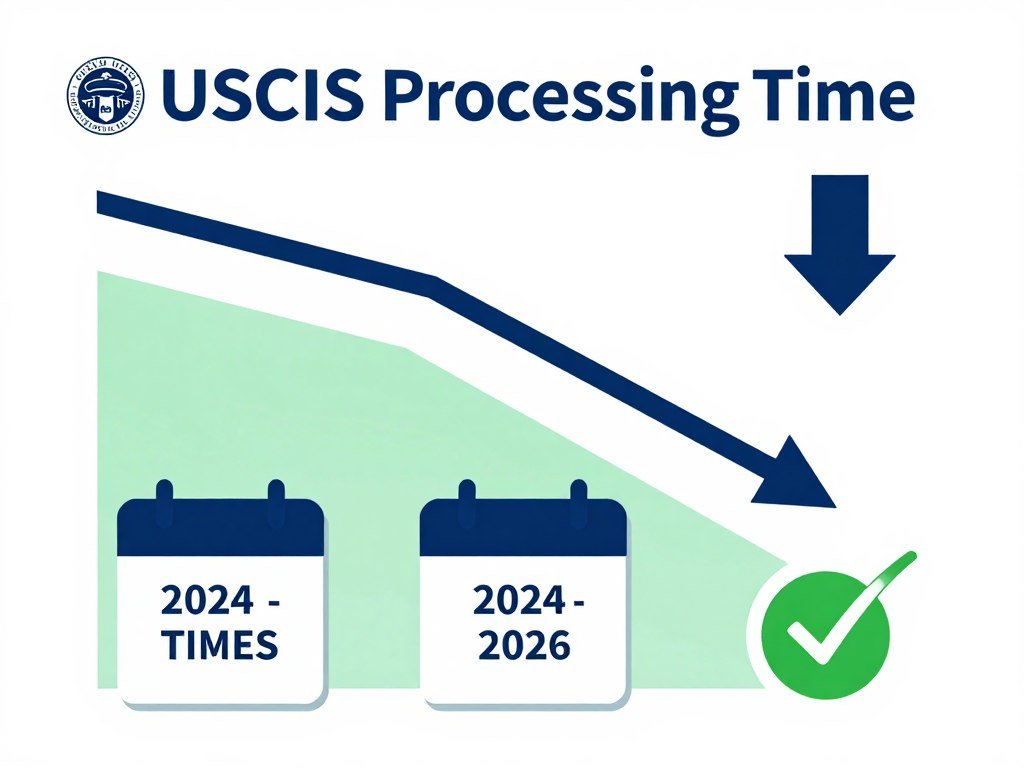
USCIS has made significant progress reducing processing time backlogs that accumulated during 2020-2022. Several improvements benefit employment-based applicants.
I-485 processing improvements: Many USCIS field offices have reduced adjustment of status processing times to eight to twelve months, down from 18-24 months in previous years. However, times still vary significantly by location.
Premium processing expansion: USCIS has expanded premium processing availability for I-140 petitions in all employment categories. This 15-day processing option helps employers and employees expedite the petition stage.
Online filing expansion: More immigration forms are now available for online filing, including certain I-485 applications. Online filing typically results in faster processing and easier case tracking.
Visa Bulletin Developments
Priority date movement affects how long applicants wait after I-140 approval. Recent trends show mixed developments across categories.
EB-2 India improvements: After years of severe backlogs, EB-2 India priority dates advanced significantly in late 2025. While still facing multi-year waits, the pace of movement has accelerated compared to 2022-2024.
EB-3 world remains current: Most countries except India and China see current priority dates in third preference, meaning immediate visa availability after I-140 approval.
Retrogression risks: Some categories experience periodic retrogression where priority dates move backward due to high demand. Monitoring monthly Visa Bulletins helps anticipate these changes.
H-1B and Work Visa Updates
Changes to temporary work visas affect many employer-sponsored immigration applicants who maintain H-1B or L-1 status while pursuing green cards.
H-1B registration process: The lottery registration system continues, with modifications to prevent fraud and ensure fair selection. Employers must register in March for October start dates.
Extended H-1B validity: H-1B workers with approved I-140 petitions can extend status beyond six years more easily. Extensions are granted in one-year or three-year increments depending on priority date status.
H-4 work authorization: Spouses of H-1B workers with approved I-140 petitions can apply for work authorization (H-4 EAD). This policy remains in effect as of 2026.
PERM Modernization Initiatives
The Department of Labor continues updating the PERM labor certification process to improve efficiency and reduce fraud.
Enhanced audit procedures: The Department of Labor has implemented more sophisticated audit selection algorithms. Cases are audited based on risk factors, industry patterns, and random selection.
Recruitment requirement updates: New guidance clarifies acceptable recruitment methods and documentation standards. Employers must follow current requirements carefully to avoid denials.
Processing time variations: PERM processing times fluctuate based on Department of Labor staffing and workload. Current times range from six to fourteen months depending on the processing center.
Policy Considerations for 2026
Several immigration policy discussions may affect employment-based immigration in 2026 and beyond. While not yet implemented, monitoring these developments helps with long-term planning.
Per-country cap reform: Proposals to eliminate or modify seven percent per-country limits could significantly reduce wait times for Indian and Chinese applicants. However, any changes would also affect processing for other countries.
STEM worker initiatives: Discussions continue about expanding opportunities for workers in science, technology, engineering, and mathematics fields, potentially creating new pathways or expedited processing.
Dependent aging-out protections: Proposals to enhance Child Status Protection Act provisions could better protect children who age out during long processing times.
Employer Compliance Focus Areas
Immigration authorities continue strengthening employer compliance enforcement, affecting companies that sponsor immigrant workers.
I-9 verification: U.S. Citizenship and Immigration Services and Immigration and Customs Enforcement conduct regular I-9 audits. Employers must maintain proper employment verification forms for all employees, including sponsored workers.
Wage and hour compliance: The Department of Labor investigates whether employers pay sponsored workers the wages stated in immigration petitions. Violations can result in fines and bars from future sponsorships.
Public access files: Employers sponsoring H-1B and PERM workers must maintain public access files containing required documentation. Audits frequently request these files.
Technology and Process Improvements
USCIS continues modernizing technology systems to improve the immigration experience for applicants and employers.
MyUSCIS account enhancements: The online account portal now provides better case tracking, document upload capabilities, and notifications about case status changes.
Electronic notifications: More applicants receive electronic updates about their cases, reducing reliance on physical mail and speeding communication.
Biometrics reuse: USCIS increasingly reuses biometrics from previous applications rather than requiring new appointments, reducing processing steps and time.
Staying Informed About Changes
Immigration policy changes regularly. Following official sources helps you stay current with developments affecting your case.
Official sources: Monitor USCIS.gov, the Department of State Visa Bulletin, and Department of Labor announcements for policy changes and processing updates.
Professional guidance: Immigration attorneys receive regular updates about policy changes and can explain how new developments affect your specific situation.
Employer communication: If you are a sponsored employee, maintain regular contact with your employer’s HR department or immigration coordinator about case status and policy changes.
Conclusion: Your Path to Employer Sponsored Immigration Success
Employer sponsored immigration provides a proven pathway to achieving lawful permanent resident status and building a lasting career in the United States. While the process involves multiple stages, careful requirements, and significant time investment, millions of skilled workers have successfully obtained green cards through employment-based categories.
Understanding each step of the process helps you prepare effectively. From initial prevailing wage determination through PERM labor certification, I-140 petition approval, priority date waits, and final adjustment of status, each stage requires attention to detail and proper documentation.
Success in employer sponsored immigration depends on several key factors. Choose the right preference category based on your qualifications. Maintain legal immigration status throughout the process. Provide comprehensive, well-organized evidence supporting your eligibility. Work with experienced professionals when needed. Avoid common mistakes that delay cases or lead to denials.
The journey from initial planning to green card approval typically spans two to five years for most applicants, with longer waits for those from countries with priority date backlogs. Patience, persistence, and proper preparation are essential.
Taking Your Next Steps

Whether you are an immigrant worker seeking sponsorship or an employer considering sponsoring valuable employees, starting with solid information positions you for success.
For workers: Discuss green card sponsorship with your employer as early as possible in your employment. Understand your qualifications and which preference category fits your background. Gather educational credentials, employment verification letters, and other documentation proactively.
For employers: Evaluate your business needs and identify positions that genuinely require specialized skills justifying permanent sponsorship. Understand the financial commitment and compliance obligations involved. Work with qualified immigration professionals to navigate requirements correctly.
For both: Recognize that employer sponsored immigration represents a significant undertaking requiring cooperation, patience, and mutual commitment. Clear communication between employers and sponsored employees throughout the process helps avoid misunderstandings and strengthens outcomes.
Resources for Continued Learning
Official government resources provide authoritative information about requirements, forms, and procedures:
- U.S. Citizenship and Immigration Services (USCIS.gov) – Forms, instructions, processing times, and policy guidance
- U.S. Department of State Visa Bulletin – Monthly priority date updates and visa availability
- U.S. Department of Labor (DOL.gov) – PERM labor certification information and prevailing wage data
- USCIS Policy Manual – Detailed guidance on adjudication standards and requirements
- American Immigration Lawyers Association (AILA.org) – Attorney directory and immigration news
The path to lawful permanent residence through employer sponsorship requires dedication, but the reward of building a permanent life in the United States makes the journey worthwhile for millions of immigrant workers and their families.