
Employment-Based Green Card Categories: Your Complete Guide to EB-1, EB-2, and EB-3 in 2026
Getting an employment-based green card is one of the most important steps toward becoming a permanent resident of the United States. In 2026, understanding the differences between EB-1, EB-2, and EB-3 categories can save you time and money.
Recent immigration trends show that employment-based green card applications continue to increase. The U.S. Citizenship and Immigration Services processes hundreds of thousands of immigrant petitions each year.
This guide explains everything you need to know about employment-based preference categories. You will learn about eligibility requirements, application processes, costs, and timelines for each category.
Find Your Best Path to a Green Card
Not sure which employment-based category fits your situation? Compare EB-1, EB-2, and EB-3 requirements to determine your eligibility and start your journey to permanent residence.
What Is an Employment-Based Green Card?
An employment-based green card allows foreign workers to become permanent residents of the United States through their job. This type of immigrant visa is different from family-based green cards.
The U.S. government offers several preference categories for employment-based immigration. Each category has specific eligibility requirements and priority dates.
Key Terms You Should Know
Before you start the application process, you need to understand these important terms:
- Form I-140: The immigrant petition for alien worker that your employer or you must file with USCIS
- Permanent Resident: A person who has been granted authorization to live and work in the United States permanently
- Priority Date: The date when your Form I-140 petition or labor certification was filed
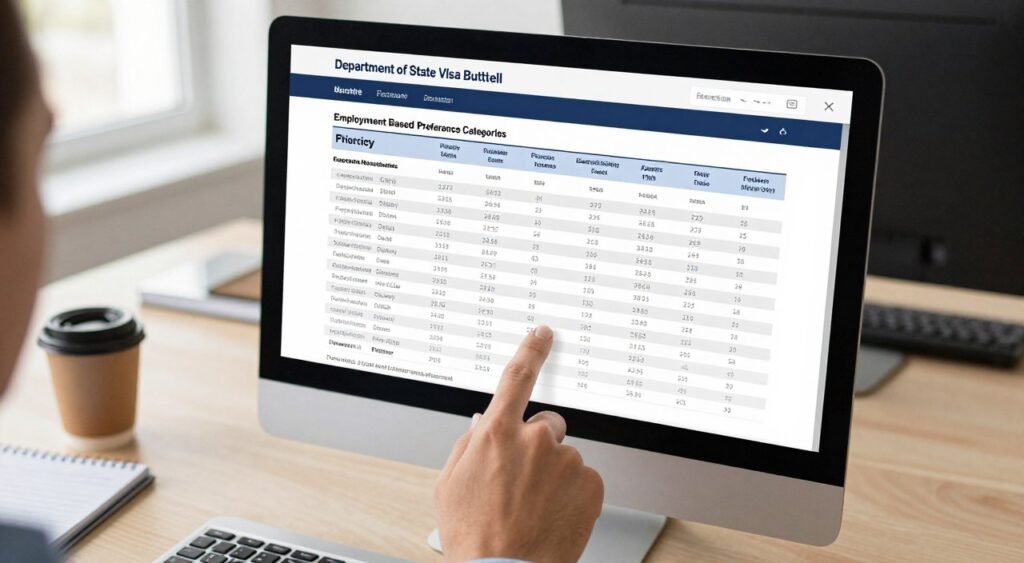
- Visa Bulletin: A monthly document from the Department of State showing which priority dates can apply for green cards
- Adjustment of Status: The process of applying for a green card while you are in the United States
- Consular Processing: The process of applying for an immigrant visa at a U.S. embassy or consulate abroad
Who Qualifies for Employment-Based Green Cards?
Employment-based green cards are available to workers in different skill levels and professions. The three main categories include professionals with extraordinary ability, workers with advanced degrees, and skilled workers.
You may qualify if you have a job offer from a U.S. employer. Some categories allow you to petition for yourself without an employer sponsor.
Each employment-based preference category serves different types of workers. The first preference goes to individuals with extraordinary ability or outstanding achievements.
EB-1 Green Card: First Preference Category
The EB-1 category is for individuals with extraordinary ability in their field. This is the fastest employment-based green card option because it usually has no waiting time.
First preference workers do not need labor certification. This saves significant time in the application process.
Three Subcategories of EB-1
The EB-1 category includes three distinct groups of applicants. Each subcategory has specific requirements that applicants must meet.
EB-1A: Extraordinary Ability
This subcategory is for people with extraordinary ability in sciences, arts, education, business, or athletics. You can petition for yourself without a job offer.
You must provide evidence of sustained national or international acclaim. This includes major awards, published material about your work, or membership in prestigious associations.
- Receipt of major international awards or prizes
- Membership in associations requiring outstanding achievement
- Published material about you in major media
- Evidence of judging the work of others in your field
- Original contributions of major significance
- Authorship of scholarly articles
- Display of work at artistic exhibitions
- High salary compared to others in your field
EB-1B: Outstanding Professors and Researchers
Outstanding professors and researchers with at least three years of experience qualify for this category. You need a job offer from a university or research institution.
You must demonstrate international recognition for your achievements. Your employer must file the immigrant petition on your behalf.
- At least three years of teaching or research experience
- Job offer for a tenured or tenure-track position
- International recognition in your academic field
- Evidence of published research or scholarly articles
- Participation as a judge of others’ work
- Awards for outstanding achievements
EB-1C: Multinational Manager or Executive
This subcategory is for managers and executives transferred to the United States by their employer. You must have worked for the company abroad for at least one year in the past three years.
Your U.S. employer must be related to your foreign employer. The relationship can be a parent company, subsidiary, or affiliate.
- Employment abroad for one year in past three years
- Coming to work for related U.S. employer
- Position as manager or executive in the United States
- Relationship between foreign and U.S. companies
- U.S. employer must have been doing business for at least one year

EB-1 Eligibility Requirements
The eligibility requirements vary based on which EB-1 subcategory you apply under. All categories require strong evidence of your qualifications.
For EB-1A, you must meet at least three of the ten criteria listed by USCIS. Alternatively, you can show a one-time major achievement like an Oscar or Nobel Prize.
For EB-1B, you need at least two types of evidence from six possible categories. These include major prizes, membership in associations, or published material about your work.
For EB-1C, you must show that your position abroad and in the United States qualifies as managerial or executive. The job duties must involve managing the organization or a major function.
Ready to Apply for EB-1?
Access official Form I-140 instructions and filing requirements for EB-1 petitions. Start gathering your evidence and preparing your application today.
EB-2 Green Card: Second Preference Category
The EB-2 category is for professionals holding advanced degrees or persons with exceptional ability. This category requires either a job offer or qualification for a national interest waiver.
Most EB-2 applications require labor certification from the Department of Labor. This process ensures that hiring a foreign worker will not hurt U.S. workers.
Two Main Paths for EB-2
You can qualify for an EB-2 green card through two different pathways. The first path requires an advanced degree, and the second requires exceptional ability.
EB-2A: Advanced Degree Professionals
This subcategory is for professionals with advanced degrees or their equivalent. An advanced degree means a U.S. master’s degree or higher, or a foreign equivalent degree.
You can also qualify with a U.S. bachelor’s degree plus five years of progressive work experience in your field. The job must require an advanced degree.
- Master’s degree, doctorate, or foreign equivalent
- Bachelor’s degree plus five years of progressive experience
- Job offer requiring advanced degree
- Labor certification (unless you qualify for national interest waiver)
- Official academic records and diplomas
- Letters from employers confirming work experience

EB-2B: Exceptional Ability
Exceptional ability means expertise significantly above the ordinary in sciences, arts, or business. You must meet at least three of six criteria established by USCIS.
Your employer must file Form I-140 on your behalf. You need a job offer and labor certification unless you qualify for a national interest waiver.
- Official academic records showing degrees, diplomas, or certificates
- Letters documenting at least ten years of full-time experience
- License to practice your profession
- Evidence of salary showing exceptional ability
- Membership in professional associations
- Recognition for achievements from peers or organizations
National Interest Waiver (NIW)
The national interest waiver allows you to skip the labor certification requirement. You can also petition for yourself without an employer sponsor.
To qualify for a national interest waiver, you must show that your work benefits the United States. The proposed endeavor must have substantial merit and national importance.
You must demonstrate that you are well positioned to advance the proposed endeavor. Finally, you must show that waiving the job offer requirement benefits the United States.
Advantages of National Interest Waiver
- No job offer required
- No labor certification needed
- Self-petition allowed
- Faster processing in many cases
- Job flexibility after approval
- Can change employers during process
Common NIW Qualifying Fields
- Healthcare and medical research
- STEM fields (Science, Technology, Engineering, Math)
- Renewable energy and environmental protection
- Education and academic research
- Business entrepreneurship benefiting U.S. economy
- Arts and cultural preservation
Documents Needed for EB-2
The documentation requirements for EB-2 are extensive. You must provide proof of your educational qualifications and professional experience.
- Form I-140 immigrant petition
- Labor certification (unless NIW applicant)
- Educational credentials and diplomas
- Official transcripts from universities
- Foreign credential evaluation (if degree is from outside the United States)
- Letters from current and former employers
- Evidence of exceptional ability or advanced degree requirement
- Job offer letter (unless NIW applicant)
- Proof of employer’s ability to pay offered wage
- Evidence supporting national interest waiver (if applicable)
Explore EB-2 and National Interest Waiver Options
Learn whether you qualify for EB-2 with or without the national interest waiver. Access detailed eligibility criteria, form instructions, and application guidance.
EB-3 Green Card: Third Preference Category
The EB-3 category is for skilled workers, professionals, and other workers. This is the most accessible employment-based green card option for many applicants.
All EB-3 applicants need a job offer and labor certification. Your employer must sponsor your green card application.
Three Subcategories of EB-3
The third preference includes three types of workers with different qualification levels. Each subcategory has specific requirements for education and experience.
EB-3A: Skilled Workers
Skilled workers must have at least two years of job experience or training. The job must require at least two years of training or experience.
This category includes many technical and trades positions. Examples include electricians, chefs, computer programmers, and technicians.
- At least two years of job experience or training
- Job requires minimum two years of training or experience
- Labor certification from Department of Labor
- Job offer from U.S. employer
- Documentation of skills and experience
- Proof of relevant work history
EB-3B: Professionals
Professionals hold U.S. bachelor’s degrees or foreign equivalent degrees. The job must require a bachelor’s degree as a minimum qualification.
This differs from EB-2 professionals who need advanced degrees. EB-3 professionals have bachelor’s degrees in their field.
- U.S. bachelor’s degree or foreign equivalent
- Job requires bachelor’s degree minimum
- Degree must be relevant to the job
- Official transcripts and diplomas
- Labor certification approval
- Valid job offer from employer

EB-3C: Other Workers (Unskilled Workers)
Other workers perform unskilled labor requiring less than two years of training or experience. This category has the longest waiting times.
Jobs in this category include positions like food service workers, cleaners, and general laborers. The job must be full-time and permanent.
- Job requires less than two years of training or experience
- Full-time permanent job offer
- Labor certification approval
- Employer sponsorship required
- Demonstration of ability to perform job duties
- Much longer waiting times than EB-3A or EB-3B
Labor Certification Process for EB-3
The labor certification process is mandatory for all EB-3 applications. Your employer must prove that no qualified U.S. workers are available for the job.
The Department of Labor reviews the labor certification application. This process is called PERM (Program Electronic Review Management).
Your employer must conduct recruitment to test the U.S. labor market. This includes placing job advertisements and interviewing U.S. applicants.
Important: The labor certification process can take several months to complete. Your employer must pay the prevailing wage for the position. The wage amount is determined by the Department of Labor based on the job location and requirements.
EB-3 Eligibility Requirements Summary
To qualify for an EB-3 green card, you must meet specific criteria. The requirements depend on which subcategory you apply under.
| Requirement Type | Skilled Workers (EB-3A) | Professionals (EB-3B) | Other Workers (EB-3C) |
| Education | High school diploma or equivalent | U.S. bachelor’s degree or foreign equivalent | No specific requirement |
| Experience | Minimum 2 years training or experience | Experience related to bachelor’s degree field | Less than 2 years required |
| Job Offer | Required – full-time permanent | Required – full-time permanent | Required – full-time permanent |
| Labor Certification | Required (PERM) | Required (PERM) | Required (PERM) |
| Typical Wait Time | 1-3 years (varies by country) | 1-3 years (varies by country) | 3-10+ years (varies by country) |
Start Your EB-3 Application Process
Get detailed information about EB-3 requirements, labor certification, and Form I-140 filing. Access official USCIS resources for skilled workers, professionals, and other workers.
Requirements and Eligibility for Employment-Based Green Cards
Each employment-based preference category has different eligibility requirements. Understanding these requirements helps you determine which category fits your situation.
All categories require you to be admissible to the United States. This means you cannot have certain criminal convictions or immigration violations.
General Eligibility Criteria
There are some basic requirements that apply to all employment-based green card applicants. You must meet these requirements regardless of your category.
- Valid passport from your country
- No criminal history that makes you inadmissible
- Good moral character
- Medical examination results showing no inadmissible health conditions
- No immigration violations or overstays
- Proof of lawful status if applying from within the United States
- Financial ability or sponsor to avoid becoming public charge
- English language proficiency (not required but helpful)
Documents You Must Submit
The document requirements vary based on your employment-based category. However, most applications require similar basic documents.
You need to provide proof of your identity and nationality. Educational credentials must be evaluated if they are from outside the United States.
- Form I-140 Immigrant Petition
- Valid passport and birth certificate
- Educational diplomas and transcripts
- Employment verification letters
- Passport-style photographs
- Medical examination (Form I-693)
- Police certificates if required
- Financial support documents
Required for All Categories
- Evidence of extraordinary ability or achievements
- Major awards and prizes
- Published materials about your work
- Proof of judging others’ work
- Membership in elite associations
- High salary or compensation evidence
- Letters from experts in your field
Additional for EB-1
- Labor certification approval (unless NIW)
- Job offer letter from employer
- Proof of employer’s ability to pay wage
- Educational credential evaluations
- Work experience documentation
- Professional licenses if applicable
- Employer tax returns and financial statements
Additional for EB-2 and EB-3
Foreign Credential Evaluation
If your education is from outside the United States, you need a credential evaluation. This document compares your foreign degree to U.S. educational standards.
You must use an evaluation service approved by USCIS. The evaluation should state the U.S. equivalent of your foreign degree.
- Choose NACES or AICE member evaluation service
- Submit official transcripts and diplomas
- Request course-by-course evaluation for best results
- Evaluation typically costs between $100 and $300
- Processing takes 1-4 weeks depending on service
- Some evaluations may require document translations
Step-by-Step Application Process for Employment-Based Green Cards
The application process for an employment-based green card involves multiple steps. Understanding each step helps you prepare properly and avoid delays.
The process differs slightly depending on whether you are inside or outside the United States. This section covers both adjustment of status and consular processing.
Step 1: Labor Certification (If Required)
Most EB-2 and all EB-3 applicants need labor certification. Your employer must file this application with the Department of Labor.
The labor certification process includes job advertisement and recruitment. Your employer must prove that no qualified U.S. workers are available.
- Employer obtains prevailing wage determination from Department of Labor
- Employer conducts recruitment following PERM requirements
- Employer files Form ETA-9089 electronically
- Department of Labor reviews and may conduct audit
- Labor certification is approved or denied
- If approved, employer can proceed to file Form I-140
Important: Labor certification can take 6-12 months or longer. Any mistakes in the recruitment process can result in denial. Your employer should work with an experienced immigration attorney during this stage.
Step 2: File Form I-140 Immigrant Petition
Form I-140 is the immigrant petition for alien worker. Your employer files this form for most categories, though EB-1A and EB-2 NIW applicants can self-petition.
The petition must include all required supporting documents. USCIS reviews the petition to determine if you qualify for the preference category.
- Prepare Form I-140 with all required information
- Gather supporting documentation proving eligibility
- Include labor certification approval (if required)
- Pay filing fee (currently $715 as of 2026)
- Submit petition to appropriate USCIS service center
- Consider premium processing ($2,805) for 15-day processing
- Respond to any requests for evidence (RFE) from USCIS
- Receive approval or denial notice

Step 3: Wait for Priority Date to Become Current
After your I-140 petition is approved, you receive a priority date. This date determines when you can apply for your green card.
You must wait until your priority date is current according to the visa bulletin. The Department of State publishes this bulletin monthly.
Wait times vary significantly based on your country of birth and preference category. Some applicants can proceed immediately, while others wait years.
Check the monthly visa bulletin at the Department of State website. The bulletin has two charts: “Final Action Dates” and “Dates for Filing.” USCIS announces which chart to use each month for adjustment of status applications.
Step 4: File for Adjustment of Status or Consular Processing
When your priority date becomes current, you can apply for permanent residence. The process depends on whether you are in the United States or abroad.
Adjustment of Status (Form I-485) – For Applicants in the United States
- Confirm your priority date is current in visa bulletin
- Complete Form I-485 Application to Register Permanent Residence
- Include Form I-765 (work permit) and Form I-131 (travel document) if desired
- Gather required documents including medical examination
- Pay filing fees ($1,440 for I-485 plus additional fees for other forms)
- Submit biometrics at local USCIS office when scheduled
- Attend interview at USCIS field office if required
- Receive approval and green card in mail, or denial with explanation
Consular Processing – For Applicants Outside the United States
- Wait for notification from National Visa Center (NVC)
- Submit Form DS-260 Immigrant Visa Application online
- Pay visa processing fees to NVC
- Submit required civil documents to NVC
- Wait for case transfer to U.S. embassy or consulate
- Complete medical examination with panel physician
- Attend visa interview at U.S. embassy or consulate
- Receive immigrant visa in passport if approved
- Enter United States within visa validity period
- Receive green card by mail after entry

Step 5: Receive Your Green Card
After approval, you will receive your green card in the mail. This card proves your status as a permanent resident of the United States.
Your green card is valid for 10 years. You can live and work permanently in the United States and travel freely.
- Card arrives by mail within 2-4 weeks of approval
- Check card information for accuracy immediately
- Report errors to USCIS within 30 days
- Carry your green card at all times as proof of status
- Remember to renew card before expiration
- You can apply for U.S. citizenship after 5 years (or 3 years if married to U.S. citizen)
Ready to Begin Your Application?
Access the official USCIS online filing system to start your employment-based green card application. Review current processing times and prepare your documents before filing.
Processing Time and Costs for Employment-Based Green Cards
Understanding the timeline and costs helps you plan your immigration journey. Processing times vary significantly based on multiple factors.
The total time from start to green card approval can range from one year to over ten years. Your country of birth and preference category are the main factors affecting wait time.
Processing Timelines by Category
Each step of the process has its own timeline. Some steps can be expedited with premium processing or other options.
| Process Step | EB-1 | EB-2 | EB-3 |
| Labor Certification | Not required | 6-12 months (unless NIW) | 6-12 months |
| Form I-140 Processing | 4-8 months (15 days with premium) | 4-8 months (15 days with premium) | 4-8 months (15 days with premium) |
| Priority Date Wait | Usually current (no wait) | 0-5+ years depending on country | 1-10+ years depending on country |
| Adjustment of Status (I-485) | 8-18 months | 8-18 months | 8-18 months |
| Consular Processing | 4-8 months after priority date current | 4-8 months after priority date current | 4-8 months after priority date current |
| Total Typical Timeline | 1-2 years | 2-7 years | 3-12+ years |
Country-Specific Backlogs
Applicants from certain countries face much longer wait times. India and China have the longest backlogs for employment-based green cards.
The per-country limit restricts the number of green cards available to nationals of any single country. This creates significant delays for applicants from high-demand countries.
- India: EB-2 and EB-3 categories face 5-10+ year waits
- China: EB-2 and EB-3 categories face 2-5 year waits
- Philippines: EB-3 category faces longer waits than most countries
- Mexico: Generally shorter waits than India and China
- All other countries: Shorter waits, sometimes current with no wait
- Check monthly visa bulletin for current wait times by country
Complete Cost Breakdown
The total cost of obtaining an employment-based green card includes government fees and other expenses. Some fees are paid by the employer, while others are paid by the applicant.
Government filing fees change periodically. Always check the USCIS website for current fee amounts before submitting applications.
Government Filing Fees (2026)
- Labor Certification (PERM): No fee
- Form I-140 Petition: $715
- Premium Processing (I-140): $2,805 (optional)
- Form I-485 Application: $1,440 (includes biometrics)
- Form I-765 Work Permit: Usually no fee when filed with I-485
- Form I-131 Travel Document: Usually no fee when filed with I-485
- Medical Examination: $200-500 (varies by physician)
- Immigrant Visa Fee (consular): $345
- USCIS Immigrant Fee: $220 (after visa approval)
Additional Expenses
- Attorney Fees: $3,000-15,000 total (varies widely)
- Credential Evaluation: $100-300
- Document Translation: $20-100 per document
- Passport Photos: $10-20
- Police Certificates: $0-50 depending on country
- Birth Certificate: $15-50
- Travel for Interview: Varies
- Document Shipping: $50-100
Who Pays Which Fees?
The employer typically pays for labor certification and Form I-140 filing. Applicants usually pay for adjustment of status or consular processing fees.
Some employers pay all fees as part of the employment agreement. This varies by company policy and individual negotiations.
Total Estimated Costs: Expect to spend between $5,000 and $20,000 for the complete employment-based green card process. This includes government fees, attorney fees, medical exams, and other required expenses. Costs are higher if you use premium processing or hire expensive attorneys.
Ways to Reduce Processing Time
Several options can help speed up parts of the process. However, some steps have mandatory waiting periods that cannot be expedited.
- Use premium processing for Form I-140 (15-day processing for $2,805)
- File I-485 concurrently with I-140 when priority date is current
- Respond quickly to any requests for evidence from USCIS
- Submit complete and accurate applications to avoid delays
- Choose attorneys with experience in your specific category
- Monitor visa bulletin monthly to file as soon as eligible
- Consider EB-1 if you qualify (usually no wait time)
- Keep all documents current and readily available
Common Mistakes to Avoid in Employment-Based Green Card Applications
Many applicants make preventable mistakes during the green card process. These errors can cause delays, denials, or even permanent bars to immigration.
Understanding common pitfalls helps you avoid problems. Most mistakes involve documentation, timing, or maintaining lawful status.
Documentation Errors
Incomplete or incorrect documentation is the most common reason for delays. USCIS may issue requests for evidence or deny applications with insufficient proof.
- Submitting Incomplete Applications: Missing required forms, signatures, or supporting documents causes delays. Review the checklist carefully before submitting. Include every required document even if it seems redundant.
- Using Expired Documents: Police certificates, medical exams, and some other documents have validity periods. Check expiration dates before filing. Renew documents if they will expire during processing.
- Poor Quality Translations: All foreign language documents need certified translations. Do not use Google Translate or informal translations. Hire certified translators who provide proper certification statements.
- Insufficient Evidence of Qualifications: This is especially common in EB-1 and EB-2 applications. Provide extensive documentation of your achievements, degrees, and experience. Include more evidence rather than less.
- Missing Supporting Letters: Recommendation letters should come from recognized experts in your field. Generic letters without specific examples are weak evidence. Get detailed letters that explain why you qualify for the category.
Timing and Process Mistakes
Timing is critical in immigration applications. Filing too early or too late can create serious problems.
- Filing I-485 Before Priority Date is Current: You cannot file adjustment of status until your priority date is current according to the visa bulletin. Filing early results in rejection and wasted fees. Check the visa bulletin carefully before filing.
- Not Responding to Requests for Evidence on Time: USCIS gives strict deadlines for responding to RFEs. Missing these deadlines usually results in denial. Set calendar reminders and respond well before deadlines.
- Failing to Maintain Status: You must maintain lawful immigration status throughout the process. Overstaying a visa or working without authorization can make you ineligible. Consult an attorney if your status may expire during processing.
- Not Filing for Work Permit and Travel Document: If you are adjusting status in the United States, file Forms I-765 and I-131 with your I-485. These give you work authorization and the ability to travel while waiting. Filing them later costs extra money.
- Changing Jobs at the Wrong Time: Changing employers can complicate or invalidate your green card application. If you are using AC21 portability, follow the rules carefully. Consult an attorney before changing jobs during the process.
Financial and Employer-Related Mistakes
Problems with employer sponsorship or financial documentation cause many denials. The employer must prove ability to pay the offered wage.
- Inadequate Proof of Employer’s Ability to Pay: The sponsoring employer must demonstrate financial ability to pay your wage. Provide tax returns, annual reports, or audited financial statements. Small companies should include extra evidence.
- Inaccurate Prevailing Wage Determination: The offered wage must meet or exceed the prevailing wage for the position. Errors in job title or location can cause problems. Work with experienced immigration professionals for labor certification.
- Misrepresenting Job Duties: The actual job duties must match what is described in the petition. USCIS may investigate and deny if they find discrepancies. Be completely honest about job requirements and duties.
Personal Conduct Issues
Your personal history affects admissibility to the United States. Certain issues can result in denial or bars to entry.
- Failing to Disclose Criminal History: You must disclose all arrests and convictions, even if charges were dismissed or expunged. USCIS will discover this information during background checks. Lying about criminal history can result in permanent inadmissibility.
- Immigration Violations: Previous overstays, unauthorized work, or other violations can make you inadmissible. Some violations create bars of 3 or 10 years. Consult an attorney if you have any immigration violations in your history.
Critical Warning: Fraud or misrepresentation in immigration applications can result in permanent inadmissibility to the United States. Always provide truthful and accurate information. If you made mistakes in previous applications, consult an experienced immigration attorney before proceeding.
How to Avoid These Mistakes
Following these best practices significantly reduces the chance of errors in your application.
- Hire an experienced immigration attorney for complex cases
- Create a detailed checklist of all required documents
- Make copies of everything before submitting
- Use certified mail or tracking for all submissions
- Keep detailed records of all dates, receipts, and correspondence
- Review applications multiple times before filing
- Set calendar reminders for deadlines and expirations
- Maintain organized files with all immigration documents
- Never assume anything – always verify requirements
- Ask questions if anything is unclear
Tips to Improve Your Approval Chances
While you cannot guarantee approval, certain strategies significantly improve your chances. These tips come from successful applicants and immigration professionals.
Preparation and attention to detail make the biggest difference. A well-documented and carefully prepared application stands out to USCIS officers.
Build a Strong Evidence Package
The quality of your supporting evidence is more important than the quantity. Focus on providing compelling proof of your qualifications.
- Get Expert Recommendation Letters: Letters from recognized authorities in your field carry significant weight. Choose recommenders who can speak specifically about your achievements and qualifications.
- Document Everything: Keep detailed records of all work experience, publications, awards, and achievements. Organize this documentation before starting your application.
- Provide Context for Evidence: Don’t assume USCIS officers understand your field. Explain the significance of awards, publications, or achievements in clear language.
- Include Independent Verification: Third-party evidence like news articles, citations, or industry recognition strengthens your case. Show that others recognize your contributions.
- Use Professional Translations: All foreign language documents need certified English translations. Use professional translation services that provide proper certification.
Work With Qualified Professionals
Immigration law is complex and constantly changing. Professional guidance helps navigate the process successfully.
- Choose an Experienced Attorney: Select an attorney who specializes in employment-based immigration. Check their track record with cases similar to yours.
- Consider Immigration-Friendly Employers: Some employers have extensive experience sponsoring foreign workers. They understand the process and provide better support.
- Use Reputable Credential Evaluation Services: Not all credential evaluation services are equal. Use NACES or AICE member organizations recognized by USCIS.
- Find Panel Physicians for Medical Exams: Only use physicians authorized by USCIS for immigration medical examinations. Check the USCIS website for authorized physicians in your area.
Timing Strategies
Strategic timing can significantly impact your application outcome and processing time.
- Monitor Visa Bulletin Closely: Priority dates can move forward or backward. Watch the bulletin monthly to file as soon as eligible.
- Consider Concurrent Filing: If your priority date is current, file Forms I-140 and I-485 together. This saves significant time in the overall process.
- Use Premium Processing When Beneficial: The $2,805 premium processing fee gets I-140 decisions in 15 days. This is valuable when timing is critical or you need certainty quickly.
- Plan Around Visa Retrogression: Priority dates can move backward during retrogression. File adjustment of status applications quickly when dates are current.
- Start Early: Begin gathering documents months before you plan to file. Many documents take time to obtain.
Maintain Compliance Throughout the Process
Your conduct during the application process affects the outcome. USCIS evaluates your admissibility continuously.
- Keep Lawful Status: Never let your visa status expire while your green card application is pending. File extensions or change of status if needed.
- Avoid Unauthorized Employment: Working without proper authorization can make you inadmissible. Wait for your work permit (EAD) approval before starting new employment.
- Travel Carefully: International travel during adjustment of status requires advance parole. Leaving without advance parole abandons your application.
- Report Address Changes: USCIS requires notification within 10 days of moving. File Form AR-11 and update your pending applications.
- Maintain Tax Compliance: File all required tax returns. USCIS may request tax transcripts to verify your status and finances.
Strengthen Your Case for Specific Categories
Each preference category has unique factors that improve approval chances.
For EB-1 Applicants
- Demonstrate sustained international acclaim over time
- Show that you are among the top in your field
- Provide evidence of major contributions to your field
- Get letters from independent experts, not just colleagues
- Include evidence of high compensation relative to peers
- Show widespread recognition beyond your immediate circle
For EB-2 and EB-3 Applicants
- Ensure job requirements match your actual qualifications
- Document that employer conducted proper recruitment
- Show employer has financial ability to pay wage
- Provide extensive proof of your work experience
- Include detailed job duty descriptions
- For NIW, show clear benefit to United States
Respond Effectively to Requests for Evidence
If USCIS issues a request for evidence, your response is critical. Many cases are approved after proper RFE responses.
- Read the RFE carefully and address every point raised
- Respond before the deadline with time to spare
- Provide the exact evidence requested, not substitutes
- Include a detailed cover letter explaining your response
- Organize documents with tabs and clear labels
- Consider attorney assistance for complex RFEs
- Keep copies of everything you submit
Download Your Complete Document Checklist
Get a comprehensive checklist of required documents for employment-based green card applications. Organize your evidence package and ensure you have everything needed for approval.
Latest Updates and Policy Changes for 2026
Immigration policies change frequently. Staying informed about recent updates helps you plan your application strategy effectively.
The U.S. government regularly adjusts processing procedures, fees, and requirements. Some changes benefit applicants while others create new challenges.
Recent Processing Changes
USCIS has implemented several changes to improve efficiency and reduce backlogs. Understanding these changes helps you navigate the current system.
- Online Filing Expansion: More forms are now available for online filing. Online filing generally results in faster processing and easier status tracking.
- Premium Processing Availability: Premium processing for Form I-140 is currently available for all employment-based categories. This provides 15-day processing for an additional fee.
- Visa Bulletin Predictions: The Department of State now provides limited forward-looking guidance on priority date movement. This helps applicants plan better.
- Automatic Work Permit Extensions: Certain renewal work permits receive automatic extensions while processing. This prevents employment gaps.
- Increased Scrutiny: USCIS has increased site visits and verification procedures for some applications. Be prepared for potential employer or work site inspections.
Fee Changes and Cost Updates
Filing fees change periodically based on USCIS operational costs. Recent fee adjustments affect employment-based applications.
- Form I-140 filing fee remains $715 as of early 2026
- Form I-485 fee increased to $1,440 including biometrics
- Premium processing fee increased to $2,805
- Some dependent family member fees have increased
- Fee waivers are not available for employment-based green card applications
- Payment methods now include online credit card and electronic bank transfer
Priority Date Movement Trends
Understanding recent visa bulletin trends helps predict future movement. Some categories are moving faster while others remain stagnant.
Current Trends (Early 2026): EB-1 remains current or nearly current for most countries. EB-2 India and China continue to face significant backlogs with slow forward movement. EB-3 for most countries except India shows moderate advancement. The Department of State expects continued but uneven progress throughout 2026.
Policy Changes Under Consideration
Several proposed changes could significantly affect employment-based green card applicants. While not yet implemented, these proposals deserve attention.
- Per-Country Cap Reform: Congress continues to debate eliminating or modifying per-country limits. This would significantly benefit India and China applicants but might increase wait times for others.
- H-1B to Green Card Streamlining: Proposals exist to create faster pathways from H-1B status to permanent residence. Implementation would dramatically improve timelines for many applicants.
- STEM Priority Programs: Some proposals would create expedited processing for applicants in critical STEM fields. This reflects national interest in retaining scientific talent.
- Entrepreneur and Startup Provisions: New policies may create easier pathways for entrepreneurs and startup founders. Current proposals focus on national interest criteria.
- Family Member Processing: Possible changes would allow dependent family members to file adjustment of status independently. This could provide more flexibility.
Technological Improvements
USCIS continues modernizing its systems to improve applicant experience and processing efficiency.
- Online Account Portal: The USCIS online account system provides better case tracking and notifications. More features are being added regularly.
- Electronic Document Submission: Scanning and uploading documents is now standard for many applications. This reduces processing time and prevents lost mail.
- Automated Case Status Updates: Applicants receive email and text notifications about case progress. This eliminates the need for constant manual checking.
- Virtual Interviews: Some interviews are now conducted by video conference. This is especially helpful for applicants in remote locations.
COVID-19 Related Policies
While pandemic-specific policies are being phased out, some changes remain in effect or have become permanent.
- Flexibility in medical exam timing continues for some applicants
- Virtual interview options remain available in certain situations
- Some document submission deadlines have extended grace periods
- Consular processing has largely returned to pre-pandemic operations
- Domestic interview operations are fully restored at most field offices
Staying Informed About Changes
Immigration law changes quickly. Use these resources to stay updated on the latest developments.
- Check USCIS website regularly for policy updates and announcements
- Review visa bulletin monthly on Department of State website
- Subscribe to USCIS email notifications for case updates
- Follow official USCIS social media for news
- Consult with immigration attorney about changes affecting your case
- Join immigration forums and communities for peer insights
- Monitor Department of Homeland Security policy publications
Frequently Asked Questions About Employment-Based Green Cards
Can I apply for an employment-based green card without a job offer?
Yes, in some cases. EB-1A applicants with extraordinary ability and EB-2 applicants who qualify for a national interest waiver can self-petition without a job offer. All other employment-based categories require an employer sponsor and job offer.
How long does the entire employment-based green card process take?
The total timeline varies from 1 year to over 10 years depending on your category and country of birth. EB-1 typically takes 1-2 years. EB-2 takes 2-7 years. EB-3 takes 3-12+ years. Indian and Chinese applicants face the longest wait times due to per-country limits.
Can my family members get green cards with me?
Yes. Your spouse and unmarried children under 21 can apply for green cards as derivative beneficiaries. They receive the same priority date as you. Family members can file adjustment of status or consular processing when your priority date becomes current.
What happens if I change employers during the green card process?
It depends on which stage you are in. If your I-140 is pending, changing employers usually requires starting over. If your I-140 is approved and your I-485 has been pending for 180 days or more, you can use AC21 portability to change to a similar job. Consult an attorney before changing employers.
Do I need to pass an English test for an employment-based green card?
No. Employment-based green card applicants do not need to take English language tests. However, your interview will be conducted in English. You may bring an interpreter if needed, though this can complicate the process.
What is the difference between EB-2 and EB-3 for someone with a bachelor’s degree?
EB-2 requires an advanced degree (master’s or higher) or bachelor’s plus 5 years progressive experience. EB-3 professionals only need a bachelor’s degree. If your job requires only a bachelor’s degree, you must apply under EB-3 even if you have higher education. The job requirements determine the category, not your actual qualifications.
Can I travel outside the United States while my green card application is pending?
If you are adjusting status in the United States, you need advance parole (Form I-131) to travel abroad. Leaving without advance parole abandons your I-485 application. If you are doing consular processing, you can travel freely until your visa interview. Always consult an attorney before international travel during the green card process.
What is a priority date and why does it matter?
Your priority date is the date when your labor certification was filed or your Form I-140 was filed (if no labor certification required). This date determines your place in line for a green card. You can only apply for permanent residence when your priority date becomes current according to the monthly visa bulletin. Earlier priority dates get green cards before later dates.
How much does an employment-based green card cost in total?
Total costs range from $5,000 to $20,000 or more. Government fees alone are approximately $2,500-3,000 including I-140, I-485, medical exam, and biometrics. Attorney fees typically add $3,000-15,000. Additional costs include credential evaluations, translations, travel, and other services. Some employers pay all costs while others pay only certain fees.
What happens if my I-140 petition is denied?
If your I-140 is denied, you can file a motion to reconsider or appeal the decision within 30 days. Alternatively, you can file a new I-140 petition addressing the reasons for denial. If you are in the United States on a temporary visa, denial does not automatically affect your current status unless your visa is expiring. Consult an attorney to evaluate your options after a denial.
Conclusion: Your Path to Permanent Residence
Understanding employment-based green card categories is the first step toward permanent residence in the United States. Each category serves different types of workers and professionals.
EB-1 provides the fastest path for individuals with extraordinary ability or outstanding achievements. EB-2 serves professionals with advanced degrees or exceptional ability. EB-3 covers skilled workers and professionals with bachelor’s degrees.
The application process requires careful preparation and attention to detail. Gather all required documents, meet all eligibility requirements, and maintain lawful status throughout the process.
Processing times vary significantly based on your category and country of birth. Plan ahead and understand the potential wait times for your situation.
Working with qualified professionals improves your chances of success. Immigration attorneys, credential evaluators, and experienced employers provide valuable guidance.
Stay informed about policy changes and processing updates. Immigration law changes frequently, and staying current helps you make informed decisions.
Most importantly, start your preparation early. Gathering documentation and building a strong case takes time. The sooner you begin, the sooner you can achieve your goal of permanent residence.
Ready to Begin Your Green Card Journey?
Take the next step toward permanent residence in the United States. Access official forms, check your eligibility, and start preparing your application today.
Important Reminder: This article provides general information about employment-based green cards. Immigration law is complex and changes frequently. Always consult with a qualified immigration attorney for advice specific to your situation. This content is for educational purposes only and does not constitute legal advice.