The Role of the Federal Reserve System in Controlling Inflation: How It Could Impact the U.S. Economy in 2026 and Beyond
The Federal Reserve faces mounting pressure as inflation remains a critical concern for millions of Americans. Price increases continue reshaping household budgets and business strategies across the nation.
Recent data from the Bureau of Labor Statistics shows consumer prices rose by 3.2 percent in early 2026. This marks a stubborn persistence that challenges the central bank’s efforts to restore price stability.
The stakes have never been higher. Inflation affects everything from groceries to housing costs. It determines whether workers see real wage growth or watch their purchasing power erode.
Understanding the Federal Reserve’s inflation control mechanisms becomes essential for navigating economic uncertainty. The decisions made in 2026 will ripple through markets, jobs, and family finances for years to come.
What Is This Economic Threat?
Inflation represents a sustained increase in the general price level of goods and services throughout the economy. When inflation accelerates, each dollar buys fewer items than before.
The Consumer Price Index tracks these changes across major spending categories. Food, energy, housing, and health care costs all factor into the overall inflation picture.
Historical context reveals inflation patterns over decades. The United States experienced severe inflation during the 1970s, with prices rising over 10 percent annually at peak periods.
Recent years brought a resurgence of inflationary pressures. Pandemic-related supply disruptions combined with massive fiscal stimulus to push prices higher starting in 2021.
Key Statistics Defining Current Inflation
Core inflation, which excludes volatile food and energy prices, reached 3.8 percent in early 2026. This measure helps policymakers identify underlying price trends.
The Peterson Institute for International Economics notes that service sector inflation proves particularly persistent. Labor-intensive services see wage pressures translating directly into higher consumer costs.
Inflation expectations among consumers and businesses matter enormously. When people expect continued price increases, they adjust behavior in ways that reinforce the inflation cycle.
The Federal Reserve targets two percent annual inflation as optimal for economic health. Current readings remain well above this benchmark, justifying continued policy vigilance.
What Is Causing the Problem?
Multiple factors converge to create inflationary pressure in the U.S. economy. Understanding these causes helps explain the Federal Reserve’s policy responses.
Policy Factors
- Expansionary fiscal policy during the pandemic injected trillions into the economy through stimulus checks and enhanced unemployment benefits
- Extended low interest rate policy by the Federal Reserve kept borrowing costs near zero for an extended period
- Government spending on infrastructure and social programs added demand to an already heated economy
- Regulatory changes affecting energy production influenced fuel and transportation costs
Market Trends
- Labor market tightness pushed wages higher as employers competed for scarce workers
- Housing market dynamics saw prices surge as demand outpaced supply across most metropolitan areas
- Corporate pricing power allowed businesses to pass increased costs to consumers without losing market share
- Inventory rebuilding after pandemic disruptions created sustained demand for goods
Global Influences
- Supply chain bottlenecks emerged from factory shutdowns and transportation constraints worldwide
- Energy price volatility stemming from geopolitical tensions and production decisions by the Organization of the Petroleum Exporting Countries
- International trade disruptions raised costs for imported components and finished products
- Currency fluctuations affected the relative prices of internationally traded goods
Structural Economic Changes
- Demographic shifts reduced labor force participation as baby boomers retired in larger numbers
- Technological disruptions created temporary mismatches between worker skills and employer needs
- Deglobalization trends encouraged reshoring of production with higher domestic labor costs
- Climate-related events increased insurance costs and disrupted agricultural production
Impact on the U.S. Economy
Inflation reverberates through every corner of the American economic system. The Federal Reserve’s response to price pressures shapes outcomes across multiple dimensions.
GDP Growth
Economic growth slowed as the Federal Reserve raised interest rates to combat inflation. Higher borrowing costs dampened business investment and consumer spending on big-ticket items.
The Congressional Budget Office projects GDP growth between 1.8 and 2.2 percent for 2026. This represents a moderation from the robust post-pandemic recovery period.
Business investment decisions face greater scrutiny under elevated rate conditions. Companies delay expansion plans when financing costs rise substantially above historical norms.
Consumer spending, which drives roughly 70 percent of economic activity, shows resilience despite inflation. Households draw on accumulated savings to maintain living standards.
Inflation Dynamics
Price pressures show uneven patterns across different sectors of the economy. Goods inflation has moderated significantly from peak levels seen in previous years.
Service sector inflation remains elevated due to persistent wage growth in labor-intensive industries. Health care costs continue rising faster than overall inflation measures.
Housing costs represent the largest component of consumer budgets and inflation calculations. Rent increases lag behind broader price trends but show stubborn persistence.
Food prices stabilized after sharp increases in prior years. Energy costs fluctuate based on global supply conditions and seasonal demand patterns.
Employment
The labor market demonstrated remarkable strength throughout the Federal Reserve’s inflation-fighting campaign. Unemployment remained near historic lows despite aggressive rate increases.
Job openings declined from extreme pandemic-era peaks but stayed elevated by historical standards. Employers maintained cautious hiring postures amid economic uncertainty.
Wage growth decelerated gradually as labor market tightness eased. Average hourly earnings increased approximately 4 percent annually in early 2026, down from higher rates previously.
Labor force participation improved modestly as workers returned after pandemic-related exits. Demographic headwinds from aging baby boomers continued constraining overall participation rates.
Financial Markets
Stock markets experienced heightened volatility as investors processed Federal Reserve policy signals and inflation data. Technology stocks faced particular pressure from rising discount rates.
Bond markets underwent significant repricing as interest rates climbed from ultra-low pandemic levels. Long-term Treasury yields reflected both rate expectations and inflation concerns.
Corporate debt markets tightened as borrowing costs increased across credit quality spectrums. Companies with weaker balance sheets faced notably higher financing expenses.
Real estate investment trusts struggled with the dual challenges of higher cap rates and elevated property financing costs. Commercial real estate values adjusted downward in many segments.
Consumers and Businesses
Household budgets faced sustained pressure from elevated prices across essential categories. Lower-income families experienced disproportionate burdens from food and energy inflation.
Consumer confidence fluctuated based on inflation trends and labor market conditions. Expectations about future price levels influenced major purchase decisions and saving behavior.
Small businesses confronted margin compression as input costs rose faster than their ability to raise prices. Access to affordable credit became more challenging for expansion plans.
Large corporations demonstrated greater flexibility in managing inflation through pricing power and operational adjustments. Supply chain diversification efforts gained priority across industries.
Recent Data and Trends
Current economic indicators provide crucial insights into the inflation trajectory and Federal Reserve policy effectiveness. Data releases shape market expectations and policy decisions.
Latest Consumer Price Statistics
The Bureau of Labor Statistics reported that consumer prices increased 3.2 percent over the twelve months ending February 2026. This marked the eighth consecutive month of readings above three percent.
Core inflation, stripping out food and energy volatility, registered at 3.8 percent annually. The persistence of core measures concerned Federal Reserve officials focused on underlying price pressures.
Monthly inflation readings showed encouraging moderation in some categories. Goods prices actually declined slightly in recent months as supply chains normalized completely.
Service inflation remained the primary concern, running at approximately 5.2 percent annually. Housing services, medical care, and recreational services led service sector increases.
Labor Market Indicators
Unemployment stood at 3.9 percent in early 2026, representing near-full employment by historical standards. Job gains averaged 185,000 monthly over the prior quarter.
The labor force participation rate edged up to 63.1 percent as more workers returned from pandemic-related absences. This increase helped ease some labor market tightness without requiring job losses.
Wage growth metrics showed gradual deceleration aligned with Federal Reserve objectives. The Employment Cost Index rose 3.9 percent annually, down from peaks above 5 percent previously.
Job openings declined to 8.9 million, still elevated but substantially below the peak of 12 million seen during the tightest labor market conditions.
Federal Reserve Actions and Statements
The Federal Reserve maintained its benchmark interest rate in the 5.25 to 5.50 percent range through early 2026. Officials signaled patience in awaiting further inflation progress before considering rate cuts.
Federal Open Market Committee meeting minutes revealed debate about the appropriate policy stance. Some members favored holding rates steady while others saw emerging case for modest easing.
Chair Jerome Powell emphasized data dependence in public communications. The central bank committed to achieving sustained two percent inflation before declaring victory.
Quantitative tightening continued with the Federal Reserve reducing its balance sheet holdings gradually. This complementary policy tool reinforced the restrictive stance of elevated rates.
International Comparisons
The International Monetary Fund noted that U.S. inflation trends generally aligned with other developed economies. European inflation showed greater persistence in some categories.
Global central banks maintained coordinated tightening stances to combat synchronized inflationary pressures. This coordination helped prevent currency volatility from undermining individual efforts.
Emerging market economies faced more severe inflation challenges, particularly those dependent on food and energy imports. Capital flows shifted as U.S. rates remained elevated relative to emerging market risk premiums.
Trade data revealed shifting patterns as countries adjusted to new price levels and exchange rate relationships. U.S. import prices moderated as dollar strength persisted.
Expert Opinions or Forecasts
Leading economists and financial institutions provide diverse perspectives on the inflation outlook and Federal Reserve policy trajectory. These forecasts help businesses and investors navigate uncertainty.
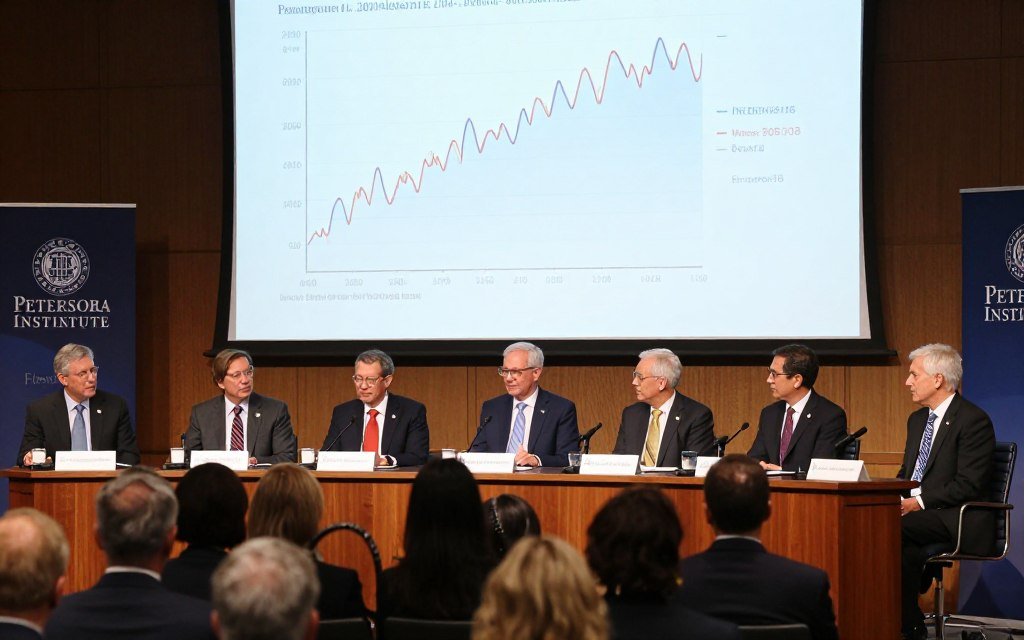
Peterson Institute International Economics Analysis
The Peterson Institute for International Economics projects inflation will decline to 2.5 percent by year-end 2026. Researchers cite moderating wage growth and improved supply conditions as key factors.
Senior fellows at the Peterson Institute emphasize risks remain tilted toward higher inflation. Geopolitical uncertainties and potential policy changes could reignite price pressures unexpectedly.
The research team expects the Federal Reserve will begin cutting rates in mid-2026 if inflation continues its downward trajectory. Initial cuts would likely total 50 to 75 basis points for the year.
Long-term inflation expectations should remain anchored near two percent according to Peterson Institute analysis. This anchoring represents a critical success for Federal Reserve credibility.
Wall Street Forecasts
Major investment banks project a range of outcomes for inflation and interest rates through 2026. Goldman Sachs anticipates inflation settling near 2.3 percent by December.
JPMorgan economists see greater persistence, forecasting inflation around 2.8 percent at year-end. Their analysis points to sticky service sector prices as the primary challenge.
Morgan Stanley strategists expect two quarter-point rate cuts in 2026, bringing the federal funds rate to 4.75 to 5.00 percent. This reflects a cautious approach to policy normalization.
Bank of America’s outlook includes higher recession probability if the Federal Reserve maintains restrictive policy too long. They assign 35 percent odds to a downturn within eighteen months.
Academic Research Perspectives
Stanford University economists publishing through the Stanford Institute for Economic Policy Research analyze structural inflation drivers. Their work highlights demographic and technological factors beyond cyclical influences.
Research indicates that deglobalization trends may sustain slightly higher inflation over coming years. Reshoring production to higher-cost domestic locations adds permanent price pressures.
Studies on inflation expectations show consumer surveys remain elevated compared to market-based measures. This divergence suggests ongoing communication challenges for the Federal Reserve.
Academic models incorporating climate change impacts project higher food and insurance costs as ongoing contributors. These structural factors complicate the return to two percent inflation.
Risk Level Assessment
Upside Inflation Risks: Medium
- Geopolitical disruptions affecting energy supplies
- Renewed supply chain problems from international conflicts
- Fiscal policy expansion ahead of elections
- Wage-price spiral if expectations become unanchored
Downside Economic Risks: Medium-High
- Excessive monetary tightening triggering recession
- Financial stability concerns from elevated rates
- Commercial real estate stress spreading systemically
- Global growth slowdown reducing demand
Market Outlook Consensus
Investor expectations reflected in futures markets suggest the federal funds rate will decline to approximately 4.50 percent by early 2027. This implies several rate cuts over the forecast horizon.
Bond market pricing indicates inflation expectations around 2.3 percent over the next five years. This represents slight improvement from current levels while acknowledging persistence challenges.
Equity market valuations incorporate assumptions of successful Fed navigation toward soft landing. Downside scenarios would trigger significant multiple compression across sectors.
Credit markets show increasing differentiation based on company fundamentals and sector positioning. Quality spreads widened as investors became more selective amid uncertainty.
Possible Solutions or Policy Responses
Addressing inflation requires coordinated actions across monetary policy, fiscal policy, and market mechanisms. The Federal Reserve leads this effort through its inflation control mandate.
Government Actions
Fiscal policy coordination with monetary objectives supports inflation reduction efforts. Reduced government spending growth helps moderate aggregate demand without requiring even higher interest rates.
The U.S. Department of the Treasury manages debt issuance to avoid disrupting Federal Reserve operations. Careful timing and maturity selection minimize market volatility during tightening cycles.
Regulatory reforms addressing specific bottlenecks can ease supply-side constraints. Energy permitting streamlining and immigration policy adjustments could expand productive capacity.
Trade policy decisions affect inflation through import prices and competitive dynamics. Tariff reductions on key inputs could provide modest disinflationary relief in targeted sectors.
Federal Reserve Policies
Interest rate policy remains the Federal Reserve’s primary tool for inflation control. The current restrictive stance aims to slow demand growth without triggering severe economic contraction.
Balance sheet reduction complements rate policy by removing monetary accommodation. The Federal Reserve allows maturing securities to roll off without replacement, shrinking its holdings gradually.
Forward guidance shapes market expectations about future policy paths. Clear communication helps financial conditions tighten appropriately without excessive volatility.
Regulatory oversight of banking system ensures financial stability during the transition to higher rates. Stress testing and capital requirements prevent policy transmission disruptions.
Data-Dependent Approach
The Federal Reserve emphasizes flexibility to adjust policy as conditions evolve. Meeting-by-meeting decisions respond to incoming data rather than preset courses.
Inflation metrics receive primary focus, with particular attention to core measures and underlying trends. Temporary price movements from volatile categories do not trigger immediate responses.
Labor market indicators provide crucial context for assessing inflation persistence. Wage growth and job market tightness signal whether demand-side pressures require further policy action.
Financial conditions indices aggregate multiple market variables into comprehensive policy impact assessments. Tightening through various channels substitutes for even higher policy rates in some scenarios.
Market Adjustments
Private sector responses to inflation and policy changes facilitate economic rebalancing. Consumer spending patterns shift toward value options and discretionary cutbacks.
Business investment decisions incorporate higher cost of capital into project evaluations. Lower-return initiatives face delays or cancellation as hurdle rates rise.
Labor markets gradually rebalance as job openings decline and worker bargaining power moderates. This adjustment occurs primarily through reduced hiring rather than mass layoffs.
Supply chain adaptations continue improving goods availability and reducing delivery times. These improvements provide disinflationary tailwinds independent of demand conditions.
What It Means for Americans
Federal Reserve inflation control efforts create direct consequences for households across income levels and geographic regions. Understanding these impacts helps families plan effectively.

Cost of Living
Household budgets continue absorbing elevated prices across essential categories. Grocery bills remain approximately 20 percent higher than pre-pandemic levels despite recent stabilization.
Health care costs accelerate faster than overall inflation, straining families without comprehensive insurance. Prescription drug prices and out-of-pocket expenses consume growing shares of disposable income.
Transportation expenses fluctuate with gasoline prices while vehicle ownership costs stay elevated. Used car prices moderated from extreme peaks but remain above historical norms.
Childcare and education expenses present persistent challenges for working families. These costs show little sensitivity to general economic conditions or Federal Reserve actions.
Jobs and Income
Employment prospects remain generally favorable despite economic headwinds from higher interest rates. Job security concerns increase modestly as hiring slows from pandemic-era frenzy.
Real wage growth turned positive as nominal increases began outpacing inflation. Workers in tight labor market sectors maintained bargaining power for above-average raises.
Career advancement opportunities face constraints as companies adopt cautious growth postures. Lateral moves for compensation increases become more common than promotional advancement.
Gig economy flexibility provides supplemental income sources for households seeking inflation buffers. Platform work grows as workers diversify income streams amid uncertainty.
Investments and Retirement
Portfolio values experienced volatility as markets processed inflation dynamics and Federal Reserve responses. Traditional 60/40 stock-bond allocations faced simultaneous pressure across asset classes.
Retirement savers confronted sequence-of-returns risks as markets declined during accumulation phases. Those nearing retirement found portfolio recovery timelines extended compared to plans.
Social Security benefits received cost-of-living adjustments reflecting inflation levels. The Social Security Administration applied 3.2 percent increases for 2026, providing some purchasing power protection.
Fixed-income investments offered improved yields as rates rose, benefiting conservative investors and retirees. CD rates and money market funds provided real returns for the first time in years.
Housing Market
Homeownership affordability deteriorated significantly as mortgage rates climbed above 7 percent. Monthly payments on median-priced homes exceeded 35 percent of median household income in many markets.
Home sales volumes declined sharply as existing owners with low-rate mortgages chose to stay put. This “lock-in effect” reduced inventory and sustained elevated prices despite affordability challenges.
Rental markets showed mixed trends with continuing increases in some high-demand metros. Other areas experienced rent stabilization or modest declines as new supply entered markets.
First-time homebuyers faced particularly acute challenges combining high prices with elevated rates. Many delayed purchases hoping for improved affordability from price declines or rate cuts.
Regional Variations
Geographic differences created disparate inflation experiences across the United States. Energy-dependent regions saw amplified price swings from volatile fuel costs.
Coastal metropolitan areas with tight housing markets experienced above-average shelter inflation. Sunbelt migration patterns drove housing cost increases in previously affordable markets.
Rural communities faced unique challenges from limited competition and transportation costs. Grocery price increases hit harder in areas with fewer shopping alternatives.
Manufacturing-heavy regions benefited from reshoring trends even as higher rates pressured overall economic activity. Job market resilience varied substantially by local industrial composition.
Future Outlook (2026–2030)
The economic trajectory through the remainder of the decade depends critically on Federal Reserve success in restoring price stability. Multiple scenarios remain plausible based on evolving conditions.
Short-Term Outlook (2026-2027)
Inflation likely continues gradual descent toward the Federal Reserve’s two percent target through late 2026. Progress may prove uneven with occasional monthly setbacks from volatile components.
The labor market should maintain reasonable health with unemployment drifting slightly higher to around 4.2 percent. This modest increase reflects improved labor supply rather than mass layoffs.
Economic growth expectations center around 2 percent annually, below long-term potential but avoiding outright recession. Consumer spending resilience supports this baseline forecast.
The Federal Reserve will likely begin reducing rates in the second half of 2026 if inflation trends cooperate. Initial cuts would proceed cautiously with careful monitoring of price responses.
Medium-Term Outlook (2028-2029)
Inflation should settle near the two percent target by 2028 assuming no major shocks. Some economists predict a slight overshoot below target as restrictive policy effects fully materialize.
Interest rates normalize toward neutral levels estimated between 3 and 3.5 percent. This represents the rate consistent with full employment and stable prices over time.
GDP growth could accelerate modestly as monetary policy headwinds diminish. Productivity improvements from artificial intelligence adoption may boost potential growth above recent trends.
Labor market conditions stabilize with unemployment near the natural rate around 4 percent. Wage growth aligns with productivity plus inflation target, supporting real income increases.
Long-Term Risks (2029-2030)
Structural inflation pressures from deglobalization and demographics may prevent full return to pre-pandemic price dynamics. The Federal Reserve might accept slightly higher inflation targets implicitly.
Climate change impacts on agriculture and insurance costs pose ongoing challenges. These supply shocks could require periodic monetary policy responses to prevent broader inflation spillovers.
Government debt levels reaching 120 percent of GDP create fiscal dominance concerns. The Federal Reserve may face political pressure to tolerate higher inflation to ease debt burdens.
Global economic fragmentation could disrupt trade patterns and supply chains unpredictably. Each disruption carries inflationary potential requiring policy vigilance.
Alternative Scenarios
Optimistic Scenario
Probability: 25%
- Inflation falls to 2% by late 2026
- No recession, continued job growth
- Fed cuts rates to 4% by 2027
- Productivity boom from AI adoption
Base Case Scenario
Probability: 50%
- Inflation reaches 2.5% by year-end 2026
- Mild slowdown, limited job losses
- Fed cuts rates cautiously to 4.5%
- Moderate growth around 2% annually
Pessimistic Scenario
Probability: 25%
- Inflation stalls above 3%
- Recession with unemployment to 5.5%
- Fed holds rates higher for longer
- Financial stability concerns emerge
Policy Challenges Ahead
The Federal Reserve faces difficult tradeoffs between inflation control and employment objectives. Achieving a soft landing requires precise policy calibration rarely accomplished historically.
Communication strategies must manage market expectations without prematurely declaring victory. Credibility built through consistent messaging supports policy effectiveness.
International coordination becomes increasingly important as global growth slows. Divergent monetary policies across major economies create currency volatility and capital flow challenges.
Political pressures on Federal Reserve independence may intensify during election cycles. Maintaining institutional autonomy remains critical for effective long-term inflation control.
Conclusion
The Federal Reserve’s inflation control efforts represent the defining economic challenge of 2026 and beyond. Success in restoring price stability will shape American prosperity for years to come.
Current data suggests inflation continues its gradual descent toward target levels. The path remains uncertain with risks in both directions requiring continued vigilance.
Americans across all income levels feel the direct impacts of inflation and policy responses. Higher interest rates create affordability challenges even as price pressures moderate.
Expert forecasts generally align around successful inflation reduction by 2028. The economic costs of achieving this outcome vary considerably across different projections.
Policy flexibility and data-dependent decision making provide the best framework for navigating uncertainty. The Federal Reserve must balance inflation control against employment and financial stability objectives.
Understanding these dynamics empowers better financial planning and business strategy. Informed citizens and investors can position themselves advantageously as the economic landscape evolves.
The coming years will test whether the Federal Reserve can engineer the soft landing that has eluded policymakers in previous cycles. The stakes include not just economic outcomes but also trust in institutions and policy frameworks.