

Future U.S. Tax Changes: What Experts Predict for the Next 5 Years
Tax laws rarely stay the same for long. Every few years, major changes reshape how Americans pay federal tax and what they owe. Right now, we stand at a critical juncture.
Many provisions from the Tax Cuts and Jobs Act will expire after tax year 2025. This means your tax return for 2026 could look dramatically different. Your tax liability might increase. Your favorite deductions might disappear.
The next five years will bring significant shifts in tax policy. These changes will affect individuals, families, and small business owners across the United States. Understanding what’s coming helps you plan ahead and potentially save thousands of dollars.
Congress continues debating what many call the “one big beautiful bill” approach to tax reform. Political parties have different visions for the future of federal tax policy. The outcome will determine tax brackets, deductions, credits, and more for millions of Americans.
This guide examines expert predictions for future US tax changes through 2030. You’ll learn which provisions face expiration, who will be affected most, and practical strategies to prepare. Whether you’re filing your next tax return or planning for retirement, these coming changes deserve your attention today.
Quick Assessment: Before diving deeper, consider your current tax situation. Do you itemize deductions? Do you claim the child tax credit? Are you a small business owner claiming qualified business income deductions? Your answers will help you identify which future changes matter most to you.
Understanding Future US Tax Changes: Key Terms and Concepts
Tax terminology can feel overwhelming. But understanding a few key concepts makes future US tax changes much clearer.
What Are Tax Brackets?
Tax brackets determine the federal tax rate applied to different portions of your income. The United States uses a progressive tax system. This means you pay different rates on different income levels.
For example, in tax year 2025, a single filer might pay 10% on the first portion of income, then 12% on the next portion, and so on. Your total income doesn’t fall into just one bracket. Instead, it’s taxed in layers.
Many experts predict tax brackets will change significantly after 2025. Some brackets may merge. Rates may increase for certain income levels. These adjustments will directly impact your federal tax liability.
Tax Credits vs. Tax Deductions: What’s the Difference?
Tax credits and deductions both reduce what you owe, but they work differently. A tax credit reduces your tax liability dollar-for-dollar. If you owe $5,000 in federal tax and claim a $2,000 tax credit, you now owe $3,000.
Deductions reduce your taxable income. If you earn $60,000 and claim $10,000 in deductions, you’re only taxed on $50,000. The actual tax savings depend on your tax bracket.
The child tax credit represents one of the most valuable tax credits for families. Currently set at $2,000 per child, this credit faces potential changes in upcoming tax years. Some proposals would increase it. Others would let it revert to pre-2018 levels.
The Tax Cuts and Jobs Act (TCJA): Why It Matters
The Tax Cuts and Jobs Act passed in 2017. It made sweeping changes to the tax code. Lower tax rates. Higher standard deduction. New limitations on itemized deductions. A deduction for qualified business income.
Here’s the crucial part: most individual tax provisions expire after tax year 2025. Unless Congress acts, tax laws will automatically revert to pre-2018 rules on January 1, 2026. This creates uncertainty for millions of taxpayers.
Business owners benefited significantly from TCJA provisions. The qualified business income deduction allows eligible small business owners to deduct up to 20% of their business income. This deduction also faces expiration unless extended.
Standard Deduction vs. Itemized Deductions
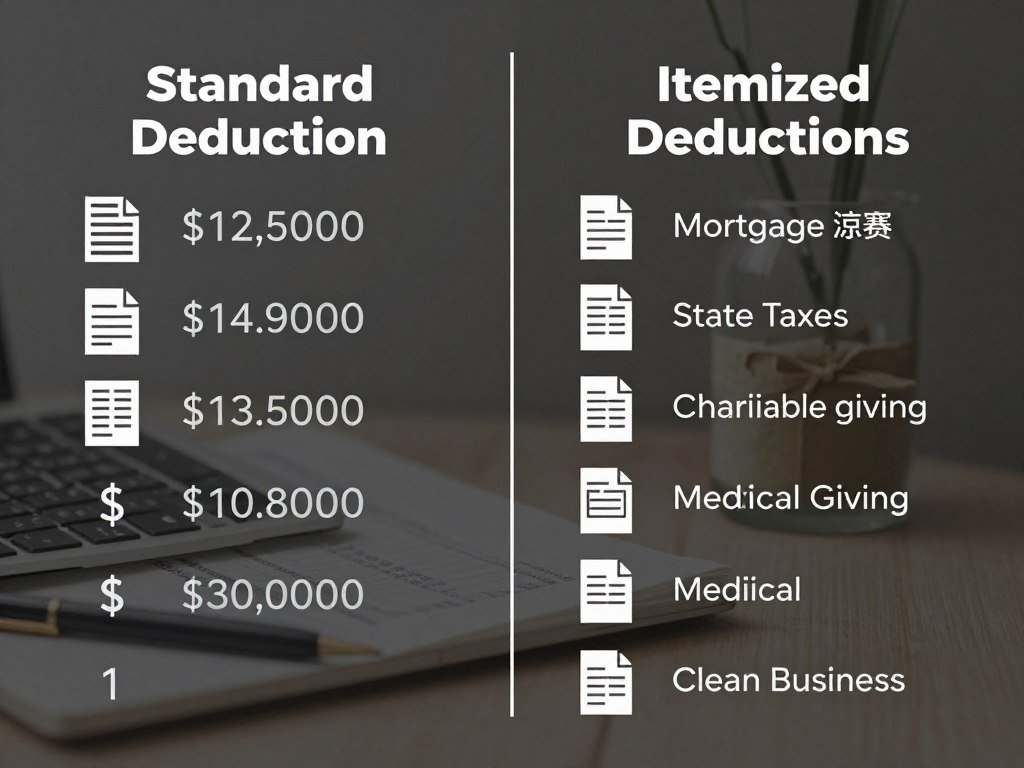
Every tax return uses either the standard deduction or itemized deductions. You choose whichever gives you the bigger tax benefit. The TCJA nearly doubled the standard deduction. This made itemizing less beneficial for many taxpayers.
Before 2018, roughly 30% of taxpayers itemized deductions. After TCJA, that number dropped below 10%. If the standard deduction reverts to lower pre-TCJA levels, millions might return to itemizing.
Itemized deductions include mortgage interest, state and local tax (SALT) deductions, charitable contributions, and medical expenses. Current SALT deduction limits of $10,000 particularly affect taxpayers in high-tax states. This cap may change in future tax years.
Calendar Year vs. Tax Year: Understanding the Timeline
A calendar year runs from January 1 through December 31. A tax year typically matches the calendar year for most individual taxpayers. When experts discuss “tax year 2025,” they mean income earned and taxes owed for the 2025 calendar year.
You file your tax return for tax year 2025 in early 2026. This timing matters for future US tax changes. Changes taking effect in 2026 will first impact returns filed in 2027.
Congress might pass the “big beautiful bill” before certain provisions expire. The effective date determines which tax year sees the changes. This makes timing crucial for tax planning.
Official Resource: The Internal Revenue Service publishes detailed explanations of tax terms, current brackets, and deduction rules at IRS.gov. Their Tax Guide for Individuals provides authoritative information updated each tax year.
What “Expiration” Really Means
When tax provisions expire, they don’t disappear entirely. Instead, the tax code reverts to previous rules. Think of it like a temporary sale ending at a store. Prices go back to what they were before.
For tax law, expiration means returning to 2017 rules. Tax rates increase slightly. The standard deduction drops. Some credits shrink or disappear. Personal exemptions return. The alternative minimum tax affects more taxpayers.
Congress can prevent expirations by passing new legislation. They might extend current rules, modify them, or let them expire as scheduled. Until legislation passes, uncertainty remains for tax year 2026 and beyond.
Current Tax Rules for 2025: Where We Stand Today

Tax year 2025 operates under rules established by the Tax Cuts and Jobs Act, with some modifications from subsequent legislation. Understanding current rules provides context for predicted future US tax changes.
2025 Federal Tax Brackets and Rates
For tax year 2025, seven federal tax brackets apply to individual income. These brackets adjust annually for inflation. The rates are 10%, 12%, 22%, 24%, 32%, 35%, and 37%.
Single filers see these approximate ranges for 2025:
- 10% on income up to $11,600
- 12% on income from $11,600 to $47,150
- 22% on income from $47,150 to $100,525
- 24% on income from $100,525 to $191,950
- 32% on income from $191,950 to $243,725
- 35% on income from $243,725 to $609,350
- 37% on income over $609,350
Married couples filing jointly enjoy approximately double these thresholds for most brackets. The actual amounts adjust each year based on inflation measurements from the previous calendar year.
These brackets remain lower than pre-TCJA rates. The top rate was 39.6% before 2018. Middle-income brackets were also slightly higher. When TCJA provisions expire after 2025, these rates will likely increase unless Congress acts.
Standard Deduction Amounts for Tax Year 2025
The standard deduction for tax year 2025 reaches historic highs after annual inflation adjustments. Single filers can deduct approximately $14,600. Married couples filing jointly deduct around $29,200. Head of household filers deduct approximately $21,900.
These amounts nearly doubled compared to pre-TCJA levels. Before 2018, single filers claimed only about $6,500 as a standard deduction. This dramatic increase meant fewer taxpayers benefited from itemizing deductions.
Additional standard deduction amounts apply for taxpayers age 65 or older and for those who are blind. These extra amounts add roughly $1,550 for single filers and $1,250 per person for married couples in 2025.
Child Tax Credit and Family Benefits
The child tax credit provides $2,000 per qualifying child under age 17 for tax year 2025. Up to $1,700 of this credit may be refundable through the Additional Child Tax Credit. This means eligible families can receive money back even if they owe no federal tax.
Income limits apply. The credit begins phasing out for single filers earning over $200,000 and married couples over $400,000. Each child must have a valid social security number to qualify for the full credit.
The child tax credit faced significant debate during recent legislative sessions. Some proposals in the “one big beautiful bill” discussions included increasing the credit to $4,000 or more per child. Other proposals suggested different age limits or income thresholds.
The Credit for Other Dependents provides $500 for qualifying dependents who don’t meet child tax credit requirements. This includes older children, elderly parents, and other qualifying relatives.
State and Local Tax (SALT) Deduction Cap
Current rules limit state and local tax deductions to $10,000 per tax return. This cap applies to property taxes, state income tax, and local income tax combined. Before TCJA, no limit existed for these itemized deductions.
The SALT deduction cap significantly impacts taxpayers in high-tax states like California, New York, New Jersey, and Connecticut. Many homeowners in these states now pay more federal tax because they cannot fully deduct their state and local taxes.
Political debates continue about the SALT cap. Some legislators propose increasing it to $20,000 or eliminating it entirely. Others argue the cap should remain to prevent subsidizing high-tax states. Future US tax changes will likely address this contentious issue.
Qualified Business Income Deduction
Small business owners, independent contractors, and self-employed individuals can deduct up to 20% of qualified business income under current rules. This deduction applies to pass-through entities including sole proprietorships, partnerships, S corporations, and some trusts.
Limitations apply based on income level and business type. Specified service trades or businesses face additional restrictions when income exceeds certain thresholds. For tax year 2025, these thresholds are approximately $191,950 for single filers and $383,900 for married couples.
The qualified business income deduction expires after 2025 unless Congress extends it. This represents a significant concern for small business owners planning for future tax years.
Mortgage Interest and Home-Related Deductions
Taxpayers who itemize can deduct mortgage interest on loans up to $750,000 for tax year 2025. This limit applies to mortgages taken out after December 15, 2017. Older mortgages still qualify under the previous $1 million limit.
Home equity loan interest remains deductible only if the loan proceeds purchased, built, or substantially improved the home. Interest on home equity loans used for other purposes no longer qualifies as an itemized deduction.
Property taxes count toward the $10,000 SALT deduction cap mentioned earlier. This double limitation affects homeowners in high-cost areas significantly.
Retirement Account Contribution Limits
For tax year 2025, traditional and Roth IRA contribution limits reach $7,000 for individuals under age 50. Those 50 and older can contribute $8,000 with the catch-up provision. These contributions may be tax-deductible depending on income and workplace retirement plan participation.
Employer-sponsored 401(k) plans allow employee contributions up to $23,000 for 2025. Workers age 50 and above can add catch-up contributions of $7,500, bringing their total to $30,500.
Required minimum distributions (RMDs) from retirement accounts begin at age 73 for most individuals under current rules. This age increased from 72 in recent legislation and may increase again in future tax years.
Student Loan Interest Deduction
Eligible taxpayers can deduct up to $2,500 of student loan interest paid during tax year 2025. This deduction phases out based on modified adjusted gross income. For single filers, phaseout begins around $80,000 and completes at $95,000. Married couples face phaseout between approximately $165,000 and $195,000.
You don’t need to itemize to claim student loan interest deductions. It’s an “above-the-line” deduction that reduces adjusted gross income on your tax return.
Health Savings Account (HSA) Rules
Individuals with high-deductible health plans can contribute up to $4,300 to Health Savings Accounts for tax year 2025. Families can contribute up to $8,550. Those 55 and older add catch-up contributions of $1,000.
HSA contributions reduce taxable income. Funds grow tax-free. Withdrawals for qualified medical expenses remain tax-free. This triple tax advantage makes HSAs valuable for long-term health care planning.
Alternative Minimum Tax (AMT)
The Alternative Minimum Tax ensures high-income taxpayers pay minimum federal tax amounts regardless of deductions and credits. For tax year 2025, AMT exemption amounts are approximately $85,700 for single filers and $133,300 for married couples.
These exemptions phase out at higher income levels. TCJA significantly increased AMT exemptions, reducing the number of affected taxpayers. If TCJA expires, millions more Americans could face AMT calculations in future tax years.
Review Your Current Tax Position
Understanding how current 2025 tax rules apply to your situation helps you prepare for future changes. Consider reviewing your most recent tax return to identify which deductions, credits, and provisions matter most to your tax liability. The IRS provides free tax calculators and worksheets to help estimate your current tax position.
Who Will Be Most Affected by Future US Tax Changes

Future US tax changes won’t impact all taxpayers equally. Some groups face more significant adjustments than others based on income levels, family structure, and financial situations.
Middle-Income Families and Individuals
Middle-income taxpayers stand to see the most dramatic changes when TCJA provisions expire. Families earning between $50,000 and $150,000 annually benefited significantly from lower tax rates and the expanded standard deduction.
These families will face higher federal tax rates after 2025 if Congress doesn’t extend current rules. The 12% bracket could increase to 15%. The 22% bracket could rise to 25%. Even small percentage increases translate to hundreds or thousands of dollars in additional tax liability annually.
The child tax credit matters enormously to middle-income families. Without legislative action, this credit could drop from $2,000 to $1,000 per child. Families with two or three children would lose $2,000 to $4,000 in tax credits on their tax return.
Single parents filing as head of household face particular vulnerability. They benefit from both the child tax credit and favorable tax brackets. Changes to either provision increase their federal tax burden significantly.
High-Income Earners in High-Tax States
Wealthy taxpayers in states with high income and property taxes already struggle with the $10,000 SALT deduction cap. Many high earners in California, New York, and New Jersey pay more federal tax now than before TCJA despite lower rates.
Future changes to the SALT cap could provide substantial relief or maintain current limitations. The “one big beautiful bill” discussions include proposals both to eliminate the cap and to make it permanent. The outcome dramatically affects this group’s tax liability.
These taxpayers often itemize deductions even under current rules. They claim mortgage interest on expensive homes, make substantial charitable contributions, and pay significant state and local tax. Changes to itemized deductions rules will impact their tax planning strategies.
High-income earners also face potential changes to the Alternative Minimum Tax. If AMT exemptions revert to pre-TCJA levels, many more wealthy taxpayers will perform AMT calculations and potentially owe additional federal tax.
Small Business Owners and Self-Employed Individuals
The qualified business income deduction saves small business owners thousands in federal tax annually. A self-employed consultant earning $100,000 might deduct $20,000, saving roughly $4,000 to $7,000 depending on their tax bracket.
This deduction expires after tax year 2025. Without extension, small business owners face immediate tax increases starting with their 2026 tax return filed in 2027. Many business owners built financial plans assuming this deduction would continue.
Pass-through entity owners face additional uncertainty. S corporations, partnerships, and LLCs taxed as partnerships all rely on current pass-through rules. Changes could affect everything from owner compensation strategies to business structure decisions.
Self-employed individuals also worry about potential changes to self-employment tax rules. Social Security tax applies to self-employment income up to annual wage base limits. Any changes to Social Security funding could impact self-employment tax rates or income thresholds.
Recent Home Buyers and Mortgage Holders
Homeowners with mortgages taken out after December 15, 2017 face the $750,000 mortgage interest deduction limit. If this limit expires, the previous $1 million cap could return, benefiting those with large mortgages.
However, the higher standard deduction makes mortgage interest deductions less valuable for many homeowners. A couple with a $400,000 mortgage at 6% interest pays roughly $24,000 in interest annually. Combined with property taxes capped at $10,000 for SALT, they reach only $34,000 in itemized deductions.
The standard deduction for married couples filing jointly is approximately $29,200 for tax year 2025. These homeowners save only $4,800 by itemizing. If the standard deduction drops to pre-TCJA levels around $13,000, itemizing becomes much more beneficial despite the SALT cap.
First-time homebuyers face unique uncertainty. They’re making 30-year financial commitments without knowing future tax treatment of mortgage interest and property taxes. This uncertainty complicates home-buying decisions for millions of Americans.
Retirees and Those Approaching Retirement
Senior citizens face multiple concerns about future US tax changes. Required minimum distribution ages already increased to 73 and may rise further. This affects retirement account withdrawal strategies and tax planning.
Social Security taxation rules could change as Congress addresses Social Security funding. Currently, up to 85% of Social Security benefits become taxable based on provisional income thresholds. These thresholds haven’t adjusted for inflation since 1993, affecting more retirees each year.
Estate tax exemptions reached historic highs under TCJA. For tax year 2025, individuals can transfer approximately $13.6 million without federal estate tax. This amount doubles to roughly $27.2 million for married couples. These exemptions expire after 2025, potentially reverting to around $7 million per person.
Wealthy retirees actively engage in estate planning now to maximize current exemptions. Future changes could significantly impact inheritance strategies and wealth transfer plans.

Parents with College-Age Students
Education-related tax benefits face potential modifications in future tax years. The American Opportunity Tax Credit provides up to $2,500 per eligible student for the first four years of higher education. The Lifetime Learning Credit offers up to $2,000 per tax return for qualified education expenses.
Student loan interest deductions help recent graduates manage education debt. Current rules allow deductions up to $2,500 annually. Proposals exist to expand, limit, or modify this deduction depending on political priorities.
Some “one big beautiful bill” discussions included proposals to expand child tax credit eligibility to older dependent students. This would benefit families supporting college-age children who don’t currently qualify for the credit.
Parents also watch 529 education savings plan rules. While these plans enjoy state-level tax benefits in many states, federal rules could change regarding contribution limits, qualified expenses, or distribution rules in future tax years.
Investors and Capital Gains Earners
Investment income taxation could shift significantly depending on legislative outcomes. Long-term capital gains rates of 0%, 15%, and 20% have remained relatively stable. However, proposals emerge periodically to tax capital gains as ordinary income or create new higher brackets.
The Net Investment Income Tax adds 3.8% to investment income for high earners. This tax affects singles earning over $200,000 and married couples over $250,000. Future legislation might adjust these thresholds or rates.
Qualified dividend taxation follows capital gains rates rather than ordinary income rates. This favorable treatment could face changes if Congress pursues tax reform targeting investment income.
Cryptocurrency investors face evolving tax rules. The IRS treats cryptocurrency as property, making each transaction potentially taxable. Future legislation will likely provide clearer guidance on digital asset taxation, affecting millions of crypto investors.
Gig Economy Workers and Independent Contractors
The rise of gig economy work complicates tax situations for millions. Uber drivers, DoorDash deliverers, freelance designers, and online sellers all face self-employment tax and income tax on their earnings.
New IRS reporting requirements take effect for tax year 2025. Payment processors must issue Form 1099-K for transactions exceeding $5,000 annually. This threshold will eventually drop to $600, significantly increasing reporting requirements for gig workers.
These workers rely heavily on the qualified business income deduction. Its expiration after 2025 would substantially increase their tax liability. Many gig workers lack formal business structures or sophisticated tax planning, making them particularly vulnerable to tax law changes.
Proposals for reclassifying independent contractors as employees could fundamentally change taxation for gig economy workers. Such changes would shift social security tax burden, eliminate business deductions, but provide employee benefits and protections.
Quick Impact Assessment
Identify your risk level for future tax changes based on your situation. Understanding your position helps prioritize tax planning efforts.
High Impact Groups
- Families with multiple children (child tax credit changes)
- Small business owners (qualified business income deduction expiration)
- High-earners in high-tax states (SALT deduction cap)
- Recent homebuyers with large mortgages
Moderate Impact Groups
- Middle-income employees (tax bracket changes)
- Retirees with substantial portfolios
- College students and their parents
- Gig economy workers
Common Mistakes to Avoid When Planning for Future Tax Changes
Uncertainty about future US tax changes causes many taxpayers to make planning errors. Avoiding these common mistakes protects your financial interests regardless of which legislative scenarios unfold.
Mistake 1: Assuming Current Rules Will Continue Unchanged
The biggest mistake is planning as if nothing will change. Many taxpayers build long-term financial strategies assuming current tax brackets, deductions, and credits remain permanent.
TCJA provisions explicitly include sunset dates. Congress designed most individual tax changes to expire after 2025. Assuming these provisions will continue without legislative action ignores stated law.
This mistake particularly affects small business owners relying on the qualified business income deduction. Building business models assuming a 20% deduction continues creates potential financial problems when that deduction disappears.
Better approach: Build multiple financial scenarios. Create one plan assuming current rules extend. Create another assuming full expiration. Calculate the difference in your tax liability. This preparation helps you adapt quickly regardless of Congressional action.
Mistake 2: Making Irreversible Financial Decisions Based on Temporary Tax Benefits
Some taxpayers make major financial commitments because of current tax advantages without considering future changes. Taking on a large mortgage solely because of mortgage interest deductions risks financial strain if those deductions become less valuable.
Similarly, structuring business operations exclusively to maximize the qualified business income deduction could prove problematic. When this deduction expires, your business structure might no longer be optimal for tax purposes.
Real estate investors sometimes purchase properties based heavily on current depreciation rules and deduction limits. Future rule changes could eliminate the favorable tax treatment that made investments attractive initially.
Better approach: Make financial decisions primarily based on fundamental economics. Treat current tax benefits as helpful advantages, not primary reasons for major commitments. Ask yourself: “Would this decision still make sense without current tax treatment?”
Mistake 3: Ignoring State and Local Tax Implications
Federal tax changes dominate headlines, but state and local tax adjustments also significantly impact total tax liability. Some states automatically conform to federal tax law changes. Others maintain separate rules requiring legislative action.
The SALT deduction cap affects taxpayers differently depending on their state. Residents of Florida, Texas, and other no-income-tax states face less impact. New York and California residents face substantial consequences. Many taxpayers forget to factor state-level responses into their planning.
Some states enacted workarounds to the SALT cap, including pass-through entity taxes that allow business owners to deduct state taxes at the entity level. Understanding your state’s specific rules and potential changes matters as much as federal law.
Better approach: Consult resources specific to your state. State revenue departments publish guidance on conformity to federal tax law. Understanding both federal and state implications provides complete pictures of your tax situation across tax years.
Mistake 4: Overlooking Retirement Account Strategy Adjustments
Required minimum distribution rules already changed multiple times in recent years. The age increased from 70½ to 72, and then to 73. Additional increases to age 75 might occur in future tax years.
Taxpayers approaching retirement often lock into withdrawal strategies without accounting for potential rule changes. This mistake costs money through unnecessary early withdrawals or insufficient planning for future RMDs.
Roth conversion strategies depend heavily on current tax brackets. Converting traditional IRA funds to Roth accounts makes sense when rates are low. If rates increase after 2025, prior years offered better conversion opportunities.
Similarly, waiting to convert could be beneficial if you anticipate lower income years ahead. However, if tax rates rise substantially, delaying conversions could prove costly.
Better approach: Review retirement account strategies annually. Consider tax-bracket arbitrage opportunities. Work with financial advisors who monitor legislative proposals affecting retirement accounts. Remain flexible to adjust strategies as rules evolve.
Mistake 5: Failing to Maintain Adequate Documentation
Tax law complexity increases every year. Future audits might examine returns filed under completely different rules than those in effect during the audit. Inadequate documentation creates problems defending positions taken on your tax return.
The IRS generally has three years from the filing date to audit returns, with extensions for substantial underreporting. Returns filed for tax year 2025 could face audit as late as 2029 or beyond. By then, tax laws will likely look completely different.
Small business owners face particular documentation challenges. Claiming the qualified business income deduction requires maintaining records proving eligibility. Gig workers need documentation of expenses claimed against self-employment income.
Better approach: Maintain digital copies of all tax-related documents for at least seven years. Use cloud storage or external drives. Organize documents by tax year. Keep supporting documentation for any unusual deductions or credits claimed. Include written explanations of your reasoning for positions taken.

Mistake 6: Timing Income and Deductions Incorrectly
Strategic timing of income and deductions becomes crucial during transition years. Year 2025 represents the last year under current TCJA rules. Taxpayers who understand coming changes can optimize timing to minimize total tax liability across multiple tax years.
For example, if tax rates increase in 2026, accelerating income into 2025 might reduce overall taxes. Conversely, if certain deductions become more valuable in 2026, deferring expenses could be beneficial.
Many taxpayers make timing decisions without considering multi-year tax planning. They focus only on minimizing current-year taxes, potentially increasing total taxes paid across several years.
Business owners have more control over timing but often fail to utilize it effectively. Deferring invoicing, accelerating equipment purchases, or adjusting owner compensation all affect tax liability timing.
Better approach: Project your income and deductions for both 2025 and 2026. Calculate potential tax liability under different scenarios. If you have flexibility in timing income or expenses, optimize across both years rather than focusing solely on one tax year. Consult tax professionals who can model various scenarios.
Mistake 7: Neglecting to Monitor Legislative Developments
Tax law changes don’t happen overnight. Legislative proposals emerge months before passage. Committee hearings, draft legislation, and political negotiations all provide advance warning of likely changes.
Many taxpayers ignore these developments until new laws take effect. This reactive approach eliminates opportunities for advance planning. Proactive monitoring allows adjustment of strategies before changes become final.
The “one big beautiful bill” discussions demonstrate this principle. Proposals emerged early in 2025. Taxpayers monitoring these discussions knew potential changes months before passage, allowing advance planning that reactive taxpayers missed.
Better approach: Subscribe to IRS newsletters and tax news sources. Follow reputable tax professionals on social media. Check Congressional committee websites tracking tax legislation. Set aside time quarterly to review developments and adjust plans accordingly. Being informed protects your financial interests.
Mistake 8: Attempting Complex Tax Planning Without Professional Help
Tax law complexity exceeds the knowledge of most individual taxpayers. DIY tax preparation works well for simple situations. However, planning for future US tax changes while optimizing current-year positions requires expertise.
Many taxpayers rely exclusively on tax software without understanding the underlying rules. Software handles calculations but cannot provide strategic advice about future planning or complex situations.
The cost of professional tax advice often pays for itself through tax savings and mistake avoidance. A CPA or enrolled agent brings expertise that typical taxpayers cannot replicate through casual research.
Better approach: Consider your situation’s complexity honestly. If you have business income, investment properties, significant deductions, or questions about future planning, consult qualified tax professionals. The investment in expertise typically generates returns many times the cost.
Strategies to Legally Reduce Your Tax Liability Despite Future Changes
Uncertainty about future US tax changes doesn’t eliminate opportunities for smart tax planning. Several strategies remain effective regardless of which legislative scenarios unfold in coming tax years.
Maximize Retirement Account Contributions Now
Retirement account contributions provide tax benefits under both current and likely future tax rules. Contributing to traditional 401(k) plans and traditional IRAs reduces current taxable income. These deductions survive regardless of other tax law changes.
For tax year 2025, maximize contributions if financially possible. The $23,000 employee contribution limit for 401(k) plans ($30,500 with catch-up contributions for those 50+) represents significant tax deferral. A taxpayer in the 24% bracket saves $5,520 in federal tax by maximizing 401(k) contributions.
Traditional IRA contributions of up to $7,000 ($8,000 with catch-up) provide additional deferral opportunities. Even if you participate in a workplace retirement plan, you might qualify for deductible IRA contributions depending on your income level.
Roth contributions deserve consideration despite providing no immediate deduction. Roth accounts grow tax-free and provide tax-free retirement income. If tax rates increase in future tax years as many experts predict, Roth accounts become even more valuable.
Consider Roth conversions during 2025 if you anticipate higher tax rates ahead. Converting traditional retirement funds to Roth accounts while current lower rates apply could save substantial taxes over your lifetime. You pay tax now at current rates instead of potentially higher future rates.
Leverage Health Savings Accounts Aggressively
Health Savings Accounts provide triple tax advantages rarely seen elsewhere in tax code. Contributions reduce taxable income. Earnings grow tax-free. Withdrawals for qualified medical expenses remain tax-free forever.
For 2025, individuals can contribute $4,300 and families $8,550 to HSAs. Those 55 and older add $1,000 catch-up contributions. These limits adjust annually for inflation and exist independently of other retirement account contribution limits.
HSAs work best as long-term savings vehicles rather than checking accounts for current medical expenses. Pay out-of-pocket for current medical costs if possible. Let HSA funds grow for decades. Use them in retirement when medical expenses increase and you need tax-free income sources.
After age 65, HSA funds can be withdrawn for any purpose without penalty (though non-medical withdrawals become taxable income). This makes HSAs function like additional IRAs with better tax treatment if used for medical expenses.
No legislative proposals threaten HSA tax benefits. This stability makes HSAs particularly valuable during uncertain times for tax planning.
Optimize Charitable Giving Strategies
Charitable contributions remain deductible for itemizers under virtually all proposed tax scenarios. However, the strategy for maximizing charitable deductions might change depending on future standard deduction levels.
Under current high standard deduction amounts, many taxpayers receive no tax benefit from charitable giving because they don’t itemize. Bunching strategies can help. Make two or three years of charitable contributions in a single tax year to exceed the standard deduction threshold.
For example, a married couple normally donating $8,000 annually receives no deduction because the standard deduction exceeds their total itemized deductions. Instead, donate $24,000 in one year and nothing the next two years. In the high-donation year, you itemize and claim $24,000 in deductions alongside other itemized deductions.
Donor-advised funds facilitate bunching strategies. Contribute to the fund and claim the full deduction immediately. Then distribute funds to specific charities gradually over multiple years. You get the tax benefit upfront while maintaining steady charitable support.
Qualified charitable distributions (QCDs) from IRAs benefit retirees age 70½ and older. You can transfer up to $105,000 annually (adjusted for inflation) directly from your IRA to qualified charities. These transfers satisfy required minimum distributions without increasing taxable income.
QCDs remain valuable even for non-itemizers. They reduce adjusted gross income, potentially lowering Medicare premiums, reducing Social Security benefit taxation, and providing other income-based benefits.
Strategic Use of 529 Education Plans
529 college savings plans grow tax-free and provide tax-free withdrawals for qualified education expenses. Many states offer state income tax deductions or credits for contributions to their 529 plans.
These plans work effectively regardless of federal tax changes. Even if federal income tax rates increase, 529 plan benefits persist. The state tax benefits remain independent of federal tax law.
Recent rule changes expanded 529 plan flexibility. Beneficiaries can roll unused 529 funds to Roth IRAs under certain conditions. This change eliminated concerns about over-funding 529 plans and improved their versatility as wealth transfer tools.
Superfunding strategies allow large one-time contributions treated as five years of annual exclusion gifts for estate tax purposes. Grandparents concerned about estate tax can contribute substantial amounts to grandchildren’s 529 plans, reducing estate tax exposure while funding education.
Consider Accelerating Income in 2025
If you believe tax rates will increase after 2025, accelerating income into 2025 reduces total tax liability. This strategy works particularly well for taxpayers who control income timing.
Small business owners can accelerate client invoicing, complete projects before year-end, and take distributions from S corporations or partnerships in 2025 rather than 2026. Each dollar of income taxed at current rates avoids potentially higher future rates.
Employees have less control but might negotiate bonuses paid in 2025 rather than 2026. Taking distributions from investment accounts in 2025 could capture long-term capital gains at current favorable rates if those rates face increases.
Converting traditional IRA funds to Roth accounts represents another form of income acceleration. You pay tax on conversions at current rates, avoiding potentially higher future rates. The converted funds then grow tax-free forever.
Calculate carefully before accelerating income. Pushing too much income into one year could bump you into higher tax brackets, eliminating the benefit. Professional guidance helps optimize the amount to accelerate.

Maximize Use of Temporary Deductions and Credits
Take full advantage of deductions and credits scheduled to expire or decrease. The qualified business income deduction expires after 2025. Small business owners should ensure they maximize this deduction while available.
Document all qualifying business expenses. Consider accelerating equipment purchases or making investments that qualify for the deduction. Seven years of bonus depreciation still applies to certain assets placed in service during 2025, providing additional tax benefits for business investments.
Families should maximize child tax credits under current rules. Ensure all eligible children have social security numbers and meet age requirements. If the credit shrinks or becomes more restrictive in future tax years, you’ll have captured maximum benefits while available.
Energy-related tax credits continue evolving. Residential energy credits for solar panels, heat pumps, and energy-efficient improvements provide substantial tax benefits. These credits might expand, contract, or change in future legislation. Taking advantage now locks in current benefits.
Implement Tax Loss Harvesting Strategies
Tax loss harvesting remains effective regardless of future tax law changes. Selling investments at a loss to offset gains reduces current tax liability. Capital losses can offset up to $3,000 of ordinary income annually, with unlimited carryforward of excess losses.
Review investment portfolios before year-end. Identify positions with unrealized losses. Sell these positions to realize losses while maintaining similar market exposure by purchasing comparable investments.
Be mindful of wash sale rules. You cannot deduct a loss if you purchase substantially identical securities within 30 days before or after the sale. Plan carefully to avoid inadvertently triggering wash sales that disallow loss deductions.
Tax loss harvesting becomes particularly valuable if capital gains tax rates increase in future tax years. Losses realized at current rates can offset gains that would otherwise be taxed at higher future rates.
Optimize Business Structure for Tax Efficiency
Small business owners should evaluate whether their current business structure remains optimal given potential tax changes. S corporations, partnerships, LLCs, and sole proprietorships face different tax treatments.
The qualified business income deduction heavily favors pass-through structures. If this deduction expires, the relative benefits of different structures shift. C corporations might become more attractive for some businesses given their flat 21% federal tax rate.
Consult with tax professionals and attorneys about optimal structure. Changing business entity type involves costs and complications. However, substantial tax savings over many years can justify restructuring expenses.
Consider timing for any business structure changes. Making changes before the end of 2025 ensures you’re positioned optimally if major tax law changes take effect in 2026.
Plan for Potential Estate Tax Changes
Current estate tax exemptions of approximately $13.6 million per person expire after 2025. These exemptions might revert to around $7 million per person (adjusted for inflation). Wealthy individuals should act now to utilize current high exemptions.
Gifting strategies, trust creation, and wealth transfer techniques work most effectively under current rules. Once exemptions drop, opportunities disappear. Wealthy families should consult estate planning attorneys in 2025 to maximize current advantages.
Even middle-class families should review estate planning. Basic wills, powers of attorney, and healthcare directives need updating as life circumstances change. These documents don’t depend on tax law but require regular review.
Quick Strategy Checklist
- Max out 401(k) contributions: $23,000 ($30,500 if 50+)
- Contribute to HSA: $4,300 individual / $8,550 family
- Consider Roth conversions at current tax rates
- Bunch charitable contributions if near standard deduction threshold
- Maximize qualified business income deduction in 2025
- Review and implement tax loss harvesting
Free Planning Tools
The IRS and other organizations provide free resources for tax planning:
- IRS Tax Withholding Estimator for paycheck adjustments
- Retirement plan contribution calculators
- Tax bracket and deduction worksheets
- Form 1040 instructions with planning guidance
- Publication 505: Tax Withholding and Estimated Tax
Real-World Example: How Tax Changes Could Affect a Typical Family

Understanding future US tax changes becomes clearer through concrete examples. Let’s examine the Johnson family, a realistic scenario demonstrating potential impacts of expiring TCJA provisions.
The Johnson Family Profile
Meet the Johnsons: Sarah and Michael, married with two children ages 8 and 12. Sarah works as a marketing manager earning $85,000 annually. Michael runs a small consulting business generating $60,000 in qualified business income.
Their combined household income totals $145,000 for tax year 2025. They own a home with a $350,000 mortgage at 6% interest, generating approximately $21,000 in annual mortgage interest. They pay $12,000 in state and local taxes.
The Johnsons represent millions of American families: two-income household, small business income, homeowners with children. Their situation demonstrates how future tax changes could affect real people.
Tax Calculation for 2025 (Current Rules)
Under current TCJA rules for tax year 2025, the Johnsons calculate their federal tax liability as follows:
Income Calculation:
- Sarah’s wages: $85,000
- Michael’s business income: $60,000
- Gross income: $145,000
- Qualified business income deduction (20% of $60,000): -$12,000
- Taxable income before standard deduction: $133,000
- Standard deduction (married filing jointly): -$29,200
- Taxable income: $103,800
Tax Bracket Calculation:
- First $23,200 taxed at 10%: $2,320
- Next $70,975 ($23,200 to $94,175) taxed at 12%: $8,517
- Remaining $9,625 ($94,175 to $103,800) taxed at 22%: $2,118
- Total federal income tax before credits: $12,955
Tax Credits:
- Child tax credit for two children: -$4,000
- Final federal tax liability for 2025: $8,955
The Johnsons’ effective tax rate under current rules: approximately 6.2% of gross income.
Tax Calculation for 2026 (If TCJA Provisions Expire)
Now let’s calculate the same family’s taxes for tax year 2026 if TCJA provisions expire without extension, reverting to pre-2018 rules.
Income Calculation:
- Sarah’s wages: $85,000 (assume same)
- Michael’s business income: $60,000 (assume same)
- Gross income: $145,000
- Qualified business income deduction: $0 (expired)
- Taxable income before deductions: $145,000
- Standard deduction (married filing jointly, pre-TCJA levels): -$13,000
- Personal exemptions for 4 people at ~$4,700 each: -$18,800
- Taxable income: $113,200
Tax Bracket Calculation (Pre-TCJA Rates):
- First $19,750 taxed at 10%: $1,975
- Next $60,750 ($19,750 to $80,500) taxed at 15%: $9,113
- Remaining $32,700 ($80,500 to $113,200) taxed at 25%: $8,175
- Total federal income tax before credits: $19,263
Tax Credits:
- Child tax credit for two children (pre-TCJA): -$2,000
- Final federal tax liability for 2026: $17,263
The Johnsons’ effective tax rate under pre-TCJA rules: approximately 11.9% of gross income.
The Impact: What the Numbers Mean
Comparing both scenarios reveals substantial differences:
Tax Year 2025 (Current TCJA Rules)
- Federal tax liability: $8,955
- Effective tax rate: 6.2%
- Benefit from qualified business income deduction: $2,640
- Child tax credit: $4,000
Tax Year 2026 (If TCJA Expires)
- Federal tax liability: $17,263
- Effective tax rate: 11.9%
- No qualified business income deduction
- Child tax credit: $2,000
Total Tax Increase: $8,308 annually
This represents a 92.8% increase in federal income tax for the Johnson family. That’s nearly $700 more in federal tax every month, significantly impacting their household budget.
Breaking Down the Factors
Several specific changes contribute to the Johnsons’ tax increase:
Loss of Qualified Business Income Deduction: Michael’s consulting business no longer generates the 20% deduction. This alone adds $12,000 to taxable income, increasing federal tax by approximately $2,640.
Reduced Child Tax Credit: The credit drops from $2,000 to $1,000 per child. For two children, this costs the family $2,000 in additional tax liability.
Lower Standard Deduction: The standard deduction decreases from $29,200 to $13,000. However, personal exemptions return, providing $18,800 in additional deductions. The net effect still increases taxable income.
Higher Tax Rates: Tax brackets shift upward. The 12% bracket becomes 15%. The 22% bracket becomes 25%. These percentage point increases apply to substantial portions of the family’s income.
Should the Johnsons Itemize Under Different Scenarios?
Under current 2025 rules, the Johnsons claim the $29,200 standard deduction. Their potential itemized deductions include:
- Mortgage interest: $21,000
- State and local tax (SALT, capped): $10,000
- Charitable contributions: $3,000 (estimated)
- Total potential itemized deductions: $34,000
The Johnsons save $4,800 by itemizing instead of using the standard deduction ($34,000 vs. $29,200). At their effective marginal rate, this saves roughly $1,056 in federal tax.
However, if TCJA expires and the standard deduction drops to $13,000, itemizing becomes dramatically more valuable. The $21,000 difference between itemized deductions and standard deduction would save approximately $4,620 in federal tax.
This demonstrates how interconnected tax law changes create complex scenarios. The SALT cap that hurts the Johnsons under current high standard deductions becomes less impactful if standard deductions revert to lower levels.
Planning Actions for the Johnson Family
Given their situation, the Johnsons should consider several strategies:
Maximize 2025 Income from Michael’s Business: If the qualified business income deduction expires, accelerating client invoicing and project completion into 2025 captures the 20% deduction one final time. This could save thousands in federal tax.
Consider Roth Conversions in 2025: Converting traditional retirement account funds to Roth accounts at current lower tax rates protects against future rate increases. The Johnsons might convert enough to fill their current 22% tax bracket, paying tax now instead of 25% or higher in future tax years.
Adjust Withholding for 2026: If tax laws change, the Johnsons need to adjust Sarah’s paycheck withholding and Michael’s estimated tax payments. Otherwise, they’ll face underpayment penalties and a large tax bill when filing their 2026 return.
Reevaluate Michael’s Business Structure: Without the qualified business income deduction, operating as a sole proprietorship or LLC might no longer be optimal. An S corporation structure could provide tax advantages through strategic salary and distribution planning.
Increase Retirement Contributions: Maximizing Sarah’s 401(k) contributions and establishing a solo 401(k) or SEP IRA for Michael reduces taxable income. These deductions persist regardless of other tax law changes, providing stable tax benefits.
The Broader Lesson
The Johnson family represents millions of American households facing potential tax increases. Their situation isn’t unique or extreme. They’re an ordinary middle-class family with common financial circumstances.
An $8,300 annual tax increase significantly impacts household budgets. That money might have funded vacation savings, college contributions, retirement investments, or home improvements. Instead, it goes to increased federal tax liability.
This example demonstrates why understanding future US tax changes matters. Advance knowledge allows planning and strategy implementation while opportunities exist. The Johnsons acting in 2025 can mitigate some impact of 2026 changes.
Families waiting until tax changes take effect lose planning opportunities. The Johnsons could save thousands through proactive 2025 actions. Reactive families filing their 2026 tax return in 2027 can only accept the increased liability.
Calculate Your Personal Impact
The Johnson family example demonstrates potential impacts, but your situation differs. Use online tax calculators to model your specific circumstances under different scenarios. Calculate your tax liability under current rules, then estimate changes if TCJA provisions expire. The difference helps you understand your personal stake in future tax policy. The IRS provides free tax calculators and estimation tools on their website.
Expert Predictions: Future US Tax Changes for 2025-2030

Tax policy experts, economists, and Washington insiders provide insights into likely scenarios for future US tax changes. While nobody can predict legislative outcomes with certainty, patterns emerge from political discussions, economic pressures, and historical precedents.
The “One Big Beautiful Bill” Approach
Current political discussions frequently reference the “one big beautiful bill” concept for comprehensive tax reform. This approach would package multiple tax provisions into single legislation addressing TCJA expiration and other priorities simultaneously.
The big beautiful bill strategy faces significant challenges. Comprehensive tax reform requires complex negotiations balancing competing interests. Different political factions prioritize different provisions. Business interests clash with individual taxpayer concerns. Revenue requirements limit options for extending tax cuts without offsets.
Experts assign varying probabilities to different outcomes. Some believe a comprehensive bill passes before December 31, 2025, extending most TCJA provisions. Others predict smaller, targeted extensions addressing only the most politically sensitive items like the child tax credit.
The composition of Congress after the 2024 and 2026 elections heavily influences outcomes. Close electoral margins create negotiating leverage for small groups of legislators. Wide margins enable more ambitious legislative agendas. Political considerations often outweigh pure policy preferences in tax legislation.
Tax Bracket and Rate Predictions
Most tax policy experts believe tax brackets and rates will change from current TCJA levels, though complete reversion to pre-2018 rates seems unlikely. Several scenarios receive serious consideration:
Scenario 1: Partial Extension with Revenue Offsets
Congress extends current rates for most taxpayers but increases top rates for high earners. The 37% top rate might increase to 39.6% or higher. The threshold where this rate applies might decrease, affecting more taxpayers. This approach generates revenue while protecting middle-class taxpayers from increases.
Scenario 2: Temporary Extension with Future Triggers
Current rates extend for limited periods (two to four tax years) with automatic adjustments based on economic conditions or deficit levels. This approach delays difficult decisions but creates ongoing uncertainty.
Scenario 3: Simplified Rate Structure
Some proposals consolidate seven current tax brackets into four or five brackets with rates between current and pre-TCJA levels. Simplification appeals to many legislators but requires complex tradeoffs determining exact rates and thresholds.
The consensus among experts: some form of extension or modification rather than complete expiration. Full reversion to pre-2018 rates would affect too many voters for most politicians to accept. However, changes targeting high earners while protecting middle-income taxpayers enjoy broader political support.
Standard Deduction and Itemized Deduction Forecasts
The standard deduction faces uncertain future. Current high levels significantly reduced itemization rates. Reverting to pre-TCJA levels around $13,000 for married couples would push millions back to itemizing.
Political pressures favor maintaining higher standard deductions. Simplicity appeals to voters. Most taxpayers prefer straightforward standard deductions over complicated itemization. The lobbying power of industries benefiting from itemized deductions (real estate, charitable organizations, state governments) creates counterpressure.
Experts predict compromise scenarios. The standard deduction might not remain at current levels but won’t drop to pre-TCJA amounts either. Levels around $20,000 for married couples represent middle ground between current and previous rules.
The SALT deduction cap generates intense political debate. High-tax states push for elimination or significant increases. Low-tax states oppose subsidizing high state taxes through federal deductions. Compromises might include:
- Increasing the cap to $15,000 or $20,000
- Different caps for married and single filers
- Phaseouts based on income levels
- Elimination of the cap with offsetting rate increases
Most experts believe some SALT cap persists beyond 2025, though potentially in modified form. Complete elimination seems politically challenging given revenue implications and perceptions about fairness.
Child Tax Credit Evolution
The child tax credit receives bipartisan interest, though proposals differ significantly. Conservative proposals focus on maintaining current $2,000 levels while potentially expanding eligibility. Progressive proposals suggest increases to $3,000 or $4,000 per child.
Recent discussions about the big beautiful bill included child tax credit expansion proposals. Some suggested increasing the credit to $4,000 per child for younger children and $3,000 for older children. Others proposed monthly payments rather than annual credits claimed on tax returns.
Income phase-out thresholds might adjust. Current thresholds of $200,000 for single filers and $400,000 for married couples could increase to account for inflation since TCJA passage. Alternatively, thresholds might decrease to target benefits toward lower-income families.
The requirement for children to have social security numbers faces debate. Some proposals would extend credits to children with Individual Taxpayer Identification Numbers (ITINs), expanding eligibility to families with undocumented members. Other proposals would maintain or strengthen social security number requirements.
Expert consensus suggests the child tax credit won’t drop below current $2,000 levels. The political cost of reducing family benefits makes decreases unlikely. Extensions or increases appear more probable than reductions.
Business Tax Provisions and the Qualified Business Income Deduction
The qualified business income deduction faces uncertain future despite strong support from small business advocacy groups. The 20% deduction provides substantial benefits but also creates complexity and planning opportunities that some view as loopholes.
Several modification proposals receive serious consideration:
Income Cap Approach: Maintain the deduction but limit eligibility to businesses below certain revenue or income thresholds. This targets benefits toward truly small businesses while eliminating advantages for larger operations.
Industry Restrictions: Expand the list of specified service trades or businesses excluded from the deduction. Currently, doctors, lawyers, and certain professionals face restrictions. Expanding these restrictions could generate revenue while maintaining benefits for manufacturing, retail, and other favored industries.
Flat Deduction Amount: Replace the 20% deduction with fixed dollar amounts based on business revenue ranges. This simplifies calculations while providing predictable benefits.
Gradual Phaseout: Rather than complete expiration, phase out the deduction over several tax years. Reduce it from 20% to 15%, then 10%, then eliminate it. This softens the impact while moving toward elimination.
Business groups lobby intensely for extension. However, revenue demands might force compromises. Experts give roughly 60-70% probability to some form of the deduction continuing beyond 2025, though possibly in modified form.

Estate Tax and Wealth Transfer Rules
Current estate tax exemptions of approximately $13.6 million per person expire after 2025. Pre-TCJA levels of roughly $5 million (adjusted for inflation) would return without legislative action. This affects wealthy families significantly.
Political divisions on estate taxation run deep. Conservative proposals favor eliminating estate taxes entirely, arguing they represent double taxation and hurt family businesses and farms. Progressive proposals suggest lowering exemptions to $3-5 million and increasing rates to capture more wealth transfers.
Compromise scenarios might maintain exemptions between current and pre-TCJA levels, perhaps around $7-10 million per person. This protects most family businesses while increasing taxation of large estates.
Experts strongly advise wealthy families to utilize current high exemptions before they expire. Gift and estate planning in 2025 locks in current rules regardless of future changes. Waiting until 2026 risks losing substantial tax advantages.
Retirement Account Rule Changes
Required minimum distribution ages continue increasing as life expectancy extends. Current RMD age of 73 might increase to 75 by 2030. This allows extended tax-deferred growth but complicates retirement planning.
Proposals exist to modify or eliminate the “stretch IRA” rules for inherited retirement accounts. Current rules require most non-spouse beneficiaries to deplete inherited IRAs within ten years. Proposals range from shortening this period to five years to restoring previous lifetime stretch provisions.
Roth IRA rules might see modifications. Proposals include eliminating income limits for Roth conversions or restricting “mega backdoor Roth” strategies used by high earners. These changes would affect retirement planning for wealthy individuals.
Most experts don’t anticipate major disruptions to core retirement account benefits. The political sensitivity of retirement security makes dramatic changes unlikely. Adjustments around the margins seem more probable.
Alternative Minimum Tax Predictions
TCJA significantly reduced AMT impact by increasing exemption amounts and phaseout thresholds. Expiration would return millions of taxpayers to AMT calculations and potential liability.
Most experts predict AMT exemptions won’t fully revert to pre-TCJA levels. The complexity AMT adds to tax filing and compliance creates bipartisan desire for simplification. Maintaining higher exemptions prevents millions of additional AMT calculations.
Alternatively, Congress might fundamentally reform or eliminate AMT entirely. The original purpose of ensuring high-income taxpayers pay minimum taxes could be accomplished through alternative mechanisms. Comprehensive tax reform might include AMT elimination with offsetting rate or deduction changes.
New Tax Provisions Under Consideration
Beyond extending or modifying existing provisions, several new tax changes receive serious political discussion:
Carbon Taxes: Environmental policy increasingly intersects with tax policy. Carbon tax proposals would tax emissions or fossil fuel use. Revenue might fund other tax cuts or environmental programs. Implementation faces political obstacles but continues advancing in policy discussions.
Wealth Taxes: Progressive proposals include taxing unrealized capital gains or implementing annual wealth taxes on ultra-high-net-worth individuals. These face constitutional questions and implementation challenges but represent potential future direction for tax policy.
Financial Transaction Taxes: Small taxes on stock trades and other financial transactions could generate substantial revenue. Opponents argue these harm market efficiency and retirement savers. Supporters emphasize revenue potential and claims about reducing financial speculation.
Value-Added Tax (VAT): The United States remains one of few developed countries without a VAT or national sales tax. Proposals periodically emerge for implementing VAT to fund other tax reductions. Significant political and practical obstacles exist to implementation.
Experts assign low probability to these newer proposals becoming law within the next five years. However, longer-term trends might favor some alternatives as traditional revenue sources prove insufficient for government funding needs.
Economic Factors Influencing Tax Policy
Tax law changes don’t occur in vacuum. Economic conditions heavily influence what becomes politically feasible. Several economic factors will shape tax policy decisions through 2030:
Federal Deficit and Debt: Growing federal deficits constrain options for extending tax cuts without offsetting revenue sources. Deficit concerns sometimes force tax increases or prevent extensions of favorable provisions.
Economic Growth Rates: Strong economic growth generates tax revenue naturally, creating fiscal space for tax cuts or extensions. Recessions reduce revenue and might force tax increases despite political reluctance.
Inflation Rates: Persistent inflation affects tax bracket adjustments, deduction limits, and credit amounts. Inflation indexing helps prevent “bracket creep” but reduces real value of fixed-dollar provisions over time.
Social Security and Medicare Funding: These entitlement programs face long-term funding challenges. Solutions might include payroll tax increases, removing wage base caps, or redirecting other tax revenue. Changes to payroll taxes affect millions of workers even if income tax rules remain stable.
The interplay between economic conditions and political priorities makes precise predictions impossible. However, understanding economic pressures helps frame realistic expectations for future US tax changes.
Expert Confidence Levels by Provision
Surveying tax policy experts, economists, and political analysts reveals varying confidence levels for different predictions:
These probabilities reflect expert assessments, not certainties. Political dynamics shift rapidly. Economic conditions change. Electoral outcomes alter legislative priorities. However, these estimates provide frameworks for understanding likely scenarios.
Timeline for Key Decision Points
Several critical dates and periods will determine the shape of future US tax changes:
Throughout 2025: Legislative proposals emerge and evolve. Committee hearings examine options. Negotiations between political factions begin. Taxpayers have the full calendar year to plan under current rules.
Fall 2025: Legislative activity intensifies as December 31 expiration deadline approaches. This period likely sees the most concrete proposals and serious negotiations.
December 2025: Final legislative window before expiration. Last-minute compromises often occur under deadline pressure. Taxpayers lose planning opportunities once December ends.
January 1, 2026: Absent legislative action, TCJA provisions expire and prior law returns. This creates immediate changes for tax year 2026, affecting withholding, estimated tax payments, and planning strategies.
Early 2026: Even if expiration occurs, Congress could pass retroactive extensions or modifications. While disruptive, retroactive tax changes have historical precedent. Taxpayers face uncertainty until legislation passes.
April 15, 2026: Deadline for filing tax year 2025 returns. These returns use the final year of TCJA rules. Subsequent returns potentially operate under different provisions.
2026-2030: Whatever legislation passes likely includes future adjustments, phase-ins, or sunset provisions. The cycle of tax policy changes continues beyond initial post-TCJA reforms.
Stay Informed: The IRS publishes updates on tax law changes at IRS.gov/newsroom. Major accounting firms and tax policy organizations provide analysis of legislative proposals and enacted changes. Following reputable sources helps you stay informed as situations develop through 2025 and beyond.
Your Action Plan: Preparing for Future US Tax Changes

Understanding future US tax changes provides little value without action. This comprehensive action plan guides you through specific steps to prepare for likely scenarios over the next five years.
Immediate Actions for 2025 (Take Within 30 Days)
Step 1: Locate and Review Your Most Recent Tax Return
Pull your tax year 2024 return (filed in early 2025) or your most recent return. Identify which deductions, credits, and provisions matter most to your situation. Understanding your current position helps you recognize how future changes affect you personally.
Look specifically for:
- Your marginal tax bracket and total federal tax liability
- Whether you claimed the standard deduction or itemized
- Child tax credits or other family-related credits
- Qualified business income deductions
- State and local tax deduction amounts
- Retirement account contribution deduction amounts
Step 2: Calculate Your Potential Tax Impact
Using the Johnson family example as a template, estimate how TCJA expiration might affect your federal tax liability. Online tax calculators help model different scenarios. The IRS Tax Withholding Estimator provides basic calculations.
Calculate two scenarios: current rules continuing versus full TCJA expiration. The difference represents your potential tax increase. This number quantifies your personal stake in tax policy debates.
Step 3: Review Current Year Withholding and Estimated Taxes
Ensure your 2025 withholding and estimated tax payments remain adequate. If you changed jobs, income sources, or family situations, adjust withholding immediately. Underpayment penalties add unnecessary costs.
Use IRS Form W-4 to adjust employee withholding. Self-employed individuals should review quarterly estimated tax payment amounts. Significant income changes within a calendar year require mid-year adjustments.
Step 4: Maximize 2025 Retirement Contributions
Don’t wait until year-end. Start maximizing retirement account contributions now. The earlier you contribute, the longer funds grow tax-deferred. Front-loading contributions also ensures you capture the full deduction even if mid-year income changes occur.
Employer 401(k) plans accept contributions throughout the calendar year via payroll deduction. IRA contributions can occur any time through the tax filing deadline (typically April 15, 2026 for tax year 2025).

Planning Actions for Mid-2025 (Complete by July)
Step 5: Evaluate Potential Roth Conversion Opportunities
The middle of the calendar year provides optimal timing for Roth conversions. You have better visibility into full-year income, allowing accurate conversion calculations that fill current tax brackets without pushing into higher brackets.
Consult tax professionals about optimal conversion amounts. Generally, converting enough to fill your current tax bracket without exceeding it makes sense. You pay tax at known current rates instead of unknown higher future rates.
Step 6: Review Business Structure and Income Acceleration Options
Small business owners should evaluate their current structure’s tax efficiency under potential future scenarios. If the qualified business income deduction expires, does your current structure remain optimal?
Consider opportunities to accelerate business income into 2025. Completing projects, sending invoices, or taking distributions before year-end captures benefits of current tax rules. Balance these actions against business cash flow needs.
Step 7: Assess Charitable Giving Strategies
If you make regular charitable contributions, evaluate whether bunching donations into 2025 makes sense. This strategy works best if you’re near the standard deduction threshold under current rules.
Establish donor-advised funds if bunching strategies appeal to you. Contribute to the fund before year-end 2025, claim the full deduction, then distribute funds to specific charities gradually over several tax years.
Step 8: Monitor Legislative Developments
Set up news alerts for tax legislation updates. Follow trusted tax policy sources. Stay informed about the “one big beautiful bill” negotiations and other Congressional activity affecting taxes.
Don’t rely on rumors or social media for tax information. Use official sources like IRS.gov, Congressional committee websites, and established tax professional organizations.
Strategic Planning for Late 2025 (Complete by October)
Step 9: Finalize Year-End Tax Planning
October through December represents the final window for 2025 tax planning. By October, you have good visibility into full-year income and expenses. Many planning strategies require execution before December 31 to affect tax year 2025.
Consider these late-year strategies:
- Tax loss harvesting in investment accounts
- Final retirement account contributions if not already maxed
- HSA contributions to reach annual limits
- Accelerated business income or deferred expenses
- Large charitable contributions if bunching strategies apply
Step 10: Adjust Withholding for 2026
Once tax legislation passes or becomes clearer, immediately adjust 2026 withholding to reflect new rules. Don’t wait for employers to automatically adjust. You control your withholding through Form W-4.
If TCJA provisions expire, most employees need significantly increased withholding. Failing to adjust creates large tax bills and potential underpayment penalties when filing your 2026 tax return in 2027.
Self-employed individuals should recalculate quarterly estimated tax payments for 2026. Changes to tax brackets, loss of qualified business income deductions, and other modifications all affect required payment amounts.

Long-Term Planning Through 2030
Step 11: Establish Multi-Year Tax Projection Process
Don’t plan just one year at a time. Develop three to five-year tax projections incorporating anticipated income changes, major life events, and likely tax law scenarios.
These projections help identify optimal years for major financial decisions. For example, if you anticipate low-income years approaching retirement, those years might be ideal for Roth conversions or realizing capital gains.
Update projections annually as circumstances change and tax law clarifies. Multi-year thinking produces better results than year-by-year reactive planning.
Step 12: Review Estate Planning Regularly
Estate tax exemptions face near-certain reductions after 2025. Wealthy families should work with estate planning attorneys to maximize current high exemptions before they expire.
Even middle-class families benefit from basic estate planning review. Wills, powers of attorney, healthcare directives, and beneficiary designations all require regular updates as life circumstances change.
Step 13: Maintain Organized Tax Records
Implement systems for organizing tax-related documents throughout calendar years. Don’t wait until tax time to gather paperwork. Maintain digital and physical files organized by tax year.
Keep records for at least seven years. Some documents like property purchase records, retirement account statements, and business formation documents should be kept permanently.
Step 14: Invest in Professional Relationships
Build relationships with qualified tax professionals before you urgently need them. Annual tax preparation represents only one aspect of professional value. Strategic planning, audit support, and expert guidance during uncertain times justify professional fees.
Interview multiple tax professionals. Ask about their experience with situations like yours. Understand their fee structures. Establish working relationships during non-crisis times.
Special Considerations by Taxpayer Category
For Families with Children
- Monitor child tax credit legislative proposals closely
- Consider 529 plan contributions to lock in educational savings
- Review dependent care FSA election amounts annually
- Plan for education credit optimization as children approach college age
- Ensure all children have valid social security numbers for credit eligibility
For Small Business Owners
- Maximize qualified business income deduction in 2025
- Evaluate business structure for post-2025 tax efficiency
- Consider equipment purchases qualifying for bonus depreciation
- Implement retirement plans (solo 401k, SEP IRA) for tax deductions
- Document all business expenses meticulously
- Review estimated tax payment calculations quarterly
For High-Income Earners
- Prepare for likely top rate increases above 37%
- Consider income acceleration into 2025 if appropriate
- Evaluate alternative minimum tax exposure under different scenarios
- Review estate planning given exemption expiration
- Maximize charitable contributions using appreciated securities
- Consider donor-advised fund strategies
Resources and Tools for Ongoing Monitoring
Several resources help you stay informed and adjust plans as circumstances evolve:
- IRS.gov – Official tax information and forms
- IRS Newsroom – Updates on tax law changes
- Tax Withholding Estimator – Calculate appropriate withholding
- Congressional committee websites – Track pending legislation
- SSA.gov – Social Security tax information
Official Government Resources
- AICPA – American Institute of CPAs resources
- NATP – National Association of Tax Professionals
- State CPA societies – Local professional resources
- Bar associations – Estate planning attorney directories
- CFP Board – Find certified financial planners
Professional Organizations
- Major tax software platforms (TurboTax, H&R Block)
- Free IRS calculation worksheets
- Retirement calculator tools
- Tax bracket calculators
- RMD calculation tools
Tax Software and Calculators
Annual Review Checklist
Commit to reviewing your tax situation annually, preferably in the first quarter of each calendar year. Use this checklist:
- Review prior year tax return for accuracy and planning opportunities
- Update multi-year income and tax liability projections
- Evaluate retirement account contribution strategy
- Review withholding and estimated tax payments for current year
- Assess any changes in family status (births, marriages, deaths)
- Monitor major life events affecting taxes (job changes, home purchases, business sales)
- Review investment portfolio for tax efficiency and loss harvesting opportunities
- Update estate planning documents if necessary
- Consult with tax professionals about new planning strategies
- Review and organize tax documents from previous calendar year
Navigating the Future of US Taxation

The next five years will bring significant changes to the federal tax landscape. The expiration of TCJA provisions after tax year 2025 creates both challenges and opportunities for American taxpayers.
Uncertainty about specific legislative outcomes makes planning difficult but not impossible. The strategies discussed in this guide work under multiple scenarios. Maximizing retirement contributions, leveraging Health Savings Accounts, optimizing charitable giving, and maintaining flexibility all provide value regardless of exact tax law changes.
Middle-income families face potentially substantial tax increases if TCJA provisions fully expire. An additional $5,000 to $10,000 in annual federal tax liability represents a significant budget impact for typical households. Small business owners losing the qualified business income deduction could see similar increases.
High-income earners should prepare for top rate increases and potential estate tax exemption reductions. These changes appear likely regardless of which political party controls Congress. Revenue demands and political pressures favor increasing taxes on wealthy individuals.
The “one big beautiful bill” approach to comprehensive tax reform faces significant obstacles. Political divisions, competing priorities, and revenue constraints complicate negotiations. Whether Congress acts before December 31, 2025 remains uncertain as of this writing.
What is certain: doing nothing guarantees suboptimal outcomes. Taxpayers who engage in proactive planning position themselves advantageously regardless of legislative results. Those who wait reactively will face limited options and likely pay more in federal tax than necessary.
The action plan outlined in this guide provides concrete steps you can implement immediately. Start with simple actions like reviewing your most recent tax return and calculating potential impacts. Progress to more sophisticated strategies like Roth conversions and business structure optimization as appropriate for your situation.
Professional guidance becomes increasingly valuable during periods of tax law uncertainty. Certified Public Accountants, Enrolled Agents, and financial planners bring expertise that helps navigate complex situations. The cost of professional advice typically generates multiples of its value through tax savings and mistake avoidance.
Remember that tax planning represents just one component of comprehensive financial planning. Don’t make poor financial decisions solely for tax benefits. Base major decisions on fundamental economic merit with tax considerations as secondary factors.
Stay informed about legislative developments throughout 2025. Tax law changes don’t happen overnight. Monitoring proposals and negotiations provides advance warning allowing proactive adjustments before changes become final.
The future of US taxation remains uncertain, but uncertainty doesn’t justify inaction. Take control of controllable factors. Maximize available deductions and credits. Build flexibility into long-term plans. Prepare for multiple scenarios rather than assuming one specific outcome.
Tax laws will continue evolving beyond 2025 regardless of what happens to TCJA provisions. The cycle of tax legislation continues perpetually. Developing sustainable practices for monitoring changes, adjusting strategies, and maintaining compliance provides lasting value across multiple tax years.
Your tax situation is unique. The examples and strategies discussed here provide frameworks, not prescriptions. Apply these concepts to your personal circumstances. Adjust recommendations based on your income level, family structure, business situation, and financial goals.
The next five years of US tax policy will significantly impact your financial well-being. Taking action now to understand, prepare for, and adapt to these changes protects your interests and potentially saves thousands of dollars in federal tax liability.
Begin your planning today. Review your most recent tax return. Calculate your potential exposure to tax increases. Identify which strategies apply to your situation. Take the first concrete steps toward protecting yourself from adverse tax law changes while positioning to capitalize on opportunities.
The path forward may be uncertain, but being prepared for multiple possibilities beats being prepared for none. Invest time and attention in tax planning now to reap benefits throughout the coming years.