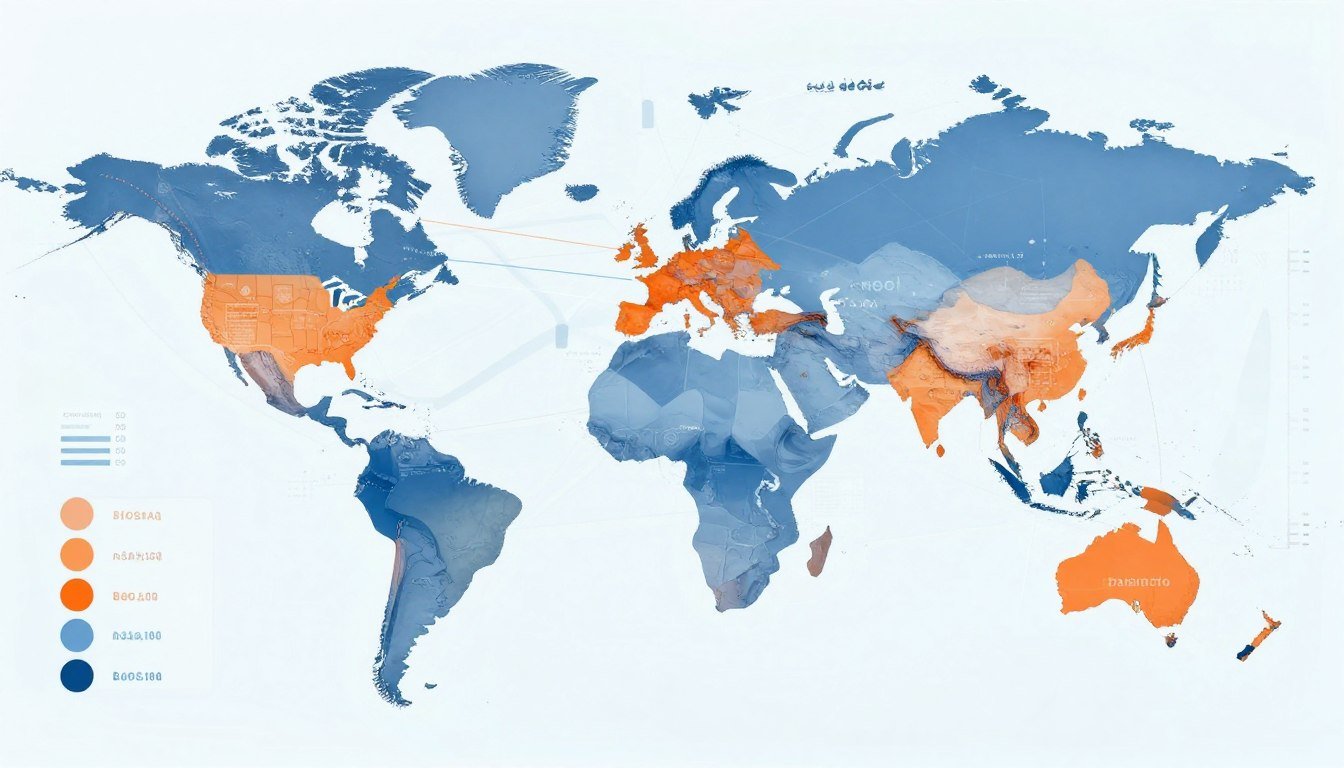
Global Recession Spillover Effects on the U.S: How It Could Impact the U.S. Economy in 2026 and Beyond
The interconnected nature of the global economy means that economic turbulence in one region rarely stays contained. As we navigate through 2025, economists and policy makers are increasingly concerned about how a potential global recession could create ripple effects that reach American shores. Understanding these spillover effects has never been more critical for businesses, investors, and households planning their financial futures.
Recent data from the International Monetary Fund shows that global growth projections have been revised downward for the third consecutive quarter. Trade volumes between major economies have contracted by 4.2% year-over-year, while financial conditions have tightened across developed markets. These warning signs suggest that the global economy faces headwinds that could fundamentally reshape the U.S. economic outlook through 2030.
The concept of economic spillover effects refers to the transmission of economic shocks from one country or region to others through various channels. These channels include trade relationships, financial market linkages, supply chains, capital flows, and monetary policy interactions. When a major economy experiences recession, the effects don’t respect borders.
For American consumers and businesses, the stakes are substantial. A global recession could impact everything from job security and wage growth to investment returns and the cost of imports. The Federal Reserve’s ability to maintain price stability and support employment depends partly on global economic conditions that lie beyond its direct control.
What Is This Economic Threat? Understanding Global Recession Spillover Effects
Global recession spillover effects on U.S. economy occur when economic downturns in foreign markets transmit adverse impacts to American economic activity through interconnected channels. These effects can manifest across multiple dimensions of the economy, from reduced export demand to financial market volatility and disrupted supply chains.
At its core, this threat represents the vulnerability that comes with economic integration. The same globalization that has enabled decades of growth and prosperity also creates pathways for economic shocks to travel across borders. When major trading partners enter recession, American exporters lose customers. When foreign financial markets experience stress, U.S. investors face losses. When global supply chains falter, American manufacturers struggle to obtain inputs.
Historical Context
The United States has experienced significant spillover effects during previous global downturns. The 2008 global financial crisis originated in U.S. mortgage markets but was amplified by international financial linkages. The European debt crisis of 2011-2012 created uncertainty that dampened U.S. business investment despite America’s stronger fiscal position.
More recently, the synchronized global slowdown of 2019 reduced U.S. real GDP growth by approximately 0.4 percentage points through trade channels alone, according to Congressional Budget Office estimates. These historical episodes demonstrate that the U.S. economy, while large and relatively self-sufficient, cannot fully insulate itself from major global economic shocks.
Current Scale and Scope
The scale of potential spillover effects has grown as global economic integration has deepened. U.S. trade in goods and services now represents approximately 27% of GDP, up from 10% in 1970. American companies have embedded themselves in complex global supply chains, with manufacturing inputs crossing borders multiple times before final assembly.
Financial integration has proceeded even faster. Foreign holdings of U.S. securities exceed $28 trillion, while American investors hold roughly $32 trillion in foreign assets. This creates bidirectional channels through which financial shocks can propagate rapidly across borders.
Key Statistical Indicators
| Economic Indicator | Current Level | Historical Average | Vulnerability Rating |
| Export Dependence on GDP | 11.9% | 9.2% | Moderate-High |
| Foreign Direct Investment Stock | $4.6 trillion | $3.1 trillion | Moderate |
| Supply Chain Import Reliance | 38% of inputs | 28% of inputs | High |
| Financial Market Correlation | 0.72 with global indices | 0.58 with global indices | High |
| Cross-Border Capital Flows | $1.4 trillion annually | $890 billion annually | Moderate-High |
These statistics reveal an economy that is significantly more exposed to global economic conditions than in previous decades. The vulnerability is not uniform across all sectors or regions, but the overall trend shows increasing interconnection and therefore increasing susceptibility to spillover effects.
The Bureau of Labor Statistics data indicates that approximately 12.8 million American jobs depend directly on exports, while millions more are linked to global supply chains and foreign investment. This employment exposure creates a direct transmission channel through which foreign recessions can impact American workers and households.
What Is Causing the Problem? Root Factors Behind Spillover Vulnerability
The heightened vulnerability of the U.S. economy to global recession spillover effects stems from multiple interconnected factors that have evolved over decades. Understanding these root causes helps clarify why spillover risks have intensified and what might be done to mitigate them.
Policy Factors Driving Spillover Vulnerability
- Coordinated Monetary Policy Tightening: Central banks across developed economies have raised interest rates in response to inflation, creating synchronized restrictive monetary policy. When the Federal Reserve, European Central Bank, and Bank of Japan all tighten simultaneously, the cumulative global impact exceeds the sum of individual policy effects. This coordination amplifies both the intended anti-inflation effects and unintended recessionary spillovers.
- Trade Policy Uncertainty: Shifts in trade agreements, tariff regimes, and export controls have introduced uncertainty that dampens cross-border investment and long-term business planning. The Congressional Budget Office estimates that trade policy uncertainty reduced U.S. GDP growth by 0.2 percentage points annually between 2018 and 2023, primarily through reduced capital formation.
- Fiscal Policy Divergence: Different fiscal policy stances across major economies create asymmetric demand conditions. When some countries implement austerity while others maintain expansionary fiscal policy, the resulting imbalances can destabilize trade flows and exchange rates, creating additional spillover channels.
- Regulatory Fragmentation: Diverging financial regulations across jurisdictions have made global financial system more complex and potentially more fragile. When regulatory standards differ substantially between markets, capital flows can become more volatile and crisis contagion more likely.
- Inadequate International Coordination: The erosion of multilateral economic cooperation has weakened the mechanisms for coordinating policy responses to global shocks. Without effective coordination, individual country responses may work at cross-purposes or create unintended spillovers to trading partners.
Market Trends Amplifying Spillover Effects
- Increased Financial Market Integration: Cross-border equity and bond holdings have grown dramatically, reaching record levels relative to GDP. When foreign markets decline, American investors holding those assets experience wealth losses that can reduce consumption and investment. The correlation between U.S. and global equity markets has increased from approximately 0.45 in the 1990s to 0.72 today, according to World Bank data.
- Algorithmic Trading and Market Contagion: The rise of algorithmic trading and passive investment strategies has increased the speed and magnitude of cross-market correlations. When automated trading systems respond to foreign market shocks, they can rapidly transmit volatility to U.S. markets regardless of fundamental economic linkages.
- Corporate Profit Dependence on Foreign Markets: S&P 500 companies now derive approximately 40% of revenues from foreign operations. This dependence means that recession in major foreign markets directly impacts American corporate earnings, which in turn affects stock valuations, business investment decisions, and ultimately employment.
- Commodity Market Volatility: Global recession typically suppresses commodity demand, which can create both benefits and challenges for the U.S. economy. While lower oil prices benefit consumers, they can damage the U.S. energy sector, which has grown substantially over the past decade through shale production expansion.
- Currency Market Instability: During periods of global economic stress, the U.S. dollar typically strengthens as investors seek safe haven assets. While this can reduce inflation through cheaper imports, it also makes U.S. exports less competitive and can create financial stress for foreign entities with dollar-denominated debt.
Global Influences Creating Transmission Channels
- China’s Economic Slowdown: As the world’s second-largest economy and largest trading nation, China’s economic health has outsized impacts on global growth. The country’s structural transition from investment-led to consumption-led growth, combined with real estate sector stress and demographic headwinds, creates significant spillover potential. U.S. exports to China total approximately $150 billion annually, supporting over 1 million American jobs.
- European Economic Fragility: The European Union collectively represents America’s largest trading partner, but faces multiple challenges including high energy costs, aging demographics, and structural rigidities. Recession in Europe directly reduces demand for U.S. exports while also creating financial market uncertainty that can affect American asset prices.
- Emerging Market Vulnerabilities: Many emerging economies face substantial external debt burdens denominated in dollars. When global financial conditions tighten, these countries experience capital outflows and currency depreciation, which can force them into recession. This reduces their demand for U.S. exports and can create financial system stress if American banks have significant emerging market exposure.
- Geopolitical Tensions and Trade Disruptions: Rising geopolitical tensions in multiple regions create uncertainty that dampens global investment and trade. Conflicts, sanctions, and the threat of trade disruptions increase risk premiums and reduce the efficiency of global commerce, creating negative spillovers even absent actual recession.
- Climate-Related Economic Shocks: Increasing frequency and severity of climate-related disasters create economic disruptions that can propagate across borders through supply chains, commodity markets, and insurance systems. These shocks are becoming more significant contributors to global economic volatility.
Structural Economic Changes Increasing Vulnerability
- Complex Global Supply Chains: Modern manufacturing relies on intricate supply networks that span multiple countries. A disruption anywhere in the chain can cascade through to final production. U.S. manufacturers now source approximately 38% of intermediate inputs from foreign suppliers, up from 28% two decades ago. This efficiency-driven integration has created vulnerability to foreign disruptions.
- Service Sector Globalization: The globalization of services, enabled by digital technology, has created new spillover channels. American companies increasingly offshore business services, IT operations, and even some professional services. Disruptions in these service-providing countries can now impact U.S. business operations in ways previously limited to goods-producing sectors.
- Technological Concentration and Dependency: Critical technologies and components are often produced in only a few global locations. Semiconductor production, for example, is highly concentrated geographically. Disruptions in these concentrated production centers can have immediate and severe impacts on downstream industries globally, including in the United States.
- Financial System Complexity: The global financial system has become increasingly complex, with derivatives, structured products, and interconnected institutions creating potential for rapid contagion. The Organization of the Petroleum Exporting Countries and major financial centers can transmit shocks through these complex linkages faster than regulatory oversight can respond.
- Labor Market Integration: While less recognized than trade or financial linkages, labor markets have also become more integrated through remote work capabilities and international talent mobility. Economic stress in foreign markets can affect U.S. labor supply and wage dynamics through these channels, particularly in highly skilled occupations.
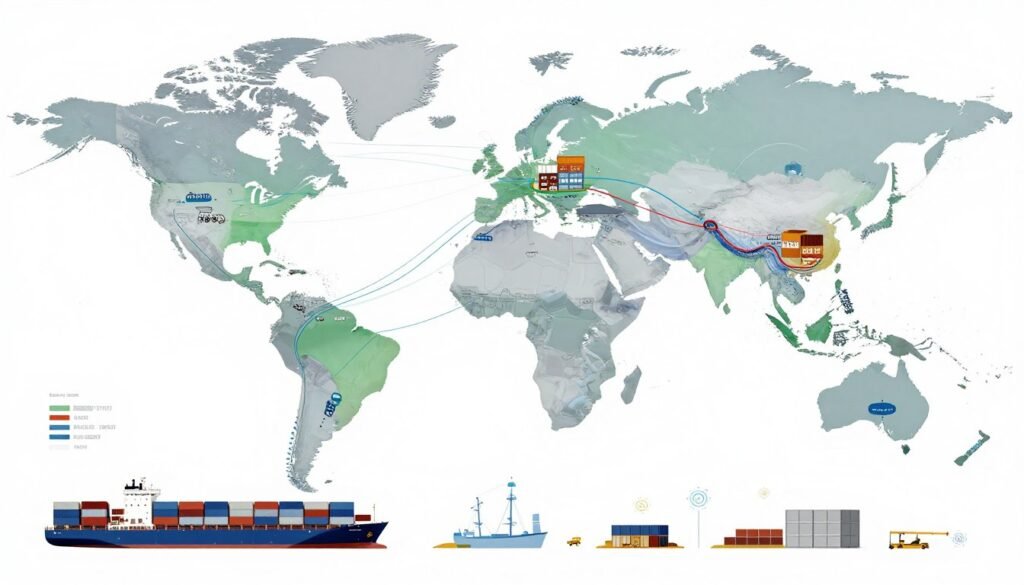
These causal factors do not operate in isolation. They interact and amplify each other, creating a complex web of vulnerabilities. Policy decisions affect market behavior, which influences structural economic relationships, which in turn shapes how global influences propagate. This interconnection means that addressing spillover vulnerability requires coordinated action across multiple policy domains.
The challenge for policy makers lies in balancing the substantial benefits of global economic integration against these vulnerability considerations. Trade, investment, and financial integration have contributed significantly to American prosperity over recent decades. The goal is not to reverse integration but to build resilience within an interconnected system.
Impact on the U.S. Economy: Comprehensive Assessment Across Key Sectors
The spillover effects from a global recession would ripple through virtually every aspect of the American economy. While the magnitude and duration of impacts would depend on the severity and geographic scope of the foreign downturn, economists can project likely consequences across major economic dimensions based on historical patterns and current structural relationships.
GDP Growth Implications
Real GDP growth represents the most comprehensive measure of economic performance and would bear the clearest imprint of global recession spillovers. Based on econometric models from the International Monetary Fund and analysis of previous global downturns, a synchronized global recession could reduce U.S. real GDP growth by between 1.2 and 2.8 percentage points in the first year of spillover transmission.
The transmission would occur through multiple channels working simultaneously. Export demand would decline as foreign customers reduce purchases of American goods and services. The Congressional Budget Office estimates that each 1% decline in foreign GDP growth reduces U.S. GDP growth by approximately 0.15 percentage points through the trade channel alone.
| Transmission Channel | Estimated Impact on U.S. GDP Growth | Time Lag | Duration |
| Direct Trade Effects | -0.4 to -0.9 percentage points | 1-2 quarters | 2-4 quarters |
| Financial Market Contagion | -0.3 to -0.7 percentage points | Immediate to 1 quarter | 2-6 quarters |
| Business Confidence and Investment | -0.2 to -0.6 percentage points | 2-3 quarters | 4-8 quarters |
| Supply Chain Disruptions | -0.1 to -0.3 percentage points | 1-2 quarters | 2-4 quarters |
| Commodity Price Effects | -0.2 to +0.3 percentage points | Immediate | Variable |
Importantly, these channels interact and can amplify each other. Financial market stress reduces business confidence, which suppresses investment, which further weakens growth. This creates potential for negative feedback loops that extend beyond simple linear addition of individual channel effects.
Sectoral impacts would vary substantially. Manufacturing, which accounts for 11% of GDP but 35% of exports, would experience disproportionate negative effects. Service sectors with significant export components, including business services, financial services, and tourism, would also face headwinds.
Inflation Dynamics and Price Pressures
The inflation impact of global recession spillovers presents complex, potentially contradictory forces. On balance, most economic analysis suggests that spillovers would create disinflationary or deflationary pressure, but the path and magnitude depend on multiple factors.
Reduced global demand would lower commodity prices, particularly for oil, industrial metals, and agricultural products. Historical analysis shows that a 10% decline in global GDP growth typically reduces oil prices by 20-30% within six months. For the U.S. economy, lower energy costs would directly reduce headline inflation and provide relief to consumers and businesses.
However, several factors could partially offset these disinflationary forces. If dollar appreciation occurs as investors flee to safety, import prices for non-commodity goods would fall, further reducing inflation. But dollar strength would also pressure American exporters and could prompt protectionist responses.
Disinflationary Pressures
- Lower commodity prices reducing input costs across economy
- Reduced aggregate demand limiting pricing power
- Increased slack in labor market moderating wage growth
- Currency appreciation reducing import prices
- Competitive pressures in global markets constraining price increases
Potential Inflationary Offsets
- Supply chain disruptions increasing costs for critical inputs
- Protectionist policies raising tariffs and import costs
- Currency depreciation in partner countries raising import prices
- Monetary policy accommodation potentially spurring demand
- Fiscal stimulus measures increasing aggregate demand
The Federal Reserve’s baseline projection assumes that a moderate global recession would reduce U.S. core inflation by approximately 0.3 to 0.5 percentage points over a 12-18 month period. This disinflationary effect would actually assist the Federal Reserve in returning inflation to its 2% target without requiring as much domestic monetary policy tightening.
However, if supply disruptions prove severe or if policy responses are highly expansionary, inflation could remain elevated despite weak demand. This “stagflationary” scenario represents a particularly challenging policy environment, as it would limit the Federal Reserve’s ability to support growth without sacrificing price stability.
Employment and Labor Market Effects
The U.S. labor market would experience significant stress from global recession spillovers, though the magnitude would depend heavily on the severity and duration of foreign economic weakness. Bureau of Labor Statistics analysis suggests that each percentage point of GDP growth lost translates to approximately 1.2 to 1.5 million jobs not created or lost over a two-year period.
Using the GDP impact projections outlined above, a significant global recession could result in 1.5 to 4.2 million fewer American jobs than would otherwise exist. This would translate to an unemployment rate increase of approximately 1.0 to 2.8 percentage points, assuming labor force participation remains stable.
Employment impacts would not distribute evenly across sectors or demographic groups. Manufacturing employment would face immediate and substantial pressure, with estimates suggesting potential job losses of 400,000 to 800,000 in severe scenarios. Transportation and warehousing sectors, closely tied to international trade, could shed 200,000 to 400,000 positions.
Service sector employment would show more varied patterns. Business services, particularly those serving internationally-exposed firms, would contract. However, healthcare, education, and government employment typically show more resilience to trade-related shocks.
| Sector | Current Employment (millions) | Estimated Job Impact Range | Vulnerability Level |
| Manufacturing | 12.8 | -400,000 to -800,000 | High |
| Transportation & Warehousing | 6.2 | -200,000 to -400,000 | High |
| Wholesale Trade | 6.0 | -150,000 to -300,000 | Moderate-High |
| Professional & Business Services | 22.5 | -300,000 to -600,000 | Moderate |
| Financial Services | 9.1 | -100,000 to -250,000 | Moderate |
| Retail Trade | 15.8 | -200,000 to -450,000 | Moderate |
| Healthcare | 20.2 | -50,000 to -150,000 | Low |
| Education | 13.7 | -30,000 to -100,000 | Low |
Wage growth would decelerate substantially as labor market slack increases. Average hourly earnings growth, which has been running at 4-5% annually in recent years, could slow to 2-3% or even turn negative in severely affected sectors. This wage deceleration would reduce household income growth and constrain consumer spending.
Long-term unemployment would likely increase significantly, as it typically does during recessions. Workers displaced from manufacturing or trade-exposed sectors often face challenges transitioning to other industries, particularly if their skills are industry-specific. The Social Security Administration estimates that each additional year of unemployment reduces lifetime earnings by approximately 15-20%, creating lasting economic scars.
Financial Markets Volatility and Investment Impacts
U.S. financial markets would experience immediate and potentially severe impacts from global recession spillovers. The high correlation between U.S. and foreign equity markets means that sharp declines abroad would quickly transmit to American stock exchanges, erasing household wealth and reducing pension fund values.
Historical analysis of previous global downturns provides benchmarks for potential market impacts. During the 2008 global financial crisis, the S&P 500 declined by 57% peak-to-trough. The European debt crisis of 2011-2012 generated a 19% correction. The synchronized global slowdown of late 2018 produced a 20% decline before recovery.
Wealth effects from stock market declines would reduce consumer spending, as households adjust consumption in response to diminished net worth. The Federal Reserve estimates that each dollar of wealth lost reduces consumption by approximately 3-5 cents over the subsequent year. With U.S. household stock holdings exceeding $40 trillion, a 20% market decline would destroy $8 trillion in wealth, potentially reducing consumer spending by $240-400 billion.
Bond markets would face complex dynamics. U.S. Treasury securities would likely benefit from flight-to-quality flows, driving yields down and prices up. However, corporate credit spreads would widen substantially as investors demand higher compensation for default risk. High-yield corporate bonds could experience severe stress, particularly in sectors most exposed to global trade and commodity prices.
- U.S. Treasury securities capturing safe-haven flows
- Investment-grade bonds from stable domestic issuers
- Dollar-denominated assets as currency strengthens
- Defensive equity sectors like utilities and consumer staples
- Gold and precious metals as inflation hedges
- Domestic-focused real estate in stable markets
Potential Market Beneficiaries
- Export-dependent equities facing demand collapse
- High-yield corporate bonds with elevated default risk
- Emerging market securities and currencies
- Commodity-linked investments facing price declines
- Commercial real estate in trade-exposed regions
- Private equity funds with global portfolio exposure
Vulnerable Asset Classes
Investment spending, both business and residential, would decline significantly. Business capital expenditure typically contracts by 15-25% during recessions as firms defer expansion plans and cut costs. Residential investment would face pressure from reduced household confidence, though lower interest rates might provide partial offset if the Federal Reserve eases monetary policy in response to spillovers.
The impact on retirement security deserves particular attention. With approximately 100 million Americans holding 401(k) accounts valued at over $7 trillion collectively, market declines would substantially reduce retirement wealth. Workers approaching retirement age face particular vulnerability, as they have limited time to recover losses before needing to draw on savings.
Consumer and Business Sector Responses
Consumer behavior would shift substantially in response to global recession spillovers, even before direct impacts on U.S. employment and income fully materialize. Consumer confidence tends to decline rapidly when households perceive rising economic uncertainty, and this confidence effect alone can reduce spending before material circumstances change.
Discretionary spending categories would bear the brunt of consumer pullback. Purchases of durable goods like automobiles, appliances, and furniture typically decline by 10-20% during recessions. Spending on recreation, entertainment, and dining out contracts as households prioritize necessities and increase precautionary saving.
The personal saving rate would likely increase from recent levels around 4-5% to 8-10% or higher, as households build financial buffers against uncertain futures. While economically rational for individual households, this increased saving reduces aggregate demand and amplifies recessionary pressures through the paradox of thrift.
Small businesses would face particularly acute challenges, as they typically have less financial cushion than large corporations and more limited access to credit during stress periods. Export-oriented small businesses would suffer demand losses, while those serving local markets would face reduced customer spending. The Bureau of Labor Statistics estimates that small businesses account for approximately 65% of net new job creation, so small business distress would significantly amplify employment impacts.
Large corporations would respond by cutting costs, deferring investments, and preserving cash. Hiring freezes and workforce reductions would become widespread. Capital expenditure plans would be curtailed or canceled. Dividend payments might be reduced or suspended to preserve liquidity. These defensive corporate responses, while individually rational, would collectively deepen the economic downturn.
Supply chain strategies would undergo reassessment, with many firms seeking to diversify sources and reduce dependence on complex global networks. This “reshoring” or “friend-shoring” trend could have long-term benefits for resilience but would increase costs in the near term and potentially reduce efficiency gains from specialization.
Recent Data and Trends: Current Economic Indicators and Warning Signs
Examining the latest economic data provides crucial insights into the current state of global spillover risks and the trajectory of the U.S. economy. Multiple indicators from authoritative sources suggest that spillover vulnerabilities have increased over the past year, though a full-scale global recession has not yet materialized.
Global Growth Trajectory and Revision Patterns
The International Monetary Fund has revised its global growth forecasts downward in four consecutive quarterly updates through early 2025. Global GDP growth projections for 2026 currently stand at 2.8%, down from 3.4% projected a year earlier. This represents growth significantly below the historical average of 3.6% observed from 2000-2019.
More concerning than the absolute level is the trajectory of revisions. Consistent downward adjustments suggest that underlying economic momentum is weaker than previously recognized. Advanced economies face particular headwinds, with projected growth of just 1.4% for 2026, barely above stall speed.
| Region/Country | 2025 Growth Estimate | 2026 Growth Projection | Revision from 6 Months Prior |
| Global | 3.0% | 2.8% | -0.4 pp |
| United States | 2.1% | 1.7% | -0.3 pp |
| Euro Area | 0.8% | 1.2% | -0.5 pp |
| China | 4.5% | 4.0% | -0.6 pp |
| Japan | 0.7% | 0.9% | -0.2 pp |
| Latin America | 1.8% | 2.1% | -0.4 pp |
| Emerging Asia | 4.8% | 4.5% | -0.5 pp |
The pattern of downward revisions suggests that forecasting models have consistently overestimated resilience. This systematic optimism bias in projections may indicate that structural headwinds are more significant than generally appreciated. When forecasts persistently miss in one direction, actual outcomes may ultimately prove worse than even revised projections suggest.
Trade Volume Trends and Export Performance
Global trade volumes provide an early warning system for economic spillovers, as trade typically declines before broader GDP impacts materialize. World Bank data shows that global merchandise trade volumes contracted by 2.1% in 2024 and remain essentially flat through the first quarter of 2025.
U.S. export performance has weakened noticeably over the past eighteen months. Real exports of goods and services declined by 1.8% in 2024 and show no growth through early 2025, according to Bureau of Economic Analysis data. This stagnation contrasts sharply with the 4.5% average annual growth rate observed from 2010-2023.
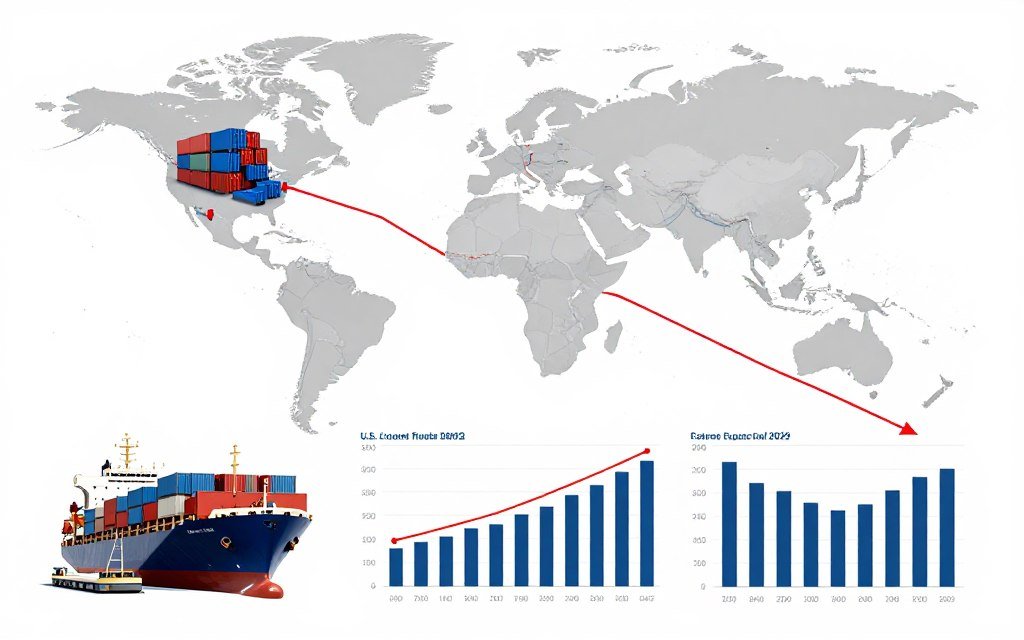
The composition of export weakness reveals vulnerability concentration. Manufacturing exports have declined by 4.2% over the past year, while service exports have maintained modest 1.3% growth. Within manufacturing, exports of capital goods and industrial supplies show particularly sharp contractions, suggesting weak foreign business investment and production activity.
Import patterns also tell an important story. While weakening imports might suggest domestic economic softness, they can also indicate supply chain reconfiguration. U.S. imports from China have declined by 8.3% over the past year, while imports from Mexico and Vietnam have increased, suggesting geographic diversification of sourcing rather than pure demand reduction.
Financial Conditions and Market Stress Indicators
Financial conditions indices compiled by the Federal Reserve and private sector analysts show meaningful tightening over the past year. The Federal Reserve’s Financial Conditions Index has increased by approximately 1.2 standard deviations from its neutral level, indicating notably restrictive financial conditions.
This tightening reflects multiple factors. Interest rates have risen substantially, with the 10-year Treasury yield fluctuating between 4.2% and 4.8%, well above the 2-3% range that prevailed from 2010-2021. Corporate credit spreads have widened, particularly for lower-rated issuers. Equity valuations have declined from elevated levels, with the S&P 500 price-to-earnings ratio falling from above 22 to approximately 18.
Cross-border capital flows show increased volatility and directional shifts consistent with rising risk aversion. Net portfolio investment flows to emerging markets have declined by $340 billion year-over-year according to World Bank estimates. This capital retrenchment creates financial stress in recipient countries and can trigger currency crises and debt defaults that generate further global spillovers.
Leading Economic Indicators
- Manufacturing PMI indices below 50 (contraction) in multiple major economies
- Yield curve inversion in U.S. Treasuries persisting for 18+ months
- Consumer confidence indices declining in 32 of 37 advanced economies
- Business investment intentions surveys showing broad-based weakness
- Credit standards tightening at fastest pace since 2008 crisis
- Inventory-to-sales ratios rising as demand weakens relative to supply
Resilience Factors
- Labor markets remain relatively tight with low unemployment rates
- Household balance sheets healthier than pre-2008 crisis period
- Banking system capital ratios well above regulatory minimums
- Corporate cash holdings elevated providing buffer against shocks
- Government fiscal capacity exists for counter-cyclical policy response
- Inflation moderating toward central bank targets allowing policy flexibility
Labor Market Dynamics and Employment Trends
U.S. labor market conditions remain the bright spot in an otherwise clouding economic picture. The unemployment rate stands at 4.1%, still historically low despite increasing slightly from the 3.4% trough reached in early 2023. Payroll employment continues growing, though at a decelerating pace of approximately 150,000 jobs per month compared to 250,000 monthly average in 2022-2023.
Job openings have declined from their pandemic-era peak of 12 million to approximately 8.2 million, indicating cooling but not collapse of labor demand. The quits rate has also declined, suggesting workers feel less confident about finding alternative employment. These indicators point to gradual labor market normalization rather than crisis.
However, leading indicators suggest employment momentum may weaken further. The Bureau of Labor Statistics’ Job Openings and Labor Turnover Survey shows that hiring rates have declined to pre-pandemic levels while layoff rates have begun creeping upward. Initial claims for unemployment insurance, while still low in absolute terms, have trended higher over the past six months.
Wage growth continues decelerating from pandemic peaks. Average hourly earnings growth has slowed to 3.8% year-over-year from above 5% two years ago. This deceleration helps moderate inflation but also reduces household purchasing power growth and could foreshadow consumer spending weakness.
Housing Market Indicators and Real Estate Trends
The housing sector shows mixed signals, with high interest rates constraining activity while underlying demand remains substantial due to demographic factors and limited inventory. Existing home sales have declined by 18% from their 2021 peak and remain depressed at around 4.1 million units annually, well below the 5-6 million considered normal.
Home prices have proven resilient despite reduced transaction volumes, with the Case-Shiller National Home Price Index showing year-over-year gains of 5.2%. This price resilience reflects tight inventory conditions, with just 2.9 months of supply available, well below the 6 months considered balanced.
New residential construction has declined modestly but remains above pre-pandemic levels. Housing starts currently run at an annual rate of approximately 1.4 million units, compared to 1.3 million average from 2010-2019. Homebuilders report declining demand for new homes but continue building to address long-term supply shortages.
Commercial real estate faces more acute challenges, particularly in office properties affected by remote work trends. Office vacancy rates have climbed to 19.2% nationally, up from 12-13% pre-pandemic. Regional variation is substantial, with some markets experiencing vacancy rates above 25%. Declining valuations and refinancing challenges create potential financial system vulnerabilities as commercial mortgages mature.
Inflation Trends and Price Dynamics
Inflation has moderated substantially from 2022 peaks but remains above the Federal Reserve’s 2% target. Consumer price index inflation stands at 3.2% year-over-year, down from 9.1% at the June 2022 peak but still elevated. Core inflation, excluding volatile food and energy, runs at 3.8%, showing greater persistence.
The composition of inflation has shifted meaningfully. Goods price inflation has declined sharply and now shows negative year-over-year readings in some categories as supply chains have normalized. Service sector inflation remains elevated at approximately 5.2%, driven partly by strong wage growth in labor-intensive service industries.
Inflation expectations, carefully monitored by the Federal Reserve, have shown encouraging declines. Five-year inflation expectations from consumer surveys have fallen to 2.8% from above 4% in 2022. Market-based measures derived from Treasury inflation-protected securities show similar moderation toward the 2% target.
Global disinflationary pressures from weaker economic activity abroad would likely assist the Federal Reserve’s inflation-fighting efforts. Lower commodity prices, reduced import price growth, and decreased demand pressures from international sources would all contribute to easing inflation toward the central bank’s target.
Fiscal Position and Government Finance Trends
The U.S. fiscal position has deteriorated substantially in recent years, creating both risks and potential policy response capacity. The federal budget deficit reached $1.7 trillion in fiscal year 2024, representing approximately 6.3% of GDP. This deficit level during a period of relatively strong economic growth is historically unusual and raises questions about fiscal sustainability.
Federal debt held by the public has climbed to 97% of GDP according to Congressional Budget Office data, up from 79% before the pandemic. Debt service costs have risen sharply as interest rates have increased, now consuming approximately $870 billion annually or about 3.2% of GDP. This growing debt burden constrains future fiscal policy flexibility.
However, the elevated deficit also means that automatic stabilizers would provide substantial counter-cyclical support if recession materializes. Unemployment insurance, progressive income taxes, and other programs would automatically increase spending and reduce revenues during downturn, providing fiscal stimulus without requiring legislative action.
State and local government finances generally appear healthier than during previous downturns. Tax collections have remained robust, and rainy-day fund balances have been rebuilt. However, significant variation exists across jurisdictions, with some states facing structural deficits that would worsen during recession.
Monetary Policy Stance and Central Bank Actions
The Federal Reserve has maintained restrictive monetary policy with the federal funds rate in the 5.25-5.50% range, well above the estimated neutral rate of 2.5-3.0%. This restrictive stance aims to ensure inflation returns to the 2% target but also creates economic headwinds and amplifies spillover vulnerability.
Forward guidance from Federal Reserve officials suggests limited near-term rate cuts unless economic conditions deteriorate significantly or inflation declines faster than anticipated. Market expectations, as reflected in fed funds futures contracts, suggest two 25-basis-point rate cuts by the end of 2026, bringing the policy rate to approximately 4.75-5.00%.
Other major central banks have maintained similarly restrictive stances. The European Central Bank has paused its hiking cycle with rates at 4.00%, while signaling little appetite for cuts given persistent inflation. The Bank of England faces similar challenges with rates at 5.25%. This global monetary policy tightening creates synchronized restrictive financial conditions that amplify recession risks.
The People’s Bank of China represents a notable exception, having cut interest rates and eased reserve requirements in efforts to support flagging economic growth. This divergence in monetary policy creates cross-currents in global financial markets and complicates policy coordination.
Expert Opinions or Forecasts: Economist Projections and Risk Assessments
Leading economists, institutional forecasters, and policy analysts have provided a range of perspectives on the likelihood and potential severity of global recession spillover effects on the U.S. economy. While views vary in specifics, a broad consensus has emerged around several key themes regarding the trajectory through 2026 and beyond.
Institutional Forecaster Consensus View
The International Monetary Fund’s baseline scenario projects that the global economy will avoid outright recession but will experience below-trend growth through 2026. In this scenario, the U.S. economy would expand by approximately 1.7% in 2026, down from 2.1% in 2025 and well below the 2.5% long-term average.
This “soft landing” scenario assumes that central banks successfully reduce inflation without triggering severe recessions, that geopolitical tensions remain manageable, and that financial systems prove resilient to tighter monetary policy. Under these conditions, spillover effects to the U.S. would remain modest, subtracting perhaps 0.3-0.5 percentage points from GDP growth but not causing recession.
The World Bank offers a somewhat more cautious baseline, projecting 1.5% U.S. growth in 2026 with material downside risks. Their analysis emphasizes that even modest additional shocks could tip the economy into contraction, given limited monetary policy space to respond with interest rates still elevated and inflation above target.
“The global economy is navigating a narrow path between persistent inflation and growing recession risks. Policy makers in advanced economies face the difficult task of maintaining restrictive financial conditions long enough to ensure price stability returns, while avoiding excessive tightening that triggers severe downturns. Spillover effects are likely to intensify if this delicate balance cannot be sustained.”
Private Sector Economic Research Perspectives
Major investment banks and economic research firms generally align with international institution views but express greater concern about downside scenarios. Goldman Sachs Research assigns a 45% probability to a moderate U.S. recession within the next 18 months, primarily triggered by global growth disappointments and tighter financial conditions.
J.P. Morgan’s economic research team projects that cumulative spillover effects could reduce U.S. GDP by 1.8 percentage points over two years in their baseline scenario, with greater impacts possible if multiple shock scenarios materialize simultaneously. They emphasize particular concern about China’s economic trajectory and its implications for global demand.
Morgan Stanley economists highlight the vulnerability created by elevated asset valuations and corporate debt levels. Their analysis suggests that negative feedback loops between financial markets and the real economy could amplify spillover effects beyond those implied by trade linkages alone.
Academic Economist Research and Models
Academic research provides deeper analysis of transmission mechanisms and historical patterns. Professor Kristin Forbes of MIT, an expert on international spillovers, notes that current conditions share troubling similarities with periods before previous global downturns. Her research identifies three warning signals all currently present: synchronized monetary policy tightening, elevated uncertainty measures, and reduced policy space.
Research from the National Bureau of Economic Research examining previous episodes of global stress finds that spillovers to the U.S. have intensified over time as integration has deepened. Studies comparing the 1990s, 2000s, and 2010s show statistically significant increases in spillover coefficients, suggesting current vulnerabilities may exceed historical experience.
Professor Carmen Reinhart’s work on debt cycles highlights that elevated global debt levels create amplification mechanisms that can transform moderate shocks into severe crises. Her analysis shows that when global debt-to-GDP ratios exceed 250%, as they currently do, negative spillovers typically prove 40-60% larger than during lower-debt periods.

Federal Reserve Analysis and Policy Outlook
Federal Reserve officials have consistently acknowledged spillover risks while expressing cautious confidence in the U.S. economy’s resilience. Chairman Jerome Powell has noted that “tighter global financial conditions, weaker foreign growth, and elevated uncertainty create headwinds for the U.S. economy, but our fundamental strengths provide meaningful buffers.”
Internal Federal Reserve staff projections, as reflected in minutes and testimony, suggest that baseline expectations include modest negative spillovers that reduce U.S. GDP growth by approximately 0.3 percentage points in 2026. However, staff analysis also presents alternative scenarios with substantially larger impacts if global conditions deteriorate more than expected.
Regional Federal Reserve Banks have contributed specialized analysis. The New York Fed’s Global Supply Chain Pressure Index shows normalization from pandemic extremes but remains above pre-2019 levels, suggesting continued vulnerability to supply disruptions. The San Francisco Fed’s financial conditions analysis indicates that current tightness could subtract up to 1 percentage point from GDP growth over coming quarters.
Treasury Department and Congressional Budget Office Views
The U.S. Department of the Treasury’s Office of International Affairs monitors global spillover risks closely and briefs senior policy makers quarterly. Recent Treasury analysis emphasizes concerns about emerging market vulnerabilities, particularly the $3.5 trillion in dollar-denominated debt held by developing countries. Treasury economists warn that financial stress in these markets could create contagion that affects U.S. financial institutions and investors.
The Congressional Budget Office’s long-term economic projections incorporate moderate spillover effects, assuming that global growth remains subpar but avoids severe recession. Their analysis projects that potential GDP growth could be reduced by 0.1-0.2 percentage points annually through 2030 due to weaker foreign demand and reduced efficiency from trade fragmentation.
CBO analysis also addresses fiscal implications, noting that weaker economic growth would reduce federal revenues while increasing spending on automatic stabilizer programs. Their projections suggest that a moderate recession scenario would increase the cumulative federal deficit by $1.2-1.8 trillion over five years, further constraining future fiscal policy space.
Market Outlook and Risk Assessments
Financial market analysts focus heavily on the implications for asset prices and investment returns. Consensus estimates from major investment research firms suggest moderate negative returns for U.S. equities if spillover effects intensify, with the S&P 500 potentially declining by 10-15% from current levels before stabilizing.
Fixed income strategists generally recommend overweight positions in U.S. Treasuries and high-quality corporate bonds, expecting these to outperform during periods of global stress. Credit analysts express concern about high-yield corporate debt, particularly in sectors with significant international exposure or commodity price sensitivity.
Real asset strategists present mixed views. Real estate analysts expect commercial property values to face continued pressure, while residential real estate may prove more resilient given structural supply shortages. Commodity analysts generally expect price weakness if global recession materializes, with oil prices potentially declining to $60-70 per barrel from current levels near $80.
Scenario Analysis and Probability Assessments
| Scenario | Probability Range | U.S. GDP Impact 2026 | Key Triggers |
| Soft Landing / Mild Spillovers | 30-40% | +1.5% to +2.0% | Successful inflation control without severe foreign recessions; resilient financial markets; policy coordination |
| Moderate Spillovers | 35-45% | +0.5% to +1.5% | Extended foreign weakness; some financial market stress; moderate trade disruptions |
| Severe Spillovers / U.S. Recession | 20-30% | -0.5% to +0.5% | Synchronized global recession; financial crisis; major supply disruptions; policy errors |
| Crisis Scenario | 5-10% | Below -0.5% | Severe financial contagion; debt crises in major economies; geopolitical shocks; sustained policy mistakes |
These probability assessments reflect the collective judgment of leading forecasters, though significant uncertainty surrounds any economic projection. The relatively wide spread across scenarios underscores the genuine uncertainty facing policy makers and businesses as they plan for the next several years.
Risk Level Assessment and Key Vulnerabilities
This comprehensive risk assessment, synthesizing views from multiple expert sources, suggests that spillover risks warrant serious attention and preparation. While catastrophic outcomes remain relatively unlikely, the probability of material negative impacts is substantial enough to justify defensive positioning by households, businesses, and investors.
Sectoral Vulnerability Assessments
Expert analysis identifies meaningful variation in spillover vulnerability across economic sectors. Manufacturing faces the highest direct exposure through trade channels, with economists estimating that a 10% decline in foreign demand could reduce U.S. manufacturing output by 3-4%.
The technology sector presents complex dynamics. While major technology firms derive substantial revenues from foreign markets, they also benefit from dollar strength and often possess pricing power that provides some insulation. However, technology supply chains remain vulnerable to disruption, particularly for semiconductor and electronic component production.
Financial services face elevated risks through multiple channels. Direct exposure to foreign markets through lending and investment creates obvious vulnerabilities. Additionally, financial market volatility generates trading losses and could trigger broader systemic stress if severe enough.
Energy sector experts note that oil and gas prices would likely decline during global recession, benefiting consumers but pressuring domestic producers. The shale production sector, which has expanded substantially over the past decade, could face significant stress if oil prices fall below $60 per barrel for extended periods.
Agricultural exports would suffer from reduced foreign demand and potentially from retaliatory trade actions if protectionist policies emerge. However, lower input costs from reduced energy and fertilizer prices could provide partial offset.
Possible Solutions or Policy Responses: Strategies to Mitigate Spillover Effects
Addressing the threat of global recession spillover effects requires coordinated action across multiple policy domains and by various economic actors. While no single intervention can eliminate spillover vulnerability given the degree of global integration, a combination of government policies, Federal Reserve actions, and market adjustments can meaningfully reduce impacts and support resilience.
Government Fiscal Policy Actions
The federal government possesses several fiscal policy tools that could cushion spillover effects, though current high deficit and debt levels constrain the scope for large-scale interventions. The U.S. Department of the Treasury has outlined potential responses that balance short-term stabilization needs against long-term fiscal sustainability concerns.
Targeted Fiscal Stimulus Measures
Rather than broad-based stimulus that would further inflate deficits, experts recommend targeted interventions focused on sectors and populations most affected by spillovers. Export-dependent manufacturing regions could receive support through tax credits for capital investment, workforce training programs, and research and development incentives that enhance long-term competitiveness.
Infrastructure investment represents a policy option with dual benefits: providing near-term demand support while enhancing long-term productive capacity. The Congressional Budget Office estimates that well-designed infrastructure spending could generate multiplier effects of 1.3 to 1.5, meaning each dollar spent generates $1.30-$1.50 in economic activity.
- Enhanced Unemployment Insurance: Extending benefit duration and increasing payment levels for workers displaced by trade-related shocks would provide crucial household support and maintain consumer spending capacity during downturns
- Small Business Support Programs: Loan guarantees, working capital assistance, and technical support for small businesses facing export market losses could prevent widespread closures and preserve employment
- State and Local Aid: Revenue-sharing programs to support state and local governments whose tax bases contract during recession would prevent pro-cyclical spending cuts and layoffs
- Targeted Tax Relief: Temporary payroll tax reductions or refundable tax credits could boost household purchasing power without permanent fiscal commitments
- Green Transition Investment: Accelerating clean energy and climate resilience investments would create jobs while addressing long-term structural challenges
The challenge lies in designing interventions that activate quickly when needed but don’t create permanent spending commitments that worsen long-term fiscal trajectories. Automatic stabilizers that scale with economic conditions represent one approach to this balance.
Trade Policy Adjustments
Trade policy represents another lever through which government can influence spillover effects, though approaches must balance short-term protection against long-term efficiency. The Organization of the Petroleum Exporting Countries and other international bodies emphasize the importance of maintaining open trade regimes even during economic stress.
Strategic trade agreements with reliable partners could diversify export markets and reduce dependence on any single economy. Efforts to strengthen trade relationships in Latin America, Southeast Asia, and other regions could provide alternative markets if traditional partners enter recession.
However, protectionist responses like tariff increases or import quotas typically prove counterproductive. They raise costs for consumers and businesses, invite retaliation, and reduce overall economic efficiency. Historical analysis shows that protectionist spirals during the 1930s substantially deepened the Great Depression.
Federal Reserve Monetary Policy Responses
The Federal Reserve’s monetary policy decisions will prove crucial in determining how spillover effects translate to domestic economic outcomes. The central bank possesses several tools, though their effectiveness depends on timing, magnitude, and how they interact with global financial conditions.
Interest Rate Policy Adjustments
If spillover effects materially slow economic activity or if inflation continues declining toward target, the Federal Reserve has scope to reduce interest rates from current restrictive levels. Market participants currently expect 2-3 rate cuts of 25 basis points each by the end of 2026, bringing the federal funds rate to approximately 4.75-5.00%.
However, monetary policy faces constraints. With inflation still above the 2% target, aggressive rate cuts could reignite price pressures. Additionally, if global recession stems partly from financial system stress, rate cuts alone may prove insufficient if credit channels remain impaired.
The neutral interest rate—the level that neither stimulates nor restricts the economy—has likely declined over recent decades due to demographic shifts, productivity trends, and other structural factors. This means the Federal Reserve may need to cut rates significantly below current levels to provide meaningful stimulus if severe spillover occurs.
Balance Sheet and Credit Market Interventions
Beyond conventional interest rate policy, the Federal Reserve could deploy various balance sheet tools if financial conditions tighten excessively. These might include:
- Asset Purchase Programs: Resuming Treasury and mortgage-backed securities purchases would inject liquidity and reduce longer-term interest rates, supporting housing and business investment
- Credit Facilities: Standing up targeted lending programs for specific markets experiencing stress could prevent credit crunches from amplifying recession effects
- Forward Guidance: Communicating clearly about future policy intentions helps shape expectations and provides stimulus even before rate cuts occur
- International Swap Lines: Maintaining dollar liquidity provision to foreign central banks prevents international funding stress from spilling back to U.S. financial markets
The effectiveness of these tools depends partly on coordination with other central banks. If the Federal Reserve eases while European and Asian central banks maintain tight policy, the resulting exchange rate movements could offset intended effects.
Financial Stability Monitoring and Regulation
The Federal Reserve’s regulatory and supervisory functions become particularly important during periods of heightened spillover risk. Enhanced monitoring of banks’ foreign exposures, stress testing that incorporates global recession scenarios, and prudential requirements that ensure adequate capital and liquidity can prevent financial system weaknesses from amplifying economic shocks.
Recent banking sector stress in 2023, while ultimately contained, demonstrated vulnerabilities that could re-emerge during global turbulence. Ensuring that financial institutions can withstand asset price declines, credit losses, and funding pressures is essential to maintaining credit flow to the real economy.
Market-Driven Adjustments and Private Sector Responses
Beyond government and central bank actions, market mechanisms and private sector decisions will significantly influence how spillover effects play out. These bottom-up adjustments, while sometimes painful in the short term, can enhance long-term resilience.
Supply Chain Reconfiguration
Businesses are already reconfiguring supply chains to reduce vulnerability to disruptions, a trend accelerated by pandemic experiences and geopolitical tensions. This “friend-shoring” or “near-shoring” involves shifting production and sourcing to politically aligned countries or closer geographic locations.
For the U.S. economy, this could mean increased manufacturing investment in Mexico, Central America, and domestically. While this may increase costs compared to previous arrangements emphasizing lowest-cost global sourcing, it can reduce vulnerability to distant disruptions and create domestic employment.
Technology advances in automation, artificial intelligence, and additive manufacturing may facilitate this transition by reducing the labor cost advantage of low-wage countries. Investment in these technologies can enhance productivity while supporting employment in advanced manufacturing roles.
Corporate Financial Resilience Building
Companies can enhance their ability to weather spillover effects through prudent financial management. Building cash reserves, maintaining flexible cost structures, and avoiding excessive leverage all improve resilience. The experience of the 2008 financial crisis demonstrated that firms entering downturns with strong balance sheets can not only survive but potentially gain market share from weaker competitors.
Diversifying customer bases and revenue streams reduces dependence on any single market. Firms heavily concentrated in export sales to specific countries face maximum vulnerability, while those with geographic diversification can better absorb regional shocks.
Labor Market Flexibility and Workforce Development
Labor market adjustments, while difficult for affected workers, help the economy adapt to changing conditions. Workforce development programs that assist displaced workers in acquiring new skills facilitate transition to growing sectors and regions.
The Social Security Administration and other agencies could expand programs like Trade Adjustment Assistance to support workers affected by foreign economic shocks. Portable benefits, stronger unemployment insurance, and investment in education and retraining all enhance labor market resilience.
Remote work capabilities developed during the pandemic provide some buffer by allowing employment relationships to persist even when local conditions deteriorate. Workers in regions facing sharp downturns may be able to work for employers in healthier markets.
International Coordination and Multilateral Responses
Given the global nature of spillover effects, coordinated international responses could prove more effective than purely national approaches. However, achieving coordination faces political and institutional challenges that have intensified in recent years.
Multilateral Institution Roles
The International Monetary Fund, World Bank, and other multilateral institutions can support global economic stability through several channels. The IMF’s lending programs can help countries experiencing balance of payments crises, preventing disorderly defaults that generate broader contagion.
The World Bank’s development lending supports emerging economies in building infrastructure and institutions that enhance resilience. Better economic fundamentals in developing countries reduce their vulnerability to shocks and their potential to transmit crises globally.
These institutions also provide forums for policy coordination, information sharing, and early warning systems that help countries anticipate and prepare for spillovers. Enhanced IMF surveillance and World Bank analytical work can identify vulnerabilities before they escalate into crises.
Trade and Financial System Architecture
Strengthening the rules-based international trade and financial system would reduce uncertainty and provide more stable foundations for global commerce. Efforts to update World Trade Organization rules for the digital economy, resolve trade disputes through multilateral mechanisms, and maintain open investment regimes all support resilience.
Financial regulatory coordination through bodies like the Financial Stability Board helps ensure that regulatory arbitrage doesn’t create vulnerabilities in the global financial system. Coordinated macroprudential policies can address risks that transcend national borders.
Structural Reforms for Long-Term Resilience
Beyond immediate crisis response, structural reforms can enhance the economy’s fundamental capacity to absorb and recover from spillovers. These reforms require long-term commitment but offer lasting benefits.
- Education and Innovation Investment: Enhancing human capital and technological capabilities increases productivity and adaptability, allowing the economy to compete successfully even as global conditions shift
- Infrastructure Modernization: Updating transportation, energy, and digital infrastructure reduces costs, enhances efficiency, and makes the economy less vulnerable to external disruptions
- Healthcare System Strengthening: Robust public health infrastructure and accessible healthcare reduce vulnerability to pandemics and other health shocks that can generate economic spillovers
- Social Safety Net Enhancement: Stronger automatic stabilizers and social insurance programs provide built-in recession resistance while supporting workers and families during transitions
- Fiscal Sustainability Progress: Gradually reducing debt-to-GDP ratios during growth periods creates space for counter-cyclical policy during downturns without threatening fiscal sustainability
These structural improvements require sustained political commitment and resources but represent investments in long-term economic resilience that pay dividends across multiple scenarios.
What It Means for Americans: Practical Effects on Daily Life and Financial Security
Understanding abstract economic spillover concepts matters only insofar as they affect the lived experience of American families, workers, investors, and businesses. Translating potential economic impacts into concrete terms helps individuals and households prepare for and navigate changing conditions.
Cost of Living Impacts and Household Budgets
The cost of living effects from global recession spillovers would likely prove mixed, with some categories rising while others fall. Energy costs would probably decline as global recession reduces oil and natural gas demand. The Organization of the Petroleum Exporting Countries would face pressure to cut production to support prices, but market forces would likely prevail in pushing energy costs lower.
For the average American household spending approximately $3,200 annually on gasoline and $1,800 on home heating and cooling, a 20% decline in energy prices would save roughly $1,000 per year. This represents meaningful relief, particularly for lower-income households that spend a higher proportion of income on energy.
However, other price dynamics could offset energy savings. If dollar appreciation makes imports cheaper, goods prices could decline. But if supply chain disruptions occur or if protectionist policies emerge, import prices might increase. Service prices, which constitute about 60% of consumer spending, would depend on domestic labor market conditions and might stay elevated even as goods prices moderate.
Potential Cost Decreases
- Gasoline and diesel prices declining by 15-25% from current levels
- Natural gas and heating oil costs falling by 10-20%
- Imported goods prices decreasing by 3-8% due to currency effects
- Certain commodity-based food items showing modest price relief
- Interest rates on variable-rate debt declining as Fed eases policy
Potential Cost Increases or Stability
- Housing costs remaining elevated due to supply constraints
- Healthcare expenses continuing upward trajectory regardless of macro conditions
- Service sector prices staying high due to wage pressures
- Insurance premiums potentially increasing due to market conditions
- Education costs continuing to rise as institutions face financial pressure
The net effect on household purchasing power would depend on individual consumption patterns. Families spending large proportions on energy and imported goods might see improvement, while those with high service consumption or fixed costs could face continued pressure.
Employment Security and Career Prospects
Job security represents the most consequential impact for most Americans, as employment provides both income and benefits crucial to financial stability. Workers in export-dependent industries face heightened risk, with manufacturing, transportation, and wholesale trade particularly vulnerable.
The Bureau of Labor Statistics estimates that approximately 12.8 million jobs depend directly on exports, while millions more connect to global supply chains or foreign investment. These workers face elevated layoff risk if foreign demand collapses. Even those retaining employment might experience reduced hours, elimination of overtime, and frozen wages as employers cut costs.

However, employment impacts would vary significantly by sector and skill level. Healthcare, education, and government employment typically prove more recession-resistant. Professional and technical workers with specialized skills often retain employment even when companies reduce overall headcount. Service sector jobs serving local markets show more stability than those dependent on broader economic conditions.
Career prospects for young workers entering the labor market could suffer particularly severe impacts. Research shows that graduating into recession generates lasting “scarring effects” on career trajectories and lifetime earnings. Reduced job opportunities, lower starting salaries, and forced acceptance of positions mismatched with skills and education all create disadvantages that persist for decades.
Income Effects Across Different Household Types
| Household Category | Primary Income Source | Vulnerability Level | Key Risk Factors |
| Manufacturing Workers | Wages from production jobs | High | Direct export exposure; plant closures; limited transferable skills |
| Professional Services | Salaries from business services | Moderate | Clients cutting spending; project delays; bonus reductions |
| Small Business Owners | Business profits | High | Revenue declines; credit access; cash flow stress |
| Retirees | Social Security, pensions, investment income | Moderate | Investment losses; fixed income erosion; healthcare costs |
| Government Employees | Public sector wages | Low-Moderate | Budget cuts; hiring freezes; pension funding stress |
| Healthcare Workers | Medical sector wages | Low | Healthcare demand stays stable; essential services protection |
These differential impacts have implications for economic inequality. Recessions typically increase income and wealth inequality, as job losses concentrate among lower-income workers while investment losses affect primarily higher-income households but from a stronger starting position. The Social Security Administration notes that wealth inequality increased substantially following the 2008 recession and had not fully reversed even before the pandemic.
Investment Portfolio and Retirement Savings Impacts
Americans hold approximately $40 trillion in direct stock holdings and another $25 trillion in pension and retirement accounts invested primarily in equities and bonds. Global recession spillovers would generate significant market volatility and potential losses that directly affect retirement security and wealth.
A moderate scenario with 15-20% equity market declines would reduce household wealth by $6-8 trillion. For a household with $500,000 in retirement savings invested 60% in equities, this would translate to a loss of $45,000-60,000. Recovery typically takes 2-4 years in moderate recessions, but severe downturns can require a decade or more for full recovery.
Asset Class Performance Expectations
Different investment categories would show varied performance during spillover periods. Understanding these dynamics helps investors position portfolios appropriately:
- U.S. Large-Cap Stocks: Expected decline of 10-20% in moderate spillover scenario, with recovery over 2-4 years. Quality companies with strong balance sheets and domestic focus would outperform exporters and leveraged firms.
- International Stocks: Likely underperformance given origination of shocks abroad. Emerging market equities particularly vulnerable with potential declines of 20-30% or more.
- U.S. Treasury Bonds: Expected to appreciate as flight-to-quality flows drive yields down and prices up. Could provide 5-10% returns during stress periods, offering crucial portfolio diversification.
- Corporate Bonds: Investment-grade corporate bonds would show modest declines as credit spreads widen but defaults remain low. High-yield bonds face significant stress with potential losses of 10-15% in severe scenarios.
- Real Estate Investment Trusts: Mixed performance depending on property type. Residential REITs more resilient; commercial office REITs vulnerable. Overall sector might decline 15-25%.
- Commodities: Generally negative performance as demand weakens, though gold might rally as safe haven. Oil could decline 20-30% from current levels, hurting energy sector investments.
- Cash and Money Market Funds: Stable principal but declining yields as Fed cuts rates. Real returns potentially negative if inflation persists above yield levels.
Portfolio diversification across these asset classes provides crucial risk management. A balanced portfolio of 60% stocks and 40% bonds would experience much smaller losses than a portfolio concentrated entirely in equities, while maintaining reasonable long-term return potential.
Housing Market Effects and Homeownership
The housing market represents the largest asset for most American households, with median home equity around $300,000 for homeowners. Spillover effects would influence housing through multiple channels, creating complex dynamics that vary by local market.
Mortgage interest rates would likely decline if the Federal Reserve cuts policy rates and if Treasury yields fall due to flight-to-quality. A reduction in 30-year mortgage rates from current levels around 7.0% to 5.5-6.0% would significantly improve affordability and support home prices.
However, offsetting factors include potential job losses reducing household income and mortgage qualification, financial market weakness dampening consumer confidence, and reduced household formation as economic uncertainty leads families to delay major decisions.
Regional variation would prove substantial. Housing markets in manufacturing-heavy regions or those dependent on commodity sectors could experience meaningful price declines of 10-20%. Markets in economically diverse regions with strong job growth in recession-resistant sectors might show continued appreciation or stability.
Renters face different dynamics. Rental markets typically soften during recessions as household formation slows and some renters move in with family. This could provide relief from the rapid rent increases experienced in recent years. However, rental assistance programs might face budget pressure if economic conditions weaken substantially.
Homeownership Decision Considerations
For Americans considering home purchases, spillover scenarios create complex trade-offs:
Potential Advantages of Buying During/After Spillovers
- Lower mortgage interest rates improving affordability
- Reduced competition from other buyers in softer markets
- Potential price discounts in some markets
- Locking in housing costs before any recovery acceleration
- Tax benefits of mortgage interest deduction
Risks of Buying During Uncertainty
- Job security concerns making long-term commitment risky
- Potential for further price declines if recession deepens
- Difficulty selling if relocation becomes necessary
- Down payment funds potentially better preserved as emergency reserves
- Maintenance and ownership costs during period of income uncertainty
The appropriate decision depends heavily on individual circumstances, particularly employment stability, emergency savings, and local market conditions. Buyers with secure employment, strong savings buffers, and long-term horizons might find opportunities, while those with uncertain job situations should probably prioritize flexibility.
Small Business Impacts and Entrepreneurship
Small businesses employing 60 million Americans and generating approximately 44% of U.S. economic activity would face multifaceted challenges during spillover periods. Revenue declines as customers reduce spending, credit access tightens as banks become more cautious, and cost pressures from supply chain disruptions or currency movements all stress small business finances.
Businesses with thin profit margins and limited cash reserves face highest risk. The typical small business maintains only enough cash to cover about one month of expenses, providing minimal buffer against revenue shocks. Access to working capital credit lines can provide crucial lifelines but often becomes constrained precisely when most needed.
However, recessions also create opportunities for entrepreneurs. Displaced workers may start businesses out of necessity or opportunity. Reduced competition as weaker businesses exit creates market space. Lower commercial rents and asset prices reduce startup costs. Many successful companies launched during or shortly after previous recessions.
Government support programs like Small Business Administration loans, disaster relief programs, and potential tax credits could ease stress on existing businesses and support new ventures. But accessing these programs requires knowledge and effort that already-stretched business owners may struggle to provide.
Educational Planning and Student Debt Considerations
Families planning for college education face complex decisions as spillover scenarios unfold. Economic uncertainty affects both the cost and value proposition of higher education investments.
College enrollment typically increases during recessions as displaced workers seek retraining and young adults facing weak job markets opt to continue education. This increased demand could support college finances but might strain capacity at public institutions facing state budget pressures.
Student debt considerations become more acute when job market prospects cloud. Taking on substantial debt to finance education makes sense only if post-graduation earnings justify the investment. Economic uncertainty makes those calculations more challenging and risky.
Federal student loan programs might see policy changes, potentially including enhanced income-driven repayment options, expanded loan forgiveness programs, or modified interest rate policies. These could affect both cost and risk calculations for prospective students.
Future Outlook (2026–2030): Projecting Economic Trajectories and Longer-Term Implications
Looking beyond immediate spillover impacts requires considering how the economic landscape might evolve through the remainder of this decade. Multiple scenarios remain plausible, and the actual path will depend on policy responses, market adjustments, geopolitical developments, and potentially unexpected shocks.
Short-Term Outlook Through 2026-2027
The next 18-24 months represent a critical period during which spillover dynamics will largely play out and determine whether the U.S. economy achieves soft landing, experiences moderate recession, or faces more severe contraction.
Baseline expectations from major forecasters suggest modest but positive growth, with real GDP expanding 1.5-2.0% in 2026 and 1.8-2.3% in 2027. This trajectory reflects assumption that global economic weakness remains manageable, monetary policy eases gradually as inflation declines, and major financial or geopolitical shocks don’t materialize.
Employment would continue expanding under this baseline, though at slower pace than recent years. The unemployment rate might drift up to 4.5-4.8% as economic growth slows, representing some labor market softening but not crisis levels. Wage growth would moderate to approximately 3.0-3.5% annually, roughly matching productivity growth and supporting gradual inflation return to 2% target.
| Economic Indicator | 2025 Estimate | 2026 Baseline Projection | 2027 Baseline Projection |
| Real GDP Growth | 2.1% | 1.7% | 2.1% |
| Unemployment Rate | 4.1% | 4.6% | 4.4% |
| Core PCE Inflation | 2.8% | 2.3% | 2.0% |
| Federal Funds Rate | 5.25-5.50% | 4.50-4.75% | 3.75-4.00% |
| 10-Year Treasury Yield | 4.4% | 3.9% | 3.7% |
| S&P 500 Level | 5,200 | 5,450 | 5,800 |
This relatively benign baseline scenario assumes several favorable developments: continued moderation in inflation without severe recession, gradual Federal Reserve policy normalization, avoidance of major financial crises or geopolitical shocks, and resilience of American consumers and businesses.
However, downside risks remain substantial. If European recession proves deeper than expected, if China’s economic transition generates financial instability, if oil price spikes occur due to geopolitical tensions, or if financial market stress amplifies, outcomes could prove significantly worse than baseline projections.
Medium-Term Trajectory Through 2028-2029
The 2028-2029 period would likely see economic conditions normalizing if the baseline scenario unfolds as expected. Real GDP growth could return to closer to potential, estimated around 2.0-2.3% annually based on labor force and productivity trends. Unemployment would stabilize near the natural rate of approximately 4.0-4.5%.
By this point, spillover effects from the 2025-2026 period would have largely dissipated, replaced by whatever new conditions prevail in the global economy. If major economies successfully navigate current challenges, global growth could return to long-term average around 3.2-3.5%, providing more supportive environment for U.S. exports and reducing spillover vulnerability.
Financial markets would likely have recovered from any downturn experienced in 2025-2027, though valuations might remain more modest than the elevated levels of recent years. Corporate profits would normalize, supporting moderate equity returns in the 7-9% range annually—below the double-digit returns of some recent periods but healthy by historical standards.
The Federal Reserve would likely have returned policy rates to neutral levels estimated around 2.5-3.0%, providing neither significant stimulus nor restraint. This would support balance between growth and inflation objectives while preserving policy space to respond to future shocks.
Structural Economic Shifts Emerging
Beyond cyclical dynamics, several structural shifts would continue reshaping the economic landscape through the late 2020s:
- Demographic Transitions: Aging population continuing to affect labor supply, consumption patterns, and fiscal pressures. Working-age population growth slowing to just 0.3% annually, constraining potential GDP growth
- Technological Transformation: Artificial intelligence, automation, and digital technologies becoming more deeply embedded across economy. Productivity impacts remain uncertain but could range from 0.5-1.5 percentage point boost to annual growth
- Energy Transition Acceleration: Shift toward renewable energy and electric vehicles continuing, creating both transition costs and longer-term efficiency gains. Energy sector employment and investment patterns transforming
- Global Economic Rebalancing: Trade relationships evolving with emphasis on resilience and geopolitical alignment alongside economic efficiency. Supply chain reconfiguration continuing with implications for inflation and productivity
- Fiscal Sustainability Pressures: Federal debt continuing to grow absent policy changes, with Congressional Budget Office projecting debt-to-GDP ratio reaching 110% by 2029. Rising interest costs consuming larger share of federal budget
These structural factors would interact with cyclical conditions to determine actual economic outcomes. Technology-driven productivity acceleration could offset demographic headwinds and support stronger growth. Alternatively, fiscal stress or failed energy transition could constrain potential and exacerbate vulnerability to shocks.
Long-Term Risks and Uncertainties Through 2030
Looking through the end of the decade requires acknowledging profound uncertainties that could drive outcomes in multiple directions. Several categories of risks warrant consideration as sources of potential economic turbulence.
Geopolitical and Security Risks
Geopolitical tensions represent perhaps the most significant source of uncertainty for the 2025-2030 period. Relations between major powers including the United States, China, Russia, and European nations will fundamentally shape global economic conditions and spillover dynamics.
Escalation of conflicts, whether in Eastern Europe, East Asia, the Middle East, or elsewhere, could generate economic shocks through energy markets, trade disruptions, financial market stress, and confidence effects. The Organization of the Petroleum Exporting Countries’ decisions about production levels interact with these geopolitical dynamics to affect energy prices and inflation.
Even absent direct military conflict, economic nationalism and strategic competition could fragment global economic integration. Increased use of sanctions, export controls, and industrial policy could reduce efficiency gains from trade and specialization while increasing costs and reducing choices for consumers and businesses.
Climate and Environmental Risks
Physical climate risks and transition risks both pose growing economic challenges through the remainder of the decade. Increased frequency and severity of extreme weather events—hurricanes, wildfires, floods, droughts—generate direct economic damages while also stressing insurance systems and supply chains.
The transition to lower-carbon economy, while necessary for long-term sustainability, creates near-term economic adjustment challenges. Energy sector transformation, building retrofitting, transportation system evolution, and industrial process changes all require massive investment and create winners and losers across regions and sectors.
Climate-driven migration could affect labor markets and political dynamics. Agricultural impacts from changing weather patterns could generate food price volatility. These factors create both direct economic effects and potential triggering mechanisms for broader economic instability.
Technological Disruption Scenarios
Rapid technological change represents a double-edged uncertainty. Positive scenarios feature productivity-enhancing breakthroughs in artificial intelligence, biotechnology, clean energy, and other domains that raise living standards and create new economic opportunities.
However, technological disruption could also generate painful adjustment dynamics. Labor market displacement if automation proceeds faster than new job creation could increase inequality and reduce aggregate demand. Cyber security threats and potential critical infrastructure vulnerabilities create risks. Challenges to existing business models and institutions could generate economic instability even if long-term outcomes prove beneficial.
The Bureau of Labor Statistics projects that 25-30% of current jobs face high displacement risk from automation over the next decade. Whether displaced workers successfully transition to new roles or face prolonged unemployment will significantly affect economic and social outcomes.
Financial System Vulnerabilities
Despite substantial regulatory reforms following the 2008 crisis, financial system vulnerabilities persist and evolve. Non-bank financial institutions now play larger roles, potentially creating risks outside traditional regulatory perimeter. Cryptocurrency and digital asset markets, while still relatively small, could pose systemic risks if they grow substantially.
High corporate and government debt levels create vulnerability to interest rate increases or economic shocks. If debt servicing costs rise sharply or if recession generates waves of defaults, financial sector stress could amplify economic downturns.
International financial linkages mean that crises originating abroad can rapidly transmit to U.S. markets. Emerging market debt problems, European banking sector stress, or Asian financial market volatility could all generate spillovers through the interconnected global financial system.
Optimistic Scenario: Strong Recovery and Sustained Growth
Despite the risks outlined above, a more optimistic scenario remains possible in which the U.S. economy proves resilient to spillovers and achieves sustained growth through 2030. This scenario would feature:
- Successful navigation of current global economic challenges without severe recession, allowing steady expansion to continue through the decade
- Productivity acceleration from technology investments and innovation, supporting 2.5-3.0% annual GDP growth rates—above current potential estimates
- Gradual labor force participation increases as flexible work arrangements and improved childcare enable more workers to remain employed
- Energy transition proceeding smoothly with cost declines in clean technology supporting rather than constraining growth
- Fiscal sustainability improvements through combination of modest revenue increases and spending reforms, reducing debt trajectory
- Effective policy coordination between monetary, fiscal, and regulatory authorities supporting stability
- Geopolitical tensions moderating and trade relationships stabilizing, reducing uncertainty and supporting investment
Under this scenario, the unemployment rate could decline to 3.5-4.0% by 2030, real wages would grow approximately 1.5% annually, and household median income could increase by 10-12% over the five-year period. Stock market returns might average 9-11% annually, and housing prices could appreciate 4-5% per year.
While this optimistic scenario cannot be guaranteed, it represents a plausible outcome if favorable breaks occur and policy decisions prove sound. The American economy has demonstrated remarkable resilience and adaptive capacity historically, and there’s no reason to assume those qualities have disappeared.
Pessimistic Scenario: Prolonged Weakness and Structural Challenges
Conversely, a more pessimistic scenario in which multiple risks materialize would generate substantially worse outcomes through 2030. This scenario might include:
- Severe global recession in 2025-2026 generating deep spillovers that push U.S. into recession with unemployment reaching 7-8%
- Financial market crisis triggered by corporate debt defaults or international instability, erasing 30-40% of equity values
- Prolonged weak recovery or multiple recession episodes preventing sustained growth momentum from developing
- Productivity stagnation as technological disruption destroys jobs faster than creating new opportunities, holding annual GDP growth below 1%
- Fiscal crisis forcing austerity measures that further depress economic activity and fraying social safety net
- Escalating geopolitical conflicts generating trade disruption, energy price spikes, and persistent uncertainty that suppresses investment
- Climate impacts accelerating faster than expected, generating repeated shocks and requiring emergency response spending
This pessimistic scenario would see real GDP essentially stagnant through much of the period, with cumulative growth of only 3-5% over five years rather than the 10-12% in baseline scenarios. Unemployment could remain elevated in the 6-7% range. Real wages might be flat or slightly negative. Housing prices could decline 15-20% from current levels. Stock markets might generate negative real returns over the period.
While this scenario represents a tail risk rather than central expectation, its potential severity warrants preparation and risk management. The combination of high debt levels, limited policy space, and multiple overlapping vulnerabilities means that a cascade of negative events could generate worse outcomes than in previous economic cycles.
Conclusion: Preparing for an Uncertain Economic Future
Global recession spillover effects on U.S. economy represent a significant but manageable challenge for American households, businesses, and policy makers. The interconnected nature of the modern global economy means that economic turbulence abroad inevitably creates ripples that reach American shores through trade, financial, and confidence channels.
The analysis presented throughout this article demonstrates that while vulnerabilities exist, they are neither unprecedented nor insurmountable. Historical experience shows that the U.S. economy possesses substantial resilience and adaptive capacity. Strong institutions, flexible labor markets, deep financial markets, and robust policy frameworks provide buffers that can absorb and mitigate spillover effects.
The key determinants of outcomes over the next five years will include the severity of foreign economic weakness, the effectiveness of domestic policy responses, the resilience of financial systems, and whether multiple shocks materialize simultaneously or remain isolated events. Baseline scenarios suggest moderate spillover effects that slow but don’t derail U.S. growth, though downside risks warrant attention and preparation.

For individual Americans, preparation involves several key elements. Building emergency savings to weather potential job disruptions or income reductions provides crucial financial buffer. Diversifying investment portfolios across asset classes reduces vulnerability to any single market segment. Maintaining flexible career skills and networks supports adaptation if employment circumstances change. Avoiding excessive debt preserves financial options during uncertain times.
For businesses, resilience building includes diversifying customer bases and supply chains, maintaining strong balance sheets with adequate liquidity, investing in productivity and efficiency improvements, and scenario planning for various economic conditions. Companies that enter downturns in strong positions not only survive but often emerge stronger as weaker competitors exit.
For policy makers, the challenge lies in balancing multiple objectives across monetary policy, fiscal policy, regulatory oversight, and international coordination. The Federal Reserve must judge when economic weakness warrants policy easing versus when inflation risks require continued restraint. Fiscal authorities must weigh short-term stabilization needs against long-term sustainability concerns. Regulators must ensure financial system resilience without unnecessarily constraining credit availability.
The Congressional Budget Office, International Monetary Fund, World Bank, and other authoritative institutions provide frameworks and data that help illuminate these challenges. Their analyses suggest that while perfect foresight remains impossible, careful monitoring of leading indicators and flexible policy responses can meaningfully improve outcomes.
Looking toward 2030, the economic landscape will reflect both the spillover dynamics of the next few years and longer-term structural trends including demographics, technology, climate change, and geopolitical evolution. The decisions made today by individuals, businesses, and governments will shape whether the U.S. economy emerges from this challenging period in a position of strength or faces prolonged difficulties.
Ultimately, managing spillover vulnerability requires neither excessive pessimism that generates counterproductive retrenchment nor naive optimism that ignores genuine risks. Instead, the appropriate posture combines realistic risk assessment with proactive preparation and confidence in the economy’s fundamental strengths. Americans who understand the challenges, prepare prudently, and remain adaptable will be best positioned to navigate whatever economic conditions emerge.
The interconnected global economy that creates spillover vulnerability has also generated decades of rising prosperity, expanding opportunity, and improved living standards. The goal is not to retreat from global engagement but to build resilience within that engagement. With sound policies, prudent risk management, and collective resolve, the United States can weather global economic storms and emerge on a path of sustainable growth and broadly shared prosperity through 2030 and beyond.