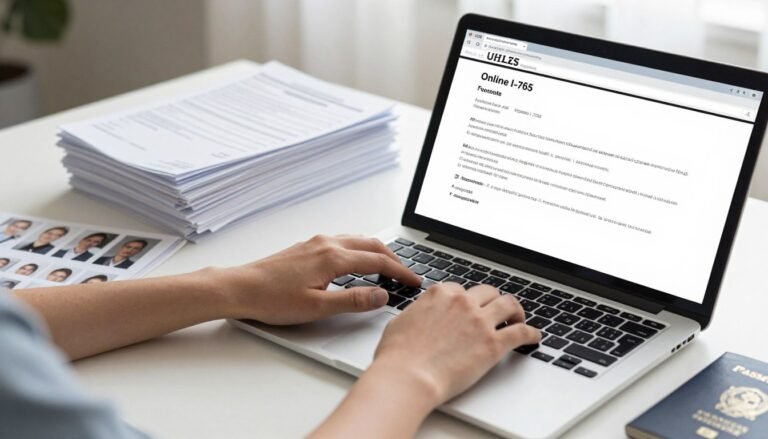

Green Card Processing Time 2026: What to Expect
Understanding green card processing time in 2026 is critical for anyone planning to live permanently in the United States. The wait can feel endless when your future depends on it.
Processing times vary widely based on your green card category. Some cases take months. Others stretch into years.
Immigration policy changes and visa availability affect how long you wait. The number of applicants also impacts processing times significantly.
This comprehensive guide breaks down current processing times for different green card categories. You’ll learn what factors influence wait times and how to navigate the process efficiently.
What the Green Card Process Means in 2026
A green card gives you lawful permanent resident status in the United States. This document allows you to live and work anywhere in the country without restrictions.
Green card holders enjoy most rights that U.S. citizens have. You can apply for citizenship after meeting residency requirements.
Understanding Key Immigration Terms
Several important terms help you understand the green card process better:
- Priority Date: The date USCIS receives your initial petition. This date determines your place in line for visa availability.
- Visa Bulletin: A monthly publication from the U.S. Department of State showing which priority dates are current for different countries and categories.
- Form I-485: The application to register permanent residence or adjust status. This is your actual green card application.
- Premium Processing: An optional service that speeds up certain petition reviews for an additional fee.
- Adjustment of Status: The process of applying for a green card while already in the United States.
- Consular Processing: Applying for an immigrant visa through a U.S. embassy or consulate in your home country.
Who Qualifies for a Green Card
Several pathways lead to permanent residence in the United States. Your eligibility depends on your specific situation.
Family-based green cards are available if you have close relatives who are U.S. citizens or permanent residents. Immediate relatives of citizens face no numerical limits.
Employment-based green cards require a job offer or extraordinary ability in your field. These categories have annual quotas that affect processing times.
Diversity visa lottery provides green cards to people from countries with low immigration rates to the United States. Winners must meet education and work requirements.
Special immigrant categories include religious workers, certain international organization employees, and Afghan or Iraqi nationals who helped the U.S. military.
Refugee or asylee status holders can apply for green cards after one year of physical presence in the United States.
Green Card Requirements and Eligibility in 2026
Meeting specific requirements is essential before starting your green card application. Each category has different eligibility rules.
General Eligibility Requirements
All green card applicants must meet certain baseline requirements regardless of category:
- You must be admissible to the United States under immigration law
- You cannot have certain criminal convictions or immigration violations
- You must pass medical examinations from approved physicians
- You need to demonstrate you won’t become a public charge
- You must not pose security threats to the United States
- You cannot have previously been deported or removed from the country
Family-Based Green Card Eligibility
Family relationships determine eligibility for this green card category. The strength of your relationship affects wait times significantly.
Immediate relatives of U.S. citizens include spouses, unmarried children under 21, and parents. These relationships have no waiting periods for visa availability.
Family preference categories face annual limits and longer wait times. These include adult children of citizens, siblings of citizens, and spouses of permanent residents.
Employment-Based Green Card Eligibility
Work-related green cards require specific qualifications and often employer sponsorship. Different categories serve different professional levels.
EB-1 Category (Priority Workers)
This category serves individuals with extraordinary ability, outstanding professors and researchers, and multinational executives. No labor certification is required.
- Extraordinary ability in sciences, arts, education, business, or athletics
- Outstanding professors or researchers with international recognition
- Multinational managers or executives with qualifying experience
- No job offer required for extraordinary ability cases
EB-2 Category (Advanced Degrees)
This category requires advanced degrees or exceptional ability. National Interest Waiver can eliminate job offer requirements.
- Master’s degree or higher, or bachelor’s plus five years experience
- Exceptional ability in sciences, arts, or business
- Labor certification usually required unless NIW approved
- Job offer typically necessary without waiver
EB-3 Category (Skilled Workers)
This category includes professionals, skilled workers, and other workers. Labor certification is mandatory for all applicants.
- Bachelor’s degree for professionals
- At least two years training or experience for skilled workers
- Less than two years experience for other workers
- Permanent job offer required
EB-4 and EB-5 Categories
Special immigrant categories and investor visas have unique requirements. Investment amounts and special qualifications apply.
- Religious workers, certain international employees
- Minimum $800,000 investment in targeted areas
- $1.05 million investment in other areas
- Job creation requirements for investor visas
Essential Documents You Need
Gathering the right documents before filing saves time and prevents delays. Missing documents cause the most common processing setbacks.
Personal identification documents include birth certificates, passports, and marriage certificates. You need certified translations for documents not in English.
Financial documents prove you can support yourself. Tax returns, employment letters, and bank statements demonstrate financial stability.
Educational credentials require degree certificates and transcripts. Foreign degrees need credential evaluations from approved organizations.
Medical examination results must come from USCIS-approved civil surgeons. Vaccinations must be current according to CDC requirements.
Police certificates show your criminal history from every country where you lived for six months after age 16.
The green card process involves multiple stages. Understanding each step helps you prepare properly and avoid mistakes.
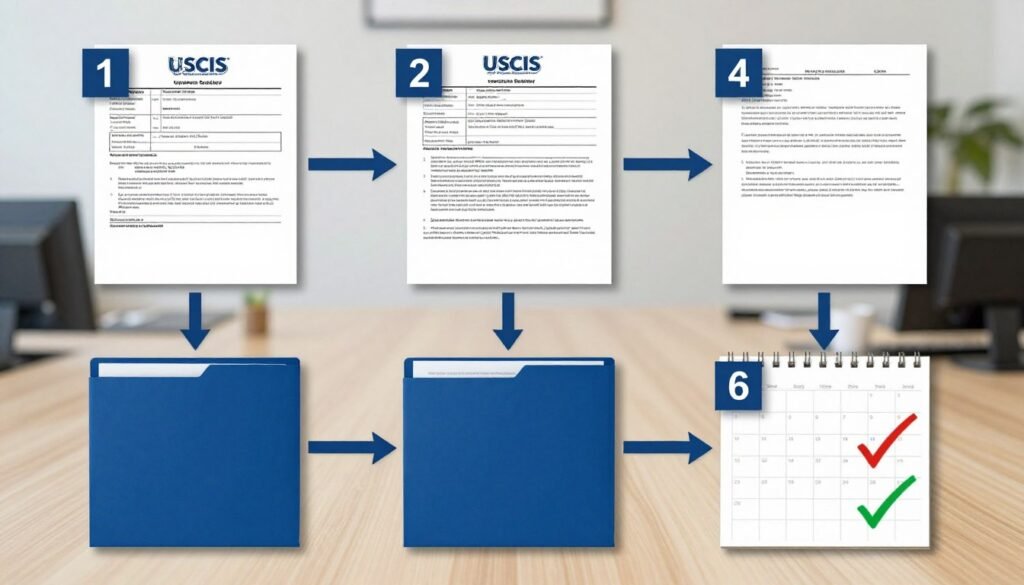
Step 1: Determine Your Eligibility Category
Identifying the correct green card category is your first critical decision. This choice affects your entire timeline and process.
Review family relationships if applying through relatives. Immediate relative status provides the fastest path with no numerical limits.
Assess your professional qualifications for employment categories. Higher preference categories like EB-1 typically process faster than EB-3.
Consider National Interest Waiver options if you qualify. This path eliminates labor certification requirements and shortens processing time.
Step 2: File the Initial Petition
Your sponsor files the appropriate petition form with USCIS. This establishes your priority date for visa availability.
Form I-130 is filed by your U.S. citizen or permanent resident relative for family-based cases. Processing currently takes 10 to 28 months depending on the USCIS service center.
Form I-140 is filed by your employer for employment-based cases. Standard processing takes 6 to 12 months without premium processing.
Premium processing is available for most Form I-140 petitions. This service costs $2,805 and guarantees 15-day processing for the petition.
Step 3: Wait for Priority Date to Become Current
The visa bulletin determines when you can proceed to the next step. Your priority date must be current before filing Form I-485.
Check the visa bulletin monthly on the U.S. Department of State website. Two charts show “Final Action Dates” and “Dates for Filing.”
Immediate relatives of U.S. citizens skip this waiting period. Their visa numbers are always available regardless of priority dates.
Country-specific backlogs exist for nations with high immigration demand. Applicants from China, India, Mexico, and the Philippines often face longer waits.
Step 4: File Form I-485 or Process Through Consulate
Once your priority date is current, you choose between two processing methods. Your location determines which option works best.
Adjustment of status through Form I-485 works if you’re already in the United States. You can remain in the country while USCIS processes your application.
Consular processing happens at U.S. embassies abroad. You attend an immigrant visa interview at the consulate in your home country.
Current Form I-485 processing times range from 8 to 24 months. Service center location and case complexity affect these timelines significantly.
Step 5: Attend Biometrics Appointment
USCIS schedules your biometrics appointment after accepting your Form I-485. This typically occurs 4 to 8 weeks after filing.
The appointment takes about 30 minutes at an Application Support Center. Technicians collect your fingerprints, photograph, and signature.
Missing this appointment delays your entire case. Reschedule immediately if you cannot attend the original appointment date.
Step 6: Complete the Interview
USCIS may schedule an adjustment of status interview. Not all cases require interviews, but you should prepare for one.
The interview typically occurs 6 to 18 months after filing Form I-485. An immigration officer reviews your application and asks questions.
Bring original documents that support your application. This includes identification, financial records, and relationship evidence for family-based cases.
Answer all questions honestly and directly. Bring an interpreter if you’re not comfortable communicating in English.
Step 7: Receive Your Decision
USCIS mails your decision after reviewing all evidence. Approval means your green card arrives within 2 to 4 weeks.
Denials include reasons and information about appeals. You typically have 30 days to file a motion to reopen or reconsider.
Requests for Evidence (RFE) mean USCIS needs additional documentation. Respond within the deadline to avoid automatic denial.

Family-Based Green Card Assistance
Reunite with your loved ones faster. Our experts handle family petition preparation, documentation, and interview preparation to minimize processing delays.
- Immediate relative petitions (spouses, children, parents)
- Family preference category applications
- K-1 fiancé visa to green card transitions
- Comprehensive document review and preparation

Employment-Based Green Card Support
Navigate complex employment categories with confidence. We specialize in EB-1, EB-2 NIW, and EB-3 cases to secure your permanent residence through work.
- EB-1 extraordinary ability and executive petitions
- EB-2 National Interest Waiver applications
- PERM labor certification process management
- Premium processing strategic guidance

Interview & Documentation Prep
Prepare thoroughly for your green card interview. We provide mock interviews, document organization, and strategic coaching to maximize your approval chances.
- Comprehensive interview preparation sessions
- Document collection and organization assistance
- Response strategy for common interview questions
- Post-interview follow-up support
Green Card Processing Time and Costs in 2026
Understanding current processing times helps you plan your immigration timeline. Wait times vary significantly based on your specific category and circumstances.
Current Processing Times by Category
USCIS updates official processing times regularly on their website. These estimates represent the time from filing to decision for most cases.
| Green Card Category | Petition Processing | Visa Wait Time | Form I-485 Processing | Total Estimated Time |
| Immediate Relative (spouse, parent, child under 21) | 12-20 months | No wait | 10-18 months | 22-38 months |
| Family Preference F1 (unmarried adult children) | 13-28 months | 6-8 years | 12-22 months | 7-10 years |
| Family Preference F2A (spouse/child of permanent resident) | 13-28 months | 2-3 years | 12-22 months | 3-5 years |
| EB-1 (priority workers) | 8-12 months (or 15 days with premium) | Current or minimal | 10-18 months | 18-30 months |
| EB-2 (advanced degree) | 10-15 months (or 15 days with premium) | Varies by country (India: 10+ years, China: 2-3 years, others: 1-2 years) | 12-20 months | 2-12+ years |
| EB-2 NIW (National Interest Waiver) | 12-18 months (or 15 days with premium) | Same as EB-2 | 12-20 months | 2-12+ years |
| EB-3 (skilled workers) | 12-18 months (or 15 days with premium) | 2-4 years (longer for India/China) | 14-24 months | 3-7+ years |
| EB-5 (investor) | 24-36 months | Varies by country | 18-30 months | 4-8+ years |
Factors That Affect Your Processing Time
Several variables influence how quickly your case moves through the system. Some factors you can control, while others depend on external circumstances.
USCIS service center workload creates regional variations in processing times. Some centers process cases months faster than others for identical petition types.
Country of birth significantly impacts employment-based wait times. Applicants from India and China face substantially longer visa availability waits due to per-country limits.
Completeness of your application affects processing speed dramatically. Missing documents or errors trigger Requests for Evidence that add 2 to 6 months to your timeline.
Security and background checks can cause unexpected delays. Some cases require additional administrative processing that extends timelines by several months.
USCIS policy changes periodically affect processing priorities. New administrations often adjust which case types receive expedited handling.
Premium processing availability dramatically reduces petition review time from months to just 15 calendar days. This service costs $2,805 but only applies to Form I-140 and certain other petitions.
Understanding the Visa Bulletin
The visa bulletin controls when you can file Form I-485. Reading it correctly helps you understand your wait time.
The bulletin shows two different charts each month. The “Final Action Dates” chart indicates when visa numbers are available for final processing.
The “Dates for Filing” chart sometimes allows earlier filing of Form I-485. USCIS announces monthly which chart applies to adjustment of status applications.
Priority dates advance at different speeds for different countries. Applicants from countries with high immigration demand see slower movement.
Retrogressions occur when priority dates move backward. This happens when visa demand exceeds available numbers in a category.
Government Filing Fees
Green card applications involve multiple fees that add up quickly. Budget for these costs when planning your application.
- Form I-130 (Family Petition): $625 filing fee
- Form I-140 (Employment Petition): $700 filing fee
- Form I-485 (Adjustment of Status): $1,440 for applicants age 14 and over, $950 for children under 14
- Form I-765 (Work Permit): Usually included with I-485, otherwise $410
- Form I-131 (Travel Document): Usually included with I-485, otherwise $630
- Premium Processing (Form I-907): $2,805 for 15-day processing of eligible petitions
- Medical Examination: $200-$500 depending on location and required vaccinations
- Biometrics Fee: Typically included in Form I-485 fee
Total costs for a single applicant typically range from $2,000 to $5,000. Families with multiple applicants should multiply these costs accordingly.
Attorney fees vary widely based on case complexity. Simple family-based cases might cost $2,000 to $5,000, while complex employment cases can exceed $10,000.
Common Mistakes to Avoid in Your Green Card Application
Small errors can cause major delays or even denials. Learning from others’ mistakes helps you avoid common pitfalls.
Filing Errors and Incomplete Applications
Incomplete applications are the most common reason for processing delays. USCIS returns improperly filed petitions without processing them.
Mistake 1: Using outdated forms. USCIS regularly updates form versions. Using an old version results in automatic rejection and wasted filing fees.
Always download forms directly from the official USCIS website immediately before filing. Check the edition date in the form’s bottom corner matches the current version.
Mistake 2: Missing signatures or dates. Every required signature field must be signed. Electronic signatures are not accepted on paper filings.
Review each page of your forms before mailing. Use blue ink for signatures so USCIS can distinguish originals from photocopies.
Mistake 3: Incorrect or missing filing fees. Paying the wrong amount delays processing for months. USCIS returns applications with incorrect payment.
Verify current fees on the USCIS website before submitting payment. Fees change periodically, and outdated information causes unnecessary problems.
Mistake 4: Insufficient supporting documentation. Every claim in your application needs documentary evidence. Missing documents trigger Requests for Evidence.
Create a checklist of required documents for your specific category. Submit clear, legible copies of all required certificates and records.
Mistake 5: Poor quality document copies. USCIS cannot process illegible documents. Faded photocopies or unclear scans delay your case.
Make high-quality copies or scans of all documents. Color copies work best for documents with official seals or stamps.
Timing and Status Mistakes
Understanding immigration timing rules prevents status violations. Mistakes in this area can derail your entire application.
Mistake 6: Filing Form I-485 before priority date is current. Premature filing wastes money and time. USCIS rejects applications filed before visa availability.
Check the visa bulletin carefully before filing adjustment of status. Wait until USCIS announces which chart controls filing dates.
Mistake 7: Allowing status to lapse before filing. Falling out of lawful status complicates adjustment of status applications. Some violations make you ineligible to adjust status.
Maintain valid status continuously until you file Form I-485. Extend or change status before current authorization expires.
Mistake 8: Unauthorized employment. Working without authorization violates immigration law. This can make you ineligible for adjustment of status.
Never work in the United States without proper employment authorization. Wait for your Employment Authorization Document before starting any job.
Documentation and Evidence Mistakes
Strong evidence makes or breaks your case. Weak documentation leads to denials even for qualified applicants.
Mistake 9: Insufficient relationship evidence for family cases. USCIS scrutinizes family relationships carefully. Bona fide relationship evidence prevents fraud suspicions.
Submit joint financial documents, photographs together, correspondence, and affidavits from people who know your relationship.
Mistake 10: Inadequate ability-to-pay evidence for employment cases. Sponsors must prove they can pay the offered wage. Insufficient financial evidence results in petition denials.
Employers should submit tax returns, financial statements, and payroll records showing ability to pay the proffered wage.
Mistake 11: Missing or expired medical examinations. Medical exams have limited validity periods. Expired exams require repeating the entire examination.
Schedule your medical exam strategically. Results remain valid for two years if you file Form I-485 before expiration.
Communication and Follow-Up Mistakes
Staying connected with USCIS throughout your case prevents missed opportunities and deadlines.
Mistake 12: Failing to update address with USCIS. USCIS mails important notices to your address of record. Missing these notices can result in case abandonment.
File Form AR-11 within 10 days of any address change. Also update your address online for pending applications through your USCIS account.
Mistake 13: Missing RFE deadlines. Requests for Evidence have strict response deadlines. Failure to respond results in automatic application denial.
Respond to RFEs well before the deadline. Request extensions only if absolutely necessary, and do so before the original deadline.
Mistake 14: Not preparing for the interview. Adjustment of status interviews test your case’s legitimacy. Unprepared applicants raise red flags.
Review your entire application before the interview. Bring original documents and be ready to explain any inconsistencies.
Premium Processing Misunderstandings
Premium processing speeds up petition review but doesn’t eliminate all wait times. Many applicants misunderstand its scope.
Mistake 15: Expecting premium processing to speed up the entire process. Premium processing only affects Form I-140 review time. It doesn’t expedite labor certification, visa availability, or Form I-485 processing.
Use premium processing strategically for petition approval. Understand it won’t eliminate visa bulletin wait times.
Tips to Improve Your Green Card Approval Chances
Strategic preparation significantly increases your approval likelihood. These proven tips help you submit the strongest possible application.
Application Preparation Strategies
Thorough preparation prevents most common problems. Investing time upfront saves months of delays later.
Tip 1: Start gathering documents early. Some documents take weeks to obtain from government agencies. Begin collecting papers several months before filing.
Request birth certificates, police certificates, and educational credentials well in advance. International documents often require apostilles or certifications.
Tip 2: Organize your documentation systematically. Clear organization helps USCIS officers review your case efficiently. Well-organized applications receive faster processing.
Create a table of contents for your filing. Tab separate sections and label everything clearly with your name and case number.
Tip 3: Write a detailed cover letter. Cover letters guide reviewers through your application. Highlight key evidence and explain any potential concerns proactively.
Summarize your eligibility for the visa category. Point out important documents and address any unusual circumstances.
Building a Strong Evidence Package
Quality evidence matters more than quantity. Focus on documents that directly prove your eligibility.
Tip 4: Submit original documents only when required. USCIS accepts clear copies for most documents. Keep originals safe unless specifically requested.
Make high-quality photocopies of all documents. Bring originals to your interview if required.
Tip 5: Provide certified translations for foreign documents. All non-English documents need proper translations. The translator must certify accuracy and competency.
Use professional translation services familiar with immigration requirements. Include both the original and translation in your submission.
Tip 6: Include explanatory statements for red flags. Address potential concerns directly in your application. Unexplained issues raise suspicions.
Write clear explanations for employment gaps, name changes, or previous visa denials. Attach supporting evidence for your explanations.
Strategic Timing Considerations
When you file can be as important as what you file. Smart timing optimizes your processing timeline.
Tip 7: Monitor visa bulletin predictions. Immigration attorneys and analysts publish visa bulletin predictions. These help you anticipate priority date movement.
Prepare your Form I-485 package before your priority date becomes current. Submit immediately when the bulletin allows filing.
Tip 8: Consider concurrent filing when eligible. Immediate relatives can file Forms I-130 and I-485 together. This saves months compared to sequential filing.
Take advantage of concurrent filing whenever possible. This approach significantly reduces overall processing time.
Tip 9: Use premium processing strategically. Premium processing guarantees 15-day petition review. Use it when faster approval provides strategic advantages.
Consider premium processing if your priority date is nearly current. Quick I-140 approval positions you to file I-485 immediately.
Professional Representation Benefits
Immigration attorneys provide value beyond form preparation. Their expertise helps navigate complex situations.
Tip 10: Consult an attorney for complex cases. Cases involving criminal history, prior violations, or unusual circumstances benefit from legal expertise.
Attorneys identify potential problems before filing. They develop strategies to address weaknesses in your case.
Tip 11: Get expert help with RFEs. Requests for Evidence require careful responses. Attorneys understand what USCIS needs to approve your case.
Never ignore an RFE or submit an incomplete response. Professional guidance increases RFE response success rates.
Tip 12: Consider professional representation for interviews. Attorneys can attend adjustment of status interviews with you. Their presence provides legal protection and stress reduction.
Interview preparation with an attorney helps you answer questions confidently. They ensure you present your case effectively.
Maintaining Status and Compliance
Protecting your immigration status throughout the process prevents eligibility problems.
Tip 13: Never violate your current status. Status violations can make you ineligible for adjustment of status. Maintain continuous lawful presence.
Extend or change status well before expiration dates. Don’t let authorization lapses complicate your green card application.
Tip 14: Keep copies of everything. Maintain complete copies of all filings and correspondence. Documentation proves what you submitted and when.
Create digital backups of all documents. Organize files by date and form type for easy reference.
Tip 15: Respond promptly to all USCIS requests. Quick responses to notices demonstrate cooperation. Delays can result in case denials.
Check your mail and USCIS online account regularly. Act immediately when USCIS contacts you.
Latest Green Card Processing Updates for 2026
Immigration policies and processing priorities shift regularly. Staying informed about current changes helps you adapt your strategy.
Recent USCIS Processing Time Changes
USCIS has implemented several initiatives aimed at reducing processing backlogs. These changes affect different case types unevenly.
The agency hired thousands of additional officers in late 2024 and early 2025. This staffing increase has begun reducing wait times for certain applications.
Form I-485 processing times decreased by approximately 15 percent at some service centers. However, other centers still face significant backlogs.
Premium processing expanded to additional form types in 2025. USCIS may extend this service to more petitions in 2026.
Visa Bulletin Trends and Predictions
Understanding visa bulletin patterns helps you anticipate your wait time. Recent trends provide clues about future movement.
Employment-based categories showed modest forward movement throughout 2025. EB-1 remains current or nearly current for most countries.
EB-2 and EB-3 categories face continued backlogs for India and China. Per-country limits prevent faster advancement despite available visa numbers overall.
Family preference categories advanced slowly but steadily. Immediate relative processing remains unaffected by numerical limits.
Retrogression risks remain for oversubscribed categories. Sudden backward movement can occur when demand exceeds supply.
Policy Changes Affecting Processing
Federal immigration policy continues evolving. Changes can accelerate or delay your green card timeline.
Public charge rule modifications affect financial evidence requirements. Current rules require less extensive financial documentation than previous versions.
Applicants must still demonstrate they won’t become primarily dependent on government benefits. However, the definition of public charge has narrowed.
Interview waiver expansions have reduced interview requirements for certain case types. More applicants receive approvals without in-person interviews.
Employment-based cases with strong documentation increasingly receive interview waivers. This saves several months in processing time.
Biometrics reuse policies allow USCIS to reuse fingerprints from previous applications. This eliminates biometrics appointment wait times for some applicants.
Technology and Online Processing Updates
USCIS continues digitizing immigration processes. Online systems improve transparency and communication.
More forms now support online filing through the USCIS online account system. Electronic filing often results in faster receipt notices.
Case status updates became more detailed and frequent. Online accounts provide better visibility into processing stages.
Electronic document submission for RFE responses speeds up processing. Digital submissions eliminate mail delivery delays.
Employment-Based Green Card Developments
Work-related green card processing saw several important changes recently. These affect applicants across all employment categories.
The Department of Labor streamlined PERM labor certification processing. Average processing times for PERM applications decreased to 6 to 9 months.
National Interest Waiver cases receive increased scrutiny but reasonable processing times. NIW remains attractive for qualified applicants.
Premium processing remains available for most Form I-140 petitions. The 15-day processing guarantee continues with few disruptions.
What to Watch in 2026
Several potential changes could affect green card processing this year. Stay alert to these developing situations.
Possible legislative reforms have been discussed in Congress. Comprehensive immigration reform could dramatically change processing times and visa availability.
Proposed changes include increasing per-country limits and creating new visa categories. These reforms remain uncertain but could help backlogged applicants.
Administrative processing changes may continue as USCIS refines operations. Process improvements could reduce processing times further.
USCIS plans additional online filing expansions. More forms may become available for electronic submission.
Economic factors influence visa bulletin movement. Economic conditions affect employment-based visa demand significantly.
Monitor official USCIS announcements regularly. Subscribe to updates from the U.S. Department of State for visa bulletin news.
Check processing times on the USCIS website monthly. Service center workloads shift, creating processing time variations.
Important Resources for Staying Updated:
- USCIS Processing Times: Check current processing times at egov.uscis.gov/processing-times
- Visa Bulletin: Monthly updates at travel.state.gov visa bulletin
- USCIS Policy Manual: Official guidance at uscis.gov/policy-manual
- Case Status: Track your case at egov.uscis.gov/casestatus
Conclusion: Planning Your Green Card Journey in 2026
Green card processing time in 2026 varies dramatically based on your category and circumstances. Family-based immediate relatives face the shortest timelines, while employment-based applicants from high-demand countries experience the longest waits.
Understanding processing times helps you plan realistically. Most cases take between two and five years from start to finish.
Several factors influence your specific timeline. Your country of birth, chosen category, application completeness, and USCIS service center all affect processing speed.

Preparation makes the difference between smooth processing and frustrating delays. Gather complete documentation, file accurate applications, and maintain valid status throughout the process.
Avoid common mistakes that cause unnecessary delays. Use current forms, submit complete documentation, and respond promptly to all USCIS requests.
Professional guidance provides significant value for complex cases. Immigration attorneys help navigate challenges and maximize approval chances.
Monitor visa bulletin updates regularly if you face visa availability wait times. Priority dates can advance or retrogress unexpectedly based on visa demand.
Stay informed about policy changes that might affect your case. USCIS procedures and immigration policies continue evolving throughout 2026.
Premium processing accelerates petition review when available. Consider this option if faster approval provides strategic advantages for your timeline.
Remember that every case is unique. Processing times represent averages, and your actual experience may differ based on specific circumstances.
Your green card application represents a significant investment of time, money, and emotional energy. Proper preparation and realistic expectations help you navigate this journey successfully.
Take action today by gathering your documents and understanding your eligibility. The sooner you start, the sooner you’ll achieve your permanent residence goal.