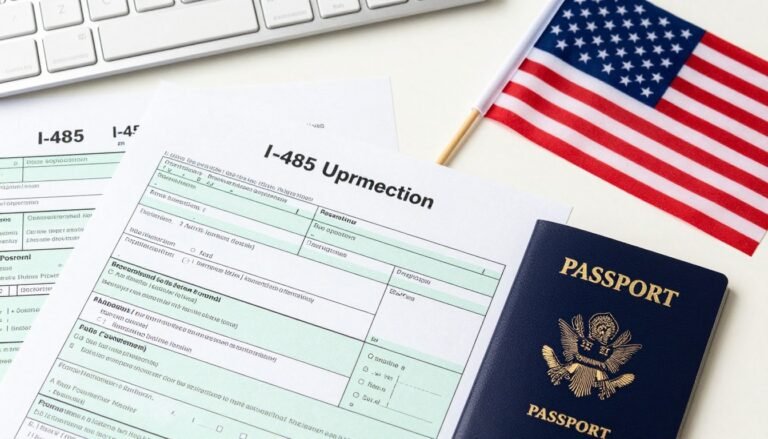

How Immigration Laws Impact the U.S. Economy
Immigration shapes the American economy in profound ways. Every year, millions of immigrants enter labor markets across the United States. They fill critical jobs and create new businesses.
Understanding how immigration laws impact US economy helps you make informed decisions. Whether you’re an immigrant seeking work opportunities or a citizen curious about economic policy, this guide explains the connections clearly.
The year 2026 brings new immigration policy discussions. Border enforcement, visa programs, and work permits remain at the center of national debate. These laws directly affect economic growth, wages, and employment across the nation.
Quick Fact: According to the Pew Research Center, immigrants comprise approximately 17% of the labor force in the United States. Their economic contributions extend across construction, services, technology, and healthcare sectors.
This article explores eight key areas. You’ll learn about immigration categories, economic impacts, policy processes, and common misconceptions. We provide actionable tips and latest updates to help you navigate this complex topic.
What Immigration Laws Mean for the U.S. Economy
Immigration laws are regulations that control who enters the United States. They determine work authorization, residency rights, and pathways to citizenship. These rules fundamentally shape the American labor market.
Key Terms You Should Know
Understanding basic terminology helps clarify economic discussions. Let’s break down essential concepts that appear throughout immigration debates.
Immigration Laws
Federal regulations governing entry, stay, and work rights for foreign nationals. Congress creates these laws. The Department of Homeland Security enforces them.
Economic Impact
The measurable effects of immigration on GDP, employment, wages, and business activity. Economists track both short-term and long-term changes across multiple sectors.
Labor Market
The supply and demand for workers in the economy. Immigration directly influences labor force size, skills availability, and wage levels in different industries.
Labor Force
All people working or actively seeking employment. In the United States, immigrants represent a significant share of the total labor force across various job categories.
How Different Immigration Categories Affect the Economy
The United States operates multiple immigration programs. Each category serves different economic purposes and creates distinct market effects.
- Employment-based visas bring skilled workers who fill specialized positions in technology, healthcare, and engineering sectors
- Family-based immigration reunites relatives who then participate in the labor force and contribute to consumer demand
- Temporary work visas address seasonal labor needs in agriculture, tourism, and construction industries
- Refugee and asylum programs provide humanitarian protection while adding workers to the labor market over time
- Diversity visa lottery introduces workers from underrepresented countries, broadening the talent pool
Statistical Overview of Immigrant Economic Contribution
Numbers tell a compelling story about immigration and the economy. Recent research provides clear evidence of immigrant contributions to national prosperity.
| Economic Indicator | Immigrant Contribution | Impact Level |
| Labor Force Participation | 17% of total workforce | High |
| Business Ownership | 28% of new businesses started by immigrants | Very High |
| GDP Contribution | $2 trillion annually | Very High |
| Tax Contributions | $492 billion in federal, state, local taxes | High |
| STEM Workforce | 25% of science and engineering jobs | Very High |
These statistics come from government data and research institutions. They demonstrate how deeply integrated immigrants are within the American economic system.
Important Note: Economic impacts vary by immigration category, skill level, and geographic location. Rural areas experience different effects than urban centers. Service industries show different patterns than manufacturing sectors.
Who Is Affected by Immigration Laws and Economic Changes
Immigration policy creates ripple effects throughout the economy. Multiple groups experience direct and indirect consequences from these regulations.
Key Stakeholder Groups
Three primary groups navigate the intersection of immigration laws and economic impact. Each faces unique challenges and opportunities.
Immigrants and Visa Applicants
Foreign nationals seeking to work, study, or settle in the United States face complex application processes. Work authorization determines their ability to earn income and build careers.
Changes in immigration policy directly affect their employment prospects. Processing delays can postpone job starts. Policy shifts may eliminate certain pathways entirely.
Employers and Businesses
Companies across all sectors rely on immigrant workers to fill positions. Technology firms sponsor H-1B visas for software engineers. Agricultural operations depend on seasonal workers.
Immigration restrictions create labor shortages in critical industries. Businesses must navigate compliance requirements while competing for limited visa allocations.
American Workers and Taxpayers
Native-born workers share labor markets with immigrants. Some experience increased competition for jobs. Others benefit from complementary skills that create new positions.
Taxpayers fund immigration enforcement and services. They also receive economic benefits through immigrant tax contributions and consumer spending.

Major Immigration Categories That Impact Economy
Understanding specific visa types clarifies how immigration laws shape economic outcomes. Each category serves distinct purposes and affects the labor market differently.
Employment-Based Immigration
These visas bring workers with specific skills the United States needs. Categories range from EB-1 for individuals with extraordinary ability to EB-3 for skilled and unskilled workers.
- H-1B visas for specialty occupations in technology and healthcare
- L-1 visas for intracompany transfers
- O-1 visas for individuals with extraordinary ability
- EB-5 investor visas requiring significant capital investment
Family-Based Immigration
These programs allow U.S. citizens and permanent residents to sponsor relatives. Family members eventually enter the workforce and contribute to economic activity.
- Immediate relative visas with no numerical limits
- Family preference categories with annual caps
- Spouses and minor children of green card holders
- Adult children and siblings of U.S. citizens
Humanitarian Programs
Refugee and asylum programs provide protection while adding participants to the labor force. These individuals often face initial employment barriers but contribute significantly over time.
- Refugee resettlement with immediate work authorization
- Asylum seekers who may work after 180 days
- Temporary Protected Status for certain nationalities
- Special Immigrant Visas for interpreters and support staff
Documents and Processes Involved
Immigration procedures require extensive documentation. Understanding these requirements helps both immigrants and employers navigate the system effectively.
- Passport and travel documents
- Educational credentials and diplomas
- Employment letters and job offers
- Financial evidence and bank statements
- Medical examination results
- Police clearance certificates
For Individual Applicants
- Labor Condition Applications for H-1B visas
- PERM labor certification for permanent residence
- Company financial statements and tax records
- Detailed job descriptions and requirements
- Prevailing wage determinations
- Evidence of recruiting efforts
For Sponsoring Employers
- Employment statistics and labor market data
- Wage information by occupation and region
- Business formation and ownership records
- Tax revenue data from federal and state sources
- Industry-specific workforce composition
- Economic growth indicators and GDP measurements
For Economic Analysis
How Immigration Laws Are Created and Changed
Immigration policy emerges from a complex legislative process. Multiple government branches participate in creating, implementing, and enforcing these regulations.
The Legislative Journey
Congress holds primary authority over immigration law. The process involves numerous steps before a bill becomes law.
- Bill Introduction: A senator or representative proposes new immigration legislation addressing specific economic or humanitarian concerns.
- Committee Review: Judiciary committees in both chambers examine the proposal, hold hearings, and gather expert testimony about economic impacts.
- Floor Debate: The full House and Senate debate the bill’s merits, discussing potential effects on the labor market and economy.
- Voting and Passage: Both chambers must pass identical versions of the bill through majority votes.
- Presidential Action: The President signs the bill into law or vetoes it, sending it back to Congress.
- Implementation: Federal agencies create regulations and procedures to enforce the new law.
Key Federal Agencies Involved
Several government departments share responsibility for immigration enforcement and administration. Each agency handles specific aspects of the system.
- Department of Homeland Security (DHS) oversees most immigration functions including border security and visa processing
- U.S. Citizenship and Immigration Services (USCIS) processes applications for visas, green cards, and citizenship
- U.S. Customs and Border Protection (CBP) manages border crossings and enforces entry regulations
- Immigration and Customs Enforcement (ICE) handles interior enforcement and removal proceedings
- Department of State operates consular services abroad and issues visas to foreign nationals
- Department of Labor (DOL) certifies labor conditions and protects American workers’ wages
How Policy Changes Affect Economic Outcomes
When immigration laws change, economic effects ripple through multiple sectors. The timeline from policy change to measurable impact varies significantly.
Short-Term Effects (1-2 Years)
Immediate policy changes create rapid market adjustments. Businesses respond quickly to new visa availability or restrictions.
- Visa application volumes shift dramatically
- Hiring plans change in affected industries
- Labor shortages emerge in restricted sectors
- Compliance costs increase for employers
Long-Term Effects (5-10 Years)
Sustained policy directions reshape the entire economy. Immigration levels influence population growth, innovation rates, and competitive positioning.
- Labor force composition shifts across industries
- Economic growth rates respond to population changes
- Business formation patterns evolve
- Regional economies develop differently based on migration flows
- Tax revenues adjust to changing workforce size
Policy Lag Warning: Economic data often lags behind policy implementation by several years. Researchers need time to collect information and analyze trends. Early assessments may not capture full impacts.
Processing Time and Economic Costs of Immigration
Immigration processes involve significant time investments and financial costs. Both immigrants and the economy bear these expenses.
Visa Processing Timelines
Wait times vary dramatically by visa category and country of origin. Some applications process in months while others take years or decades.
| Visa Category | Average Processing Time | Annual Cap | Government Filing Fee |
| H-1B Specialty Occupation | 3-6 months | 85,000 visas | $460-$780 |
| EB-2 Employment-Based Green Card | 1-3 years | 40,040 visas | $700-$1,440 |
| Family-Based Immigration (F2A) | 2-5 years | 87,934 visas | $535-$1,225 |
| L-1 Intracompany Transfer | 2-4 months | No cap | $460-$805 |
| O-1 Extraordinary Ability | 2-3 months | No cap | $460 |
Premium processing services can reduce wait times to 15 business days for an additional fee. However, this option isn’t available for all categories.
Economic Costs of Processing
Immigration applications involve multiple expense categories beyond government fees. Total costs include legal representation, documentation, and indirect economic impacts.
Direct Applicant Costs
- Government filing fees ($460-$14,000 depending on category)
- Attorney fees ($3,000-$15,000 for complex cases)
- Medical examinations ($200-$500)
- Document translation ($50-$200 per document)
- Travel costs for interviews
Employer Sponsorship Costs
- PERM labor certification ($4,000-$7,000)
- Legal fees ($5,000-$20,000)
- Prevailing wage studies
- Recruitment advertising expenses
- Administrative processing time
Economic Opportunity Costs
- Lost productivity during wait times
- Delayed business expansion plans
- Foregone innovation from restricted talent
- Competition disadvantages versus other nations
- Reduced consumer spending from uncertainty
Government Revenue from Immigration Fees
Immigration applications generate substantial revenue for federal agencies. These funds support processing operations and enforcement activities.
Annual Fee Revenue: USCIS collects approximately $4-5 billion annually in application fees. Most of this revenue funds the agency’s operations, as USCIS receives limited direct congressional appropriations.
Common Mistakes People Make About Immigration and Economy
Misunderstandings about immigration’s economic impact persist despite extensive research. These misconceptions shape public debate and policy discussions.

Five Major Misconceptions
Evidence contradicts several widespread beliefs about immigration economics. Understanding the actual data helps form accurate perspectives.
Mistake #1: Immigrants Take Jobs from Americans
This oversimplifies complex labor market dynamics. Research shows immigration creates complementary employment rather than simple substitution.
The Reality: Immigrants often fill positions that native workers don’t pursue. They also create demand for goods and services that generates new jobs. Studies by the Pew Research Center demonstrate that areas with higher immigration often experience stronger overall employment growth.
Different skill levels create different effects. High-skilled immigrants typically complement American workers rather than compete directly. Low-skilled immigration shows mixed effects depending on local labor market conditions.
Mistake #2: Immigration Lowers Wages for Everyone
Wage effects vary significantly by occupation, education level, and geographic location. Blanket statements miss important nuances.
The Reality: Most economic research finds minimal wage impacts for native workers overall. Some studies show slight wage decreases for workers without high school diplomas who compete directly with recent immigrants.
However, other workers often experience wage gains. Immigrants increase demand for complementary skills. Business owners, managers, and workers in occupations that benefit from immigrant labor may see higher earnings.
Mistake #3: Immigrants Don’t Pay Taxes
This myth ignores substantial tax contributions from immigrant workers and business owners throughout the United States.
The Reality: Immigrants pay approximately $492 billion in federal, state, and local taxes annually. This includes income taxes, payroll taxes, property taxes, and sales taxes.
Even undocumented immigrants contribute through payroll tax withholding and sales taxes. Many file tax returns using Individual Taxpayer Identification Numbers (ITINs). These contributions fund Social Security and Medicare programs that some immigrants never claim.
Mistake #4: Immigration Drains Government Resources
This misconception fails to account for tax contributions and long-term fiscal effects across generations.
The Reality: First-generation immigrants may use certain public services. However, their children and grandchildren typically contribute more in taxes than they receive in benefits.
Research shows immigration creates positive fiscal impacts over time. The National Academies of Sciences found that immigration’s long-term fiscal effect is positive at the federal level. State and local effects vary based on immigrant composition and local policies.
Mistake #5: Restricting Immigration Helps the Economy
This assumes labor markets operate as zero-sum competitions. Economic evidence suggests otherwise.
The Reality: Severe immigration restrictions can harm economic growth. Labor shortages in critical sectors reduce productivity. Businesses may relocate operations to countries with better talent access.
The 1990s demonstrated how immigration can coincide with strong economic growth. That period saw high immigration inflows alongside low unemployment and rising wages. Correlation doesn’t prove causation, but it challenges simple restriction narratives.
Understanding the Full Economic Picture
Immigration’s economic effects depend on numerous factors. Simple generalizations rarely capture reality.
Documented Economic Benefits
- Increased labor force participation and workforce flexibility
- Business formation and entrepreneurship at higher rates than natives
- Innovation and patent creation, especially in technology sectors
- Demographic balance offsetting aging population trends
- Consumer spending that stimulates demand for goods and services
- Tax contributions exceeding public benefit costs over time
- Lower prices for consumers in labor-intensive industries
Documented Economic Challenges
- Short-term wage pressure in specific occupations with direct competition
- Integration costs for education, language training, and social services
- Regional disparities where immigrant populations concentrate
- Enforcement costs for immigration control and border security
- Adjustment periods for communities experiencing rapid demographic change
- Credential recognition barriers that underutilize immigrant skills
Tips for Understanding Immigration’s Economic Impact
Developing informed perspectives on immigration economics requires careful attention to credible sources and nuanced analysis.
Legal and Research Best Practices
Several strategies help you stay informed about immigration policy changes and their economic implications.

- Follow Official Government Sources: Monitor announcements from USCIS, DHS, and the Department of State for policy updates and regulation changes.
- Review Academic Research: Read peer-reviewed studies from universities and research institutions like the Pew Research Center and National Bureau of Economic Research.
- Understand Data Limitations: Recognize that economic data has lag times and uncertainty. Initial reports often undergo revisions as better information becomes available.
- Consider Multiple Perspectives: Economic effects vary by occupation, region, and time period. National averages may not reflect local experiences.
- Distinguish Correlation from Causation: Immigration and economic changes often occur simultaneously without one necessarily causing the other.
- Track Long-Term Trends: Short-term fluctuations differ from sustained patterns. Evaluate immigration economics over years and decades, not just months.
- Consult Immigration Attorneys: Professional legal guidance helps navigate complex regulations and understand personal implications.
- Participate in Public Comment Periods: Federal agencies often seek public input on proposed rule changes that affect immigration and the economy.
Resources for Staying Informed
Multiple authoritative sources provide ongoing updates about immigration law and economic research.
- USCIS Policy Manual offers detailed guidance on immigration procedures and eligibility requirements
- Federal Register publishes proposed and final regulations affecting immigration law
- Bureau of Labor Statistics tracks employment, wages, and labor force participation data
- Migration Policy Institute conducts nonpartisan research on migration trends and policy impacts
- American Immigration Council provides research, legal resources, and policy analysis
- Congressional Research Service prepares reports on immigration policy for lawmakers
Pro Tip: Subscribe to email updates from USCIS and other official sources to receive immediate notifications about policy changes that might affect your immigration status or business operations.
Latest Updates and Policy Changes in 2025-2026
Immigration policy continues evolving in response to economic conditions, political priorities, and global events. Several significant developments shape the current landscape.
Recent Policy Changes
The past year brought notable shifts in immigration regulations and enforcement priorities. These changes affect both individual applicants and broader economic trends.

2025 Policy Developments
- Revised H-1B visa lottery procedures prioritizing wage levels
- Expanded STEM Optional Practical Training periods for international students
- Updated public charge regulations affecting green card applications
- Modified asylum processing procedures at the border
- Changes to employment authorization documents processing times
2026 Anticipated Changes
- Potential comprehensive immigration reform legislation
- Adjustments to visa caps based on labor market conditions
- Enhanced enforcement technology at border crossings
- Streamlined processing for certain employment categories
- Regional pilot programs addressing specific labor shortages
Economic Data and Immigration Trends
Recent statistics reveal how immigration patterns interact with economic performance. These numbers inform ongoing policy discussions.
These ratings synthesize multiple economic indicators tracking immigration’s measurable contributions to the United States economy over the past decade.
Projected Immigration Reform Possibilities
Congressional discussions continue around comprehensive immigration legislation. Several proposals circulate with varying economic implications.
- Point systems favoring education and language skills
- Increased employment-based visa allocations
- Streamlined processes for STEM graduates
- Startup visa categories for entrepreneurs
- Merit-based selection replacing some family preferences
Skills-Based Reform Proposals
- Flexible visa caps responding to unemployment rates
- Regional programs addressing specific shortages
- Expanded temporary worker programs
- Agricultural worker pathway programs
- Essential worker legalization provisions
Labor Market Adjustment Proposals
- Enhanced screening technology investments
- Increased border patrol staffing levels
- Mandatory E-Verify employment verification
- Penalties for employers hiring unauthorized workers
- Detention capacity expansions
Border Security and Enforcement
Global Competition for Talent
Other countries actively compete for skilled immigrants. These international trends influence U.S. immigration policy discussions.
Canada, Australia, and European nations offer streamlined pathways for high-skilled workers. Their point-based systems prioritize economic contributions. Some offer faster processing and family reunification options.
The United States faces pressure to modernize its immigration system to maintain competitive advantages. Technology companies particularly advocate for expanded visa programs that allow them to recruit globally.
2026 Outlook: Economic conditions will significantly influence immigration policy debates. Labor shortages in healthcare, technology, and construction may drive demand for expanded legal immigration. Conversely, economic downturns typically correlate with more restrictive proposals.
Economic Impact Across Different Sectors
Immigration affects various industries differently. Each sector experiences unique labor force dynamics and economic outcomes.
Major Industry Categories
Understanding sector-specific impacts provides clearer insight into immigration’s economic role. Let’s examine six key areas where immigrants make substantial contributions.

Technology and Innovation
The technology sector relies heavily on immigrant talent. Silicon Valley companies compete globally for software engineers, data scientists, and research specialists.
- 25% of STEM workers are foreign-born
- Immigrant-founded companies represent significant market value
- Patent creation rates higher among immigrant inventors
- H-1B visas concentrate in technology occupations
Healthcare Services
Medical facilities across the nation depend on immigrant healthcare workers. Physicians, nurses, and home health aides include substantial immigrant representation.
- 28% of physicians and surgeons are immigrants
- Rural hospitals particularly rely on foreign medical graduates
- Nursing shortages partially addressed through immigration
- Growing demand as population ages
Construction and Trades
Building trades employ significant immigrant labor across the United States. Construction activity would slow substantially without these workers.
- 30% of construction workers are foreign-born
- Specialization in specific trades like drywall and roofing
- Housing construction pace depends on labor availability
- Infrastructure projects require large workforce
Agriculture and Food Production
Agricultural operations depend extensively on seasonal and year-round immigrant workers. Food supply chains would face serious disruption without this labor force.
- 73% of agricultural workers are foreign-born
- H-2A temporary agricultural program growing annually
- Harvest timing creates critical labor demands
- Domestic worker recruitment faces persistent challenges
Service Industries
Restaurants, hospitality, and personal services employ substantial immigrant workforces. These sectors show strong immigrant entrepreneurship rates.
- 23% of food service workers are immigrants, with higher concentrations in major metropolitan areas
- Hotel and accommodation industries rely on immigrant labor for housekeeping and food service positions
- Personal care services including salons and spas often feature immigrant business owners
- Retail trade employs immigrants across various positions from entry-level to management
Regional Economic Variations
Immigration’s economic impact varies significantly by geographic location. Some regions show much higher immigrant concentrations than others.
| Region | Immigrant Share of Population | Key Industries | Economic Impact Level |
| California | 27% | Technology, Agriculture, Services | Very High |
| Texas | 17% | Construction, Energy, Manufacturing | High |
| New York | 23% | Finance, Healthcare, Services | Very High |
| Florida | 21% | Tourism, Construction, Healthcare | High |
| Midwest States | 8% | Manufacturing, Agriculture, Meatpacking | Moderate |
Demographic Changes and Long-Term Fiscal Effects
Immigration influences America’s demographic profile and long-term fiscal sustainability. These effects extend across decades and generations.
Population Growth and Aging
The United States faces demographic challenges similar to other developed nations. Birth rates have declined while life expectancy increases. Immigration partially offsets these trends.
Without immigration, the American population would begin shrinking within decades. Current fertility rates fall below replacement levels. Immigrant families tend to have higher birth rates, at least initially.
The labor force would shrink dramatically without immigration. More retirees would depend on fewer working-age adults. Social Security and Medicare face funding challenges that immigration partially addresses.
Aging Population Challenges
- Rising dependency ratios as baby boomers retire
- Increased healthcare costs for elderly population
- Social Security funding pressures from fewer workers per retiree
- Labor shortages in elder care professions
Immigration as Partial Solution
- Younger immigrant populations expand workforce
- Immigrant workers pay into Social Security and Medicare
- Healthcare worker immigration helps meet demand
- Tax base expansion supports public programs
- Population growth sustains economic dynamism
Generational Fiscal Impacts
Economic effects of immigration compound across generations. First-generation immigrants show different fiscal patterns than their children and grandchildren.
First-generation immigrants may initially use more public services than they contribute in taxes. Education for children and emergency medical care represent costs.
However, second and third generations typically become net fiscal contributors. Higher education levels and better language skills lead to higher earnings. These descendants pay substantially more in taxes than they receive in benefits.
“The long-run fiscal impact of immigration is generally positive at the federal level but varies at state and local levels depending on the characteristics of immigrant populations.”
Economic Mobility Patterns
Immigrant economic success varies significantly based on education, country of origin, and arrival circumstances. Understanding these patterns provides realistic expectations.
- College-educated immigrants typically achieve parity with native workers within a decade
- Refugees face longer integration periods but show strong long-term progress
- Second-generation immigrants often exceed their parents’ economic achievements
- Language acquisition significantly affects earnings potential and job advancement
- Credential recognition barriers prevent some immigrants from using their full skills
Immigration and Business Creation
Immigrants start businesses at higher rates than native-born Americans. This entrepreneurship creates jobs and drives economic innovation.
Immigrant Business Formation Statistics
Data clearly demonstrates immigrant entrepreneurial activity across the United States. These businesses range from small local operations to major corporations.

Key Statistics: Immigrants are 80% more likely to start businesses than native-born Americans. In 2023, immigrants founded 28% of new businesses despite representing 14% of the population.
Types of Immigrant Businesses
Immigrant entrepreneurs operate across all economic sectors. Different immigrant groups show distinct business patterns based on skills, capital, and networks.
Technology Startups
Silicon Valley and other tech hubs feature substantial immigrant-founded companies. These businesses often scale rapidly and create high-wage jobs.
Notable Examples: More than half of U.S. startup companies valued over $1 billion have immigrant founders. Google, Tesla, and Stripe represent this category.
Main Street Businesses
Local restaurants, retail stores, and service businesses form the backbone of immigrant entrepreneurship. These operations employ family members and community residents.
Community Impact: Immigrant-owned businesses often revitalize neighborhoods. They create local jobs and attract customers to commercial districts.
Professional Services
Immigrant professionals establish medical practices, law firms, accounting offices, and consulting businesses. Advanced degrees enable these service providers.
Market Advantages: Language skills and cultural knowledge help immigrant professionals serve diverse client populations effectively.
Economic Impact of Immigrant Businesses
Immigrant-owned businesses generate substantial economic activity. They create jobs for both immigrants and native-born workers.
- Immigrant-owned businesses employ approximately 8 million workers nationwide
- These enterprises generate over $1.3 trillion in annual revenue
- Job creation extends beyond the business owners to employees across communities
- Tax revenues flow to local, state, and federal governments from business operations
- Supply chain relationships support additional businesses and employment
Barriers and Challenges
Despite high entrepreneurship rates, immigrant business owners face specific obstacles. Understanding these challenges helps policy makers and support organizations.
Common Challenges: Limited access to business loans and capital, language barriers in navigating regulations, credential recognition issues, and unfamiliarity with American business practices create hurdles for immigrant entrepreneurs.
Frequently Asked Questions About Immigration and Economy
Common questions arise about how immigration laws impact the U.S. economy. These answers provide clear, evidence-based responses.
Do immigrants take more jobs than they create?
No, this common concern oversimplifies labor market dynamics. Economic research consistently shows that immigration creates complementary employment rather than simple job substitution.
Immigrants fill positions and create demand for goods and services. This demand generates new jobs across multiple sectors. Studies examining decades of immigration data find no evidence that immigration causes persistent unemployment increases.
The labor market isn’t a fixed pie where one person’s job comes at another’s expense. Economic growth expands opportunities for everyone.
How do immigration laws affect small businesses?
Immigration laws significantly impact small business operations in multiple ways. Many small businesses rely on immigrant workers to fill positions that native workers don’t pursue.
Restrictive immigration policies can create labor shortages for small employers. Construction companies, restaurants, and service businesses particularly feel these effects. Small employers often lack resources to navigate complex visa sponsorship processes.
Conversely, immigrant entrepreneurs start small businesses at high rates. They create jobs and contribute to local economies. Immigration policies that facilitate legal entry and work authorization help small business formation.
What economic sectors depend most on immigrant workers?
Several sectors show particularly high immigrant workforce concentrations. Agriculture leads with approximately 73% of farmworkers being foreign-born. Construction follows with about 30% immigrant workers.
Healthcare employs substantial immigrant professionals, including 28% of physicians and many nurses. Technology sectors actively recruit immigrant talent, especially for specialized positions. Food service, hospitality, and personal care services also employ significant immigrant populations.
These industries would face severe labor shortages without immigration. Operations would slow, prices would rise, and service availability would decrease.
Do immigrants pay enough taxes to cover public services they use?
This question requires examining both short-term and long-term fiscal impacts across different government levels.
First-generation immigrants may initially use more in public services than they pay in taxes, particularly for education and emergency healthcare. However, comprehensive research shows positive long-term fiscal effects.
Second and third generations typically contribute far more in taxes than they receive in benefits. At the federal level, immigration creates net positive fiscal impacts over time. State and local effects vary based on immigrant characteristics and local service costs.
Immigrants collectively pay approximately 2 billion annually in federal, state, and local taxes. This includes individuals across all immigration statuses.
How would the economy change with significantly reduced immigration?
Substantial immigration reductions would create multiple economic challenges. Labor force growth would slow dramatically, potentially turning negative as the native-born population ages.
Critical industries would face severe worker shortages. Agricultural production, construction activity, and healthcare services would all contract without adequate labor supply. Food prices would likely increase as harvesting costs rise.
Economic growth would slow since labor force expansion drives GDP increases. The dependency ratio would worsen with fewer workers supporting growing numbers of retirees. Social Security and Medicare would face increased funding pressures.
Innovation rates might decline as immigrant entrepreneurs and STEM workers contribute disproportionately to patents and new business formation.
Can immigration help address labor shortages?
Yes, immigration represents one of the most effective tools for addressing labor market gaps. When specific industries or regions face worker shortages, immigration can provide solutions.
Temporary visa programs already serve this function for agriculture and seasonal businesses. Expanding such programs or creating new categories could address shortages in healthcare, construction, and technology.
However, immigration policy takes time to change. Immediate labor needs may require other solutions while longer-term immigration adjustments take effect. Some countries use point systems that respond quickly to changing labor market conditions.
Understanding Immigration’s Economic Role Going Forward
Immigration laws shape the United States economy in profound and complex ways. The evidence demonstrates substantial economic contributions across multiple dimensions.
Immigrants expand the labor force and fill critical positions across industries. They start businesses at higher rates and contribute to innovation. Tax payments support public programs while demographic effects help address population aging.

Economic impacts vary by immigration category, skill level, and geographic location. No single simple statement captures all effects. Context matters when evaluating specific policies and their consequences.
The year 2026 brings continued debate about immigration reform. Understanding economic evidence helps inform these discussions. Both restriction advocates and expansion supporters should engage with comprehensive research rather than selective data.
Key Takeaways
Several fundamental points emerge from examining immigration economics:
- Immigration contributes positively to economic growth and labor force expansion over time
- Fiscal impacts are positive at the federal level across generations despite variation at state and local levels
- Labor markets adjust to immigration flows without persistent unemployment increases
- Immigrant entrepreneurship creates jobs and drives innovation across sectors
- Different immigration categories serve distinct economic functions and create varied effects
- Policy changes create both opportunities and challenges depending on implementation details
Moving Forward
Whether you’re an immigrant navigating the system or a citizen following policy debates, informed understanding helps. Immigration economics involves nuance that resists simple generalizations.
Stay connected to credible sources. Monitor government announcements for policy changes. Review academic research that examines long-term trends. Consult immigration attorneys for personal guidance.
The intersection of immigration law and economic impact will continue evolving. Demographic trends, technological change, and global competition all influence future directions. Thoughtful policy requires balancing multiple considerations including economic growth, labor market health, fiscal sustainability, and humanitarian values.
Get Expert Immigration Assistance
Navigating U.S. immigration law requires expert guidance. Whether you’re seeking work authorization, family reunification, or permanent residence, professional support improves your success chances.
Official USCIS Contact Center for immigration questions and application status