Immigration Options for Parents of U.S. Citizens
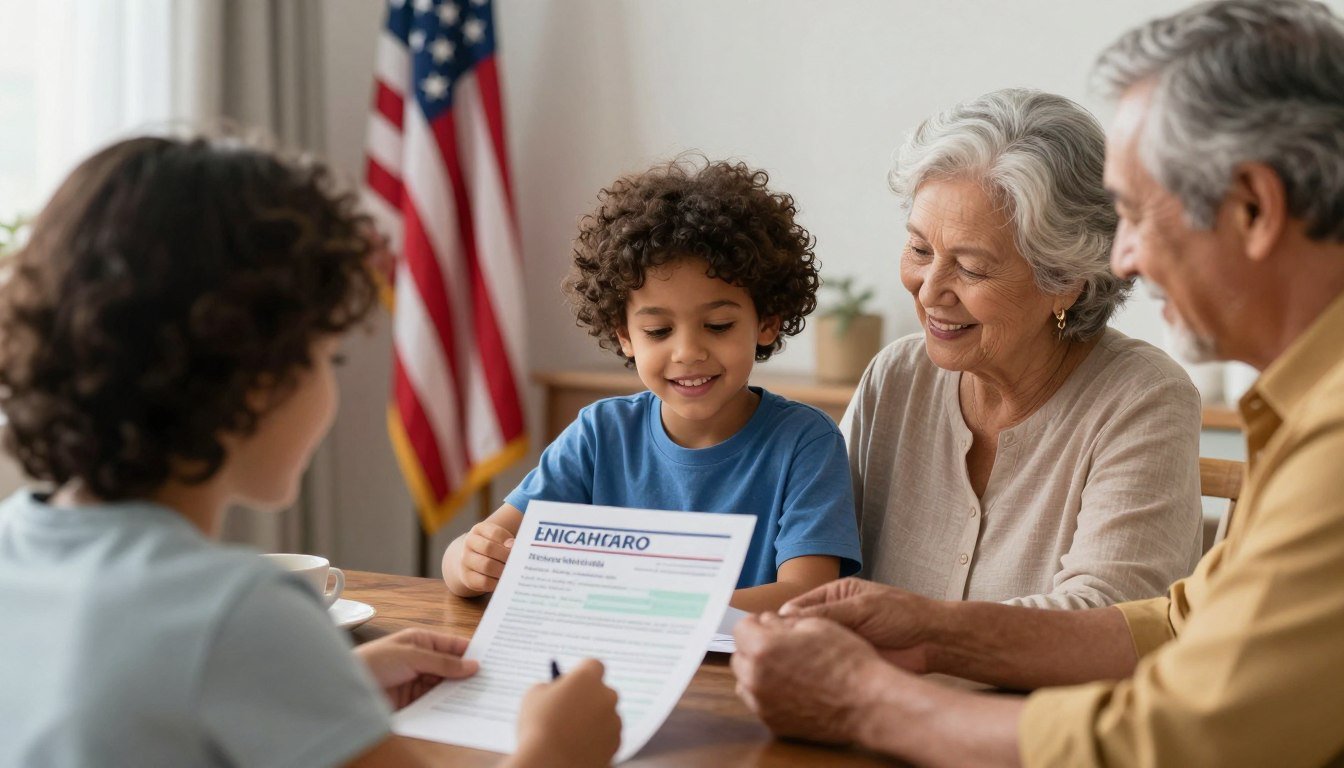
Bringing your parents to live in the United States is one of the most meaningful ways to reunite your family. As a U.S. citizen, you have special privileges to petition for your parents to become lawful permanent residents.
In 2026, family-based immigration remains a priority for U.S. immigration policy. Parents of U.S. citizens are considered immediate relatives under immigration law. This classification provides significant advantages in the immigration process.
This guide explains everything you need to know about immigration options for parents of U.S. citizens. You will learn about eligibility requirements, required documents, the application process, costs, and timelines.
What This Immigration Process Means
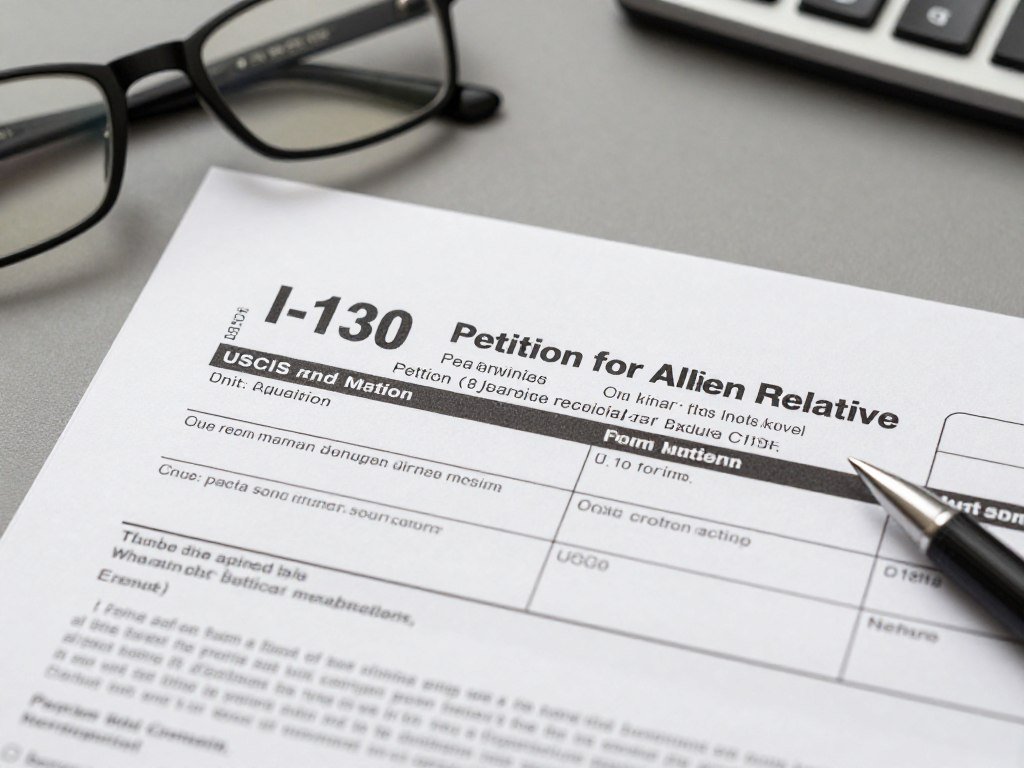
The immigration process for parents involves petitioning for a green card. A green card grants permanent residence in the United States. This allows your parents to live and work in the country legally.
Key Immigration Terms Explained
Immediate Relative: Parents of U.S. citizens fall into this category. Immediate relatives are not subject to annual visa limits. This means no waiting in visa queues that affect other family preference categories.
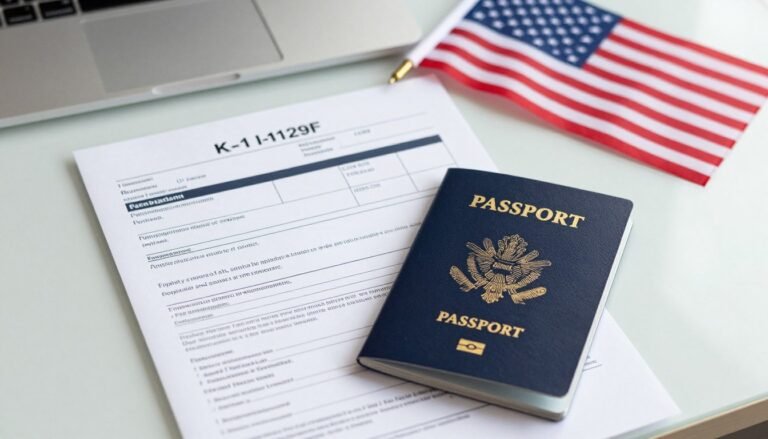
Form I-130: This is the Petition for Alien Relative. You must file this form to sponsor your parents. It establishes the family relationship between you and your parent.
Adjustment of Status: This process applies when your parent is already in the United States. They can apply for permanent residence without leaving the country.
Consular Processing: This process applies when your parent lives outside the United States. They will attend an interview at a U.S. embassy or consulate in their country.
Who Qualifies to Sponsor Parents
To petition for your parents, you must meet specific requirements. First, you must be a U.S. citizen at least 21 years old. Green card holders cannot sponsor their parents for immigration.
Second, you must prove the parent-child relationship. You need documentation showing you are the biological or adoptive child. Birth certificates serve as primary evidence for this relationship.
Third, you must demonstrate financial ability to support your parents. The U.S. government requires proof that your parents will not become dependent on public assistance. This involves filing an Affidavit of Support.
Requirements and Eligibility for Parent Immigration
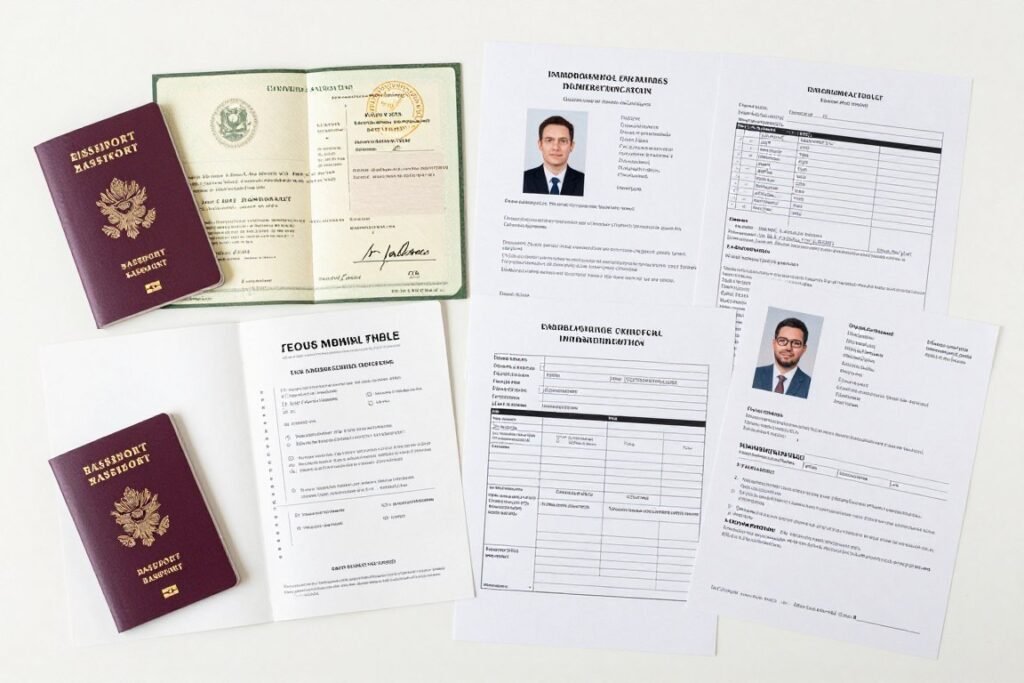
Eligibility Criteria
Your parents must meet certain conditions to qualify for a green card. They must pass medical examinations showing they do not have communicable diseases. Background checks ensure they have no serious criminal history.
Both biological and adoptive parents qualify for this visa category. If you are petitioning for a stepparent, the marriage to your biological parent must have occurred before you turned 18 years old.
- U.S. citizen petitioner must be at least 21 years old
- Valid proof of U.S. citizenship (passport, birth certificate, naturalization certificate)
- Evidence of parent-child relationship (birth certificate showing names)
- Financial capability to support parents (Affidavit of Support Form I-864)
- Parents must pass medical examination and background checks
Required Documents
Gathering the correct documents is essential for a successful application. Missing or incorrect documents cause delays and potential denials. Organize these documents carefully before filing your petition.
For the U.S. Citizen Petitioner
- Proof of U.S. citizenship (birth certificate, passport, or naturalization certificate)
- Government-issued photo identification
- Evidence of name change if applicable (marriage certificate, court order)
- Form I-130 completed and signed
- Form I-864 Affidavit of Support with financial evidence
For the Parent Beneficiary
- Valid passport from country of citizenship
- Birth certificate showing relationship to petitioner
- Marriage certificate if petitioner’s name differs from birth certificate
- Divorce or death certificates if applicable
- Passport-style photographs meeting USCIS specifications
- Police certificates from countries of residence
Need help determining your eligibility? Speak with an immigration information specialist
Step-by-Step Immigration Process
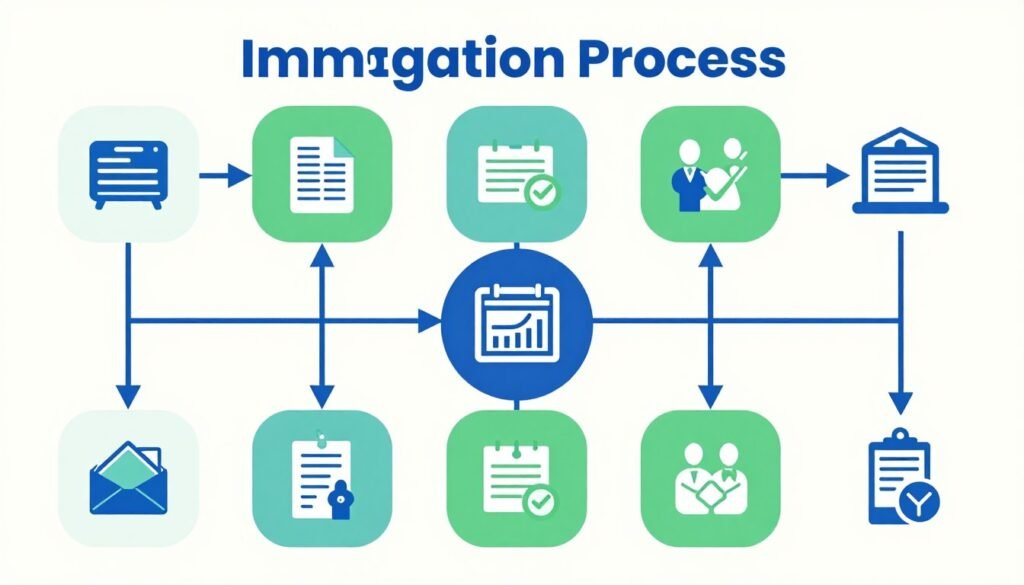
The immigration process follows a clear sequence of steps. Understanding each stage helps you prepare properly. The process differs slightly depending on whether your parent is inside or outside the United States.
Step 1: File Form I-130 Petition
Begin by completing Form I-130, Petition for Alien Relative. You can file this form online through the USCIS website or submit a paper application. Include all required documents and the filing fee.
File a separate Form I-130 for each parent. If you are petitioning for both your mother and father, you need two separate petitions. Each petition requires its own fee and documentation.
Step 2: Wait for USCIS Processing
After filing, USCIS will send you a receipt notice. This confirms they received your petition. Processing times vary but typically range from 8 to 14 months for parent petitions.
USCIS may request additional evidence during this time. Respond promptly to any requests to avoid delays. Keep copies of everything you submit.
Step 3: Choose Your Processing Path
Once USCIS approves your I-130 petition, the case moves forward through one of two paths. The path depends on your parent’s current location.
Path A – Adjustment of Status: If your parent is legally present in the United States, they can file Form I-485. This application adjusts their status to permanent resident without leaving the country.
Path B – Consular Processing: If your parent lives abroad, the case transfers to the National Visa Center. Your parent will attend an interview at a U.S. embassy or consulate in their country.
Step 4: Complete Medical Examination
All immigrant visa applicants must undergo a medical examination. This must be performed by a USCIS-approved civil surgeon or panel physician. The examination includes vaccination records review and tests for certain communicable diseases.
Step 5: Attend Immigration Interview
Your parent will attend an in-person interview. For adjustment of status cases, this occurs at a local USCIS office. For consular processing cases, it happens at the U.S. embassy or consulate.
During the interview, an officer reviews the application and supporting documents. They ask questions about the family relationship and immigration history. Bring original documents to verify copies submitted with the application.
Step 6: Receive Decision and Green Card
After the interview, the officer will make a decision. Most cases receive approval on the spot or shortly after. Approved applicants receive their green card by mail within several weeks.
The green card confirms your parent’s status as a lawful permanent resident. They can now live and work anywhere in the United States. The initial green card is typically valid for 10 years.
Processing Time and Costs

Expected Processing Times
Processing times for parent green cards vary by several factors. Current USCIS data shows most Form I-130 petitions for parents take 8 to 14 months to process. Additional time is needed for visa processing after petition approval.
Total timeline from filing to receiving a green card typically ranges from 12 to 18 months. This assumes no complications or requests for additional evidence. Cases requiring extra documentation may take longer.
- Form I-130 processing: 8 to 14 months average
- National Visa Center processing: 2 to 4 months
- Interview scheduling: 1 to 3 months
- Green card production after approval: 2 to 4 weeks
- Total estimated time: 12 to 18 months from start to finish
Government Filing Fees
Understanding costs helps you budget properly for the immigration process. All fees must be paid to USCIS or the Department of State. Fee amounts are subject to change, so verify current fees on official government websites.
| Form/Service | Fee Amount | Who Pays |
| Form I-130 Petition | $535 | U.S. Citizen Petitioner |
| Form I-485 (if adjusting status) | $1,140 | Parent Applicant |
| Biometrics Fee | $85 | Parent Applicant |
| Immigrant Visa Application (DS-260) | $325 | Parent Applicant |
| Medical Examination | $200-$500 | Parent Applicant |
| Affidavit of Support Review | $120 | U.S. Citizen Petitioner |
Total costs typically range from $1,500 to $2,500 per parent. This does not include optional attorney fees. Many families successfully complete the process without legal representation.
Common Mistakes to Avoid
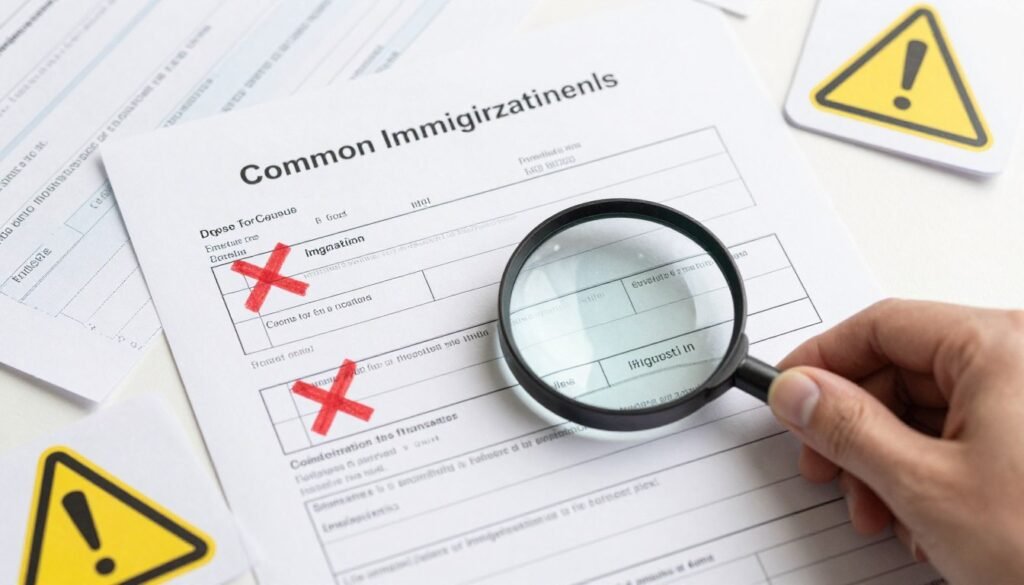
Avoiding common errors increases your chances of approval. Many mistakes are preventable with careful attention to instructions. Learn from the experiences of others to streamline your application.
Documentation Errors
Missing or Incomplete Documents: The most common mistake is submitting incomplete applications. Every required document must be included. Missing documents cause delays and requests for evidence.
Create a checklist of required documents before filing. Check each item off as you gather it. Make copies of everything before submitting.
Incorrect Translations: All foreign language documents must have certified English translations. The translator must certify their competency and accuracy. Uncertified translations are rejected.
Form Completion Mistakes
Inconsistent Information: Information across all forms must match exactly. Names, dates, and addresses should be consistent. Inconsistencies raise red flags and cause processing delays.
Leaving Blank Fields: Do not leave form fields blank unless instructed. Write “N/A” (not applicable) in fields that do not apply to your situation. Blank fields may be interpreted as incomplete forms.
Financial Documentation Issues
Insufficient Income Evidence: The Affidavit of Support requires proof of adequate income. You must demonstrate income at least 125% of federal poverty guidelines. Include tax returns, pay stubs, and employment letters.
If your income is insufficient, you can use a joint sponsor. The joint sponsor must be a U.S. citizen or lawful permanent resident. They must also meet the income requirements.
Timing and Status Errors
Filing While Parent is Out of Status: Parents who overstayed their visa face complications. Consult with an immigration attorney before filing if your parent violated their visa status. Some situations require legal advice.
Not Responding to USCIS Requests: USCIS may request additional evidence during processing. You typically have 87 days to respond. Missing this deadline can result in automatic denial.
Interview Preparation Failures
Poor Interview Preparation: Failing to prepare for the interview is a critical mistake. Review your application thoroughly before the interview. Bring original documents to verify submitted copies. Answer questions honestly and directly.
- Submitting incomplete applications without all required documents
- Providing inconsistent information across multiple forms
- Failing to include certified translations for foreign documents
- Not meeting income requirements for Affidavit of Support
- Missing deadlines for responding to USCIS requests
- Inadequate interview preparation and document organization
Tips to Improve Approval Chances
Strategic preparation significantly improves your application’s success rate. These proven tips help ensure smooth processing and approval.
Document Organization Strategies
Create a Master File: Organize all documents in a clear, logical order. Use tabs and labels to separate different document types. Include a table of contents listing all included documents.
Submit high-quality copies of all documents. Ensure text is clear and readable. Poor quality copies may be rejected.
Accuracy and Consistency
Triple-Check All Information: Review every form multiple times before submission. Have another person review your application for errors. Small mistakes can cause major delays.
Use the same name format throughout all documents. If your parent uses different name variations, provide an explanation. Include documentation showing name changes.
Financial Preparation
Strengthen Your Affidavit of Support: Provide more financial evidence than minimally required. Include multiple years of tax returns. Add bank statements and investment account statements.
If using a joint sponsor, ensure they meet all requirements. The joint sponsor must submit their own complete Affidavit of Support package.
Relationship Evidence
Establish Clear Parent-Child Relationship: Provide strong evidence of your relationship. Birth certificates are primary evidence. Include additional supporting documents like school records, medical records, or family photographs.
If the birth certificate does not list the petitioner’s name, provide secondary evidence. This might include baptismal certificates, school records, or affidavits from family members.
Professional Guidance
Seek Help When Needed: Complex cases benefit from professional assistance. Consider consulting an immigration attorney if your situation involves complications. This includes previous visa denials, criminal history, or status violations.
Free resources are available from USCIS and nonprofit organizations. Many communities offer immigration assistance workshops. Take advantage of these resources.
Best Practices for Success
- File complete applications with all required documents
- Maintain consistent information across all forms
- Keep copies of everything submitted
- Respond promptly to all USCIS communications
- Prepare thoroughly for immigration interviews
Resources to Use
- USCIS official website for current forms and fees
- Immigration attorney for complex cases
- Nonprofit legal service providers
- Community immigration workshops
- USCIS Contact Center for case status updates
Latest Updates and Policy Changes in 2026
U.S. immigration policy continues to evolve. Staying informed about recent changes helps you navigate the process effectively. Here are important updates relevant to parent immigration in 2026.
Processing Time Improvements
USCIS has implemented measures to reduce processing backlogs. New hiring initiatives and technology upgrades aim to speed up application reviews. Family-based petitions, including parent cases, are receiving priority attention.
Many service centers now process Form I-130 petitions faster than in previous years. Average processing times have decreased by approximately 15% compared to 2024.
Online Filing Expansion
USCIS continues expanding online filing capabilities. More immigration forms can now be filed electronically through the USCIS online account system. Online filing offers several advantages including instant receipt confirmation and easier case tracking.
Electronic filing is now available for Form I-130 and Form I-485. Consider using online filing for faster processing and better case management.
Fee Adjustments
Immigration fees are subject to periodic adjustments. The most recent fee changes took effect in 2024. No major fee increases are expected for parent petitions in 2026, but always verify current fees on the official USCIS website.
Public Charge Rule Clarifications
The public charge rule evaluates whether an immigrant is likely to depend on government assistance. Recent clarifications emphasize the importance of the Affidavit of Support. Ensure you meet income requirements and provide strong financial evidence.
The rule does not prevent parents with health conditions from immigrating. However, demonstrate that you can financially support your parents without relying on public benefits.
Interview Waiver Considerations
In certain circumstances, USCIS may waive the in-person interview requirement. This typically applies to adjustment of status cases where the relationship is well-documented. Interview waivers are granted at USCIS discretion and cannot be requested.
Conclusion

Bringing your parents to live in the United States as permanent residents is an achievable goal. As a U.S. citizen at least 21 years old, you have the right to petition for your parents through the immediate relative visa category.
The process involves filing Form I-130, providing supporting documentation, and completing either adjustment of status or consular processing. Expected timelines range from 12 to 18 months from initial filing to receiving the green card.
Success requires careful preparation and attention to detail. Gather all required documents before filing. Ensure information is accurate and consistent across all forms. Respond promptly to any USCIS requests for additional evidence.
Avoid common mistakes like incomplete applications, missing translations, or inadequate financial evidence. Take time to understand requirements and follow instructions precisely.
Stay informed about processing times and policy changes. Use official USCIS resources for current information. Consider professional assistance for complex situations.
Proper preparation and thorough documentation significantly improve your chances of success. With patience and careful attention to the process, you can help your parents achieve permanent residence in the United States.