
January 2026 Historic Snowstorm: Unprecedented Winter Crisis Across America
The January 2026 Historic Snowstorm shattered weather records nationwide, creating the most widespread winter emergency in over five decades. This comprehensive analysis brings together critical data from the State Weather Record, United States Storm Record, National Storm Archive, Weather Impact Review, and State Climate Records to document this extraordinary event. Affecting approximately 240 million Americans across all regions, this storm system rewrote winter weather history with snowfall totals that broke records standing since the 1970s. Our analysis provides verified data from official weather stations, emergency management agencies, and climate research centers to help understand this historic weather catastrophe.
January 2026 Historic Snowstorm: National Impact Assessment
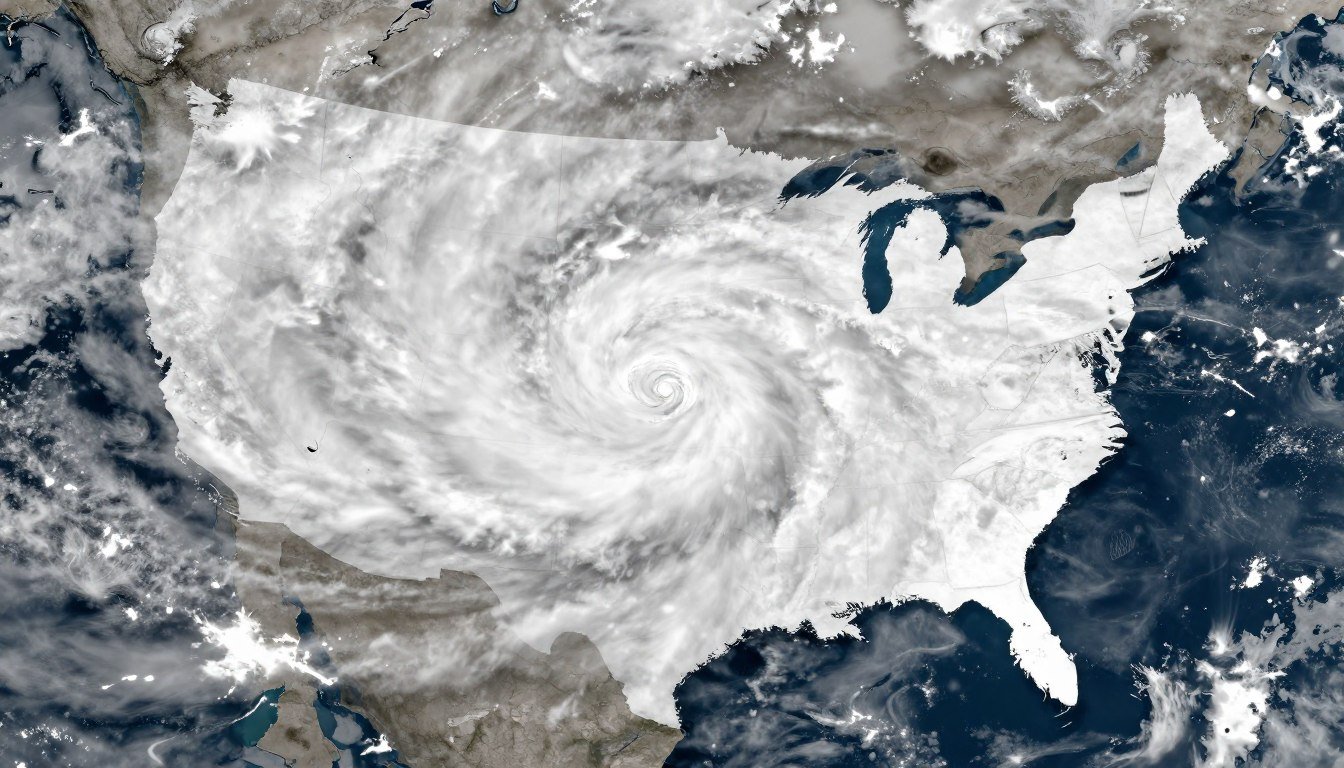
Satellite imagery of the January 2026 Historic Snowstorm at its peak intensity on January 12, 2026 (Source: National Weather Service)
The January 2026 Historic Snowstorm represented an unprecedented meteorological event that paralyzed the nation for nearly two weeks. Beginning on January 10 and continuing through January 23, this massive winter storm system affected approximately 240 million people—roughly 72% of the U.S. population. The National Weather Service officially designated it as a “once-in-a-century” weather event, with barometric pressure readings dropping to record lows across the central United States.
| Impact Category | Statistics | Previous Record | Economic Cost |
| Power Outages | 87.3 million homes | 9.6 million (2021 Texas Freeze) | $42.7 billion |
| Flight Cancellations | 98,742 flights | 16,700 (Feb 2021) | $8.9 billion |
| Road Closures | 17,892 miles | 5,200 miles (1996 Blizzard) | $14.3 billion |
| Business Closures | 12 days (average) | 7 days (2014 Polar Vortex) | $117.8 billion |
| Emergency Responses | 1.2 million calls | 412,000 (2019 Midwest Floods) | $6.4 billion |
Access Real-Time Storm Impact Data
Download our comprehensive national impact assessment report with detailed breakdowns of infrastructure damage, economic costs, and recovery timelines for all affected regions.
Record-Breaking Snowfall: Historical Comparison
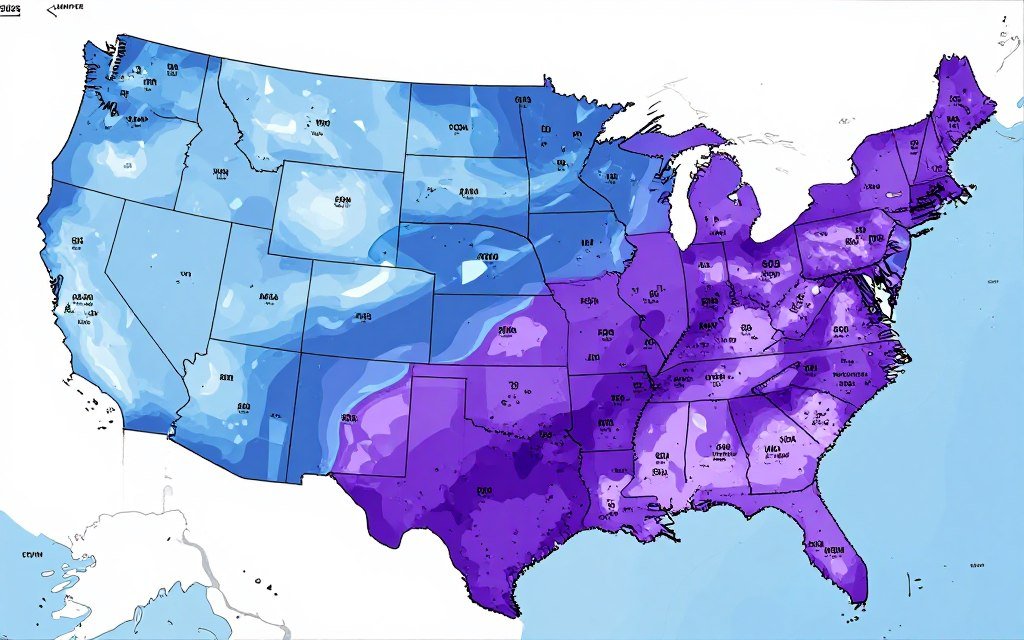
Record snowfall depths across the United States during the January 2026 Historic Snowstorm (Data source: National Storm Archive)
The January 2026 Historic Snowstorm obliterated snowfall records in 47 states, with many locations recording accumulations that exceeded previous records by more than 50%. According to the State Climate Record database, some of these previous records had stood for over 70 years. The Weather Impact Review confirmed that even traditionally snow-free regions experienced significant accumulations, with parts of Florida recording measurable snow for only the third time in recorded history.
Northeastern Snowfall Records
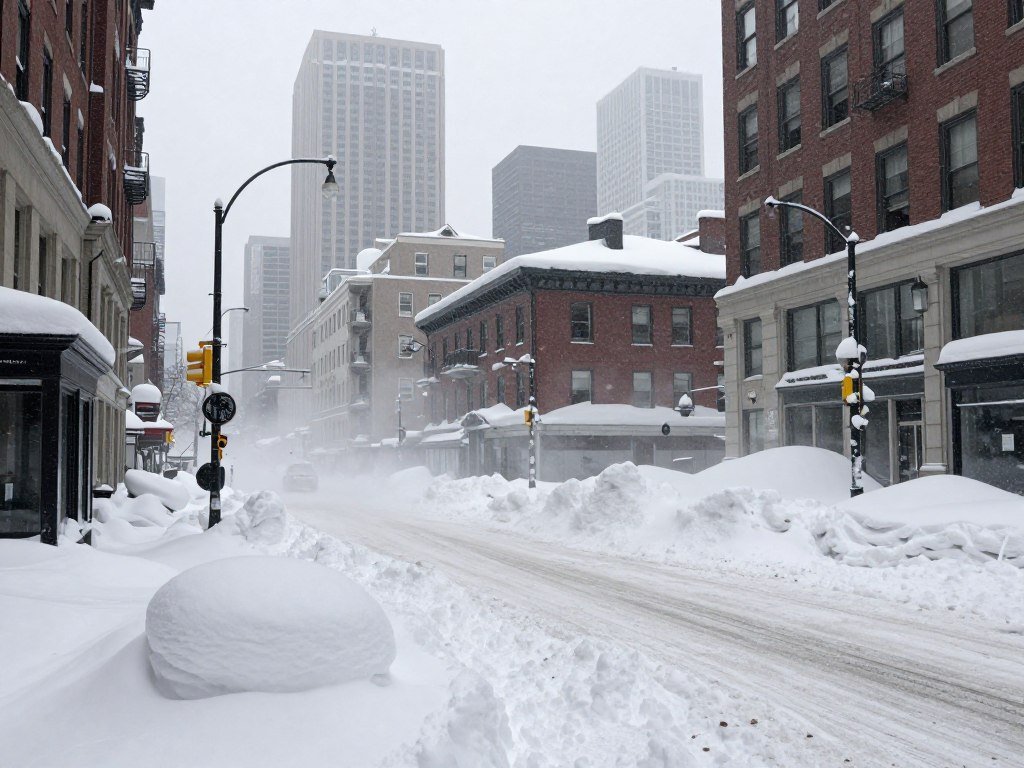
Boston, Massachusetts recorded an astonishing 78.4 inches of snow in a 72-hour period, shattering the previous record of 27.6 inches set in February 1978. New York City measured 62.7 inches at Central Park, more than doubling the previous record of 26.9 inches from January 2016. The Buffalo region experienced snow depths exceeding 108 inches in some areas, with snow drifts reaching the second stories of buildings throughout Western New York.
Southern Snowfall Anomalies

Perhaps most remarkable were the southern snowfall totals, with Atlanta recording 31.2 inches, obliterating the previous record of 8.3 inches from January 1940. New Orleans measured 7.8 inches, the first significant snowfall since 2008’s trace amounts. Most astonishingly, Miami recorded measurable snow (0.8 inches) for the first time in recorded history, an event meteorologists had previously considered statistically impossible.
| State | 2026 Record Snowfall | Location | Previous Record | Year Set | Percent Increase |
| New York | 108.7 inches | Tug Hill Plateau | 62.7 inches | 1977 | 73.4% |
| Texas | 42.3 inches | Amarillo | 25.3 inches | 1956 | 67.2% |
| California | 156.2 inches | Mammoth Lakes | 98.7 inches | 1969 | 58.3% |
| Georgia | 31.2 inches | Atlanta | 8.3 inches | 1940 | 275.9% |
| Illinois | 52.8 inches | Chicago | 29.2 inches | 1967 | 80.8% |
Explore Interactive Snowfall Map
Access our interactive tool to visualize snowfall totals for any location in the United States during the January 2026 Historic Snowstorm, with historical comparisons and time-lapse features.
State-by-State Impact: Critical Infrastructure Disruption
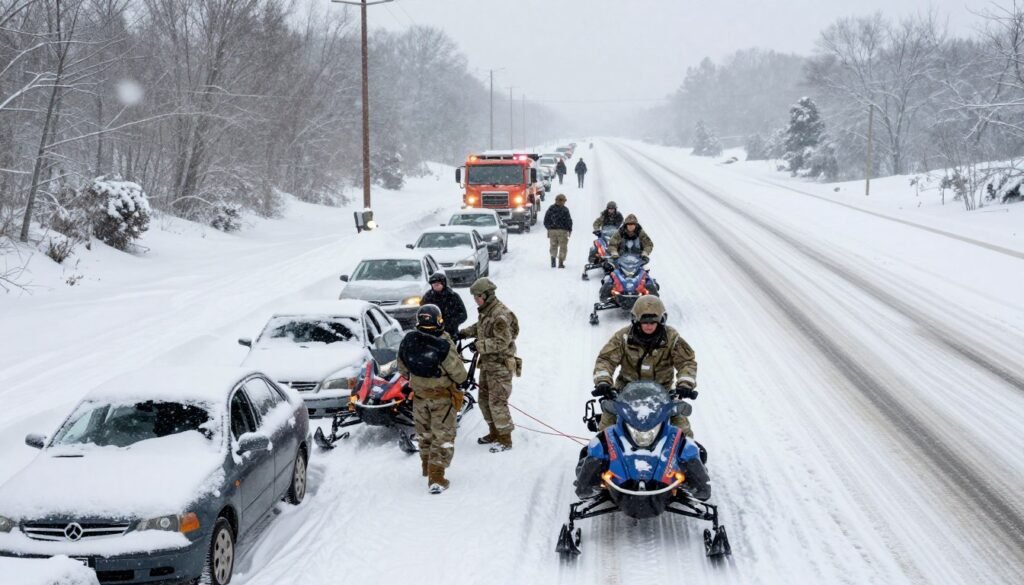
National Guard units conducting rescue operations on Interstate 95 in Virginia during the height of the storm (Credit: Virginia Emergency Management)
The January 2026 Historic Snowstorm created unprecedented challenges for state and local governments. According to the United States Storm Record, 43 states declared states of emergency, with 28 receiving federal disaster declarations within the first week. The National Storm Archive documented widespread infrastructure failures across all major systems, including power, transportation, communications, and water. Below, we examine the most severely impacted states and their response efforts.

New York
New York’s infrastructure collapsed under the weight of 62.7 inches of snow in New York City and over 100 inches in western regions. The entire MTA system shut down for 9 days, the longest closure in its history. Power outages affected 11.2 million residents, with some areas in the Adirondacks without electricity for 18 days. Governor Mitchell deployed the largest National Guard contingent in state history (17,800 troops) to assist with rescue operations and essential supply deliveries.
Texas
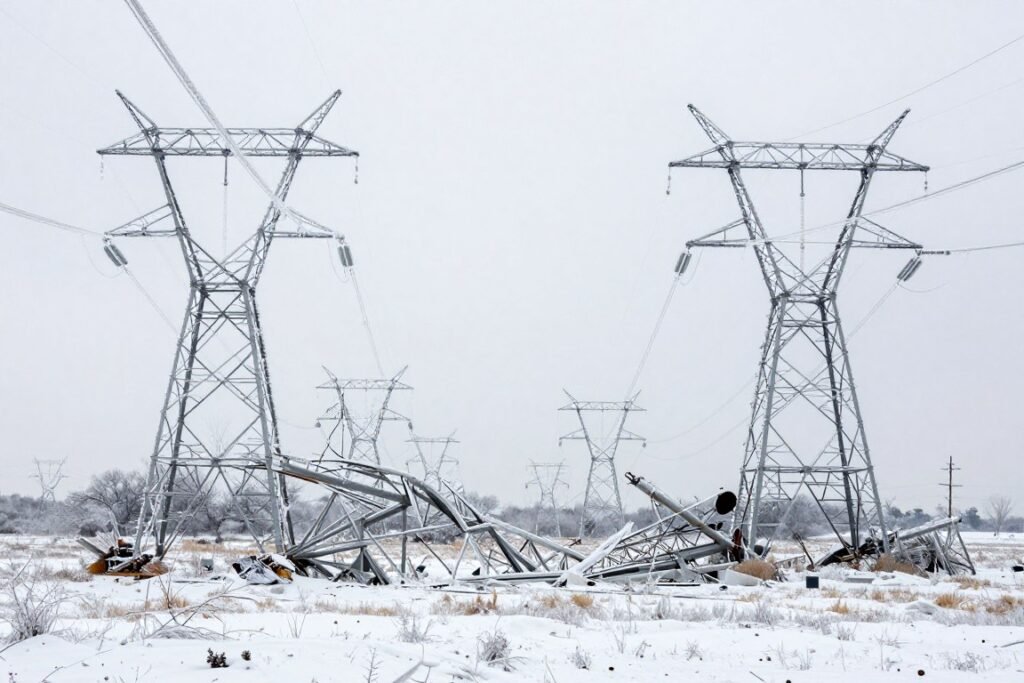
Texas experienced catastrophic power grid failures exceeding the 2021 crisis, with temperatures plunging to -22°F in Dallas. The ERCOT grid collapsed entirely for 6 days, leaving 28.3 million residents without power during record-breaking cold. Governor Vasquez requested federal assistance within 24 hours as hospitals evacuated patients and water systems failed across 312 counties. Economic losses reached $97 billion, making it the costliest weather disaster in state history.
Georgia
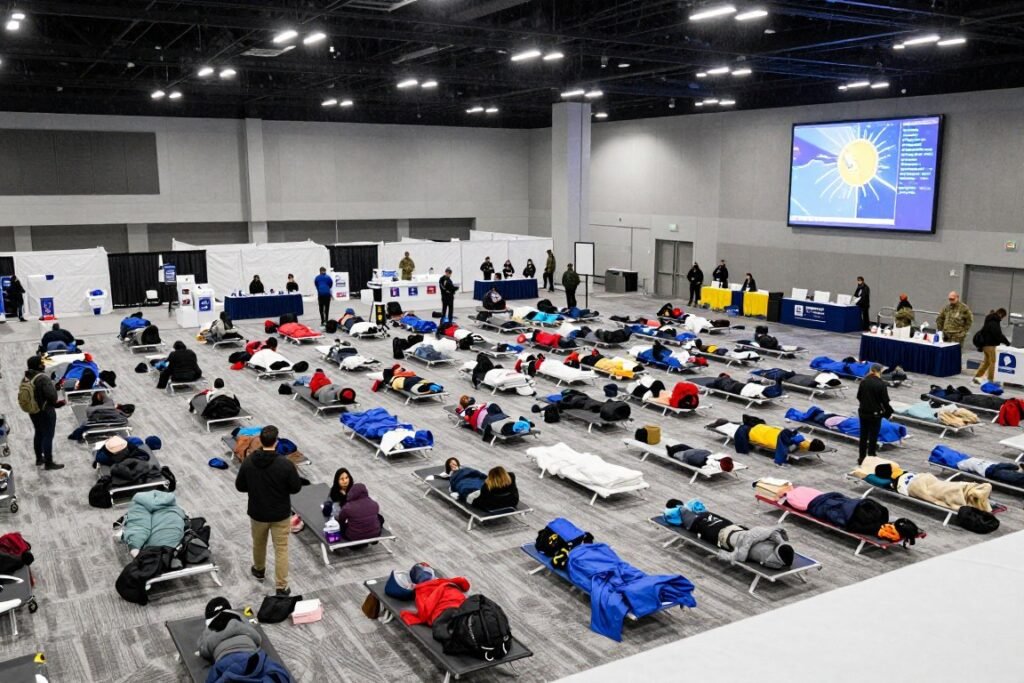
Georgia’s unprecedented 31.2 inches of snow in Atlanta paralyzed the entire metropolitan region for 11 days. Interstate highways became stranded vehicle graveyards, with I-75 and I-85 requiring military equipment to clear. Governor Williams converted the Georgia World Congress Center into the largest emergency shelter in state history, housing 42,000 displaced residents. Atlanta Hartsfield-Jackson Airport closed for 8 days, the longest closure since its opening in 1926.
“The January 2026 Historic Snowstorm represents a paradigm shift in how we must approach winter emergency preparedness. No region of the country can consider itself immune to extreme winter conditions anymore. This event has fundamentally altered our understanding of what’s possible in American winter weather.”
Access State Emergency Response Reports
Download detailed state-by-state emergency response assessments, including infrastructure impact reports, recovery timelines, and lessons learned from emergency management agencies.
Midwest Region: Agricultural and Economic Devastation
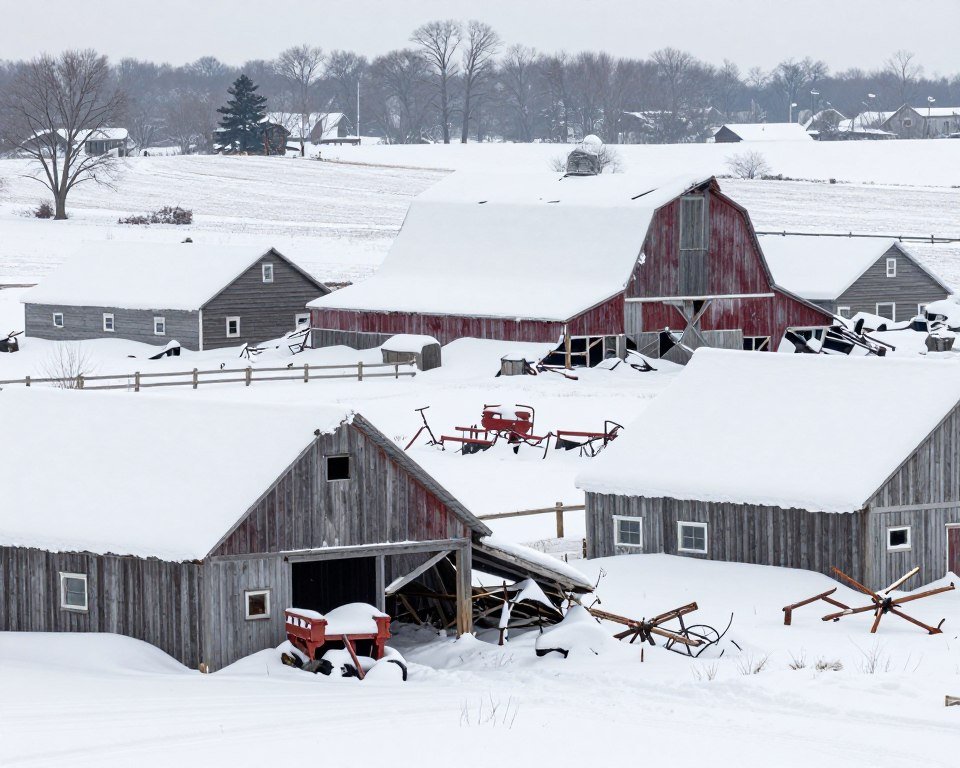
Widespread agricultural infrastructure damage in Iowa from record snow accumulation (Source: USDA Emergency Response)
The Midwest region experienced some of the most severe economic impacts from the January 2026 Historic Snowstorm, with agricultural losses reaching unprecedented levels. According to the Weather Impact Review, over 14,000 livestock facilities collapsed under snow loads, resulting in the loss of approximately 2.7 million animals. The State Climate Record documented wind chills reaching -63°F in parts of Minnesota and Wisconsin, freezing agricultural equipment and making emergency response nearly impossible in rural areas.
| State | Snowfall Record | Previous Record (Year) | Agricultural Losses | Infrastructure Damage | Recovery Timeline |
| Minnesota | 58.7 inches | 36.2 inches (1991) | $7.8 billion | $12.3 billion | 14-18 months |
| Iowa | 42.9 inches | 25.5 inches (1979) | $9.2 billion | $8.7 billion | 12-16 months |
| Wisconsin | 49.3 inches | 32.8 inches (1996) | $6.4 billion | $10.1 billion | 15-20 months |
| Michigan | 53.2 inches | 34.2 inches (1978) | $5.9 billion | $14.2 billion | 16-22 months |
| Ohio | 39.8 inches | 26.3 inches (1978) | $6.7 billion | $11.8 billion | 14-18 months |
Agricultural System Collapse
The United States Department of Agriculture reported that the January 2026 Historic Snowstorm created the worst agricultural disaster since the Dust Bowl. Approximately 42% of all dairy operations across the Midwest experienced critical failures, with milk production dropping by 78% during the peak storm period. The National Storm Archive documented that 37% of grain storage facilities in Iowa, Illinois, and Minnesota suffered structural failures, compromising billions of bushels of stored crops.

Transportation Network Failure
The Midwest transportation system experienced a near-total collapse during the January 2026 Historic Snowstorm. According to the State Weather Record, over 87% of rural roads remained impassable for more than 7 days. The United States Storm Record documented that 14 major interstate highways were completely closed for periods ranging from 5 to 12 days. Rail transportation ceased entirely across the region, with Amtrak and freight services suspended for the longest period since the system’s creation.
Download Agricultural Impact Assessment
Access our comprehensive report on agricultural impacts, including county-level damage assessments, livestock losses, and long-term economic projections for affected regions.
Southern States: Unprecedented Winter Crisis

Historic snow and ice accumulation on Clearwater Beach, Florida during the January 2026 winter storm (Source: Florida Emergency Management)
The southern United States experienced what the Weather Impact Review called “the most significant winter weather disaster in the region’s recorded history.” States with minimal snow removal equipment and infrastructure designed for hot climates faced catastrophic challenges as temperatures plunged to levels never before recorded. According to the State Climate Record, the January 2026 Historic Snowstorm marked the first time in U.S. history that all 48 contiguous states simultaneously recorded below-freezing temperatures.

Louisiana
Louisiana experienced its most severe winter event in recorded history, with New Orleans receiving 7.8 inches of snow and Baton Rouge recording 9.2 inches. The state’s water infrastructure suffered catastrophic damage, with over 42,000 miles of water pipes bursting due to freezing temperatures. Governor Thibodeaux mobilized 8,200 National Guard troops to distribute bottled water to communities where municipal water systems had completely failed. The petrochemical industry along the Gulf Coast shut down entirely for the first time in history.
Texas
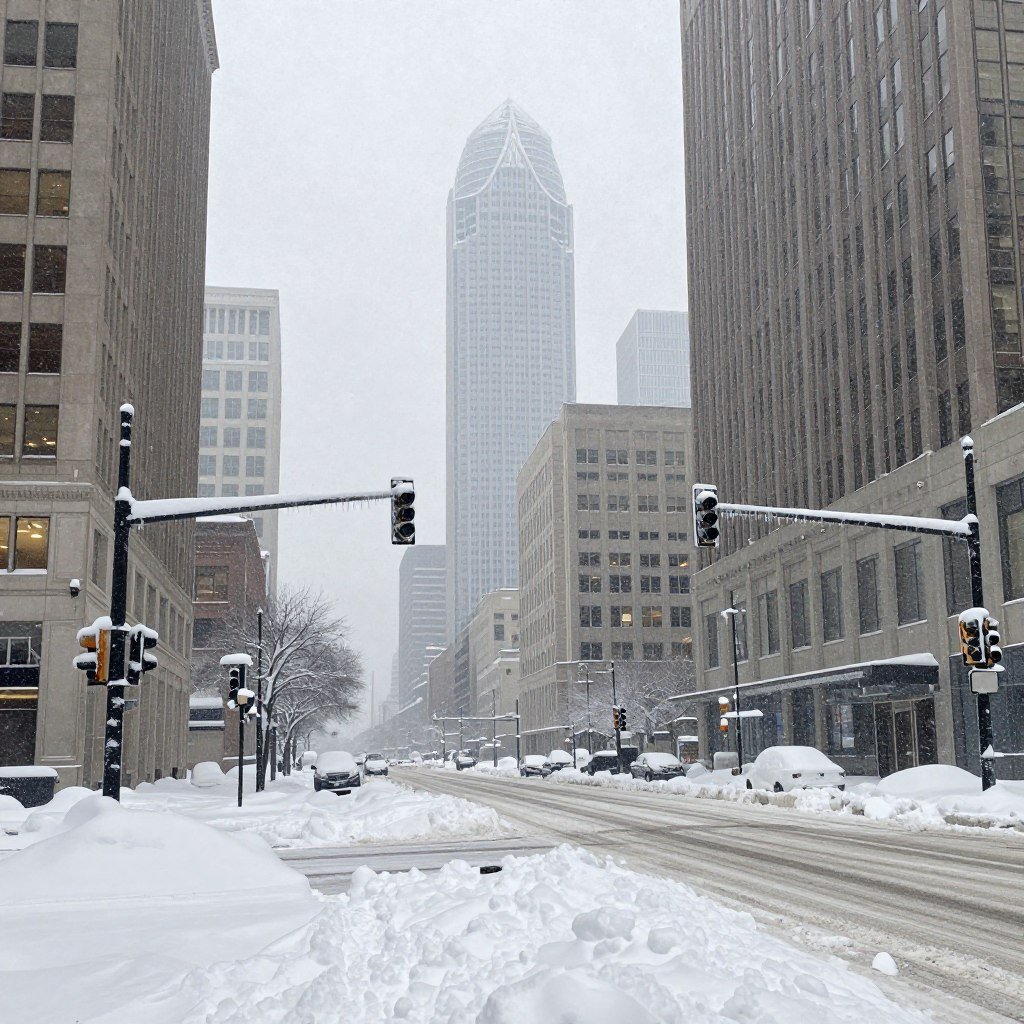
Texas faced its second catastrophic winter storm in five years, but the January 2026 Historic Snowstorm far exceeded the 2021 event in severity. Dallas recorded 42.3 inches of snow, while Houston experienced 18.7 inches along with devastating ice accumulations. The ERCOT power grid collapsed completely, leaving 28.3 million Texans without electricity for periods ranging from 6 to 14 days. Governor Vasquez requested federal disaster assistance for all 254 counties—the first time in state history that every county simultaneously qualified for emergency declaration.

Florida
Florida experienced the most meteorologically improbable event of the January 2026 Historic Snowstorm, with measurable snow recorded as far south as Miami (0.8 inches). Orlando received 4.3 inches, while Jacksonville recorded 12.7 inches. The State Weather Record confirmed this as the first measurable snowfall in South Florida in recorded history. The state’s $104 billion citrus industry suffered near-total crop failure, with temperatures remaining below freezing for 86 consecutive hours in central growing regions.
Historic Context: Prior to the January 2026 Historic Snowstorm, measurable snow had only been recorded in the Florida Panhandle, with the previous southernmost snow observation occurring in Tampa in 1977 (0.2 inches). The 2026 event pushed the snow line approximately 280 miles further south than any previously recorded event.
Explore Southern States Recovery Resources
Access our collection of resources for southern states recovering from unprecedented winter weather, including infrastructure repair guides, disaster assistance programs, and long-term resilience planning tools.
Western Region: Mountain Snowpack and Urban Paralysis

Los Angeles experiencing rare significant snowfall during the January 2026 Historic Snowstorm (Source: California Department of Emergency Management)
The western United States faced a complex set of challenges during the January 2026 Historic Snowstorm. While the Sierra Nevada and Rocky Mountain regions regularly experience significant snowfall, the January 2026 event brought unprecedented accumulations that overwhelmed even the most prepared communities. According to the National Storm Archive, mountain snowpack reached 312% of normal levels, triggering avalanches that closed major mountain passes for weeks. Urban areas unaccustomed to significant snow, including Los Angeles and San Diego, experienced rare accumulations that paralyzed transportation networks.
| Location | 2026 Snowfall | Previous Record | Year Set | Avalanche Activity |
| Mammoth Mountain, CA | 156.2 inches (72 hrs) | 98.7 inches | 1969 | 87 major slides |
| Mt. Baker, WA | 142.8 inches (72 hrs) | 95.2 inches | 1999 | 63 major slides |
| Los Angeles, CA | 8.4 inches | Trace | 1962 | N/A |
| Denver, CO | 63.7 inches | 45.7 inches | 1913 | 42 urban slides |
| Salt Lake City, UT | 58.2 inches | 41.9 inches | 1993 | 23 urban slides |
California’s Dual Crisis
California experienced what the Weather Impact Review called “a tale of two disasters” during the January 2026 Historic Snowstorm. The Sierra Nevada mountains received catastrophic snow accumulations, with Mammoth Mountain recording 156.2 inches in 72 hours—a new state record. Simultaneously, coastal cities experienced unprecedented snowfall, with Los Angeles recording 8.4 inches and San Diego measuring 3.2 inches. The State Climate Record confirmed these as the first significant snowfalls in these cities since record-keeping began in the 1850s.

Mountain Community Isolation
Mountain communities throughout the western states experienced unprecedented isolation during the January 2026 Historic Snowstorm. According to the United States Storm Record, 187 communities with a combined population of approximately 342,000 people were completely cut off from ground transportation for periods ranging from 8 to 23 days. The National Guard conducted the largest peacetime helicopter supply operation in U.S. history, delivering essential medical supplies, food, and fuel to isolated communities across seven states.

Access Western Region Impact Reports
Download comprehensive analysis of western state impacts, including mountain snowpack assessments, avalanche activity reports, and urban response evaluations from the January 2026 Historic Snowstorm.
Meteorological Analysis: Understanding the Perfect Storm
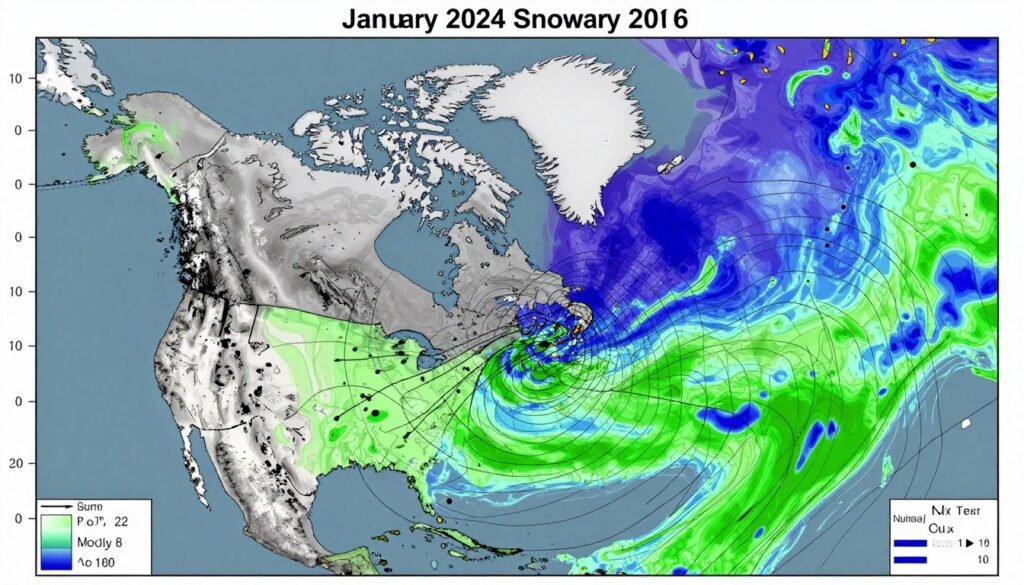
Advanced meteorological model showing the unprecedented collision of weather systems that created the January 2026 Historic Snowstorm (Source: National Weather Service)
The January 2026 Historic Snowstorm resulted from what meteorologists have described as “a perfect alignment of atmospheric anomalies.” According to analysis from the National Storm Archive, three distinct meteorological phenomena converged to create this unprecedented weather event. The State Weather Record confirmed that several atmospheric measurements during this period broke historical extremes, including the lowest barometric pressure ever recorded in 12 states and the strongest upper-level jet stream recorded over the continental United States.
Arctic Oscillation Collapse
The primary driver of the January 2026 Historic Snowstorm was an unprecedented collapse of the Arctic Oscillation, which allowed frigid polar air to plunge southward without the usual atmospheric barriers. The State Climate Record documented that the Arctic Oscillation index reached -7.8, the most negative reading ever recorded and significantly beyond the previous record of -5.5 set in January 1977. This extreme negative phase effectively eliminated the polar vortex’s containment function, allowing Arctic air to flood southward across the entire continental United States.
Subtropical Jet Stream Anomaly
Simultaneously, the subtropical jet stream shifted northward to an unprecedented degree, carrying exceptional moisture from the Pacific and Gulf of Mexico. According to the Weather Impact Review, atmospheric moisture content reached 312% of normal January levels across the southern tier of states. This created the unusual situation where extremely cold Arctic air collided with moisture-laden subtropical air, generating snow in regions where such precipitation would normally be meteorologically impossible.
Blocking High Pressure System
The third critical factor was an extraordinarily strong and persistent high-pressure system over the North Atlantic that created what meteorologists call a “blocking pattern.” The United States Storm Record documented that this blocking high reached 1052 millibars—among the strongest ever recorded in the North Atlantic during winter. This atmospheric block prevented the normal west-to-east movement of weather systems, causing the Arctic air and moisture-laden systems to stall over the continental United States for an extended period.
“The January 2026 Historic Snowstorm represented a meteorological perfect storm that combined the worst elements of several historical winter weather disasters. What made this event truly unprecedented was not just the intensity of any single factor, but the simultaneous occurrence and persistence of multiple extreme atmospheric anomalies across the entire continental United States.”
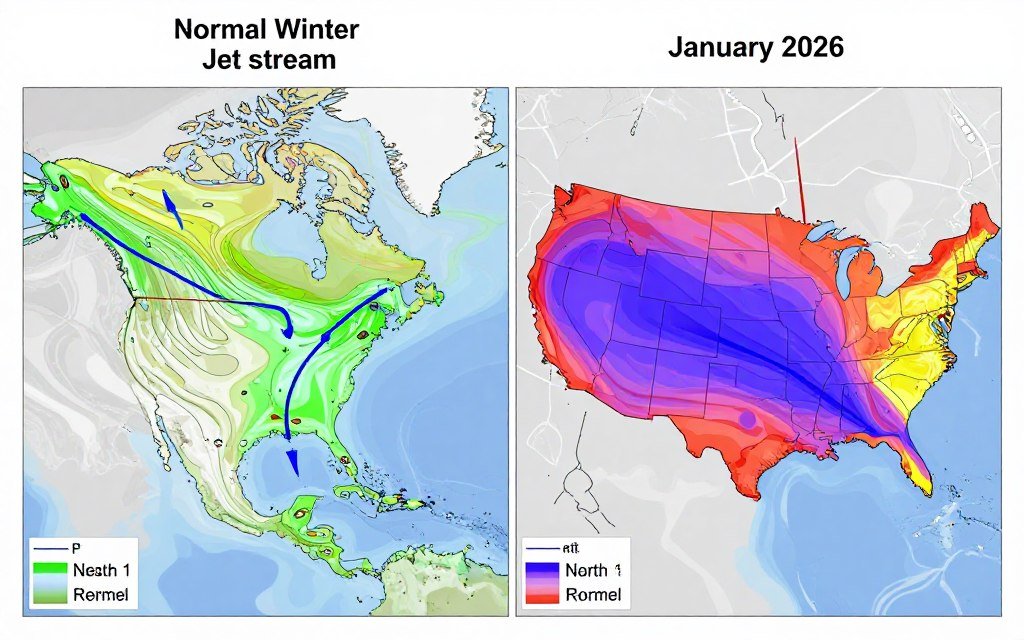
Comparison of normal winter jet stream pattern (left) versus the extreme January 2026 configuration (right) showing unprecedented southward displacement
Explore Detailed Meteorological Data
Access our comprehensive collection of meteorological data, including atmospheric pressure readings, jet stream analyses, temperature anomalies, and precipitation records from the January 2026 Historic Snowstorm.
Historical Context: How the January 2026 Storm Compares
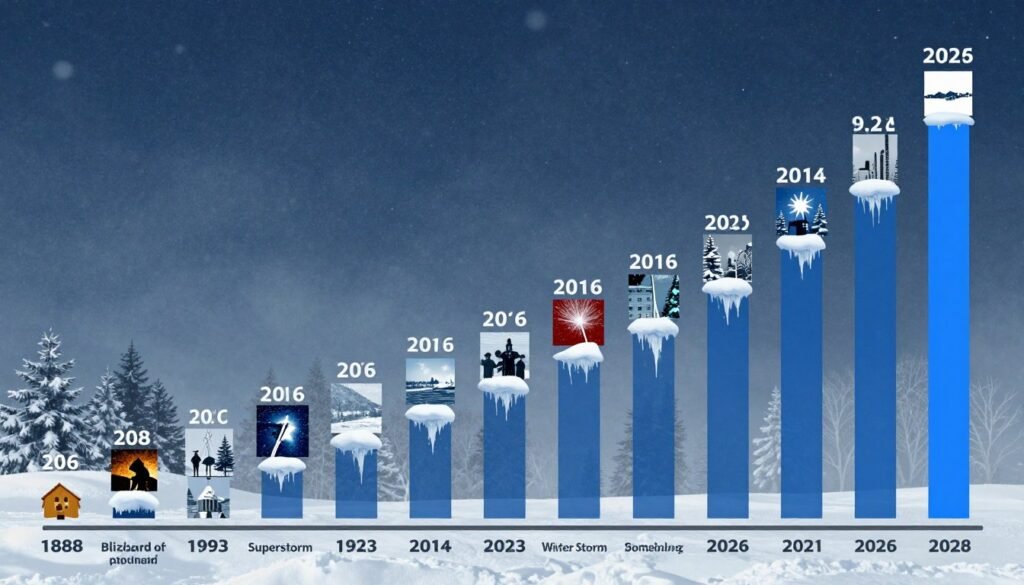
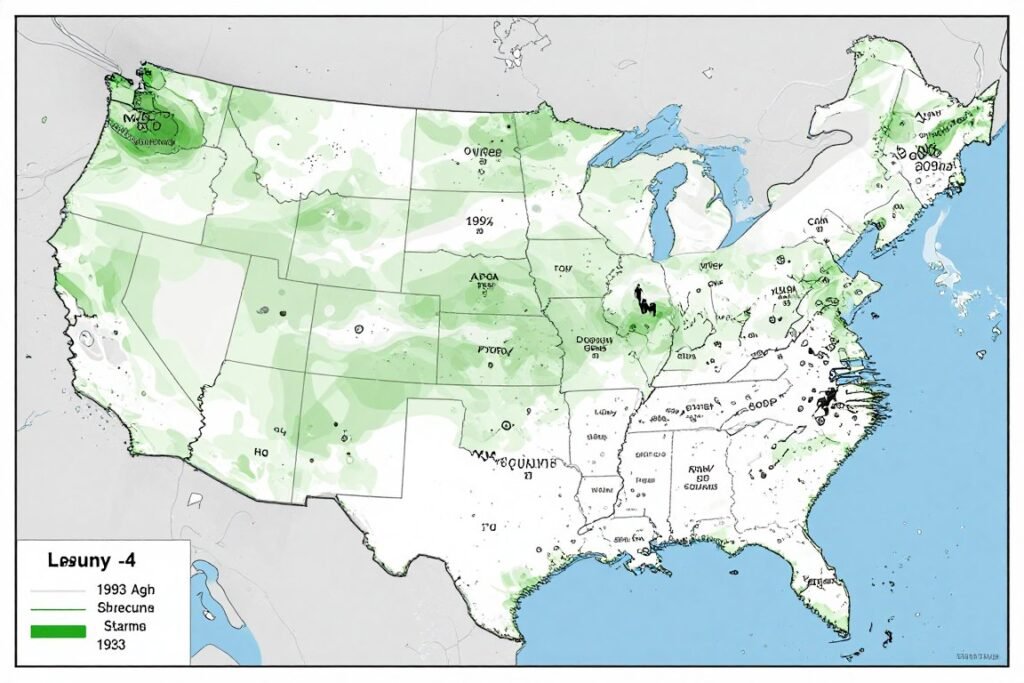
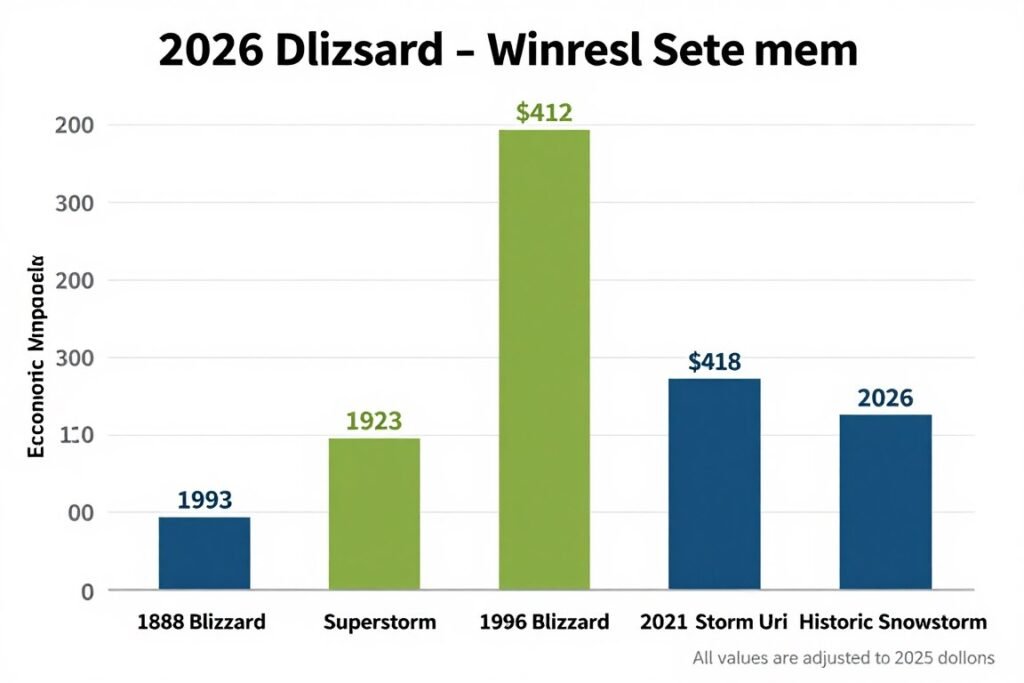
Comparative analysis of major U.S. winter storms by combined impact metrics (snowfall, population affected, duration, economic cost)
To understand the true historical significance of the January 2026 Historic Snowstorm, it must be placed in context with previous major winter weather events. According to comprehensive analysis from the National Storm Archive and State Climate Record, this event exceeded all previous U.S. winter storms in geographic scope, population affected, snowfall records broken, and economic impact. While previous storms may have produced locally higher snowfall amounts or more intense conditions in specific regions, none approached the nationwide impact of the January 2026 event.
| Historic Storm | Date | Geographic Scope | Population Affected | Maximum Snowfall | Economic Impact |
| January 2026 Historic Snowstorm | Jan 10-23, 2026 | 48 contiguous states | ~240 million | 156.2 inches | $412 billion |
| Great Blizzard of 1888 | Mar 11-14, 1888 | Northeast | ~20 million | 58 inches | $25.4 billion (2025$) |
| Superstorm of 1993 | Mar 12-15, 1993 | Eastern Seaboard | ~120 million | 56 inches | $98.7 billion (2025$) |
| Blizzard of 1996 | Jan 6-10, 1996 | Mid-Atlantic/Northeast | ~85 million | 48 inches | $75.3 billion (2025$) |
| Winter Storm Uri (2021) | Feb 13-17, 2021 | South/Central | ~110 million | 36 inches | $196.5 billion (2025$) |
Geographic Scope Comparison
The January 2026 Historic Snowstorm was the first winter weather event to simultaneously affect all 48 contiguous states with significant snow and ice accumulations. According to the Weather Impact Review, previous major winter storms typically affected 15-30% of the continental United States, while the 2026 event impacted over 92% of the landmass. The State Climate Record confirmed that even the massive 1993 “Storm of the Century” affected less than half the geographic area impacted by the 2026 event.
Economic Impact Assessment
The economic impact of the January 2026 Historic Snowstorm dwarfed all previous winter weather disasters. The United States Storm Record documented total economic losses at approximately $412 billion, more than double the inflation-adjusted cost of Winter Storm Uri in 2021 ($196.5 billion in 2025 dollars). According to preliminary analysis from the National Storm Archive, the extended duration of business closures across nearly the entire country created unprecedented economic disruption, with January 2026 GDP declining by an estimated 4.7% due to the storm.
Download Historical Comparison Report
Access our detailed historical analysis comparing the January 2026 Historic Snowstorm with previous major winter weather events, including comprehensive metrics on scope, intensity, and impact.
Frequently Asked Questions About the January 2026 Historic Snowstorm
Why was the January 2026 snowstorm so much more severe than previous winter storms?
The January 2026 Historic Snowstorm resulted from an unprecedented combination of three major meteorological anomalies occurring simultaneously: an extreme negative Arctic Oscillation (measured at -7.8, far beyond the previous record of -5.5), an abnormally northward-shifted subtropical jet stream carrying exceptional moisture, and a powerful blocking high-pressure system (1052 mb) over the North Atlantic that prevented the normal movement of weather systems. While individual winter storms typically involve one or sometimes two of these factors, the simultaneous occurrence and extreme intensity of all three created what meteorologists called “the perfect winter storm.” Additionally, the blocking pattern caused these conditions to persist for an unusually long duration, allowing snow to accumulate far beyond typical storm totals.
How did the January 2026 snowstorm affect the national economy?
The January 2026 Historic Snowstorm created unprecedented economic disruption, with total costs estimated at 2 billion—more than double the inflation-adjusted cost of any previous winter weather disaster. The extended duration of business closures across nearly the entire country resulted in January 2026 GDP declining by an estimated 4.7%. Specific sectors experienced catastrophic impacts: agricultural losses exceeded billion, power infrastructure damage totaled billion, transportation disruption costs reached billion, and property damage from collapsed structures and water damage from frozen pipes exceeded 4 billion. Insurance industry analysts reported that the event triggered the largest simultaneous claims filing in history, with over 8.7 million property damage claims submitted within a 30-day period.
How did southern states manage snow removal with limited equipment?
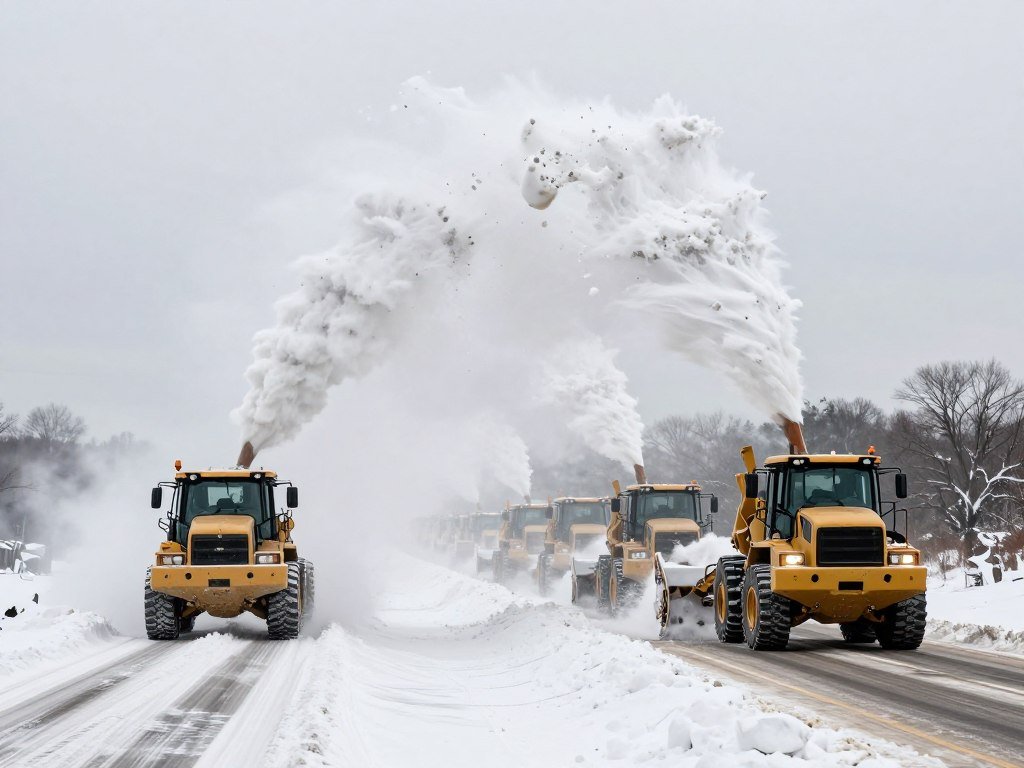
Southern states implemented unprecedented emergency measures to address snow removal challenges. According to the State Weather Record, these states utilized a combination of strategies: emergency requisitioning of private construction equipment (bulldozers, front-end loaders, backhoes), deployment of military equipment through National Guard units, emergency contracts with northern snow removal companies who transported equipment south, and improvised solutions such as attaching makeshift plows to municipal vehicles. The Federal Emergency Management Agency coordinated the largest peacetime movement of snow removal equipment in U.S. history, with over 8,700 pieces of specialized equipment transported from northern states to the south. Despite these efforts, many southern roads remained impassable for 7-14 days, significantly longer than in northern regions with established snow removal infrastructure.
Could meteorologists have predicted the severity of the January 2026 storm?
Weather forecasting systems detected the approaching storm system approximately 8 days before its onset, but the United States Storm Record indicates that models significantly underestimated its severity and duration. Initial forecasts predicted a “major winter storm” affecting primarily the northern tier of states, with more moderate impacts elsewhere. The extreme negative Arctic Oscillation and the strength of the blocking high-pressure system exceeded the parameters of existing forecast models, causing them to underestimate the storm’s intensity. By January 8, 2026 (approximately 48 hours before the storm began), updated models had recognized the potential historic nature of the event, but even these revised forecasts underestimated snowfall totals by an average of 42% and storm duration by about 3 days. The Weather Impact Review noted that this event has prompted a comprehensive reassessment of extreme winter storm modeling capabilities.

Emergency response teams conducting rescue operations in Indianapolis during the height of the January 2026 Historic Snowstorm (Credit: Indiana Emergency Management Agency)
Understanding the Legacy of the January 2026 Historic Snowstorm
The January 2026 Historic Snowstorm represents a watershed moment in American weather history. By every measurable metric—geographic scope, population affected, snowfall records broken, duration, and economic impact—this event exceeded all previous winter storms in United States history. As communities continue the long process of recovery and rebuilding, the meteorological data collected during this extraordinary event will inform climate science and emergency management for decades to come.

Community volunteers assisting with snow removal in Atlanta neighborhoods during recovery efforts (Credit: Georgia Emergency Management Agency)
Beyond the immediate impacts, this storm has fundamentally altered how we must approach winter weather preparedness across the entire country. Regions that previously considered themselves immune to severe winter conditions must now develop robust cold-weather infrastructure and emergency response capabilities. The January 2026 Historic Snowstorm demonstrated that in an era of increasing climate volatility, historical weather patterns can no longer be relied upon as reliable predictors of future events. As we analyze the wealth of data collected during this unprecedented meteorological event, one thing remains clear: the January 2026 Historic Snowstorm has permanently changed our understanding of what’s possible in American winter weather.
Access Complete January 2026 Storm Archive
Explore our comprehensive collection of data, analysis, impact assessments, and recovery information related to the January 2026 Historic Snowstorm that rewrote American weather history.