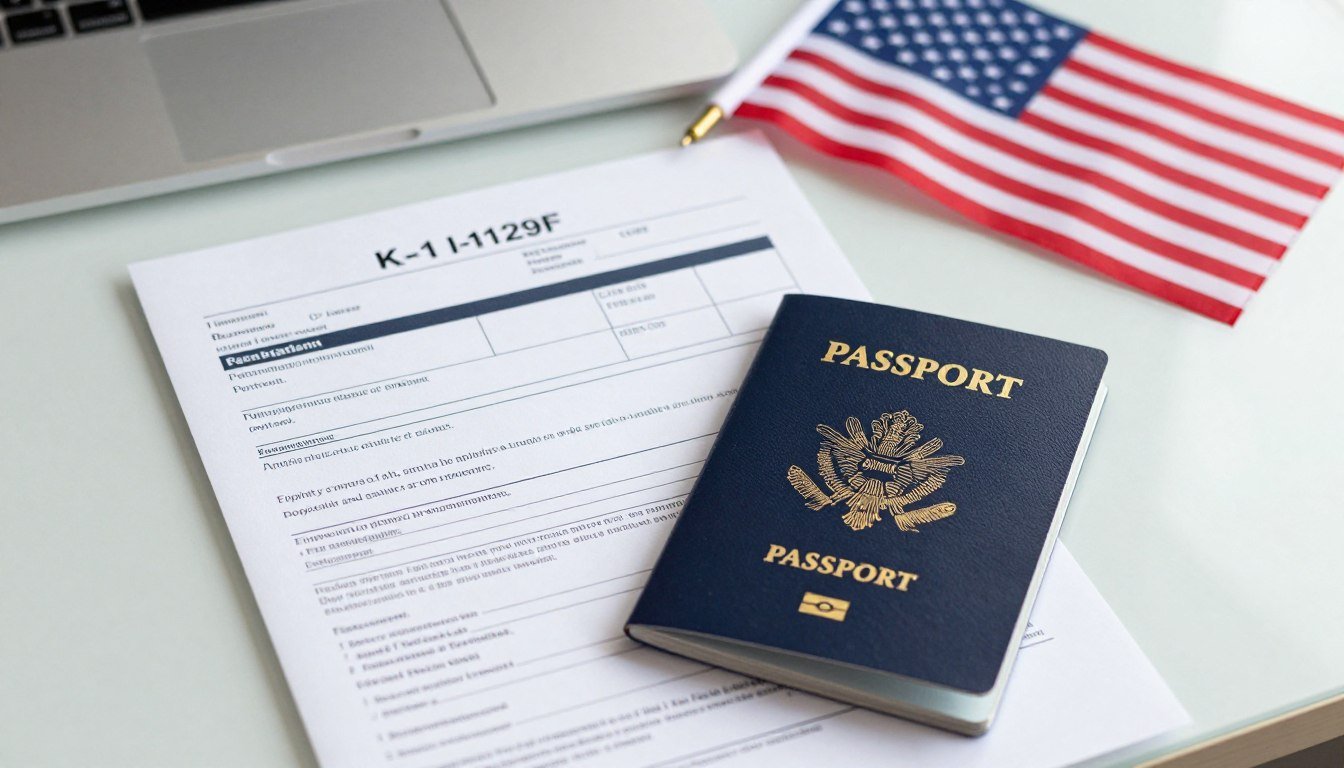
K-1 Fiancé Visa Requirements and Timeline: Your Complete 2026 Guide
Bringing your fiancé to the United States represents one of life’s most important milestones. The K-1 visa process makes this dream possible for thousands of couples each year.
In 2026, understanding K-1 Fiancé Visa Requirements has become more critical than ever. Immigration policies continue evolving, and processing times fluctuate based on current government resources.
This comprehensive guide breaks down everything you need to know about the K-1 visa application. You’ll learn the exact requirements, step-by-step process, realistic timelines, and proven strategies to strengthen your application.
Whether you’re just starting your research or ready to file your petition, this article provides clear, beginner-friendly guidance based on official United States government sources. Let’s explore how to successfully navigate the K-1 fiancé visa journey.
What the K-1 Fiancé Visa Process Means
The K-1 visa is a nonimmigrant visa that allows foreign nationals to enter the United States to marry their U.S. citizen fiancé. This special visa category exists specifically for engaged couples.
Understanding key terminology helps you navigate the application process more confidently. The U.S. citizen who files the petition is called the “petitioner.” The foreign fiancé is called the “beneficiary.”
Key Definitions You Need to Know
Form I-129F is the official petition alien fiancé form. U.S. citizens must file this document with U.S. Citizenship and Immigration Services to start the process.
The nonimmigrant visa application (Form DS-160) comes later. Your fiancé completes this after USCIS approves your petition alien fiancé request.
Adjustment of status refers to the process of becoming a permanent resident. After marriage, your spouse can apply to register permanent residence in the United States.
U.S. Citizen Petitioner
The American partner who sponsors their foreign fiancé must meet specific requirements to file the petition.
- Must hold valid U.S. citizenship
- Must be legally free to marry
- Must meet income requirements
- Must have met fiancé in person
Foreign Fiancé Beneficiary
The international partner traveling to the United States must qualify under immigration law standards.
- Must be legally free marry their U.S. partner
- Must pass medical examination requirements
- Must have no disqualifying criminal history
- Must intend to marry within 90 days
Valid Relationship
Immigration officials verify that your relationship is genuine and meets all legal standards.
- Met in person within two years before filing
- Both parties genuinely intend to marry
- Relationship is not solely for immigration benefits
- Documentary evidence supports your bond
90-Day Marriage Window
The K-1 visa has strict time limits that couples must follow carefully after arrival.
- Marriage must occur within 90 days of entry
- Cannot extend the 90-day period
- Must marry the specific person named in petition
- Can apply for green card after marriage
Who Qualifies for the K-1 Visa
Only U.S. citizens can petition for a K-1 fiancé visa. Permanent residents cannot sponsor fiancés through this visa category.
Both partners must be legally free marry under their respective country’s laws. Previous marriages must be properly terminated through divorce or annulment.
The couple must have met person within the past two years. Some religious or cultural exceptions exist, but most applicants must prove face-to-face meetings.
Important Note: The K-1 visa is a nonimmigrant visa, but it leads to permanent residence. After entering the United States and getting married, your spouse can file Form I-485 to adjust their status and become a permanent resident.
Ready to Start Your K-1 Visa Journey?
Visit the official USCIS website to access Form I-129F and begin your petition alien fiancé application today.
K-1 Fiancé Visa Requirements and Eligibility Criteria
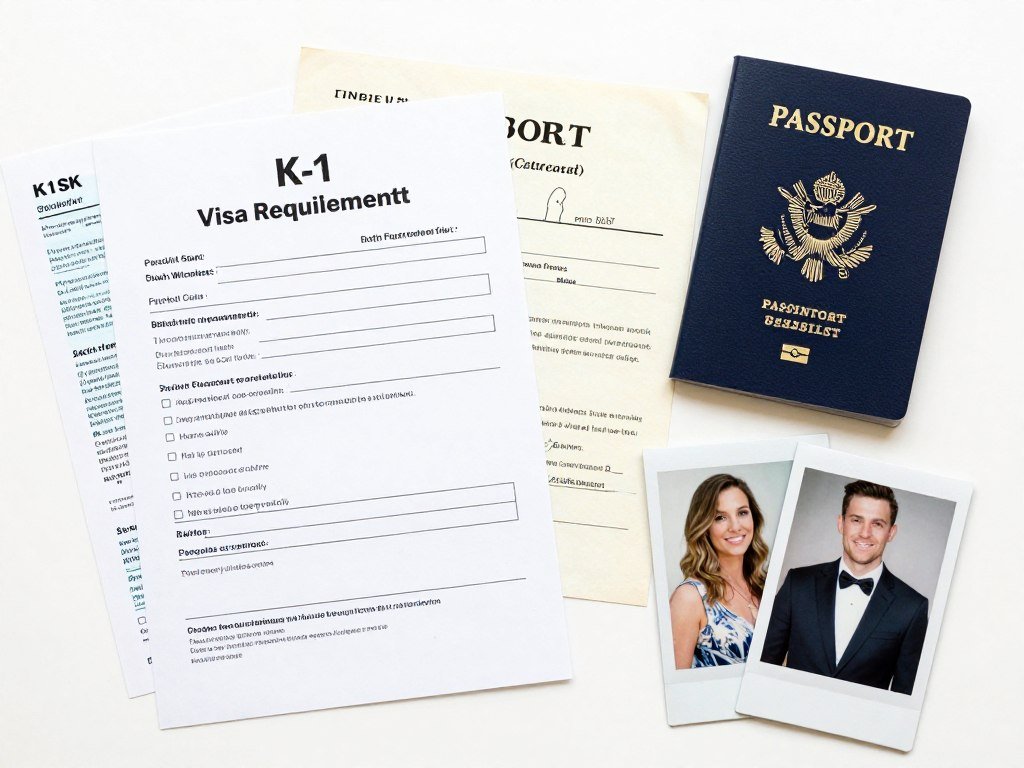
Meeting all K-1 Fiancé Visa Requirements ensures your application moves smoothly through the immigration process. Each requirement serves a specific purpose in verifying your relationship and eligibility.
U.S. Citizen Sponsor Requirements
As the U.S. citizen fiancé, you must prove your citizenship status. Acceptable documents include a U.S. passport, birth certificate, or naturalization certificate.
Income requirements play a crucial role in the K-1 visa process. You must demonstrate financial ability to support your fiancé at 100% of the Federal Poverty Guidelines.
The legally free marry requirement means you must provide evidence of terminated previous marriages. Divorce decrees or death certificates prove your legal marital status.
- Valid proof of U.S. citizenship (passport, birth certificate, or naturalization papers)
- Evidence of meeting income requirements (recent tax returns, W-2 forms, pay stubs)
- Proof of legal freedom to marry (divorce decrees if previously married)
- Completed Form I-129F petition with all required sections
- Two passport-style photographs taken within 30 days
- Filing fee payment receipt for USCIS processing
Foreign Fiancé Requirements
Your foreign fiancé must obtain a valid passport from their home country. The passport must remain valid for at least six months beyond their planned entry date to the United States.
A medical examination by an approved physician is mandatory. Only panel physicians approved by the embassy consulate can conduct K-1 visa medical exams.
Police certificates from all countries where your fiancé lived for more than six months since age 16 are required. These documents verify criminal history background.
- Valid passport with minimum six months remaining validity
- Birth certificate with certified English translation if needed
- Police certificates from all countries of residence
- Medical examination results from approved panel physician
- Evidence of relationship with U.S. citizen petitioner
- Proof of meeting in person within past two years
- Completed DS-160 nonimmigrant visa application form
- Two recent passport photographs meeting specific requirements
Relationship Evidence Requirements
Proving you met person within two years is essential. Immigration officers need clear evidence of your physical meeting before filing the petition.
Photographs together at different times and locations strengthen your case. Include pictures with family members, during travel, and at special events.
Communication records demonstrate an ongoing relationship. Save emails, chat logs, phone records, and video call screenshots showing regular contact.
Required Documentation
- Photos together showing different dates and locations
- Flight tickets and hotel receipts from visits
- Communication records (emails, messages, call logs)
- Engagement photos or wedding planning evidence
- Sworn statements from friends and family
- Gift receipts or money transfer records
Financial Documentation
The U.S. citizen fiancé must file Form I-134, Affidavit of Support. This form proves you can financially support your fiancé after they enter the United States.
Income requirements vary based on household size. Check current Federal Poverty Guidelines on the USCIS website for exact amounts.
If you don’t meet income requirements alone, joint sponsors can help. A joint sponsor must be a U.S. citizen or permanent resident meeting the financial threshold.
- Most recent federal tax return (Form 1040) with all schedules
- W-2 forms from all employers for the past year
- Recent pay stubs covering the last six months
- Letter from employer verifying current employment and salary
- Bank statements showing financial stability
- Evidence of assets (property deeds, investment statements) if needed
Pro Tip: Start gathering documents early. Some documents like police certificates can take several weeks to obtain. Begin the process as soon as you decide to apply for the K-1 visa to avoid delays.
Need a Complete Documentation Checklist?
Download our comprehensive K-1 visa requirements checklist to ensure you have every document ready before filing your petition.
Step-by-Step K-1 Visa Application Process
The K-1 visa application involves multiple stages across different government agencies. Understanding each step helps you prepare properly and avoid common delays.
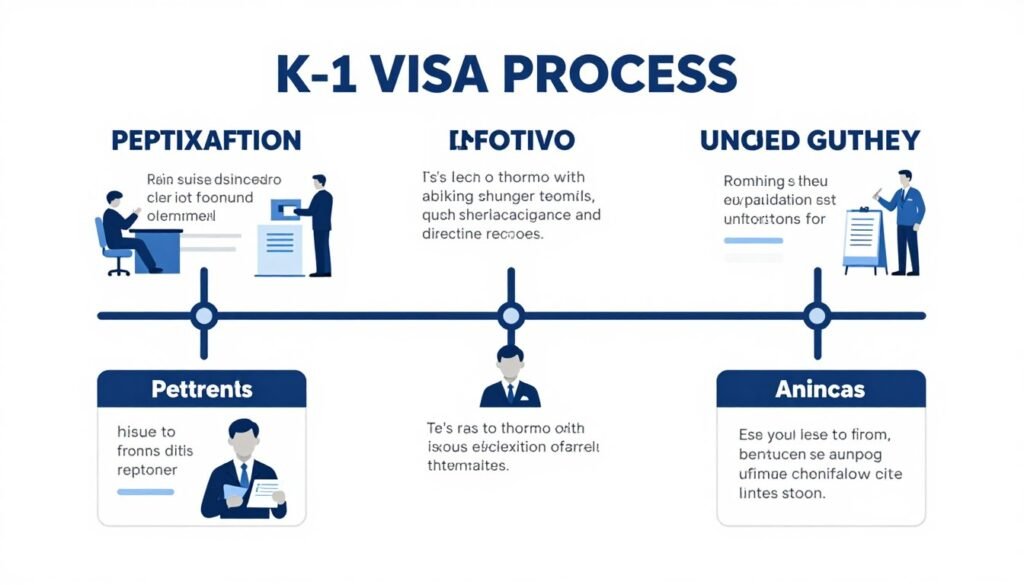
Step 1: File Form I-129F Petition with USCIS
The U.S. citizen fiancé must file Form I-129F with U.S. Citizenship and Immigration Services. This petition alien fiancé form starts the entire process.
Complete every section accurately. Missing information causes delays or rejection. Review instructions carefully before submitting.
Include all required supporting documents with your petition. Pay the required filing fee through acceptable payment methods listed on the USCIS website.
- Download and complete Form I-129F from official USCIS website
- Gather all required supporting documentation listed above
- Make copies of everything for your records
- Pay the current filing fee (check USCIS website for amount)
- Mail the complete package to the designated USCIS lockbox address
- Keep your receipt notice showing USCIS received your petition
Important: Only file Form I-129F at the correct USCIS address. Sending it to the wrong location causes significant delays. Always check the current mailing address on the official USCIS website before sending your petition.
Step 2: USCIS Reviews and Processes Your Petition
After USCIS receives your Form I-129F, they send a receipt notice. This notice includes your case number for tracking.
Processing times vary by service center. Current wait times range from several months to over a year depending on workload.
USCIS may request additional evidence if they need more information. Respond quickly to any Request for Evidence (RFE) to avoid delays.
Once approved, USCIS forwards your case to the National Visa Center. The National Visa Center then sends it to the appropriate embassy consulate.
Step 3: National Visa Center Processing
The National Visa Center receives approved petitions from USCIS. They assign a case number and send instructions to your fiancé.
Your fiancé receives information about the visa application process at this stage. The National Visa Center provides specific instructions for the next steps.
This phase typically takes a few weeks. The National Visa Center forwards your case to the embassy consulate in your fiancé’s home country.
- Receive notification from National Visa Center with case number
- Follow instructions provided in the NVC welcome letter
- Pay required visa application fees online
- Wait for case transfer to the embassy consulate
Step 4: Complete DS-160 Nonimmigrant Visa Application
Your fiancé must submit Form DS-160 online. This nonimmigrant visa application collects biographical information and travel history.
Answer all questions truthfully and completely. Inconsistencies can lead to visa denial during the interview.
Upload a digital photo meeting specific requirements. The confirmation page shows your application was successfully submitted.
Print the DS-160 confirmation page. Your fiancé needs this document for the visa interview at the embassy consulate.
Step 5: Schedule and Attend Medical Examination
Only panel physicians approved by the U.S. embassy can perform K-1 visa medical examinations. Find the approved doctor list on the embassy website.
Schedule your medical examination before the visa interview. Results are typically valid for six months.
The medical examination includes a physical exam, vaccination review, and tests for certain communicable diseases. Bring vaccination records to your appointment.
- Locate approved panel physician on embassy website
- Schedule medical examination appointment
- Bring passport, photos, vaccination records, and medical history
- Complete all required tests and vaccinations
- Receive sealed medical results envelope (do not open)
- Bring sealed envelope to visa interview
Step 6: Attend Visa Interview at Embassy Consulate
The embassy consulate schedules your fiancé for a visa interview. This is the final step before receiving the K-1 visa.
Arrive early with all required documents organized. Officers review your relationship evidence and ask questions about your plans.
Common interview questions cover how you met, your relationship history, and wedding plans. Answer honestly and provide consistent information.
If approved, the embassy consulate keeps your passport to print the visa. You typically receive it back within days of the interview.
Required Interview Documents
- Valid passport with minimum six months validity
- DS-160 confirmation page with barcode
- Visa interview appointment letter
- Sealed medical examination results
- Police certificates from all countries of residence
- Birth certificate with translation
- Evidence of relationship with petitioner
- Two passport photos meeting requirements
What to Expect at Interview
- Security screening upon entering embassy
- Fingerprint and biometric data collection
- Document review by consular officer
- Interview questions about relationship
- Questions about plans in United States
- Decision communicated same day typically
- Passport held for visa printing if approved
- Instructions for visa packet pickup
Step 7: Travel to United States
After receiving the K-1 visa, your fiancé can travel to the United States. The visa is valid for six months from the issue date.
Your fiancé must enter the United States before the visa expires. They can only make one entry using the K-1 visa.
Bring all original documents when traveling. Customs officers at the port of entry review documentation before allowing entry.
The K-1 visa allows a single entry to the United States. Once inside, your fiancé has 90 days to marry you.
Step 8: Get Married Within 90 Days
Marriage must occur within 90 days of entering the United States. This requirement is strict and cannot be extended.
You must marry the specific person named in your petition. Marrying someone else violates visa conditions.
Obtain a marriage license and have your ceremony before the 90-day deadline. Keep your marriage certificate for the next step.
Step 9: File for Adjustment of Status
After marriage, your spouse can file Form I-485 to register permanent residence. This adjustment status process leads to receiving a green card.
File the application register permanent residence as soon as possible after marriage. Include Form I-765 for work authorization and Form I-131 for travel permission.
Your spouse becomes a permanent resident after USCIS approves the application. They receive a green card allowing them to live and work in the United States.
- Complete Form I-485 Application to Register Permanent Residence
- File Form I-765 for Employment Authorization Document
- Submit Form I-131 for travel document if needed
- Provide marriage certificate and relationship evidence
- Attend biometrics appointment
- Complete adjustment of status interview if required
- Receive approval and green card
Start Your Application Today
Access official USCIS forms and begin your K-1 visa petition. The sooner you file Form I-129F, the sooner your fiancé can join you in the United States.
K-1 Visa Processing Time and Costs in 2026
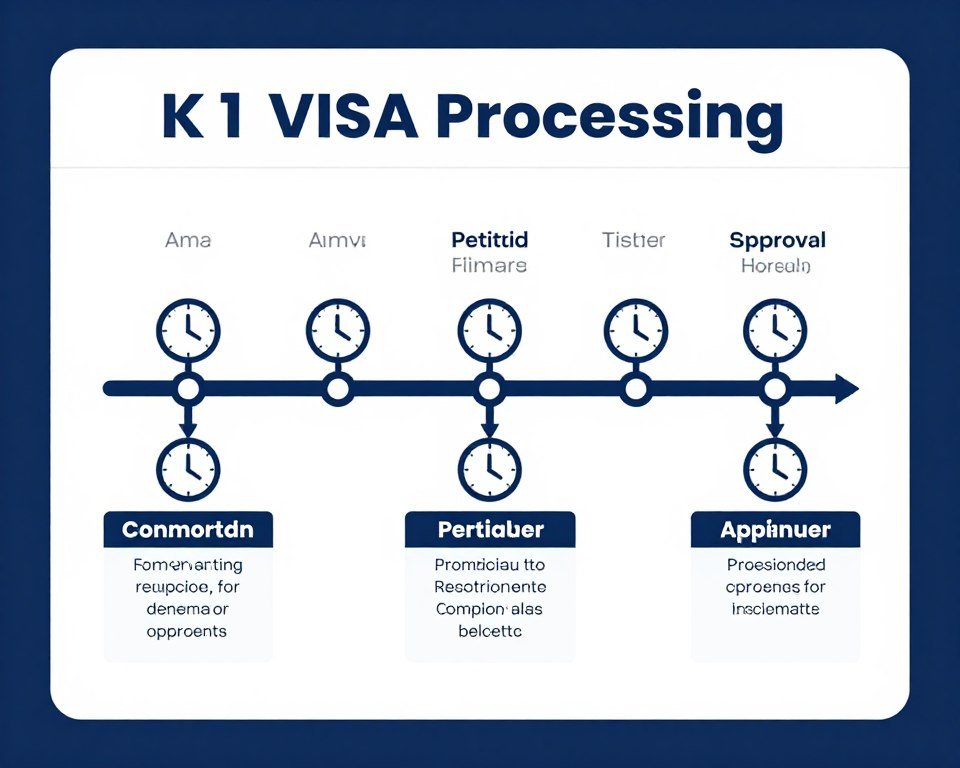
Understanding realistic timelines and costs helps you plan effectively. Processing times vary based on multiple factors beyond your control.
Current Processing Times
The total K-1 visa process typically takes 12 to 18 months from filing to arrival. This timeline includes all stages from petition submission to entering the United States.
USCIS Form I-129F processing currently takes 6 to 12 months. Service center workloads and staffing affect these times.
After USCIS approval, the National Visa Center processing adds 2 to 4 weeks. Embassy consulate scheduling varies by location and demand.
Visa interview wait times depend on the specific embassy consulate. Some locations schedule appointments within weeks while others take months.
USCIS Processing Phase
Form I-129F petition review and approval takes the longest portion of the overall timeline.
- Average time: 6 to 12 months
- Varies by service center location
- Premium processing not available
- RFEs can add 2-3 months
NVC and Embassy Phase
After USCIS approval, your case moves to the National Visa Center and then the embassy consulate.
- NVC processing: 2 to 4 weeks
- Embassy scheduling: 1 to 6 months
- Medical exam: 1 to 2 weeks
- Visa issuance: 5 to 10 days after approval
Total Timeline Range
From filing to arrival in the United States, most couples complete the process within this timeframe.
- Fastest cases: 8 to 10 months
- Average cases: 12 to 18 months
- Complex cases: 18 to 24 months
- Delays add additional time
Complete Cost Breakdown
Government fees for the K-1 visa process total approximately $2,000 to $2,500. These costs don’t include additional expenses like travel and medical exams.
The Form I-129F filing fee is currently $535. This fee goes to USCIS when you submit your petition alien fiancé form.
Your fiancé pays the visa application fee of $265. This covers DS-160 processing at the embassy consulate.
The medical examination costs vary by country and doctor. Expect to pay $100 to $500 depending on location and required tests.
| Fee Category | Amount | Paid To | When Due |
| Form I-129F Filing Fee | $535 | USCIS | With petition submission |
| DS-160 Visa Application Fee | $265 | U.S. Department of State | Before visa interview |
| Medical Examination | $100-$500 | Approved panel physician | Before visa interview |
| Form I-485 Filing Fee | $1,140-$1,225 | USCIS | After marriage in U.S. |
| Form I-765 Work Authorization | Included with I-485 | USCIS | Filed with I-485 |
| Biometrics Fee | $85 | USCIS | With I-485 application |
Additional Expenses to Consider
Beyond government fees, budget for travel costs. Visiting your fiancé during the process and their final travel to the United States add significant expenses.
Document preparation costs include translations, notarizations, and certified copies. Professional translation services charge $20 to $50 per page.
Some couples hire immigration attorneys for help. Legal fees range from $1,500 to $5,000 depending on service level and complexity.
- International travel for in-person meetings: $500-$3,000
- Document translations and certifications: $100-$500
- Passport photos at various stages: $20-$50
- Police certificates from multiple countries: $50-$200
- Shipping and courier services: $50-$150
- Optional legal assistance: $1,500-$5,000
- One-way flight to United States: $300-$2,000
- Wedding ceremony and marriage license: $100-$1,000+
Money-Saving Tip: You can complete the entire K-1 visa process yourself without an attorney. USCIS provides free instructions and resources. Many couples successfully apply K-1 visa on their own, saving thousands in legal fees.
Factors That Affect Processing Time
Several variables impact how long your specific case takes. Understanding these helps set realistic expectations.
USCIS service center workload varies by location. Some centers process cases faster than others based on staffing and volume.
Requests for Evidence extend timelines significantly. Incomplete applications or missing documents trigger RFEs that add months to processing.
Embassy consulate capacity in your fiancé’s country affects interview scheduling. High-demand posts have longer wait times.
Administrative processing occurs when cases need additional security checks. This can add weeks or months to the timeline.
Factors That Speed Up Processing
- Complete, accurate application with all documents
- Strong relationship evidence submitted upfront
- Quick responses to any USCIS requests
- Filing during lower-volume periods
- Clean background checks for both parties
- Well-organized interview preparation
Factors That Cause Delays
- Incomplete forms or missing documentation
- Requests for Evidence from USCIS
- Criminal history requiring additional review
- Previous immigration violations
- Administrative processing at embassy
- Errors on forms requiring corrections
Stay Updated: Processing times and fees change periodically. Always check the official USCIS website for current information before filing your petition or making financial plans.
Common Mistakes to Avoid in the K-1 Visa Process
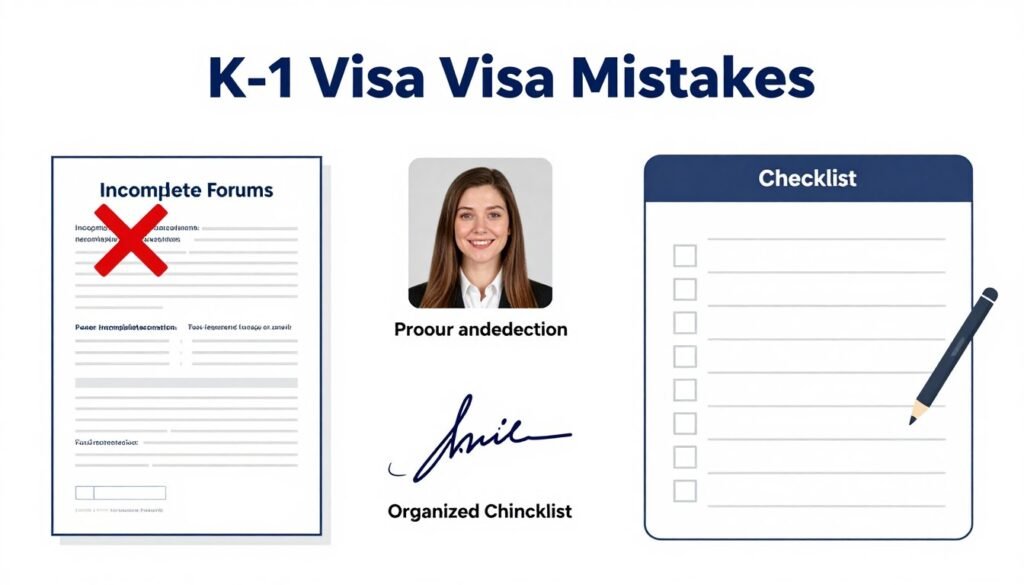
Even small errors can delay your application by months or lead to denial. Learning from others’ mistakes helps you avoid costly problems.
Documentation and Filing Errors
Incomplete forms are the most common mistake. Every question on Form I-129F requires an answer. Writing “N/A” is better than leaving blanks.
Missing signatures invalidate your petition. Both the U.S. citizen petitioner and foreign fiancé must sign where indicated.
Sending the petition to the wrong address causes major delays. USCIS uses different addresses for different forms and filing methods.
Not making copies of everything you submit creates problems later. Always keep complete copies of your entire submission package.
Critical Error to Avoid: Never submit false information or fake documents. Immigration fraud carries serious consequences including permanent visa denial and potential criminal charges. Always provide truthful, accurate information.
- Incomplete Form I-129F: Leaving sections blank or unanswered causes USCIS to reject or delay your petition. Answer every question completely even if you write “None” or “N/A.”
- Insufficient Relationship Evidence: Submitting only a few photos or minimal proof makes officers question your relationship’s legitimacy. Provide comprehensive evidence covering your entire relationship timeline.
- Missing Filing Fee or Incorrect Payment: Wrong payment amounts or unacceptable payment methods result in petition rejection. Verify current fees on USCIS website before sending payment.
- Wrong USCIS Mailing Address: Sending your petition to an outdated or incorrect address delays processing by weeks or months. Always check current addresses on official USCIS website.
- Unsigned Forms: Forms without required signatures are automatically rejected. Review each form carefully to ensure all signature lines are completed.
- Poor Quality Photos: Blurry, dark, or improperly sized photos don’t meet requirements. Follow exact specifications for passport photos at each stage.
- Missing Translations: Foreign language documents without certified English translations are unacceptable. All documents must include professional translations with translator certification.
- Expired or Invalid Passports: Passports must be valid for at least six months beyond intended entry date. Renew passports before starting the visa process.
Relationship Evidence Mistakes
Weak evidence of meeting in person is a common problem. Include flight tickets, hotel receipts, and dated photos together from your visits.
Generic or staged photos don’t prove a genuine relationship. Officers want to see natural photos from different times and locations with varied activities.
Insufficient communication records raise red flags. Save and submit examples of ongoing contact through multiple channels over time.
Forgetting to explain unusual circumstances can hurt your case. If you have a large age gap or met online, provide clear explanations.
Interview Preparation Errors
Inconsistent answers between partners during interviews signal problems. Discuss your relationship timeline and ensure both partners know key details.
Arriving late or unprepared to the visa interview creates negative impressions. Know the embassy location, arrive early, and bring organized documents.
Incomplete interview documents cause denials. Bring original documents plus copies organized in a logical order.
Nervous or evasive behavior raises suspicion. Answer questions directly and honestly without over-explaining.
- Inconsistent answers about how you met
- Unclear wedding plans or vague timelines
- Missing required original documents
- Defensive or argumentative responses
- Bringing unauthorized people to interview
- Failing to disclose previous relationships
- Wearing inappropriate or casual clothing
Interview Mistakes to Avoid
- Consistent, honest answers from both partners
- Specific wedding plans and realistic timeline
- All documents organized and readily accessible
- Calm, respectful communication style
- Attending interview alone as instructed
- Full disclosure of relevant history
- Professional, respectful appearance
Interview Success Strategies
Timeline and Process Mistakes
Filing Form I-129F before meeting in person leads to denial. USCIS requires proof you met within the past two years before filing.
Waiting too long after approval to schedule interviews wastes time. Petitions eventually expire if you don’t pursue the process promptly.
Missing the 90-day marriage deadline after entering the United States has serious consequences. Your fiancé must leave or faces immigration violations.
Not filing for adjustment status after marriage delays getting the green card. File Form I-485 soon after marriage to begin the permanent residence process.
Financial Documentation Errors
Failing to meet income requirements is a leading cause of denial. Calculate your household size correctly and verify you exceed 100% of poverty guidelines.
Missing tax returns or inconsistent financial information creates problems. USCIS cross-checks your claimed income against tax records.
Not arranging a joint sponsor when needed delays approval. If you don’t meet income requirements, find an eligible joint sponsor before filing.
- Underestimating total household size in poverty guideline calculations
- Submitting incomplete tax returns missing schedules or W-2 forms
- Using outdated poverty guideline figures instead of current year
- Failing to explain gaps in employment history
- Not including joint sponsor documentation when required
- Mixing personal and business finances without clear separation
Get Official Guidance from USCIS
Contact the USCIS Contact Center for help with your application questions. Trained officers provide accurate information about requirements and processes.
Monday-Friday, 8am-8pm EST
Tips to Improve Your K-1 Visa Approval Chances
Strengthening your application increases approval odds and reduces processing delays. Follow these proven strategies for success.
Build Strong Relationship Evidence
Document your relationship thoroughly from the beginning. The more evidence you provide, the easier it is for officers to verify your genuine bond.
Include relationship evidence from the entire duration you’ve known each other. Show progression from initial meeting through engagement.
Mix different types of evidence for credibility. Combine photos, communication records, visit documentation, and third-party statements.
Quality matters more than quantity. Ten meaningful photos showing different occasions are better than fifty similar selfies.
Strongest Types of Evidence
- Photos together at family events and holidays
- Flight itineraries and boarding passes from visits
- Hotel reservations and receipts with both names
- Communication showing daily interaction over time
- Joint activities like trips, concerts, or classes
- Engagement announcements to friends and family
- Affidavits from people who know your relationship
- Financial support evidence like money transfers
How to Organize Evidence
- Arrange chronologically from first meeting to present
- Label each photo with date and location
- Create a relationship timeline summary
- Group similar evidence types together
- Include captions explaining context
- Translate foreign language communications
- Use tabs or dividers for easy navigation
- Keep original and backup copies
Ensure Financial Stability
Meeting income requirements comfortably reduces scrutiny. Aim to exceed the minimum threshold by a comfortable margin.
Maintain consistent employment during the process. Job changes or gaps in employment can complicate financial documentation.
If you’re close to the income limit, consider adding a joint sponsor. This eliminates concerns about borderline finances.
Document all income sources clearly. Include employment income, self-employment, retirement benefits, and other regular income.
Complete Forms Accurately and Thoroughly
Read instructions completely before starting any form. Understanding requirements prevents mistakes.
Answer every question even if it doesn’t apply to you. Use “N/A” or “None” rather than leaving blanks.
Type forms when possible for clarity. Handwritten forms must be legible in black ink.
Have someone review your completed forms before submission. Fresh eyes catch errors you might miss.
Pro Strategy: Create a comprehensive application package that tells your love story clearly. Officers reviewing hundreds of cases appreciate well-organized, complete submissions that make their job easier. A professional presentation demonstrates you take the process seriously.
Prepare Thoroughly for the Visa Interview
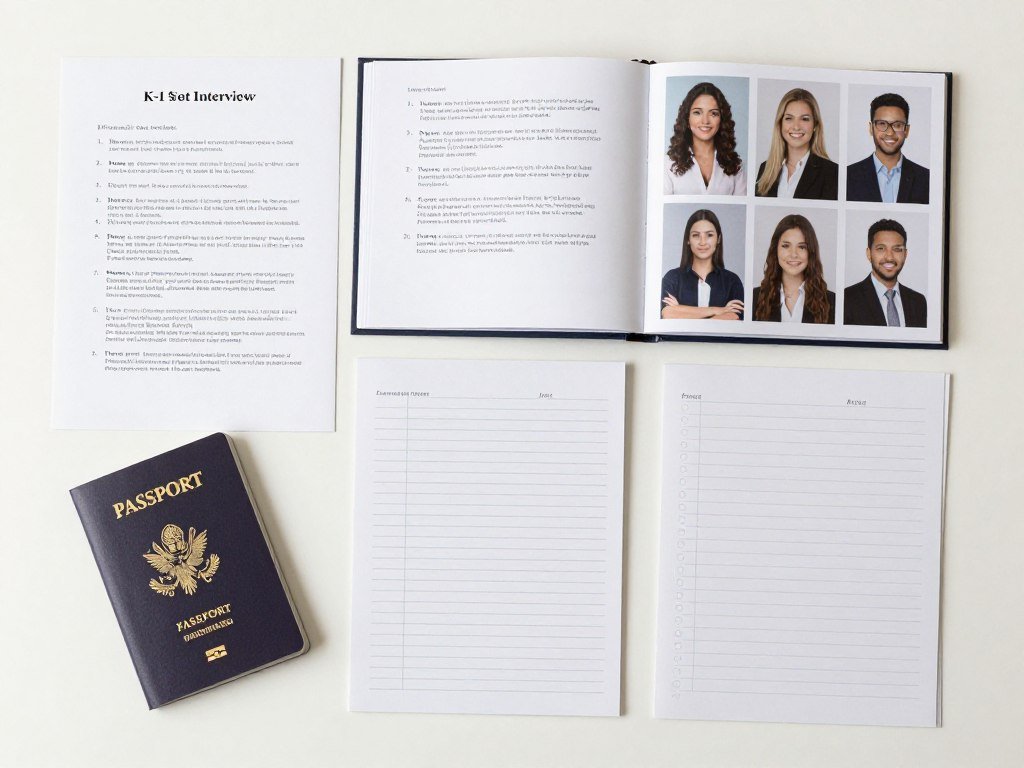
Practice answering common interview questions together. Consistent answers between partners build credibility.
Know specific details about each other’s lives. Officers ask about family members, jobs, education, and daily routines.
Understand the timeline of your relationship. Be ready to explain when and how you met, fell in love, and decided to marry.
Prepare clear explanations for any unusual circumstances. Age gaps, previous marriages, or quick engagements need context.
- How and when you first met each other
- What attracted you to your partner
- Timeline of visits and how long each lasted
- Details about the engagement proposal
- Wedding plans including date, location, and guest list
- Where you will live after marriage
- Employment plans in the United States
- How you communicate while apart
- Information about each other’s families
- Future plans for children or career
Address Potential Red Flags Proactively
Large age differences between partners require extra evidence. Provide detailed explanations of how you met and your compatibility.
Previous denied visa applications need clear explanations. Disclose prior denials and explain what changed.
Criminal history must be fully disclosed with supporting documents. Hiding past issues guarantees denial if discovered.
Previous marriages require complete documentation. Provide divorce decrees or death certificates proving you’re legally free marry.
Maintain Open Communication with USCIS
Respond promptly to any USCIS requests. Requests for Evidence have strict deadlines that you must meet.
Update USCIS if your address changes during processing. Missing important notices causes serious delays.
Keep your case number and receipt notices accessible. You’ll need these to check status and communicate with USCIS.
Monitor your case status online regularly. USCIS posts updates that help you stay informed about progress.
Consider Legal Consultation for Complex Cases
Complex situations benefit from professional guidance. Immigration attorneys help navigate unusual circumstances.
Previous immigration violations require expert advice. An attorney can assess your eligibility and strategy.
Multiple denied petitions suggest underlying issues. Professional review identifies problems you might miss.
Criminal history, even minor offenses, warrants legal consultation. Immigration consequences of crimes are complex.
When to Seek Legal Help: Most straightforward K-1 visa cases don’t require an attorney. However, if you have criminal history, previous visa denials, complex financial situations, or unusual relationship circumstances, consulting an immigration attorney can save time and increase success chances.
DIY Applications Work Best When
- Neither partner has criminal history
- Clear, well-documented relationship
- Meet all financial requirements comfortably
- No previous visa denials
- Both parties legally free marry
- Straightforward circumstances
Consider Attorney When
- Criminal history exists for either party
- Previous visa denials or violations
- Complex financial or employment situations
- Large age gaps or unusual circumstances
- Previous immigration issues
- Concerns about admissibility
Legal Help Essential For
- Serious criminal convictions
- Previous deportation or removal
- Prior immigration fraud allegations
- Multiple denied petitions
- Inadmissibility concerns
- Complex legal situations
Latest K-1 Visa Policy Updates and Changes in 2026
Immigration policies evolve regularly. Staying informed about current requirements ensures your application meets the latest standards.
Recent Processing Time Changes
USCIS processing times for Form I-129F have fluctuated significantly in recent years. Current wait times are longer than historical averages due to increased application volume.
The agency continues working to reduce backlogs. USCIS hired additional staff and implemented efficiency measures to improve processing speeds.
Premium processing remains unavailable for K-1 visa petitions. Unlike some other visa categories, you cannot pay extra for faster processing.
Check official USCIS processing times regularly. The agency updates estimated wait times monthly on their website.
Fee Adjustments and Payment Updates
USCIS periodically adjusts filing fees to cover operational costs. Fee changes typically occur every few years with advance notice.
Current fees remain stable for 2026. However, proposed increases are under review that may take effect later this year.
Payment methods have expanded for convenience. USCIS now accepts credit cards, debit cards, and electronic transfers for many applications.
Always verify current fees before filing. The official USCIS website lists the most up-to-date fee information.
Enhanced Security and Background Checks
Security vetting has become more comprehensive in recent years. Additional background checks can extend processing times for some applicants.
Administrative processing occurs more frequently at certain embassy consulates. This extra scrutiny particularly affects applicants from specific regions.
Social media review is now part of the visa application process. Officers may ask for your social media handles during the DS-160 application.
Biometric data collection has expanded. Both fingerprints and facial recognition technology are standard at most embassy consulates.
Documentation and Evidence Standards
USCIS continues emphasizing genuine relationship verification. Officers scrutinize evidence more carefully to prevent fraud.
Digital communication evidence is now widely accepted. Screenshots of messages, emails, and video calls supplement traditional photos.
Translation requirements remain strict. All foreign language documents must include certified English translations from qualified professionals.
Original documents are required at interviews. Photocopies alone are insufficient for most supporting evidence.
Changes to Adjustment of Status Process
The application register permanent residence process has been streamlined. USCIS now combines work authorization and travel permits into single filing.
Interview waivers have become more common for adjustment status cases. Some low-risk applicants receive approval without face-to-face interviews.
Processing times for green cards after marriage vary widely. Current timelines range from 10 to 24 months depending on the field office.
Combo cards containing both work authorization and travel permission are standard. Spouses receive a single card with both benefits.
Stay Current: Immigration policy changes can happen quickly. Always check official government websites for the most recent information before making decisions or filing applications. The USCIS, Department of State, and Department of Homeland Security websites provide authoritative updates.
Potential Upcoming Changes
Proposed legislation could affect future K-1 visa processing. Congressional discussions include potential reforms to fiancé visa procedures.
Increased digitization of the process is planned. USCIS is working toward fully online applications for many visa categories.
Enhanced fraud detection measures are under development. New technology aims to identify fraudulent applications more effectively.
Policy changes may occur based on administration priorities. Immigration enforcement and processing priorities shift with different political leadership.
- Ongoing discussions about fee increases for various forms
- Potential implementation of electronic filing for I-129F
- Enhanced interview protocols at certain embassies
- Improved online case tracking and status updates
- Expanded use of virtual interviews for some cases
- Updated poverty guideline thresholds for income requirements
Resources for Staying Informed
Official government websites provide the most reliable information. USCIS, Department of State, and Department of Homeland Security publish updates regularly.
The USCIS Policy Manual contains detailed guidance. This comprehensive resource explains all immigration processes and requirements.
Embassy websites post country-specific information. Check your fiancé’s local embassy for processing details and requirements.
Immigration news from official sources helps you stay current. Subscribe to USCIS email updates for important announcements.
Access Official Immigration Resources
Visit official government websites for the most accurate, up-to-date K-1 visa information and policy changes.
Ready to Begin Your K-1 Visa Journey

The K-1 fiancé visa process brings couples together despite international borders. While the journey requires patience and careful preparation, thousands successfully navigate it every year.
Understanding K-1 Fiancé Visa Requirements from the start positions you for success. Thorough preparation prevents delays and strengthens your application.
Remember these essential points as you begin. First, gather comprehensive relationship evidence documenting your genuine bond. Second, ensure you meet all income requirements or arrange a joint sponsor. Third, complete every form accurately and thoroughly.
Start the process as soon as you’re ready. The long timeline means earlier filing brings you together sooner. Don’t wait for perfect circumstances that may never arrive.
Your Next Steps
Begin by reviewing all Form I-129F instructions on the USCIS website. Download the form and supporting document checklist.
Organize your relationship evidence chronologically. Create a comprehensive package showing your journey from meeting to engagement.
Verify you meet income requirements using current Federal Poverty Guidelines. Calculate your household size correctly and gather financial documentation.
File your petition when you have all required documents ready. Incomplete submissions cause delays that extend your time apart.
Essential Resources
- USCIS Form I-129F instructions and checklist
- Current processing time estimates
- Federal Poverty Guidelines for income verification
- DS-160 application portal
- Embassy interview wait times
- Official USCIS Contact Center
Important Reminders
- Keep copies of everything you submit
- Respond promptly to USCIS requests
- Update address changes immediately
- Check case status regularly online
- Maintain relationship evidence collection
- Stay informed about policy changes
Proper preparation makes the difference between smooth processing and frustrating delays. Take time to understand each requirement before filing.
Don’t hesitate to seek help when needed. The USCIS Contact Center answers questions, and immigration attorneys assist with complex situations.
Your careful attention to details now leads to approval later. Thousands of couples successfully complete this process and build their lives together in the United States.
The K-1 visa represents the first step toward your shared future. Once your fiancé arrives and you marry, the path to permanent residence opens. Within a few years, your spouse can even apply for U.S. citizenship.
Stay positive throughout the journey. Processing times feel long, but proper preparation ensures steady progress toward your goal of being together.
Start Your K-1 Visa Application Today
Access official forms, instructions, and resources to begin bringing your fiancé to the United States. Every journey starts with a single step.
Questions? Contact USCIS:
“The process seemed overwhelming at first, but taking it step by step made everything manageable. Proper preparation and patience pay off when you finally reunite with your loved one.”
Frequently Asked Questions About K-1 Fiancé Visas
How long does the entire K-1 visa process take from start to finish?
The complete K-1 visa timeline typically ranges from 12 to 18 months. This includes USCIS petition processing, National Visa Center transfer, embassy consulate scheduling, and final visa issuance. Processing times vary based on service center workload and embassy capacity in your fiancé’s country.
Can my fiancé work in the United States on a K-1 visa?
K-1 visa holders cannot work immediately upon arrival. After marriage, they can file Form I-765 with their adjustment status application to receive work authorization. The Employment Authorization Document typically arrives within 3 to 5 months of filing Form I-485.
What happens if we don’t marry within 90 days?
The 90-day marriage deadline is strict and cannot be extended. If you don’t marry within this timeframe, your fiancé must leave the United States. Staying beyond the allowed period creates serious immigration violations that can affect future visa applications.
How much income do I need to sponsor my fiancé?
The U.S. citizen petitioner must earn at least 100% of the Federal Poverty Guidelines for their household size. For 2026, this means approximately $15,060 for a household of two. Income requirements increase with larger household sizes. Check current guidelines on the USCIS website.
Can we apply for a K-1 visa if we’ve never met in person?
Generally no. USCIS requires proof that you met person within the past two years before filing Form I-129F. Limited exceptions exist for extreme hardship or religious/cultural customs that prohibit in-person meetings before marriage. These exceptions are rarely granted.
What if my fiancé was previously denied a U.S. visa?
Previous visa denials don’t automatically disqualify K-1 applicants. However, you must disclose all prior denials and address the reasons for denial. If the denial was for fraud or misrepresentation, consult an immigration attorney before applying.
Can my fiancé bring their children to the United States?
Yes, unmarried children under 21 can receive K-2 visas to accompany your fiancé. Include them on Form I-129F when filing. They must marry the petitioner within 90 days like the primary K-1 beneficiary and can apply for green cards after the marriage.
How long after marriage can my spouse get a green card?
Processing times for adjustment of status applications vary from 10 to 24 months depending on the USCIS field office. Your spouse can file Form I-485 immediately after marriage. They’ll receive work authorization and travel permission while waiting for permanent resident status approval.
Can my fiancé travel outside the United States after arriving on K-1 visa?
Leaving the United States before marriage can complicate the process. If travel is necessary after marriage but before receiving the green card, file Form I-131 for advance parole. Traveling without proper authorization can abandon the adjustment status application.
Do I need a lawyer to apply for a K-1 visa?
Most straightforward K-1 visa cases don’t require legal representation. USCIS provides detailed instructions and forms are accessible to self-filers. However, complex situations involving criminal history, previous visa denials, or unusual circumstances benefit from professional legal guidance.