
Marriage-Based Immigration Process Explained: Your Complete 2026 Guide
Marriage to a U.S. citizen opens a pathway to permanent residence in the United States. This process, known as marriage-based immigration, helps thousands of families reunite each year.
In 2026, immigration policies continue to evolve. New processing procedures and updated requirements make it essential to understand current regulations.
This guide walks you through every step of obtaining a marriage green card. You’ll learn about eligibility requirements, necessary documents, processing times, and common pitfalls to avoid.
Marriage-based immigration allows foreign nationals to obtain lawful permanent resident status through marriage to a U.S. citizen or green card holder. This process grants the foreign spouse the right to live and work permanently in the United States.
Key Terms You Need to Know
Understanding immigration terminology helps you navigate the process more effectively. Here are essential terms:
- Petitioner: The U.S. citizen or green card holder sponsoring their foreign spouse
- Beneficiary: The foreign national spouse seeking immigration benefits
- Adjustment of Status: Process for foreign nationals already in the United States to become permanent residents
- Consular Processing: Visa application process conducted at a U.S. embassy or consulate abroad
- Green Card: Common term for permanent resident card, allowing indefinite residence in the United States
- Form I-130: Petition for Alien Relative, the primary form filed by the petitioner
- Conditional Residence: Temporary status granted when marriage is less than two years old at approval
- Bona Fide Marriage: Genuine marriage entered into for love, not immigration benefits
Who Qualifies for Marriage-Based Immigration
Both parties must meet specific criteria for a successful marriage green card application. The petitioner must be either a U.S. citizen or lawful permanent resident.
The marriage must be legally valid in the location where it occurred. Both spouses must be legally free to marry, meaning any previous marriages were properly terminated through divorce or death.
Most importantly, the marriage must be genuine. U.S. Citizenship and Immigration Services scrutinizes applications to detect fraud. Immigration officers look for evidence that couples married for love rather than immigration benefits alone.
Requirements and Eligibility
Meeting all eligibility requirements ensures your marriage-based immigration application moves forward smoothly. Both the petitioner and beneficiary must satisfy specific criteria established by U.S. immigration law.
Petitioner Requirements
The U.S. citizen or green card holder spouse must prove their status. Citizens provide a birth certificate, passport, or naturalization certificate.
Green card holders submit a copy of their permanent resident card. The petitioner must also demonstrate financial capability to support their spouse.
This requirement prevents the foreign spouse from becoming a public charge. The petitioner completes Form I-864, Affidavit of Support, showing income at least 125% of federal poverty guidelines.
Beneficiary Requirements
The foreign spouse must enter the United States legally if applying through adjustment of status. Overstaying a visa or entering without inspection creates complications that may require consular processing instead.
The beneficiary must pass medical examinations and background checks. These screens check for communicable diseases and criminal history that could make someone inadmissible to the United States.
Essential Documents You Need
Gathering complete documentation before filing prevents delays. Required documents vary slightly based on your specific situation, but generally include:
- Proof of petitioner’s U.S. citizenship or permanent residence status
- Valid passports for both spouses
- Marriage certificate from the jurisdiction where you married
- Birth certificates for both spouses
- Divorce decrees or death certificates for any previous marriages
- Passport-style photographs meeting USCIS specifications
- Police certificates from countries where beneficiary lived for more than six months
- Medical examination results (Form I-693) from approved civil surgeon
- Financial documents proving petitioner’s income (tax returns, pay stubs, W-2 forms)
- Evidence of genuine marriage (joint bank accounts, lease agreements, photos together)
Financial Documents
Proving adequate financial support protects both the applicant and U.S. government.
- Most recent federal tax returns
- Recent pay stubs covering last six months
- Employment verification letter
- Bank statements showing assets
Marriage Evidence
Strong evidence of genuine marriage strengthens your petition significantly.
- Joint utility bills and lease agreements
- Photographs throughout relationship
- Joint insurance policies
- Affidavits from family and friends
Identity Documents
Valid identification establishes identity and legal status for both spouses.
- Government-issued photo identification
- Current passports with validity dates
- Previous visa stamps if applicable
- Travel records and entry stamps
Legal Records
Complete legal documentation prevents application rejection and processing delays.
- Certified marriage certificate translation
- Final divorce or annulment decrees
- Court records if applicable
- Name change documentation
Step-by-Step Process
The marriage-based immigration process follows a structured sequence. Understanding each step helps you prepare properly and avoid mistakes that cause delays.

Step 1: File Form I-130 Petition
The process begins when the U.S. citizen or green card holder files Form I-130, Petition for Alien Relative. This form establishes the relationship between petitioner and beneficiary.
Submit the petition to U.S. Citizenship and Immigration Services with all required supporting documents. Include the filing fee, currently $535 for the I-130 petition.
USCIS reviews the petition to verify the validity of your marriage. They check that all required evidence accompanies the application and that the marriage meets legal requirements.
Step 2: Choose Your Processing Path
Two processing paths exist depending on the beneficiary’s location. The choice significantly affects timeline and procedures.
Adjustment of Status: If the foreign spouse currently resides in the United States with valid status, they can apply for adjustment of status. This process allows them to remain in the country while their application processes.
Consular Processing: If the foreign spouse lives abroad or cannot adjust status in the United States, they must complete consular processing. This requires attending an interview at a U.S. embassy or consulate in their home country.
Step 3: Complete Supporting Applications
After filing the I-130, additional forms follow based on your processing path. For adjustment of status, file Form I-485, Application to Register Permanent Residence.
Include Form I-765 for employment authorization and Form I-131 for travel permission. These forms allow the beneficiary to work and travel while awaiting green card approval.
For consular processing, the National Visa Center takes over after USCIS approves the I-130. They provide instructions for completing Form DS-260, the immigrant visa application.
Step 4: Attend Biometrics Appointment
USCIS schedules a biometrics appointment for fingerprinting and photographs. This typically occurs within a few weeks of filing your application.
Bring your appointment notice and valid identification. The process takes about 30 minutes. USCIS uses biometrics for background checks and to produce your green card.
Step 5: Complete Medical Examination
All immigration applicants must undergo medical examinations by USCIS-approved civil surgeons. Schedule this exam after receiving your case number.
The examination checks for communicable diseases and ensures required vaccinations are current. Bring vaccination records to avoid unnecessary repeat vaccinations.
The civil surgeon completes Form I-693, which you submit with your application or bring to your interview in a sealed envelope.
Step 6: Prepare for the Marriage Interview
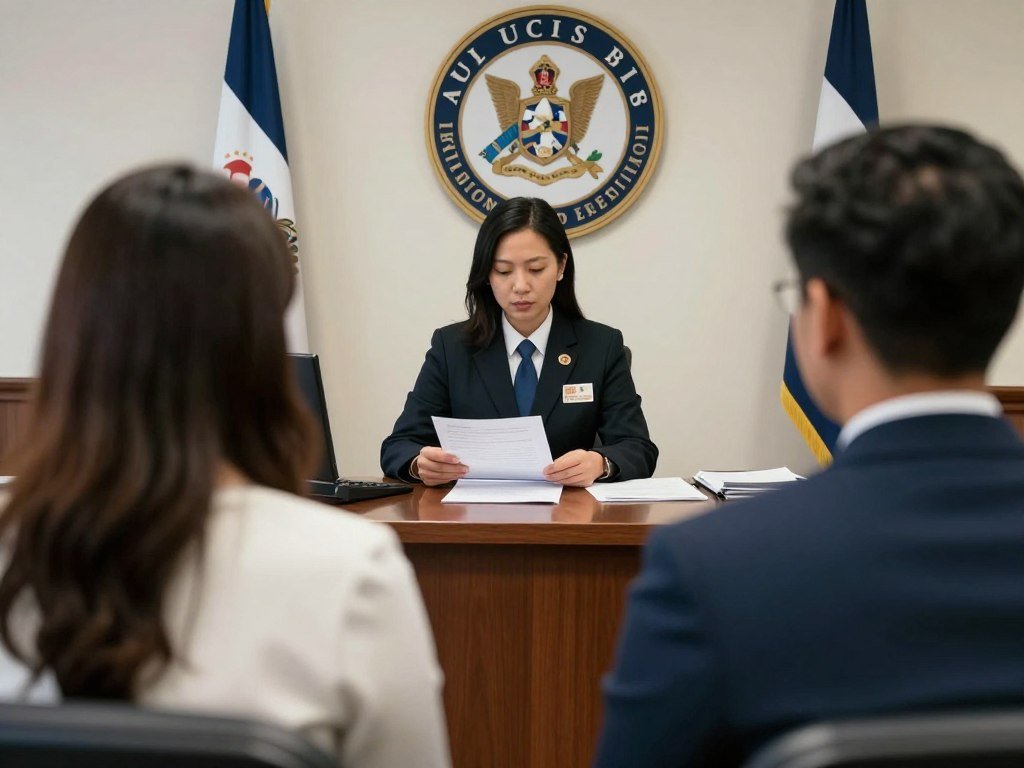
The marriage interview represents the most critical step. Immigration officers assess whether your marriage is genuine.
Both spouses must attend the interview together. Bring originals of all documents submitted with your application. Officers ask questions about your relationship, daily life, and future plans.
Prepare by reviewing your application thoroughly. Be honest and consistent in your answers. Bring additional evidence of your ongoing relationship, such as recent photos, joint bills, or birth certificates of children.
Step 7: Receive Decision and Green Card
After the interview, officers typically issue a decision. If approved, you’ll receive your green card by mail within two to three weeks.
Marriages less than two years old receive conditional green cards valid for two years. You must file to remove conditions within 90 days before the card expires.
Marriages over two years old at approval receive standard ten-year green cards. These do not require condition removal but must be renewed every ten years.
Processing Time and Costs
Understanding timelines and expenses helps you plan your marriage-based immigration journey. Processing times vary based on several factors including USCIS workload and your specific situation.
Expected Processing Timelines
Current processing times fluctuate based on USCIS capacity and case complexity. Here are typical timeframes for 2026:
| Processing Stage | Typical Timeline | Factors Affecting Speed |
| I-130 Petition (U.S. Citizen Spouse) | 10-13 months | Service center workload, documentation completeness |
| I-130 Petition (Green Card Holder Spouse) | 13-15 months | Visa availability, priority dates |
| Adjustment of Status (I-485) | 12-18 months | Field office capacity, background check completion |
| Consular Processing | 6-12 months after I-130 approval | Embassy workload, administrative processing needs |
| Work Permit (I-765) | 4-6 months | Can be expedited in certain circumstances |
| Travel Document (I-131) | 4-6 months | Processing center backlog |
Adjustment of status for immediate relatives of U.S. citizens generally processes faster than consular processing. However, if you’re outside the United States, consular processing may be your only option.
Premium processing is not available for family-based immigration petitions. You cannot pay extra to expedite your marriage green card application under normal circumstances.
Complete Cost Breakdown
Budget carefully for all immigration expenses. Government fees represent only part of the total cost.
| Expense Item | Cost | When Due |
| Form I-130 Filing Fee | $535 | With initial petition |
| Form I-485 Filing Fee | $1,140 | With adjustment application |
| Biometric Services Fee | $85 | With I-485 or when scheduled |
| Form I-765 (Work Permit) | Included with I-485 | Filed concurrently |
| Form I-131 (Travel Document) | Included with I-485 | Filed concurrently |
| Medical Examination | $200-$500 | Before interview |
| Document Translations | $20-$40 per page | With application |
| Passport Photos | $15-$30 | With application |
| Attorney Fees (if applicable) | $1,500-$5,000 | Varies by arrangement |
Total costs for adjustment of status typically range from $2,000 to $3,000 without attorney fees. Add attorney costs if you choose professional representation, which many couples find helpful given the complexity.
For consular processing, expect similar government fees but potentially higher travel costs if the U.S. embassy or consulate is far from where you live.
Ways to Reduce Costs
Several strategies can minimize expenses without compromising application quality:
- Complete forms yourself if your case is straightforward and you feel confident
- Use free USCIS resources and guides available on their official website
- Get document translations from certified translators rather than attorneys
- Take passport photos at drugstores instead of professional studios
- Request fee waivers if you meet income requirements (Form I-912)
- Organize documents carefully to avoid rejection and refiling fees
However, consider professional help if your case involves complications like prior immigration violations, criminal history, or previous visa denials.
Common Mistakes to Avoid
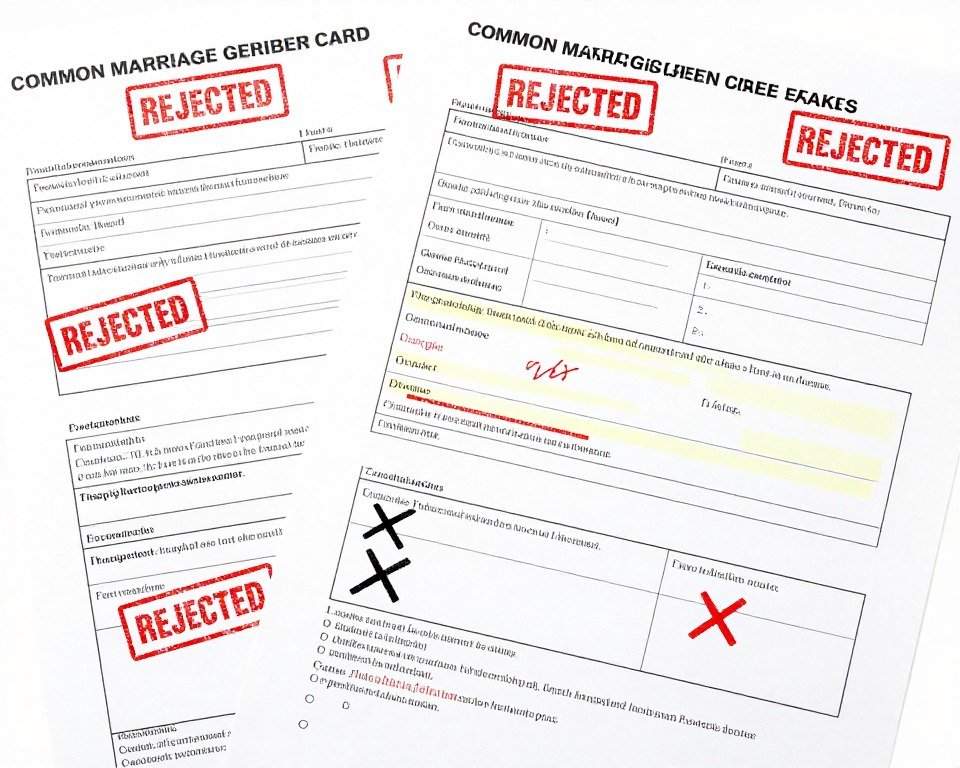
Many marriage green card applications face delays or denials due to preventable errors. Learning from others’ mistakes saves time, money, and stress.
Incomplete or Incorrect Forms
Submitting incomplete applications represents the most common mistake. USCIS rejects applications missing required information or signatures.
Read instructions carefully for each form. Answer every question completely. Write “N/A” or “None” rather than leaving fields blank.
Double-check that all signatures appear where required. Unsigned forms will be rejected, causing months of delays.
Insufficient Evidence of Genuine Marriage
Immigration officers scrutinize marriage authenticity carefully. Couples often underestimate how much proof they need.
Provide substantial evidence spanning your entire relationship. Include documents from before and after marriage showing joint financial obligations, shared residence, and combined lives.
Photos alone don’t prove marriage validity. Include joint bank statements, lease agreements, insurance policies listing both spouses, and utility bills showing both names.
Missing Deadlines and Appointments
USCIS sends notices with specific deadlines for responses, biometrics appointments, and interviews. Missing these deadlines can result in case denial.
Update your address immediately if you move. File Form AR-11 within 10 days of address changes to ensure you receive all notices.
Set reminders for important dates. If you cannot attend a scheduled appointment, request rescheduling promptly rather than simply missing it.
Inadequate Financial Documentation
Petitioners must prove they can financially support their spouse. Many applications fail because income documentation is incomplete or insufficient.
The petitioner must show income at 125% of federal poverty guidelines. If income falls short, find a joint sponsor who meets requirements.
Provide three years of tax returns, not just one year. Include all pages of returns, W-2 forms, and recent pay stubs showing current employment.
Poor Interview Preparation
Couples sometimes approach interviews casually, assuming their genuine marriage will be obvious. Immigration officers ask detailed questions about daily life together.
Review your application thoroughly before the interview. Know dates, addresses, and information you provided. Inconsistent answers raise red flags.
Bring original documents for everything submitted as copies. Officers verify authenticity during interviews.
Answer questions honestly and directly. Don’t volunteer unnecessary information, but never lie to immigration officers.
Traveling Outside the United States Improperly
Leaving the United States while your adjustment of status is pending can abandon your application. Many applicants don’t realize departure without advance parole terminates their case.
Apply for advance parole (Form I-131) if you need to travel internationally. Wait until you receive the document before departing.
Consult an immigration attorney before traveling if you have any questions about how departure might affect your case.
Failing to Disclose Information
Some applicants hide information they fear will hurt their case. This strategy always backfires when USCIS discovers the truth.
Disclose all arrests, even if charges were dropped or expunged. Report all previous marriages and immigration violations.
USCIS conducts thorough background checks. Hidden information discovered later can result in permanent bars from immigration benefits.
Using Incorrect or Outdated Forms
USCIS regularly updates forms. Using old versions causes automatic rejection and processing delays.
Download forms directly from the official USCIS website each time you prepare to file. Check the edition date in the bottom corner to verify you have the current version.
Don’t rely on forms you downloaded months earlier. Verify you’re using the latest edition before submitting.
Critical Warning: Immigration Fraud
Entering a fraudulent marriage solely for immigration benefits constitutes a federal crime. Penalties include deportation, permanent immigration bars, fines up to $250,000, and imprisonment up to five years. USCIS trains officers to detect fraud. Don’t attempt to deceive immigration authorities.
Don’t Let Mistakes Derail Your Marriage Green Card
Even small errors can cause major delays or denials in marriage-based immigration cases. Our experienced team reviews your documentation, ensures completeness, and helps you avoid the common pitfalls that trap many applicants. Get expert guidance to protect your investment of time and money.
Tips to Improve Approval Chances
Strategic preparation significantly increases your likelihood of green card approval. These practical tips help you build the strongest possible application.

Document Everything Thoroughly
Comprehensive documentation proves your marriage authenticity beyond doubt. Start gathering evidence immediately after marriage.
Create joint financial accounts as soon as legally married. Add your spouse to insurance policies, lease agreements, and utility accounts.
Take photos regularly throughout your relationship showing different locations, time periods, and family interactions. Include dates and locations on photo backs or in digital metadata.
Organize Your Application Perfectly
Organization demonstrates professionalism and makes USCIS officers’ work easier. A well-organized application processes faster.
Create a cover letter listing every document included. Use tabs to separate different evidence categories.
Make copies of everything before submitting. Keep a complete duplicate file for your records and interview preparation.
Write a Detailed Relationship Statement
Personal statements explaining your relationship history add context to documentary evidence. Write separate statements describing how you met, your courtship, wedding, and married life.
Include specific dates, locations, and details that demonstrate genuine emotional connection. Explain any unusual circumstances like age differences or quick marriages.
Keep statements honest and straightforward. Don’t embellish or create fictional romantic narratives.
Gather Strong Third-Party Affidavits
Letters from family, friends, and community members who know your relationship add credibility. Request affidavits from people who witnessed your relationship develop.
Good affidavits include specific examples of interactions with you as a couple. Generic letters stating “they seem happy together” carry little weight.
Notarize affidavits when possible, though notarization isn’t required. Include affiant contact information for verification if needed.
Prepare for Interview Questions
Practice answering common interview questions together before your appointment. Consistency between spouses’ answers matters more than memorizing perfect responses.
Review your daily routines, sleeping arrangements, meal patterns, household chores division, and future plans. Officers ask detailed questions about ordinary life details.
Don’t rehearse answers robotically. Be natural and honest while ensuring you agree on basic facts.
Common Interview Topics
- How and where you met your spouse
- Details of your first date and courtship
- Wedding ceremony and guest attendance
- Current living arrangements and home layout
- Daily routines and work schedules
- Financial arrangements and bill payment
- Future plans including children and careers
- Extended family relationships and interactions

Address Red Flags Proactively
Some situations raise fraud concerns for immigration officers. Address these issues upfront in your application.
Large age differences between spouses, very short courtships, or previous immigration violations all warrant explanation. Provide extra documentation to overcome suspicions.
If this is a second marriage for immigration purposes, expect extra scrutiny. Document the legitimacy of your current marriage thoroughly.
Update USCIS Promptly
Inform USCIS immediately of any address changes, phone number updates, or changes in circumstances. File Form AR-11 online or by mail within 10 days of moving.
Update your case if your marital status changes, you have children, or your employment situation shifts significantly.
Consider Professional Help for Complex Cases
Immigration attorneys become essential when complications exist. Prior immigration violations, criminal records, or previous visa denials require professional guidance.
Attorneys know how to present complicated cases favorably. They understand which evidence USCIS values and how to structure applications for approval.
Initial consultations often cost little or nothing. Discuss your situation with an attorney before deciding whether to hire representation.
Maintain Legal Status Throughout Process
Beneficiaries adjusting status must maintain lawful presence. Overstaying a visa or working without authorization complicates cases significantly.
Apply for work authorization early if you need employment. Wait until you receive your Employment Authorization Document before starting work.
If your visa expires during processing, consult an attorney about maintaining legal status while your application is pending.
Latest Updates and Policy Changes
Immigration policies evolve frequently. Staying informed about current regulations helps you navigate the marriage-based immigration process effectively in 2026.

Processing Time Improvements
USCIS continues efforts to reduce backlogs accumulated during recent years. Processing times for marriage-based green cards show modest improvement compared to peak delay periods.
The agency hired additional officers and implemented efficiency measures. While timelines remain longer than pre-2020 levels, current processing speeds beat the worst backlogs.
Online case status tracking became more detailed. Applicants receive more specific updates about where their case stands in the review process.
Digital Filing Expansion
USCIS expanded online filing capabilities for marriage-based applications. More forms now accept electronic submission, reducing mail delays and lost applications.
Create a USCIS online account to file electronically when available. Digital filing provides immediate confirmation of receipt and faster initial processing.
Online accounts also enable document upload for Requests for Evidence, eliminating mail time for supplemental documentation.
Interview Policy Updates
In-person interviews remain required for marriage-based green card applications. USCIS briefly waived some interviews during pandemic periods but reinstated universal interview requirements.
Some field offices now schedule interviews more quickly than during peak backlog periods. However, wait times vary significantly by location.
Virtual interview options do not apply to marriage-based applications. Both spouses must appear in person for the marriage interview.
Public Charge Rule Modifications
Public charge considerations affect spousal sponsorship requirements. Current policy focuses primarily on whether sponsors meet income requirements rather than assessing likely future benefit use.
The Form I-944 (Declaration of Self-Sufficiency) is no longer required. This change simplified applications by removing a complex supplemental form.
Petitioners still must demonstrate adequate income through the I-864 Affidavit of Support. Meeting 125% of poverty guidelines remains mandatory.
Background Check Enhancements
Security screening processes became more thorough. USCIS conducts comprehensive background checks using multiple databases and international information sharing.
These enhanced checks may extend processing times for some applicants. Cases requiring additional administrative processing face longer waits.
Be transparent about your entire history. Enhanced screening systems detect undisclosed information that applicants hoped to hide.
Fee Changes
USCIS adjusts filing fees periodically to match processing costs. The most recent fee schedule took effect in 2023, with minor adjustments in subsequent years.
Monitor the official USCIS website for current fee information before filing. Using outdated fee amounts causes application rejection.
Fee waiver eligibility requirements remain available for low-income petitioners who qualify under specific guidelines.
Country-Specific Processing Variations
Consular processing timelines vary significantly by country. Some U.S. embassy and consulate locations face longer backlogs than others.
Check the State Department’s visa appointment wait times for your specific embassy or consulate. This information helps you plan realistic timelines.
Some countries require additional security clearances that extend processing beyond normal timeframes. Research requirements specific to your situation.
Stay Updated with Official Sources
Immigration policies change frequently. Always verify current requirements through official government sources:
- USCIS Official Website: www.uscis.gov – Primary source for forms, fees, and policy updates
- U.S. Department of State: travel.state.gov – Consular processing information and visa bulletins
- National Visa Center: nvc.state.gov – Instructions for approved petitions awaiting visa numbers
Anticipated Changes
Immigration reform discussions continue in Congress. Proposed legislation could affect processing times, fees, or eligibility requirements.
While major reforms remain uncertain, incremental policy adjustments occur regularly through administrative action. Subscribe to USCIS email updates to receive notifications of changes.
Consult immigration news from reliable sources rather than social media rumors. Misinformation spreads quickly in immigrant communities.
Resources and Getting Help
Numerous resources support you through the marriage-based immigration process. Knowing where to find reliable information and assistance makes your journey smoother.
Official Government Resources
Start with official government sources for the most accurate and current information about marriage-based immigration.
U.S. Citizenship and Immigration Services
USCIS processes family-based immigration petitions and provides comprehensive guides, forms, and policy manuals. Their website offers detailed instructions for each step of the marriage green card process.
- Download current forms and instructions
- Check processing times by form and office
- Track your case status online
- Find approved civil surgeons
- Access policy manuals and guidance
U.S. Department of State
The State Department manages consular processing for immigrant visas abroad. Their resources help if your spouse must complete the process at a U.S. embassy or consulate outside the United States.
- Find your local U.S. embassy or consulate
- Review visa appointment wait times
- Access visa bulletin for priority dates
- Learn consular processing procedures
- Get country-specific requirements
National Visa Center
After USCIS approves your I-130 petition, the National Visa Center manages the next phase for consular processing cases. They provide specific instructions for document submission and interview scheduling.
- Submit required civil documents
- Pay visa processing fees
- Complete DS-260 application online
- Schedule visa interview appointment
- Check case status and next steps
When to Seek Professional Help
While many couples successfully complete marriage green card applications independently, certain situations benefit from attorney assistance.
Consider hiring an immigration attorney if your case involves:
- Prior immigration violations or unlawful presence
- Criminal history or arrests
- Previous visa denials or deportation orders
- Complex family situations or multiple prior marriages
- Beneficiary health conditions affecting admissibility
- Uncertainty about eligibility or process
- Language barriers making form completion difficult
- Prior fraud allegations or misrepresentation concerns
Immigration attorneys provide valuable services including case assessment, application preparation, documentation review, interview preparation, and representation at USCIS appointments.
Finding Qualified Immigration Attorneys
Not all attorneys specialize in immigration law. Verify credentials before hiring legal representation.
The American Immigration Lawyers Association maintains a directory of qualified immigration attorneys. State bar associations also provide lawyer referral services.
Schedule consultations with multiple attorneys before deciding. Compare fees, experience with marriage-based cases, and communication style.
Be wary of “notarios” or immigration consultants who claim they can provide services equivalent to attorneys. Only licensed attorneys can provide legal advice.
Avoid Immigration Fraud
Beware of scammers promising guaranteed approvals or special government connections. No one can guarantee immigration success. Report suspected fraud to the Federal Trade Commission or USCIS Fraud Detection office.
Community Resources
Non-profit organizations provide free or low-cost immigration assistance to qualifying individuals. Many offer legal services, application help, and educational workshops.
Catholic Charities, the International Rescue Committee, and local immigrant advocacy groups often provide marriage green card assistance.
Some law schools operate immigration clinics where students provide services under attorney supervision at reduced cost.
Get Expert Guidance for Your Marriage-Based Immigration Case
Every marriage-based immigration case is unique. While this guide provides comprehensive information, your specific situation may present particular challenges or opportunities.

Our immigration specialists have helped hundreds of couples successfully navigate the marriage green card process. We understand the complexities, common pitfalls, and strategies that improve approval chances.
How We Help
- Comprehensive case evaluation identifying potential issues
- Document preparation and review ensuring completeness
- Evidence gathering strategies to prove marriage authenticity
- Interview preparation coaching for confidence and consistency
- Timeline management to meet critical deadlines
- Response preparation for Requests for Evidence
- Appeal and motion assistance if needed
- Ongoing support throughout the entire process
Why Choose Our Services
- Experienced with marriage-based immigration specifically
- High approval rate across diverse case types
- Transparent pricing with no hidden fees
- Personalized attention to your unique situation
- Clear communication in plain English
- Available for questions throughout your case
Frequently Asked Questions
These common questions address concerns many couples have about the marriage-based immigration process.
How long does it take to get a marriage-based green card?
Processing times vary based on whether you’re adjusting status within the United States or processing through a U.S. embassy abroad. For adjustment of status, expect 12-18 months from filing to green card receipt. Consular processing typically takes 10-15 months total after filing the I-130 petition.
USCIS processing times fluctuate based on workload. Check current processing times on the USCIS website for your specific service center or field office.
Can I work while my marriage green card is pending?
If you’re adjusting status within the United States, you can apply for work authorization by filing Form I-765 with your adjustment application. Work permits typically arrive 4-6 months after filing.
You must wait until you receive your Employment Authorization Document before starting work. Working without authorization jeopardizes your immigration case. If you’re outside the United States doing consular processing, you cannot work in the U.S. until you receive your immigrant visa and enter the country.
What happens if we get divorced before the green card is approved?
Divorce before green card approval generally terminates your case. The petition is based on your marriage, so ending the marriage eliminates the eligibility basis.
However, if you can prove the marriage was genuine when entered and divorce resulted from circumstances beyond your control (such as domestic violence), you may qualify for special provisions. Consult an immigration attorney immediately if facing divorce during the green card process.
Do both spouses need to attend the interview?
Yes, both the petitioner and beneficiary must attend the marriage interview together. Immigration officers interview couples jointly and may separate them to ask questions individually.
Only in extraordinary circumstances (severe illness, military deployment) might USCIS waive the joint interview requirement. Such waivers require substantial documentation and are rarely granted.
What is conditional residence and how do I remove conditions?
If your marriage is less than two years old when your green card is approved, you receive a conditional green card valid for two years. This prevents fraud by requiring you to prove your marriage remains genuine.
Within 90 days before your conditional card expires, file Form I-751 to remove conditions. This petition requires evidence that you’re still married and your marriage is bona fide. After approval, you receive a standard 10-year green card.
Can my spouse sponsor me if they have a criminal record?
A petitioner’s criminal record doesn’t automatically disqualify them from sponsoring a spouse. However, certain crimes may create issues, particularly crimes involving moral turpitude or family violence.
The beneficiary’s criminal history matters more, as certain convictions make people inadmissible to the United States. Consult an immigration attorney if either spouse has a criminal record to assess how it might affect your case.
How much money does my spouse need to earn to sponsor me?
The petitioner must show income at least 125% of the federal poverty guidelines for their household size. For 2026, this means approximately $24,000 annual income for a household of two people.
If the petitioner’s income falls short, they can use assets or find a joint sponsor who meets the income requirements. Joint sponsors must be U.S. citizens or green card holders willing to accept financial responsibility.
Can I travel outside the United States while my application is pending?
If you’re adjusting status, leaving the United States without advance parole abandons your application. Apply for advance parole (Form I-131) before traveling internationally.
Wait until you receive your advance parole document before departing. The document typically arrives 4-6 months after filing. Once you have it, you can travel internationally and return to continue your adjustment process.
What if we haven’t lived together yet?
Not living together doesn’t disqualify you, but you must provide strong evidence of your genuine marriage. Document reasons for living apart (job locations, immigration status, family obligations).
Show proof of regular communication, visits, financial support, and plans to live together. Frequent travel receipts, phone records, money transfers, and detailed explanations help demonstrate your genuine relationship despite physical separation.
When can I apply for citizenship after getting a marriage green card?
Green card holders married to U.S. citizens can apply for citizenship after three years of permanent residence, provided they remain married to and living with the same U.S. citizen spouse.
Other green card holders must wait five years before applying for citizenship. Time spent with conditional residence counts toward this requirement. You must also meet other citizenship requirements including physical presence, good moral character, and English language proficiency.
Conclusion
The marriage-based immigration process offers a clear pathway for spouses to build lives together in the United States. While the journey involves paperwork, patience, and careful preparation, thousands of couples successfully complete it each year.
Success requires thorough documentation, honest representation of your relationship, and attention to procedural details. Start gathering evidence early. Organize your application meticulously. Prepare thoroughly for your interview.
Remember that immigration officers want to approve legitimate cases. Their job is to verify genuine marriages, not to create obstacles for loving couples.
Stay informed about current policies through official government sources. Processing times, fees, and requirements change periodically. Always verify you’re using the latest forms and following current procedures.
Don’t hesitate to seek professional help if your case involves complications. Immigration attorneys provide valuable guidance that can mean the difference between approval and denial for complex situations.
The investment of time, effort, and resources in your marriage green card application pays dividends for your family’s future. Permanent residence opens opportunities for employment, education, travel, and eventual citizenship.
Take the process seriously, but don’t let anxiety overwhelm you. With proper preparation and genuine documentation of your marriage, you can navigate this journey successfully and begin your life together as permanent residents of the United States.
Next Steps
Ready to begin your marriage-based immigration journey?
- Verify your eligibility based on the requirements outlined in this guide
- Start gathering documents proving your relationship authenticity
- Download current forms from the official USCIS website
- Review processing times for your location to set realistic expectations
- Consider scheduling a consultation to discuss your specific situation
- Create a timeline with all important deadlines and milestones
- Begin completing forms carefully, following all instructions precisely
Your journey to permanent residence through marriage begins with that first step. Whether you’re just starting to explore options or ready to file your petition, proper knowledge and preparation set the foundation for success.
The United States welcomes families who follow proper procedures and demonstrate genuine relationships. Your marriage green card represents not just immigration status, but the beginning of your American dream together.