Student Loan Debt Impact on Economic Growth: How It Could Impact the U.S. Economy in 2026 and Beyond
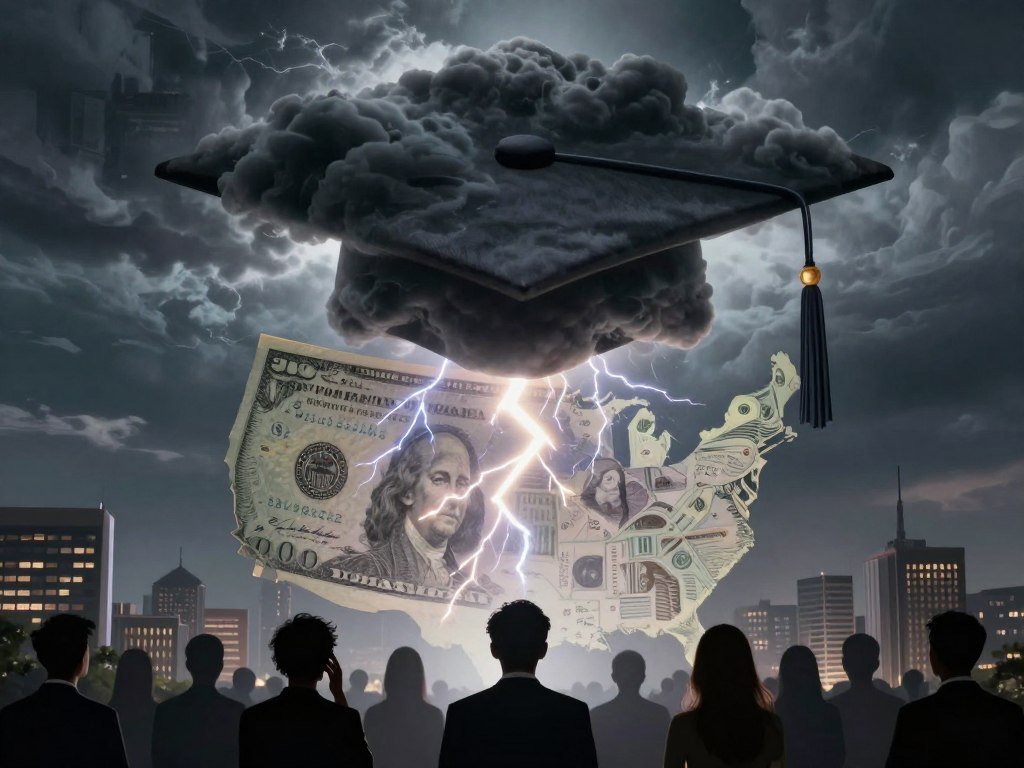
The mounting burden of student loan debt has emerged as a critical threat to America’s economic stability. With over 43 million borrowers collectively owing more than $1.7 trillion, this financial obligation represents one of the most significant challenges facing the United States economy today. The sheer magnitude of this debt levels creates ripples throughout every sector of the economy.
Understanding why this matters now requires examining recent developments. The resumption of student loan payments in 2023 after a three-year pause has immediately affected consumer spending patterns. Data from the Federal Reserve reveals that borrowers are cutting back on discretionary purchases and delaying major life decisions. This shift in consumer behavior affects businesses across the nation.
Recent analysis shows that per capita student debt has reached historic highs. The average borrower now carries approximately $37,000 in education debt. This financial burden affects individuals for decades after graduation. Young professionals entering the workforce face immediate constraints on their earning potential and spending capacity.
The implications extend far beyond individual borrowers. When millions of Americans dedicate substantial portions of their income to loan payments, they have less money for other economic activities. This reduced spending power affects housing markets, small businesses, and overall economic growth potential. Economic researchers are now examining how these dynamics will shape the financial landscape through 2026 and beyond.
What Is This Economic Threat?
Student loan debt represents borrowed money that students and their families take on to pay for higher education expenses. This includes tuition costs, fees, books, and living expenses during college attendance. Unlike other forms of consumer debt, education loans often accumulate before borrowers have established careers or steady income streams. The debt burden begins affecting financial decisions immediately upon graduation or leaving school.
Historical Background of Education Financing
The landscape of education financing has transformed dramatically over recent decades. Before the 1980s, college costs remained relatively affordable, and many students could work their way through school. The average cost of attending a four-year public university was modest compared to family incomes. This accessibility changed as tuition began rising faster than inflation.
During the 1990s and early 2000s, federal student loan programs expanded significantly. The government made credit more readily available to students from all income levels. While this expansion aimed to increase college access, it also enabled institutions to raise tuition costs. The relationship between available credit and rising education costs created a cycle that continues today.
The financial crisis of 2008 accelerated these trends. State governments reduced funding for public universities, forcing institutions to increase tuition to maintain operations. Students borrowed larger amounts to cover these rising costs. By 2010, student loan debt had surpassed credit card debt to become the second-largest category of consumer debt in the United States.
Key Statistics Revealing the Scale
The numbers surrounding education debt paint a stark picture of the crisis. Current data from the Bureau of Labor Statistics and Congressional Budget Office highlight the scope:
Total Outstanding Debt
The United States carries over $1.77 trillion in student loan obligations. This represents the cumulative borrowing of more than 43 million individuals. The total continues growing by approximately $100 billion annually as new students take out loans and interest accrues on existing balances.
Per Capita Burden
The average student borrower now owes $37,338 in education debt. Graduate students face even higher debt levels, with many owing over $100,000. Per capita student debt varies significantly by state and institution type, but the national average has increased steadily over the past two decades.
Default Rates
Approximately 10 percent of borrowers enter default status within three years of beginning repayment. Default occurs when borrowers fail to make payments for 270 days or more. These defaults damage credit scores and can result in wage garnishment and tax refund seizure.
Payment Burden
The typical borrower dedicates 10 to 15 percent of their monthly income to student loan payments. For many individuals, this payment rivals or exceeds housing costs. The burden proves especially acute for those with lower incomes or who did not complete their degree programs.
These statistics reveal more than numbers on a spreadsheet. They represent millions of Americans whose financial futures are constrained by education debt. The aggregate effect of these individual burdens creates macroeconomic consequences that researchers and policymakers are only beginning to fully understand.
What Is Causing the Problem?
The student debt crisis stems from multiple interconnected factors that have evolved over several decades. Understanding these causes helps explain why the problem has reached its current scale and why solutions remain elusive.
Policy Factors Driving Debt Growth
- Federal loan programs expanded access to credit without corresponding price controls on tuition, enabling institutions to raise costs knowing students could borrow more to cover increases
- State governments reduced funding for public universities by an average of 30 percent per student since 2000, forcing schools to shift costs directly to students through higher tuition
- Bankruptcy protections that apply to most consumer debts do not extend to student loans, creating a unique lending environment with minimal risk for lenders and maximum obligation for borrowers
- Income-driven repayment plans, while providing relief to struggling borrowers, often result in negative amortization where monthly payments fail to cover interest charges
- Tax policies treat student loan interest differently than mortgage interest, limiting the financial relief available to borrowers while they repay their education debt
Market Trends Affecting Education Costs
- Administrative costs at colleges and universities have grown substantially, with spending on non-teaching staff increasing faster than spending on faculty salaries over the past 20 years
- Competition among institutions for student enrollment has led to spending on amenities and facilities that attract applicants but increase overall operational costs passed to students
- The credential inflation phenomenon means more jobs require bachelor’s or advanced degrees, increasing demand for higher education regardless of price
- Private lenders entered the education loan market aggressively during the 2000s, offering credit with variable interest rates and fewer consumer protections than federal loans
- For-profit colleges expanded rapidly, often charging high tuition while delivering questionable educational quality, leaving students with significant debt and limited career prospects
Global Influences on Education Economics
- International competition for skilled workers has created pressure on American workers to obtain higher credentials, driving college attendance even as costs rise
- Globalization has shifted many middle-skill jobs overseas, making higher education seem like the only pathway to economic security for American students
- International students, who often pay full tuition prices, became an important revenue source for American universities, influencing institutional financial planning
- Economic uncertainty in global markets has made education appear as one of few reliable investments, sustaining demand despite rising costs
Structural Economic Changes
- Wage stagnation means that while tuition costs have tripled since 1990, median incomes for young workers have remained essentially flat when adjusted for inflation
- The shift from defined-benefit pensions to individual retirement savings has increased financial pressure on young workers who must simultaneously repay student loans and save for retirement
- Housing costs in major employment centers have risen faster than incomes, leaving less money available for loan repayment among borrowers living in urban areas where jobs are concentrated
- The decline of union membership and worker bargaining power has reduced the ability of young workers to negotiate salaries sufficient to manage education debt
- Automation and technological change have eliminated many entry-level positions that previously allowed recent graduates to establish careers, extending the time required to reach earnings sufficient for comfortable debt repayment
These factors interact in complex ways. Policy decisions enable certain market behaviors. Market trends influence what policies seem feasible. Global forces shape both policy options and market dynamics. The result is a system where education debt grows faster than the economy’s ability to support repayment.
Impact on the U.S. Economy
The influence of student loan debt extends throughout the economy, affecting everything from gross domestic product to individual household decisions. Research from the Federal Reserve and Congressional Budget Office demonstrates these widespread effects.
GDP Growth Constraints
Student debt directly constrains economic growth by reducing consumer spending capacity. When borrowers dedicate substantial income to loan payments, they have less money for purchases that drive economic activity. This effect compounds over time as millions of borrowers simultaneously reduce spending.
Analysis from economic researchers shows that student debt reduces annual GDP growth by approximately 0.1 to 0.3 percentage points. While this might seem modest, the cumulative effect over a decade represents hundreds of billions in lost economic activity. The impact becomes more pronounced as the total debt burden grows and affects larger portions of the population.
The Congressional Budget Office projects that if current trends continue, student debt could reduce economic growth by increasingly significant margins through 2026 and beyond. Each new cohort of graduates enters the workforce carrying more debt than previous generations. This creates a drag on economic expansion that intensifies over time.
Inflation Dynamics
The relationship between student debt and inflation operates through several channels. Debt-burdened borrowers typically reduce discretionary spending while maintaining spending on necessities. This shift in consumption patterns affects demand for different types of goods and services.
Data suggests that high levels of education debt may actually reduce inflationary pressures in certain sectors. When young adults delay home purchases or reduce discretionary spending, demand for these goods decreases. Lower demand typically translates to less upward pressure on prices in affected sectors.
However, the picture is complex. Student debt may contribute to inflation in essential sectors like healthcare and food where borrowers cannot easily reduce spending. The overall effect on inflation remains a subject of ongoing research and analysis by economists.
Employment Market Effects
Student loan obligations significantly influence employment decisions and labor market dynamics. Research indicates several distinct effects on how people work and what jobs they pursue.
Borrowers often feel pressure to prioritize higher-paying jobs over positions that might better match their interests or skills. This misallocation of human capital reduces overall economic efficiency. When talented individuals choose careers primarily based on salary rather than aptitude, both the individuals and the economy suffer.
Evidence from labor market studies shows that individuals with high student debt levels are more likely to accept positions outside their field of study. They take jobs in sectors where they lack specialized training simply because those positions offer higher immediate compensation. This undermines one of the primary justifications for higher education investment.
Entrepreneurship Impact
Student debt substantially reduces business formation rates. Young adults with significant education loans are less likely to start new businesses compared to those without debt burdens. Research from the Bureau of Labor Statistics shows that areas with higher per capita student debt levels have lower rates of new business creation.
The mechanism is straightforward. Starting a business requires financial flexibility and often personal financial investment. Borrowers making monthly loan payments have less savings available to launch ventures. They also face more difficulty securing additional credit when they already carry substantial education debt.
Geographic Mobility
Debt constrains workers’ ability to relocate for better opportunities. Moving to new cities requires upfront costs and financial reserves. Borrowers struggling with monthly payments often lack these resources. This reduced mobility means workers cannot easily move to areas where their skills command premium wages.
The effect proves particularly problematic during economic transitions. When industries decline in certain regions, workers need mobility to find new opportunities. Student debt makes this adjustment more difficult, potentially increasing unemployment duration and reducing the economy’s flexibility.
Financial Markets Consequences
Education debt affects financial markets through multiple channels. The most direct effect involves the mortgage market. First-time homebuyers face difficulty qualifying for mortgages when they carry substantial student loan obligations. Lenders consider debt-to-income ratios when evaluating applications, and education loans reduce borrowing capacity for housing.
Data from the Federal Reserve indicates that homeownership rates among young adults have declined significantly, with student debt identified as a major contributing factor. The typical age of first-time homebuyers has increased, and many borrowers delay purchases by five to ten years compared to previous generations.
The credit market more broadly shows effects from student debt levels. Borrowers with high education debt often have lower credit scores due to occasional missed payments or high utilization of available credit. These lower scores affect interest rates on auto loans, credit cards, and other financial products.
Investment markets feel indirect effects as well. When young workers delay retirement saving due to student loan payments, they miss crucial years of compound growth. This creates long-term financial security issues for individuals and may affect capital availability in markets over time.
Consumers and Business Ecosystem
Consumer spending patterns have shifted dramatically as student debt has grown. Young adults represent a key demographic for many businesses. When this group reduces spending, entire industries feel the impact.
The retail sector has seen significant changes attributable to student debt burdens. Research shows borrowers reduce spending on clothing, entertainment, dining out, and other discretionary categories. These spending cuts directly affect businesses in affected sectors, potentially leading to reduced employment and investment in those industries.
The housing market demonstrates some of the clearest business impacts. Reduced home purchases by young adults affect not just home builders but also furniture retailers, appliance manufacturers, home improvement stores, and many other related businesses. The ripple effects extend throughout the economy.
Service industries face similar pressures. When borrowers reduce discretionary spending, businesses offering non-essential services see reduced demand. This includes everything from restaurants to gyms to entertainment venues. Each affected business may reduce its own workforce or investment, creating further economic effects.
Recent Data and Trends
The latest information from government agencies and research institutions reveals concerning trends in student debt accumulation and repayment. These recent developments provide insight into how the situation continues evolving.
Current Debt Levels and Growth Rates
The U.S. Department of the Treasury reports that total outstanding student loan debt reached $1.77 trillion as of early 2025. This represents an increase of approximately $70 billion from the previous year. The growth rate has slowed somewhat compared to the rapid expansion seen during the 2010s, but the debt continues accumulating.
Per capita student debt shows similar upward trends. The average borrower who graduated in 2023 carried approximately $38,000 in education loans. This compares to roughly $28,000 for the class of 2013. The 35 percent increase over a decade far exceeds inflation and wage growth during the same period.
Federal student loan data indicates that graduate students now account for a growing share of total debt. While graduate students represent only about 15 percent of enrolled students, they hold nearly 50 percent of outstanding student loan debt. This concentration reflects both higher borrowing amounts and longer repayment periods for advanced degrees.
Payment Resumption Impact
The resumption of student loan payments in October 2023 after a three-year pause provided natural experiment conditions for researchers. The Federal Reserve conducted detailed analysis of how borrowers adjusted their spending when payments restarted.
Evidence from payment data shows that approximately 60 percent of borrowers resumed making payments as required. However, about 40 percent of borrowers either missed payments entirely or made partial payments below their scheduled amounts. This higher-than-expected non-payment rate suggests financial stress among a substantial portion of the borrower population.
Consumer spending data from the Bureau of Labor Statistics reveals notable changes coinciding with payment resumption. Monthly consumer spending decreased by approximately 0.3 percent among households with student debt. This might seem small, but applied across millions of households, it represents billions in reduced economic activity.
The specific spending categories affected include dining and entertainment, travel, and durable goods purchases. Borrowers maintained spending on necessities like housing and food but cut discretionary purchases. This pattern aligns with predictions from economic research about how debt obligations influence consumer behavior.
Demographic Patterns in Debt Distribution
Recent data analysis reveals significant disparities in how student debt affects different demographic groups. These patterns have important implications for economic equity and policy responses.
Racial Disparities
Black borrowers carry significantly higher average debt levels than white borrowers with similar educational attainment. Data shows Black graduates owe an average of $25,000 more than white graduates four years after completing their degrees. This gap reflects differences in family wealth, college costs at institutions with different racial compositions, and repayment outcomes.
Default rates also show stark racial disparities. Black borrowers default at nearly three times the rate of white borrowers. These differences in repayment outcomes contribute to broader wealth gaps between racial groups in the United States.
Gender Differences
Women hold approximately two-thirds of all student loan debt despite representing roughly 56 percent of college students. This disparity reflects several factors including women’s higher enrollment in graduate programs, lower average starting salaries in female-dominated fields, and longer repayment periods.
Research indicates that the combination of student debt and the gender wage gap creates compounding financial challenges for women borrowers. They earn less on average while owing more in absolute terms, making repayment more difficult relative to income.
Default and Delinquency Trends
Default rates have fluctuated significantly in recent years. The payment pause during the pandemic prevented new defaults from occurring. As payments resumed, researchers watched closely to see how many borrowers would struggle with repayment.
Early evidence suggests default rates may increase compared to pre-pandemic levels. The combination of inflation, higher housing costs, and stagnant wages has made loan repayment more challenging for many borrowers. The Congressional Budget Office projects that default rates could reach 12 to 15 percent for recent cohorts of borrowers over their repayment lifetimes.
Delinquency data shows similar concerning trends. Approximately 20 percent of borrowers who resumed payments fell behind within the first six months. While not all delinquencies lead to default, they indicate financial stress and potentially warn of future defaults.
Income-Driven Repayment Utilization
Income-driven repayment plans have become increasingly popular among borrowers seeking to manage their debt obligations. These plans tie monthly payments to borrowers’ incomes, potentially extending repayment periods but reducing immediate payment burdens.
Current data shows that approximately 40 percent of borrowers in active repayment are enrolled in income-driven plans. This represents a significant increase from 20 percent a decade ago. The growth reflects both increased awareness of these options and growing financial pressure on borrowers.
However, research reveals that income-driven plans may create long-term challenges. Many borrowers in these plans experience negative amortization, where monthly payments fail to cover interest charges. Their loan balances grow over time despite making regular payments. This dynamic contributes to the overall increase in outstanding student debt levels.
Regional Variations
Student debt burdens vary significantly by geographic region. Some states have much higher per capita student debt than others, reflecting differences in state support for public higher education, cost of living, and local labor market conditions.
States in the Northeast and mid-Atlantic regions tend to have the highest average debt levels. In contrast, western states often show lower per capita debt, partly due to more robust state funding for public universities. These regional differences affect local economic conditions, as areas with higher debt burdens may experience more constrained consumer spending and slower economic growth.
Analysis from economic development researchers shows that counties with higher student debt levels often have lower rates of small business formation and slower job growth. The correlation suggests that regional economic development may be hampered by concentrated student debt burdens in certain areas.
Expert Opinions or Forecasts
Leading economists and policy analysts have offered various perspectives on how student debt will affect the economy in coming years. Their forecasts range from cautiously optimistic to deeply concerned, depending on assumptions about policy responses and broader economic conditions.
Economic Growth Projections
The International Monetary Fund has analyzed how student debt might constrain economic expansion through 2026 and beyond. Their research suggests that without policy interventions, education debt could reduce annual GDP growth by 0.15 to 0.25 percentage points. Over a five-year period, this cumulative effect could mean the economy grows $200 to $400 billion smaller than it otherwise would.
Researchers at the Congressional Budget Office project similar effects. Their models indicate that student debt acts as a persistent drag on economic growth, with the impact intensifying as more borrowers enter repayment and overall debt levels continue rising. The effect proves particularly pronounced among younger age cohorts who carry the highest debt burdens.
Some economists argue the impact may be overstated. They point out that education spending represents investment in human capital that increases productivity over time. From this perspective, student debt enables educational attainment that ultimately strengthens the economy. However, most analysis suggests that current debt levels exceed the optimal amount for maximizing economic benefits from education.
Labor Market Outlook
Employment researchers project that student debt will continue influencing career choices and labor market dynamics through 2026. The key concern involves misallocation of talent, where highly educated individuals make career decisions based primarily on debt obligations rather than skills and interests.
Analysis suggests this misallocation could reduce overall economic productivity. When engineers become investment bankers solely for higher salaries to repay loans, or when teachers leave education for corporate jobs, the economy loses the benefit of individuals working in their areas of expertise and passion.
The Bureau of Labor Statistics has examined how student debt affects workforce participation rates. Their research indicates that some individuals, particularly those who borrowed but did not complete degrees, withdraw from the labor force entirely due to the challenge of managing debt obligations on lower incomes. This reduced participation constrains economic growth and tax revenues.
Housing Market Forecasts
Real estate economists project continued suppression of home-buying among young adults through 2026 and potentially beyond. The typical first-time homebuyer age may continue increasing as student debt delays wealth accumulation needed for down payments.
This trend has significant implications beyond housing markets. Homeownership has historically served as the primary wealth-building mechanism for middle-class Americans. When student debt delays or prevents homeownership, it constrains wealth accumulation for an entire generation. The long-term effects could include increased wealth inequality and reduced retirement security.
Construction industry analysts note that reduced demand from young buyers affects new home construction, which in turn affects employment in construction and related industries. The ripple effects extend throughout the economy.
Financial System Stability
Banking regulators and financial system analysts have evaluated whether student debt poses systemic risks similar to mortgage debt before the 2008 financial crisis. Most experts conclude that student debt is unlikely to trigger a financial crisis, primarily because most loans are federally backed rather than held by private institutions.
However, economists warn that high default rates could strain government finances. If large numbers of borrowers default and federal loan forgiveness programs expand, taxpayers may ultimately bear substantial costs. The Congressional Budget Office has modeled various scenarios showing potential fiscal impacts ranging from modest to severe depending on default rates and policy responses.
Wealth Inequality Implications
Economists specializing in inequality have raised concerns about how student debt exacerbates wealth gaps. Since debt burdens fall disproportionately on borrowers from lower-income families, education financing systems may actually increase inequality rather than reduce it as intended.
Research projects that current student debt patterns could increase wealth inequality substantially over coming decades. Borrowers from wealthy families either avoid debt entirely or repay it quickly with family assistance. Meanwhile, borrowers from lower-income backgrounds struggle with repayment for decades, constraining their ability to build wealth through homeownership and investment.
Optimistic Scenario
Some analysts project that economic growth, wage increases, and policy reforms could moderate the impact of student debt. If incomes rise faster than debt levels, the burden becomes more manageable over time. New repayment programs and limited forgiveness could provide relief to struggling borrowers while maintaining overall economic stability.
In this view, the economy can grow despite student debt headwinds. Innovation and productivity gains offset the drag from reduced consumer spending. Labor markets adjust as employers offer higher wages to attract debt-burdened talent. The situation remains challenging but not catastrophic.
Pessimistic Scenario
Other economists warn of compounding negative effects if current trends continue. Rising debt levels, stagnant wages, and increasing defaults could create a self-reinforcing cycle of economic weakness. Consumer spending falls, businesses reduce investment and hiring, incomes stagnate further, making debt even harder to repay.
This darker outlook suggests that without significant policy intervention, student debt could substantially constrain economic growth throughout the 2020s. The effects might prove most severe for younger workers, potentially creating a “lost generation” that never fully recovers economically.
Risk Level Assessment
Based on comprehensive analysis of expert opinions and economic data, the overall risk level from student debt to economic growth appears Medium to High through 2026.
The risk assessment reflects several factors. The debt burden is large enough to meaningfully constrain economic activity, particularly consumer spending and home-buying. Default rates may rise, creating fiscal challenges. The effects on entrepreneurship and labor allocation reduce economic efficiency. However, the debt is unlikely to trigger immediate crisis, and policy options exist to mitigate impacts.
The uncertainty in the assessment stems from unknown policy responses. Significant student debt relief or restructuring could reduce risks substantially. Conversely, continued growth in debt levels without policy action could push risks higher. The economic environment also matters, with stronger growth making debt more manageable and weakness exacerbating problems.
Possible Solutions or Policy Responses
Addressing the economic impacts of student debt requires coordinated responses from government, financial institutions, and markets. Various proposals have emerged from policymakers, economists, and advocacy groups.
Government Actions and Legislative Proposals
Federal policymakers have considered numerous approaches to student debt relief and reform. These proposals vary widely in scope, cost, and target populations.
Broad debt cancellation represents the most sweeping approach. Some proposals call for canceling $10,000 to $50,000 of debt per borrower, potentially eliminating debt entirely for millions of borrowers while reducing burdens for many others. Proponents argue this would provide immediate economic stimulus by freeing income for consumer spending. Critics raise concerns about costs to taxpayers, fairness to those who already repaid loans, and moral hazard that might encourage excessive future borrowing.
Targeted relief programs focus on specific groups facing particular hardships. These might include borrowers who attended predatory for-profit institutions, those with disabilities preventing repayment, or public service workers who completed qualifying employment. Targeted approaches cost less than broad cancellation while addressing situations where debt creates especially severe problems.
Reform Proposals
- Automatic enrollment in income-driven repayment plans for all federal borrowers, simplifying the system and ensuring payments remain affordable relative to income
- Interest rate reductions or elimination on federal student loans, reducing total repayment amounts and accelerating debt paydown
- Expansion of Public Service Loan Forgiveness to include more occupations and simplify qualifying requirements
- Creation of new forgiveness programs tied to specific economic needs or policy goals
- Bankruptcy reform allowing student debt discharge under certain circumstances
Beyond addressing existing debt, policymakers have proposed reforms to prevent future debt accumulation. These include making community college free, increasing Pell Grants to cover more education costs, and tying federal student aid to institutional performance and outcomes.
Some proposals focus on the root cause of rising costs. These include accountability measures for colleges, limits on tuition increases at institutions receiving federal aid, and requirements for institutions to share financial risk when students default on loans.
Federal Reserve Policies and Monetary Approaches
While the Federal Reserve does not directly control student lending, its monetary policy decisions affect the broader economic environment in which borrowers repay debt. Interest rate policy influences both federal student loan rates and general economic conditions affecting borrowers’ incomes.
Research from the Federal Reserve examines how monetary policy might be calibrated to account for student debt’s economic effects. When substantial portions of the population face debt burdens that constrain spending, traditional monetary stimulus through lower interest rates may prove less effective. Borrowers use additional income from economic growth primarily to service debt rather than increase consumption.
This dynamic suggests monetary policymakers should consider student debt levels when forecasting inflation and setting interest rates. The debt burden might mean the economy can run “hotter” with less inflation risk than traditional models predict, since debt-burdened consumers increase spending slowly even when unemployment falls and wages rise.
Market Adjustments and Private Sector Responses
Market forces and private sector actors are developing responses to student debt challenges, though these alone cannot solve the systemic problem.
Employers have begun offering student loan repayment assistance as an employee benefit. Companies contribute funds directly toward workers’ education debt, similar to retirement plan matching. This benefit helps attract talent while providing tax advantages to both employers and employees. However, only a small percentage of employers currently offer such programs, limiting their overall economic impact.
Financial technology companies have created platforms for debt refinancing and management. These services help borrowers consolidate loans, find lower interest rates, and optimize repayment strategies. While useful for individual borrowers, refinancing does not reduce total debt levels and may not be available to those struggling most with repayment.
Important Consideration: Market-based solutions primarily benefit borrowers with strong credit and steady incomes. Those facing the most severe financial stress often cannot access refinancing or employer assistance programs. This means private sector responses may inadvertently increase disparities between different groups of borrowers.
Some states have implemented their own student debt relief programs. These include loan forgiveness for workers in specific high-need fields, grants to help residents repay education debt, and enhanced state-level income-driven repayment programs. State actions provide models for broader policy but cannot address the national scale of the problem.
Higher education institutions themselves have begun responding to debt concerns. Some colleges have expanded financial aid to reduce student borrowing. Others have implemented programs guaranteeing graduates jobs or loan repayment assistance if earnings fall below certain thresholds. These institutional responses remain limited in scope but show growing awareness of debt’s impact on student outcomes.
Coordinated Approach Recommendations
Most experts agree that effectively addressing student debt’s economic impact requires coordinated action across multiple policy areas. No single approach will suffice to resolve the challenge comprehensively.
An effective strategy would likely include immediate relief for current borrowers facing hardship, reforms to make existing debt more manageable through income-driven repayment improvements, and systemic changes to reduce future debt accumulation. This three-pronged approach addresses both current problems and prevents their recurrence.
The U.S. Department of the Treasury has analyzed various policy combinations, estimating costs and economic benefits. Their research suggests that well-designed interventions could provide economic returns exceeding their fiscal costs through increased consumer spending, higher tax revenues from economic growth, and reduced default-related expenses.
What It Means for Americans
The macroeconomic effects of student debt translate into concrete impacts on individuals’ daily lives and major life decisions. Understanding these practical implications helps Americans navigate the current environment and plan for the future.
Cost of Living Pressures
Student loan payments directly affect borrowers’ ability to afford basic necessities and maintain their standard of living. The typical borrower dedicates $200 to $400 monthly to loan repayment. For someone earning the median income for young workers, around $50,000 annually, this represents 5 to 10 percent of gross income.
This payment burden means less money available for rent, groceries, healthcare, and other essential expenses. Many borrowers report cutting back on food quality, delaying medical care, or living in substandard housing to afford loan payments. These choices have real consequences for health and wellbeing.
The burden intensifies in high-cost areas. Borrowers living in expensive cities face a squeeze between education debt and housing costs. Many end up spending 50 percent or more of income on these two expenses alone, leaving minimal funds for everything else. This financial pressure forces some to relocate to lower-cost areas, potentially sacrificing career opportunities.
Inflation has exacerbated these challenges. As prices for food, housing, and other necessities increase, fixed student loan payments consume growing shares of real income. Borrowers find themselves falling behind financially even when making all required payments.
Employment and Career Implications
Student debt shapes career decisions in ways that affect both individual satisfaction and economic efficiency. Research shows that borrowers with higher debt levels are more likely to choose jobs based primarily on salary rather than interest or fit.
This dynamic pushes talented individuals into lucrative fields regardless of whether those fields match their skills and passions. The economy loses when engineers become consultants, teachers become corporate trainers, or social workers enter finance. The misallocation reduces overall productivity and innovation.
For individual borrowers, the pressure to maximize income can lead to career dissatisfaction and burnout. Many report feeling trapped in jobs they dislike because leaving would make loan repayment impossible. This constraint reduces career mobility and may lead to worse long-term career outcomes.
Entrepreneurship also suffers. Starting a business requires financial flexibility that debt-burdened individuals lack. The economy misses out on innovation and job creation that might have occurred if talented people could launch ventures without worrying about loan payments during startup phases.
Investment and Retirement Security
Student debt creates significant long-term financial security challenges by delaying wealth accumulation. The years spent repaying education loans are years when individuals cannot save and invest for retirement. This delay has compounding effects over time.
Consider a typical scenario. A borrower spends 10 to 20 years repaying student loans while saving little for retirement. By the time debt is cleared and serious retirement saving begins, the individual is in their 40s. They have missed crucial decades of compound growth on investments. Catching up requires much higher savings rates later in life.
Analysis shows that borrowers with substantial student debt reach retirement with significantly less wealth than those without debt, even when controlling for income and education level. The difference can amount to hundreds of thousands of dollars in retirement savings.
Investment Capacity
Beyond retirement accounts, student debt affects ability to build wealth through other investments. Borrowers cannot take advantage of market opportunities when spare income goes to loan payments. They miss chances to invest in stocks during downturns or to build portfolios that generate passive income.
The inability to invest also increases financial vulnerability. Without emergency savings or investment accounts, borrowers face greater risk from job loss or unexpected expenses. A single financial shock can trigger a downward spiral of missed loan payments and damaged credit.
Long-term Planning
Student debt complicates all aspects of financial planning. Borrowers struggle to balance competing priorities like saving for children’s education while still repaying their own loans. The complexity overwhelms many people, leading to decisions by default rather than strategy.
Financial advisors report that student debt creates unique challenges in developing comprehensive financial plans. Traditional planning approaches assume clients can allocate resources across various goals. Debt obligations remove that flexibility, forcing difficult tradeoffs.
Housing Market Access
The impact of student debt on housing represents one of the most visible effects for individuals and families. Borrowers face multiple barriers to homeownership that previous generations did not experience to the same degree.
First, student loan payments reduce monthly income available for mortgage payments. Lenders use debt-to-income ratios to determine mortgage eligibility. Education debt counts against borrowers, reducing how much they can borrow for housing. Many qualified buyers with good incomes cannot purchase homes they could otherwise afford due to student loan obligations.
Second, student debt delays savings accumulation for down payments. Without family assistance, borrowers often spend years accumulating funds for the 10 to 20 percent down payment typically required. During this time, rising home prices may outpace their saving rate, making homeownership increasingly unattainable.
Third, student debt affects credit scores through utilization ratios and occasional missed payments. Lower credit scores translate to higher mortgage interest rates when borrowers do qualify, increasing long-term housing costs.
The result is delayed or foregone homeownership. Data shows that homeownership rates among millennials and younger generations trail previous generations at the same ages. Student debt is identified as a primary cause of this generational shift.
For those who do purchase homes, student debt often means buying smaller properties in less desirable locations than they would prefer. This constrains quality of life and may affect children’s educational opportunities if families must settle for areas with weaker schools.
Family Formation Decisions
Student debt influences major life decisions beyond finances. Research indicates that borrowers delay marriage and having children due to financial constraints from education debt.
The mechanism is straightforward. Young adults feel they should achieve certain financial stability before starting families. Student debt delays reaching that stability, pushing family formation later. Some individuals may ultimately have fewer children than desired or forego parenthood entirely due to financial pressures.
These individual decisions aggregate into demographic trends with broad social implications. Lower birth rates affect everything from school enrollment to future workforce size. While student debt is not the only factor influencing these demographic patterns, research suggests it plays a meaningful role.
Future Outlook (2026–2030)
Projecting how student debt will affect the economy through the remainder of the decade requires examining likely scenarios under different policy and economic conditions.
Short-Term Outlook Through 2026
The immediate future will likely see continued growth in outstanding student debt, though potentially at slower rates than the previous decade. Several factors will influence near-term trends.
Enrollment patterns suggest steady but not explosive growth in new borrowing. College enrollment has declined slightly from peak levels, particularly at for-profit institutions. However, graduate program enrollment remains strong, and these students borrow larger amounts. The Congressional Budget Office projects total outstanding debt will reach approximately $1.9 trillion by 2026.
Repayment dynamics will be crucial. If default rates rise significantly as some economists project, the debt burden on active borrowers could intensify. Higher defaults mean fewer borrowers successfully paying down their debt, concentrating obligations among those who remain in good standing. Conversely, if economic conditions improve and incomes rise, repayment may become more manageable, stabilizing the situation.
Policy decisions in 2025 and 2026 will substantially affect the outlook. Any significant debt relief or repayment reforms would alter trajectories. However, political disagreements make major legislative action uncertain. Continuation of current policies seems most likely in the short term.
The economic impact through 2026 will likely mirror recent patterns. Student debt will continue acting as a modest drag on economic growth, reducing consumer spending and constraining housing markets. The effects will be noticeable but not catastrophic, assuming no major economic shocks.
Medium-Term Projections Through 2030
Looking further ahead, the economic effects of student debt could intensify or moderate depending on how various factors evolve.
Scenario One: Status Quo Continuation
If current trends persist without major policy changes, student debt will likely grow to $2.1 to $2.3 trillion by 2030. The number of borrowers will increase as new cohorts enter repayment. Per capita debt levels will continue rising as tuition increases outpace inflation.
Under this scenario, the economic drag from student debt intensifies. Consumer spending growth remains constrained, particularly in housing and durable goods. Business formation rates stay suppressed. Economic growth runs perhaps 0.2 to 0.3 percentage points below potential due to debt effects. The cumulative impact over the decade could mean the economy is $500 billion to $800 billion smaller than it would be without current debt burdens.
Scenario Two: Policy Reform
Alternatively, significant policy reforms could alter the trajectory. If policymakers implement substantial debt relief, improved repayment programs, and measures to control future costs, outcomes could improve markedly.
Debt relief would provide immediate economic stimulus as borrowers redirect income from loan payments to consumption. Estimates suggest that each dollar of debt cancellation generates approximately $0.30 to $0.50 in additional consumer spending. Applied to meaningful relief, this could boost GDP growth by 0.1 to 0.2 percentage points annually for several years.
Long-Term Risks and Uncertainties
Beyond 2030, the trajectory becomes increasingly uncertain. Long-term outcomes depend heavily on decisions made in coming years.
One critical uncertainty involves generational effects. If an entire generation reaches middle age carrying substantial student debt, the economic implications could prove profound. Middle-aged workers typically represent peak earners and consumers. If this group remains constrained by education debt, the economy could experience extended periods of weak consumption and investment.
The interaction between student debt and other economic trends creates additional uncertainty. Automation and artificial intelligence may disrupt labor markets, affecting borrowers’ ability to earn incomes sufficient for repayment. Climate change adaptation costs could strain government budgets, potentially limiting resources available for student debt relief. Global economic shifts might create opportunities or challenges that alter domestic debt dynamics.
Demographic trends add another layer of complexity. As the population ages and the ratio of retirees to workers increases, Social Security and Medicare costs will rise. This fiscal pressure could constrain government’s ability to address student debt through forgiveness or reforms. Alternatively, the need to maintain living standards for working-age adults might make debt relief a political priority.
Key Variables to Monitor
Several indicators will signal whether outcomes trend toward better or worse scenarios:
- Default rates among borrowers who resumed payments in 2023-2024
- Homeownership rates among adults aged 25-40
- New business formation rates in areas with high student debt
- Consumer spending growth compared to income growth
- Political momentum for policy reforms
Potential Tipping Points
Economic researchers have identified several potential tipping points where student debt effects could accelerate or change character.
First, if default rates rise above certain thresholds, the federal government might face difficult fiscal choices. Very high defaults would require either budget cuts elsewhere, tax increases, or expanding federal deficits. Each option carries economic consequences that could interact with existing debt effects.
Second, housing market dynamics could create feedback loops. If student debt substantially suppresses homeownership over extended periods, it might affect housing prices. Lower demand could mean slower price growth or even declines in some markets. While this might make housing more affordable, it could also reduce wealth for existing homeowners and affect construction employment.
Third, labor market misallocation from student debt could reach levels that noticeably reduce productivity growth. If substantial portions of the workforce consistently choose careers based on debt obligations rather than comparative advantage, the economy’s long-term growth potential diminishes.
These tipping points are not inevitable. Appropriate policy responses could prevent reaching critical thresholds. However, their possibility underscores why monitoring student debt trends remains important for economic policymakers.
International Comparisons and Lessons
Looking at how other developed nations handle higher education financing provides perspective on potential paths forward. Most wealthy countries either heavily subsidize higher education or have income-contingent loan systems that prevent debt from becoming unmanageable.
Countries with universal or near-universal free higher education generally avoid student debt problems entirely. The tradeoff involves higher taxes to fund education. However, these nations also benefit from more educated workforces without the economic drag from loan repayment.
Nations with income-contingent systems tie loan payments strictly to earnings. Borrowers pay fixed percentages of income above certain thresholds, with remaining debt forgiven after defined periods. This approach prevents debt from creating severe hardship while still requiring borrowers to contribute to education costs when able.
The United States could learn from these international examples. However, implementing similar systems would require substantial policy changes and possibly constitutional reforms. The political feasibility remains uncertain.
Conclusion
Student loan debt represents a significant and growing challenge for the American economy. The $1.77 trillion owed by 43 million borrowers creates measurable effects on economic growth, consumer spending, housing markets, and individual financial security.
The evidence shows that student debt constrains economic expansion by reducing consumption, suppressing entrepreneurship, and misallocating talent in labor markets. These effects appear modest in the short term but compound over time. By 2026 and beyond, the cumulative impact could prove substantial if current trends continue without policy intervention.
For individual Americans, the implications are immediate and personal. Borrowers face difficult tradeoffs between loan repayment and other financial goals. Many delay homeownership, reduce retirement saving, and make career decisions based primarily on debt obligations rather than skills and interests. These individual constraints aggregate into broader economic effects.
The future trajectory remains uncertain and depends heavily on policy choices made in coming years. Without reforms, student debt will likely continue growing and intensifying its economic drag. However, well-designed interventions could moderate impacts and improve outcomes for both borrowers and the broader economy.
Several key takeaways emerge from this analysis. First, student debt is not merely a personal finance issue but a macroeconomic challenge with far-reaching consequences. Second, the problem stems from multiple causes including policy decisions, market dynamics, and structural economic changes. Third, effective solutions will require coordinated action across government, financial institutions, and higher education sectors. Fourth, monitoring key indicators will help gauge whether the situation is improving or deteriorating. Fifth, international examples demonstrate that alternative approaches to education financing are possible, though implementing them in the United States would require significant political will.
What Borrowers Should Do
- Understand all repayment options, including income-driven plans that tie payments to earnings
- Prioritize high-interest debt while maintaining minimum payments on all obligations
- Build emergency savings even while repaying loans to avoid default during financial shocks
- Consider refinancing if credit and income support better rates, but understand tradeoffs in federal protections
- Seek employer benefits for student loan repayment assistance where available
- Make strategic career and location decisions that balance debt obligations with long-term goals
- Stay informed about policy changes that might affect repayment obligations or forgiveness opportunities
What Policymakers Should Consider
- Recognize student debt as an economic growth issue, not just a fairness or education concern
- Evaluate policy options based on comprehensive economic impacts including effects on consumption, housing, and labor markets
- Consider both relief for existing borrowers and reforms to prevent future debt accumulation
- Study international models for education financing that avoid creating unmanageable debt burdens
- Improve data collection and analysis to better understand debt’s evolving economic effects
- Develop coordinated strategies across education, finance, and economic policy domains
The student loan debt situation did not emerge overnight and will not resolve quickly. However, with informed policy choices, market adaptations, and individual strategies, the economic impacts can be managed and potentially reduced over time. The decisions made in 2025 and 2026 will substantially affect outcomes through 2030 and beyond.
Understanding the student loan debt impact on economic growth remains essential for anyone concerned about America’s economic future. Whether as borrowers, policymakers, business leaders, or citizens, Americans have stakes in how this challenge unfolds. Informed engagement with the issue represents the first step toward effective solutions that balance individual needs with broader economic health.