Trump Imposes 10% Global Tariff After Supreme Court Ruling: Complete Economic Impact Analysis
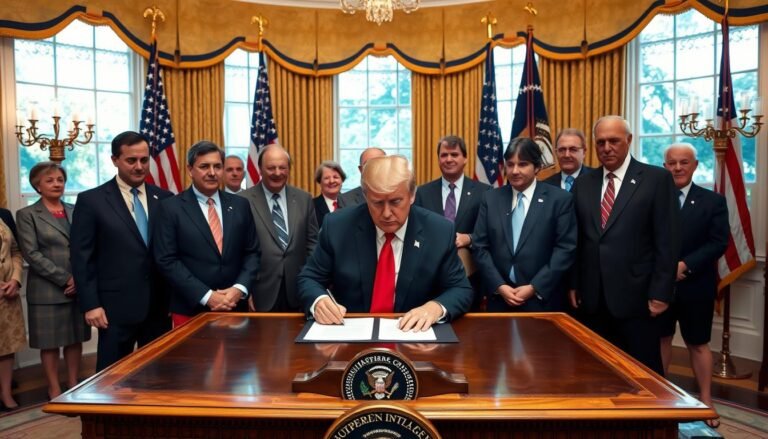
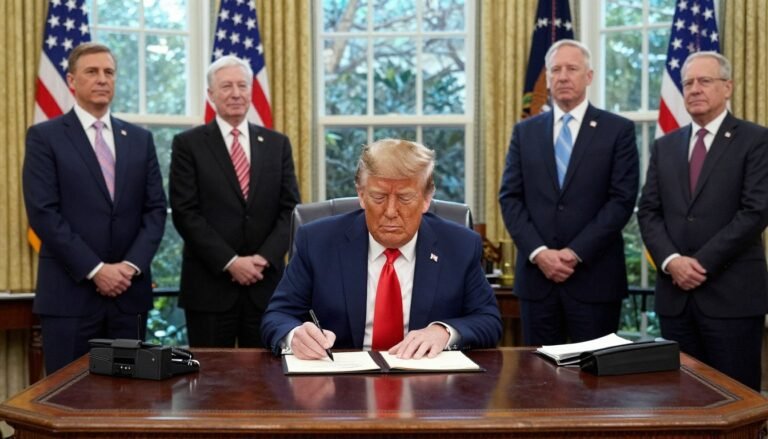
In a stunning development that sent shockwaves through global markets, President Donald Trump implemented a sweeping 10% tariff on virtually all imports entering the United States following an unprecedented Supreme Court decision. This aggressive trade policy shift represents one of the most consequential economic moves in modern American history. The Trump global tariff affects hundreds of billions of dollars in international commerce.
The decision came after the Supreme Court strikes Trump administration’s initial attempt to implement broader tariff measures under different legal frameworks. Rather than backing down, the White House pivoted to alternative statutory authority. Markets responded immediately. The S&P 500 dropped sharply in early trading.
This comprehensive analysis examines every dimension of this historic policy shift. We explore the legal background, immediate consequences, international reactions, domestic economic impacts, and future trajectory. Business owners, investors, and consumers all face significant changes ahead.
The Supreme Court Ruling That Changed Everything
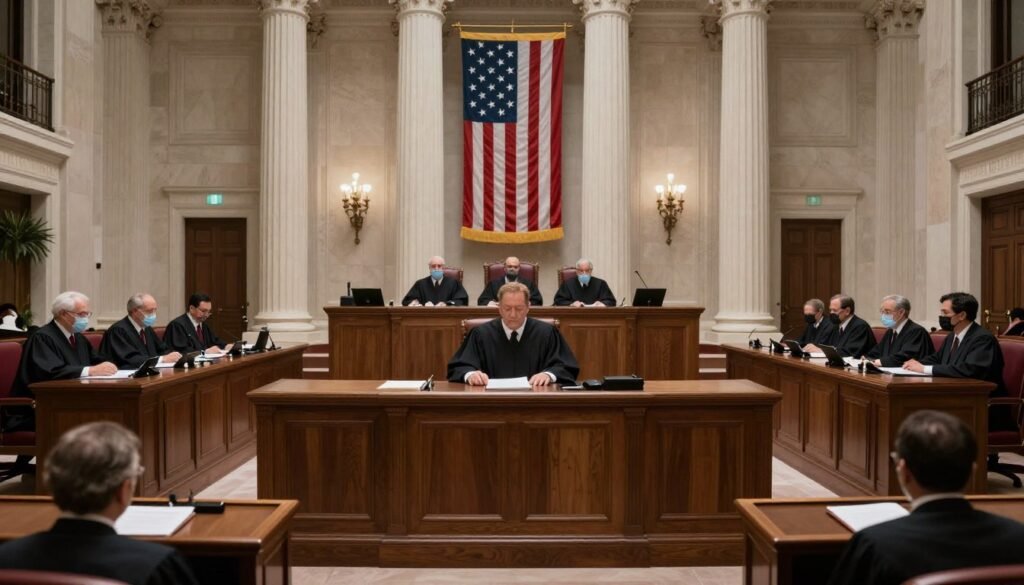
The Supreme Court decision that precipitated this crisis emerged from a complex constitutional challenge. Multiple business groups and state governments contested the Trump administration‘s initial tariff framework. They argued the executive branch exceeded constitutional authority. The justices agreed in a narrow decision.
Chief Justice John Roberts wrote the majority opinion. He emphasized separation of powers principles. The ruling stated that while Congress granted presidents trade authority, those powers contained limits. The Trump tariffs initially relied on Section 232 of the Trade Expansion Act. This statute allows tariffs for national security reasons.
Constitutional Questions at Stake
The legal challenge centered on whether national security justifications legitimately applied. Plaintiffs argued aluminum and automobile imports did not genuinely threaten America’s defense capabilities. The Supreme Court sided with challengers. They found the administration stretched statutory language beyond congressional intent.

Key Legal Issues Decided
- Executive overreach in trade policy implementation
- Proper interpretation of national security statutes
- Congressional intent versus executive discretion
- Limits on presidential emergency powers
- Constitutional separation of powers doctrine
Justice Brett Kavanaugh penned a concurring opinion. He suggested alternative legal pathways existed. This proved prescient. The White House immediately explored those alternatives.
Trump’s Legal Pivot: IEEPA and Section 122
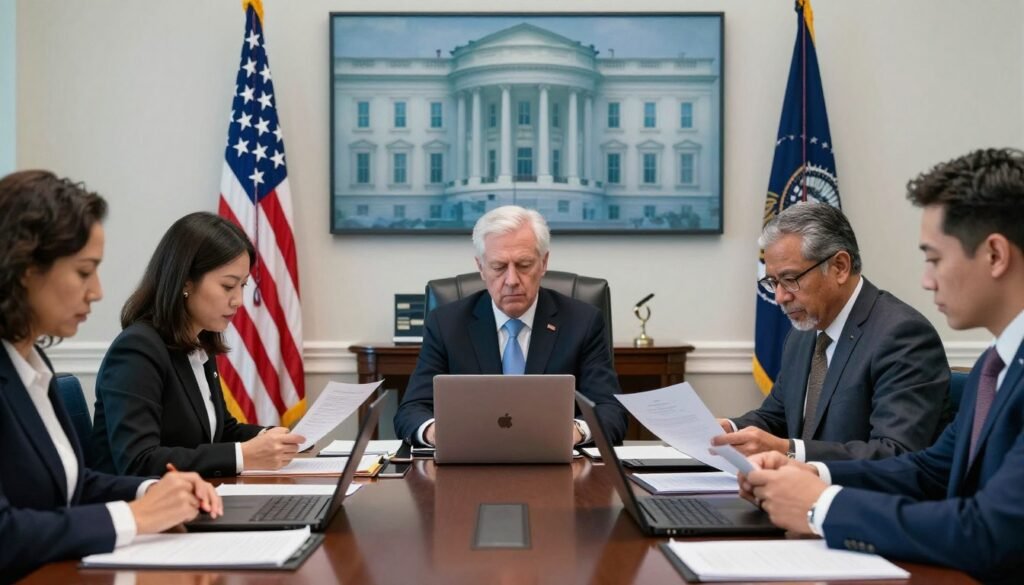
Within hours of the Supreme Court strikes Trump decision, administration lawyers activated Plan B. They turned to the International Emergency Economic Powers Act. This statute, known as IEEPA, grants presidents extraordinary authority during national emergencies. President Donald Trump declared such an emergency related to trade deficits.
The emergency economic powers framework differs fundamentally from Section 232. IEEPA requires declaring a national emergency. It demands finding an “unusual and extraordinary threat” to national security or the economy. Trump said chronic trade deficits met this standard.
Additionally, the administration invoked Section 122 of the Trade Act of 1974. This provision allows temporary import surcharges to address balance of payments problems. Treasury Secretary Scott Bessent certified that current account deficits warranted action. Legal experts debate whether these justifications withstand scrutiny.
“The President possesses broad authority under IEEPA to address economic threats. Our trade deficit represents exactly such a threat to American prosperity and security.”
The “Deeply Disappointing” Response
Legal scholars used the phrase “deeply disappointing” repeatedly when reacting to the administration’s workaround. Professor Sarah Chen from Yale Law School noted the strategy appears to circumvent the Supreme Court‘s clear guidance. She questioned whether emergency declarations should apply to longstanding trade issues.
Former judges expressed concern about precedent. If presidents can simply switch legal authorities after court defeats, judicial review loses effectiveness. This creates constitutional tensions. The Supreme Court may need to address IEEPA limits in future cases.
Important Legal Context: The International Emergency Economic Powers Act has been invoked over 50 times since its 1977 enactment. However, most uses targeted specific countries or entities, not global trade policy. This application represents unprecedented breadth.
Congressional leaders expressed mixed reactions. Senate Finance Committee Chairman voiced support for protecting American workers. House Speaker Nancy Pelosi called the move constitutionally questionable. She suggested Congress might need to clarify or restrict presidential trade powers.
How the 10% Global Tariff Actually Works
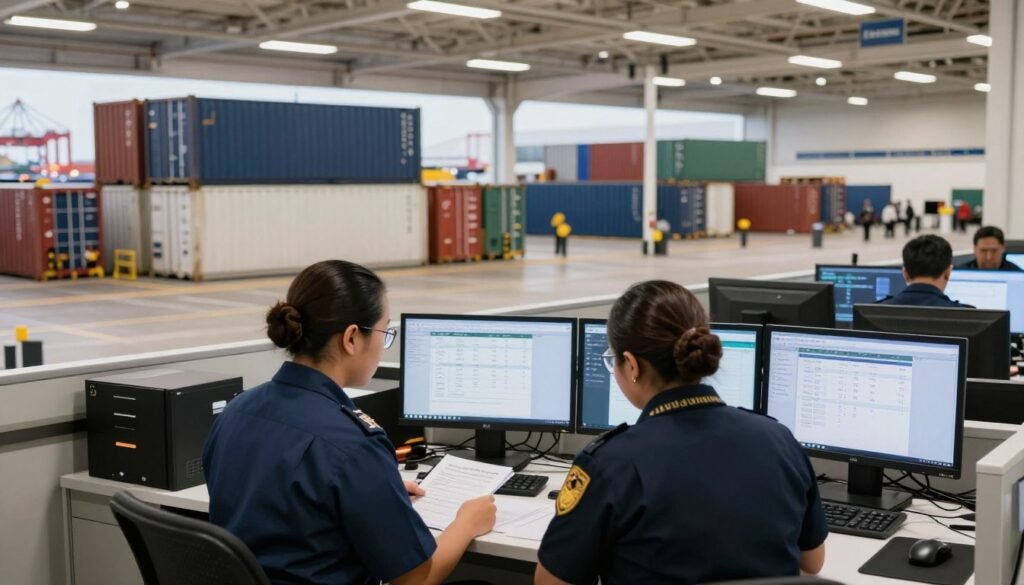
The Trump tariff policy applies a flat 10% rate across virtually all imported goods. Implementation began within 48 hours of the announcement. US Customs and Border Protection updated systems overnight. Importers faced immediate increased costs.
The tariff structure contains few exceptions. Medical supplies, certain raw materials, and goods from select treaty partners receive temporary exemptions. These carveouts affect less than 5% of total import value. The Trump administration designed the policy for maximum revenue generation and economic pressure.
Affected Products and Categories
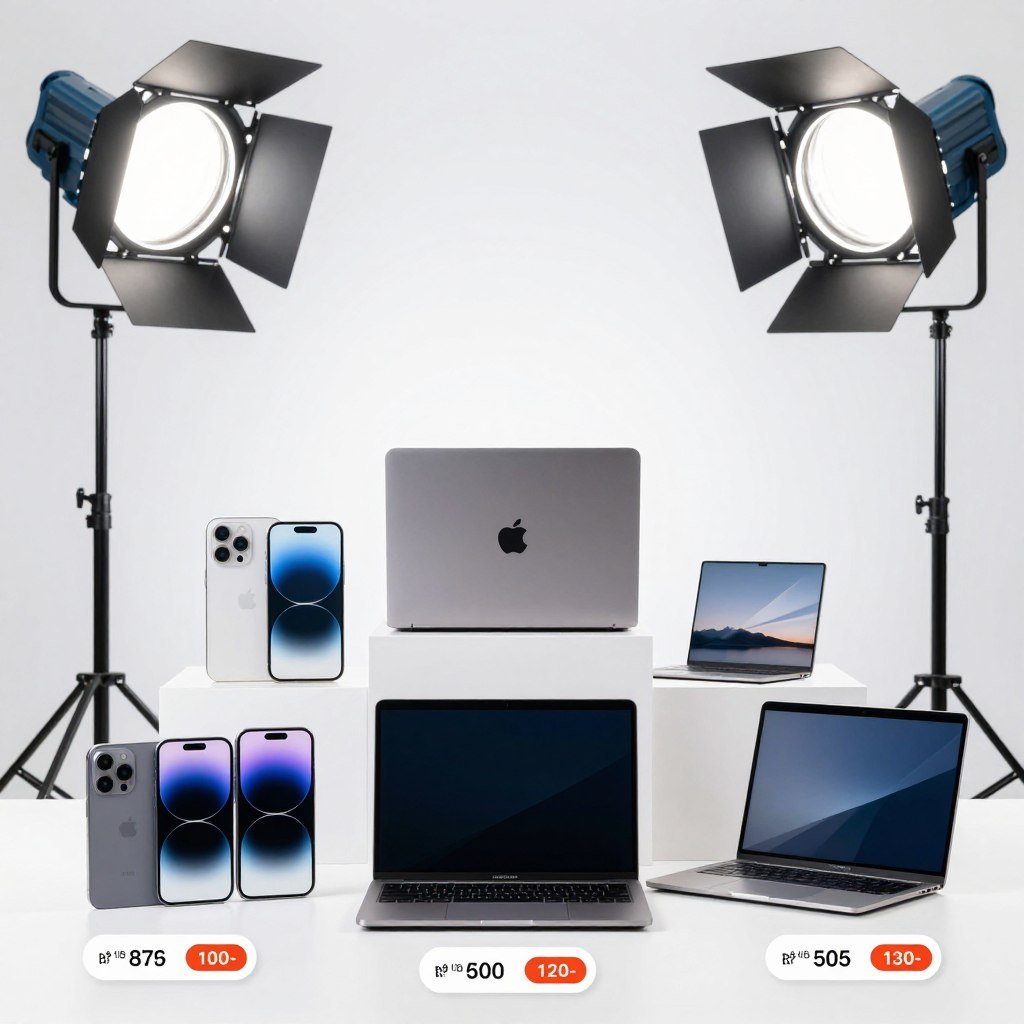
Consumer Electronics
Smartphones, computers, televisions, and gaming systems face the full 10% tariff. These products overwhelmingly come from Asian manufacturers. Prices will rise correspondingly. Retailers absorbed initial costs but plan price increases.
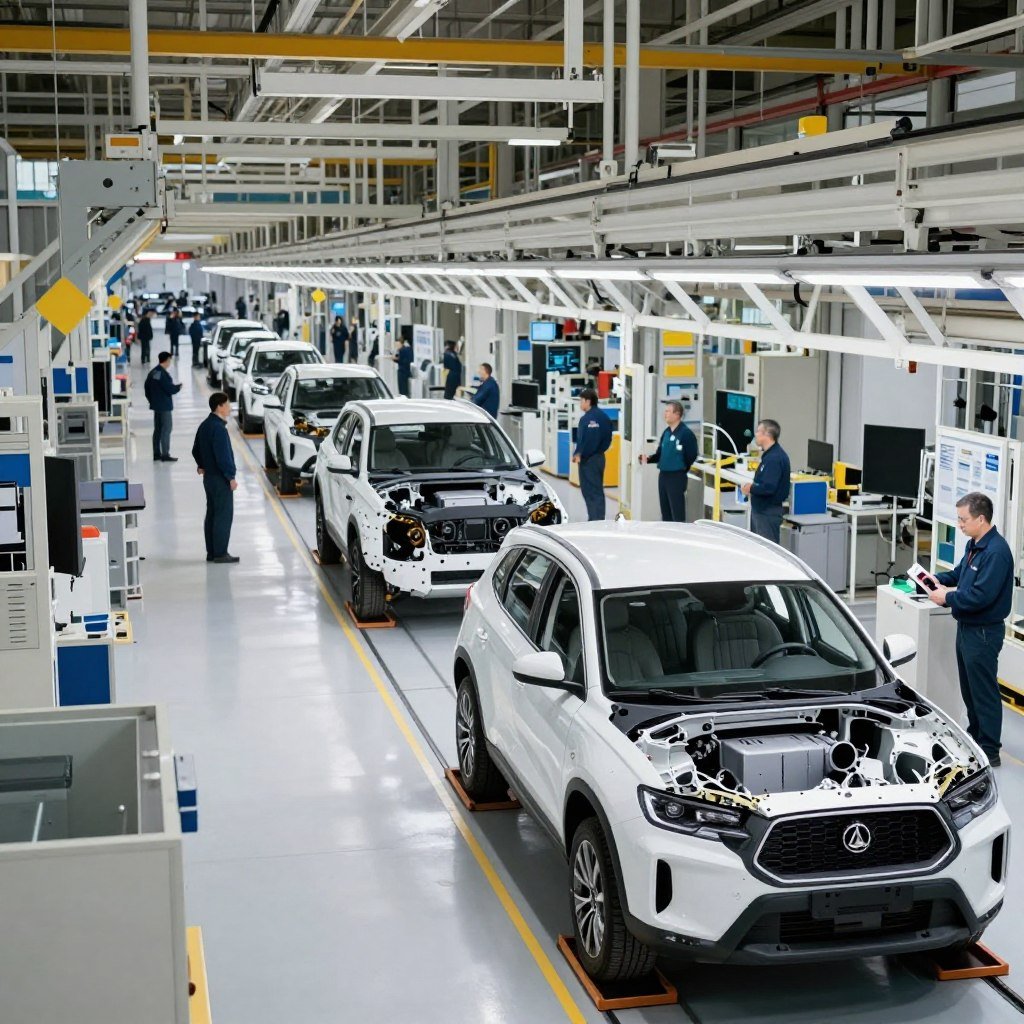
Automotive Sector
Vehicles and auto parts represent massive tariff exposure. Even American-brand cars contain imported components. The new tariffs affect entire supply chains. Auto industry executives warn of significant price increases ahead.

Apparel and Textiles
Clothing imports face substantial new costs. Most garments sold in America come from overseas factories. Bangladesh, Vietnam, and China dominate production. Retailers project 8-12% price increases by next quarter.
Industrial machinery, chemicals, agricultural products, and countless other categories face the tariff. The breadth distinguishes this policy from previous Trump trade actions. Earlier tariffs targeted specific countries or sectors. This universal approach affects all trading partners simultaneously.
Collection and Revenue Projections
The Treasury Department estimates the tariff generates $80-100 billion annually in tariff revenue. This assumes import volumes remain relatively constant. However, economists expect significant demand destruction. If imports decline 20%, revenue falls proportionally.
Secretary Scott Bessent presented optimistic revenue scenarios to Congress. He projects $85 billion in the first year. Critics note these calculations assume unrealistic import stability. Historical evidence suggests tariffs substantially reduce trade volumes.
| Import Category | Annual Value (Billions) | Tariff Revenue (Billions) | Price Impact |
| Consumer Goods | $650 | $65 | 8-10% increase |
| Industrial Supplies | $520 | $52 | 5-7% increase |
| Automotive | $385 | $38.5 | 12-15% increase |
| Food Products | $150 | $15 | 6-9% increase |
| Capital Goods | $680 | $68 | 7-10% increase |
The administration plans to use tariff revenue for domestic infrastructure and tax cuts. Trump announced a “Buy American” initiative funded by collections. However, budget analysts warn that revenue shortfalls seem likely. Trade volumes historically decline sharply after major tariff implementations.
Exemption Process and Special Cases
Companies can petition for product-specific exemptions. The Commerce Department established a formal process. However, initial guidance suggests extremely limited approval rates. The White House wants broad application.
Exemption criteria include:
- No domestic production capacity exists
- Products qualify as essential medical supplies
- National security requires continued imports
- Exemption serves broader trade negotiation strategy
- Goods come from countries with special treaty status
Small businesses struggle most with the exemption process. Application requirements demand extensive documentation. Legal and consulting costs make the process prohibitive for many smaller importers. Trade associations report overwhelming demand for assistance.
Business Impact Note: Companies with complex international supply chains face cascading effects. A product with components from five countries now carries cumulative tariff costs. Supply chain redesign takes years. Many businesses cannot quickly adapt.
Immediate Consequences: The First 30 Days
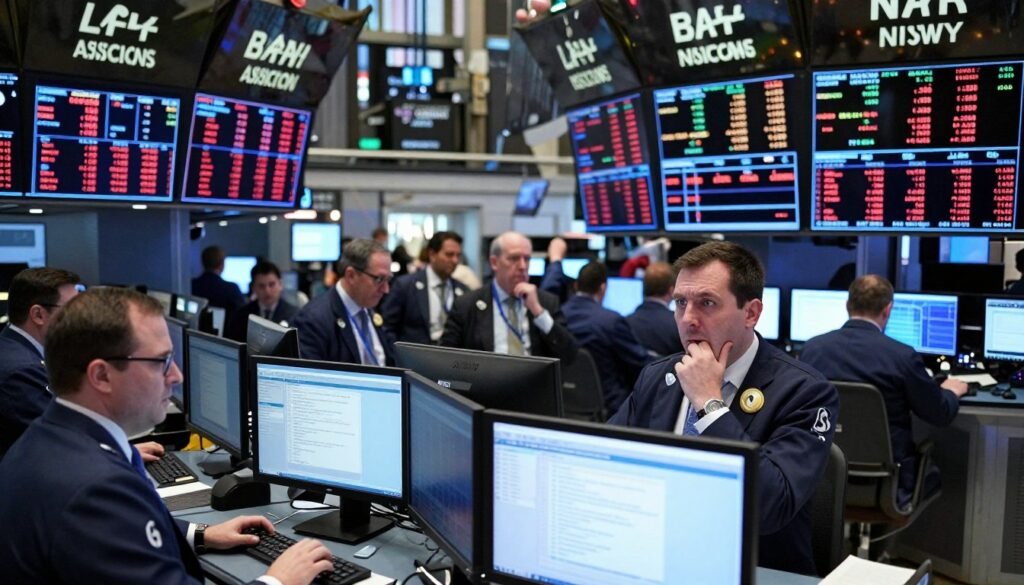
Markets reacted violently to the Trump global tariff announcement. The S&P 500 dropped 4.2% in the first trading session. Technology stocks suffered disproportionate losses. Apple fell 7%, reflecting its extensive Asian supply chain exposure. The stock market erased $1.3 trillion in value within 72 hours.
Bond markets told a different story. Treasury yields fell as investors sought safety. The 10-year yield dropped from 4.25% to 3.87% in two weeks. This flight to quality suggested deep concerns about growth prospects. Currency markets saw the dollar strengthen initially before retreating.
Corporate America’s Response
Major retailers issued urgent warnings. Walmart CEO Doug McMillon stated prices would rise across categories. Target, Best Buy, and Home Depot echoed similar messages. These companies operate on thin margins. They cannot absorb 10% cost increases indefinitely.
Industries Facing Severe Impact
- Retail and consumer goods sectors
- Automotive manufacturing and dealers
- Electronics and technology companies
- Apparel and fashion retailers
- Food service and restaurant chains
- Construction and home improvement
- Agriculture and farming operations

Manufacturing executives expressed mixed feelings. Some domestic producers welcomed reduced foreign competition. Steel and aluminum companies particularly benefited. However, manufacturers using imported inputs faced cost explosions. The auto industry highlighted this tension dramatically.
Supply Chain Disruptions
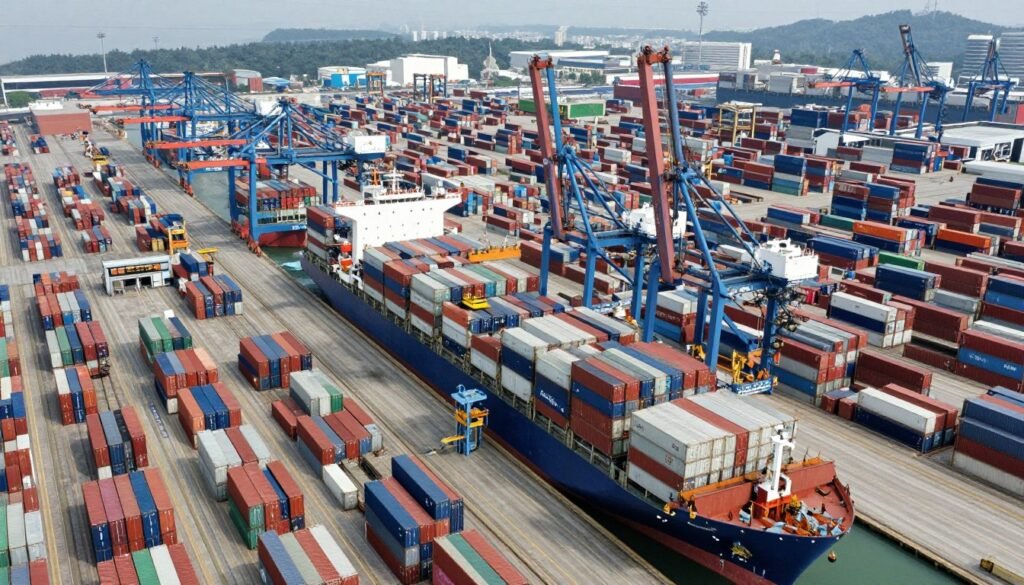
Logistics companies reported immediate chaos. Importers rushed to clear goods before tariff implementation. Ports experienced severe congestion. Los Angeles and Long Beach handled 40% above normal volumes in the final pre-tariff days. This created bottlenecks lasting weeks.
Customs processing slowed dramatically. Officers needed to apply new tariff codes and collect additional duties. Computer systems experienced glitches. Some shipments sat in limbo for days. Perishable goods spoiled in containers. The economic waste proved substantial.
Air freight costs skyrocketed. Companies willing to pay premium prices for speed bid up capacity. Rates from Shanghai to Los Angeles doubled. European routes saw similar increases. This added costs beyond the tariff itself.
Consumer Behavior Shifts
Shoppers initially seemed unaware of impending price increases. Consumer confidence surveys showed minimal immediate impact. However, economists expected this to change as retailers implemented price adjustments. The lag between tariff imposition and shelf price changes typically runs 30-60 days.

Big-ticket purchases faced immediate headwinds. Auto dealers reported declining showroom traffic. Potential buyers postponed decisions, anticipating further price increases. Home improvement projects were delayed. Appliance sales dropped sharply. These sectors drive significant economic activity.
Online retailers moved fastest to adjust prices. Amazon and other platforms implemented algorithmic price adjustments. Customers noticed increases within days. Social media filled with complaints about suddenly expensive products. Consumer frustration mounted rapidly.
Calculate Your Business Tariff Impact
Understanding specific tariff exposure is crucial for business planning. Our comprehensive impact calculator analyzes your import profile and projects cost increases across product categories. Get actionable insights within minutes.
Financial Markets in Turmoil
Volatility indicators spiked to levels unseen since the pandemic. The VIX index, measuring expected stock market turbulence, jumped from 15 to 32. Options traders positioned for continued uncertainty. Hedge funds adjusted portfolios dramatically.
Sector rotation accelerated. Investors fled companies with international exposure. Domestic-focused businesses gained favor. Utilities, healthcare providers, and regional banks attracted capital. Global manufacturers and retailers saw outflows.
| Market Indicator | Pre-Tariff | Day 1 | Day 7 | Day 30 |
| S&P 500 Index | 4,850 | 4,645 | 4,520 | 4,385 |
| Dollar Index | 103.5 | 105.2 | 104.8 | 102.9 |
| 10-Year Treasury Yield | 4.25% | 4.15% | 4.02% | 3.87% |
| VIX Volatility Index | 15.2 | 28.5 | 32.1 | 26.8 |
| Oil Price (WTI) | $78 | $74 | $71 | $68 |
Bond strategists worried about growth implications. Lower Treasury yields reflected reduced inflation expectations despite the tariff. This paradox suggested traders anticipated economic contraction. Slower growth would suppress demand and prices despite higher input costs.
Employment and Labor Markets
Immediate employment effects remained muted. However, companies announced hiring freezes. Retail chains paused expansion plans. Manufacturing facilities delayed capital investments. These decisions would affect jobs in coming months.
Labor unions expressed concern for American workers. While some domestic manufacturers might add jobs, import-dependent sectors faced cuts. The net employment effect appeared likely negative. Economic models suggested 200,000-400,000 jobs at risk over 12 months.
Global Reactions: How the World Responded
International condemnation came swiftly and forcefully. The European Union, China, Canada, Mexico, and dozens of other nations issued strongly worded statements. Many threatened retaliation. The Trump tariff policy triggered the most significant trade tensions in decades.
World Trade Organization Director-General Ngozi Okonjo-Iweala called an emergency session. She warned the tariff violated numerous trade agreements. The WTO dispute resolution system faced potential collapse if members abandoned multilateral rules. She urged negotiations rather than escalation.
European Union: Swift and Unified Opposition
European Commission President Ursula von der Leyen convened an emergency meeting within hours. She announced reciprocal tariffs on $20 billion in American exports. The list targeted politically sensitive products: bourbon, motorcycles, blue jeans, and agricultural goods from swing states.
German Chancellor Olaf Scholz called the tariff “economically destructive and legally questionable.” He emphasized Germany’s automotive industry faces severe challenges. BMW, Mercedes-Benz, and Volkswagen all operate major American factories. However, they import significant components. The integrated supply chains made tariff impacts complex.
“This is not the trade policy of a reliable partner. The United States has abandoned decades of cooperation. Europe will defend its economic interests firmly but proportionately.”
French President Emmanuel Macron took a particularly hard line. He suggested Europe should reduce reliance on American technology and defense equipment. This struck at core US exports. Macron proposed accelerating European strategic autonomy initiatives.
China: Measured but Firm Response
Chinese officials initially responded cautiously. Foreign Ministry spokesperson Wang Wenbin stated China would “take necessary measures to protect legitimate rights.” This diplomatic language masked significant anger. China accounts for roughly 18% of US imports. The tariff hit Chinese exporters hard.
Within a week, China announced targeted retaliation. They impose tariffs of 15% on agricultural products, particularly soybeans and corn. These products come primarily from Republican-voting farm states. The political calculation was obvious.
Chinese President Xi Jinping used the crisis to accelerate domestic consumption initiatives. He framed reduced American exports as an opportunity. China would source more from Southeast Asia, Africa, and Latin America. This strategy aimed to reduce long-term dependence on Western markets.
- 15% tariff on US agricultural exports
- Restrictions on technology imports
- Reduced Boeing aircraft orders
- Financial sector access limitations
- Rare earth export controls tightened
- Tourism to US discouraged
- Educational exchange programs limited
Chinese Retaliatory Measures
- Increased imports from ASEAN nations
- Deeper trade ties with Africa
- Latin American agricultural partnerships
- European technology cooperation
- Domestic substitution programs
- Belt and Road Initiative expansion
- Yuan internationalization push
Alternative Sourcing Strategy
Canada and Mexico: NAFTA Allies Stunned
Canada and Mexico felt particularly betrayed. The United States-Mexico-Canada Agreement (USMCA) theoretically protected North American trade. However, the Trump administration argued IEEPA authority superseded trade agreements during emergencies. This interpretation shocked America’s closest neighbors.
Canadian Prime Minister Justin Trudeau called an emergency cabinet meeting. He characterized the tariff as a violation of trust. Canada announced reciprocal tariffs on $12 billion in American goods. The list included steel, aluminum, and consumer products. Trudeau emphasized Canada would match American actions dollar-for-dollar.
Mexico’s President Claudia Sheinbaum Pardo faced a particularly difficult situation. Mexico’s economy depends heavily on American trade. However, domestic political pressure demanded strong response. She announced 10% tariffs on US agricultural exports and manufacturing goods. Mexican officials also threatened to restrict energy exports.
Asian Response: Fear and Strategic Calculations
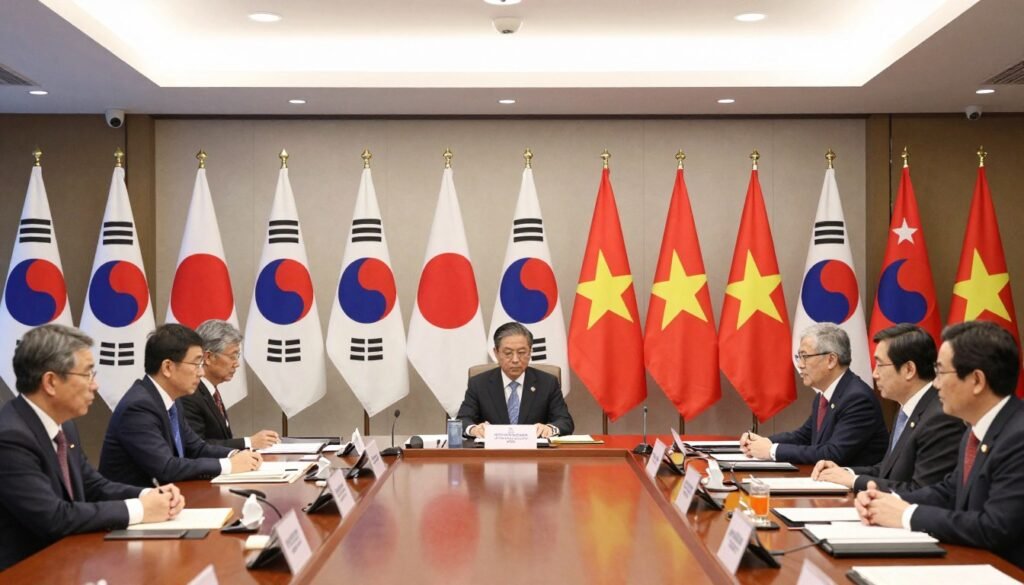
Japan, South Korea, and other Asian nations scrambled to respond. These countries run significant trade surpluses with America. The tariff threatened key industries. Japanese Prime Minister Fumio Kishida sought exemptions for automotive exports. He emphasized Japanese companies employ thousands of American workers in US factories.
South Korea focused on technology and defense partnerships. Korean officials highlighted cooperation on semiconductors and military equipment. They argued these strategic relationships deserved special consideration. The White House seemed partially receptive. Negotiations continued.
Vietnam faced existential concerns. Vietnamese exports to America had grown dramatically in recent years. Many companies relocated from China to Vietnam specifically to avoid earlier Trump tariffs. Now that strategy backfired. Vietnam announced modest retaliatory measures while pleading for bilateral negotiations.
Developing Nations: Disproportionate Impact
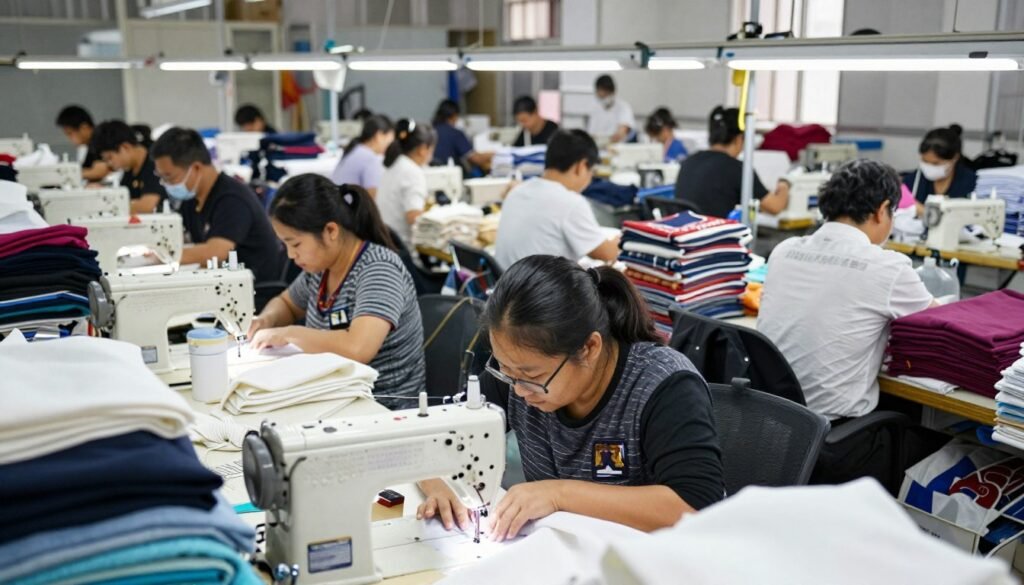
Poorer countries suffered most severely. Bangladesh, Cambodia, and other textile exporters faced catastrophic scenarios. These nations built entire industries serving American consumers. The tariff threatened hundreds of thousands of jobs. Economic development gains risked reversal.
African leaders expressed frustration at international forums. They argued developing nations had no responsibility for US trade deficits. Yet they suffered consequences. Several African finance ministers called for international aid to offset tariff impacts. The World Bank began assessing assistance needs.
International Organizations Sound Alarms
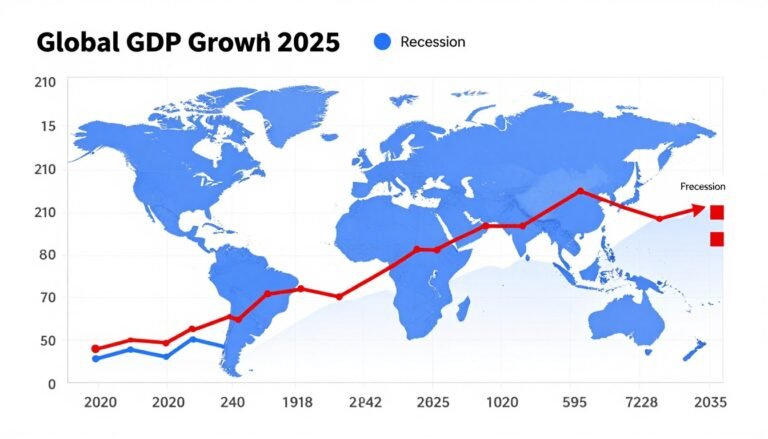
The International Monetary Fund issued dire warnings. Chief Economist Pierre-Olivier Gourinchas projected the tariff could reduce global GDP growth by 0.5-0.8 percentage points. This seemingly small reduction translates to roughly $500 billion in lost economic output. Developing nations would bear disproportionate costs.
The Organization for Economic Cooperation and Development echoed these concerns. They emphasized interconnected supply chains mean everyone loses in trade wars. OECD models suggested American consumers would pay 80% of tariff costs through higher prices. The remaining 20% would hit foreign producers’ profit margins.
Economic Warning: Historical analysis of major tariff events shows trade wars typically escalate. The Smoot-Hawley Tariff of 1930 triggered worldwide retaliation. Global trade collapsed 65% over four years. While modern economies differ, the risks of escalation remain severe.
Impact on the United States Economy

The Trump global tariff fundamentally alters American economic dynamics. Consumers face higher prices across virtually all product categories. Businesses confront supply chain disruptions and cost increases. The Federal Reserve faces impossible policy choices. Inflation and growth concerns pull in opposite directions.
Economic forecasters dramatically revised projections downward. Goldman Sachs cut GDP growth estimates by 1.2 percentage points. JPMorgan warned of potential recession within 12 months. Morgan Stanley projected inflation would rise 1.5 percentage points above previous forecasts. These revisions reflected tariff’s sweeping scope.
Consumer Price Increases: Who Pays?
American shoppers will absorb most tariff costs. Economic research consistently shows this pattern. The Trump administration claims foreign producers pay tariffs. However, decades of evidence proves otherwise. Importers pay tariffs, then pass costs to consumers through higher prices.

The Tax Policy Center estimated typical middle-class families would pay $1,200-1,800 additional annually. This effectively functions as a regressive tax. Lower-income households spend higher percentages of income on goods. They suffer disproportionately. Wealthier households buy more services, which face no direct tariff impact.
| Product Category | Average Price Increase | Annual Cost per Household | Timeline |
| Electronics | 8-12% | $240 | 30-60 days |
| Clothing & Footwear | 9-11% | $320 | 60-90 days |
| Furniture & Home Goods | 10-14% | $180 | 90-120 days |
| Automotive | 6-9% | $450 | Immediate |
| Food & Beverages | 5-8% | $380 | 30-45 days |
| Toys & Recreation | 10-13% | $150 | 45-60 days |
Grocery prices face particular scrutiny. While most food production remains domestic, many ingredients and products come from imports. Coffee, chocolate, tropical fruits, and seafood all face tariffs. Processed foods containing imported ingredients see costs rise. Restaurants and food service companies warned menu prices would increase 6-10%.
Small Business Challenges

Small businesses face disproportionate challenges. Large corporations negotiate better terms with suppliers. They diversify sourcing across countries. They hire trade lawyers for exemption applications. Small importers lack these advantages. Many operate on razor-thin margins already.
The National Federation of Independent Business surveyed members. Over 68% reported significant concern about tariff impacts. Nearly 40% considered the policy existentially threatening. Small businesses simply cannot absorb 10% cost increases without passing them to customers or cutting employment.
Retail shop owners particularly struggled. They typically order inventory months in advance. Goods purchased pre-tariff carried new duties upon arrival. This created cash flow crises. Many small retailers faced choosing between raising prices immediately or operating at losses until inventory turned over.
Business Consultation: Navigate Tariff Challenges
Expert guidance makes the difference between surviving and thriving during trade disruptions. Our specialists help businesses redesign supply chains, identify exemption opportunities, and optimize pricing strategies. Schedule your consultation today.
Immediate appointments available. Our team includes former trade officials and supply chain experts.
Manufacturing: Winners and Losers
Domestic manufacturers experienced divergent outcomes. Companies producing import-competing goods celebrated reduced foreign competition. American steel mills, aluminum smelters, and textile factories anticipated improved business conditions. Some announced expansion plans and hiring initiatives.
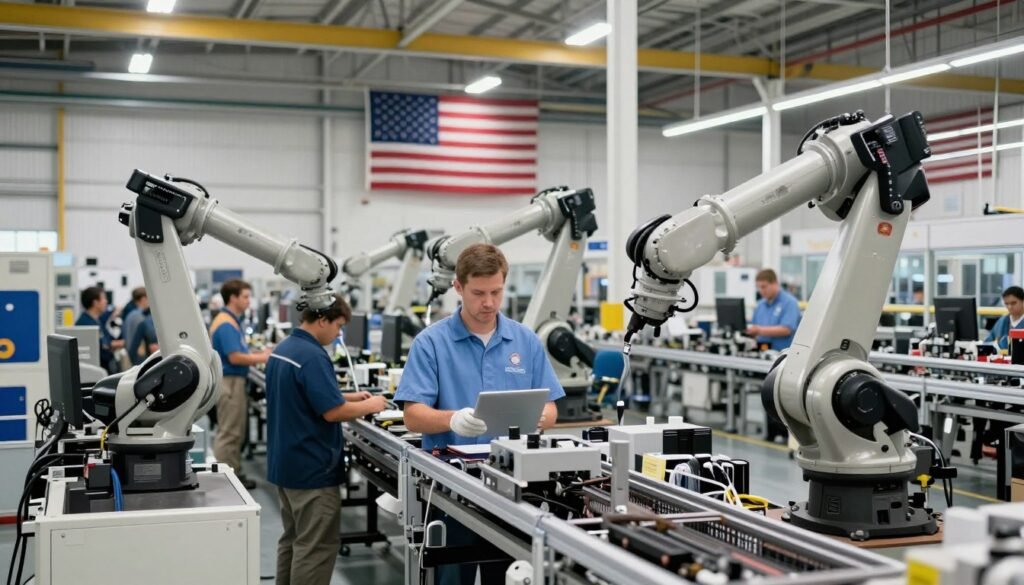
However, manufacturers using imported inputs suffered severely. The vast majority of American factories depend on global supply chains. They import components, raw materials, and intermediate goods. The tariff hit them from multiple angles. Input costs rose while they faced difficulty raising final product prices due to competition.
Automotive manufacturers epitomized this complexity. A “Made in America” car typically contains 25-40% imported content by value. Everything from electronics to rubber to specialized steel comes from abroad. The tariff raised production costs substantially. Yet automakers faced fierce competition. Price increases drove customers to delay purchases.
Employment Effects: Job Gains vs. Job Losses
The White House touted potential manufacturing job gains. Trump said the policy would bring factory jobs back to America. Some evidence supported this claim in specific sectors. Steel mills announced recalls of laid-off workers. Several manufacturing facilities previously mothballed planned to reopen.
Sectors Gaining Jobs
- Primary steel production
- Aluminum smelting operations
- Textile and apparel manufacturing
- Furniture production facilities
- Basic plastics manufacturing
Sectors Losing Jobs
- Retail and wholesale trade
- Automotive manufacturing and sales
- Electronics assembly
- Food processing and distribution
- Transportation and logistics
- Business services supporting trade
However, economic models suggested net job losses. The Federal Reserve Bank of New York estimated 300,000-500,000 jobs at risk over 18 months. Job gains in protected industries would total perhaps 50,000-80,000. This created a significant negative balance. Moreover, gained jobs paid less on average than lost positions in technology and advanced manufacturing.
Inflation vs. Growth: The Fed’s Dilemma
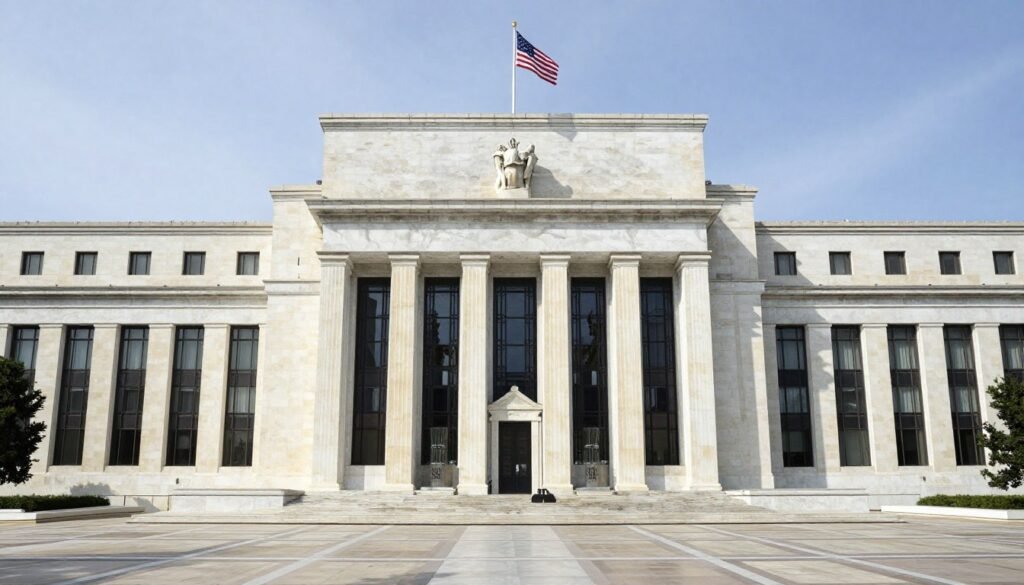
Federal Reserve Chairman Jerome Powell faced an impossible policy choice. The tariff was simultaneously inflationary and recessionary. It raised prices while reducing economic growth. This stagflation scenario offered no good options.
If the Fed raised interest rates to combat inflation, they would worsen the growth slowdown. Higher rates would increase unemployment and potentially trigger recession. If they cut rates to support growth, inflation would accelerate. Either choice involved accepting significant economic pain.
Powell testified before Congress that the Trump tariff created “the most challenging policy environment in decades.” He indicated the Fed would likely accept temporarily higher inflation rather than induce recession. Markets interpreted this as dovish. However, Powell emphasized tremendous uncertainty surrounded any forecast.
“We face a policy conflict without precedent in modern monetary history. Traditional tools prove inadequate when supply shocks combine with demand destruction of this magnitude.”
Real Estate and Housing Markets
Housing markets felt immediate impacts. Construction materials faced substantial tariffs. Lumber, steel, concrete components, and finished products like appliances all cost more. The National Association of Home Builders estimated new home prices would rise $15,000-25,000 on average.
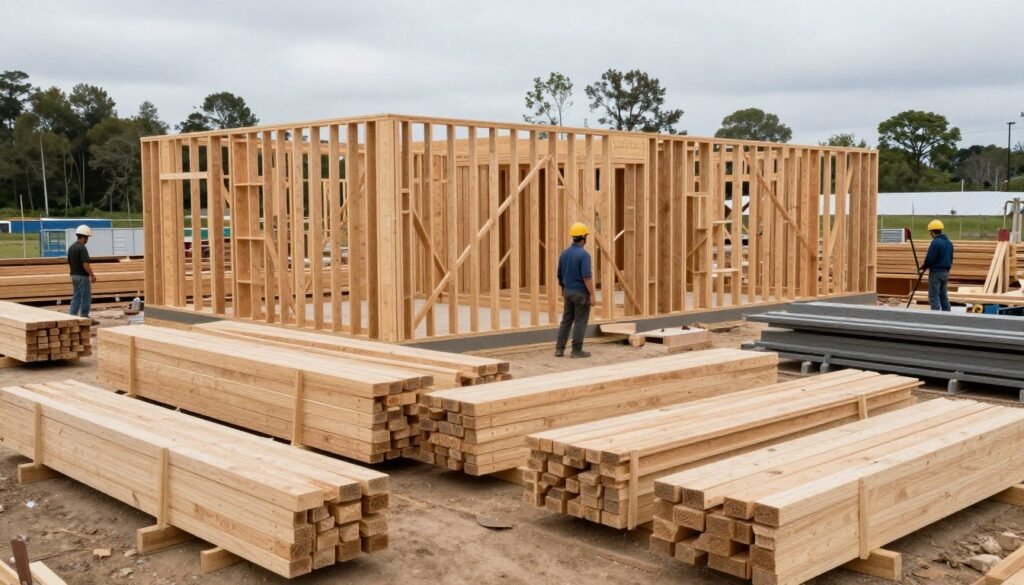
Existing home sales already faced headwinds from elevated interest rates. Adding tariff-driven price increases further suppressed demand. Mortgage applications dropped 18% in the first month after Trump announced the policy. Real estate agents reported buyers pulling out of contracts citing economic uncertainty.
Renovation and remodeling activity slowed dramatically. Homeowners postponed projects as material costs spiked. Home Depot and Lowe’s both revised sales forecasts downward. This rippled through related industries: appliance makers, flooring companies, and contractors all expected reduced business.
State and Local Economic Impacts
Some states faced particularly severe challenges. California’s massive port system handled much reduced volume. This affected longshoremen, truckers, and warehouse workers. The technology sector, concentrated in California, relied heavily on Asian supply chains. Electronics manufacturing faced existential pressure.
Texas confronted complex cross-currents. The state’s large energy sector benefited from reduced imports. However, extensive border trade with Mexico meant tariff retaliation hit hard. Texas exports faced Mexican counter-tariffs. Agriculture particularly suffered. Cotton, beef, and grain farmers all saw key markets threatened.
Rust Belt states expected to benefit from manufacturing reshoring. Michigan, Ohio, and Pennsylvania steel and auto workers anticipated job gains. However, these expectations might prove optimistic. Supply chain restructuring takes years. Meanwhile, retaliatory tariffs hit agricultural exports from these states immediately.
Global Economy: Worldwide Repercussions
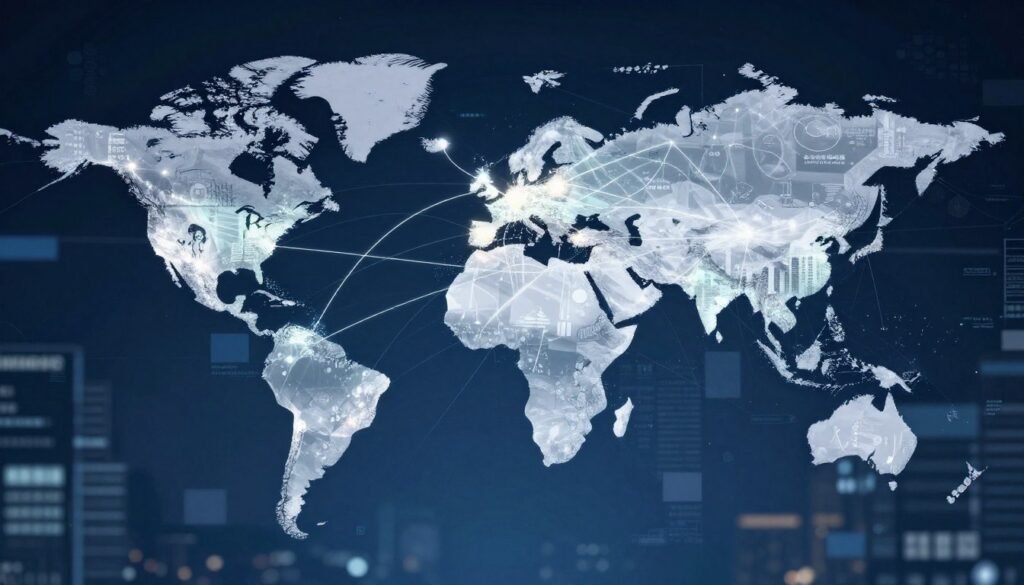
The Trump global tariff triggered cascading effects throughout the international economic system. No country remained immune. Integrated supply chains meant disruptions in one location affected production everywhere. The World Bank called it “the most significant trade shock since the 1930s.”
Global trade volumes fell sharply. The Baltic Dry Index, measuring shipping costs, plummeted 22% in three weeks. This indicated severely reduced cargo volumes. Container ships began idling. Shipping companies cut routes. The entire logistics infrastructure faced potential overcapacity crisis.
Trade Volume Collapse
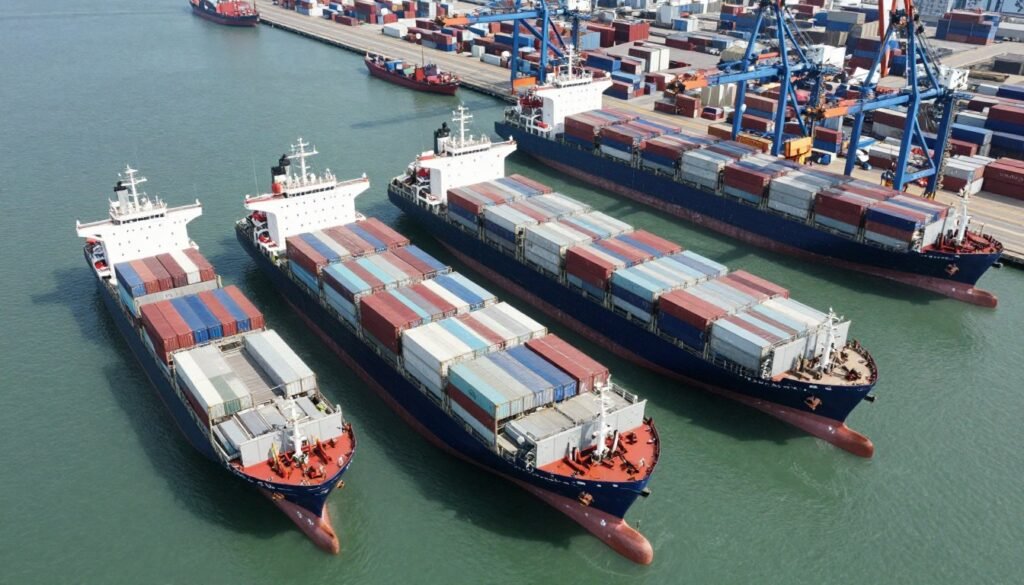
Initial data showed US import volumes dropped 12% month-over-month immediately after implementation. Economists expected further declines. Historical experience suggested 15-25% reduction in trade volumes were likely over six months. This represented hundreds of billions in lost commerce.
Export-dependent economies faced immediate crises. Singapore, which depends heavily on trade, saw its currency fall 8% against major trading partners. Malaysia, Thailand, and Philippines experienced similar pressures. Central banks intervened to stabilize currencies. However, fundamental economic damage proved unavoidable.
| Country/Region | Pre-Tariff Export Volume | Projected Decline | GDP Impact | Employment Risk |
| China | $450B annually | 18-25% | -1.2% | 2.5M jobs |
| European Union | $550B annually | 12-18% | -0.7% | 1.8M jobs |
| Mexico | $380B annually | 20-28% | -2.3% | 1.2M jobs |
| Canada | $320B annually | 15-22% | -1.5% | 450K jobs |
| Japan | $140B annually | 10-15% | -0.5% | 320K jobs |
| South Korea | $95B annually | 16-23% | -1.1% | 280K jobs |
Currency Market Chaos
Foreign exchange markets experienced extreme volatility. The dollar initially strengthened as investors fled to safety. However, this proved temporary. As economic damage became apparent, the dollar weakened against major currencies. The euro gained 6% over three weeks. The yen appreciated 8%.

Emerging market currencies suffered catastrophically. Turkish lira, Argentine peso, and South African rand all fell sharply. These countries borrowed heavily in dollars. A stronger dollar made debt servicing more expensive. Several nations faced potential sovereign debt crises. The IMF prepared emergency lending facilities.
Chinese authorities faced particular pressure. They wanted to let the yuan depreciate to offset tariff impacts. This would make Chinese exports cheaper despite tariffs. However, massive capital flight might result. The People’s Bank of China walked a precarious tightrope. They allowed modest depreciation while maintaining capital controls.
Supply Chain Restructuring: Massive Costs
Companies globally began assessing supply chain alternatives. Moving production requires enormous investment. Factories cannot relocate overnight. New facilities take years to build and operationalize. Equipment must be purchased, workers trained, supply networks established. Costs run into billions for major manufacturers.
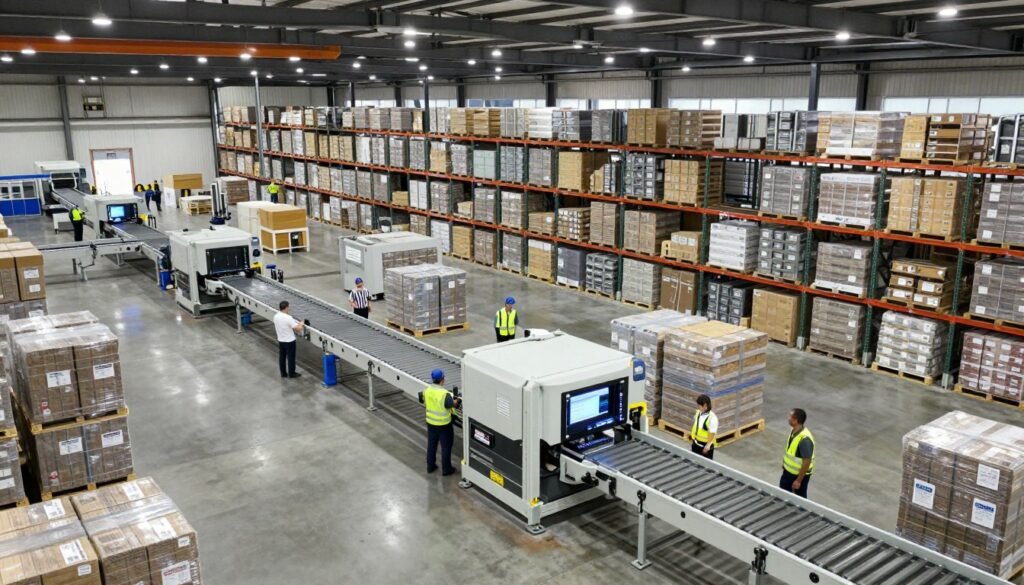
Some companies explored “nearshoring” to Mexico or Canada. However, the tariff affected these countries too. USMCA protections proved ineffective. This left businesses with few good options. Southeast Asian countries courted manufacturers. Vietnam, Indonesia, and Thailand all offered incentives. However, their infrastructure often proved inadequate for massive production shifts.
The transition period created massive inefficiency. Companies maintained dual supply chains during migration. This meant higher costs without corresponding benefits. McKinsey estimated supply chain restructuring would cost Fortune 500 companies collectively $400-600 billion over five years.
Developing Nations: Catastrophic Impacts
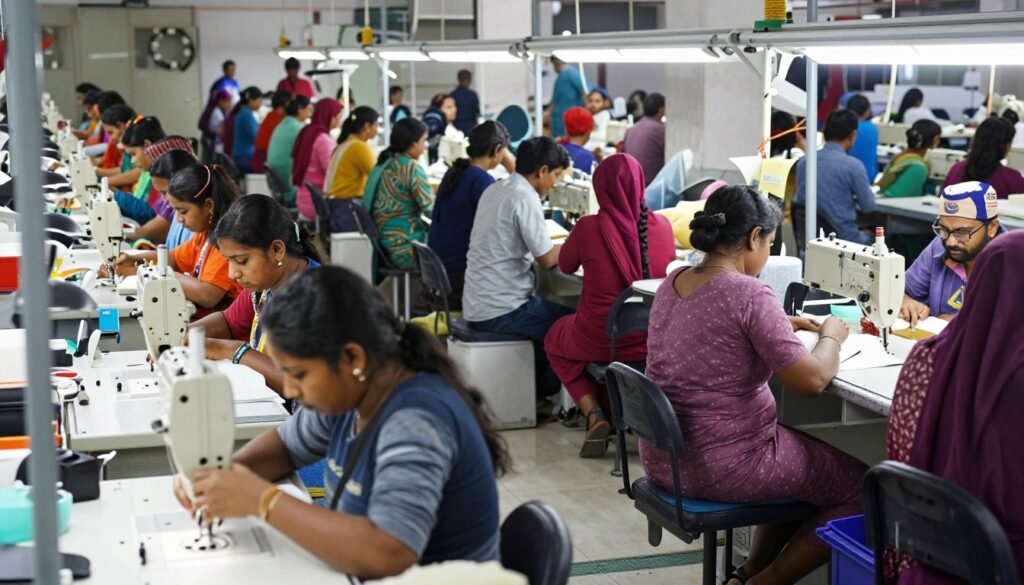
Poor countries faced existential threats. Bangladesh exported $40 billion in garments annually to America. The tariff eliminated profitability for many factories. Layoffs began immediately. An estimated 500,000 jobs were at risk. This represented 2% of Bangladesh’s workforce in a single industry.
Cambodia’s situation proved even worse. Garments constituted 80% of exports. Nearly all went to the United States or EU (which also imposed retaliatory tariffs). The country faced potential economic collapse. Prime Minister Hun Manet appealed to the United Nations for emergency assistance.
African textile producers confronted similar scenarios. The African Growth and Opportunity Act theoretically provided duty-free access. However, the emergency powers tariff superseded existing agreements. Kenyan, Ethiopian, and Lesotho factories announced closures. These countries had invested heavily in export-oriented development. Those strategies now appeared catastrophically mistaken.
Global GDP Forecasts Slashed
International financial institutions dramatically lowered growth projections. The IMF cut global GDP forecast by 0.6 percentage points. This translated to roughly $550 billion in lost output. Developing countries would bear 65% of losses despite representing smaller shares of global economy.

The World Bank forecast even grimmer scenarios. They projected 0.8% global growth reduction if trade wars escalated. This assumed retaliatory measures continued expanding. If major economies imposed 20-25% tariffs, global recession became likely. Such scenarios hadn’t occurred since the 1930s.
Unemployment projections rose sharply. The International Labour Organization estimated 5-8 million jobs globally faced elimination. Manufacturing, shipping, retail, and services supporting trade all faced cuts. Youth unemployment would surge in developing countries. This raised social stability concerns.
Commodity Markets in Freefall
Natural resource exporters suffered severely. Reduced manufacturing activity meant lower demand for industrial commodities. Copper prices fell 15%. Aluminum dropped 18%. Iron ore declined 22%. These moves devastated economies dependent on resource exports.
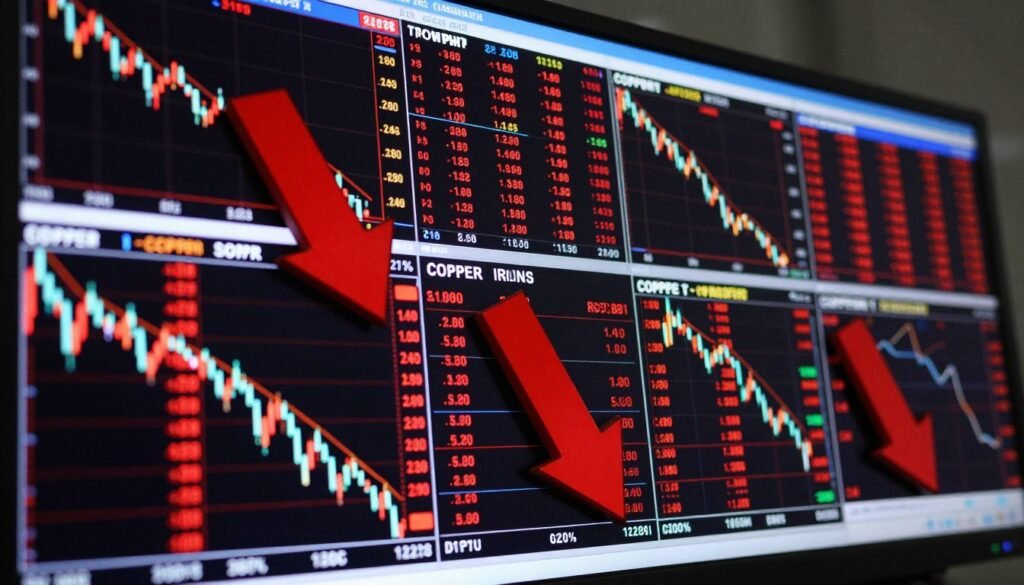
Australia, Brazil, and Chile all faced fiscal crises. These countries budgeted based on commodity prices substantially higher than current levels. Government revenues plummeted. Budget deficits exploded. All three nations announced austerity measures. Public services faced cuts. This created domestic political instability.
Oil markets reflected reduced economic activity. Crude prices fell from $78 to $68 per barrel. OPEC+ considered production cuts to support prices. However, internal disagreements prevented coordinated action. Saudi Arabia wanted cuts. Russia refused. The cartel appeared on verge of collapse.
International Financial System Stress
Banks with significant trade finance exposure faced mounting losses. Letters of credit and trade financing became riskier as volumes fell. Several European banks announced provisions for bad debts. Asian banks with extensive shipping industry exposure looked particularly vulnerable.

Insurance companies faced claims related to trade disruptions. Marine cargo insurers, political risk insurers, and credit insurers all experienced increased claims. Several smaller insurers faced solvency concerns. Regulators in London and Singapore began stress testing insurance markets.
The Trump tariff revealed how interconnected modern finance had become. A trade shock in one location instantly transmitted worldwide. Portfolio managers struggled to find safe havens. Traditional diversification strategies failed as correlations approached 1.0. Everything moved together in the same direction: down.
Expert Economic Analysis and Perspectives
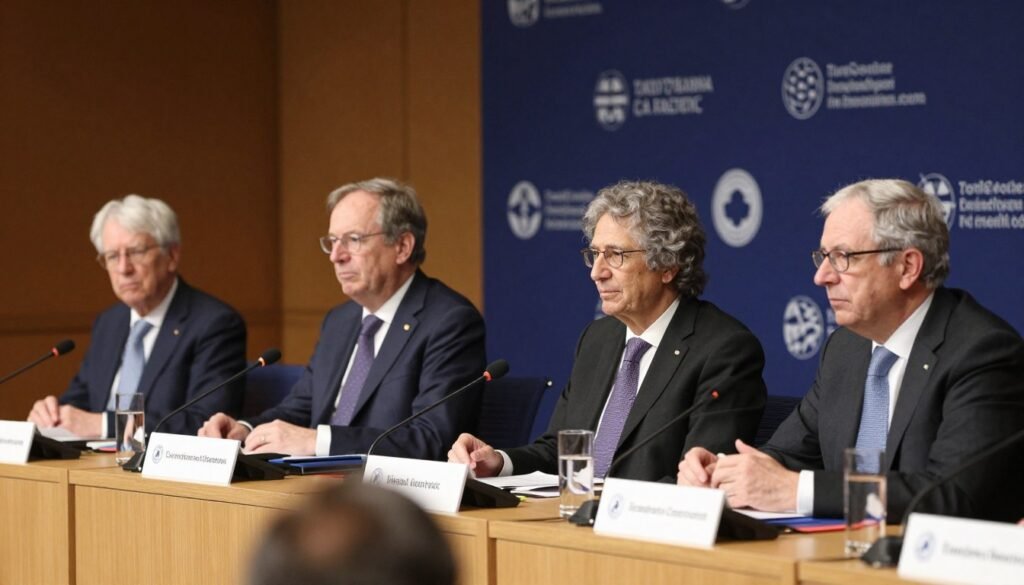
Leading economists worldwide condemned the Trump global tariff as economically destructive. Sixteen Nobel Prize-winning economists signed an open letter warning of severe consequences. They emphasized tariffs function as taxes on consumers. The policy would reduce living standards without achieving stated objectives.
Professor Joseph Stiglitz from Columbia University called the policy “economically illiterate and historically ignorant.” He cited extensive research showing tariffs harm the imposing country more than targets. Stiglitz emphasized the 1930s experience should serve as warning. Trade restrictions deepened and prolonged the Great Depression.
Historical Parallels: Lessons from Past
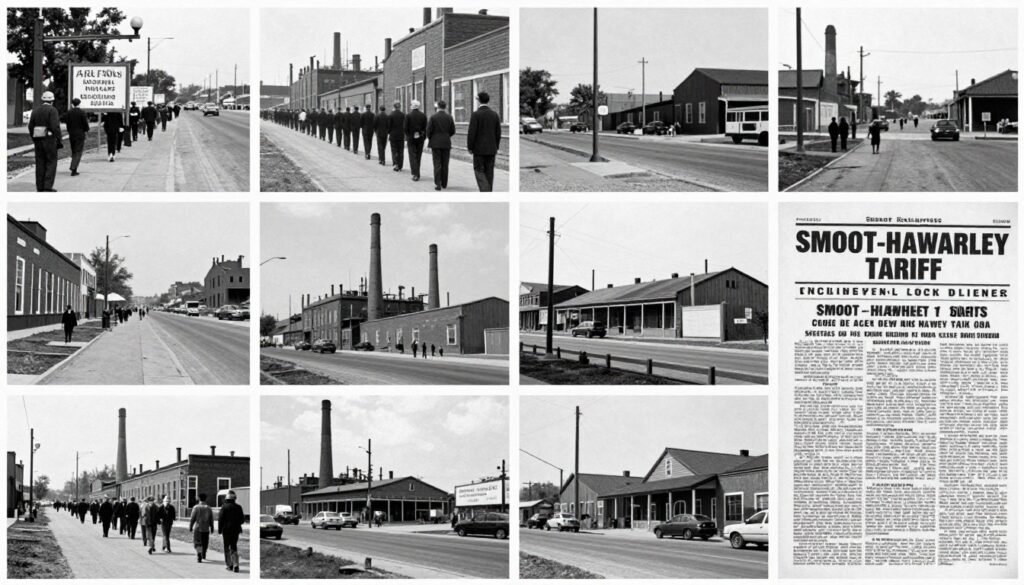
Economic historians drew parallels to the Smoot-Hawley Tariff Act of 1930. That legislation raised tariffs to record levels. Trading partners retaliated immediately. Global trade collapsed 65% within four years. Unemployment soared worldwide. Most economists consider Smoot-Hawley a catastrophic policy mistake that worsened the Depression.
Professor Douglas Irwin from Dartmouth College, a leading tariff historian, noted key similarities. Both policies claimed to protect domestic jobs. Both ignored economic theory and evidence. Both triggered massive retaliation. However, Irwin emphasized modern economies are far more interconnected. Today’s supply chains mean disruption effects multiply faster and spread wider.
“We are witnessing a policy failure of historic proportions. Every lesson from the past century of trade economics is being ignored. The consequences will be severe and long-lasting.”
Conservative Economists Split
Traditionally free-market economists found themselves divided. Some conservatives supported the Trump administration politically but opposed the tariff economically. This created uncomfortable tensions. Several prominent Republican economists publicly broke with the White House.
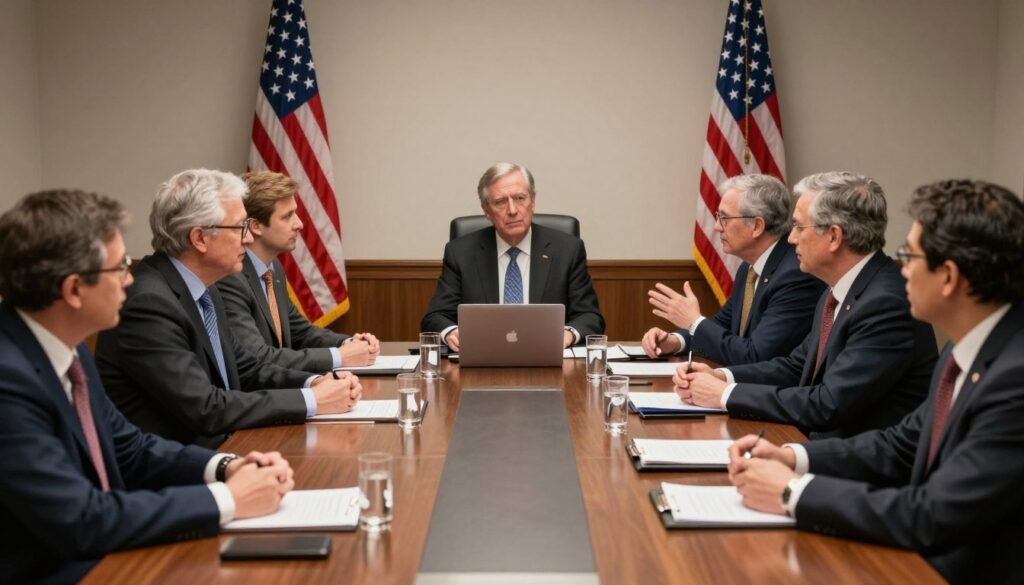
Former Council of Economic Advisers chairs from Republican administrations issued a joint statement. They called the tariff “antithetical to conservative economic principles.” The statement emphasized free trade creates prosperity. Government intervention in markets rarely improves outcomes. Five former Treasury Secretaries under Republican presidents signed the letter.
However, a minority of conservative economists defended the policy. They argued unfair Chinese trade practices justified strong response. These economists emphasized national security concerns. They claimed economic efficiency should not override geopolitical considerations. This “economic nationalism” school gained traction in populist political circles.
Trade Theory vs. Political Reality
Academic economists emphasized that Trump tariff violated fundamental trade theory. The principle of comparative advantage, established by David Ricardo 200 years ago, shows all countries benefit from trade. Each nation specializes in products it produces most efficiently. Everyone gains from exchange.
Economic Theory: Why Tariffs Fail
- Consumers pay higher prices for all goods
- Resources misallocate to inefficient industries
- Productivity growth slows from reduced competition
- Innovation declines without international pressure
- Retaliation eliminates export industries’ gains
- Supply chain disruption creates massive costs
- Trade wars escalate, multiplying damage

However, political realities often diverge from economic theory. Voters in manufacturing regions supported the tariff. They saw factories close and jobs disappear over decades. Trade theory offered little comfort. Economists’ promises that overall prosperity increased rang hollow to displaced workers.
The Political Economy Perspective
Political scientists noted the Trump administration calculated political benefits outweighed economic costs. Manufacturing states proved electorally crucial. Appearing “tough on trade” resonated with key constituencies. Short-term political gains might justify long-term economic damage from the administration’s perspective.

Professor Margaret Peters from UCLA studied trade policy politics extensively. She emphasized concentrated benefits and diffuse costs characterize tariff politics. Protected industries and workers organize effectively. They lobby intensively. Consumers who pay higher prices remain dispersed and unorganized. This political asymmetry favors protectionism despite economic irrationality.
Business School Faculty Assessments
Business strategy professors analyzed competitive implications. Harvard Business School’s Willy Shih noted supply chain flexibility became paramount. Companies that diversified sourcing previously gained enormous advantages now. Firms dependent on single-country supply chains faced potential extinction.
Wharton School’s Mauro Guillén emphasized the tariff accelerated deglobalization trends. He argued we were witnessing a fundamental restructuring of international business. Regional trade blocs would replace global integration. Companies needed to rethink entire strategies. The past 40 years of globalization were reversing.
Strategic Insight: Leading business schools now teach “supply chain resilience” as core curriculum. The era of maximizing efficiency through global integration has ended. New paradigm emphasizes redundancy, diversification, and regionalization even at higher costs.
Industry-by-Industry Impact Analysis

The Trump global tariff affected every economic sector differently. Some industries faced existential crises. Others saw opportunities. Understanding sector-specific impacts helps businesses and investors make informed decisions. The following analysis examines major industries individually.
Technology Sector: Silicon Valley’s Nightmare

Technology companies faced catastrophic impacts. Nearly all electronics manufacturing occurs in Asia. Apple, Microsoft, Google, and others depend entirely on Chinese, Taiwanese, and Vietnamese factories. The tariff raised production costs 8-12% immediately. These companies operate on substantial but not unlimited margins.
Apple’s situation epitomized industry challenges. iPhones cost roughly $400 to manufacture. Retail prices average $1,000. The tariff added $40 per unit. Apple faced choosing between absorbing costs or raising prices. Either choice hurt. Absorbing costs reduced profits. Price increases suppressed demand.
Semiconductor companies confronted supply chain nightmares. Chip production involves 50-100 process steps across multiple countries. A single processor might cross international borders six times during manufacturing. The tariff applied at each import. Cumulative costs threatened entire business models.
- 10% cost increase on all hardware
- Complex supply chains crossing multiple borders
- Limited domestic manufacturing alternatives
- Long development cycles prevent quick pivots
- Intense competition limits pricing power
- Customer price sensitivity very high
- Innovation investments may be cut
Technology Sector Challenges
- Accelerated automation reduces labor dependency
- Software and services avoid tariffs
- Cloud computing unaffected by trade policy
- Domestic data center construction increases
- American semiconductor fabs gain advantage
- National security priorities favor US firms
- Innovation in supply chain technology accelerates
Potential Silver Linings
Automotive Industry: Complex Supply Chains
Automobile manufacturers navigated incredibly complex challenges. Modern vehicles contain 30,000 parts from dozens of countries. Even “American-made” cars use extensive imported components. The Trump tariff hit the industry from multiple angles simultaneously.
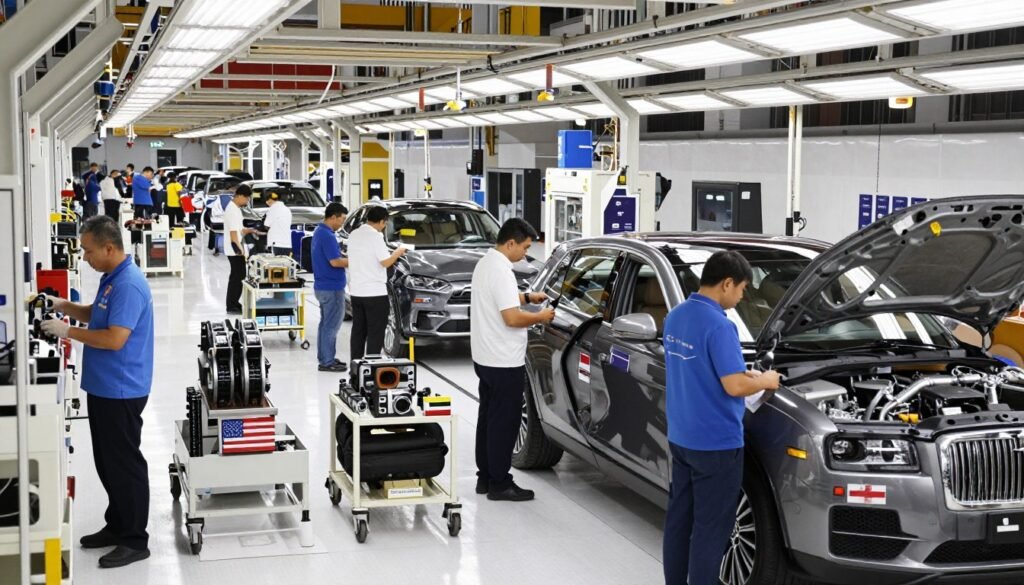
Ford estimated the tariff added $1,200-1,500 to average vehicle cost. GM projected similar increases. These amounts significantly impacted affordability. The average new car already cost $48,000. Adding another $1,500 pushed many buyers out of the market. Used car values increased as new car purchases declined.
Electric vehicle manufacturers faced particular pressure. EV batteries come almost entirely from Asia. Lithium, cobalt, and rare earth elements are processed in China. The tariff made EVs substantially more expensive just as the industry reached price parity with gasoline vehicles. This threatened climate policy objectives.
Retail: Thin Margins Under Pressure

Retailers operated on notoriously thin profit margins. Many earned 2-4% net margins in good years. A 10% cost increase on imported goods eliminated profitability entirely. Retailers faced impossible choices. Raise prices and lose customers. Absorb costs and lose money. Either path led to potential bankruptcy.
Dollar stores faced existential threats. These chains built business models on ultra-low prices. Nearly 100% of merchandise came from imports, predominantly China. The tariff destroyed their value proposition. Dollar General’s CEO called the situation “potentially insurmountable.” Similar companies faced comparable crises.
Department stores already struggling with e-commerce competition faced new headwinds. Macy’s, Nordstrom, and others reported 15-20% sales declines after implementing tariff-driven price increases. Several regional chains announced bankruptcy filings. Retail employment faced massive cuts.
Agriculture: Retaliation Hits Hardest
American farmers suffered primarily from retaliation rather than the tariff itself. The US imports relatively few agricultural products. However, retaliatory tariffs from China, EU, Mexico, and others devastated American agricultural exports. This created severe hardship in rural America.

Soybean farmers faced catastrophe. China purchased 60% of US soybean exports historically. Chinese 15% retaliatory tariff made American soybeans uncompetitive. Brazilian and Argentine farmers eagerly filled the gap. American farmers saw prices collapse 25%. Many faced bankruptcy after several years of difficult conditions.
Corn, wheat, and pork producers confronted similar scenarios. Mexico imposed reciprocal tariffs on American corn. The EU targeted pork. Canada restricted wheat imports. Each action hurt specific farming regions. The Midwest, Great Plains, and South all suffered.
| Agricultural Product | Primary Export Market | Retaliatory Tariff | Price Decline | Estimated Job Losses |
| Soybeans | China | 15% | 22-28% | 45,000 |
| Corn | Mexico | 12% | 15-20% | 32,000 |
| Pork | China, EU | 18% | 25-32% | 28,000 |
| Wheat | Canada, Mexico | 10% | 12-18% | 18,000 |
| Dairy | Canada, Mexico | 14% | 18-24% | 22,000 |
The White House announced $28 billion in agricultural subsidies to offset losses. However, farmers emphasized they preferred market access over government payments. Subsidies created dependency and distorted planting decisions. Long-term export market relationships, once lost, proved difficult to rebuild.
Energy Sector: Mixed Outcomes
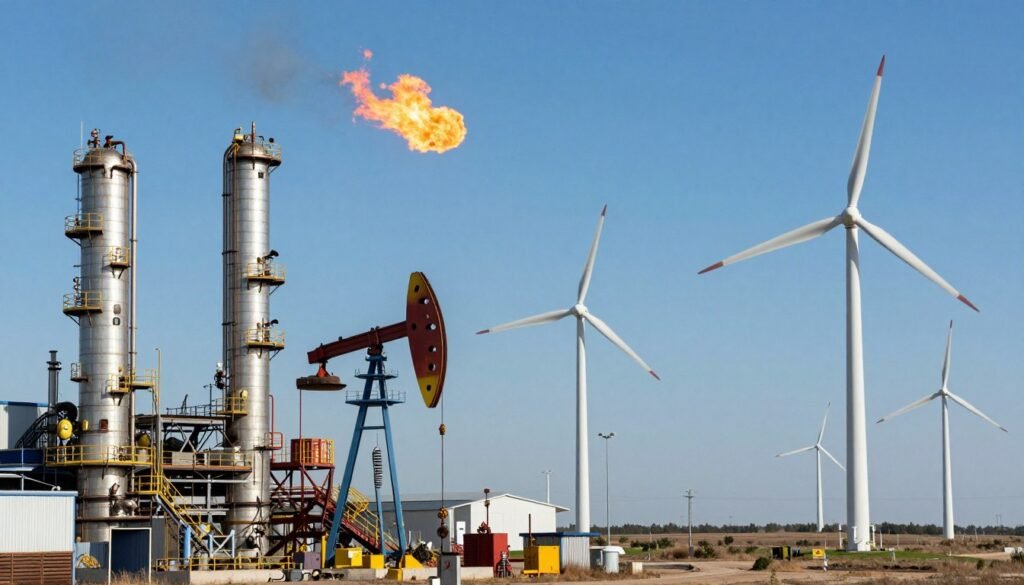
Energy companies experienced divergent impacts. Domestic oil and gas producers benefited from reduced competition. The tariff discouraged imports. This supported domestic prices. Shale producers in Texas, North Dakota, and Pennsylvania gained market share.
However, renewable energy sectors suffered. Solar panels came predominantly from Asia. Wind turbine components involved global supply chains. The tariff raised renewable energy project costs 15-25%. This slowed the transition away from fossil fuels. Climate advocates expressed frustration that Trump trade policy undermined environmental objectives.
Construction: Material Costs Explode
Construction companies faced immediate cost explosions. Steel, aluminum, lumber, and countless other materials face tariffs. The National Association of Home Builders calculated 30-40% of construction materials came from imports. Project costs increased proportionally.
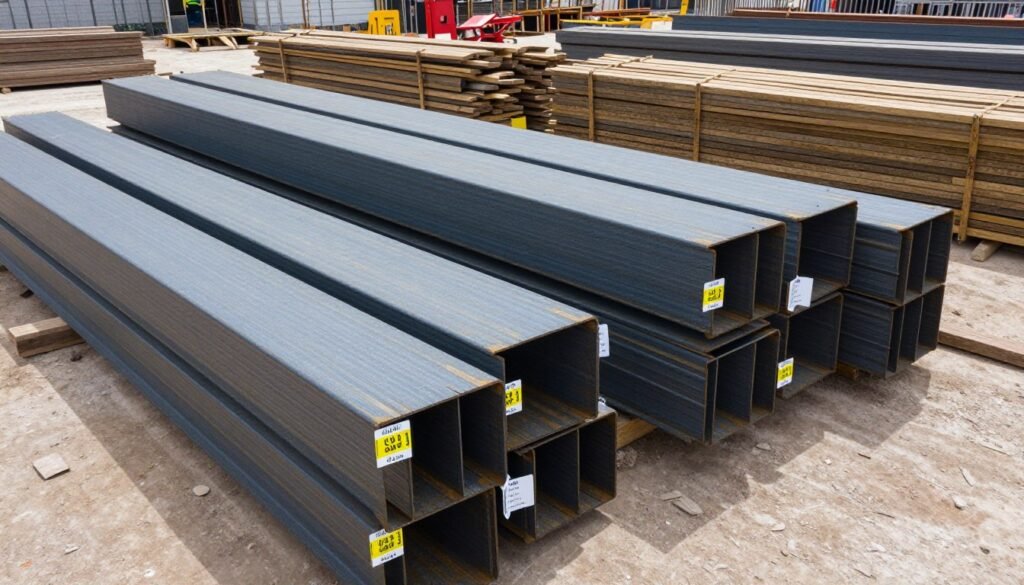
Infrastructure projects faced cancellations. State and municipal governments budgeted based on previous material costs. Sudden 15-20% increases made projects unaffordable. Road repairs, bridge replacements, and school construction all faced delays. The infrastructure bill President Trump signed lost much of its impact as costs soared.
Healthcare: Indirect but Significant Effects
Healthcare providers faced indirect impacts. Medical devices often contain imported components. Diagnostic equipment came from Germany, Japan, and China. Hospital construction costs increased due to material tariffs. These factors pressured already-strained healthcare budgets.
Pharmaceutical companies worried about supply chain disruptions. Many drug ingredients come from India and China. While pharmaceuticals received limited exemptions, related products did not. Medical device manufacturers relocated production, creating supply uncertainties. Hospitals reported difficulty maintaining consistent supplies of certain products.
Fact-Checking Administration Claims

The Trump administration made numerous claims justifying the Trump global tariff. Independent analysis revealed many statements ranged from misleading to demonstrably false. Fact check organizations worked overtime assessing administration assertions. This section examines key claims against evidence.
Claim: “Tariffs Are Paid by Foreign Countries”
Trump said repeatedly that foreign countries pay tariffs to the US Treasury. This represents fundamental misunderstanding of tariff mechanics. Fact check: This claim is false. American importers pay tariffs when goods enter the country. They then typically pass costs to consumers through higher prices.
Every mainstream economist confirmed this. The Tax Foundation, a conservative think tank, stated unequivocally: “Tariffs are taxes paid by domestic consumers.” Congressional Budget Office analysis reached identical conclusions. No credible economic research supported the administration’s claim.
“The claim that foreign countries pay tariffs represents either profound economic ignorance or deliberate misinformation. Either possibility is concerning from a policy perspective.”
Claim: “Tariffs Will Bring Manufacturing Jobs Back”
The White House claimed tariffs would restore millions of manufacturing jobs. Fact check: This claim is mostly false. While some protected industries might add jobs, overall employment effects appear negative. Manufacturing job losses from higher input costs and retaliation exceed gains in protected sectors.
Evidence Against the Claim
- Federal Reserve models predict net job losses
- Previous tariff rounds showed minimal reshoring
- Automation continues regardless of tariff policy
- Input-using industries employ more workers than protected sectors
- Retaliation costs export industry jobs
- Historical evidence shows tariffs reduce employment
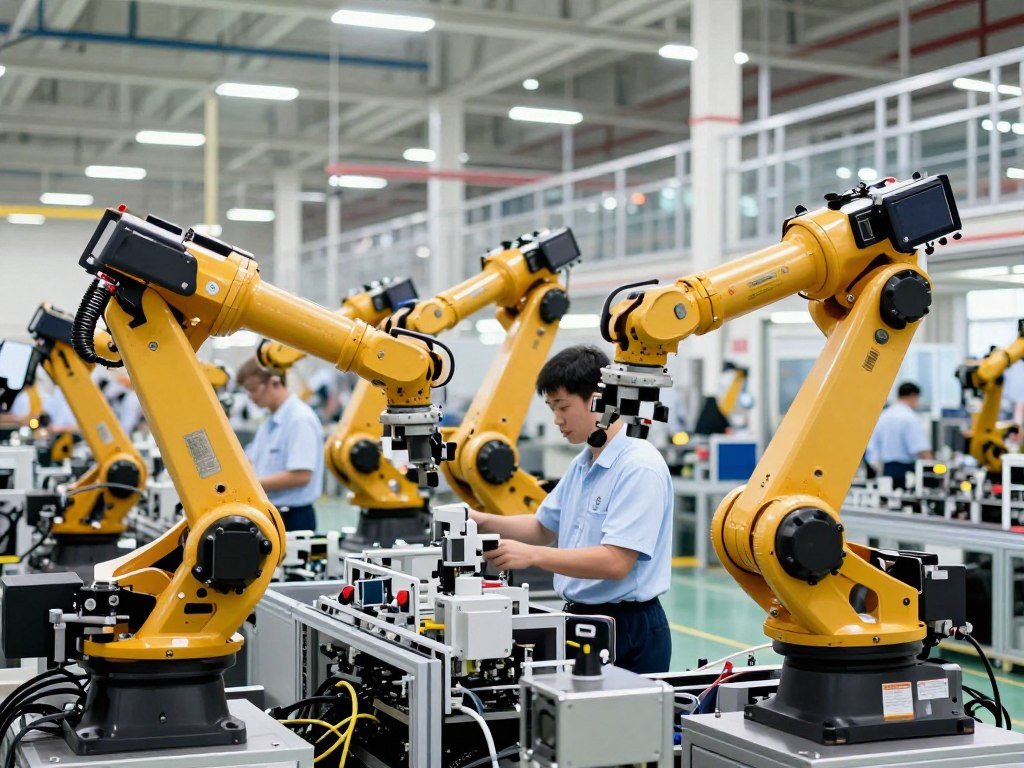
Manufacturing employment declined primarily due to automation, not trade. A Ball State University study found 87% of manufacturing job losses from 2000-2010 resulted from productivity gains (automation). Only 13% connected to trade. Tariffs cannot reverse technological progress.
Claim: “Trade Deficits Represent Money Lost”
President Donald Trump frequently characterized trade deficits as “losing money” to other countries. Fact check: This claim is false. Trade deficits are not inherently harmful. They reflect capital inflows and investment attractiveness. The US runs trade deficits because foreigners want to invest in American assets.
When America buys $100 million in Chinese goods, China holds $100 million in dollars. They invest those dollars in US Treasury bonds, real estate, stocks, or business ventures. The trade deficit is balanced by capital inflows. This is accounting identity, not opinion.
Trade deficits can indicate economic strength. The US attracted investment because of economic growth, rule of law, and investment returns. Strong economies typically run trade deficits. Weak economies often run surpluses because they cannot attract foreign capital.
Claim: “National Security Requires Tariffs”
The administration invoked national security to justify tariffs under the International Emergency Economic Powers Act. Fact check: This claim is dubious. Most products subject to tariff have no plausible national security connection. Importing shoes, furniture, or toys does not threaten American security.
Legal Analysis: Constitutional scholars argue the emergency economic powers invocation stretches statutory language beyond recognition. Chronic trade imbalances do not constitute the type of “unusual and extraordinary threat” IEEPA contemplated. Expect further legal challenges.
Even in sectors with legitimate security concerns, blanket tariffs proved counterproductive. Semiconductor supply chain security matters genuinely. However, broad tariffs disrupted chip supplies without building domestic capacity. Targeted industrial policy would serve security goals better than universal tariffs.
Claim: “Tariffs Will Generate Massive Revenue”
Secretary Scott Bessent projected $85 billion in annual tariff revenue. Fact check: This claim is misleading. While tariffs initially generate revenue, trade volume declines reduce collections. Moreover, economic damage from tariffs reduces other tax revenues. Net fiscal impact likely proves negative.
| Revenue Source | Optimistic Projection | Realistic Estimate | Pessimistic Scenario |
| Tariff Collections | $85 billion | $62 billion | $45 billion |
| Lost Income Tax (unemployment) | -$8 billion | -$18 billion | -$32 billion |
| Lost Corporate Tax (lower profits) | -$12 billion | -$25 billion | -$42 billion |
| Lost Payroll Tax | -$5 billion | -$12 billion | -$22 billion |
| Net Fiscal Impact | $60 billion | $7 billion | -$51 billion |
Congressional Budget Office analysis suggested net revenue would prove minimal or negative once all effects were considered. Slower economic growth reduces income tax, corporate tax, and payroll tax collections. These losses potentially exceed tariff revenues.
Legal Challenges and Constitutional Questions

Multiple legal challenges to the Trump tariff policy were filed within days of implementation. Business groups, state governments, and civil liberties organizations all sued. These cases raised fundamental constitutional questions. The Supreme Court will likely need to address presidential power limits repeatedly.
Separation of Powers Issues
The Constitution grants Congress power “to regulate Commerce with foreign Nations.” Article I, Section 8 explicitly places trade policy under legislative authority. However, Congress delegated substantial power to presidents through various statutes. The Trade Expansion Act, IEEPA, and other laws grant executive branch trade authority.
Plaintiffs argued the Trump administration exceeded even these broad delegations. IEEPA requires genuine national emergencies. Section 232 demands actual national security threats. Chronic trade deficits meet neither standard, challengers contended. They argued accepting the administration’s interpretation would render congressional trade authority meaningless.
Government lawyers countered that courts should defer to executive determinations. National security and emergency declarations involve political questions beyond judicial competence. Presidents possess inherent constitutional authority over foreign affairs. Congress ratified this by passing broad delegation statutes.
Non-Delegation Doctrine Revival?
Conservative legal scholars saw opportunity to revive non-delegation doctrine. This principle holds Congress cannot delegate legislative power to executive branch. The doctrine largely fell into disuse after 1930s. However, current Supreme Court conservative majority expressed interest in resurrecting it.
If the Court ruled Congress impermissibly delegated trade authority, consequences would prove enormous. Numerous statutes granting executive powers might fall. However, such dramatic ruling seemed unlikely. Even conservative justices recognized the chaos that would result. More limited ruling seemed probable.
Statutory Interpretation Battles
Lower courts began hearing cases challenging specific statutory interpretations. Does IEEPA actually authorize universal import tariffs? Does Section 122 of the Trade Act permit indefinite surcharges? These technical questions carried massive practical implications.
The US Court of International Trade heard several early cases. This specialized court handles trade disputes. Initial rulings proved mixed. Some judges found the administration stretched statutory language beyond breaking point. Others deferred to executive interpretation. Appeals seemed certain regardless of initial outcomes.
What legal authority does the President have to impose tariffs?
Presidents possess authority under multiple statutes: Section 232 of the Trade Expansion Act for national security reasons, IEEPA for national emergencies, and Section 122 for balance of payments. However, courts must determine whether current invocations legitimately fit these statutory frameworks.
Can the Supreme Court block the tariffs?
Yes, the Supreme Court could rule the tariffs exceed presidential authority or violate constitutional separation of powers. However, courts traditionally defer to executive branch on foreign affairs and national security. Plaintiffs face uphill battle despite strong legal arguments.
What happens if courts rule against the administration?
If courts invalidate the tariffs, the administration could appeal or seek alternative legal authorities. Congress could also pass legislation explicitly authorizing the policy. However, Democratic House control makes congressional approval unlikely. Legal uncertainty would persist for years.
Do tariffs violate international trade law?
Almost certainly yes. The Trump tariff appears to violate World Trade Organization rules and numerous bilateral trade agreements. However, international law enforcement mechanisms are weak. The US could simply ignore adverse WTO rulings with minimal consequences beyond reputational damage.
Congressional Response Options
Congress possessed several options to address the situation. They could pass legislation explicitly authorizing or prohibiting the tariffs. They could clarify ambiguous statutory language. They could restrict or expand presidential trade authority going forward.
However, political divisions prevented action. Republicans controlled Senate. Democrats controlled House. Neither party commanded sufficient majorities to override presidential vetoes. Gridlock seemed likely. The situation would ultimately require judicial resolution or political change through elections.
Future Predictions and Likely Scenarios

Predicting economic futures involves substantial uncertainty. However, analyzing historical patterns and current trajectories enables informed projections. This section examines most likely scenarios for Trump tariff policy evolution and economic consequences. Three main pathways emerge as possibilities.
Scenario One: Escalation and Trade War
The highest-probability scenario involves continued escalation. Trading partners have already announced retaliatory measures. The Trump administration traditionally responded to retaliation with additional tariffs. This pattern characterized earlier trade disputes with China and Europe.
Under this scenario, tariff rates rise to 20-25% within 12 months. Major economies implement matching retaliatory measures. Global trade volumes fall 30-40%. This would trigger worldwide recession. Unemployment rises sharply in all major economies. Stock market values decline 25-35% from current levels.
Historical precedent suggests this scenario carries 40-45% probability. Trade wars tend to escalate once initiated. Political incentives favor toughness over compromise. Each side blames the other. Domestic audiences reward leaders who appear strong. These dynamics make de-escalation difficult.
Factors Favoring This Scenario
- Historical pattern of Trump trade policy escalation
- Political incentives favor appearing tough
- Already-announced retaliation makes reversal difficult
- Nationalist sentiment rising globally
- Limited diplomatic channels for resolution
Factors Against This Scenario
- Severe economic pain might force compromise
- Business lobby pressure on all governments
- Financial market crashes concentrate minds
- Election cycles create pressure to resolve
- International institutions facilitate negotiations
Scenario Two: Negotiated Resolution
The second scenario involves negotiations producing partial resolution. The White House uses tariff threat as leverage for bilateral trade deals. Major partners agree to targeted concessions. The US reduces or eliminates tariffs in exchange. This represents the administration’s stated goal.

Under this scenario, deals emerge over 6-18 months. China agrees to purchase additional American products. The EU reduces automotive tariffs. Mexico and Canada receive exemptions in exchange for migration cooperation. Tariff rates decline to 5-8% rather than 10%. Trade partially recovers.
This scenario carries approximately 30-35% probability. It requires all parties prioritizing economic stability over political positioning. Business pressure must overwhelm nationalist sentiment. The path exists but demands compromise from leaders who rarely compromise.
| Country/Region | Likely Concessions to US | US Concessions Required | Deal Probability |
| China | Increased agricultural purchases, IP protection improvements | Tariff reduction to 5%, technology export relaxation | 35% |
| European Union | Automotive tariff cuts, increased LNG imports | Full tariff elimination, digital tax compromise | 45% |
| Mexico | Migration enforcement, energy exports guaranteed | Full USMCA compliance, tariff elimination | 55% |
| Canada | Dairy market opening, defense spending increase | Tariff elimination, softwood lumber resolution | 50% |
| Japan | Agricultural market access, defense cooperation | Automotive tariff reduction, technology cooperation | 40% |
Scenario Three: Legal/Political Reversal
The third scenario involves tariff policy reversal through legal or political means. Courts might rule the tariffs unconstitutional. Elections might bring policy change. Political pressure from affected constituencies might force retreat. Business lobbying might overwhelm administration resolve.

This scenario carries 20-25% probability. Courts traditionally defer to executive branch on trade and national security. However, the administration’s statutory interpretations stretched legal limits. One or more adverse court rulings could force policy changes. Appeals would follow, creating years of uncertainty.
Political reversal might occur if economic damage proves severe and politically costly. Swing-state voters suffering job losses might turn against the administration. Republican legislators might break with the White House facing constituent pressure. However, partisan tribalism makes such defections unlikely unless pain becomes extreme.
Economic Impact Projections
Economists developed models for each scenario’s impacts. Projections span wide ranges reflecting uncertainty. However, central tendencies suggest significant economic costs under all scenarios except full reversal.
| Economic Indicator | Escalation Scenario | Negotiated Resolution | Policy Reversal |
| GDP Growth (annual) | -0.5% to -2.0% | +1.2% to +1.8% | +2.0% to +2.8% |
| Unemployment Rate | 6.5% to 8.2% | 4.5% to 5.3% | 3.8% to 4.4% |
| Inflation Rate | 4.5% to 6.2% | 2.8% to 3.5% | 2.0% to 2.7% |
| Stock Market (S&P 500) | -25% to -35% | -5% to +8% | +12% to +22% |
| Consumer Confidence | 65 to 75 | 88 to 96 | 102 to 112 |
Long-Term Structural Changes
Regardless of which scenario materializes, certain long-term changes appear inevitable. The era of hyperglobalization has ended. Companies will maintain more geographically diversified supply chains. Regional trade blocs will strengthen at expense of global integration. Governments will prioritize supply chain resilience over efficiency.
Manufacturing will partially reshore to developed countries. However, automation means fewer workers benefit than policy proponents hope. Factories return but employment remains limited. High-skilled workers gain while middle-skilled manufacturing jobs continue disappearing regardless of trade policy.
Technology decoupling between US and China accelerates. Separate technology ecosystems emerge. This creates inefficiency and reduces innovation but continues for national security reasons. Europe attempts to maintain independence from both American and Chinese systems, with mixed success.
Investment Strategy Implications
Investors must adapt strategies to new realities. Simple geographic diversification proves insufficient when all markets move together. New approaches emphasize supply chain exposure, currency positioning, and sectoral selection based on trade policy sensitivity.
- Domestic-focused services
- Defense and aerospace
- Domestic energy production
- Healthcare services
- Utilities and infrastructure
- Cybersecurity and defense tech
- Regional retail chains
Sectors Likely to Outperform
- Global manufacturing
- Import-dependent retail
- International shipping
- Multinational technology
- Export-oriented agriculture
- Automotive manufacturing
- Consumer discretionary goods
Sectors Likely to Underperform
- Banking and financial services
- Industrial machinery
- Chemicals and materials
- Transportation services
- Real estate and REITs
- Media and entertainment
- Professional services
Sectors with Mixed Outlook
How Businesses Can Adapt and Survive

Businesses facing the Trump global tariff reality must adapt rapidly. Passive acceptance guarantees failure. Companies implementing proactive strategies can survive and potentially thrive. This section provides actionable guidance for businesses navigating the new trade environment.
Supply Chain Diversification
The most critical adaptation involves supply chain restructuring. Companies dependent on single-country sourcing face existential vulnerability. Diversification across multiple countries reduces risk. However, this requires significant time and investment.
Begin by conducting comprehensive supply chain audits. Identify every imported component and its origin. Calculate tariff exposure for each product line. Prioritize high-volume, high-margin products for immediate attention. Create detailed migration plans with realistic timelines.
- Audit entire supply chain identifying all import sources
- Calculate tariff impact on each product and component
- Research alternative sourcing locations and suppliers
- Conduct site visits and quality assessments
- Negotiate terms with new suppliers
- Implement phased transition plans
- Maintain dual sourcing during transition
- Monitor quality and cost metrics continuously
Pricing Strategy Adjustments
Small businesses particularly struggle with pricing decisions. Absorbing costs destroys profitability. Raising prices drives away customers. The optimal strategy involves nuanced, product-by-product analysis.
When to Absorb Costs
- Highly price-sensitive products
- Strong competition exists
- Customer acquisition priority
- Loss leader strategies
- Short-term competitive advantage
When to Raise Prices
- Loyal customer base
- Unique or differentiated products
- Limited competition
- High-margin items
- Industry-wide price increases
Consider implementing tiered pricing strategies. Premium products can absorb larger increases. Budget offerings require more restraint. Communicate transparently with customers about tariff impacts. Many consumers understand external cost pressures. Sudden unexplained increases generate more backlash than explained ones.
Product Line Optimization
Review entire product portfolios through tariff lens. Some products become unprofitable. Eliminate them. Others gain competitive advantage if competitors struggle more with tariff impacts. Expand these. Strategic product line adjustments help maintain profitability.
Consider developing products with higher domestic content. Market “Made in USA” positioning. Some consumer segments pay premiums for domestic production. The current environment makes this positioning more valuable. However, ensure genuine domestic content rather than superficial marketing claim
Exemption Application Strategies
The Commerce Department exemption process, while difficult, offers potential relief. Companies should pursue exemptions for products meeting criteria. However, prepare for lengthy, bureaucratic processes requiring substantial documentation.
Successful exemption applications demonstrate:
- No domestic alternative exists
- Product specifications unique to applicant
- Domestic production capacity insufficient
- Exemption serves broader national interests
- Company made good faith domestic sourcing efforts
Hire experienced trade lawyers. DIY applications rarely succeed. Specialized attorneys understand Commerce Department expectations. They structure applications to maximize approval chances. While expensive, legal fees prove worthwhile if exemptions gain approval.
Financial Planning and Cash Management

Tariffs create immediate cash flow challenges. Imported goods now cost 10% more to land. Companies must pay tariffs upon entry before selling goods. This increases working capital requirements substantially. Financial planning must account for these realities.
Consider these financial strategies:
Inventory Management
Reduce inventory levels where possible. Every dollar of inventory now carries higher cost. Just-in-time practices become more valuable. However, balance efficiency against supply chain reliability concerns. Find optimal point between carrying costs and stockout risks.
Credit Line Expansion
Secure additional credit lines before crisis fully manifests. Banks tighten lending when economic problems emerge. Establish relationships and credit capacity during relatively stable periods. Use credit strategically to manage cash flow through transition.
Hedging Strategies
Currency hedging becomes more important in volatile trade environment. Forward contracts lock in exchange rates. Options provide flexibility with downside protection. Consult treasury management specialists about appropriate hedging strategies for your business.
Collaboration and Industry Advocacy
Individual companies have limited influence. However, industry associations and collective advocacy prove more effective. Join trade associations focused on tariff issues. Participate in lobbying efforts. Coordinate with competitors on policy advocacy while maintaining competitive market positions.
Share best practices with industry peers. The current environment creates common challenges. Companies that normally compete may benefit from information sharing about supply chain solutions, exemption strategies, and pricing approaches. Industry associations facilitate this collaboration.
What This Means for American Consumers

American consumers bear the primary cost of the Trump global tariff. Every household faces higher prices across virtually all product categories. Understanding impacts helps consumers make informed decisions about spending, saving, and financial planning. This section provides practical guidance.
Which Products Cost More
The tariff affects prices unevenly. Products with high import content see largest increases. Domestically produced goods with imported components face moderate increases. Pure domestic goods remain largely unaffected initially, though secondary effects emerge.

| Product Category | Price Increase Range | Annual Cost per Household | When to Expect Changes |
| Electronics & Computers | 8-12% | $240 | Already begun |
| Clothing & Shoes | 9-11% | $320 | 2-3 months |
| Furniture | 10-14% | $180 | 3-4 months |
| Toys & Games | 10-13% | $150 | 1-2 months |
| Appliances | 7-10% | $85 | 2-3 months |
| Groceries (imported items) | 5-8% | $380 | 1-2 months |
Smart Shopping Strategies
Consumers can minimize tariff impacts through strategic choices. However, completely avoiding price increases proves impossible. The tariff affects too many products. Instead, focus on optimizing major purchases and adjusting spending patterns.
Time Major Purchases Carefully
Buy big-ticket items sooner rather than later. Prices will only increase further. Electronics, appliances, and furniture all face steeper prices ahead.
- Purchase planned electronics now
- Buy appliances before prices rise
- Consider accelerating furniture purchases
- Stock up on durable goods
Shift to Domestic Alternatives
Where domestic options exist, consider switching. American-made products become relatively more competitive as import prices rise.
- Research domestic brands
- Support local manufacturers
- Check product origin labels
- Accept potentially higher initial costs
Buy Used and Secondhand
Secondhand markets offer tariff-free alternatives. Used electronics, furniture, and clothing provide substantial savings compared to new tariff-affected products.
- Explore thrift stores and consignment shops
- Check online marketplaces
- Consider certified refurbished electronics
- Join local buy-nothing groups
Reduce Discretionary Spending
Focus budgets on necessities. Delay or eliminate optional purchases. Build savings cushion to handle price increases on essential goods.
- Cut subscription services
- Reduce dining out frequency
- Postpone vacation plans
- Minimize impulse purchases
Budget Adjustment Recommendations

Financial advisors recommend adjusting household budgets to account for 5-8% higher living costs. This varies by spending patterns. Households that buy more goods versus services face larger impacts. Budget categories requiring adjustment include:
- Clothing budget: Increase 9-11% or reduce purchases
- Electronics: Budget 8-12% higher or delay purchases
- Furniture and home goods: Expect 10-14% increases
- Grocery costs for imported items: Rise 5-8%
- Vehicle purchases: Plan for 6-9% higher prices
- Toys and gifts: Budget 10-13% more or buy fewer
Long-Term Financial Planning
The Trump tariff creates long-term inflation pressure. This affects retirement planning, savings goals, and investment strategies. Consumers should consult financial advisors about adjusting plans. Key considerations include:

Financial Planning Priorities
- Increase retirement savings rates to offset inflation
- Rebalance investment portfolios for new environment
- Consider inflation-protected securities
- Build larger emergency funds
- Review insurance coverage adequacy
- Accelerate debt paydown while rates moderate
- Adjust college savings projections upward
Impact on US International Relations
The Trump global tariff fundamentally damaged America’s international relationships. Allies questioned US reliability. The post-World War II liberal international order faced existential stress. Diplomatic implications extend far beyond economics into security and geopolitical spheres.
Alliance Strain: NATO and Defense Partnerships
European NATO allies expressed particular frustration. They viewed the tariff as attacking friends while enemies like Russia escaped similar treatment. German officials noted the irony of tariffs justified by national security being imposed on security allies.
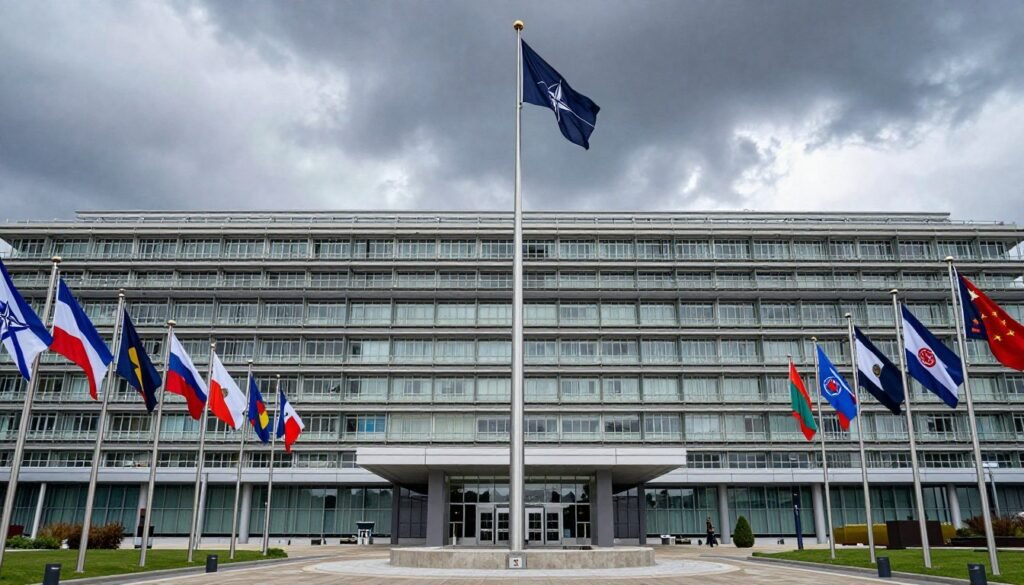
Defense ministers warned economic conflict undermined security cooperation. If America treated economic relations as zero-sum competition, Europeans questioned security commitments’ reliability. Poland’s defense minister asked whether Article 5 guarantees meant anything if America attacked Polish economic interests.
Asian allies shared similar concerns. Japan and South Korea host American military bases. They purchase American weapons systems. They coordinate closely on China policy. Yet the tariff treated them as adversaries. This cognitive dissonance created policy confusion and trust deficits.
China Relations: Strategic Competition Intensifies
US-China relations entered dangerous territory. The tariff represented latest escalation in ongoing strategic competition. However, economic warfare created risks of broader conflict. Historical parallels to pre-World War I great power rivalries worried analysts.
Chinese officials adopted increasingly confrontational rhetoric. They characterized America as declining hegemon lashing out at rising power. State media emphasized China’s technological achievements and domestic market size. The narrative suggested China could survive American economic aggression.
Military tensions increased parallel to economic conflict. Chinese naval activity near Taiwan intensified. Air defense identification zone incursions multiplied. Both sides increased military exercises. The risk of miscalculation grew as overall relationships deteriorated.
Developing World: Alienation and Opportunity
Developing nations felt betrayed by American policy. They made economic development decisions based on access to US markets. The tariff destroyed those assumptions. Countries like Bangladesh, Vietnam, and Cambodia faced economic crises through no fault of their own.
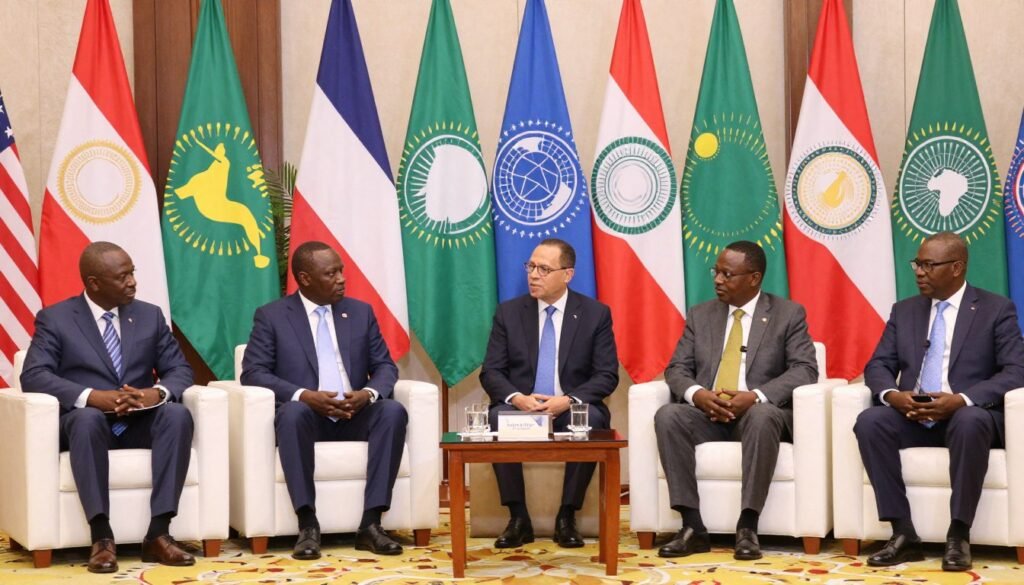
China seized this opportunity aggressively. Beijing offered developing nations alternative markets and investment. The Belt and Road Initiative gained new momentum. Countries previously hesitant about Chinese influence reconsidered. American tariff policy inadvertently advanced Chinese geopolitical objectives.
International Institution Erosion
The World Trade Organization faced potential irrelevance. If major powers simply ignored rules, what purpose did multilateral institutions serve? The Trump administration already blocked WTO dispute resolution appointments. The tariff policy further undermined the organization.
Other international institutions felt ripple effects. The IMF and World Bank faced questions about their relevance if economic rules didn’t matter. UN agencies worried about funding as international cooperation deteriorated. The entire post-1945 institutional architecture appeared vulnerable.
“We are witnessing potential end of the rules-based international order. If the world’s largest economy simply abandons agreed frameworks when convenient, the system cannot survive.”
Conclusion: Navigating Unprecedented Uncertainty

The Trump global tariff represents one of the most consequential economic policy decisions in modern American history. Following the Supreme Court strikes Trump administration’s initial approach, President Donald Trump pivoted to alternative legal authorities. He invoked the International Emergency Economic Powers Act and other statutory provisions to implement a sweeping 10% tariff on virtually all imports.
The consequences ripple through every dimension of economic life. American consumers face significantly higher prices. Businesses confront supply chain disruptions and cost pressures. Workers in import-dependent industries risk unemployment. Financial markets experienced severe volatility. The S&P 500 and other equity indices declined sharply.
Internationally, the tariff triggered massive retaliation. The European Union, China, Canada, Mexico, and numerous other trading partners imposed reciprocal tariffs on American exports. Global trade volumes fell dramatically. Developing nations face economic crises. International institutions confront existential questions about relevance.
Key Takeaways
Economic Reality
Despite administration claims, American workers and consumers bear tariff costs. Prices rise across virtually all categories. Net employment effects appear negative. Economic growth slows while inflation accelerates. This stagflation scenario offers no easy policy solutions.
Global Impact
No country remains immune. Integrated supply chains mean disruptions cascade worldwide. Export-dependent economies face severe challenges. Currency markets experience extreme volatility. The risk of global recession increases substantially.
Future Uncertainty
Three main scenarios emerge as possibilities: escalating trade war, negotiated resolution, or policy reversal through legal or political means. Each carries different probabilities and implications. Businesses and investors must prepare for multiple possible futures.
Moving Forward
Successfully navigating this environment requires adaptation at every level. Businesses must restructure supply chains, adjust pricing strategies, and optimize operations. Consumers should budget for higher costs while seeking domestic alternatives where possible. Investors need to rebalance portfolios for new realities.

Policymakers face difficult choices. The Trump administration shows no signs of retreating. Congress remains gridlocked. Courts will eventually rule on constitutional questions, but appeals ensure years of uncertainty. Meanwhile, economic damage accumulates.
The broader lesson involves recognizing how interconnected modern economies have become. Attempts to return to earlier eras of autarky or limited trade ignore these realities. Supply chains evolved over decades for efficiency reasons. Restructuring creates enormous costs and inefficiencies.
Historical experience offers sobering warnings. Trade wars typically escalate. Economic nationalism tends toward conflict. The 1930s demonstrated how trade restrictions can deepen and prolong economic crises. While modern economies differ substantially, core lessons remain relevant.
Looking Ahead
The coming months and years will prove critical. Will escalation continue toward full trade war? Will negotiations produce compromise solutions? Will courts or political changes force policy reversals? These questions lack clear answers. Uncertainty itself represents a major economic cost.

What remains certain is that adaptation and resilience matter more than ever. Companies that diversify supply chains gain advantage. Consumers who adjust budgets manage impacts better. Investors who position for new realities protect wealth. Flexibility and preparation provide the best defenses against uncertainty.
The Trump global tariff marks a potential inflection point in global economic history. The era of hyperglobalization likely has ended. What replaces it remains unclear. Regional trading blocs might strengthen. Technology decoupling between major powers seems inevitable. Supply chain resilience will trump pure efficiency.
Understanding these dynamics helps all stakeholders make better decisions. Businesses can plan strategically rather than react frantically. Consumers can adjust spending to minimize pain. Investors can position portfolios appropriately. Policymakers can grasp full implications of their choices.
The path forward involves no easy answers. Trade-offs between competing objectives prove unavoidable. Economic efficiency conflicts with supply chain security. International cooperation tensions with national interests. Short-term political gains create long-term economic costs. Navigating these tensions requires wisdom, flexibility, and realistic assessment of possibilities.