Understanding the US 10% Tariff Policy: Comprehensive Economic Impact Analysis
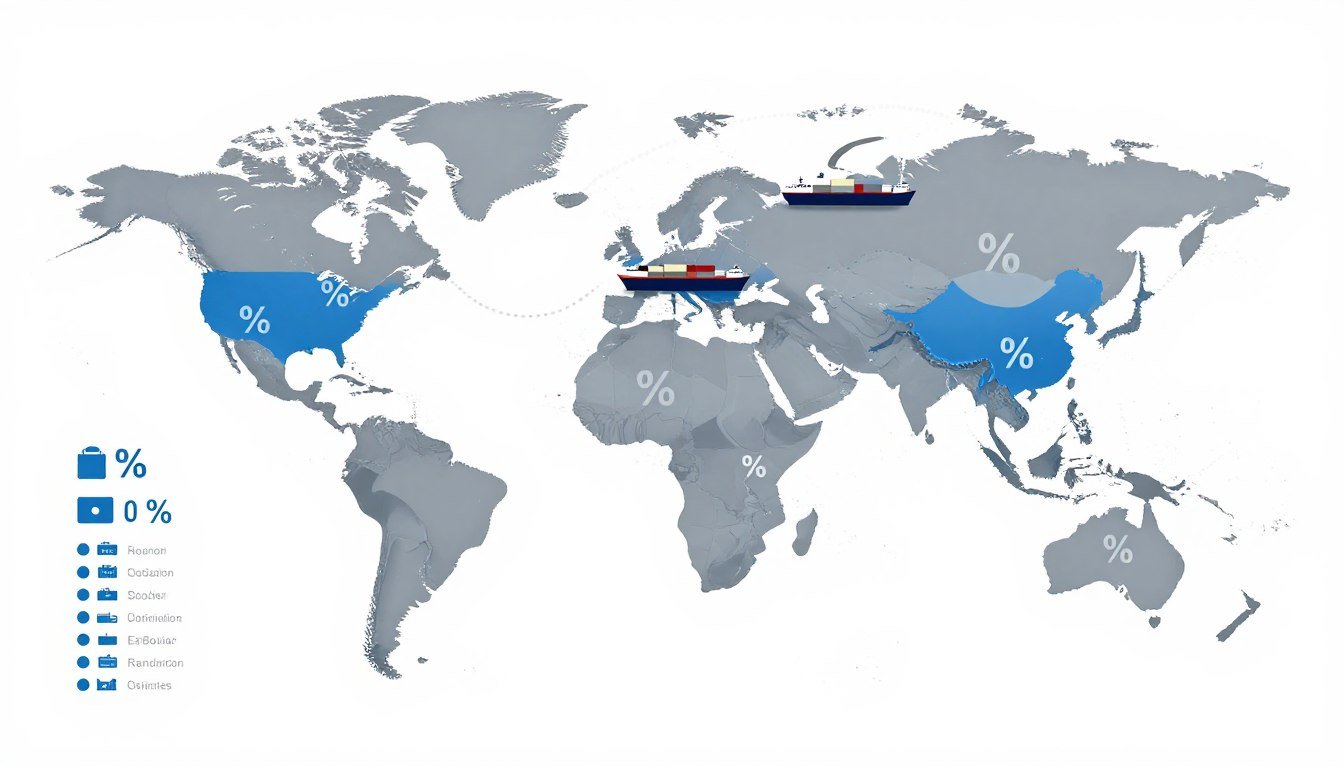
The proposed US 10% tariff policy represents one of the most significant trade policy discussions in recent years. This comprehensive analysis examines what would happen if the United States imposes a 10% tariff on imports, how the global community might respond, and the potential reactions from the American public.
Trade policy decisions carry far-reaching consequences. The implications extend beyond simple percentage calculations to affect international relationships, domestic employment, consumer prices, and global economic stability.
What a 10% Tariff Actually Means for Trade
A tariff is essentially a tax on imported goods. When the United States government imposes a 10% tariff, it means importers must pay an additional 10% of the product’s value when bringing goods into the country. This cost typically gets passed along the supply chain, ultimately affecting consumer prices.
The mechanics of tariff implementation involve customs enforcement, trade documentation, and payment collection at ports of entry. Understanding these operational details helps clarify why tariffs impact more than just final retail prices.
Historical Context of US Tariff Policies
Throughout American history, tariffs have served various purposes. In the 19th century, they provided government revenue. During the Great Depression, the Smoot-Hawley Tariff Act raised duties on thousands of imported items, contributing to global trade collapse.
More recently, tariff policies have focused on protecting specific industries or addressing trade imbalances. The distinction between broad-based tariffs and targeted duties matters significantly for economic outcomes.
Revenue Generation
Tariffs historically provided government income before modern taxation systems existed. Today they represent a smaller revenue source.
- Federal budget contributions
- Alternative to domestic taxes
- Trade deficit management tool
- Economic policy instrument
Industry Protection
Protective tariffs shield domestic producers from foreign competition by making imported goods more expensive.
- Manufacturing job preservation
- Strategic industry support
- Competition balance adjustment
- Market entry barriers
Negotiation Leverage
Tariff threats serve as bargaining tools in international trade negotiations and diplomatic discussions.
- Trade agreement incentives
- Diplomatic pressure tactics
- Policy compliance enforcement
- Bilateral relationship management
Economic Security
Strategic tariffs aim to reduce dependency on foreign suppliers for critical goods and materials.
- Supply chain independence
- National defense considerations
- Critical resource protection
- Manufacturing capability retention
Legal Framework and Presidential Authority
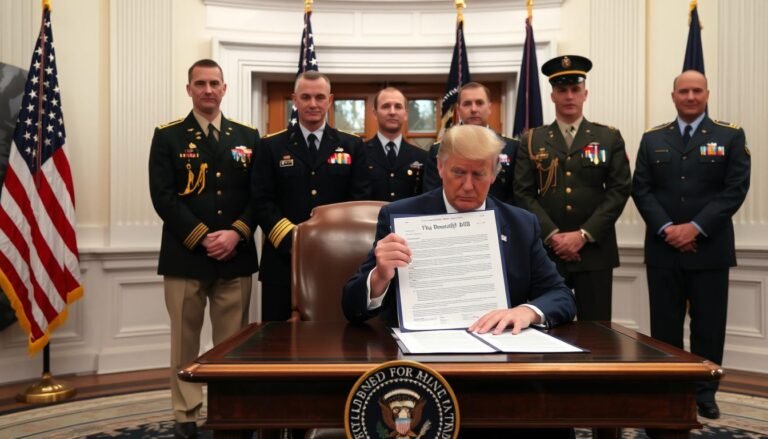
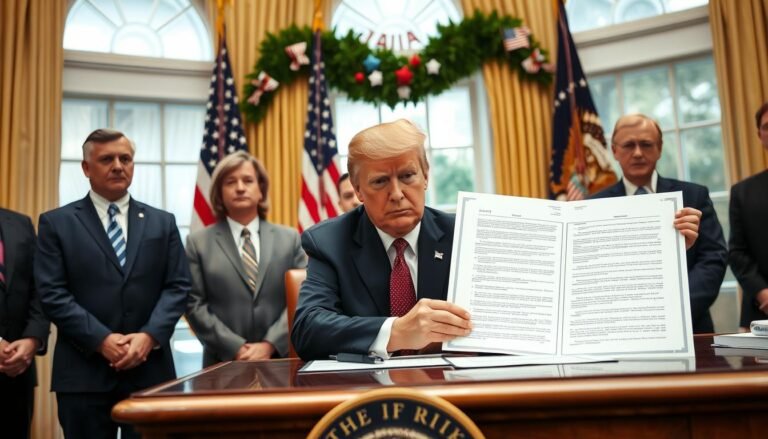
The authority to impose tariffs involves complex legal mechanisms. Presidential emergency economic powers derive from several statutes, including the International Emergency Economic Powers Act and Section 232 of the Trade Expansion Act.
Recent Supreme Court decisions have examined the scope of presidential tariff authority. The question of whether a president can unilaterally impose broad tariffs without Congressional approval remains constitutionally significant.

The International Emergency Economic Powers Act grants presidents authority to regulate commerce during national emergencies. However, the definition of what constitutes an emergency for trade purposes has faced legal challenges.
Section 232 allows tariffs for national security reasons, while Section 301 addresses unfair trade practices. These legal provisions create the framework within which trade policy operates.
Implementing a broad 10% tariff would trigger immediate and long-term economic effects across multiple sectors. The initial impact would appear in import costs, but consequences would ripple through the entire economy.
Consumer prices would likely increase as importers pass tariff costs to retailers and ultimately to shoppers. Industries heavily dependent on imported components or finished goods would face particularly acute pressure.
Immediate Market Reactions
Financial markets typically respond swiftly to major trade policy announcements. Stock markets might experience volatility as investors reassess company valuations based on tariff exposure.
Potential Economic Benefits
- Domestic manufacturing incentives increase
- Job creation in protected industries
- Reduced trade deficit numbers
- Government revenue generation
- Strategic industry development support
- Supply chain localization encouragement
- Negotiating leverage enhancement
Potential Economic Drawbacks
- Consumer price increases across categories
- Retaliatory tariffs from trading partners
- Supply chain disruption costs
- Reduced purchasing power for families
- Export industry job losses
- International business investment decline
- Global economic growth slowdown
Currency exchange rates would adjust as markets price in new trade realities. A stronger dollar might result from tariff-induced changes in trade flows, affecting American export competitiveness.
Impact on Consumer Prices
The Consumer Price Index would reflect tariff impacts within months of implementation. Products with high import content percentages would see the most significant price increases.
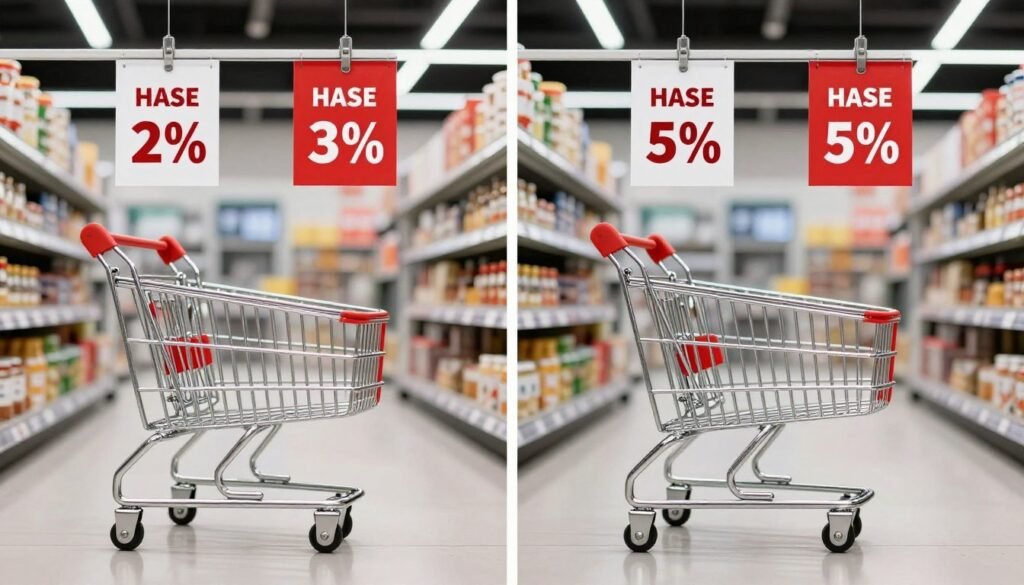
Electronics, clothing, furniture, and automobiles represent categories particularly vulnerable to tariff-driven price increases. Even products assembled domestically often contain imported components subject to duties.
The Peterson Institute for International Economics estimates that broad tariffs could cost the average American household hundreds of dollars annually through higher prices. Lower-income families would feel disproportionate impacts as they spend larger portions of income on goods.
Manufacturing and Employment Effects
Manufacturing sectors would experience mixed outcomes depending on their position in global supply chains. Domestic steel producers might benefit from reduced foreign competition, while steel-consuming industries would face higher input costs.
| Industry Sector | Immediate Impact | Job Effect | Long-term Outlook |
| Steel Manufacturing | Increased demand, higher prices | Potential job gains | Depends on sustained protection |
| Automotive Production | Higher component costs | Mixed effects | Supply chain restructuring needed |
| Consumer Electronics | Significant price increases | Potential retail job losses | Market share vulnerability |
| Agriculture Exports | Retaliatory tariff exposure | Potential job losses | Market access concerns |
| Retail Trade | Margin pressure, inventory costs | Reduced hiring capacity | Business model adjustments |
| Technology Services | Hardware cost increases | Minimal direct impact | Innovation cost concerns |
Employment outcomes depend on whether tariff-protected industries expand faster than tariff-harmed sectors contract. Historical evidence suggests net employment effects of broad tariffs tend toward negative territory.
Small Business Vulnerabilities
Small and medium enterprises face particular challenges adapting to tariff regimes. Unlike large corporations, they lack resources to quickly shift supply chains or absorb cost increases.
Import-dependent small businesses might struggle with working capital as tariff payments add to upfront costs. The administrative burden of navigating tariff classifications and exemption processes also weighs more heavily on smaller operations.

How the World Will React to a US 10% Tariff
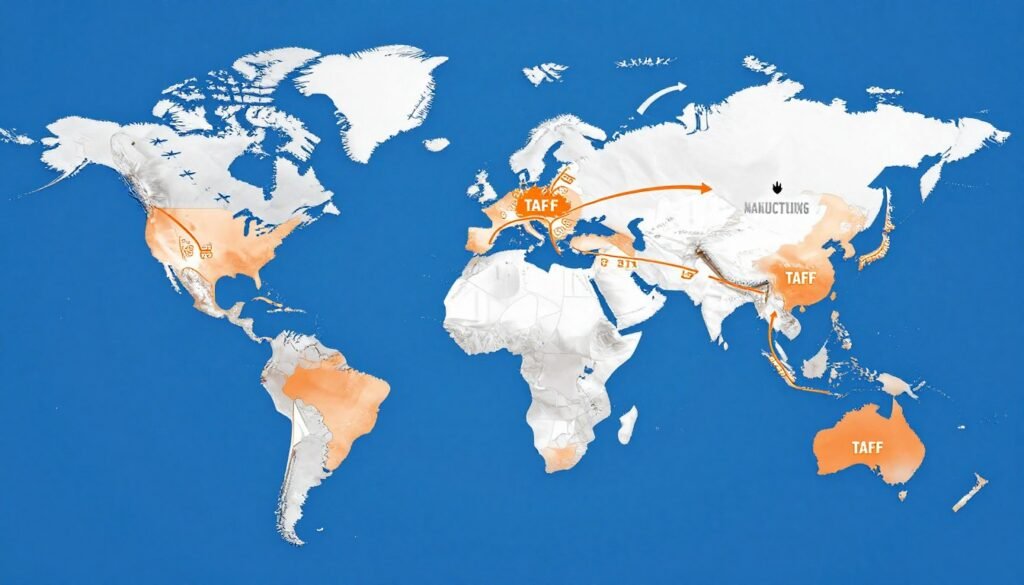
International response to American tariff policy would unfold across diplomatic, economic, and legal dimensions. Trading partners would evaluate their options ranging from negotiation to retaliation.
The World Trade Organization framework provides mechanisms for challenging tariffs deemed inconsistent with international trade rules. Countries might pursue formal dispute resolution while simultaneously implementing countermeasures.
Immediate Diplomatic Responses
Allied nations would likely express concern through diplomatic channels before taking concrete actions. The European Union, Japan, Canada, and other partners might seek exemptions or negotiate alternative arrangements.
Countries excluded from tariff exemptions would feel particularly aggrieved. The perception of unequal treatment could strain bilateral relationships and weaken multilateral cooperation on other issues.
Key International Stakeholders
Multiple countries and international organizations would respond with varying strategies based on their economic relationships with the United States and their own trade policy priorities.
Retaliatory Tariff Measures
History demonstrates that tariffs often trigger reciprocal actions. China, the European Union, Canada, and Mexico have previously responded to American tariffs with their own duties on US exports.
Retaliatory tariffs typically target politically sensitive products. Agricultural goods from swing states, bourbon from Kentucky, and motorcycles from Wisconsin have faced foreign duties in past trade disputes.
- Formal WTO complaint filing
- Targeted retaliatory tariffs on US goods
- Strengthened trade ties with other partners
- Public criticism of protectionist policies
- Negotiation attempts for exemptions
European Union Response
- Equivalent tariff implementation
- Currency policy adjustments
- Alternative market development focus
- Rare earth export restrictions consideration
- Regional trade agreement expansion
China Response Strategy
- Export revenue reduction concerns
- Economic development slowdown
- Limited retaliation capacity
- Alternative market seeking
- Multilateral coalition formation
Developing Nations Impact
The cumulative effect of multiple countries imposing retaliatory tariffs could significantly harm American export industries. Agriculture, aerospace, and manufacturing sectors would face the most substantial risks.
Global Supply Chain Reorganization
Multinational corporations would reassess global production strategies. Some might relocate manufacturing to avoid tariffs, while others would seek to regionalize supply chains.
Southeast Asian nations might benefit as companies diversify away from tariff-affected countries. Vietnam, Thailand, and Indonesia could attract manufacturing investment seeking tariff avoidance.
Impact on International Trade Agreements
Existing trade agreements would face stress as tariffs potentially violate commitments. The United States-Mexico-Canada Agreement includes provisions that broad tariffs might contradict.
Future trade negotiations would become more complicated. Countries would question American commitment to free trade principles, making new agreements harder to finalize.
The broader architecture of global trade governance might weaken. If major economies increasingly pursue unilateral trade actions, the multilateral system loses effectiveness.
Currency Market Adjustments
Foreign exchange markets would adjust to reflect new trade realities. Some countries might allow currency depreciation to offset tariff impacts, maintaining export competitiveness through exchange rate channels.
Central banks would face difficult policy choices balancing currency stability against export industry support. Competitive devaluation risks would increase if multiple countries pursue this strategy simultaneously.
Dollar strength or weakness would depend on complex factors including relative interest rates, safe-haven demand, and trade flow changes. Currency volatility could increase substantially during adjustment periods.
American public opinion on tariff policy reflects deep divisions along political, economic, and geographic lines. Reactions would vary dramatically based on individual circumstances and ideological perspectives.
Polling data consistently shows that Americans express abstract support for protecting domestic industries but oppose policies increasing consumer prices. This tension creates challenging political dynamics for elected officials.
Political Divide on Trade Policy
Republican and Democratic voters historically held different trade policy preferences, though recent years have seen evolution in both party coalitions. Economic nationalism has gained traction across the political spectrum.
President Donald Trump’s trade policies shifted Republican opinion toward greater tariff acceptance. Democratic voters show more mixed views, balancing labor protection interests against consumer cost concerns.
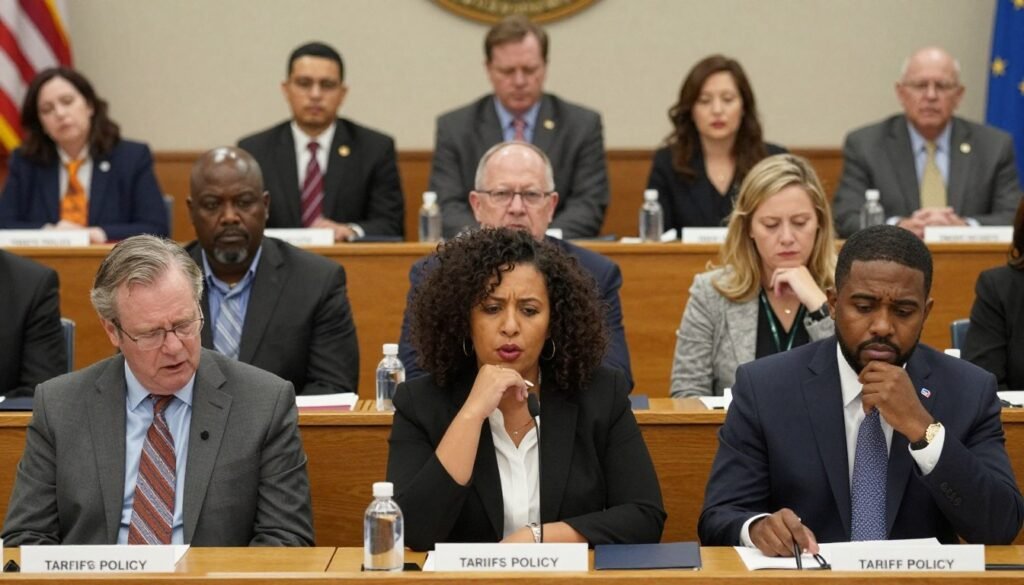
The Supreme Court’s role in reviewing tariff authority adds another dimension to public reaction. Court decisions striking down or upholding tariffs would influence public perception of policy legitimacy.
Regional Economic Impact Variations
Geographic location significantly influences tariff impact experiences. Manufacturing-heavy Midwestern states might view tariffs more favorably than coastal regions with service-based economies.
Manufacturing Belt Perspective
States like Michigan, Ohio, and Pennsylvania with significant manufacturing employment might support tariffs protecting local industries and jobs.
- Steel and automotive worker support
- Union backing for protection measures
- Hope for factory reopenings
- Skepticism of free trade promises
Agricultural Region Concerns
Farm states facing retaliatory tariffs on agricultural exports would express significant opposition to trade conflicts.
- Soybean and corn export worries
- Livestock industry price pressure
- Market access loss anxiety
- Long-term relationship damage fears
Income Level and Consumer Impact
Lower and middle-income families would feel tariff effects most acutely through reduced purchasing power. Higher prices for everyday goods strain household budgets already facing inflationary pressures.
Wealthy households possess more capacity to absorb price increases without lifestyle adjustments. This economic disparity creates different reaction patterns across income groups.
Key Finding: Economic research indicates that tariff costs function regressively, taking larger percentage shares of income from lower-earning households. This distributional impact influences public opinion formation across socioeconomic groups.
Business Community Response
American businesses would divide in their tariff policy views. Import-dependent retailers and consumer goods companies would oppose broad tariffs, while some domestic manufacturers would support protective measures.
Trade associations representing various industries would lobby vigorously based on member interests. The Chamber of Commerce, National Association of Manufacturers, and Retail Industry Leaders Association would take public positions.

Small business owners lacking large corporation resources would face particular pressure. Many would struggle to navigate tariff complexities while managing cost increases and customer price sensitivity.
Media Coverage and Information Environment
News media framing significantly shapes public opinion formation. Conservative outlets might emphasize job protection and national sovereignty arguments, while liberal media would focus on consumer costs and international relationship damage.
The complexity of trade economics creates challenges for public understanding. Many Americans lack detailed knowledge of how tariffs function, relying on partisan information sources for interpretation.
Social media would amplify both support and opposition voices. Viral content simplifying complex trade issues into emotional narratives would influence opinion more than detailed economic analysis.
Labor Union Perspectives
Organized labor traditionally supports trade protection for manufacturing jobs. Major unions would likely back tariff policies they believe preserve American employment, particularly in heavy industry sectors.
However, unions representing service sector workers or export-dependent industries might oppose tariffs. The AFL-CIO and individual union positions would reflect their membership’s diverse interests.
Historical Context: Labor union support for tariffs reflects decades of manufacturing job losses attributed to trade liberalization. The North American Free Trade Agreement remains politically controversial in union circles, influencing current trade policy views.
Generational Differences in Trade Opinion
Younger Americans who grew up with globalized supply chains and international connectivity might view tariffs differently than older generations remembering stronger domestic manufacturing.
Millennial and Gen Z consumers accustomed to low-cost imported goods would notice price increases immediately. Their economic circumstances, including student debt burdens and housing affordability challenges, make additional cost pressures particularly unwelcome.
Baby Boomers and older generations might be more receptive to economic nationalism appeals, especially those who experienced manufacturing sector declines in their communities.
Legal Challenges and the Supreme Court’s Role
The Supreme Court would play a crucial role in determining the constitutional limits of presidential tariff authority. Legal challenges questioning emergency economic powers invocation would test separation of powers principles.
Justice Amy Coney Barrett and other justices would examine whether presidents can unilaterally impose broad tariffs without Congressional authorization. The Court’s ruling in such cases would set important precedent for executive power scope.
Constitutional Questions at Stake
The Constitution grants Congress authority to regulate commerce with foreign nations. Presidential tariff powers derive from statutes Congress enacted, raising questions about delegation limits.
The International Emergency Economic Powers Act requires actual emergencies justifying extraordinary measures. Whether normal trade imbalances constitute emergencies remains legally contested.

Section 232 national security provisions allow tariff imposition to protect defense capabilities. Defining national security broadly enough to encompass general economic concerns would expand executive power substantially.
Previous Court Decisions on Trade Authority
Historical Supreme Court cases provide precedent for analyzing presidential trade powers. The Court has generally deferred to executive branch foreign policy judgments while maintaining Congressional primacy over commerce regulation.
Justice Neil Gorsuch and other textualist justices would examine statutory language carefully. If Congress intended to grant broad emergency tariff authority, clear textual support would be expected.
The non-delegation doctrine limits how much lawmaking power Congress can transfer to the executive branch. Overly vague statutory grants of authority might face constitutional scrutiny.
Timeline for Legal Resolution
Court challenges would require months or years for resolution through the judicial system. District courts would hear initial cases, with appeals proceeding through circuit courts before potential Supreme Court review.
During litigation, tariffs might remain in effect unless courts issue preliminary injunctions. The economic uncertainty created by pending legal challenges would itself impact business planning and investment decisions.
Important Note: The 150 days provision in some emergency authority statutes creates time limits requiring Congressional approval for extended tariff duration. This procedural requirement adds complexity to long-term trade policy implementation.
Long-Term Economic Scenarios and Projections
Economists project various long-term outcomes depending on tariff duration, breadth, and international response patterns. Scenarios range from minimal lasting impact to fundamental global trade system restructuring.
The optimistic scenario envisions tariffs serving as negotiating tools that produce better trade agreements before causing permanent damage. Pessimistic projections foresee protracted trade conflicts harming global economic growth.
Best-Case Economic Outcome
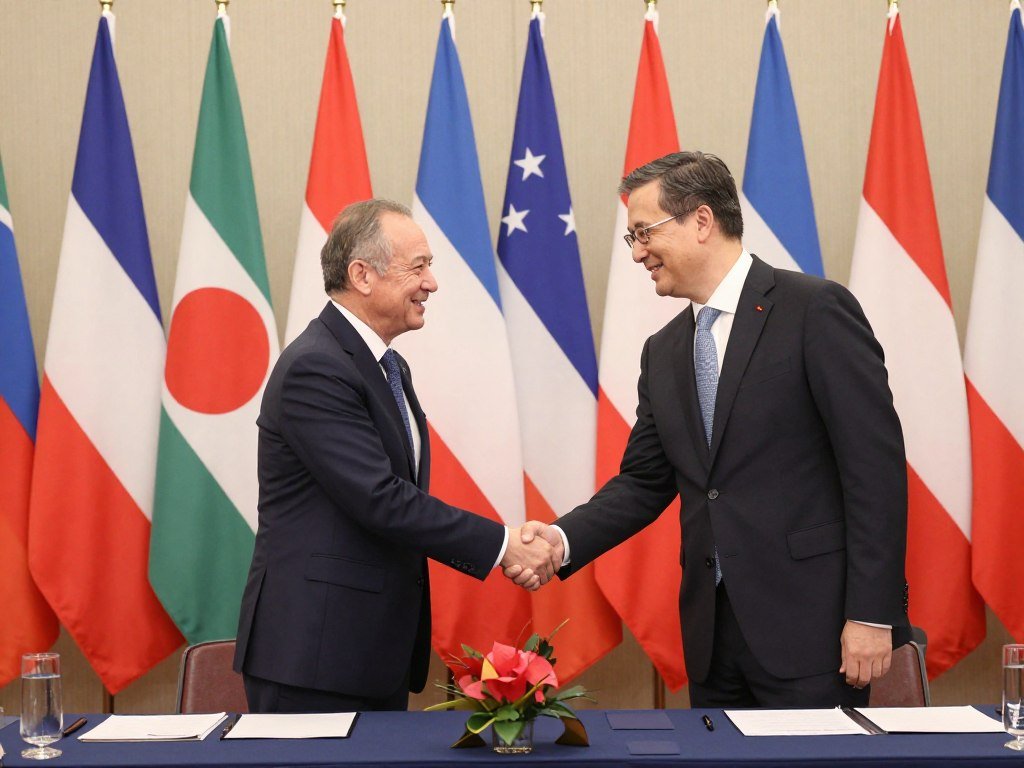
In favorable scenarios, tariff threats would prompt trading partners to negotiate improved market access for American exports. The United States might achieve concessions on intellectual property protection, agricultural market barriers, or industrial subsidies.
After successful negotiations, tariffs would be withdrawn or significantly reduced. Short-term economic disruption would give way to expanded trade under fairer terms, potentially benefiting all parties.
Successful Negotiation Elements
- Reciprocal tariff reduction agreements
- Intellectual property enforcement improvements
- Market access expansion for US firms
- Subsidy and dumping issue resolution
- Investment protection enhancement
- Currency manipulation prevention commitments
Worst-Case Economic Outcome
Pessimistic scenarios involve escalating trade conflicts with multiple countries imposing increasing tariffs. A global trade war would reduce international commerce, lower economic growth, and potentially trigger recession.
Supply chains would fragment along political lines, increasing costs and reducing efficiency gains from specialization. Innovation might slow as cross-border collaboration becomes more difficult.
Investment would decline due to policy uncertainty and reduced market access. Companies would postpone expansion plans, hire fewer workers, and reduce research and development spending.
Middle-Ground Scenarios
Most analysts expect outcomes falling between extremes. Some tariffs would remain while others are negotiated away. The global trading system would adapt to a somewhat more protectionist environment without complete collapse.
American manufacturing would experience selective reshoring in some sectors while remaining globally integrated in others. The economy would adjust to higher import costs through productivity improvements and product substitutions.
Sector-Specific Impact Analysis
Different economic sectors would experience vastly different tariff impacts. Understanding these variations helps businesses and workers prepare for potential policy changes.
Automotive Industry
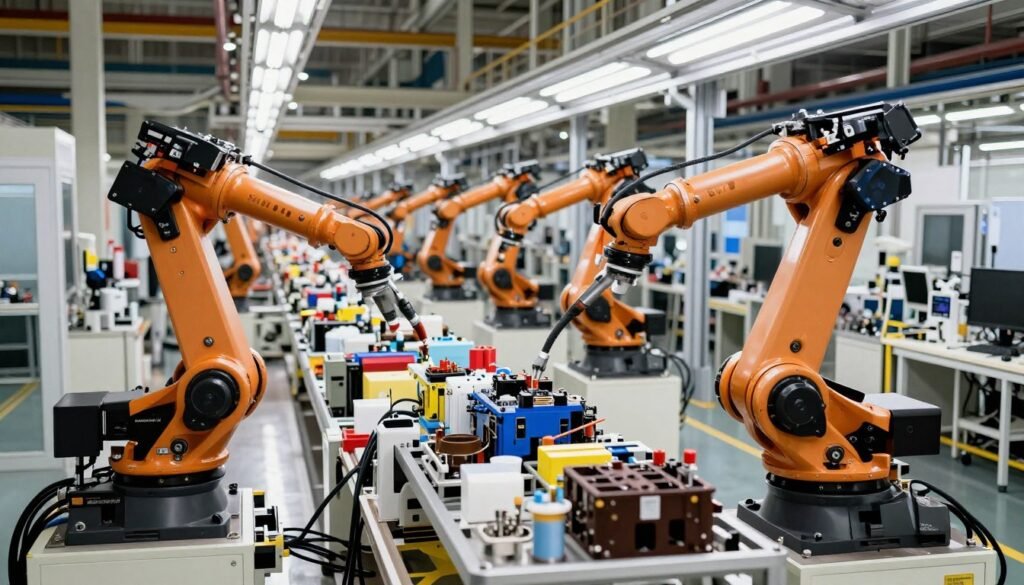
The automotive sector exemplifies modern supply chain complexity. A single vehicle contains components from dozens of countries, making tariff impacts difficult to calculate precisely.
Automakers would face increased costs for imported parts, engines, and electronics. These expenses would either compress profit margins or translate into higher vehicle prices for consumers.
The United States-Mexico-Canada Agreement’s rules of origin requirements add complexity. Vehicles must contain specified North American content percentages to qualify for duty-free treatment between member countries.
Technology and Electronics
Consumer electronics heavily depend on Asian manufacturing, particularly from China, Taiwan, and South Korea. Tariffs on smartphones, computers, and televisions would directly impact consumer prices.
Technology companies would face difficult choices between absorbing costs, raising prices, or relocating production. The latter option requires years and billions in capital investment.
Semiconductor supply chains represent particularly complex global networks. Advanced chips require manufacturing in multiple countries using specialized equipment from various sources.
Agriculture and Food Products
American agriculture depends heavily on export markets. Retaliatory tariffs from China, Europe, or other major markets would devastate farm income in many regions.
Soybeans, pork, wheat, and corn face particular vulnerability to foreign tariffs. These commodities represent major export categories with concentrated production in specific states.

Government support programs for farmers facing tariff-related losses would create fiscal pressures. Previous trade disputes resulted in billions in agricultural subsidies compensating for lost markets.
Retail and Consumer Goods
Retail businesses operate on thin profit margins making them vulnerable to cost increases. Large retailers like Walmart, Target, and Amazon would need strategies for managing tariff impacts.
Clothing, footwear, toys, and home goods categories source extensively from countries potentially subject to tariffs. These products often have limited domestic production capacity, making substitution difficult.
E-commerce platforms would need to update pricing systems and manage customer communication about cost increases. The direct-to-consumer business model faces particular pressure from tariff-driven price volatility.
Energy and Natural Resources
Energy sector tariff impacts would vary by commodity type. Oil and natural gas trade patterns might shift based on relative pricing including tariff effects.
Solar panel tariffs have been particularly controversial, balancing domestic manufacturing protection against renewable energy deployment goals. Higher solar equipment costs slow clean energy adoption.
Steel and aluminum tariffs directly affect energy infrastructure construction costs. Pipelines, refineries, and renewable energy projects all require significant metal inputs.
Policy Alternatives and Recommendations
Trade policy experts propose various alternatives to broad tariffs for addressing legitimate economic concerns. These approaches aim to achieve trade goals with fewer negative side effects.
Targeted Rather Than Broad Tariffs
Narrowly focused tariffs on specific products or practices create less collateral damage than blanket duties. Section 301 tariffs addressing unfair trade practices exemplify this targeted approach.
Dumping duties counter below-cost exports designed to capture market share. Countervailing duties offset foreign government subsidies. These tools exist within international trade rules.
Negotiated Trade Agreements
Bilateral and multilateral agreements offer structured frameworks for market opening and rule establishment. The negotiation process allows addressing specific concerns through mutual concessions.
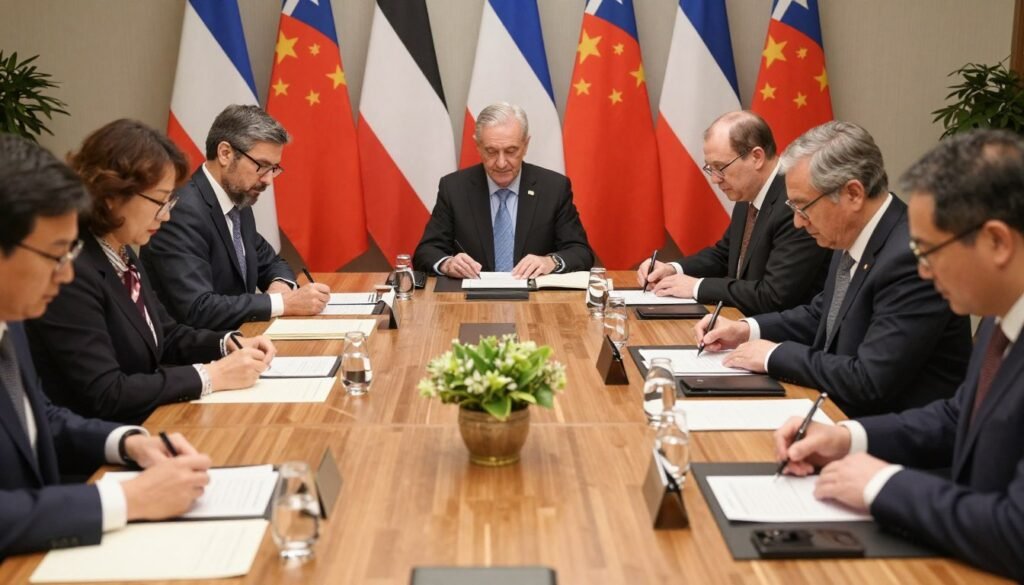
The Trans-Pacific Partnership represented an attempt to set high-standard rules for Asia-Pacific trade. American withdrawal from that agreement left a void filled by Chinese-led alternatives.
Domestic Investment in Competitiveness
Rather than blocking imports, policies could enhance American competitive advantages. Infrastructure investment, workforce training, research and development support, and education improvements would strengthen long-term economic position.
Manufacturing technology adoption support helps American factories compete through productivity rather than protection. Robotics, artificial intelligence, and advanced materials offer opportunities for maintaining industrial leadership.
Currency and Macroeconomic Approaches
Exchange rate policies influence trade balances alongside tariffs. A weaker dollar makes American exports more competitive while raising import prices naturally.
Fiscal and monetary policy coordination affects trade flows through savings and investment patterns. Reducing budget deficits would lower capital inflows and potentially narrow trade deficits.
Frequently Asked Questions About US Tariff Policy
What exactly is a 10% tariff and how does it work?
A 10% tariff means importers must pay a tax equal to 10% of a product’s value when bringing it into the United States. For example, importing goods valued at $100,000 would require an additional $10,000 tariff payment to customs authorities.
This cost typically gets passed through the supply chain. Importers raise prices to wholesalers, who raise prices to retailers, who ultimately charge consumers more. The final price increase may exceed 10% due to markup calculations at each distribution level.
Can the president impose tariffs without Congress approval?
Presidential tariff authority derives from several Congressional statutes granting executive power under specific circumstances. The International Emergency Economic Powers Act allows tariffs during declared national emergencies. Section 232 permits duties for national security reasons. Section 301 addresses unfair foreign trade practices.
However, the constitutional limits of these delegated powers remain subject to Supreme Court interpretation. Recent legal challenges question whether presidents can invoke emergency authorities for routine trade policy without genuine crises. The court’s role in defining these boundaries continues evolving through litigation.
How quickly would consumers see price increases?
Price increases would appear at different speeds depending on product inventory levels and supply chain positions. Retailers with existing inventory purchased before tariffs wouldn’t immediately raise prices. However, as that inventory depletes and replacement stock incurs tariff costs, prices would rise.
For products with short supply chains and frequent restocking, consumers might notice increases within weeks. Durable goods with longer inventory cycles could maintain pre-tariff prices for several months before adjustment. Overall, most economists expect meaningful consumer price impacts within three to six months of tariff implementation.
Which countries would be most affected by US tariffs?
China would face the largest absolute impact as America’s biggest goods trading partner. In the last year, Chinese exports to the United States exceeded $400 billion, making even a 10% tariff economically significant for both countries.
However, smaller economies highly dependent on American markets might suffer proportionally greater consequences. Mexico and Canada send large portions of their total exports to the United States under the USMCA framework. Vietnam, South Korea, and Germany also maintain substantial export relationships vulnerable to tariff disruption.
Would tariffs actually bring manufacturing jobs back to America?
The relationship between tariffs and manufacturing employment proves more complex than simple protection logic suggests. While some domestic production might increase, several factors limit job creation potential.
Modern manufacturing relies heavily on automation, meaning new facilities employ fewer workers than historical factories. Supply chain integration makes fully domestic production economically unviable for many products. Retaliatory tariffs harm export-dependent American manufacturers, potentially costing more jobs than protection creates. Economic research on previous tariff episodes shows modest employment gains in protected sectors often offset by larger losses in downstream industries facing higher input costs.
How do tariffs differ from quotas or other trade restrictions?
Tariffs impose taxes on imports but don’t limit quantities. Importers can bring in unlimited volumes by paying the required duties. Quotas, conversely, cap import quantities regardless of price. After quota limits are reached, additional imports become prohibited.
Other trade restrictions include regulatory standards, licensing requirements, and sanitary measures. These non-tariff barriers can effectively limit imports through compliance complexity rather than direct costs or quantity limits. Modern trade agreements address all these restriction types through various provisions and dispute resolution mechanisms.
What role does the World Trade Organization play?
The World Trade Organization provides a multilateral framework for trade rules and dispute resolution. Member countries agree to certain principles including non-discrimination and tariff bindings limiting duties to agreed maximum levels.
Countries believing trading partners violated WTO rules can file complaints. A dispute settlement process investigates allegations and issues rulings. However, WTO enforcement mechanisms have limitations. The organization cannot force compliance, though it can authorize retaliatory measures against violators. Recent years have seen criticism and challenges to the WTO system, with some countries pursuing unilateral actions outside its framework.
Are there any products exempt from tariffs?
Tariff policies typically include exemption processes for specific circumstances. Companies can request exclusions demonstrating that required products lack domestic alternatives or that tariffs would cause severe economic hardship.
The exemption process requires detailed applications with supporting evidence. Government agencies review requests considering factors like domestic availability, strategic importance, and economic impact. However, exemption programs create administrative complexity and uncertainty. Decisions may take months, complicating business planning. Previous tariff regimes granted thousands of exclusions while denying many others, creating unpredictable outcomes for similar products.

Historical Lessons from Past Tariff Policies
American history provides numerous examples of tariff policy experiments with varying outcomes. These precedents offer valuable lessons for evaluating potential consequences today.
The Smoot-Hawley Tariff of 1930
The Smoot-Hawley Tariff Act raised duties on thousands of imports during the early Great Depression. Intended to protect American jobs, the legislation instead contributed to global trade collapse as other countries retaliated with their own tariffs.
International trade plummeted by roughly two-thirds between 1929 and 1934. Economists broadly agree that Smoot-Hawley worsened the Depression’s severity and duration. The episode demonstrated how protectionist policies can spiral into destructive trade wars harming all participants.
“The Smoot-Hawley tariff was a significant policy mistake that turned a recession into a depression and helped spread the economic crisis worldwide.”
Post-World War II Trade Liberalization
After World War II, the United States led efforts to reduce trade barriers through the General Agreement on Tariffs and Trade. Multiple negotiating rounds progressively lowered tariffs over decades.
This liberalization period coincided with unprecedented global economic growth and rising living standards. While causation remains debated, the correlation between open trade and prosperity influenced decades of policy consensus favoring lower barriers.
Steel Tariffs Under President George W. Bush
In 2002, President George W. Bush imposed tariffs on steel imports to protect domestic producers. The policy faced immediate international criticism and retaliatory threats from the European Union and other trading partners.
Economic analysis found that while steel producers benefited, steel-consuming industries faced higher costs. Job losses in manufacturing sectors using steel exceeded employment gains in steel production. The administration lifted the tariffs after 150 days under pressure from affected industries and international partners.
Recent Trade Actions Under President Donald Trump
The Trump administration implemented various tariffs beginning in 2018, including duties on steel, aluminum, and Chinese goods. These actions generated extensive economic research on contemporary tariff impacts.
Studies found that American consumers and importing firms bore nearly the entire cost of tariffs through higher prices. Expected supply chain reshoring occurred more slowly and limitedly than proponents predicted. Retaliatory measures from China and other countries harmed American agricultural exports particularly severely.
The White House provided substantial financial assistance to farmers affected by lost export markets. These support programs partially offset tariff-related agricultural income losses but created fiscal costs and dependency concerns.
Court decision precedents from this era would influence future legal challenges to presidential tariff authority. Multiple cases reached federal courts examining the scope of emergency economic powers and statutory interpretation.
Preparing for Potential Policy Implementation
Businesses, workers, and consumers can take steps to prepare for possible tariff implementation regardless of whether duties ultimately materialize. Preparation reduces vulnerability to sudden policy changes.
Business Planning Strategies
Companies should conduct supply chain audits identifying tariff exposure across product lines. Understanding which inputs and finished goods face potential duties enables contingency planning.
Diversification strategies might include developing alternative supplier relationships in different countries. While supply chain restructuring requires time and investment, preliminary groundwork facilitates faster adaptation if tariffs occur.
Financial Preparation
- Model tariff cost scenarios across product lines
- Evaluate pricing strategy options and margins
- Assess working capital needs for higher inventory costs
- Review customer contracts for price adjustment clauses
- Consider currency hedging strategies
Operational Adaptation
- Map complete supply chain dependencies
- Identify domestic sourcing alternatives
- Evaluate manufacturing location options
- Develop relationships with customs brokers
- Train staff on tariff classification systems
Consumer Preparation
Individual consumers have limited ability to avoid tariff-driven price increases but can make informed purchasing decisions. Understanding which product categories face highest tariff risks helps with timing major purchases.
Building emergency savings provides financial cushion against unexpected cost increases. Flexible household budgets allow adjustment when prices rise in specific categories.
Policy Advocacy Opportunities
Stakeholders can engage in the policy process through various channels. Trade associations coordinate industry positions and communicate with government officials about member concerns.
The public comment process for proposed tariffs allows businesses and individuals to submit formal feedback. While influence varies, documented impacts can affect exemption decisions and policy modifications.

Congressional representatives respond to constituent concerns about trade policy impacts. Coordinated communication from affected businesses and workers in a district can influence legislative positions on tariff authority.
Broader Global Economic Implications
American tariff policy affects the global economic system beyond direct trade impacts. Decisions made in Washington influence international institutions, alliance relationships, and economic governance frameworks.
Impact on Developing Countries
Developing nations particularly depend on export-led growth strategies. Trade barriers in major markets like the United States can derail economic development progress and poverty reduction efforts.
Countries in Africa, Latin America, and Asia that built manufacturing capacity counting on American market access would face severe adjustment challenges. Alternative markets might not absorb displaced exports at similar prices or volumes.
Currency and Financial Market Effects
Major shifts in trade policy trigger financial market volatility. Stock prices reflect changed corporate profit expectations based on tariff impacts. Bond markets adjust to fiscal implications of potential trade conflicts.
Exchange rate fluctuations would redistribute tariff burdens. Currency depreciation in exporting countries partially offsets tariff costs, maintaining some competitiveness. However, this adjustment mechanism creates its own economic pressures including imported inflation.

Geopolitical Consequences
Trade disputes strain diplomatic relationships beyond commercial matters. Partners questioning American reliability on trade might also doubt security commitments and alliance obligations.
China could exploit trade tensions to expand its influence through alternative trade arrangements. The Regional Comprehensive Economic Partnership and Belt and Road Initiative offer frameworks for Chinese-led economic integration potentially excluding American participation.
European allies facing American tariffs might reconsider the broader transatlantic relationship. Trade conflicts could undermine cooperation on security issues, climate policy, and other shared challenges requiring coordinated responses.
Conclusion: Navigating an Uncertain Trade Policy Landscape
The potential implementation of a US 10% tariff policy represents a significant economic policy decision with far-reaching consequences. As this analysis has demonstrated, the impacts would extend across domestic prices, international relationships, and global economic systems.
Economic theory and historical experience suggest broad tariffs carry substantial risks alongside potential benefits. While protecting specific industries might preserve some jobs, economy-wide costs through higher prices and reduced efficiency could exceed localized gains. Retaliatory measures from trading partners would compound negative effects, particularly for export-dependent sectors.
The American public would experience mixed reactions reflecting diverse economic interests and political perspectives. Manufacturing regions might support protective measures, while agricultural areas facing retaliatory tariffs would oppose trade conflicts. Consumer price sensitivity would create political pressure regardless of ideological trade policy preferences.
International response would likely combine diplomatic efforts, retaliatory tariffs, and supply chain restructuring. The global trading system built over decades would face stress potentially leading to fundamental reorganization. Whether such changes ultimately benefit or harm American economic interests depends on complex factors difficult to predict with certainty.
Legal challenges through the Supreme Court and other judicial venues would test constitutional limits on presidential tariff authority. Court decisions would establish important precedents affecting future trade policy flexibility and separation of powers between executive and legislative branches.
As trade policy debates continue, informed analysis considering multiple perspectives and evidence-based projections remains essential. The decisions made today regarding tariffs and trade relationships will shape economic opportunities for years to come. Stakeholders across the economy should engage thoughtfully with these critical policy questions affecting prosperity, employment, and international cooperation.
Key Takeaway: Trade policy decisions require balancing legitimate economic security concerns against the substantial costs of protectionism. Neither complete free trade nor comprehensive tariff barriers represent optimal approaches. Thoughtful, targeted policies addressing specific problems while maintaining overall openness to international commerce offer the most promising path forward.