
Wage Inflation vs Productivity Growth: How It Could Impact the U.S. Economy in 2026 and Beyond
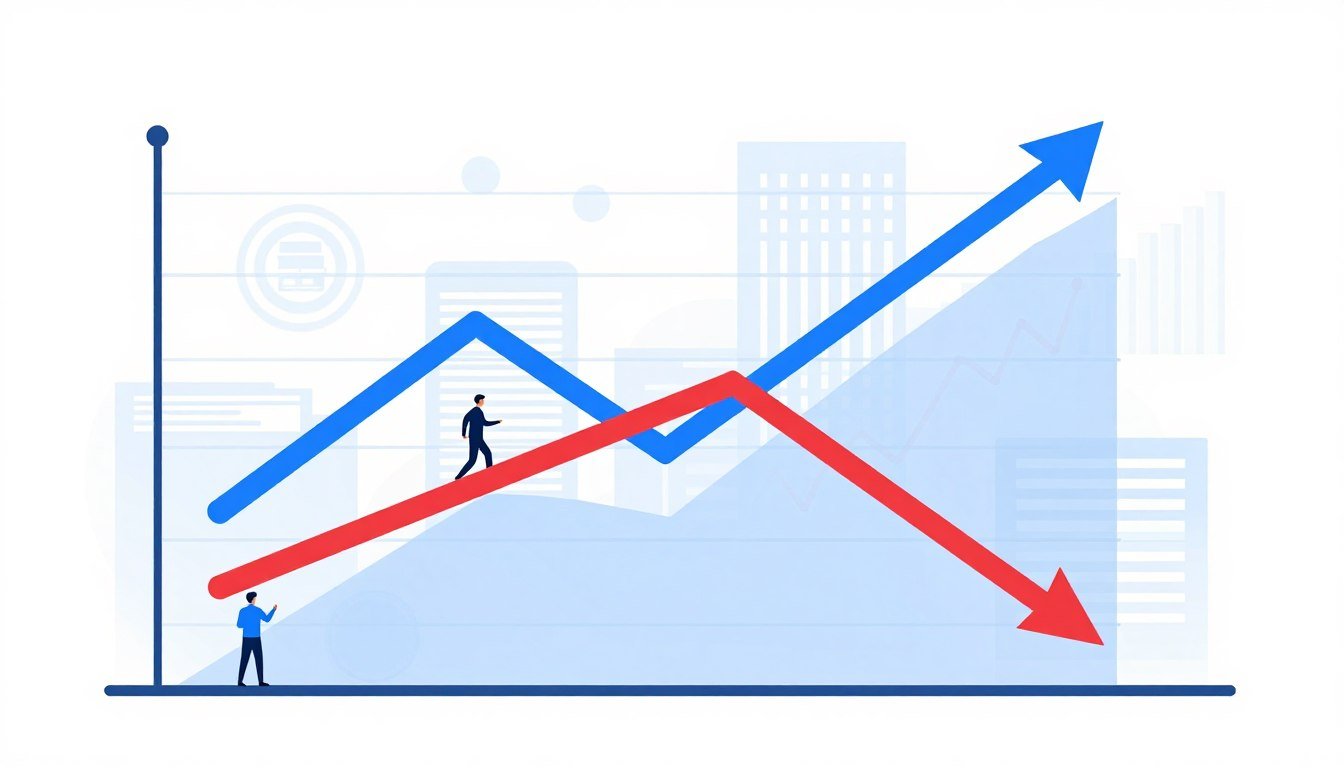
The American economy stands at a critical crossroads. Recent data from the Bureau of Labor Statistics reveals a troubling pattern. Wage growth has accelerated to 4.2 percent annually. Meanwhile, labor productivity growth has slumped to just 1.1 percent over the same period. This growing disconnect between what workers earn and what they produce threatens to reshape the economic landscape through 2026 and beyond.
This divergence matters now more than ever. When wages rise faster than productivity, businesses face mounting cost pressures. These pressures ripple through the entire economy. They affect prices, employment decisions, and investment strategies. The gap between compensation and output has widened dramatically since the pandemic. Understanding this dynamic is essential for business leaders, policymakers, and workers alike.
The Congressional Budget Office projects this trend will persist through the mid-2020s. Their latest analysis shows the wage-productivity gap could widen by an additional 8 percentage points by 2026. This represents the largest sustained divergence since the 1970s stagflation period. The implications touch every corner of American economic life.
What Is This Economic Threat?
The wage inflation versus productivity growth gap represents a fundamental imbalance in the labor market. Wage inflation occurs when compensation rises across the economy. Productivity growth measures how much output workers generate per hour worked. When these two metrics move in opposite directions, economic stability comes under threat.
Historically, wages and productivity moved together. From 1948 to 1973, both metrics grew in tandem. Workers became more productive. They earned proportionally more. This balanced relationship supported stable economic growth. The labor share of income remained consistent. Businesses could absorb wage increases through efficiency gains.
That relationship fractured in subsequent decades. Between 1973 and 2020, productivity grew 61.8 percent while wages increased only 17.5 percent according to Bureau of Labor Statistics analysis. The current divergence reverses this pattern. Wages now outpace productivity. This creates different but equally serious challenges.
Key statistics paint a stark picture. Labor compensation has risen 23 percent since early 2020. Output per hour worked has increased just 5 percent over the same period. The labor share of national income has climbed to 58.9 percent. This marks the highest level since 2001. Meanwhile, total factor productivity has declined for three consecutive quarters.
The service sector shows the most pronounced imbalance. Wage growth in services industries averages 5.1 percent annually. Productivity in these same sectors has stagnated at 0.3 percent growth. Manufacturing presents a contrasting picture. Productivity there continues advancing at 2.4 percent. Yet even manufacturing wages have accelerated beyond output gains.
What Is Causing the Problem?
Multiple forces have converged to create this economic imbalance. The causes span policy decisions, market dynamics, global shifts, and structural changes. Each factor reinforces the others. Together they create a complex challenge without simple solutions.
Policy Factors
- Federal minimum wage increases in multiple states have lifted baseline compensation across the labor market and created upward pressure on all wage levels
- Pandemic-era stimulus programs totaling $5 trillion injected unprecedented liquidity into the economy and strengthened worker bargaining power
- Extended unemployment benefits during 2020-2021 allowed workers to be more selective about job opportunities and raised reservation wages
- Immigration policy restrictions have limited labor supply growth to 0.7 percent annually compared to the pre-pandemic average of 1.2 percent
- Federal Reserve interest rate policies maintained near-zero rates through 2021 and fueled wage competition among businesses
Market Trends
- Labor market tightness reached historic levels with the unemployment rate dropping to 3.4 percent in early 2023 and creating intense competition for workers
- Worker mobility increased substantially as 4.5 million Americans quit jobs monthly during 2021-2022 to seek higher compensation
- Remote work proliferation expanded geographic labor markets and intensified wage competition across regions
- Industry concentration in key sectors has limited productivity investments as dominant firms focus on market share over efficiency improvements
- Capital investment has shifted toward short-term returns rather than long-term productivity enhancements with business fixed investment growing just 1.8 percent annually
Global Influences
- Supply chain disruptions have reduced operational efficiency across industries and increased labor requirements per unit of output
- International competition for skilled workers has driven up compensation for technical talent with cross-border wage arbitrage narrowing
- Global commodity price volatility has increased business costs while constraining productivity investments
- Deglobalization trends have reduced efficiency gains from international trade and supply chain optimization
- Currency fluctuations have impacted import costs and domestic price pressures affecting real wage dynamics
Structural Economic Changes
- Demographic shifts with 10,000 baby boomers retiring daily have removed experienced workers and reduced overall productivity
- Service sector expansion has shifted employment toward lower-productivity industries as services now represent 68 percent of employment
- Technology adoption lags have prevented productivity gains from materializing with only 23 percent of small businesses fully implementing digital tools
- Skills mismatches between available workers and job requirements have reduced effective labor utilization
- Declining business formation rates have reduced competitive pressures that typically drive productivity improvements
Impact on the U.S. Economy
The wage-productivity gap generates far-reaching consequences throughout the economic system. These effects compound over time. Understanding each impact area helps anticipate future challenges.
GDP Growth
Economic growth faces headwinds from the widening gap. Gross domestic product expansion has decelerated to 2.1 percent annually. This marks a decline from the 2.5 percent average of the previous decade. The Congressional Budget Office projects further slowing to 1.8 percent by 2026.
Reduced productivity limits potential growth. When output per worker stagnates, the economy can only expand through population growth or increased work hours. Both factors face constraints. The working-age population grows at just 0.4 percent annually. Average hours worked have declined to 34.3 per week.
Business investment responds negatively to compressed profit margins. Capital expenditure growth has slowed to 1.2 percent. Companies prioritize cost control over expansion. This creates a negative feedback loop. Lower investment further constrains productivity. Weaker productivity limits growth potential.
The composition of growth has shifted unfavorably. Consumer spending drives 68 percent of expansion. Business investment contributes only 13 percent. This consumer-heavy growth proves less sustainable. It depends on continued wage gains. Those gains remain disconnected from underlying productive capacity.
Inflation
Price pressures intensify when wage growth exceeds productivity. Unit labor costs have surged 6.3 percent over the past year. These costs represent the primary driver of service sector inflation. Services account for 63 percent of consumer spending.
The relationship between wages and prices creates self-reinforcing dynamics. Higher compensation increases business costs. Firms pass these costs to consumers through price increases. Workers then demand additional wage gains to maintain purchasing power. This wage-price spiral characterized the 1970s inflation episode.
The Federal Reserve faces difficult tradeoffs. Controlling inflation requires restraining wage growth. Yet aggressive monetary tightening risks recession. Interest rates have climbed to 5.5 percent. Further increases could trigger significant job losses. The central bank projects inflation will remain above target through 2025.
Core inflation excluding food and energy persists at 3.8 percent. This exceeds the Federal Reserve’s 2 percent target. Services inflation runs even higher at 5.2 percent. Wage pressures in labor-intensive sectors show no signs of abating. Healthcare costs have accelerated 4.9 percent. Housing services inflation remains elevated at 6.1 percent.
Employment
Labor market dynamics are shifting as the wage-productivity gap persists. Job creation has decelerated to 150,000 positions monthly. This represents half the pace of 2021-2022. Businesses face margin pressure from rising labor costs. They respond by slowing hiring and seeking efficiency improvements.
The unemployment rate has edged up to 3.9 percent from cycle lows. Further increases appear likely as economic growth slows. The Congressional Budget Office forecasts unemployment reaching 4.4 percent by late 2025. Job openings have declined from 12 million to 8.7 million. The ratio of openings to unemployed workers has normalized to 1.4.
Wage growth shows signs of moderating from peak levels. Average hourly earnings growth has slowed to 4.2 percent from 5.9 percent at its peak. However, this deceleration remains insufficient to align with productivity trends. Real wage growth still outpaces productivity by 2.5 percentage points.
Sectoral employment patterns reflect productivity differences. High-productivity manufacturing has shed 89,000 jobs over the past year. Lower-productivity service sectors have added 2.1 million positions. This shift reduces economy-wide productivity. It perpetuates the imbalance between compensation and output.
Financial Markets
Asset prices have reacted negatively to the wage-productivity divergence. Corporate profit margins have compressed from 12.8 percent to 11.2 percent. Equity valuations have declined as earnings growth disappoints. The S&P 500 has underperformed historical averages. Forward price-earnings ratios have contracted from 21 to 18.
Fixed income markets face conflicting pressures. Persistent inflation keeps bond yields elevated. The 10-year Treasury yield hovers near 4.5 percent. Yet recession fears periodically invert the yield curve. Credit spreads have widened as default risks increase. High-yield spreads have expanded from 320 to 450 basis points.
Currency markets reflect deteriorating competitiveness. The dollar has weakened against major trading partners. Declining productivity reduces the economy’s attractiveness for foreign investment. The trade-weighted dollar index has fallen 7 percent from recent peaks. This depreciation adds to imported inflation pressures.
Real estate markets experience bifurcated impacts. Commercial property values have declined 15 percent. Rising business costs reduce demand for office and retail space. Residential markets remain supported by housing shortages. Yet affordability constraints intensify as prices stay elevated while economic growth slows.
Consumers and Businesses
Households face contradictory forces. Nominal wage gains provide short-term income support. Real wages adjusted for inflation have grown just 0.7 percent. Consumer sentiment has declined to levels typically associated with recessions. The University of Michigan index stands at 69. This reflects concerns about future economic conditions.
Savings rates have compressed to 3.4 percent from pandemic highs of 16 percent. Households draw down accumulated buffers to maintain spending. Credit card debt has surged to $1.13 trillion. Delinquency rates are rising. The share of balances 90 days past due has increased from 1.6 percent to 2.8 percent.
Businesses confront mounting pressures from multiple directions. Labor costs consume a larger share of revenue. Material costs remain elevated. Pricing power has begun eroding as consumer resistance strengthens. Small business optimism has declined for seven consecutive quarters. The NFIB index sits at 89.9. This marks the lowest reading since 2012.
Investment decisions favor automation and labor-saving technology. Capital expenditure has shifted toward productivity enhancement. Yet implementation lags create a timing gap. Benefits materialize slowly while wage pressures persist immediately. This sequence strains cash flow and constrains expansion plans.
Recent Data and Trends
Current economic data reveals the scale and persistence of the wage-productivity divergence. Multiple indicators confirm the trend extends across sectors and time periods. Understanding these patterns helps forecast future developments.
The Bureau of Labor Statistics released comprehensive productivity data in December 2024. Nonfarm business sector productivity increased just 1.0 percent in the third quarter. This follows declines in the first and second quarters. The four-quarter moving average stands at 0.8 percent. This represents the weakest sustained period since 2016.
Compensation data tells a different story. Real hourly compensation rose 3.9 percent over the same four-quarter period. Nominal compensation climbed 6.1 percent. This creates a productivity-compensation gap of 3.1 percentage points. The gap has persisted for eleven consecutive quarters. It represents the longest sustained divergence in the data series.
Unit labor cost growth confirms the imbalance. These costs surged 5.0 percent in the third quarter alone. Over four quarters, unit labor costs have risen 5.8 percent. This metric directly measures how much labor expense increases per unit of output. Rising unit costs signal reduced competitiveness. They foreshadow either price increases or margin compression.
| Metric | Q3 2024 | 4-Quarter Change | Pre-Pandemic Average |
| Labor Productivity Growth | 1.0% | 0.8% | 1.4% |
| Real Compensation Growth | 4.1% | 3.9% | 1.1% |
| Unit Labor Cost Growth | 5.0% | 5.8% | 1.8% |
| Labor Share of Income | 58.9% | +1.2 pts | 57.1% |
| Hours Worked Growth | 0.2% | 0.7% | 1.6% |
Sectoral analysis reveals important variations. The service sector shows the most acute imbalance. Service productivity declined 0.2 percent over four quarters. Service wages rose 5.1 percent. This 5.3 percentage point gap drives overall economy-wide trends. Services account for 71 percent of private sector output.
Manufacturing productivity tells a more favorable story. Output per hour in manufacturing increased 2.2 percent. Yet even this improvement trails manufacturing wage gains of 4.6 percent. The productivity advantage once enjoyed by manufacturing has narrowed substantially. This reduces one of the sector’s key competitive strengths.
Regional data from Federal Reserve districts shows geographic variation. The San Francisco district reports productivity gains of 1.8 percent. Coastal technology hubs maintain stronger efficiency trends. The Atlanta district shows productivity declining 0.6 percent. Southeastern states with heavy service sector concentration face larger challenges.
International comparisons highlight U.S.-specific patterns. European Union productivity has grown 1.6 percent over the comparable period. Euro area wage growth has been more restrained at 3.2 percent. The European Central Bank notes their wage-productivity alignment remains closer to historical norms. This difference affects relative competitiveness.
Leading indicators suggest persistence of current trends. Business investment in productivity-enhancing equipment remains subdued. Orders for capital goods have declined 3.1 percent year-over-year. Research and development spending has flattened at 2.9 percent of GDP. These indicators suggest productivity improvements will remain elusive through 2025.
Labor market indicators point to continued wage pressure in specific sectors. Healthcare vacancy rates remain at 9.2 percent. Technology sector job postings still exceed available candidates by 1.7 to 1. These tight labor markets will sustain above-average wage growth. Productivity improvements in these sectors have lagged behind their wage increases.
Expert Opinions or Forecasts
Leading economists and institutions have analyzed the wage-productivity divergence extensively. Their projections vary in specifics but converge on several key themes. The consensus sees the imbalance persisting through 2026 with gradually moderating intensity.

The International Monetary Fund released projections in October 2024. They forecast U.S. productivity growth averaging 1.1 percent through 2026. Wage growth is projected at 3.8 percent over the same period. This implies a continued but narrowing gap. The IMF attributes gradual convergence to monetary policy effects and demographic adjustments.
Jerome Powell, Federal Reserve Chairman, addressed the issue in December 2024 testimony. He emphasized the challenge posed by persistent wage-price dynamics. Powell noted that bringing inflation to target requires wage growth moderating toward 3.0-3.5 percent. Current trajectories suggest this alignment remains distant. The Fed projects maintaining restrictive policy through mid-2025.
Former Treasury Secretary Lawrence Summers has been particularly vocal. In a November 2024 analysis, Summers argued the divergence creates stagflation risks. He projects GDP growth below 2 percent with inflation above 3 percent through 2025. Summers advocates for productivity-enhancing policies including infrastructure investment and regulatory reform. He assigns a 40 percent probability to recession by late 2025.
The Congressional Budget Office provides detailed long-term projections. Their February 2024 baseline shows labor productivity growing 1.3 percent annually through 2030. This represents a significant downgrade from previous estimates. CBO attributes the revision to slower capital deepening and reduced total factor productivity growth. They project potential GDP growth of just 1.9 percent.
The disconnect between wage growth and productivity gains represents the defining challenge for monetary policy in 2025. Without productivity acceleration or wage moderation, the Fed faces an extended period of restrictive policy with elevated recession risks.
Private sector forecasters echo these concerns with varying emphases. Goldman Sachs economists project wage growth decelerating to 3.5 percent by late 2025. They forecast productivity rebounding to 1.4 percent as business investment takes effect. Goldman assigns a 35 percent recession probability for 2025. Their base case shows growth slowing to 1.6 percent.
JPMorgan’s analysis takes a more pessimistic view. Chief economist Michael Feroli projects productivity remaining below 1 percent through 2026. He cites demographic headwinds and underinvestment in capital equipment. Feroli sees wage growth staying elevated at 4 percent. This persistent gap implies continued inflation pressure. JPMorgan forecasts core PCE inflation at 2.8 percent through end-2025.
Academic research provides additional perspective. A Stanford University study released in September 2024 examined historical wage-productivity episodes. Researchers found that divergences exceeding two percentage points for more than three years typically precede significant economic adjustments. These adjustments manifest through recession, accelerating inflation, or both. The current episode already spans nearly four years.
The Organization for Economic Cooperation and Development published comparative analysis in November 2024. They note the U.S. divergence exceeds that of other developed economies. OECD economists attribute this to tighter U.S. labor markets and larger pandemic-era fiscal stimulus. They project gradual convergence beginning in late 2025 as immigration policy normalizes and labor force participation stabilizes.
Optimistic Scenario
Technology adoption accelerates and productivity surges while labor markets gradually cool.
- Productivity growth rebounds to 2.0% by 2026
- Wage growth moderates to 3.2% through competitive pressures
- Inflation returns to target without recession
- GDP growth stabilizes near 2.3% potential
Base Case Scenario
Gradual convergence occurs through combination of modest productivity gains and wage moderation.
- Productivity growth reaches 1.4% by late 2025
- Wage growth slows to 3.6% as unemployment rises
- Inflation declines to 2.5% by end-2026
- GDP growth averages 1.8% with brief slowdown
Pessimistic Scenario
Wage-price spiral intensifies requiring aggressive monetary tightening and triggering recession.
- Productivity stagnates near 0.5% through 2026
- Wage growth remains above 4.5% in tight sectors
- Inflation persists above 3.5% requiring higher rates
- GDP contracts 1.2% in 2025 recession episode
Structural Change Scenario
Fundamental shifts in labor markets create permanently higher wage floors relative to productivity.
- Productivity averages 1.0% in new normal
- Wage growth stabilizes at 3.8% reflecting worker power
- Inflation settles at 3.0% higher equilibrium
- GDP growth potential reduced to 1.6% long-term
Market participants assign probabilities across these scenarios. The futures market implies a 42 percent chance of the base case. Pessimistic outcomes carry 28 percent probability. Optimistic scenarios receive 18 percent likelihood. Structural change scenarios account for 12 percent.
Risk Level Assessment: High
The consensus among economists and institutions points to elevated risks. The wage-productivity divergence creates multiple vulnerabilities. Inflation may prove more persistent than hoped. Unemployment could rise more sharply than forecast. Financial markets face valuation pressures from margin compression. The international competitiveness of U.S. businesses continues eroding.
Near-term risks appear especially elevated through mid-2025. Policy uncertainty surrounding potential administration changes adds complexity. Trade policy shifts could exacerbate or alleviate pressures depending on implementation. Immigration policy remains a critical variable. Labor supply constraints would perpetuate wage pressures. Liberalization might ease tensions but faces political obstacles.
Possible Solutions or Policy Responses
Addressing the wage-productivity divergence requires coordinated action across multiple policy domains. Solutions must balance competing objectives. Policymakers face tradeoffs between inflation control, employment protection, and growth support. Effective responses combine demand management, supply enhancement, and structural reforms.
Government Actions
Fiscal policy can address both demand and supply factors. On the demand side, restraint in government spending would reduce aggregate pressure on resources. The federal budget deficit reached $1.7 trillion in fiscal 2024. Deficit reduction through spending discipline would complement Federal Reserve tightening. This would ease labor market tensions without relying solely on higher unemployment.
Supply-side measures offer more constructive approaches. Infrastructure investment directly enhances productivity. The Infrastructure Investment and Jobs Act allocated $1.2 trillion over five years. Accelerating implementation of these funds would boost productive capacity. Transportation improvements reduce logistics costs. Broadband expansion enables remote work productivity. Energy infrastructure supports manufacturing efficiency.
Workforce development programs can address skills mismatches. The U.S. spends just 0.1 percent of GDP on active labor market policies. This compares to an OECD average of 0.6 percent. Expanding apprenticeship programs bridges skills gaps. Community college funding for technical training builds capabilities. Tax incentives for employer-provided education encourage human capital investment.
Immigration reform represents a powerful but politically challenging lever. Labor force growth has slowed significantly due to restrictive policies. Increasing high-skilled immigration would directly boost productivity. Economists estimate that raising H-1B visa caps by 100,000 annually would increase GDP by 0.3 percent. Broader reforms addressing agricultural and service sector labor needs would ease wage pressures in those industries.
Regulatory streamlining could remove productivity barriers. Occupational licensing affects 23 percent of U.S. workers. Many requirements lack clear justification. Reciprocity agreements between states would improve labor mobility. Zoning reform would enable more productive use of urban space. Permitting process acceleration would speed business investment. The World Bank ranks the U.S. 55th globally in ease of starting a business.
Tax policy adjustments can incentivize productive investment. Accelerated depreciation for equipment purchases encourages capital spending. Research and development tax credits support innovation. The current 20 percent marginal corporate tax rate could be restructured to favor productivity-enhancing investments over financial engineering.
Federal Reserve Policies
Monetary policy bears primary responsibility for inflation control. The Federal Reserve has raised interest rates from near zero to 5.5 percent. Further increases remain possible if inflation proves persistent. The December 2024 dot plot shows median projection of 4.9 percent for 2025. This implies potential for additional tightening.
The Fed faces communication challenges. Market expectations influence inflation dynamics. Clear guidance about the inflation-employment tradeoff helps anchor expectations. Forward guidance can prepare markets for extended restrictive policy. This reduces volatility and supports necessary economic adjustments.
Balance sheet policy complements interest rate decisions. Quantitative tightening continues at $95 billion monthly. This removes accommodation from long-term rates. Extended balance sheet reduction would reinforce restrictive stance. The Fed’s securities holdings have declined from $8.5 trillion to $7.3 trillion. Further reductions to $5 trillion appear feasible by 2026.
Supervisory policy affects credit availability. Stricter lending standards slow credit growth. This reduces demand pressure on the economy. Bank supervision can be calibrated to economic conditions. Tighter oversight during overheating periods constrains excessive risk-taking. The Fed has already implemented stricter stress test scenarios emphasizing operational risk.
Regional Federal Reserve banks provide valuable economic intelligence. District-level data identifies sectoral and geographic patterns. This granular information improves policy calibration. Presidents of regional banks contribute diverse perspectives to Federal Open Market Committee deliberations. Enhanced data collection from regional contacts would strengthen policy formation.
Market Adjustments
Business responses to the wage-productivity gap are already underway. Automation investment has accelerated across industries. Manufacturing firms have increased robotics spending by 28 percent year-over-year. Service sector companies are implementing artificial intelligence tools. These investments take time to affect productivity but represent positive trends.
Workforce management practices are evolving. Companies are emphasizing retention over expansion. Training investments build existing employee capabilities. Performance management systems align compensation with productivity. Flexible work arrangements improve efficiency for knowledge workers. These micro-level adjustments accumulate to economy-wide effects.
Pricing strategies must adapt to new realities. Businesses cannot indefinitely pass costs to consumers. Margin compression forces efficiency improvements. Companies are redesigning operations to reduce labor intensity. Process optimization and lean management principles gain renewed importance. Market discipline drives productivity in ways policy cannot replicate.
Capital allocation is shifting. Firms prioritize productivity-enhancing investments over expansion. Technology spending focuses on tools that augment worker output. Cloud computing, data analytics, and collaboration platforms improve service sector productivity. These investments generate returns gradually but compound over time.
Labor markets are cooling gradually. Quit rates have declined from 3.0 percent to 2.3 percent monthly. This reduces wage pressure from job-switching. Hiring rates have moderated from 4.6 percent to 3.8 percent. Job openings continue falling from peak levels. These adjustments occur naturally as monetary policy takes effect. They represent market-driven moderation rather than policy-imposed recession.
What It Means for Americans
The wage-productivity divergence affects every American household. The impacts vary by income level, employment status, and life stage. Understanding these practical effects helps individuals and families prepare and adapt.
Cost of Living
Persistent inflation erodes purchasing power despite nominal wage gains. Consumer prices have risen 19 percent since early 2020. Wages have increased 23 percent over the same period. This leaves real purchasing power up just 3 percent. The gains concentrate among job-switchers who negotiated substantial raises. Workers remaining with the same employer often experienced real wage declines.
Essential expenses have grown faster than average inflation. Housing costs have surged 21 percent. Food prices are up 24 percent. Energy costs increased 31 percent though recent declines provide some relief. Healthcare expenses climbed 18 percent. These categories consume 70 percent of median household budgets. Faster inflation in essentials squeezes discretionary spending.
Geographic variation creates disparities. Urban coastal areas face the highest cost pressures. San Francisco Bay Area living costs have risen 26 percent. New York metro area costs are up 23 percent. Midwest and Southern regions have experienced more moderate increases of 16-18 percent. These differences affect real wage gains significantly.
Lower-income households bear disproportionate impacts. Bottom-quartile households spend 75 percent of income on essentials. Price increases in these categories directly reduce living standards. Higher-income households devote just 45 percent of income to essentials. They maintain greater flexibility to absorb cost increases or adjust consumption patterns.
Jobs
Employment prospects are shifting as the economy adjusts. Overall job creation continues but has slowed substantially. Monthly payroll gains average 150,000 compared to 400,000 in 2021-2022. Unemployment has risen from 3.4 percent to 3.9 percent. Further increases appear likely as businesses respond to margin pressures.
Job security varies dramatically by sector. Technology companies have announced significant layoffs. Healthcare and education sectors continue expanding. Government employment remains stable. Manufacturing faces headwinds from weak global demand. Construction activity has slowed with higher interest rates affecting housing and commercial projects.
Wage growth continues for now but is moderating. Job-switchers still command premium offers but the premium is shrinking. The switching premium has declined from 8 percent to 4 percent. Employers are more selective in hiring and promotion decisions. Performance expectations have intensified as companies seek to justify higher compensation levels.
Career transitions become more challenging during adjustment periods. Employers reduce hiring for entry-level positions. Early-career workers face greater competition for opportunities. Mid-career professionals find fewer advancement opportunities. Senior workers approaching retirement may face pressure to leave as companies reduce headcount through attrition.
Remote work arrangements face reconsideration. Some employers are mandating return-to-office policies. They seek productivity improvements through direct supervision. Other companies maintain flexibility as a retention tool. The outcome of this tension will shape long-term work patterns and affect worker quality of life significantly.
Investments
Investment portfolios face multiple pressures from the wage-productivity imbalance. Stock valuations depend heavily on profit margins. Compressed margins reduce earnings growth. S&P 500 forward earnings estimates have been revised downward by 6 percent for 2025. This creates headwinds for equity returns.
Sector performance varies based on labor intensity and pricing power. Technology companies with high margins can better absorb cost pressures. Consumer discretionary stocks face challenges from weakening spending. Financial sector earnings benefit from higher interest rates but face credit quality concerns. Energy stocks remain volatile based on commodity prices.
Fixed income investing has become more attractive. Higher yields on Treasury bonds provide competition for equity returns. The 10-year Treasury yield near 4.5 percent offers reasonable real returns if inflation moderates. Corporate bond spreads have widened, reflecting elevated business risks. Credit quality becomes increasingly important in bond selection.
Retirement account balances have experienced volatility. The average 401(k) balance declined 8 percent in 2024. This follows strong gains in 2021-2023. Workers approaching retirement face particular challenges. Sequence-of-returns risk becomes elevated during periods of market stress. Diversification across asset classes provides some protection but cannot eliminate all risks.
Real assets offer potential inflation hedges. Real estate investment trusts have produced mixed results. Commercial property REITs struggle with weak demand and work-from-home trends. Residential REITs benefit from housing shortages. Commodity-linked investments provide direct inflation protection but carry high volatility. Treasury Inflation-Protected Securities offer guaranteed real returns though nominal yields remain modest.
Housing
Housing markets face contradictory forces. Affordability has reached the worst levels in four decades. Median home prices stand at $417,000. The median household income of $74,000 supports a price of roughly $280,000 at current mortgage rates. This creates a $137,000 affordability gap. First-time buyers find homeownership increasingly difficult to achieve.
Mortgage rates remain elevated despite recent declines. The 30-year fixed rate averages 7.1 percent. This compares to 3.1 percent in late 2021. Monthly payments have more than doubled for equivalent home values. A $400,000 mortgage at current rates requires $2,700 monthly compared to $1,700 at 2021 rates. This payment increase prices out many potential buyers.
Housing supply remains constrained. New construction has averaged 1.4 million units annually. Household formation and replacement demand total 1.6 million units. This structural shortage supports prices even as affordability worsens. Existing inventory stands at just 3.2 months of supply. A balanced market typically shows 6 months of inventory.
Rental markets offer limited relief. Average rents have risen 26 percent since 2020. Rent growth has slowed recently but remains above pre-pandemic trends. Rental vacancy rates remain tight at 6.1 percent. New apartment construction provides some supply relief in specific metro areas. However, development costs have increased substantially, limiting new project feasibility.
Geographic mobility has declined to historic lows. Moving rates have fallen from 13 percent annually to 9 percent. Housing costs create barriers to relocation for economic opportunities. Workers cannot easily move to higher-wage markets when housing costs consume potential income gains. This reduced mobility constrains labor market efficiency and wage convergence across regions.
Home equity represents significant household wealth. Existing homeowners have benefited from price appreciation. Total home equity has reached $32 trillion. This provides cushion for weathering economic stress. However, equity gains are illiquid and unevenly distributed. First-time buyers locked out of homeownership miss wealth-building opportunities. This widens wealth inequality over time.
Future Outlook (2026–2030)
The trajectory of the wage-productivity gap will define economic performance through the rest of the decade. Multiple pathways exist. The actual outcome depends on policy choices, business adaptations, and external developments. Both short-term adjustments and long-term trends merit consideration.
Short-Term Outlook (2024-2026)
The near-term outlook hinges on the speed of convergence between wages and productivity. Base case projections show gradual narrowing of the gap. Productivity growth is expected to recover modestly to 1.3-1.5 percent by late 2025. Wage growth should decelerate to 3.5-3.8 percent over the same period. This convergence occurs through combination of productivity improvements and labor market cooling.
The path involves some economic pain. Unemployment likely rises to 4.3-4.6 percent by mid-2025. This represents an increase of roughly 1 million jobless workers. Job creation slows further to 100,000 monthly or below. Some economists classify this as a growth recession with minimal GDP decline but widespread job losses in specific sectors.
Inflation moderates but remains above target. Core PCE inflation is projected at 2.6 percent by end-2025. Service sector inflation proves particularly sticky at 3.2 percent. Goods inflation may turn slightly negative as supply chains normalize fully. The Federal Reserve maintains restrictive policy through this period. Rate cuts begin only in late 2025 once disinflation clearly takes hold.
Business margins face continued pressure. Corporate profits decline 4-6 percent in 2025. Small business failures increase modestly. Companies accelerate restructuring and efficiency initiatives. These short-term pressures drive productivity improvements that resolve the imbalance over time. Investment in automation and technology continues despite near-term margin compression.
Financial markets experience volatility. Equity valuations remain under pressure until earnings visibility improves. Credit spreads stay elevated reflecting business stress. However, once productivity acceleration becomes evident and inflation clearly moderates, markets price in recovery. This could occur as early as late 2025 in optimistic scenarios.
Consumer behavior adjusts to new realities. Spending growth slows to 2.1 percent annually. Households rebuild savings from depleted levels. Credit growth moderates significantly. Delinquencies peak in mid-2025 then stabilize. Consumer sentiment improves gradually as inflation anxieties ease and job market stabilizes.
Long-Term Risks (2027-2030)
The period from 2027-2030 presents divergent possibilities. The optimistic scenario sees successful convergence leading to stable growth. Productivity growth stabilizes at 1.6-1.8 percent. Wage growth aligns at 3.0-3.2 percent. Inflation returns to the 2 percent target. GDP growth recovers to potential near 2.2 percent. This outcome requires successful policy implementation and business adaptation.
Technology adoption drives productivity gains in this scenario. Artificial intelligence applications mature and generate measurable efficiency improvements. Service sector productivity converges toward manufacturing levels. Infrastructure investments from 2021-2024 begin generating returns. Workforce skills improve through training initiatives. The economy achieves a higher sustainable growth trajectory.
A less favorable scenario involves persistent structural challenges. Productivity remains constrained at 1.0-1.2 percent growth. Wage floors stay elevated due to demographic factors and worker expectations. Inflation settles at 2.5-3.0 percent rather than returning fully to target. This represents a new equilibrium with higher but stable inflation. GDP growth potential declines to 1.7-1.9 percent.
Demographics present headwinds through this entire period. Baby boomer retirements continue removing experienced workers. The labor force grows just 0.3 percent annually. Immigration policy remains restrictive in baseline projections. Labor force participation stabilizes but doesn’t recover to pre-pandemic levels. These factors constrain both GDP growth and productivity improvements.
Global economic conditions add uncertainty. China’s growth trajectory affects U.S. export opportunities. European economic weakness could spread through trade and financial channels. Climate-related disruptions may increase in frequency and severity. Geopolitical tensions affect supply chains and investment flows. These external factors could either exacerbate or mitigate domestic wage-productivity challenges.
Policy uncertainty represents an ongoing risk. Changes in administration bring shifts in economic priorities. Trade policy could become more or less restrictive. Immigration policy faces political gridlock. Infrastructure funding might not materialize as planned. Regulatory approaches may change significantly. These policy variables substantially affect long-term outcomes.
Debt dynamics add fiscal constraints. Federal debt held by the public has reached 97 percent of GDP. Interest payments consume increasing shares of the budget. This limits fiscal flexibility for productive investments. Entitlement spending grows automatically with aging demographics. Pressure for deficit reduction could constrain growth-supporting policies. Alternatively, continued large deficits could crowd out private investment.
Key Milestones to Watch
- Q2 2025: Productivity data showing sustained quarterly improvements above 1.5%
- Q3 2025: Wage growth moderating below 3.5% on annual basis
- Q4 2025: Unemployment stabilizing at 4.2-4.5% without further increases
- Q1 2026: Core inflation declining below 2.5% on consistent basis
- Q2 2026: Federal Reserve beginning rate normalization process
- Q3 2026: Business investment growth exceeding 3% annually
- Q4 2026: Unit labor cost growth declining below 2.5%
- 2027: Labor productivity growth sustained above 1.5% for four quarters
- 2028: Wage-productivity gap narrowing below 1.5 percentage points
- 2029: Inflation stabilizing at or near 2% target consistently
Successful navigation requires sustained effort across multiple fronts. Productivity improvements must accelerate through investment and innovation. Wage growth must moderate through market mechanisms rather than mass unemployment. Policy must support both objectives simultaneously. This delicate balance determines whether the 2026-2030 period brings renewed prosperity or extended stagnation.
The stakes extend beyond immediate economic metrics. Sustained wage-productivity misalignment erodes competitiveness and living standards. It creates political pressures that could lead to counterproductive policies. Successfully resolving the current imbalance would demonstrate resilience of American economic institutions. Failure to do so raises questions about long-term economic dynamism.
Conclusion
The divergence between wage inflation and productivity growth represents one of the most significant economic challenges facing the United States through 2026 and beyond. Wages have grown 23 percent since 2020. Labor productivity has increased only 5 percent. This fundamental imbalance creates ripples throughout the economy. It affects inflation, employment, business profitability, and household finances.
Multiple factors have created this situation. Pandemic-era policies strengthened worker bargaining power. Labor market tightness drove compensation above productivity. Service sector expansion shifted employment toward lower-productivity industries. Investment in productivity-enhancing capital has lagged. Demographic changes removed experienced workers. These forces combined to produce the widest wage-productivity gap in decades.
The impacts touch every American. Consumers face persistent inflation that erodes purchasing power. Workers experience uncertainty about job security and wage growth. Businesses confront compressed margins and difficult strategic choices. Investors navigate volatile markets with elevated risks. Homebuyers find affordability at historic lows. The effects vary by sector, region, and income level but spare no segment of society.
Policy responses will shape outcomes significantly. Monetary policy must balance inflation control against employment protection. Fiscal policy should emphasize productivity-enhancing investments over demand stimulus. Structural reforms in immigration, education, and regulation would address root causes. Market forces will drive adjustments but policy can accelerate or smooth the transition.
The outlook for 2026-2030 spans from optimistic to concerning. Base case scenarios show gradual convergence through modest productivity gains and wage moderation. This path involves some economic pain but avoids severe recession. More favorable outcomes require accelerated technology adoption and supportive policies. Less favorable scenarios involve persistent imbalances requiring extended restrictive policy or settling into higher inflation equilibrium.
Near-term risks remain elevated through mid-2025. The wage-productivity gap continues at historically wide levels. Inflation persists above target. The Federal Reserve maintains restrictive policy. Unemployment is rising but labor markets remain relatively tight. This period requires careful navigation to avoid policy errors that could trigger unnecessary recession or allow inflation to become entrenched.
Long-term prospects depend on productivity acceleration. The U.S. economy has historically demonstrated capacity for innovation and adaptation. Previous periods of economic stress have led to restructuring that ultimately strengthened competitiveness. Current pressures could drive similar dynamism. Businesses are investing in automation and technology. Workers are acquiring new skills. These adaptations take time but generate lasting benefits.
Americans should prepare for continued economic volatility. Households benefit from building financial buffers and managing debt. Workers gain from developing marketable skills and maintaining flexibility. Businesses must balance near-term cost control with productivity investments. Investors should maintain diversification and realistic return expectations. These individual adaptations collectively determine how smoothly the economy navigates this challenge.
The wage inflation versus productivity growth imbalance will define American economic performance through the rest of this decade. It affects competitiveness, living standards, and financial stability. Successfully resolving this imbalance requires sustained effort from policymakers, businesses, and workers. The outcome will shape economic opportunities for millions of Americans and determine whether the U.S. maintains its position of global economic leadership.