What a 75-Nation U.S. Visa Policy Could Mean for Global Migration
The U.S. Department of State announced the visa policy affecting 75 nations in January 2026
Understanding the 75-Nation U.S. Visa Policy
The policy, announced by the U.S. Department of State in January 2026, specifically targets immigrant visa processing for nationals of 75 countries deemed “at high risk of public benefits usage.” This pause affects those seeking permanent residency in the United States but does not impact nonimmigrant visas such as tourist, student, or temporary work visas. The stated goal is to conduct “a full review of all policies, regulations, and guidance” to ensure immigrants from these countries do not become a “public charge” in the United States.
The affected countries span multiple continents, including nations in Africa, Asia, Europe, and the Americas. Among them are U.S. allies like Brazil, Thailand, and Albania, as well as countries with more complex diplomatic relationships such as Russia, Iran, and Syria. The policy represents a significant expansion of immigration restrictions beyond previous targeted travel bans.
Which countries are affected by the 75-Nation U.S. Visa Policy?
The policy affects nationals from 75 countries across multiple regions:
How a Large-Scale U.S. Visa Restriction Reshapes International Travel
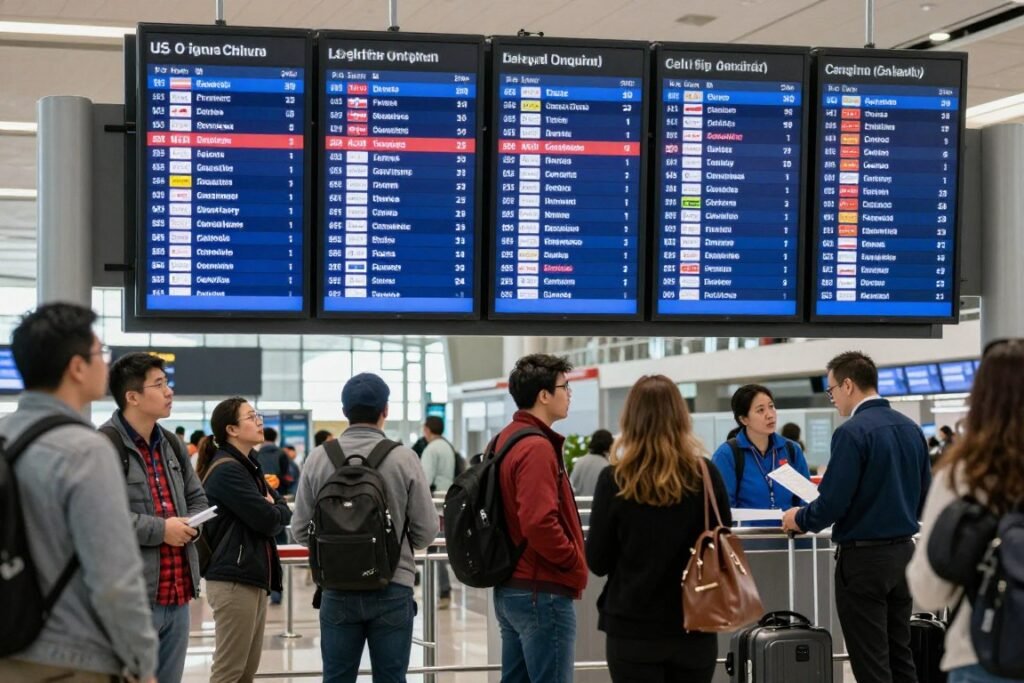
The 75-Nation U.S. Visa Policy creates immediate ripple effects across global travel patterns. While tourist and business visas remain unaffected, the psychological impact of such broad restrictions influences travel decisions even for those not directly impacted. Travel agencies report increased uncertainty among clients from affected countries, with many postponing U.S. travel plans despite being eligible for nonimmigrant visas.
For the global tourism industry, this policy creates significant challenges. The United States, which welcomed over 79 million international visitors in 2025, may see reduced tourism from affected regions as travelers opt for destinations with more predictable entry requirements. Countries like Canada, Australia, and European nations could see increased tourism as travelers redirect their international plans away from the United States.
The timing is particularly significant with the 2026 World Cup and 2028 Olympics both hosted or co-hosted by the United States. Event organizers now face additional complexities in ensuring international participation, especially for athletes, support staff, and fans from affected countries who may need to navigate more complex visa processes.
“International travel patterns don’t just respond to actual restrictions but to perceived barriers. Even when policies target specific visa types, they create a chilling effect across all forms of travel to that destination.”
The Economic Impact of a Broad U.S. Immigration Ban
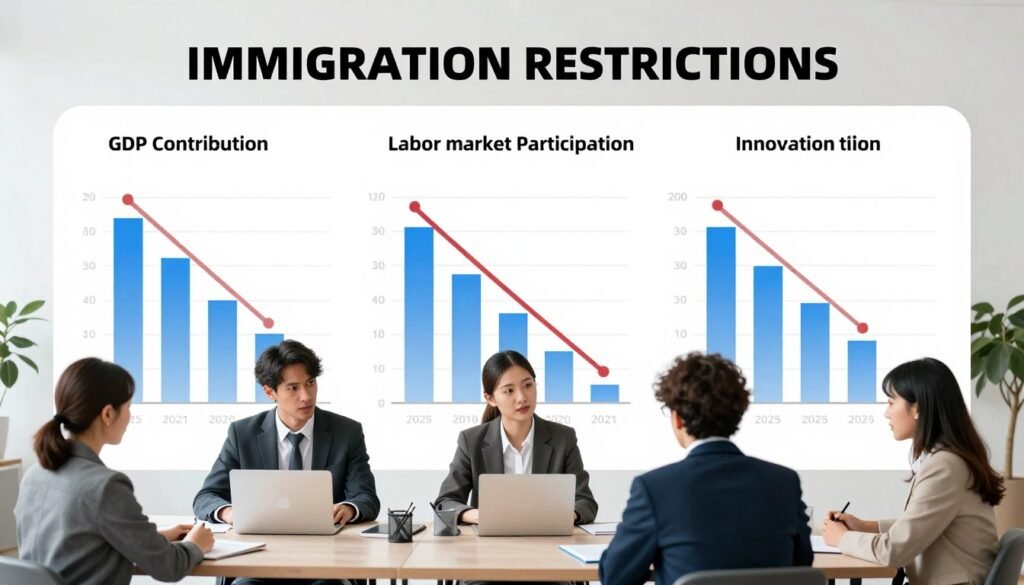
The economic implications of the 75-Nation U.S. Visa Policy extend far beyond immediate travel disruptions. Immigration has historically been a significant driver of U.S. economic growth, with immigrants founding approximately 25% of new businesses and contributing substantially to innovation and workforce development. By restricting immigrant visas from 75 nations, the policy creates several economic ripple effects:
Labor Market Effects
Industries reliant on immigrant labor—including agriculture, construction, healthcare, and technology—face potential workforce shortages. While the policy doesn’t affect temporary work visas, it disrupts the pipeline of workers who transition from temporary to permanent status. Healthcare facilities in rural areas, already struggling with staffing shortages, may face particular challenges as they often rely on immigrant medical professionals who seek permanent residency.
Business Formation Impact
Immigrant entrepreneurs have founded many successful U.S. companies. The policy may reduce new business formation from affected countries, potentially slowing innovation and job creation. Small businesses owned by immigrants from affected countries may also face difficulties expanding or planning long-term growth due to uncertainty about their permanent status or ability to bring in family members or business partners.
Stay Informed About Immigration Policy Changes
Receive timely updates on U.S. visa policies and their economic impacts with our monthly policy briefing.
For American businesses with international operations, the policy creates additional complexity in talent mobility strategies. Companies may need to reconsider global assignments, relocate regional headquarters, or develop alternative approaches to knowledge transfer that don’t rely on physical relocation of personnel to the United States.
Remittances—money sent by immigrants to their home countries—also face potential disruption. In 2025, immigrants in the U.S. sent over $190 billion in remittances worldwide. Countries heavily dependent on these flows, such as Haiti, Nepal, and several Central American nations, could experience economic pressure if fewer nationals can obtain permanent residency in the United States.
How Students and Workers Are Affected by Multi-Country Visa Limits

While the 75-Nation U.S. Visa Policy specifically targets immigrant visas rather than student or temporary work visas, it nevertheless creates significant uncertainty for international students and workers. Many international students and professionals come to the United States with long-term plans that include potential permanent residency. The policy disrupts these pathways, forcing reconsideration of educational and career trajectories.
Impact on Higher Education
U.S. universities, which enrolled over one million international students in 2025, face potential enrollment challenges from affected countries. Students making multi-year educational investments increasingly consider post-graduation opportunities, including work authorization and pathways to permanent residency. With these pathways now uncertain for nationals of 75 countries, some prospective students may choose educational destinations with more predictable immigration outcomes, such as Canada, Australia, or the United Kingdom.
Skilled Worker Implications
For professionals from affected countries currently working in the U.S. on temporary visas, the policy creates career uncertainty. Many H-1B visa holders, for example, pursue permanent residency as part of their long-term career planning. The policy forces these workers to reconsider their futures in the United States, potentially leading to talent loss as they explore opportunities in other countries with more accessible pathways to permanent status.
This talent redirection could significantly impact America’s global competitiveness in key sectors like technology, healthcare, and research. Countries with more welcoming immigration policies may benefit from this talent redistribution, gaining highly skilled professionals who might otherwise have contributed to the U.S. economy.
Global Reactions and Diplomatic Implications

The diplomatic repercussions of the 75-Nation U.S. Visa Policy extend far beyond immigration matters. International reactions have been swift and varied, with affected countries expressing concerns about the policy’s implications for bilateral relations. Several diplomatic consequences have emerged:
Reciprocal Measures
Some affected countries have implemented or threatened reciprocal visa restrictions for U.S. citizens. Brazil, Thailand, and several other economically significant nations have announced reviews of their own visa policies toward Americans, potentially complicating travel for U.S. businesses, tourists, and diplomats.
Multilateral Tensions
Regional organizations like the African Union, ASEAN, and CARICOM have issued statements criticizing the policy as discriminatory. These multilateral forums have become venues for coordinated diplomatic responses, potentially complicating U.S. engagement on other priority issues like trade, security, and climate change.
Strategic Competitor Advantage
Nations competing with the U.S. for global influence—particularly China and Russia—have seized the opportunity to position themselves as more reliable partners to affected countries. China has announced expanded visa facilitation for nationals of several affected nations, particularly in Africa and Southeast Asia.
The policy also impacts America’s soft power and global perception. Public opinion surveys in affected regions show declining favorability ratings toward the United States, with potential long-term implications for American cultural, educational, and commercial influence. Universities, cultural institutions, and businesses report increased difficulties in engaging international partners from affected regions.
Key Diplomatic Challenge: The policy creates particular tensions with strategic partners like Thailand, Brazil, and Nigeria—countries with which the U.S. has sought to deepen economic and security cooperation. Diplomatic efforts to compartmentalize immigration issues from other bilateral priorities face significant challenges.
Security Considerations and Legal Challenges

The 75-Nation U.S. Visa Policy is framed primarily as an economic measure to prevent “public charge” concerns, but it intersects significantly with national security considerations and faces potential legal challenges. The policy’s implementation involves complex legal questions about administrative procedure, equal protection, and international obligations.
The Role of National Security in Modern Visa Policies
While distinct from previous security-focused travel restrictions, this policy nevertheless reflects the growing intersection between immigration control and security considerations. The extensive vetting procedures referenced in the policy documentation include expanded background checks, social media screening, and financial history analysis—tools that serve both economic assessment and security purposes.
Security experts note that broad-based restrictions can sometimes undermine security objectives by reducing cooperation from affected communities and countries. Intelligence sharing, counterterrorism partnerships, and transnational crime investigations all depend on international cooperation that may be strained by visa restrictions perceived as discriminatory.
| Legal Challenge Type | Potential Arguments | Precedent Cases |
| Administrative Procedure Act | Policy implemented without proper notice and comment period | Trump v. Hawaii (2018), Biden v. Texas (2022) |
| Equal Protection | Disparate impact on specific nationalities without sufficient justification | Ramos v. Wolf (2020), IRAP v. Trump (2019) |
| International Obligations | Violation of bilateral agreements and international conventions | Hamad v. Gates (2012), Flores v. Reno Settlement |
Legal challenges to the policy have already been filed by immigration advocacy organizations, educational institutions, and affected individuals. These cases raise questions about the statutory authority for such broad restrictions, the evidence base for the “public charge” determinations, and potential violations of the Administrative Procedure Act. The litigation landscape will likely shape the policy’s implementation and longevity.
Need Expert Immigration Guidance?
Our immigration specialists can help you understand how the 75-Nation U.S. Visa Policy affects your specific situation.
The Human Impact: Families and Refugees

Beyond policy analysis and economic impacts, the 75-Nation U.S. Visa Policy creates profound human consequences. Families face prolonged separation, career trajectories are disrupted, and refugee pathways are complicated. These personal stories illustrate the lived reality of broad immigration restrictions.
How Families Navigate Immigration Barriers Across Borders
For mixed-status families—where some members are U.S. citizens or permanent residents while others are nationals of affected countries—the policy creates painful choices. U.S. citizens with spouses from affected countries now face uncertain timelines for reunification. While the policy allows continued processing of applications, the indefinite pause on visa issuance means families remain in limbo, unable to make concrete plans for their futures.
Children are particularly affected by these separations. Educational psychologists report increased anxiety, depression, and academic challenges among children separated from parents due to immigration restrictions. The financial strain of maintaining households in multiple countries adds additional pressure to families already navigating complex immigration processes.
“The policy creates a particularly cruel form of uncertainty. Families can still apply and interview for visas—investing time, money, and emotional energy in the process—but with no guarantee of when or if approval will come.”
What a 75-Country Visa Ban Could Mean for Refugee Pathways
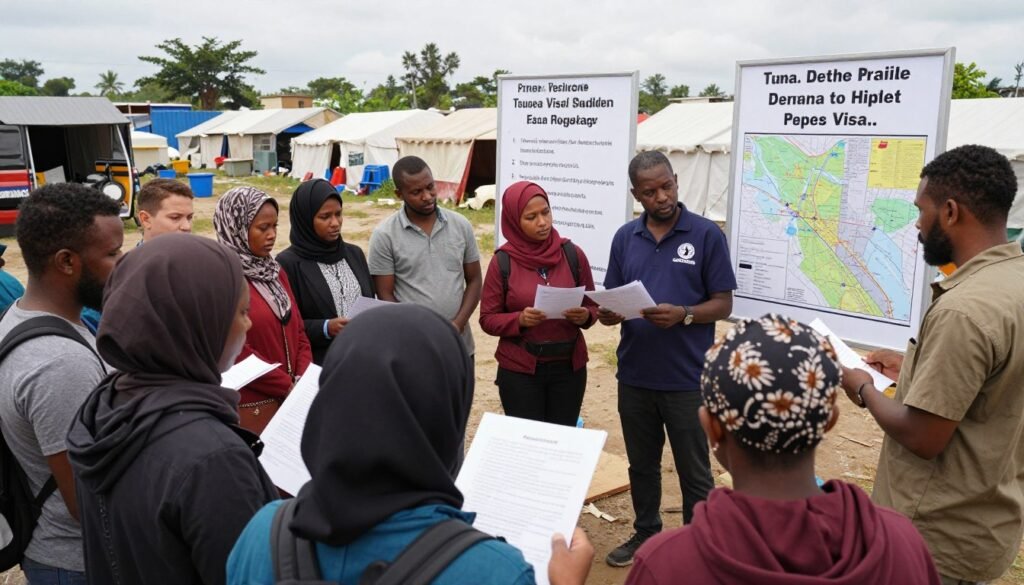
The policy’s impact on refugee resettlement is significant, as many of the affected countries are major sources of refugees and asylum seekers. While refugee admissions technically operate under different legal frameworks than immigrant visas, the practical implementation of the policy creates additional scrutiny and delays for refugee processing from affected nations.
Humanitarian organizations report that the policy has created confusion among refugee populations, with some abandoning U.S. resettlement applications in favor of other destination countries. This shift could significantly alter global refugee flows, potentially increasing pressure on European, Canadian, and Australian resettlement systems.
Historical Context and Ethical Considerations
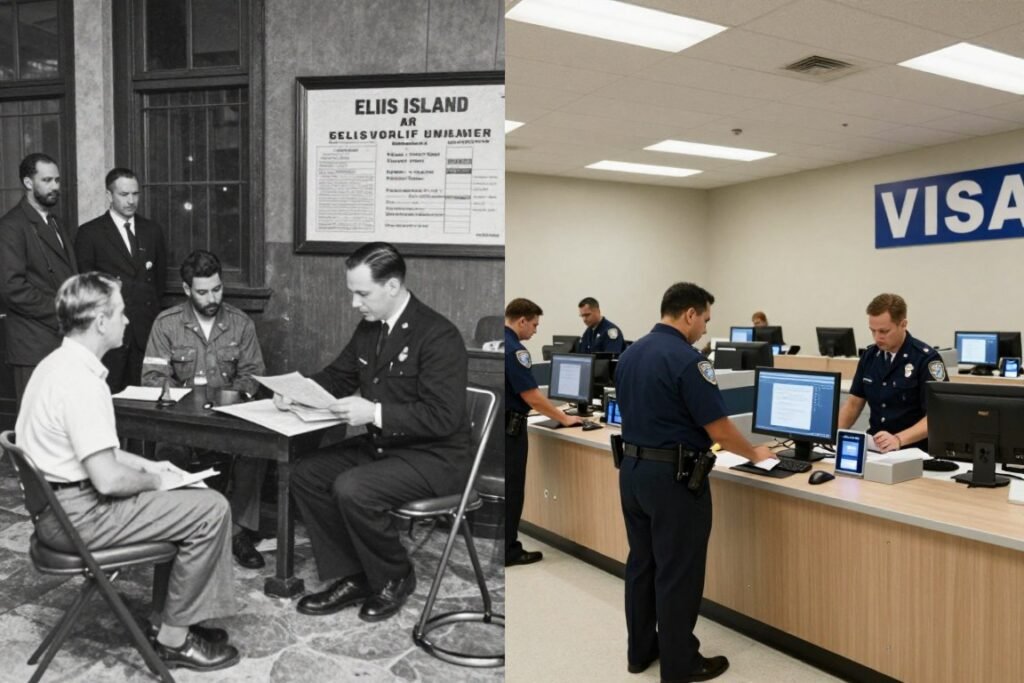
The 75-Nation U.S. Visa Policy joins a long history of American immigration restrictions, from the Chinese Exclusion Act of 1882 to the national origin quotas of the 1924 Immigration Act. Historical analysis provides important context for understanding both the implementation challenges and long-term consequences of broad immigration restrictions.
What History Tells Us About Wide-Scale Travel Restrictions
Previous large-scale immigration restrictions have often produced unintended consequences. The quota system implemented in the 1920s, for example, not only reduced immigration but fundamentally altered the demographic composition of immigrant flows for decades. Similarly, the current policy may reshape migration patterns well beyond its official duration, as potential immigrants develop alternative plans and destination countries adjust their own policies in response.
Historical examples also demonstrate that immigration restrictions often reflect broader social and economic anxieties rather than empirical evidence about immigrants’ economic contributions. The “public charge” concern central to the current policy echoes similar arguments made during previous restrictive periods, despite research consistently showing immigrants’ positive fiscal contributions over time.
The Ethics of Large-Scale Immigration Restrictions
The policy raises fundamental ethical questions about the balance between national sovereignty and human mobility rights. Political philosophers and ethicists debate whether nationality-based restrictions constitute justified discrimination or whether they violate principles of equal moral worth. These debates take on practical significance as courts evaluate the policy’s legality and as voters consider its alignment with American values.
Religious and humanitarian organizations have raised particular concerns about the policy’s impact on vulnerable populations. Several faith leaders have questioned whether the policy aligns with religious teachings about welcoming strangers and caring for the vulnerable, while human rights organizations have highlighted the disproportionate impact on those fleeing persecution and economic hardship.
Download Our Comprehensive Analysis
Get our detailed report on the historical patterns and future implications of the 75-Nation U.S. Visa Policy.
Migration Trends and Policy Psychology

The announcement of the 75-Nation U.S. Visa Policy has already begun to reshape global migration patterns, even before its full implementation. Migration researchers observe several emerging trends that illustrate how policy announcements themselves—regardless of implementation details—can significantly alter human behavior.
How Policy Announcements Affect Migration Trends
In the weeks following the policy announcement, visa application data shows significant changes in behavior. Applications for nonimmigrant visas from affected countries have declined despite these visa types being explicitly excluded from the restrictions. This “chilling effect” demonstrates how policy uncertainty creates broader impacts than the specific restrictions themselves.
Simultaneously, immigration agencies in Canada, Australia, and the United Kingdom report increased interest from nationals of the affected countries, suggesting a redirection of migration flows. Educational consultants note that students from affected countries are increasingly considering alternative destinations for international study, potentially reshaping global talent flows for years to come.
Potential Policy Benefits
- Enhanced screening may identify genuine public charge risks
- Temporary pause allows systematic review of vetting procedures
- May reduce processing backlogs for non-affected countries
- Creates opportunity to develop more targeted support programs
- Could incentivize development of origin country economies
Potential Policy Costs
- Family separation and psychological hardship
- Loss of talent and economic contributions
- Diplomatic tensions with affected countries
- Reduced U.S. soft power and global influence
- Litigation costs and administrative complexity
Why Governments Use Travel Restrictions as Policy Tools
The 75-Nation U.S. Visa Policy reflects broader trends in how governments utilize immigration restrictions as policy instruments. Political scientists note that visa policies serve multiple functions beyond their stated objectives: they signal values to domestic constituencies, create leverage in international negotiations, and demonstrate administrative capacity to address complex social challenges.
The policy’s focus on “public charge” concerns reflects particular anxieties about social welfare systems and resource allocation. Similar concerns have driven immigration restrictions in other wealthy nations, suggesting a pattern where economic uncertainty increases support for more restrictive immigration policies regardless of immigrants’ actual fiscal impacts.
The Future of Global Migration Under Changing Visa Regimes
The 75-Nation U.S. Visa Policy represents a significant inflection point in global migration governance. Its implementation and outcomes will likely influence not only U.S. immigration policy but also how other nations approach migration management. Several key trends will shape the policy’s long-term impact:
- Technology-Enabled Screening: Advanced data analytics and artificial intelligence will increasingly shape how “public charge” and other eligibility determinations are made, raising both efficiency possibilities and ethical concerns.
- Regional Migration Shifts: As access to the U.S. becomes more uncertain for nationals of affected countries, regional migration hubs may emerge, with countries like Mexico, Brazil, and South Africa becoming more significant destination countries.
- Bilateral Migration Agreements: Countries may increasingly pursue bilateral agreements that provide special immigration pathways outside of general visa systems, creating a more fragmented global migration regime.
- Remote Work Alternatives: Digital nomad visas and remote work arrangements may partially substitute for physical migration, allowing talent to contribute across borders without permanent relocation.
The policy also raises fundamental questions about the future of global mobility in an era of increasing nationalism and border control. Will the trend toward more restrictive immigration policies continue, or will economic and demographic pressures eventually lead to more open approaches? The implementation and outcomes of the 75-Nation U.S. Visa Policy will provide important insights into these broader questions.
For individuals, families, businesses, and institutions affected by the policy, the coming months will require adaptability, patience, and careful planning. While the policy’s stated timeline is indefinite, immigration policies historically evolve in response to changing circumstances, legal challenges, and political priorities. Understanding the multifaceted implications of the policy is the first step toward navigating its challenges effectively.