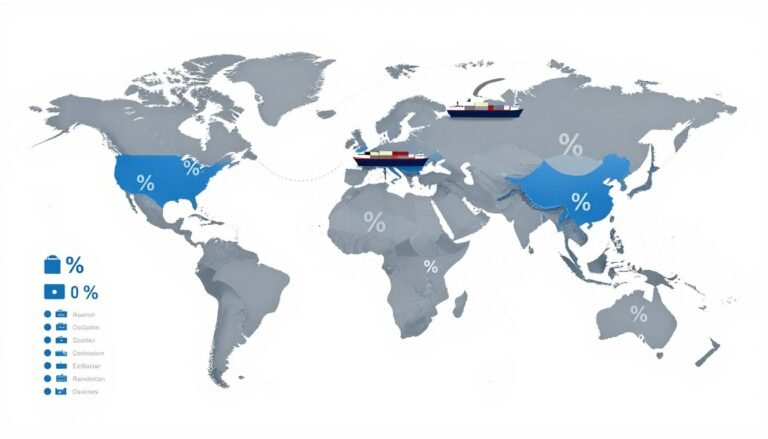
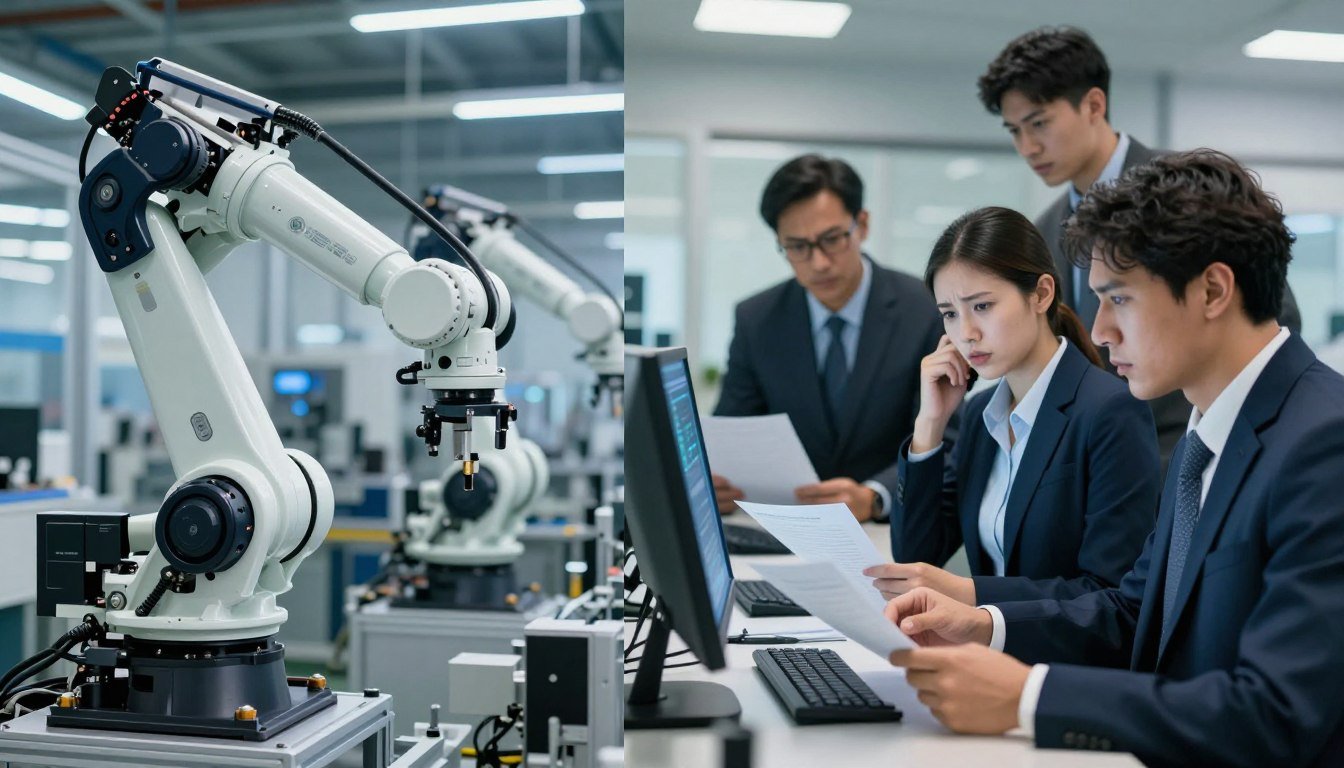
Automation and Job Displacement Risks: How It Could Impact the U.S. Economy in 2026 and Beyond
The wave of automation sweeping across American industries represents one of the most significant economic threats of our generation. Machines and artificial intelligence systems now perform tasks that once required human intelligence and skills. This shift challenges millions of workers and reshapes entire sectors of our economy.
The threat matters now more than ever because the pace of technological change has accelerated dramatically. Recent data from the Bureau of Labor Statistics reveals that automation technologies have advanced faster in the past three years than in the previous decade combined. Companies across manufacturing, retail, and service industries are investing billions in robotics and artificial intelligence solutions.
A striking trend emerged in early 2025 when research firms documented that nearly 20 percent of current U.S. jobs face high risk automation within the next five years. This statistic represents approximately 30 million American workers who may need to adapt their skills or transition to new roles. The Congressional Budget Office projects this transformation could reshape workforce dynamics more profoundly than any shift since the Industrial Revolution.
Understanding these automation and job displacement risks helps workers prepare for coming changes. It guides businesses in making responsible technology investments. It informs policymakers about necessary interventions to protect economic stability.
Stay Informed: Economic landscapes shift rapidly in the automation age. Subscribe to receive monthly updates about workforce trends, policy changes, and career adaptation strategies that help you stay ahead of these transformations.
What Is This Economic Threat?
Automation and job displacement risks describe the economic phenomenon where machines, robots, and artificial intelligence systems replace human workers in performing job tasks. This displacement occurs when technology becomes more cost-effective or efficient than human labor for specific roles. The threat extends beyond simple job loss to encompass wage suppression, skills obsolescence, and structural unemployment.
The concept differs from historical technological progress in its scope and speed. Previous industrial shifts occurred gradually over decades, allowing workers time to adapt. Current automation leverages artificial intelligence and machine learning to master complex tasks rapidly. These systems learn and improve continuously, expanding their capabilities into domains once considered uniquely human.
Historical Background and Evolution
The relationship between automation and employment has evolved through distinct phases. The first Industrial Revolution introduced mechanized manufacturing in the late 1700s. Steam power and mechanical looms displaced artisan craftspeople but created factory jobs. The second wave brought electricity and assembly lines in the early 1900s. These innovations eliminated some roles while generating new opportunities in industrial management and maintenance.
The digital revolution of the 1980s and 1990s introduced computers into workplaces. This transformation automated clerical work and routine data processing. Yet it simultaneously created demand for programmers, analysts, and technology professionals. The pattern suggested that technology destroys old jobs while creating new ones.
Today’s automation wave breaks this historical pattern in several ways. Artificial intelligence systems now handle cognitive work previously immune to automation. Robots perform delicate assembly tasks requiring precision and adaptability. Machine learning algorithms make complex decisions across healthcare, finance, and legal services. The International Monetary Fund notes this represents a fundamental shift in the nature of work itself.
Key Statistics Defining the Threat
The Bureau of Labor Statistics published comprehensive data in late 2024 revealing the scope of automation risks. Their analysis identified that 47 million American jobs contain tasks highly susceptible to automation. This figure represents roughly 29 percent of the total workforce. The risk concentrates heavily in specific sectors and role types.
Manufacturing jobs face the highest immediate risk, with 61 percent of roles vulnerable to robotics and automation technologies. Retail positions follow closely, with 53 percent at high risk due automation of cashier functions, inventory management, and customer service. Transportation and warehousing sectors show 48 percent vulnerability as autonomous vehicles and automated sorting systems advance.
The Congressional Budget Office estimates that full automation deployment could displace between 15 and 25 million workers by 2030. This projection assumes moderate adoption rates and accounts for new job creation. Under aggressive automation scenarios, displacement could reach 35 million workers. These figures exclude the broader impacts on wages and working conditions for workers whose jobs transform rather than disappear entirely.
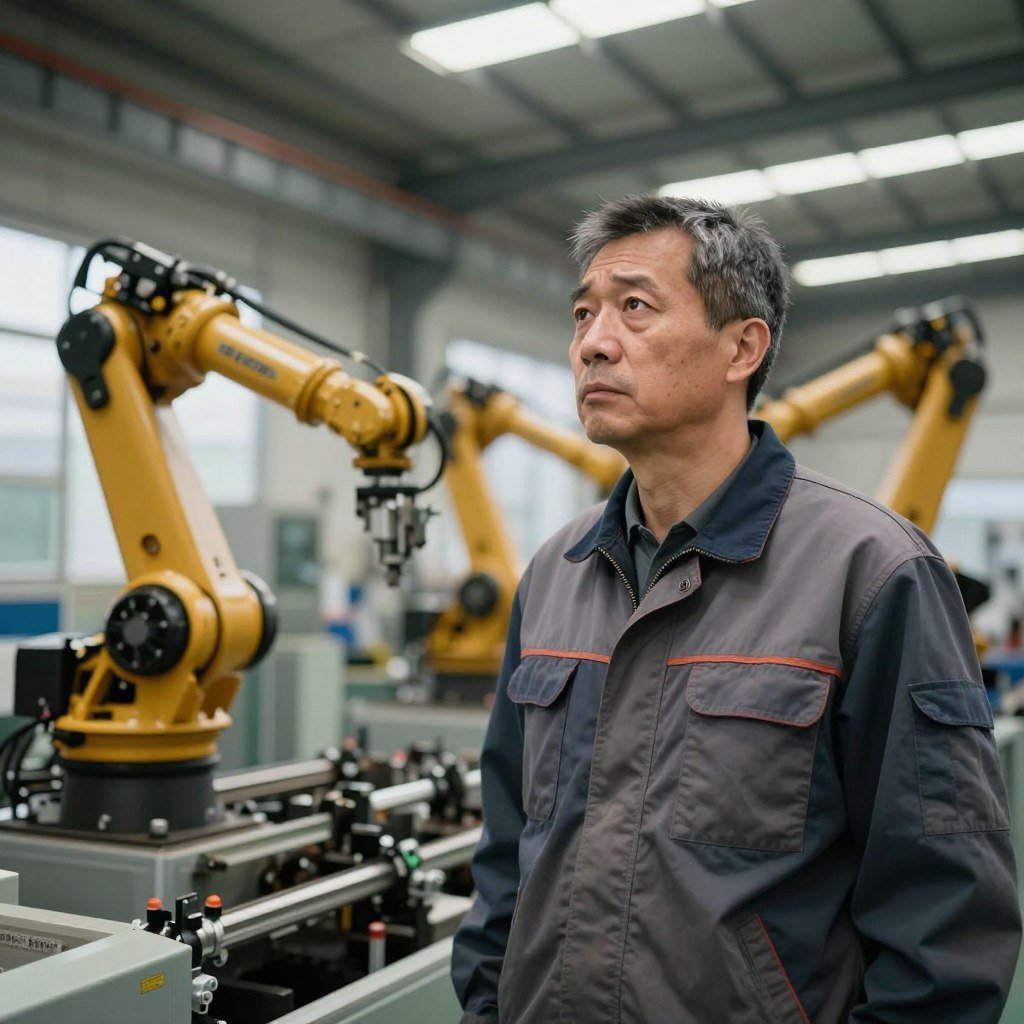
Understanding Your Risk Level
Individual workers face varying levels of automation risk based on their specific roles and skills. Jobs involving routine manual tasks show the highest vulnerability. Positions requiring creativity, complex problem-solving, or emotional intelligence demonstrate greater resilience.
Research from leading economic institutions suggests that workers can assess their personal risk by examining their daily tasks. Repetitive activities following predictable patterns face higher automation potential. Roles demanding human judgment, relationship building, or adaptive responses to unique situations remain more secure.
The World Bank’s analysis indicates that workers with strong foundational skills in data literacy, critical thinking, and interpersonal communication navigate automation transitions more successfully. These capabilities transfer across roles and industries, providing career flexibility as labor markets evolve.
Wage data reveals another dimension of the threat. The U.S. Department of the Treasury reports that workers in high-automation-risk roles have experienced wage stagnation over the past decade. Meanwhile, workers in low-risk positions have seen average wage gains of 3.7 percent annually. This divergence reflects growing market anticipation of automation impacts.
Small and medium-sized businesses face unique challenges in this landscape. While large corporations invest heavily in automation technologies, smaller companies often lack resources to modernize. This creates competitive disadvantages that may force business closures and additional job losses. The Small Business Administration estimates that 40 percent of small manufacturers face viability concerns due to automation pressures.
What Is Causing the Problem?
Multiple converging forces drive the acceleration of automation and resulting job displacement. These factors interact in complex ways, creating momentum that challenges traditional approaches to workforce stability. Understanding these causes helps identify potential intervention points and solution strategies.
Policy Factors Accelerating Automation
Government policies at federal and state levels have inadvertently encouraged rapid automation adoption. Tax structures provide significant advantages for capital investment in equipment and technology. Companies can depreciate automation systems quickly, reducing their tax obligations substantially. Meanwhile, employment costs carry ongoing payroll tax burdens that make human workers comparatively expensive.
- The federal tax code allows businesses to deduct automation equipment costs immediately rather than spreading them over multiple years
- Payroll taxes add approximately 15 percent to the cost of employing workers, while automation investments face no comparable recurring taxes
- Research and development tax credits specifically incentivize companies to develop labor-replacing technologies
- Immigration policies restricting skilled worker availability push companies toward automation solutions
- Minimum wage increases in various states accelerate automation in low-skill service roles
The Social Security Administration faces pressure from these trends as well. Fewer workers contributing payroll taxes while more individuals depend on benefits creates fiscal challenges. This dynamic may force policy changes that further impact employment landscapes.
Trade policies also contribute to automation pressures. Companies facing international competition from low-wage countries choose automation over maintaining domestic human workforces. Tariffs and trade barriers affect these calculations but rarely eliminate the competitive advantages of automation.

Market Trends Driving Technology Adoption
Economic market forces create powerful incentives for businesses to adopt automation rapidly. Competition demands continuous efficiency improvements. Shareholders expect rising profit margins. These pressures make automation investments attractive regardless of broader social impacts.
- Venture capital funding for robotics and artificial intelligence companies reached record levels, exceeding $75 billion in 2024
- Labor shortages in certain sectors pushed companies to seek automation solutions rather than raise wages sufficiently to attract workers
- Consumer expectations for 24/7 availability and instant service delivery favor automated systems over human-staffed operations
- E-commerce growth demands warehouse automation to meet delivery speed requirements
- Manufacturing reshoring efforts prioritize highly automated facilities rather than labor-intensive production
The cost of automation technology continues declining while capabilities expand. Industrial robots that cost $200,000 a decade ago now sell for under $50,000 with superior functionality. Artificial intelligence systems become more accessible through cloud computing platforms. These economic shifts make automation viable for progressively smaller operations.
Investment patterns show that companies increasingly view automation as essential rather than optional. The Organization for Economic Cooperation and Development reports that automation spending grew three times faster than other capital investments during 2024. This trend indicates deepening commitment to technology-based workforce strategies.
Global Influences Reshaping Labor Markets
International competition and global supply chain dynamics accelerate automation adoption across industries. Companies operating in global markets face pressure to match efficiency levels of foreign competitors. Manufacturing firms compete against highly automated facilities in Germany, Japan, and South Korea. Service companies contend with offshore operations in countries with lower labor costs.
The COVID-19 pandemic’s aftermath reshaped global attitudes toward automation. Supply chain disruptions demonstrated vulnerabilities in human-dependent operations. Companies responded by investing in automation to reduce future disruption risks. This shift affected manufacturing, logistics, customer service, and numerous other sectors simultaneously.
- Global supply chain fragility encouraged companies to automate operations for greater control and resilience
- International labor cost differentials narrowed as automation created similar cost structures across countries
- Technology transfer accelerated as automation solutions developed in one country deployed globally within months
- Foreign direct investment increasingly targets highly automated facilities rather than labor-intensive operations
- International organizations like the World Bank promote automation as economic development strategy for emerging markets

Currency fluctuations and international economic instability make automation investments more attractive than managing global human workforces. Companies reduce exposure to foreign labor market risks by deploying standardized automation systems across multiple countries. This strategy provides operational consistency while minimizing country-specific employment complications.
Structural Economic Changes Enabling Disruption
Fundamental transformations in economic structures create conditions favorable to rapid automation deployment. Traditional industry boundaries blur as digital technologies enable new business models. Platform companies disrupt established sectors while employing minimal human workforces relative to their economic impact.
The shift toward service-based economies has not provided immunity from automation as previously expected. Service roles increasingly decompose into routine tasks suitable for automation. Customer service representatives face displacement by chatbots and artificial intelligence systems. Data analytics automates market research and business intelligence functions. Even creative fields experience automation pressure as artificial intelligence generates content, designs, and analysis.
- Gig economy growth normalizes non-traditional employment relationships, making automation transitions less disruptive to corporate structures
- Concentration of economic power in large technology companies accelerates automation development and deployment
- Declining union membership reduces organized resistance to automation initiatives
- Short-term financial performance pressures push executives toward quick automation wins rather than long-term workforce development
- Educational system misalignment with evolving job requirements leaves workers vulnerable to technological displacement
Demographic trends compound these structural factors. Aging populations in developed countries create concerns about worker availability. Automation presents itself as solution to anticipated labor shortages. However, this framing overlooks the displacement of existing workers who face barriers to transitioning into remaining roles.
Financial markets reward companies demonstrating automation progress with higher valuations. Investors interpret automation initiatives as indicators of management sophistication and future profitability. These market signals encourage executives to prioritize automation investments even when alternative workforce strategies might prove socially beneficial.
Impact on the U.S. Economy
The economic consequences of widespread automation extend far beyond individual job losses. These changes ripple through interconnected systems affecting gross domestic product, inflation dynamics, employment structures, financial markets, and the operational realities facing consumers and businesses. Understanding these broader impacts reveals the true scope of the transformation underway.
GDP Growth Implications
Automation’s relationship with gross domestic product growth presents a complex picture with contradictory forces. In the short term, automation investments boost GDP through increased capital spending and productivity gains. Companies purchasing robots, artificial intelligence systems, and supporting infrastructure contribute to economic activity. The Congressional Budget Office estimates that automation-related investments added 0.3 percentage points to annual GDP growth during 2023 and 2024.
Productivity improvements from automation theoretically increase economic output per worker. Factories operating with robotic systems produce more goods with fewer employees. Automated warehouses process higher volumes of orders. These efficiency gains should translate to GDP expansion under traditional economic models.
However, demand-side effects may offset productivity benefits. Workers displaced by automation experience income reductions, decreasing their consumer spending power. If automation creates widespread unemployment or underemployment, aggregate demand suffers. The International Monetary Fund models suggest that rapid automation without adequate transition support could reduce GDP growth by 0.5 to 1.2 percentage points annually by 2028.
Income inequality dynamics further complicate GDP impacts. Automation concentrates wealth among capital owners while reducing labor’s share of national income. This redistribution affects economic growth patterns since lower-income households spend higher proportions of their income than wealthy individuals. The shift toward capital income may reduce economic velocity and dampen GDP growth.
Long-term GDP projections remain highly uncertain. Some economists anticipate that automation enables sustained productivity growth exceeding 2.5 percent annually, driving robust GDP expansion. Others warn that insufficient aggregate demand and social instability could constrain growth below 1.5 percent annually. The U.S. Department of the Treasury acknowledges both scenarios remain plausible depending on policy responses and transition management.
Inflation and Price Dynamics
Automation exerts complex and sometimes contradictory pressures on inflation. Cost reductions from automation should theoretically lower prices for goods and services. Manufacturers with automated production lines reduce labor costs, enabling price decreases. Retailers using automated checkout systems cut operating expenses. These savings may pass to consumers through lower prices.
Indeed, sectors with significant automation adoption have shown relative price decreases. Consumer electronics prices declined consistently despite rising capabilities due to automated manufacturing. Online retail prices remain competitive partly due to warehouse automation reducing fulfillment costs. The Bureau of Labor Statistics data shows that goods from highly automated sectors experienced 1.8 percent lower price inflation than less automated sectors during 2024.
- Automated manufacturing reduces production costs by 15 to 30 percent across various industries
- Labor cost reductions from automation directly decrease the largest expense component for service businesses
- Increased competition from automated operations pressures traditional businesses to lower prices
- Productivity gains enable companies to absorb input cost increases without raising consumer prices
- Automated supply chain management reduces inventory costs and waste, lowering overall expense structures
However, countervailing forces may sustain or increase inflation despite automation. Displaced workers with reduced incomes demand fewer goods, potentially creating excess capacity and deflationary pressures in some sectors while shortage conditions emerge in others. Concentrated market power among large automated companies may reduce competitive pressure, allowing price maintenance despite lower costs.
Service sectors face different inflation dynamics. Healthcare, education, and personal services prove more difficult to automate comprehensively. As automation displaces workers from manufacturing and retail, labor supply increases in remaining service sectors. This shift could moderate wage growth in services, affecting overall inflation rates differently than goods-producing sectors.
The Federal Reserve faces challenges managing monetary policy in an automation-driven economy. Traditional relationships between unemployment and inflation may weaken as structural unemployment coexists with labor shortages in specific skilled roles. Interest rate policies designed for conventional economic dynamics may prove less effective when automation transforms labor markets fundamentally.
Employment Transformation and Labor Markets
Employment impacts represent the most visible and socially significant consequences of automation. The Bureau of Labor Statistics projects that automation will eliminate between 15 and 25 million existing jobs by 2030 while creating 8 to 12 million new positions. This net loss of 7 to 13 million jobs represents 4 to 8 percent of the current workforce.
Job displacement concentrates in specific occupations and industries. Manufacturing roles face the highest immediate risk, with estimates suggesting 40 percent of current positions may disappear by 2028. Retail employment shows similar vulnerability as automated checkout systems, inventory robots, and artificial intelligence-powered customer service replace human workers. Transportation sector jobs face existential threats from autonomous vehicle deployment over the next decade.
High-Risk Occupations
- Production line workers and assemblers
- Cashiers and retail sales clerks
- Truck drivers and delivery personnel
- Data entry specialists and clerks
- Bookkeepers and accounting technicians
- Customer service representatives
- Warehouse workers and material handlers
- Food preparation and service workers
Lower-Risk Occupations
- Healthcare practitioners and nurses
- Teachers and educational professionals
- Management and executive roles
- Creative professionals and designers
- Skilled trades requiring adaptability
- Social workers and counselors
- Scientists and research professionals
- Legal professionals and strategists
New job creation patterns differ significantly from displacement patterns. Emerging roles require different skills, concentrate in different geographic regions, and offer varied compensation levels compared to disappearing jobs. Technology sector employment grows robustly, but these positions demand advanced education and specialized skills. Healthcare and social services expand due to aging populations, but wage levels vary widely across these roles.
Geographic impacts create regional economic challenges. Manufacturing-dependent communities face concentrated job losses as automated facilities require minimal staffing. Rural areas with limited economic diversity struggle to generate replacement employment opportunities. Urban technology centers benefit from new job creation while traditional industrial regions decline. These geographic disparities exacerbate existing regional inequality trends.
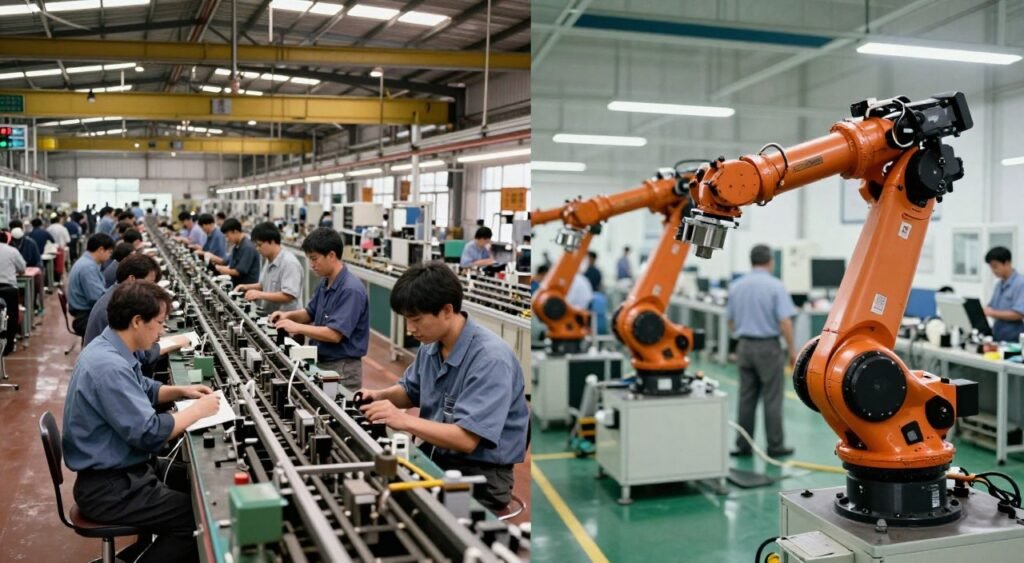
Demographic groups experience automation impacts unequally. Workers without college degrees face substantially higher displacement risks. The Congressional Budget Office estimates that 35 percent of workers with only high school education occupy high-risk automation roles, compared to 12 percent of college graduates. Age factors create additional vulnerabilities as older workers find retraining more challenging while younger workers enter labor markets with uncertain career trajectories.
Wage effects extend beyond direct job losses. Workers in automation-threatened roles experience wage suppression even before displacement occurs. Employers leverage automation potential to resist wage increases. Workers accept lower compensation to remain competitive with automation alternatives. The U.S. Department of the Treasury data indicates that wages in high-automation-risk occupations grew 40 percent slower than low-risk occupations between 2015 and 2024.
Labor force participation rates may decline as discouraged workers exit job markets entirely. Those facing repeated displacement or unable to acquire new skills stop seeking employment. This phenomenon reduces measured unemployment rates while masking underlying employment problems. The Social Security Administration expresses concern about declining workforce participation among prime-age workers as automation pressures intensify.
Financial Market Reactions and Capital Flows
Financial markets respond to automation trends through investment reallocation and valuation adjustments. Technology companies developing automation solutions attract substantial capital inflows. Robotics firms, artificial intelligence developers, and industrial automation providers see rising stock valuations. The technology sector’s share of total market capitalization increased from 23 percent in 2020 to 31 percent in 2024, partly reflecting automation investment enthusiasm.
Traditional labor-intensive companies face market pressure to demonstrate automation strategies. Firms announcing significant automation initiatives typically experience positive stock price reactions. Conversely, companies appearing slow to adopt automation face investor skepticism and potential valuation discounts. These market signals create powerful incentives for executives to prioritize automation investments regardless of social consequences.

Investment patterns shift away from commercial real estate supporting traditional workplaces. Office space demand may decline as automation reduces workforce sizes. Retail property values face pressure from e-commerce growth and automated fulfillment centers. Industrial real estate focused on highly automated facilities attracts capital while traditional factory properties lose appeal. These real estate market shifts affect pension funds, insurance companies, and individual investors holding property-related assets.
Bond markets reflect changing economic growth expectations and inflation dynamics associated with automation. Long-term interest rates incorporate uncertainties about productivity gains versus demand reductions from unemployment. Corporate bond spreads widen for companies in high-automation-risk sectors while tightening for technology leaders. Municipal bonds from manufacturing-dependent regions face higher yields reflecting economic stress concerns.
- Venture capital funding for automation startups exceeded $75 billion in 2024, up from $42 billion in 2020
- Private equity firms increasingly target companies with clear automation transformation potential
- Pension funds adjust asset allocations to reduce exposure to automation-vulnerable sectors
- Index fund rebalancing favors technology and automation-leader companies
- Foreign investment flows increasingly target U.S. technology and automation sectors
Wealth inequality dynamics accelerate through financial market channels. Ownership of automation-benefiting assets concentrates among higher-income households. Stock market gains from automation companies accrue primarily to wealthier investors while displaced workers experience asset losses. This divergence amplifies existing wealth disparities, creating social tensions with potential economic consequences.
Consumer and Business Operational Changes
Automation reshapes daily operational realities for both consumers and businesses. Retail experiences transform as self-checkout systems replace cashiers. Banking moves entirely online with artificial intelligence handling routine transactions. Customer service interactions shift to chatbots and automated phone systems. These changes reduce human interaction while promising efficiency and convenience.
Consumer experiences vary significantly based on demographic factors and preferences. Younger, technology-comfortable consumers generally embrace automated services. Older adults and those with limited digital literacy face challenges navigating automated interfaces. This digital divide creates service accessibility concerns as automation becomes ubiquitous. The displacement of human workers also eliminates employment pathways for less-skilled workers, affecting these individuals as consumers when their incomes decline.

Business operations undergo fundamental restructuring around automation capabilities. Companies redesign workflows to maximize automation potential. Supply chain management becomes highly data-driven with artificial intelligence optimization. Human resources functions shrink as workforce sizes decline. These operational changes affect vendor relationships, real estate needs, and corporate cultures.
Small businesses face particular challenges adapting to automation-driven competition. Large corporations achieve scale economies in automation investments that smaller competitors cannot match. This dynamic threatens small business viability across sectors from retail to manufacturing. The Small Business Administration reports increasing concern about competitive disadvantages facing companies lacking resources for significant automation investments.
Business-to-business relationships transform as automation changes partner capabilities and needs. Manufacturers demand suppliers adopt compatible automation systems for seamless integration. Retailers require vendors to interface with automated inventory management. These requirements create investment pressures throughout supply chains, affecting companies not directly automating customer-facing operations.
Companies also confront workforce management challenges during automation transitions. Maintaining employee morale while implementing displacement-causing technologies proves difficult. Businesses face decisions about retraining investments versus workforce reductions. These human resource challenges affect productivity, quality, and corporate reputations even before automation fully deploys.
Recent Data and Trends
Current data from authoritative sources provides concrete evidence of automation’s accelerating impact on American employment and economic structures. These statistics reveal patterns shaping workforce transformations over coming years. Understanding these trends helps workers, businesses, and policymakers anticipate challenges and opportunities.
Latest Employment and Displacement Statistics
The Bureau of Labor Statistics released comprehensive automation impact data in December 2024. Their analysis examined detailed task composition across 800 occupations. The findings reveal that 42 percent of all work tasks performed by American workers face potential automation within existing technology capabilities. This percentage rises to 63 percent when including technologies currently in development stages.
Manufacturing employment declined by 180,000 positions during 2024 despite rising production output. This productivity paradox reflects automation’s labor-displacing effects. Automotive manufacturing experienced particularly dramatic shifts, with major producers announcing plans to reduce hourly workforce by 25 percent over the next three years while investing $15 billion in factory automation systems.
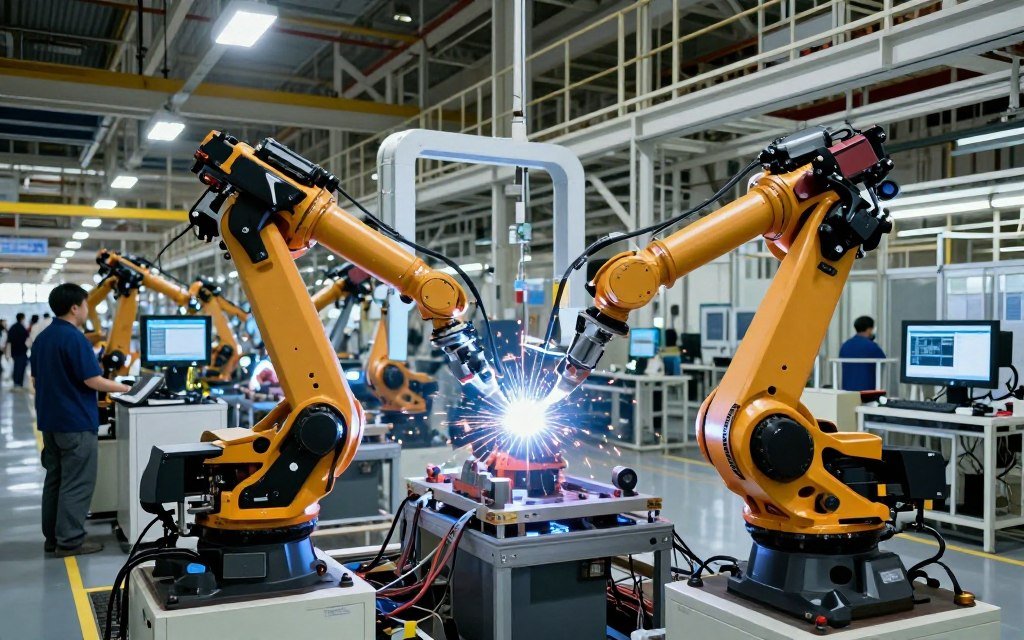
Retail sector data shows accelerating automation adoption following labor shortage experiences during 2022-2023. Major retailers deployed over 50,000 new automated checkout systems during 2024. Employment in retail cashier roles decreased by 4.3 percent year-over-year, representing approximately 125,000 fewer positions. The National Retail Federation projects an additional 15 percent reduction in cashier positions by 2027 as automation investments continue.
Transportation sector faces mounting displacement pressures from autonomous vehicle development. While fully autonomous commercial vehicles remain limited, driver-assistance systems reduce labor requirements. Long-haul trucking companies reported 8 percent workforce reductions during 2024 by implementing convoy systems where one driver oversees multiple semi-autonomous trucks. The American Trucking Association estimates this trend could eliminate 300,000 driving positions by 2030.
| Sector | Current Employment | High Risk Jobs (%) | Projected Loss by 2030 | Primary Automation Type |
| Manufacturing | 12.8 million | 61% | 3.2 million | Industrial robotics |
| Retail Trade | 15.9 million | 53% | 4.1 million | Self-checkout, inventory robots |
| Transportation | 5.9 million | 48% | 1.8 million | Autonomous vehicles |
| Food Service | 12.4 million | 38% | 2.2 million | Kitchen automation, service robots |
| Office Administration | 21.2 million | 44% | AI assistants, process automation | 4.7 million |
| Customer Service | 2.9 million | 55% | 1.1 million | Chatbots, AI systems |
Service sector automation progresses more gradually but affects larger workforce populations. Customer service roles experience displacement from artificial intelligence chatbots and automated phone systems. Financial services firms reduced customer-facing staff by 7 percent during 2024 while expanding artificial intelligence capabilities. Insurance companies automated 40 percent of claims processing tasks previously requiring human adjusters.
Investment and Technology Adoption Rates
Corporate investment in automation technologies reached unprecedented levels during 2024. The U.S. Department of Commerce reported that businesses spent $312 billion on automation equipment, software, and integration services. This figure represents 23 percent growth compared to 2023 and exceeds total automation spending from 2018-2020 combined. Investment concentration varies significantly across company sizes and industries.
Large corporations lead automation adoption with substantial capital resources. Fortune 500 manufacturing companies allocated an average of 18 percent of capital budgets to automation initiatives during 2024. Technology sector firms invested even more heavily, with leading companies spending 25-30 percent of capital expenditures on internal automation systems and product development.
Small and medium-sized businesses demonstrate increasing automation interest but face adoption barriers. Surveys from the National Federation of Independent Business indicate that 62 percent of small businesses view automation as necessary for competitive survival. However, only 18 percent have implemented significant automation systems due to capital constraints and technical expertise limitations. This gap creates strategic vulnerabilities for smaller companies.
Industry-specific adoption patterns reveal varying automation trajectories. Warehousing and logistics operations show the most rapid deployment, with Amazon and other major players installing thousands of robots monthly. Manufacturing automation proceeds steadily with particular concentration in automotive, electronics, and pharmaceutical sectors. Service industry automation accelerates in standardized operations like fast food while remaining limited in customized service businesses.
- Industrial robot installations increased by 31 percent in 2024 compared to previous year
- Artificial intelligence system deployments grew 44 percent year-over-year across business applications
- Automated vehicle pilot programs expanded to 23 states, up from 12 states in 2023
- Retail self-checkout systems now handle 38 percent of all transactions, up from 29 percent in 2023
- Manufacturing productivity per worker increased 4.7 percent while employment declined 1.4 percent
Technology costs continue declining, accelerating adoption timelines. Industrial robots that cost $180,000 in 2020 now sell for under $75,000 with superior capabilities. Cloud-based artificial intelligence services reduce implementation costs by 60 percent compared to on-premise solutions. These price decreases make automation viable for progressively smaller operations and lower-wage positions.
Skills Gap and Workforce Readiness Indicators
Data on workforce skills reveals concerning gaps between current capabilities and future job requirements. The Congressional Budget Office analysis indicates that 47 percent of workers in high-automation-risk roles lack skills for transitioning to emerging opportunities. This skills mismatch creates structural unemployment risks even when new jobs become available.
Educational attainment patterns show problematic trends. Workers with only high school education occupy 58 percent of high-risk automation positions but represent only 22 percent of workers in emerging technology roles. College graduates concentrate in lower-risk occupations with better automation resilience. This educational divide translates directly to economic security disparities.

Employer surveys reveal growing concerns about finding qualified workers for technology-intensive roles. Manufacturing companies report that 68 percent of open positions remain unfilled for over 90 days due to skills shortages. Technology sector employers cite similar challenges despite offering competitive compensation. The talent pipeline fails to produce sufficient numbers of workers with data analytics, robotics maintenance, and artificial intelligence management capabilities.
Geographic disparities in educational infrastructure compound workforce challenges. Rural communities and economically distressed regions lack access to training programs for emerging occupations. Community colleges in these areas struggle with funding limitations while demand for retraining services increases. The result creates geographic mismatches where job opportunities concentrate in different locations than displaced workers.
Age-related patterns show that younger workers adapt more readily to automation transitions. Workers under 35 demonstrate higher rates of successful skill acquisition and role transitions. Those over 50 face substantial barriers including age discrimination, family obligations limiting geographic mobility, and greater challenges mastering new technologies. The Bureau of Labor Statistics data indicates that displaced workers over 50 experience unemployment durations 40 percent longer than younger workers.
Critical Skills for Automation Resilience
Research from leading workforce development organizations identifies capabilities that provide career security in automation-driven markets:
- Data literacy: Understanding how to interpret, analyze, and apply data insights across business contexts
- Digital fluency: Comfort working with diverse software systems and learning new technologies quickly
- Complex problem-solving: Ability to address novel challenges without predetermined solutions
- Emotional intelligence: Skills in relationship building, empathy, and human interaction that machines cannot replicate
- Adaptive learning: Capacity to continuously acquire new competencies throughout careers
- Creative thinking: Generating innovative approaches and novel solutions to emerging challenges
- Technical foundations: Basic understanding of how automation systems function and integrate
Regional Economic Impact Patterns
Geographic data reveals that automation impacts concentrate in specific regions, creating localized economic crises. The Midwest manufacturing belt faces particularly severe challenges as automotive and industrial automation eliminates traditional employment bases. Cities like Detroit, Cleveland, and Milwaukee show manufacturing employment declining 15-20 percent since 2020 with limited replacement job creation.
Rural areas dependent on single industries experience compounded vulnerabilities. Communities built around manufacturing plants, distribution centers, or food processing facilities face existential threats when these operations automate extensively. The Economic Development Administration identifies 340 U.S. counties as high-risk for automation-driven economic collapse due to employment concentration in vulnerable sectors.

Urban technology centers benefit dramatically from automation trends. Cities like San Francisco, Seattle, Austin, and Boston experience robust job growth in artificial intelligence, robotics, and software development. These regions attract talent and investment while other areas decline. The result amplifies regional inequality and creates political tensions over economic policy directions.
Coastal versus interior disparities widen as automation reshapes economic geography. Coastal metropolitan areas capture most new technology job creation while interior regions lose manufacturing and logistics positions to automation. This pattern reinforces existing urban-rural divides with profound social and political implications. The World Bank notes that similar geographic polarization in other countries preceded significant political instability.
Real estate markets reflect these regional automation impacts. Housing prices in technology centers reached record levels as high-wage workers concentrate in these locations. Meanwhile, property values stagnate or decline in manufacturing-dependent communities experiencing population outflows. These real estate patterns affect household wealth, local tax revenues, and community sustainability.
Expert Opinions or Forecasts

Leading economists, labor market analysts, and technology experts offer varying perspectives on automation’s trajectory and consequences. These professional forecasts range from optimistic scenarios emphasizing productivity gains to pessimistic warnings about mass unemployment and social disruption. Understanding this spectrum of expert opinion helps frame realistic expectations and appropriate policy responses.
Economist Projections on Employment and Growth
The Congressional Budget Office published its most comprehensive automation impact assessment in late 2024. Their baseline scenario projects net job losses of 12 million positions by 2030, representing approximately 7.5 percent of the current workforce. This forecast assumes moderate automation adoption rates and accounts for new job creation in technology sectors, healthcare, and personal services.
Under optimistic assumptions where displaced workers successfully retrain and new industries emerge rapidly, the Congressional Budget Office estimates net employment losses could limit to 5 million positions. This scenario requires substantial public and private investment in workforce development, geographic labor mobility, and entrepreneurial ecosystem support. However, even this favorable projection includes significant transition pain for affected workers and communities.
Pessimistic scenarios paint more troubling pictures. If automation adoption accelerates beyond current trends while job creation disappoints, employment losses could reach 25 million positions by 2030. This outcome becomes more likely if economic growth slows, reducing demand for goods and services that support new employment. Several prominent economists estimate this scenario carries 25-30 percent probability based on historical technology transition patterns.
The International Monetary Fund takes a measured stance in their World Economic Outlook report. They project that automation will transform rather than eliminate most jobs over the next decade. Their analysis suggests 60 percent of current positions will experience significant task changes, with 15-20 percent facing complete displacement. The IMF emphasizes that policy responses and institutional adaptations will largely determine whether transformation proves economically beneficial or socially destructive.
Productivity forecasts show broad agreement on potential gains. Most economists project that successful automation deployment could increase labor productivity growth to 2.5-3.5 percent annually, compared to the 1.3 percent average over the past decade. These productivity improvements could boost GDP growth and living standards if gains are broadly distributed. However, experts disagree sharply on whether market forces alone will ensure equitable benefit sharing or whether policy interventions prove necessary.
Nobel laureate economists express particular concern about wage dynamics. Joseph Stiglitz warns that automation without offsetting policies will concentrate economic gains among capital owners while depressing wages for most workers. This pattern already appears in data showing labor’s declining share of national income. Other economists argue that productivity gains will eventually translate to wage increases as historical patterns suggest, though they acknowledge transition periods may prove lengthy and painful.
Labor Market Analyst Perspectives
Workforce experts at the Bureau of Labor Statistics focus on occupational transformation patterns. Their detailed task analysis reveals that pure job elimination represents only part of automation’s impact. Many roles will persist but with fundamentally altered responsibilities. These transformed positions require different skills and may offer changed compensation levels.
The Bureau of Labor Statistics identifies three categories of automation impact. First, complete displacement affects approximately 20 percent of current occupations where automation can perform all essential tasks more effectively than humans. Second, substantial transformation impacts 40 percent of roles where automation handles major task components while humans retain modified responsibilities. Third, minimal change applies to 40 percent of positions where automation affects few core tasks, though peripheral activities may shift.
Career transition specialists emphasize the importance of understanding automation’s uneven geographic and demographic impacts. Younger workers with strong educational foundations navigate transitions more successfully. Geographic mobility enables workers to relocate to opportunity-rich regions. Those lacking these advantages face compounded challenges requiring targeted support interventions.
Workforce development professionals highlight critical gaps in retraining infrastructure. Current community college and vocational training capacity falls far short of projected needs. Programs often focus on traditional skills rather than emerging technology competencies. Funding limitations prevent rapid program expansion and curriculum modernization necessary for effective workforce adaptation.
- Average retraining program completion rates hover around 43 percent, indicating significant challenges for displaced workers
- Successful career transitions typically require 18-24 months including training and job search, creating financial stress for families
- Geographic mismatches mean 60 percent of displaced workers would need to relocate for optimal reemployment opportunities
- Age discrimination affects workers over 50, who represent 35 percent of those in high-automation-risk roles
- Rural residents face particular barriers with limited local training options and fewer alternative employment opportunities
Labor economists at research universities study automation’s effects on wage structures. Their findings indicate that automation depresses wages not only for displaced workers but also for those in adjacent occupations. The threat of automation gives employers leverage to resist wage increases. Workers accept lower compensation to remain competitive with potential automation alternatives. This dynamic affects millions of workers beyond those directly displaced.
Technology Expert Assessments
Artificial intelligence researchers and robotics engineers provide technical perspectives on automation capabilities and timelines. Leading AI scientists project that narrow artificial intelligence systems will master most routine cognitive tasks within five years. This includes data analysis, report generation, basic programming, and standardized decision-making. However, general intelligence matching human versatility remains decades away, if achievable at all.
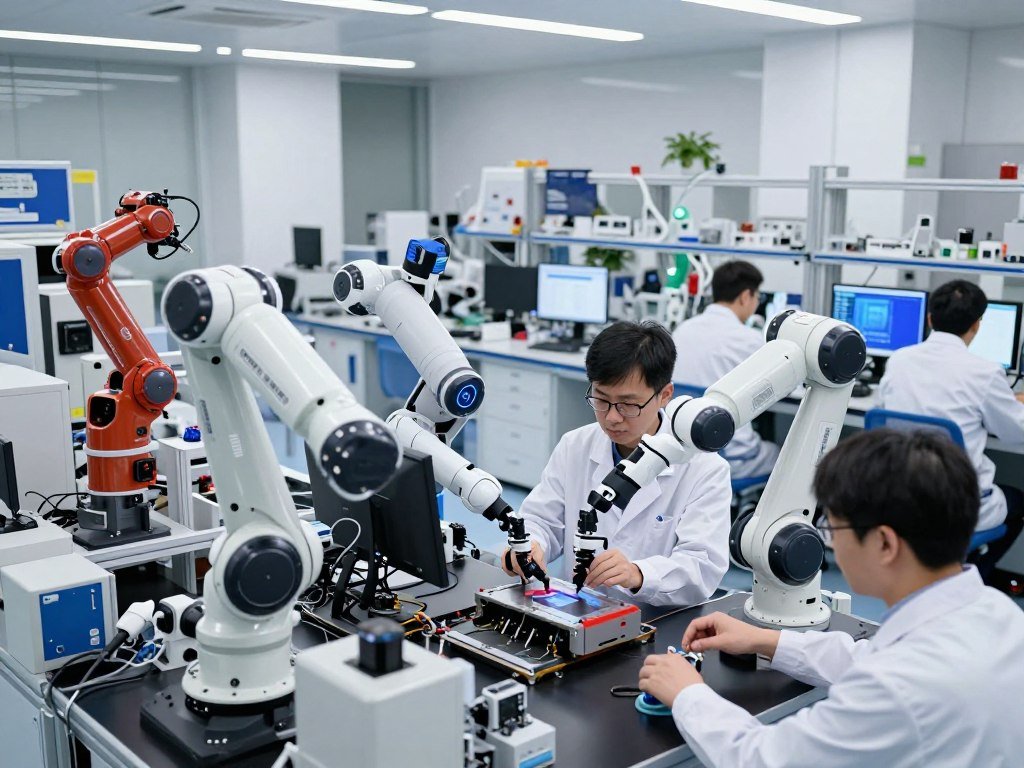
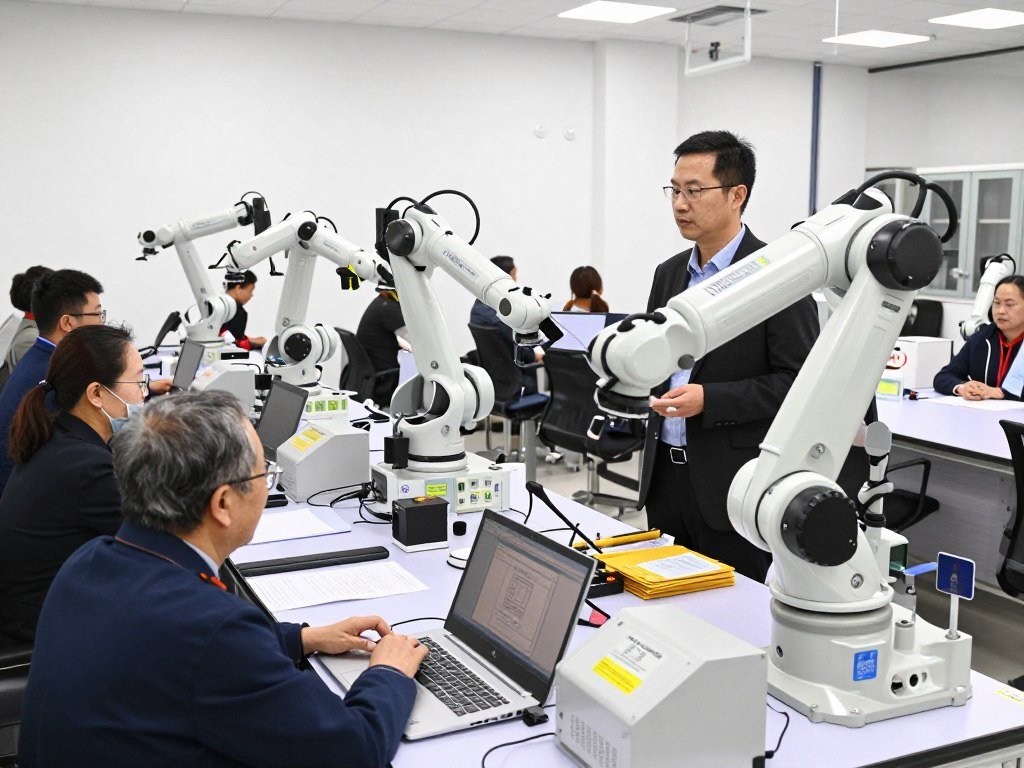
Robotics advances enable physical task automation across expanding contexts. Manufacturing robots achieve unprecedented dexterity and adaptability. Warehouse robots navigate complex environments autonomously. Service robots begin handling food preparation, cleaning, and delivery tasks. Engineers project that physical task automation will progress more gradually than cognitive automation due to real-world complexity, but momentum is building across applications.
Technology executives emphasize business drivers accelerating automation adoption. Competition pressures companies to match or exceed rivals’ efficiency levels. Shareholders demand profit margin expansion. Labor shortages in certain roles push automation solutions. These forces create powerful momentum that policy interventions or ethical considerations struggle to counteract.
Some technology leaders express concern about automation’s social consequences. They acknowledge that while technological progress creates long-term benefits, transition periods cause genuine suffering for displaced workers. These executives advocate for industry participation in workforce transition programs and support for social safety net expansions. However, competitive pressures limit most companies’ willingness to voluntarily moderate automation deployment.
Computer scientists studying artificial intelligence safety raise distinct concerns. They worry that automation decisions driven purely by profit optimization may ignore broader social welfare considerations. Without governance frameworks addressing distribution of automation benefits and costs, technology deployment may create socially destructive outcomes despite generating aggregate economic gains.
Market Outlook and Investment Implications
Financial analysts project continued robust growth for automation-related sectors. Investment banks forecast that robotics companies will see revenue growth averaging 25-30 percent annually through 2030. Artificial intelligence software markets may expand even faster as applications proliferate across industries. These projections drive substantial capital flows into automation technology companies.
Equity strategists recommend investors maintain exposure to automation beneficiaries while reducing holdings in displacement-vulnerable sectors. Technology stocks, particularly those focused on artificial intelligence and robotics, receive widespread buy ratings. Traditional retail, manufacturing, and transportation companies face skepticism unless they demonstrate clear automation strategies.

Fixed-income analysts assess regional municipal bonds with caution given automation’s geographic impacts. Bonds from technology hub cities command premium prices while those from manufacturing-dependent regions require higher yields to attract buyers. This spread reflects market concerns about tax base erosion in automation-vulnerable communities. Corporate bonds show similar patterns with automation leaders enjoying tight spreads while labor-intensive companies face higher borrowing costs.
Real estate investment strategists emphasize shifting property sector attractiveness. Industrial properties suitable for automated distribution centers attract strong investor interest. Data center real estate benefits from artificial intelligence computational demands. Traditional office and retail properties face headwinds from remote work and e-commerce trends accelerated by automation. These real estate shifts affect pension funds, REITs, and individual investors holding property assets.
Commodity markets show mixed automation impacts. Demand for industrial metals used in robotics and electronics manufacturing strengthens. Energy consumption patterns shift as data centers proliferate. Agricultural automation affects farming equipment demand while potentially reducing labor-intensive crop production. These commodity implications ripple through supply chains and affect resource-dependent regional economies.
Risk Level Assessment
Synthesizing expert opinions across disciplines suggests classifying automation-driven job displacement as a HIGH RISK economic threat for the period 2026-2030. This assessment reflects several converging factors that elevate concern levels beyond moderate risk categories.
The high-risk designation reflects the scale of potential displacement affecting 15-25 million workers. It incorporates the rapid pace of automation deployment outstripping workforce adaptation capacity. Geographic concentration of impacts threatens regional economic collapse in vulnerable areas. Substantial skills gaps prevent smooth labor market transitions. Limited policy preparedness means inadequate safety nets and retraining infrastructure exist to manage the transformation effectively.
This risk level indicates that without significant interventions, automation-driven displacement could cause substantial economic disruption, elevated unemployment, increased inequality, and social instability. The threat warrants immediate attention from policymakers, business leaders, and workforce development institutions to implement mitigation strategies before impacts intensify further.
Possible Solutions or Policy Responses

Addressing automation and job displacement risks requires coordinated action across government, private sector, and educational institutions. No single intervention sufficiently manages the transformation’s complexity. Effective responses combine workforce development, social safety net expansions, tax policy adjustments, and economic restructuring initiatives. The following solutions represent options under active discussion among policymakers and stakeholders.
Government Actions and Programs
Federal workforce development initiatives require substantial expansion to meet retraining needs. The current system serves approximately 2 million workers annually through various programs. Meeting projected displacement would require capacity increases to 8-10 million participants annually. This expansion demands additional funding estimated at $40-60 billion over five years according to the U.S. Department of Labor.
Congress considers several legislative approaches to workforce challenges. The Workforce Innovation and Opportunity Act faces potential reauthorization with expanded funding and modernized training programs. Proposals include portable training accounts allowing workers to accumulate educational credits throughout careers. Tax credits for companies providing substantive retraining to displaced workers could incentivize private sector participation in transition management.
Universal basic income proposals generate significant debate as potential automation responses. Pilot programs in several cities test monthly cash transfers to residents regardless of employment status. Proponents argue this provides economic security during workforce transitions. Critics raise concerns about costs, work incentives, and implementation feasibility. The Congressional Budget Office estimates a meaningful UBI program would cost $2-3 trillion annually, requiring major tax increases or spending reallocations.
Wage insurance programs offer middle-ground alternatives to UBI. These initiatives provide partial wage replacement to displaced workers accepting lower-paying positions during career transitions. This approach maintains work incentives while cushioning income losses. Several states pilot wage insurance programs with federal support. Expansion could protect workers financially while they acquire new skills and rebuild earnings capacity.
- Expand community college funding to double capacity for technology training programs
- Create national apprenticeship programs in emerging technology sectors
- Establish portable benefits systems allowing workers to maintain health insurance and retirement contributions across job changes
- Implement wage insurance covering 50 percent of earnings differences for displaced workers in transition
- Fund regional economic development initiatives targeting automation-vulnerable communities
- Provide relocation assistance for workers moving to opportunity-rich areas
- Strengthen unemployment insurance systems to provide longer benefit periods during structural transitions
Infrastructure investments offer opportunities to create jobs replacing those lost to automation. The Infrastructure Investment and Jobs Act allocates funds for physical infrastructure improvements requiring substantial human labor. Expanding such programs to include broadband deployment, renewable energy installations, and community facility modernization could generate employment for workers transitioning from automation-vulnerable sectors.
The Social Security Administration faces pressure to adjust policies given changing workforce dynamics. Earlier retirement eligibility ages could provide graceful exit options for older workers facing displacement. However, this increases system costs and reduces workforce participation. Alternative proposals include strengthening disability benefits for workers unable to adapt to new skill requirements. These adjustments require careful balancing of fiscal sustainability and worker protection.
Federal Reserve Policies and Monetary Responses
The Federal Reserve confronts unique monetary policy challenges in automation-driven economic transformations. Traditional relationships between employment, inflation, and interest rates may weaken as structural unemployment coexists with labor shortages in specific sectors. This complicates the Fed’s dual mandate of promoting maximum employment and stable prices.
Interest rate policies influence automation investment decisions. Lower rates make capital investments in automation equipment more attractive by reducing borrowing costs. Higher rates could slow automation deployment but might also dampen overall economic growth and job creation. The Fed must balance these competing considerations when setting monetary policy in automation contexts.

Financial stability concerns arise from automation’s impact on regional banking systems. Banks in manufacturing-dependent regions face loan portfolio risks as local businesses struggle and unemployment rises. The Fed’s supervisory role includes monitoring these concentrations and ensuring adequate capital buffers. Regulatory interventions may prove necessary to maintain financial system stability during significant economic restructuring.
Payment system modernization represents another Federal Reserve responsibility affected by automation. Digital payment technologies and cryptocurrency developments challenge traditional banking intermediation. The Fed explores central bank digital currency options that could reshape monetary transmission mechanisms. These innovations interact with automation trends in complex ways affecting both policy effectiveness and financial inclusion.
The Federal Reserve Bank research divisions study automation’s macroeconomic implications extensively. Their analysis informs policy discussions about appropriate monetary responses to technology-driven structural changes. Publications from regional Fed banks provide valuable data and frameworks for understanding automation’s economic impacts across different geographic contexts.
Market Adjustments and Private Sector Initiatives
Business community responses to automation challenges vary widely. Some companies invest substantially in worker retraining and transition support. Others pursue automation aggressively with minimal attention to displacement consequences. Industry associations develop best practice guidelines, though participation remains voluntary and uneven.
Corporate retraining programs show promise where implemented seriously. Major technology companies operate skills development initiatives teaching programming, data analytics, and digital literacy. Manufacturing firms partner with community colleges to prepare workers for transformed roles operating and maintaining automated systems. These programs benefit participants but reach limited numbers relative to overall displacement scale.
Labor unions negotiate technology agreements protecting worker interests during automation transitions. These contracts may include advance notice requirements, severance packages, retraining provisions, and preferential hiring for new positions. Strong unions in manufacturing and transportation sectors secure better outcomes for members than unorganized workers receive. However, union membership continues declining, limiting these protections’ reach.
Industry-education partnerships create talent pipelines for emerging occupations. Companies communicate skill requirements to colleges and universities. Educational institutions develop curricula meeting industry needs. Students gain relevant competencies for available positions. These collaborations work best in technology hubs with geographic proximity between employers and educational institutions. Rural areas and declining industrial regions lack similar ecosystem advantages.
Venture capital and private equity increasingly consider workforce impacts in investment decisions. Some investors prioritize companies with strong retraining commitments or business models creating quality employment. Others focus solely on financial returns regardless of labor market effects. Market forces alone appear insufficient to ensure socially responsible automation deployment without regulatory frameworks or reputational pressures encouraging broader considerations.
- Establish industry-wide retraining funds financed by automation-deploying companies
- Create corporate tax incentives rewarding companies that successfully retrain and retain workers during automation transitions
- Develop sectoral training partnerships between companies, unions, and educational institutions
- Implement advance notification requirements giving workers adequate time to prepare for automation changes
- Encourage profit-sharing arrangements allowing workers to benefit financially from productivity gains
- Support employee ownership models giving workers stakes in automation benefits
Education System Reforms and Lifelong Learning
The education system requires fundamental restructuring to serve automation-era workforce needs. Traditional models preparing students for single careers prove inadequate when technological change demands continuous skill evolution. Lifelong learning becomes essential rather than optional for career sustainability.
K-12 education must incorporate technology fluency and adaptive learning capabilities as core competencies. Students need exposure to programming, data analysis, and human-machine collaboration skills. Equally important are creativity, critical thinking, and emotional intelligence that differentiate human capabilities from automation. Many school districts lack resources and expertise to modernize curricula effectively.

Higher education institutions expand access to mid-career students seeking skill updates and career changes. Online learning platforms, evening programs, and modular credentials accommodate working adults. However, affordability remains a significant barrier. Federal and state financial aid systems designed for traditional college-age students often exclude or disadvantage adult learners. Policy reforms could expand access to grants and affordable loans for workforce retraining.
Community colleges play critical roles in workforce adaptation as accessible entry points for skill development. These institutions offer practical training aligned with regional employment needs. Strengthening community college systems through enhanced funding, industry partnerships, and transfer pathways to four-year institutions could substantially improve workforce resilience. The American Association of Community Colleges advocates for federal investment doubling current support levels.
Microcredentials and digital badges provide alternatives to traditional degree programs. These focused certifications verify specific competencies valued by employers. Technology companies increasingly accept microcredentials for hiring decisions. However, quality varies significantly across providers, and many workers remain unaware of these pathways. Standardization and quality assurance could improve microcredential effectiveness as workforce development tools.
Employer tuition assistance programs enable workers to pursue education while maintaining employment. Tax policies could incentivize companies to expand these offerings. Some proposals suggest allowing workers to use pre-tax income for training expenses, similar to health savings accounts. These approaches reduce individual financial barriers to skill development while maintaining employment continuity.
Short-Term Educational Priorities
- Rapid deployment of automation literacy programs for at-risk workers
- Emergency funding for community college capacity expansion
- Mobile training units reaching rural and underserved communities
- Fast-track certification programs in high-demand technology roles
- Career counseling services helping workers identify viable transition paths
- Financial support for training participants covering living expenses
Long-Term Educational Transformation
- K-12 curriculum integration of technology fluency and adaptive learning
- Universal access to lifelong learning accounts for continuous skill development
- Seamless pathways between educational institutions and credential types
- Industry-validated competency frameworks guiding training programs
- Regional skills ecosystems connecting employers, educators, and workers
- Cultural shift embracing career transitions as normal rather than failures
Apprenticeship expansion offers proven models for skill development combining classroom learning with practical experience. European countries utilize apprenticeships extensively across occupations from manufacturing to healthcare. The United States could adapt these models to technology sectors and modernized traditional trades. Federal support for apprenticeship development would help companies offset training costs while ensuring quality standards.
The education system must also address digital divide issues preventing equitable access to online learning resources. Rural broadband expansion enables remote participation in training programs. Providing devices and technical support ensures technology access doesn’t create additional barriers for economically disadvantaged populations. The Infrastructure Investment and Jobs Act includes broadband funding, but implementation speed matters for workforce transition timelines.
What It Means for Americans

Automation and job displacement risks translate into concrete impacts affecting Americans’ daily lives, financial security, and future prospects. Understanding these practical implications helps individuals and families prepare for coming changes. The effects touch multiple aspects of economic wellbeing from immediate cost of living concerns to long-term retirement security.
Cost of Living Implications
Automation’s impact on cost of living presents contradictory dynamics. Prices for goods produced through automated manufacturing generally decline as production costs fall. Electronics, appliances, and consumer products from highly automated facilities become more affordable. This deflationary pressure benefits consumers by increasing purchasing power for these items.
However, services requiring human interaction show different patterns. Healthcare, education, childcare, and personal services prove difficult to automate comprehensively. Labor costs in these sectors continue rising, pushing service prices upward. Families experience divergent cost pressures where manufactured goods become cheaper while essential services grow more expensive. This split inflation pattern affects household budgets unequally across income levels.
Housing costs reflect complex automation influences. In technology hub cities attracting automation-related employment, housing demand intensifies, driving prices and rents higher. San Francisco, Seattle, and Austin residents face escalating housing expenses as technology workers compete for limited supply. Conversely, manufacturing-dependent communities experiencing job losses see housing values stagnate or decline as population outflows reduce demand.
Transportation expenses may decrease for some households as autonomous vehicle services reduce costs below personal vehicle ownership. Ride-sharing with self-driving vehicles could provide affordable mobility without car payments, insurance, and maintenance. However, displaced transportation workers lose incomes, creating financial stress that outweighs any savings from cheaper services. The net effect varies significantly based on individual employment situations.
Food costs face automation influences throughout production and distribution chains. Agricultural automation reduces farming labor costs. Automated warehouses and delivery systems lower logistics expenses. Restaurant automation affects food service pricing. These changes create efficiency gains potentially translating to consumer savings. However, food industry workers facing displacement experience income reductions undermining their purchasing power regardless of price trends.
- Manufactured goods prices projected to decline 2-4 percent over next five years due to automation
- Service sector prices expected to increase 4-6 percent annually as labor-intensive activities face cost pressures
- Housing costs in technology centers rising 8-12 percent annually while declining 2-3 percent in industrial regions
- Healthcare expenses continuing upward trajectory with 5-7 percent annual increases despite limited automation
- Transportation costs potentially decreasing 15-25 percent for early autonomous service adopters
Job Security and Career Prospects
Employment stability erodes across occupations as automation capabilities expand. Workers face growing uncertainty about career longevity regardless of current performance. Even individuals in seemingly secure positions recognize that technological advances could render their roles obsolete. This psychological burden affects financial planning, family decisions, and overall wellbeing.
Young workers entering labor markets confront fundamentally different career trajectories than previous generations. The expectation of holding multiple careers throughout working lives becomes reality rather than choice. Recent college graduates understand that their initial occupations may not exist throughout their work lives. This necessitates continuous learning and adaptation as core career strategies rather than occasional enhancements.

Mid-career workers between 40 and 55 face particularly acute challenges. They possess substantial experience in their fields but may lack time to develop entirely new skill sets before retirement. Age discrimination compounds their difficulties as employers prefer younger workers for retraining investments. These individuals often carry significant financial responsibilities including mortgages, children’s education costs, and retirement savings needs. Displacement creates devastating financial consequences for this demographic group.
Geographic mobility requirements create difficult family decisions. Optimal employment opportunities increasingly concentrate in specific metropolitan areas. Workers facing displacement must choose between relocating to opportunity-rich regions or accepting limited local options. Family ties, housing equity, and children’s education stability complicate these decisions. Many families lack financial resources for cross-country moves even when better opportunities exist elsewhere.
The gig economy expands partly as displaced workers pursue independent contracting and temporary positions. While flexibility benefits some workers, many gig participants lack employer-provided health insurance, retirement benefits, and employment protections. This shift from traditional employment relationships creates financial insecurity and retirement preparation challenges. The Social Security Administration notes growing concerns about gig workers’ retirement security given inconsistent income and limited retirement plan access.
Career planning strategies must evolve to address automation realities. Workers need regular skills assessments identifying gaps relative to emerging job requirements. Continuous learning becomes mandatory rather than optional. Building financial reserves for potential transition periods proves essential. Developing transferable skills applicable across multiple industries provides greater resilience than deep specialization in potentially vulnerable fields.
Investment Portfolio Impacts
Individual investors face portfolio implications from automation trends reshaping corporate profitability and sector dynamics. Retirement accounts holding traditional diversified portfolios experience uneven performance as automation winners outperform while vulnerable sectors lag. Understanding these dynamics helps investors make informed allocation decisions protecting long-term financial security.
Technology sector concentration in major stock indices increases dramatically as automation companies dominate market capitalizations. The S&P 500 index sees technology stocks comprising over 30 percent of total value, up from 20 percent a decade earlier. This concentration creates portfolio risks if technology valuations correct or if regulatory actions constrain automation companies. Investors relying on index funds experience significant automation company exposure whether intentionally chosen or not.
Dividend income faces pressure as automation-vulnerable companies cut payouts due to declining profitability. Traditional manufacturing firms and retailers reducing dividends or eliminating them entirely affect retirees depending on investment income. Conversely, technology companies historically paying minimal dividends begin returning more cash to shareholders as businesses mature. This shift requires investors to rebalance portfolios maintaining desired income levels.
Corporate bond portfolios require attention to automation exposure within holdings. Bonds from companies in high-risk sectors face potential credit quality deterioration. Investment-grade bonds could face downgrades to speculative status if business models erode under automation pressure. Fixed-income investors should evaluate holdings for automation vulnerability, potentially reducing exposure to at-risk issuers while that remains possible at reasonable prices.
Real estate investment trust (REIT) performance diverges based on property type automation exposure. Industrial REITs owning warehouse and distribution facilities benefit from e-commerce and automated logistics growth. Data center REITs profit from artificial intelligence computational demands. Retail and traditional office REITs struggle with structural headwinds from automation-enabled remote work and online shopping. Portfolio allocations should reflect these diverging property sector trajectories.
International diversification provides partial insulation from U.S.-specific automation impacts. However, automation proceeds globally with similar sectoral effects across developed economies. Emerging markets may offer different risk profiles where labor cost advantages persist longer before automation deployment. Geographic diversification remains important but doesn’t eliminate automation-related portfolio risks entirely.
- Review portfolio sector allocations quarterly assessing automation exposure across holdings
- Rebalance away from high-automation-risk sectors toward beneficiaries and resilient alternatives
- Maintain adequate cash reserves for potential career transitions requiring financial cushions
- Consider reducing concentration in employer stock if company faces automation pressures
- Evaluate dividend sustainability for income-producing investments in vulnerable sectors
- Explore thematic funds focused on automation beneficiaries for targeted exposure
Housing Market Considerations
Real estate markets experience significant automation-driven disruption affecting homeownership decisions and property values. Geographic divergence intensifies as automation concentrates economic activity in technology centers while hollowing out traditional industrial regions. These patterns create winners and losers among homeowners based largely on location.
Technology hub housing markets see robust demand and price appreciation. Cities attracting automation-related employment experience population inflows and housing shortages. Home prices in San Francisco, Seattle, Austin, and similar markets reached record levels during 2024. Existing homeowners in these areas benefit from substantial equity gains. However, first-time buyers face affordability challenges requiring dual high incomes or significant down payments to enter markets.
Manufacturing-dependent communities face opposite dynamics with declining populations and stagnant property values. Home prices in Rust Belt cities and industrial towns fell or remained flat during periods when national housing markets appreciated substantially. Homeowners in these regions experience wealth losses as property equity erodes. Underwater mortgages trap some residents unable to sell and relocate even when better opportunities exist elsewhere.
Rental markets follow similar geographic patterns with high-demand technology centers seeing rising rents while struggling regions show declining or flat rental rates. Renters in technology hubs face escalating housing costs consuming larger income shares. Meanwhile, renters in declining areas may find bargains but struggle with limited local employment prospects justifying remaining in these locations.
Housing mobility decisions require careful analysis balancing career opportunities against housing costs and family considerations. Moving to opportunity-rich regions means higher housing expenses potentially offsetting income gains. Staying in economically declining areas maintains lower housing costs but limits career prospects. Families must evaluate these tradeoffs considering both parents’ careers, children’s education, and proximity to extended family support networks.
Mortgage affordability shifts as automation affects employment stability and income trajectories. Lenders may tighten standards for workers in high-automation-risk occupations, viewing them as elevated credit risks. This could limit homeownership access for substantial worker populations even before actual displacement occurs. Conversely, workers in automation-resilient or benefiting roles may find easier mortgage qualification and more favorable terms.
Remote work enabled by automation technologies creates new geographic flexibility for some workers. Individuals whose jobs transition to permanent remote arrangements can choose locations based on lifestyle preferences and cost considerations rather than employer proximity. This flexibility allows optimizing housing costs while maintaining career opportunities. However, remote positions face their own automation pressures over time as companies recognize that remote work functions may automate more easily than on-site roles.
Retirement Security Concerns
Long-term retirement preparation faces substantial challenges in automation-driven economies. Workers experiencing multiple career disruptions accumulate less retirement savings due to interrupted employment and reduced earnings during transitions. Social Security benefits may decrease if lifetime earnings decline due to displacement and forced acceptance of lower-paying positions.
The Social Security Administration projects potential funding challenges if automation significantly reduces payroll tax revenues while benefit obligations continue. Current workers facing displacement may receive lower benefits than anticipated based on reduced lifetime earnings. The system’s long-term solvency requires adequate worker-to-beneficiary ratios that automation-driven unemployment could undermine. Policy adjustments may prove necessary, potentially including benefit reductions, tax increases, or eligibility age changes affecting current workers’ retirement plans.

Defined contribution retirement plans like 401(k) accounts depend on consistent contributions throughout careers. Employment disruptions interrupt contribution patterns, reducing long-term accumulation. Company matching contributions cease during unemployment periods, further diminishing retirement savings. Workers taking hardship withdrawals during extended job searches deplete accounts and incur penalties undermining retirement security.
Pension plans where they still exist face funding challenges from automation’s impact on employer profitability and employment levels. Traditional manufacturing companies with pension obligations struggle financially as automation reduces revenue and workforces. Pension Benefit Guaranty Corporation may assume failing pension plans, potentially reducing benefits for retirees depending on these payments. Workers with traditional pensions should monitor plan funding status and employer financial health as indicators of benefit security.
Healthcare costs in retirement represent major financial concerns given medical expense inflation consistently outpacing general inflation. Medicare provides basic coverage but requires supplemental insurance or out-of-pocket spending for comprehensive protection. Workers experiencing reduced lifetime earnings due to automation displacement accumulate less savings for healthcare costs while potentially facing health issues from employment stress. This combination creates significant retirement financial vulnerability.
- Maximize retirement contributions during stable employment periods building financial cushions
- Avoid hardship withdrawals from retirement accounts if alternative resources exist
- Consider delaying Social Security claiming to increase monthly benefits if feasible
- Maintain emergency funds separate from retirement accounts for income disruptions
- Evaluate potential geographic arbitrage retiring in lower-cost areas if career considerations allow
- Plan for longer careers potentially working into seventies as career disruptions affect accumulation
Younger workers face different retirement challenges requiring adjusted strategies. They will likely experience multiple career transitions throughout working lives, necessitating flexibility in retirement planning. Building diverse skills and portable capabilities becomes as important as financial accumulation. Understanding that retirement may look fundamentally different than current models helps set realistic expectations and planning parameters.
Future Outlook (2026–2030)

The period from 2026 through 2030 represents a critical transition phase in automation’s economic impact. Current trends suggest this timeframe will see accelerating deployment of artificial intelligence and robotics across sectors, creating substantial workforce disruptions while generating economic transformations. Understanding likely scenarios helps workers, businesses, and policymakers prepare for multiple potential outcomes.
Short-Term Outlook (2026-2027)
The immediate two-year horizon shows automation deployment intensifying across manufacturing, retail, and logistics sectors. The Bureau of Labor Statistics projects that an additional 3 to 4 million workers will face direct displacement during this period. Manufacturing continues experiencing the steepest declines with major automotive and electronics producers completing factory modernization initiatives that dramatically reduce workforce requirements.
Retail sector transformation accelerates as major chains expand self-checkout systems and automated inventory management. Amazon and similar e-commerce leaders deploy hundreds of thousands of additional warehouse robots, reducing fulfillment center staffing by 25-30 percent. Traditional retailers adopt similar technologies to remain competitive, creating cascading employment effects across the industry. The National Retail Federation estimates that retail employment will decline by approximately 600,000 positions during 2026-2027.
Artificial intelligence systems make significant inroads into office work and professional services. Customer service roles experience substantial automation through conversational AI chatbots handling increasingly complex interactions. Data entry, basic accounting, and routine legal document preparation automate extensively. While complete job elimination occurs less frequently in professional contexts, task transformation affects millions of office workers requiring skill adaptations.
Economic growth during 2026-2027 faces conflicting pressures. Productivity improvements from automation support GDP expansion, with the Congressional Budget Office projecting 2.2-2.5 percent annual growth. However, consumer demand softens as displaced workers reduce spending. Unemployment rates may rise from current levels to 5-6 percent as displacement outpaces new job creation. This tepid growth environment creates policy challenges for Federal Reserve interest rate decisions balancing inflation concerns against employment objectives.
Regional economic divergence intensifies during this period. Technology hub cities continue attracting talent and investment, experiencing robust employment growth in artificial intelligence, software development, and high-skilled services. Manufacturing-dependent regions face accelerating population outflows as workers seek opportunities elsewhere. This geographic polarization strains social cohesion and generates political pressures for federal intervention supporting struggling communities.
Wage dynamics show continued divergence between automation-resilient and vulnerable occupations. High-skilled technology workers command increasing compensation as demand exceeds supply. Meanwhile, workers in automation-threatened roles experience wage stagnation or declines as employer leverage increases. The U.S. Department of the Treasury projects that wage inequality will widen measurably during 2026-2027, potentially reaching levels not seen since the early 20th century.
- Manufacturing employment declining 8-10 percent from 2025 levels by end of 2027
- Retail sector losing 600,000 positions as automated checkout becomes standard
- Transportation and warehousing employment dropping 12-15 percent due to automation
- Technology sector adding 800,000 positions in artificial intelligence and robotics fields
- Healthcare expanding by 1.2 million positions as aging demographics drive service demand
- Overall unemployment rising to 5.5-6 percent from current 4.2 percent
Medium-Term Trends (2028-2030)
The 2028-2030 period sees automation effects broadening beyond early-adopting sectors into domains previously considered secure from technological displacement. Professional services including law, accounting, and healthcare experience substantial task automation. Educational delivery models transform as artificial intelligence tutoring systems provide personalized instruction at scale. Even creative fields face automation pressures from generative AI producing content, designs, and analysis.
Autonomous vehicle deployment reaches commercial viability in this timeframe, creating existential threats to professional driving occupations. Long-haul trucking begins transitioning to self-driving systems on major interstate routes. Urban delivery services deploy autonomous vehicles for last-mile logistics. Ride-sharing networks introduce robotaxis in major metropolitan areas. The International Monetary Fund estimates these developments could displace 1.5 to 2 million transportation workers between 2028 and 2030.

The nature of work transforms fundamentally for workers remaining employed. Human-machine collaboration becomes standard across occupations with workers supervising automated systems, handling exceptions, and performing tasks requiring human judgment. This shift demands continuous learning as technologies evolve rapidly. Workers without strong adaptive learning capabilities struggle to maintain employment even in initially secure positions.
New job categories emerge around automation technology development, deployment, and maintenance. Robotics technicians, AI system trainers, automation ethics specialists, and human-machine interface designers represent growing occupational areas. However, these new roles total fewer positions than those eliminated and require different skills than displaced workers typically possess. The World Bank estimates that new job creation will offset only 40-50 percent of automation-driven losses during this period.
Economic inequality reaches concerning levels by 2030 absent policy interventions. The Congressional Budget Office projects that the top 10 percent of earners will capture 65-70 percent of income gains during the 2020s decade, with automation playing a central role in this concentration. Wealth inequality grows even more pronounced as asset ownership rewards capital while labor’s income share declines. These disparities create social tensions and political instability risks that could feedback into economic disruption.
GDP growth trajectories remain uncertain depending heavily on policy responses and consumption patterns. Optimistic scenarios where displaced workers transition successfully and new industries emerge suggest 2.5-3 percent annual growth rates. Pessimistic projections assuming demand weakness from unemployment and inadequate transition support indicate growth potentially slowing to 1.5-2 percent. The actual outcome likely falls somewhere between these bounds, influenced by decisions made during the 2026-2027 timeframe.
Long-Term Risks Beyond 2030
Looking past 2030, automation’s trajectory suggests continued acceleration unless conscious policy choices alter paths. Artificial intelligence capabilities advance toward handling increasingly complex cognitive tasks. Robotics achieves greater dexterity and adaptability expanding into additional physical domains. The combination threatens displacement extending to currently secure professional and creative occupations.
Structural unemployment may become persistent feature of advanced economies if job destruction consistently exceeds creation. The Organization for Economic Cooperation and Development models suggest that 20-30 percent structural unemployment rates could emerge by 2040 under aggressive automation scenarios without offsetting policy interventions. This would represent economic transformation rivaling the Industrial Revolution’s social upheaval.
Social safety net systems face existential funding challenges if traditional employment-based models erode while benefit demands increase. Social Security, unemployment insurance, and healthcare financing mechanisms all assume robust employment and payroll tax revenues. Automation disrupting these foundations necessitates fundamental restructuring potentially including universal basic income, consumption taxes funding social programs, or other novel approaches to economic security.
Political instability risks increase alongside economic disruption and inequality. Historical patterns suggest that rapid technological change creating concentrated winners and widespread losers generates populist political movements and social conflict. The World Bank warns that automation’s impacts could prove destabilizing for democratic institutions if governments fail to manage transitions effectively and ensure broadly shared prosperity.
However, optimistic scenarios remain possible where automation generates abundance benefiting society broadly. Productivity gains could enable shorter work weeks, earlier retirements, and higher living standards if institutional frameworks distribute benefits equitably. Automation could free humans from dangerous, repetitive, and undesirable tasks while creating opportunities for more meaningful and creative work. Achieving these positive outcomes requires intentional policy choices prioritizing broad prosperity over concentrated gains.
The 2026-2030 period represents a critical juncture where policy decisions and institutional adaptations will largely determine whether automation proves economically beneficial or socially destructive. Workers, businesses, and policymakers face urgent needs to implement transition support systems, workforce development infrastructure, and economic restructuring initiatives that can manage the transformation ahead.
Potential Positive Outcomes
- Dramatic productivity increases raising living standards
- Elimination of dangerous and undesirable jobs
- More time for creative and meaningful human activities
- Reduced costs for essential goods and services
- Medical and scientific breakthroughs from AI assistance
- Environmental benefits from optimized resource usage
- Opportunities for new industries and occupations
Potential Negative Outcomes
- Mass unemployment and underemployment
- Extreme wealth and income inequality
- Social instability and political upheaval
- Regional economic collapse in vulnerable areas
- Inadequate retirement security for displaced workers
- Loss of human skills and capabilities through disuse
- Concentration of power among technology companies
Conclusion

Automation and job displacement risks represent one of the most consequential economic challenges facing the United States through 2026 and beyond. The evidence presented throughout this analysis demonstrates that technological transformation will reshape labor markets, disrupt traditional employment patterns, and challenge existing social safety net systems. The scale of potential displacement affecting 15 to 25 million workers demands serious attention from policymakers, business leaders, and individuals.
The threat’s complexity defies simple solutions or single-dimensional responses. Geographic disparities create different challenges for technology hub cities versus manufacturing-dependent regions. Demographic factors including age, education, and skills determine individual vulnerability levels. Sectoral variations mean some industries face existential automation pressures while others experience primarily task transformation rather than elimination.
Current data reveals acceleration trends that intensify concerns. Corporate automation investments reached record levels during 2024. Job displacement already proceeds across manufacturing, retail, and logistics sectors. Skills gaps between displaced workers and emerging opportunities create structural mismatches preventing smooth transitions. Without coordinated interventions, these patterns suggest difficult years ahead for millions of American workers and their communities.
Expert forecasts consistently identify this as a high-risk economic threat. The Congressional Budget Office, International Monetary Fund, and Bureau of Labor Statistics all project substantial workforce disruption through 2030. The range of potential outcomes spans from manageable transitions to socially destabilizing unemployment and inequality. Which scenario materializes depends critically on policy choices and institutional responses implemented during the next several years.
Policy solutions exist across government action, private sector initiatives, and educational system reforms. Workforce development programs require dramatic expansion to serve millions of workers needing retraining. Social safety nets need strengthening to support individuals during extended transition periods. Tax policies should address automation’s distributional consequences ensuring broad benefit sharing. Education systems must embed lifelong learning capabilities preparing workers for continuous adaptation.
The practical impacts on American families touch every aspect of economic security. Cost of living dynamics shift as goods prices decline while service costs rise. Job security erodes even for currently employed workers facing uncertain career longevity. Investment portfolios require rebalancing reflecting automation’s sectoral winners and losers. Housing markets diverge geographically based on automation’s uneven regional impacts. Retirement security faces challenges from interrupted careers and reduced lifetime earnings.

The 2026-2030 outlook suggests critical transition years where automation deployment accelerates across sectors. Manufacturing, retail, transportation, and office work face continuing displacement pressures. New technologies including autonomous vehicles and advanced artificial intelligence systems expand automation’s reach into previously secure occupations. The economic and social fabric will experience strain testing institutional resilience and policy effectiveness.
Long-term trajectories beyond 2030 remain highly uncertain. Automation could generate broadly shared prosperity if institutional frameworks ensure equitable distribution of productivity gains. Alternatively, unchecked technological displacement could create persistent structural unemployment and dangerous inequality levels. The difference between these outcomes depends on decisions made now regarding workforce preparation, social safety nets, and economic governance structures.
Individual Americans must take proactive steps protecting themselves and their families. Continuous skills development becomes essential for career sustainability. Financial planning should assume potential income disruptions and extended transition periods. Geographic flexibility may prove necessary as employment opportunities concentrate in specific regions. Building resilience through transferable skills and adaptable mindsets provides the best personal insurance against automation’s impacts.
Business leaders bear responsibility for managing automation deployment ethically and sustainably. Investing in worker retraining demonstrates both social responsibility and enlightened self-interest by maintaining consumer purchasing power. Advance notification of automation plans allows workers time to prepare. Profit-sharing arrangements that include workers in productivity gains create stakeholder alignment benefiting companies and employees.
Policymakers face urgent imperatives to implement comprehensive responses addressing automation’s multifaceted challenges. Workforce development infrastructure requires immediate expansion. Social safety net programs need modernization for 21st century labor market realities. Tax policies should ensure automation benefits society broadly rather than accruing narrowly to capital owners. Regional development initiatives must support communities facing concentrated displacement.
The coming years will determine whether America successfully navigates this technological transformation or succumbs to its socially destructive potential. The stakes involve not merely economic statistics but the security and dignity of millions of workers and their families. The challenge demands collective action drawing on government, business, educational institutions, and civic organizations. Meeting this moment successfully requires both urgency and sustained commitment to ensuring that technological progress serves human flourishing.
“The best time to prepare for automation’s impact was ten years ago. The second-best time is now. Every month of delay makes the transition more difficult and the social costs higher.”