Debt Ceiling Crises and Market Volatility: How It Could Impact the U.S. Economy in 2026 and Beyond
The United States faces a recurring economic threat that could shake financial markets and disrupt millions of American lives. The debt ceiling crisis represents one of the most significant policy challenges confronting the federal government today.
This legislative limit on government borrowing has repeatedly pushed the nation to the brink of default. Each confrontation creates market uncertainty and threatens economic stability.
Why does this matter right now? Recent Congressional Budget Office projections show the federal debt reaching unprecedented levels. The Treasury Department may hit the debt ceiling again between 2025 and 2026.
Secretary Janet Yellen has warned Congress about the consequences of failing to raise the debt ceiling. Without action, the government cannot pay its bills on time.
Consider this alarming data point. The U.S. national debt exceeded $34 trillion in early 2024. This represents more than 120% of the nation’s gross domestic product.
The debt limit has been raised, suspended, or revised 78 times since 1960. Yet each new crisis brings fresh uncertainty to financial markets and households across America.
What Is This Economic Threat?
The debt ceiling is a legal limit set by Congress on how much money the federal government can borrow. This cap restricts the total amount of debt the U.S. Treasury can issue.
Congress created the debt ceiling in 1917 during World War I. The Second Liberty Bond Act gave the Treasury more flexibility in managing government finances. Before this law, Congress had to approve each individual bond issuance.
The current debt limit stands at approximately $31.4 trillion after the 2023 suspension period ended. When the government hits this ceiling, it cannot issue new debt to pay existing obligations.
This creates a fundamental problem. The federal government spends more money than it collects in revenue. The difference must be financed through borrowing.
Understanding the Mechanics of the Debt Ceiling
The debt ceiling covers all federal debt. This includes both debt held by the public and intragovernmental holdings.
Public debt consists of Treasury securities sold to investors, foreign governments, and institutions. Intragovernmental debt includes securities held by federal trust funds like Social Security.
When the Treasury hits the debt ceiling, it cannot borrow more money. The department must rely on extraordinary measures to continue government operations temporarily.
Key Statistics About Federal Debt
The numbers behind America’s debt paint a sobering picture. Federal debt has grown dramatically over the past two decades.
| Year | Total Federal Debt | Debt as % of GDP | Debt Ceiling Actions |
| 2000 | $5.7 trillion | 55% | Raised twice |
| 2010 | $13.6 trillion | 90% | Raised three times |
| 2020 | $27.7 trillion | 129% | Suspended twice |
| 2023 | $33.2 trillion | 123% | Suspended until January 2025 |
The Congressional Budget Office projects federal debt will reach 181% of GDP by 2053. This assumes current laws remain unchanged.
Interest payments on the national debt are growing rapidly. The Treasury paid over $659 billion in interest during fiscal year 2023. This exceeds what the government spends on many major programs.
Historical Debt Ceiling Crises
The 2011 debt ceiling crisis marked a turning point. Political standoff brought the nation within days of default. Standard & Poor’s downgraded U.S. credit rating for the first time in history.
Stock markets plunged during the 2011 crisis. The S&P 500 fell nearly 17% in just three weeks. Consumer confidence dropped sharply as Americans worried about economic stability.
The 2013 debt ceiling confrontation led to a 16-day government shutdown. Federal workers were furloughed and government services were disrupted nationwide.
The 2023 debt ceiling crisis was resolved in June when Congress passed the Fiscal Responsibility Act. This legislation suspended the debt ceiling until January 1, 2025.
What Is Causing the Problem?
Multiple factors drive the recurring debt ceiling crisis. Understanding these causes helps explain why the United States repeatedly faces this challenge.
Policy Factors
Structural budget deficits represent the core issue. The federal government consistently spends more than it collects in revenue.
Tax policy decisions have reduced government revenue over time. Major tax cuts in 2001, 2003, and 2017 decreased federal income without corresponding spending reductions.
- Mandatory spending programs continue growing automatically without annual appropriations
- Social Security benefits increase as the population ages and more Americans retire
- Medicare costs rise due to healthcare inflation and demographic shifts
- Defense spending remains elevated due to global security commitments
- Interest payments on existing debt compound as the national debt grows larger
Political polarization makes budget agreements difficult. The two major parties hold fundamentally different views on taxation and government spending.
The debt ceiling itself creates artificial crises. Most other developed nations do not have statutory debt limits separate from budget appropriations.
Market Trends
Interest rates significantly impact government borrowing costs. When the Federal Reserve raises rates to combat inflation, the Treasury must pay more to borrow money.
Global demand for U.S. Treasury securities affects borrowing capacity. Foreign governments and investors hold approximately $7.6 trillion in U.S. debt.
- China remains a major holder of U.S. Treasury securities despite recent reductions
- Japan continues as the largest foreign holder of American government debt
- Domestic institutional investors purchase substantial amounts of government bonds
- Federal Reserve holdings influence overall market dynamics for Treasury securities
Market volatility around debt ceiling deadlines increases borrowing costs. Uncertainty causes investors to demand higher yields on Treasury securities.
The Congressional Research Service estimates that the 2011 debt ceiling crisis increased borrowing costs by $1.3 billion that year alone.
Global Influences
International economic conditions affect U.S. fiscal policy. Global recessions reduce trade and tax revenues while increasing demand for government support.
The COVID-19 pandemic triggered massive federal spending. Congress appropriated trillions in emergency relief programs. These extraordinary measures added significantly to the national debt.
- Supply chain disruptions increased costs for government operations and contracts
- International conflicts create pressure for additional defense spending
- Global competition for technology and infrastructure investments demands resources
- Climate change requires substantial government investment in adaptation and mitigation
Currency exchange rates impact the real value of debt held by foreign investors. A stronger dollar makes U.S. debt more expensive for international buyers.
Structural Economic Changes
Demographic shifts fundamentally alter government finances. The baby boom generation’s retirement places unprecedented pressure on Social Security and Medicare.
The ratio of workers to retirees continues declining. In 1960, there were 5.1 workers per Social Security beneficiary. By 2023, this ratio fell to just 2.8 workers per beneficiary.
Healthcare costs grow faster than overall economic growth. Medical technology advances and an aging population drive Medicare spending upward.
- Productivity growth has slowed compared to historical averages
- Income inequality affects tax revenue collection and spending needs
- Automation and technological change alter employment patterns and payroll tax receipts
- Rising education and childcare costs increase pressure for government support programs
The Congressional Budget Office projects that spending on major healthcare programs and Social Security will rise from 10.6% of GDP in 2023 to 14.2% by 2053.
Infrastructure maintenance creates ongoing federal obligations. Roads, bridges, water systems, and public facilities require continuous investment.
Impact on the U.S. Economy
The debt ceiling crisis sends shockwaves through every corner of the American economy. These impacts range from immediate market disruptions to long-term structural damage.
GDP Growth
Economic growth slows when debt ceiling uncertainty increases. Businesses delay major investments and hiring decisions during periods of fiscal uncertainty.
The 2011 debt ceiling crisis reduced GDP growth by an estimated 0.6 percentage points. Consumer confidence plummeted, causing households to cut spending.
A prolonged crisis could trigger recession. The Congressional Budget Office warns that a government default would cause immediate economic contraction.
Investment spending typically falls during debt ceiling standoffs. Companies postpone capital expenditures and expansion plans until the crisis resolves.
- Business confidence indices decline sharply during debt ceiling negotiations
- Capital markets freeze as investors seek safe assets outside government securities
- Supply chains experience disruptions when government contractors face payment uncertainty
- Small businesses struggle to access credit as banks tighten lending standards
International trade suffers as partners question U.S. economic stability. Export growth slows when global buyers worry about American financial reliability.
Inflation
The relationship between debt ceiling crises and inflation operates through multiple channels. Market disruption can trigger both inflationary and deflationary pressures.
A debt default would likely cause immediate deflation. Economic activity would collapse as the government stops making payments. Demand for goods and services would plummet.
However, long-term inflation risks increase with persistent debt ceiling battles. Each crisis erodes confidence in U.S. fiscal management and dollar stability.
Short-Term Inflationary Effects
- Interest rate volatility affects borrowing costs throughout economy
- Dollar weakness increases import prices for consumer goods
- Supply chain disruptions create temporary price spikes
- Panic buying emerges as consumers fear economic instability
Long-Term Inflationary Pressures
- Reduced confidence in dollar as reserve currency
- Higher risk premiums demanded by Treasury security buyers
- Increased government borrowing costs feed into higher taxes or more debt
- Economic uncertainty prompts defensive pricing by businesses
The Federal Reserve faces difficult policy choices during debt ceiling crises. Monetary policy becomes less effective when fiscal policy uncertainty dominates.
Extraordinary measures used by the Treasury can have inflationary consequences. Depleting government accounts reduces liquidity in the banking system.
Employment
Job markets deteriorate rapidly during extended debt ceiling crises. Both public and private sector employment face serious threats.
Federal employees experience immediate impacts. During the 2013 crisis, approximately 800,000 federal workers were furloughed. They missed paychecks and faced financial hardship.
Government contractors lose work when agencies cannot issue new contracts. Millions of Americans work for companies that depend on federal contracts.
| Sector | Direct Federal Jobs | Contractor Jobs | At-Risk Employment |
| Defense | 950,000 | 2,100,000 | High |
| Healthcare | 380,000 | 850,000 | Very High |
| Transportation | 230,000 | 420,000 | Medium |
| Technology | 145,000 | 680,000 | Medium |
Private sector hiring freezes during periods of debt ceiling uncertainty. Employers wait to see how the crisis resolves before committing to new positions.
Small businesses face particular vulnerability. Many small firms lack cash reserves to weather payment delays from government clients.
Financial Markets
Stock markets react negatively to debt ceiling brinkmanship. Volatility increases as investors struggle to assess default probability and economic impact.
The S&P 500 typically declines during debt ceiling standoffs. In 2011, the index lost 17% of its value. In 2013, markets fell 5% before the crisis resolved.
Treasury securities experience unusual price movements. These securities normally serve as safe haven assets. During debt ceiling crises, this status becomes uncertain.
- Bond yields spike on securities maturing around default dates
- Money market funds reduce holdings of government debt
- Credit default swap prices on U.S. debt increase dramatically
- Foreign investors reduce purchases of Treasury securities
- Corporate bond spreads widen as market risk aversion increases
Exchange rates for the dollar fluctuate significantly. The dollar typically weakens as investors question U.S. fiscal stability. This affects international trade and import prices.
Retirement account values decline with stock market volatility. Millions of Americans see their 401(k) and IRA balances shrink during debt ceiling crises.
Consumers and Businesses
Household finances suffer both directly and indirectly from debt ceiling uncertainty. Consumer confidence drops sharply during these crises.
Social Security benefits could face delays if the government defaults. Nearly 67 million Americans receive Social Security payments each month. These recipients depend on timely payments for basic living expenses.
Medicare reimbursements to healthcare providers might stop. Doctors, hospitals, and clinics could suspend services if they cannot receive payment from the government.
Critical Consumer Impacts: Veterans benefits, tax refunds, and federal employee salaries all face potential interruption during a debt default. Military personnel might not receive paychecks. Federal retirees could see pension payments suspended.
Mortgage rates rise during debt ceiling crises. Higher Treasury yields push up interest rates for home loans. This makes housing less affordable for potential buyers.
Consumer borrowing costs increase across the board. Credit cards, auto loans, and student loans all become more expensive as market interest rates rise.
Businesses face higher borrowing costs for expansion and operations. Corporate bond yields increase alongside Treasury rates. Companies postpone investments and hiring.
Recent Data and Trends
Current fiscal data reveals the scale of challenges facing the United States. These numbers provide context for understanding future debt ceiling crises.
Latest Federal Debt Statistics
The U.S. Department of the Treasury reports that total federal debt exceeded $34 trillion in January 2024. This milestone reflects decades of deficit spending.
Debt held by the public totals approximately $27 trillion. This category includes Treasury securities owned by domestic and foreign investors.
Intragovernmental holdings account for roughly $7 trillion. The Social Security trust funds hold the largest portion of this internal debt.
| Fiscal Metric | FY 2022 | FY 2023 | FY 2024 (Projected) |
| Total Federal Revenue | $4.90 trillion | $4.44 trillion | $4.69 trillion |
| Total Federal Spending | $6.27 trillion | $6.13 trillion | $6.75 trillion |
| Budget Deficit | $1.37 trillion | $1.69 trillion | $2.06 trillion |
| Interest on Debt | $475 billion | $659 billion | $892 billion |
Interest payments now represent the fastest-growing category of federal spending. The Bureau of Labor Statistics projects these costs could exceed $1 trillion annually by 2026.
The debt-to-GDP ratio stands at approximately 123% as of 2024. This ratio has increased significantly since the 2008 financial crisis.
Congressional Budget Office Projections
The Congressional Budget Office releases regular long-term budget projections. These forecasts paint a concerning picture of future fiscal challenges.
Under current law, the federal budget deficit will average 6.1% of GDP over the next decade. This exceeds the 50-year average of 3.7% of GDP.
Federal debt held by the public will reach 116% of GDP by 2034. Without policy changes, this ratio continues climbing indefinitely.
- Social Security spending will rise from 5.2% to 6.3% of GDP by 2034
- Medicare spending will increase from 3.1% to 3.9% of GDP over the same period
- Net interest costs will nearly double from 2.4% to 4.1% of GDP
- Revenue will remain relatively flat at around 18% of GDP
- All other federal spending will decline from 9.4% to 7.8% of GDP
The Congressional Budget Office warns that these projections assume no major economic shocks or new policy initiatives. Actual outcomes could be significantly worse.
Treasury Department Data on Extraordinary Measures
The Treasury Department employs extraordinary measures when the debt ceiling is reached. These temporary accounting maneuvers create limited additional borrowing capacity.
Treasury Secretary Janet Yellen has used extraordinary measures multiple times in recent years. These actions buy time for Congress to raise or suspend the debt ceiling.
Types of Extraordinary Measures
- Suspending investments in the Civil Service Retirement Fund
- Redeeming existing investments in the Government Securities Investment Fund
- Suspending reinvestment in the Exchange Stabilization Fund
- Declaring a debt issuance suspension period for Postal Service obligations
Limitations of Extraordinary Measures
- Provide only temporary relief lasting weeks or months
- Must be fully repaid once debt ceiling is raised
- Reduce financial flexibility during crisis periods
- Create uncertainty for affected retirement funds
The suspension period for extraordinary measures varies based on tax revenues and government spending patterns. Seasonal factors affect how long these measures can sustain operations.
The Congressional Research Service estimates that extraordinary measures typically provide $300-400 billion in additional borrowing capacity. This amount funds government operations for 2-4 months.
International Monetary Fund Assessments
The International Monetary Fund regularly evaluates U.S. fiscal policy. Recent reports express concern about America’s debt trajectory.
IMF economists warn that high debt levels reduce fiscal flexibility. The government has less capacity to respond to future economic crises or emergencies.
The organization recommends gradual fiscal consolidation. This means reducing budget deficits through a combination of spending restraint and revenue increases.
Global institutions increasingly view U.S. debt as a systemic risk. A default would trigger worldwide financial crisis affecting every major economy.
Expert Opinions or Forecasts
Leading economists and financial institutions provide varied perspectives on future debt ceiling risks. Their forecasts help Americans understand potential scenarios for 2026 and beyond.

Economist Projections for 2026-2030
The consensus among economists suggests another debt ceiling crisis will occur in 2025 or 2026. The current suspension expires in early 2025.
Dr. Douglas Elmendorf, former Congressional Budget Office director, predicts increasing severity of future crises. Political polarization makes compromise more difficult with each iteration.
Professor Carmen Reinhart of Harvard University warns about debt sustainability limits. She argues that markets will eventually demand higher interest rates on U.S. debt.
- Goldman Sachs projects debt-to-GDP ratio reaching 130% by 2030
- JPMorgan Chase economists forecast cumulative deficits exceeding $15 trillion over the next decade
- Brookings Institution researchers estimate interest costs will exceed defense spending by 2028
- Peterson Institute analysts warn of potential dollar devaluation if debt trajectory continues
- Yale School of Management experts predict increased borrowing costs as foreign demand weakens
Former Federal Reserve Chairman Ben Bernanke emphasizes the need for long-term fiscal reforms. He argues that delaying action only makes eventual adjustments more painful.
Treasury Secretary Janet Yellen consistently warns that failure to raise the debt ceiling would be catastrophic. She describes a government default as an economic and financial disaster.
Market Outlook and Financial Industry Perspectives
Major financial institutions prepare clients for heightened volatility around debt ceiling deadlines. Investment strategies increasingly account for political risk.
BlackRock, the world’s largest asset manager, advises diversification away from traditional safe haven assets. The firm questions whether Treasury securities can maintain their risk-free status.
Moody’s Analytics estimates that a prolonged default lasting several weeks would eliminate 6 million jobs. The credit rating agency projects immediate recession in this scenario.
Morgan Stanley Forecast
Expects significant market volatility in Q1 2025 as debt ceiling deadline approaches. Recommends defensive positioning with increased allocation to cash equivalents.
Bank of America Analysis
Projects Treasury yields could spike 50-75 basis points during crisis peak. Warns of potential for sustained elevated borrowing costs even after resolution.
Fidelity Investments Position
Advises clients to maintain balanced portfolios with international diversification. Suggests debt ceiling risk argues for reduced concentration in U.S. government securities.
The Conference Board’s CEO Confidence Survey shows declining optimism about fiscal policy. Business leaders express frustration with repeated debt ceiling brinkmanship.
International investors grow increasingly concerned. Surveys show foreign central banks considering diversification away from dollar-denominated assets.
Risk Level Assessment: High and Rising
Based on comprehensive analysis of economic data, expert opinions, and historical patterns, the risk level for future debt ceiling crises rates as HIGH.
Multiple factors support this HIGH risk assessment. Political divisions show no signs of narrowing. The structural budget deficit continues widening.
Each successive debt ceiling crisis becomes more dangerous. Markets and foreign investors gradually lose confidence in U.S. fiscal management.
Scenarios for Future Debt Ceiling Confrontations
Financial analysts outline three primary scenarios for how future debt ceiling crises might unfold.
Scenario A: Last-Minute Resolution
Congress reaches agreement days before default deadline, similar to past crises. Markets experience volatility but recover quickly once ceiling is raised or suspended.
Probability: 55%
Scenario B: Technical Default
Brief missed payments occur before resolution. Limited economic damage but lasting impact on U.S. credit rating and borrowing costs.
Probability: 30%
Scenario C: Extended Default
Political stalemate prevents resolution for weeks or months. Severe recession, financial crisis, and permanent damage to dollar’s reserve currency status.
Probability: 15%
Even the most optimistic scenario involves significant economic costs. Market volatility, reduced business investment, and delayed government payments harm the economy regardless of ultimate outcome.
The World Bank warns that a U.S. default would trigger global recession. International trade would contract sharply as credit markets freeze worldwide.
Possible Solutions or Policy Responses
Policymakers and economists propose various solutions to address recurring debt ceiling crises. These approaches range from procedural reforms to fundamental fiscal restructuring.

Government Actions to Resolve Debt Ceiling Impasses
Congress has several options for addressing immediate debt ceiling crises. Each approach carries different political and economic implications.
The most common solution involves raising the debt ceiling to a specific new level. This requires legislation passing both chambers of Congress and presidential signature.
Alternatively, Congress can suspend the debt ceiling for a defined period. The 2023 Fiscal Responsibility Act used this approach, suspending the limit until January 1, 2025.
- Clean debt ceiling increase without policy conditions or spending cuts
- Debt ceiling increase paired with spending reduction commitments
- Multi-year suspension to remove near-term crisis risk
- Conditional increase tied to budget reform implementation
- Automatic increase mechanisms linked to budget passage
Some proposals suggest eliminating the debt ceiling entirely. This approach would treat borrowing authority as implicit in budget appropriations, similar to most other countries.
The White House has explored potential unilateral executive actions. Options include invoking the 14th Amendment or issuing premium bonds. However, these approaches face serious legal challenges.
Bipartisan Commission Proposals
Several bipartisan groups have proposed comprehensive fiscal reforms. These plans typically combine revenue increases with spending restraint.
The Simpson-Bowles Commission in 2010 recommended gradual deficit reduction totaling $4 trillion over ten years. The plan included tax reform, discretionary spending cuts, and entitlement program adjustments.
More recent proposals from the Committee for a Responsible Federal Budget suggest similar approaches. These plans emphasize long-term sustainability over short-term fixes.
Federal Reserve Policies During Debt Ceiling Crises
The Federal Reserve faces difficult decisions during debt ceiling confrontations. The central bank must balance multiple competing objectives.
Fed leadership consistently urges Congress to raise the debt ceiling promptly. Former Chair Jerome Powell has called the debt ceiling “the only tool” Congress has that could cause catastrophic economic damage.
During crises, the Federal Reserve prepares contingency plans to maintain financial system stability. These plans include emergency lending facilities and market interventions.
Federal Reserve Response Capabilities
- Emergency liquidity support to financial institutions
- Open market operations to stabilize Treasury markets
- Communication strategies to reduce panic
- Coordination with international central banks
- Temporary acceptance of defaulted securities as collateral
Federal Reserve Response Limitations
- Cannot force Congress to raise debt ceiling
- Limited ability to prevent default consequences
- Actions might create moral hazard encouraging future crises
- Emergency measures could conflict with inflation-fighting goals
- Legal constraints on lending to insolvent government
The Federal Reserve cannot directly solve debt ceiling crises. Only Congress has the authority to increase borrowing capacity.
However, Fed actions can mitigate some market disruptions. Emergency lending facilities help prevent credit market freezing during acute crises.
Market Adjustments and Private Sector Responses
Financial markets and businesses adapt to recurring debt ceiling uncertainty. These adjustments help reduce but cannot eliminate crisis impacts.
Money market funds have developed strategies to avoid Treasury securities maturing around potential default dates. This reduces direct exposure to payment interruptions.
Corporations maintain larger cash reserves to weather potential disruptions. This precautionary approach reduces vulnerability but also reduces productive investment.
- Diversification into alternative safe assets including foreign government bonds
- Development of contingency plans for government payment delays
- Increased use of credit derivatives to hedge default risk
- Adjustment of business operating plans to account for political uncertainty
- Accelerated cash management practices during crisis periods
The private sector cannot substitute for responsible government fiscal policy. Market adaptations impose costs and reduce economic efficiency.
Long-Term Structural Reforms
Sustainable solutions require addressing underlying fiscal imbalances. This means tackling both spending growth and revenue adequacy.
Social Security reform proposals include gradually raising the retirement age, adjusting benefit formulas, and increasing payroll tax caps. These changes could extend the program’s solvency for decades.
Medicare reforms might include competitive bidding for services, increased means testing, and negotiated drug pricing. The Congressional Budget Office estimates these measures could save hundreds of billions annually.
| Reform Category | Specific Measures | 10-Year Budget Impact |
| Tax Reform | Broaden tax base, eliminate loopholes, adjust rates | +$2.5 trillion revenue |
| Entitlement Adjustment | Benefit formula changes, eligibility adjustments | -$1.8 trillion spending |
| Healthcare Cost Control | Drug pricing, provider payment reform | -$1.2 trillion spending |
| Discretionary Spending Caps | Enforce budget limits, reduce waste | -$800 billion spending |
Tax reform could increase revenue without dramatically raising rates. Eliminating deductions and closing loopholes would broaden the tax base.
Defense spending efficiency improvements could generate savings while maintaining security. Better procurement practices and reduction of duplicative programs offer opportunities.
These structural reforms face significant political obstacles. Powerful constituencies oppose changes affecting their benefits or tax obligations.
What It Means for Americans
The debt ceiling crisis impacts ordinary Americans in concrete ways. Understanding these effects helps families and individuals prepare for potential disruptions.

Impact on Cost of Living
Debt ceiling crises drive up everyday expenses for American households. These cost increases hit family budgets from multiple directions.
Grocery prices rise when supply chains experience disruptions. Food distributors and retailers face higher costs if government inspections or certifications are delayed.
Gasoline prices increase with market volatility. Oil markets react to economic uncertainty by building in risk premiums. This translates directly to higher prices at the pump.
- Mortgage payments increase for new homebuyers as interest rates rise
- Credit card interest charges climb alongside benchmark rate increases
- Auto loan costs rise making vehicle purchases more expensive
- Utility bills increase as energy companies face higher financing costs
- Healthcare costs grow faster when government reimbursements face uncertainty
Inflation expectations rise during debt ceiling standoffs. Businesses raise prices preemptively to protect profit margins against potential cost increases.
A prolonged crisis could trigger recession. Job losses and income reductions would devastate household finances far more than temporary price increases.
Employment and Job Security Concerns
American workers face direct threats to their livelihoods during debt ceiling crises. Both public and private sector employees experience heightened job insecurity.
Federal employees comprise nearly 3 million American workers. These individuals face furloughs or delayed paychecks when the government cannot borrow to meet payroll.
Military service members and veterans worry about benefit continuity. Defense Department civilian employees faced furloughs during the 2013 shutdown related to debt ceiling negotiations.
Critical Employment Sectors at Risk: Government contractors employ millions of Americans. Companies providing services to federal agencies cannot complete work or receive payment during crises. This forces layoffs and business closures in communities dependent on government contracts.
Private sector job growth slows during periods of debt ceiling uncertainty. Employers postpone hiring decisions until fiscal policy becomes clearer.
Small business owners face particular vulnerability. Many small firms operate with thin margins and limited cash reserves. Delayed government payments can force business failures.
Investment Portfolio Effects
Americans saving for retirement or other goals watch their investment values decline during debt ceiling crises. Market volatility creates substantial losses.
Stock portfolios in 401(k) and IRA accounts suffer when equity markets fall. The typical American household with retirement savings lost thousands of dollars during the 2011 debt ceiling crisis.
Bond portfolios face unusual risks. Treasury securities normally provide stable returns. During debt ceiling standoffs, even government bonds become volatile.
Short-Term Investment Impacts
- Stock values decline 5-20% during acute crises
- Bond prices fluctuate with changing default perceptions
- Money market funds potentially break the buck if holding defaulted securities
- Alternative investments see increased volatility
Long-Term Investment Consequences
- Reduced long-term returns from heightened political risk
- Higher investment costs as fund managers hedge uncertainty
- Potential permanent damage to dollar-based asset values
- Increased correlation between traditional safe and risky assets
Younger workers face compound effects on retirement savings. Market declines early in careers result in decades of lost compound growth.
Retirees drawing income from portfolios must sell assets at depressed prices. This permanently reduces their remaining savings and future income capacity.
Housing Market Disruptions
The housing market experiences significant stress during debt ceiling crises. Both buyers and sellers face challenges in these periods.
Mortgage interest rates rise sharply when Treasury yields increase. A one percentage point increase in mortgage rates reduces purchasing power by approximately 10%.
Home sales slow dramatically during crisis periods. Buyers hesitate to make major financial commitments amid economic uncertainty. Sellers struggle to find qualified buyers.
- FHA and VA loan processing delays affect government-backed mortgages
- Appraisal services face disruptions if federal employees are furloughed
- Home construction slows as builders worry about future demand
- Property values stagnate or decline in areas dependent on government employment
- Refinancing applications drop as rates increase and uncertainty rises
First-time homebuyers find themselves priced out of markets. Rising rates and economic uncertainty make homeownership increasingly unaffordable.
Existing homeowners see their largest asset decline in value. Housing wealth represents the primary savings vehicle for many American families.
Practical Steps for Americans
Families can take concrete actions to protect themselves from debt ceiling crisis impacts. Preparation reduces vulnerability to economic disruption.
Contact elected representatives to express concern about fiscal policy. Political pressure from constituents can influence Congressional behavior on debt ceiling votes.
Future Outlook (2026–2030)
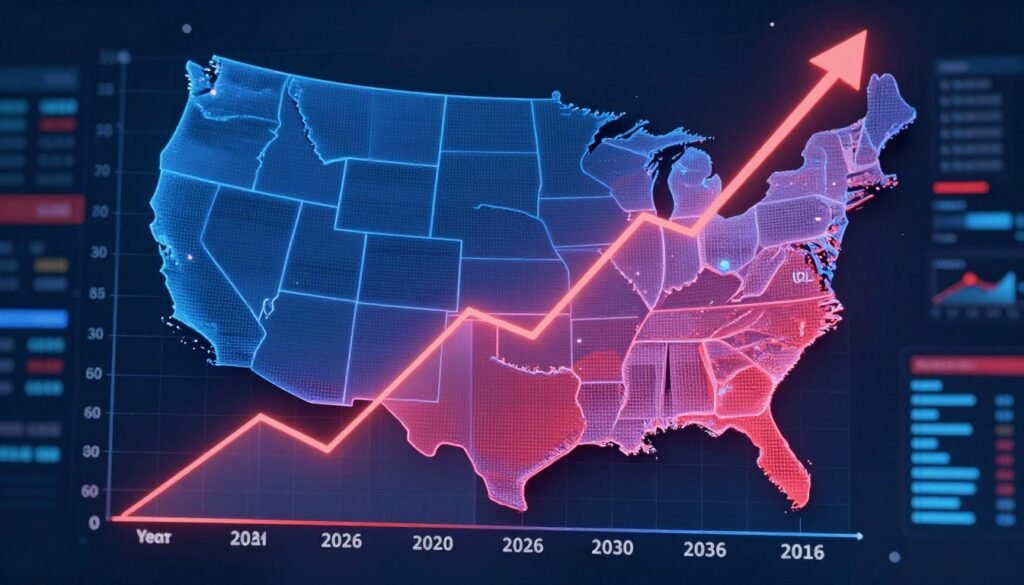
The next five years present significant challenges for U.S. fiscal policy and economic stability. Multiple factors suggest increasingly difficult debt ceiling confrontations ahead.
Short-Term Outlook (2025-2027)
The immediate future brings near-certainty of another debt ceiling crisis. The current suspension expires in January 2025, forcing Congressional action.
Political dynamics suggest a difficult negotiation process. The 2024 election results will shape the balance of power in Congress and influence debt ceiling strategies.
Treasury Secretary Janet Yellen will likely deploy extraordinary measures immediately when the limit returns. These accounting maneuvers typically provide several months of additional borrowing capacity.
- First quarter 2025 brings return of debt ceiling constraint
- Spring 2025 represents probable deadline for Congressional action
- Summer 2025 could see market volatility if resolution is delayed
- Potential government shutdown as leverage tactic in negotiations
- Credit rating agencies monitoring situation for potential downgrades
Economic growth will likely slow in 2025-2026 due to debt ceiling uncertainty. Business investment typically declines 15-20% during crisis periods.
Interest rates on government debt will rise as the deadline approaches. The Congressional Research Service projects borrowing costs could increase by 50-100 basis points during acute crisis phases.
Key Deadlines and Milestones
Several critical dates will determine how the next debt ceiling crisis unfolds. Understanding this timeline helps stakeholders prepare.
| Time Period | Key Events | Economic Implications |
| January 2025 | Debt ceiling suspension expires, limit returns at current debt level | Initial market positioning, extraordinary measures begin |
| February-April 2025 | Treasury extraordinary measures period, tax refund season creates cash demands | Building political pressure, early negotiations, moderate volatility |
| May-June 2025 | Probable X-date when extraordinary measures exhausted | Peak crisis period, maximum market volatility, urgent resolution needed |
| Late 2025-2026 | Post-resolution period, assessment of economic damage | Recovery phase, potential lasting impacts on borrowing costs |
The X-date represents the point when the Treasury exhausts all extraordinary measures and available cash. This deadline creates maximum pressure for Congressional action.
Predicting the exact X-date proves difficult. Tax revenues and government spending fluctuate based on economic conditions and seasonal patterns.
Long-Term Risks (2027-2030)
The longer-term outlook presents even more serious fiscal challenges. Structural budget deficits continue widening without policy changes.
The Congressional Budget Office projects federal debt held by the public will reach $36 trillion by 2027 and $41 trillion by 2030. This assumes no major economic shocks or new spending initiatives.
Interest costs become increasingly burdensome. By 2030, annual interest payments could exceed $1.4 trillion, representing nearly 20% of all federal spending.
Critical Long-Term Projection: Without policy changes, federal debt will exceed 140% of GDP by 2030. This level approaches territory historically associated with sovereign debt crises. Market confidence in U.S. fiscal sustainability will deteriorate progressively.
Demographic trends worsen fiscal pressures. Baby boom retirements accelerate through 2030, increasing Social Security and Medicare costs substantially.
The worker-to-beneficiary ratio continues declining. By 2030, only 2.5 workers will support each Social Security beneficiary compared to 3.0 workers in 2020.
Compounding Risk Factors
Multiple risk factors could accelerate fiscal deterioration beyond baseline projections. These scenarios represent plausible developments that would make the debt ceiling crisis worse.
Economic Recession Scenario
A recession reduces tax revenues while increasing spending on unemployment benefits and safety net programs. This could add $2-4 trillion to projected deficits over five years.
Rising Interest Rate Environment
If interest rates remain elevated above Congressional Budget Office projections, debt service costs could increase by $500 billion annually by 2030, creating vicious cycle of rising debt and interest.
New Policy Initiatives
Major spending programs or tax cuts would worsen fiscal trajectory. Even modest initiatives could add trillions to deficits if not fully offset by other changes.
Climate change impacts will create additional fiscal pressures. Disaster relief, infrastructure adaptation, and energy transition costs will strain federal budgets through 2030 and beyond.
Geopolitical tensions may require increased defense spending. Military modernization and expanded commitments could add hundreds of billions to annual deficits.
Potential Positive Developments
Despite serious challenges, some scenarios could improve the fiscal outlook. These developments remain possible though not currently reflected in baseline projections.
Bipartisan fiscal reform could address structural imbalances. A grand bargain combining entitlement reforms with revenue increases would significantly improve long-term sustainability.
- Productivity growth acceleration could boost tax revenues substantially
- Immigration reform might improve worker-to-beneficiary ratios
- Healthcare cost containment could slow Medicare spending growth
- Tax compliance improvements might increase revenue without rate increases
- Economic growth above projections would improve debt-to-GDP ratios
Debt ceiling elimination would remove recurring crisis risk. Several proposals exist to make borrowing authority automatic rather than requiring separate Congressional action.
Public pressure for fiscal responsibility could force political compromises. As debt burden grows more visible through higher interest costs, constituent demands for action may increase.
International Context and Global Implications
U.S. debt dynamics occur within changing global economic environment. International developments will influence American fiscal challenges through 2030.
The dollar’s reserve currency status faces gradual erosion. While the dollar remains dominant, alternatives are emerging. This reduces America’s ability to borrow cheaply indefinitely.
China and other nations actively work to reduce dollar dependence. Alternative payment systems and currency arrangements could eventually reduce demand for U.S. Treasury securities.
The International Monetary Fund projects slower global growth through 2030. This environment makes fiscal adjustment more difficult as economic expansion provides less natural deficit reduction.
European and Asian economies face their own debt challenges. This creates potential for coordinated fiscal crises that could trigger worldwide recession.
Conclusion
The debt ceiling crisis represents one of the most serious economic challenges facing the United States over the next five years. This recurring confrontation threatens market stability, economic growth, and American financial security.
The fundamental problem is clear. The federal government spends significantly more than it collects in revenue. This structural deficit requires continuous borrowing to maintain operations.
When Congress fails to raise the debt ceiling, the government cannot borrow more money. This creates immediate crisis as bills cannot be paid and obligations cannot be met.
The impacts ripple throughout the economy. Financial markets experience severe volatility. Businesses postpone investments and hiring. Consumers reduce spending amid uncertainty.
Key Takeaways for Americans
Several critical points emerge from this comprehensive analysis of debt ceiling crises and their economic impact.
- The next debt ceiling crisis will occur in 2025 when the current suspension expires
- Political divisions make resolution increasingly difficult with each confrontation
- A government default would trigger immediate recession and financial crisis
- Even near-misses impose substantial economic costs through higher borrowing costs and reduced growth
- Long-term fiscal sustainability requires structural reforms to both spending and revenue
- Individual Americans should prepare for periodic market volatility and economic uncertainty
- The problem will worsen without policy changes as debt continues growing faster than the economy
The Congressional Budget Office projects federal debt reaching 181% of GDP by 2053 under current policies. This trajectory is unsustainable and will eventually force dramatic adjustments.
Interest costs already consume an increasing share of federal spending. By 2030, debt service could exceed defense spending, limiting government capacity to respond to other priorities.
Forward-Looking Statement
The years 2026 through 2030 will prove critical for American fiscal policy. Decisions made during this period will shape the nation’s economic future for decades.
Optimistically, political leaders might achieve comprehensive fiscal reform. A balanced approach combining spending restraint with revenue adequacy would stabilize the debt-to-GDP ratio.
Such reforms would restore confidence in U.S. fiscal management. Borrowing costs would decline. Investment would increase. Economic growth would accelerate.
However, the more likely scenario involves continued political gridlock and recurring crises. Each debt ceiling confrontation will impose economic costs and erode international confidence.
Eventually, market forces will compel action. If politicians cannot agree on gradual reforms, markets will force sudden and painful adjustments through higher interest rates and reduced demand for U.S. debt.
The choice belongs to American voters and their elected representatives. Either we address fiscal challenges proactively through measured reforms, or we face crisis-driven changes imposed by economic necessity.
Time favors early action. The longer reforms are delayed, the more difficult and painful adjustments become. Every year of inaction adds trillions to the ultimate cost of fiscal stabilization.
Americans must demand responsible fiscal policy from their leaders. The debt ceiling crisis is not inevitable. It results from political choices that can be changed through determined leadership and public pressure.
The stakes could not be higher. America’s economic prosperity, global standing, and financial security all depend on resolving these fiscal challenges. The window for painless solutions is closing rapidly.