Interest Rate Hikes and Economic Slowdown Risks: How It Could Impact the U.S. Economy in 2026 and Beyond
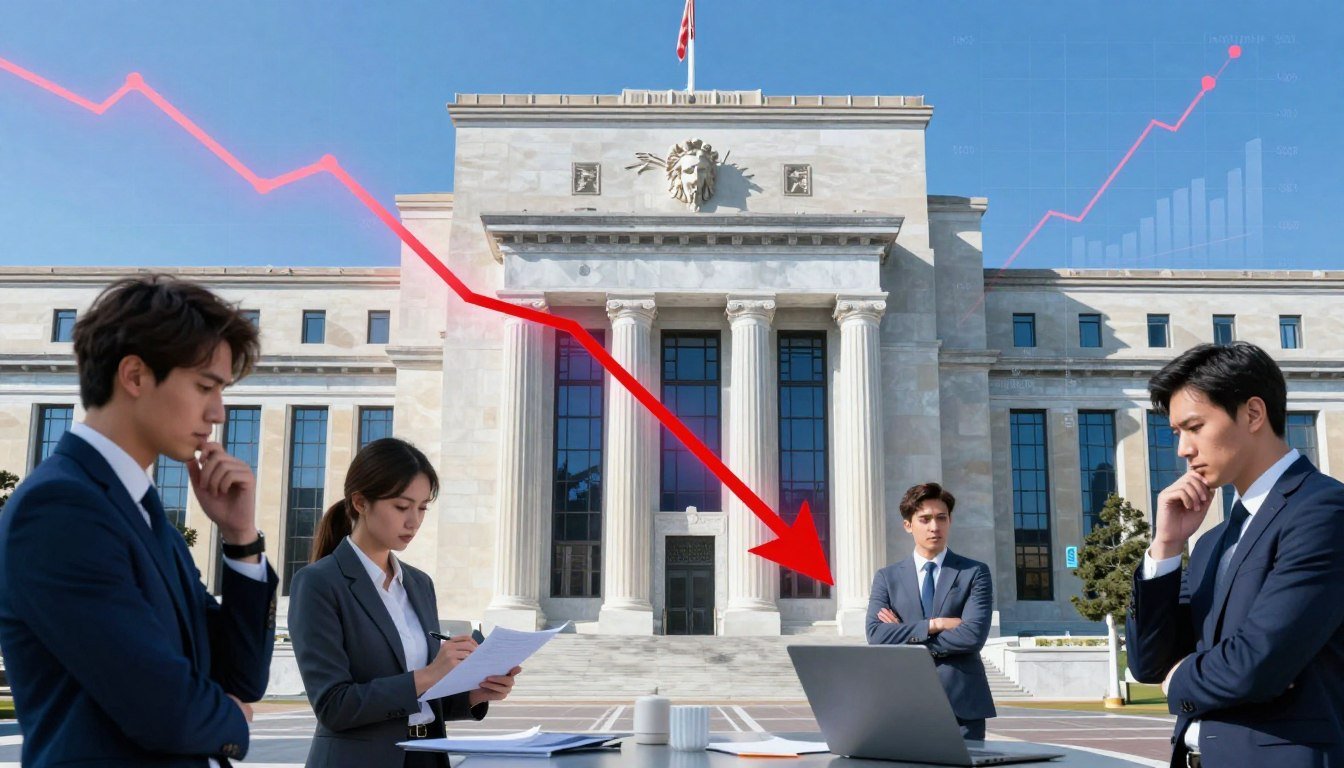
The United States economy stands at a critical juncture. Interest rates have climbed to levels not seen in over two decades. The Federal Reserve has implemented aggressive monetary policy changes to combat persistent inflation. These actions carry significant consequences for every American household and business.
Understanding the relationship between interest rate hikes and potential economic slowdown has never been more urgent. The decisions made by the Federal Reserve today will shape economic conditions for years to come. Your job security, investment portfolio, and daily cost of living all hang in the balance.
Recent data from the Bureau of Labor Statistics reveals concerning trends. Economic activity shows signs of cooling as borrowing costs rise. Business investment has slowed. Consumer spending patterns have shifted dramatically. The question is no longer if these changes will impact you, but how severe that impact will be.
This comprehensive analysis examines the mechanics of interest rate policy and its ripple effects throughout the economy. We explore what experts predict for 2026 and beyond. Most importantly, we provide actionable insights to help you navigate these uncertain economic waters.
What Is This Economic Threat?
Interest rate hikes represent a fundamental shift in monetary policy by the Federal Reserve. When the Fed raises its federal funds rate, it increases the cost of borrowing money throughout the entire financial system. This powerful tool aims to control inflation by reducing economic activity and cooling down an overheated economy.
An economic slowdown occurs when the pace of growth decreases significantly. Gross domestic product expands more slowly or even contracts. Employment gains weaken. Consumer confidence deteriorates. Investment activity declines across multiple sectors of the economy.
The threat emerges when rate hikes become too aggressive or persist too long. The Federal Reserve walks a tightrope. They must raise rates enough to tame inflation without triggering a full recession. Historical precedent suggests this balance is extraordinarily difficult to achieve.
Historical Context of Rate Hikes
The Federal Reserve has raised interest rates numerous times throughout its history. Each cycle brought different challenges and outcomes. The most dramatic example occurred in the early 1980s when then-Federal Reserve Chairman Paul Volcker pushed the federal funds rate above 19 percent.
That aggressive monetary policy successfully crushed double-digit inflation. However, it also triggered a severe recession. Unemployment soared above 10 percent. Businesses failed in record numbers. The pain was intense but ultimately cleared the way for sustained growth in later years.
More recently, the Federal Reserve raised rates steadily from 2015 to 2018. The economy continued expanding during this period. Job growth remained strong. Inflation stayed relatively contained. This successful cycle ended when global economic concerns prompted rate cuts in 2019.
Current Statistics and Measurements
The federal funds rate currently sits in a target range significantly higher than the near-zero levels of 2020-2021. The Federal Reserve has implemented one of the fastest rate-hiking cycles in modern history. Each increase makes borrowing more expensive for consumers and businesses alike.
According to the U.S. Department of the Treasury, yields on government securities have risen substantially. The 10-year Treasury note yield has climbed from historic lows to levels not seen since before the 2008 financial crisis. These changes signal investor expectations about future economic conditions and inflation trends.
Monetary Policy Indicators
The Federal Reserve System monitors multiple economic indicators when setting policy.
- Federal funds rate target range adjustments
- Core inflation measurements excluding volatile items
- Employment levels and labor force participation
- GDP growth rates across consecutive quarters
Economic Activity Measures
Tracking real-time economic performance requires examining diverse data points.
- Consumer spending on goods and services
- Business investment in equipment and structures
- Housing market activity and construction starts
- Manufacturing output and industrial production
Financial Market Responses
Markets react immediately to changes in interest rate expectations and policy.
- Stock market valuations and sector rotation
- Corporate bond spreads and credit availability
- Currency exchange rates and capital flows
- Commodity prices including energy and metals
Banking System Health
The banking sector transmits monetary policy throughout the broader economy.
- Commercial bank lending standards and volumes
- Deposit rates offered to savers
- Mortgage rate movements and refinancing activity
- Credit card and auto loan interest costs
The Congressional Budget Office projects that sustained higher interest rates will increase federal government borrowing costs significantly. Interest payments on the national debt could consume a growing share of the federal budget. This fiscal pressure may constrain government’s ability to respond to future economic challenges.
What Is Causing the Problem?
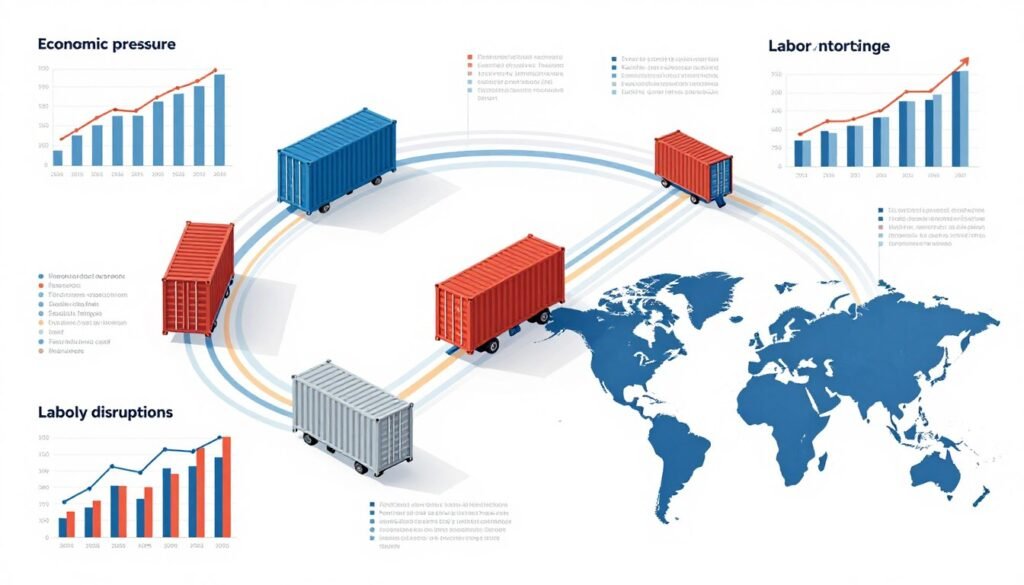
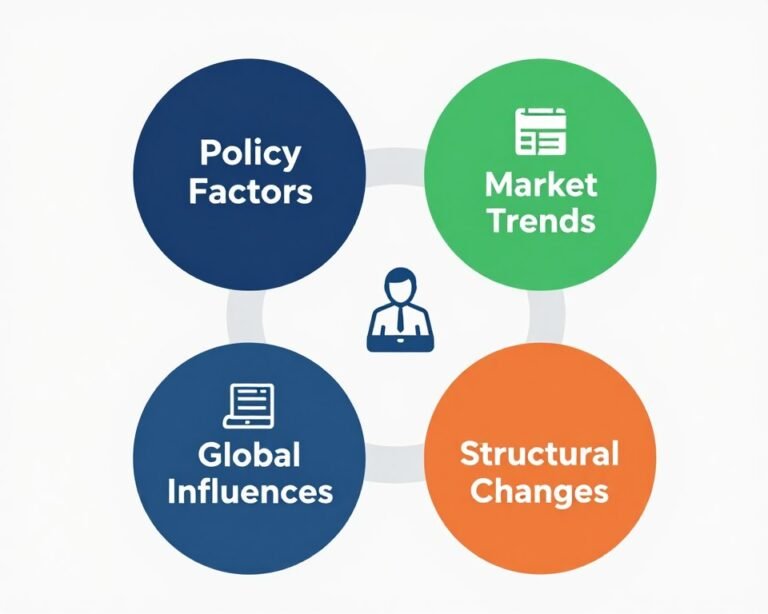
The current economic situation stems from a perfect storm of interconnected factors. No single cause drives the Federal Reserve’s aggressive monetary policy stance. Instead, multiple pressures have converged to create an environment requiring extraordinary intervention.
Policy Factors
- Extended Period of Low Rates: The Federal Reserve maintained near-zero interest rates for over a decade following the 2008 financial crisis and throughout the COVID-19 pandemic. This prolonged accommodation may have allowed economic imbalances to build.
- Massive Fiscal Stimulus: Unprecedented government spending during the pandemic injected trillions of dollars into the economy. These programs prevented economic collapse but also contributed to overheating demand.
- Delayed Policy Response: The Federal Reserve initially characterized inflation as transitory. This delayed the start of rate hikes, potentially necessitating a more aggressive path once action began.
- Quantitative Tightening: Beyond raising the federal funds rate, the Fed is also shrinking its balance sheet by allowing securities to mature without replacement. This dual approach amplifies the restrictive impact of monetary policy.
Market Trends
- Labor Market Tightness: Unemployment has remained historically low even as the Federal Reserve raises rates. Strong job growth and rising wages contribute to inflationary pressures that concern policymakers.
- Housing Market Distortions: Years of low mortgage rates fueled a housing boom. Home prices surged to unprecedented levels. Now higher rates are causing rapid market corrections in many regions.
- Asset Price Inflation: Extended low rates inflated values across asset classes from stocks to cryptocurrencies. Normalizing policy has triggered significant market volatility and wealth destruction.
- Corporate Debt Accumulation: Businesses borrowed heavily when money was cheap. Rising interest rates now increase debt service costs and may trigger defaults among highly leveraged companies.
Global Influences
- Supply Chain Disruptions: The pandemic exposed vulnerabilities in global supply networks. Persistent bottlenecks have kept goods prices elevated even as demand normalizes.
- Energy Price Volatility: Geopolitical tensions and production decisions by the Organization of the Petroleum Exporting Countries have caused dramatic swings in oil and natural gas prices, feeding into broader inflation.
- International Policy Divergence: Central banks worldwide are pursuing different strategies. The European Central Bank and Bank of Japan have been slower to raise rates, creating currency tensions and capital flow disruptions.
- Emerging Market Pressures: Developing economies face particular challenges as the U.S. dollar strengthens. Their debt burdens increase and capital flees to higher-yielding American assets.
Structural Economic Changes
- Demographic Shifts: An aging population changes savings and consumption patterns. Labor force participation rates have not fully recovered to pre-pandemic levels, constraining economic growth potential.
- Productivity Slowdown: Despite technological advances, measured productivity growth has disappointed. Lower productivity limits how fast the economy can grow without triggering inflation.
- Deglobalization Trends: Companies are reshoring production and diversifying supply chains away from single countries. This increases costs but reduces vulnerability to future disruptions.
- Climate and Energy Transition: The shift toward renewable energy requires massive investment. Transitional costs and uncertainties add to economic complexity and inflationary pressures.
Each of these factors alone would challenge economic stability. Their simultaneous occurrence has created an environment of exceptional uncertainty. The Federal Reserve must navigate these crosscurrents while attempting to engineer a soft landing for the economy.
Impact on the U.S. Economy
Interest rate hikes ripple through every corner of the American economy. The effects are neither uniform nor immediate. Some sectors feel the impact within weeks while others experience delayed consequences. Understanding these varied impacts helps predict how the economy will evolve in coming years.
GDP Growth
Gross domestic product growth slows predictably when interest rates rise. Higher borrowing costs discourage spending and investment across the economy. The Congressional Budget Office has revised its GDP growth projections downward for the next several years.
Real GDP expanded at a robust pace in the immediate aftermath of pandemic recovery. However, this growth rate has moderated significantly as monetary policy has tightened. Quarter-over-quarter changes now show much more modest expansion or even occasional contraction.
Consumer spending, which comprises roughly 70 percent of GDP, becomes more constrained as interest rates rise. Credit card rates increase. Auto loans cost more. Mortgage payments consume larger portions of household budgets. These factors reduce discretionary spending power throughout the economy.
Business investment also suffers under higher rates. Companies delay expansion plans when the cost of capital rises. Projects that seemed profitable at low interest rates no longer meet return thresholds. This investment pullback reduces future productive capacity and employment opportunities.
Inflation
The Federal Reserve raises interest rates specifically to combat inflation. Higher borrowing costs reduce demand for goods and services. Lower demand eventually translates to slower price increases or even price declines in some categories.
Inflation peaked at levels not seen in four decades. The rapid rise in consumer prices eroded purchasing power and created widespread economic anxiety. Food, energy, and housing costs surged, hitting lower-income households particularly hard.
Recent data shows inflation beginning to moderate from peak levels. However, the path to the Federal Reserve’s 2 percent target remains uncertain. Core inflation, which excludes volatile food and energy prices, has proven particularly sticky and slow to decline.
The lag between rate hikes and inflation impact complicates policy decisions. Changes in monetary policy typically take 12 to 18 months to fully affect price levels. The Federal Reserve must predict future conditions based on incomplete current information.
Employment
The labor market has demonstrated remarkable resilience despite aggressive rate hikes. The Bureau of Labor Statistics continues to report solid job gains month after month. Unemployment remains near historic lows. This strength complicates the Federal Reserve’s efforts to cool the economy.
Tight labor markets contribute to wage inflation. Workers have leverage to demand higher pay. Businesses must increase wages to attract and retain talent. These wage gains support consumer spending but also add to inflationary pressures the Federal Reserve is trying to contain.
Historical patterns suggest employment impacts from rate hikes arrive with delay. Initial job losses typically occur in interest-sensitive sectors like construction and manufacturing. If economic slowdown deepens, layoffs eventually spread to services and other industries.
Certain industries face immediate pressure from higher rates. Real estate and mortgage lending have already experienced significant job cuts. Technology companies, many of which expanded rapidly during the low-rate era, have announced substantial workforce reductions.
Financial Markets
Stock market valuations have adjusted sharply to the new interest rate environment. Higher rates make future corporate earnings less valuable in present terms. This mathematical reality compresses price-to-earnings ratios across the market.
Growth stocks, particularly in technology, have suffered disproportionate declines. These companies derive much of their value from projected future earnings. Rising discount rates applied to distant cash flows dramatically reduce their present value.
Bond markets have experienced historic losses as rates have risen. Bond prices move inversely to yields. Investors holding existing lower-yielding securities have seen significant principal declines. Even traditionally safe government bonds have delivered negative returns.
Credit markets show signs of stress. Corporate bond spreads have widened, indicating investors demand higher compensation for default risk. Access to credit has tightened for lower-rated borrowers. Some companies find themselves effectively shut out of bond markets entirely.
Consumers and Businesses
American households face mounting financial pressure from multiple directions. Higher interest rates increase costs on variable-rate debts like credit cards and home equity lines. Mortgage rates have more than doubled from pandemic-era lows, dramatically reducing home affordability.
Refinancing opportunities have vanished for most homeowners. Those who locked in low rates during the pandemic enjoy a significant advantage. However, this also reduces housing market liquidity as people hesitate to give up favorable mortgages by moving.
Businesses confront difficult decisions about expansion and hiring. The calculus for capital investment has shifted dramatically. Projects must clear higher hurdle rates to justify proceeding. Many companies are adopting wait-and-see approaches, delaying commitments until economic clarity improves.
Small businesses face particular challenges accessing credit. Community banks have tightened lending standards. The cost of small business loans has increased substantially. Many entrepreneurs find their growth plans constrained by financing difficulties.
Recent Data and Trends
Current economic indicators paint a complex picture of an economy in transition. The data reveals an economy that is slowing but not collapsing. Growth continues but at a diminished pace. Job creation persists but shows signs of moderating. Understanding these trends helps predict what lies ahead.
Federal Reserve Actions and Statements
The Federal Reserve has raised the federal funds rate target range through a series of increases. These hikes represent the fastest tightening cycle in decades. The pace of increases has slowed as rates have reached restrictive territory, but policymakers have signaled rates may need to stay elevated for an extended period.
Minutes from recent Federal Open Market Committee meetings reveal internal debate about the appropriate policy path. Some officials worry about doing too much and causing unnecessary economic pain. Others remain focused on ensuring inflation returns to the 2 percent target even if it requires additional tightening.
The Federal Reserve’s quarterly Summary of Economic Projections shows officials expect rates to remain higher than previously anticipated. The median projection for the federal funds rate has risen, indicating policymakers do not foresee rapid cuts even if inflation moderates.
Labor Market Statistics
The Bureau of Labor Statistics reports the economy continues adding jobs at a solid if moderating pace. Monthly payroll gains remain positive across most sectors. The unemployment rate hovers near 50-year lows. Labor force participation has improved but remains below pre-pandemic levels.
Job openings, while declining from record highs, still substantially exceed the number of unemployed workers. This imbalance gives workers continued leverage in wage negotiations. Average hourly earnings continue growing at rates that concern inflation hawks at the Federal Reserve.
Certain sectors show early warning signs of stress. Temporary help services employment has declined, often a leading indicator of broader labor market weakness. Manufacturing hours worked have decreased. These subtle shifts may foreshadow more significant employment challenges ahead.
| Economic Indicator | Current Level | Previous Year | Trend Direction |
| Federal Funds Rate | 5.25 – 5.50% | 0.00 – 0.25% | Higher |
| Core Inflation Rate | 4.7% | 6.6% | Declining |
| Unemployment Rate | 3.8% | 3.5% | Slightly Higher |
| GDP Growth (Annual) | 2.1% | 2.6% | Slower |
| 30-Year Mortgage Rate | 7.2% | 6.3% | Higher |
| Consumer Confidence Index | 102.6 | 108.3 | Lower |
Inflation Measurements
Consumer price inflation has retreated from four-decade highs but remains well above the Federal Reserve’s target. Goods prices have begun declining in some categories as supply chains normalize. Services inflation, however, proves more persistent due to tight labor markets and wage pressures.
Housing costs, which comprise a large share of consumer budgets, continue rising though at a slower pace. Shelter inflation lags actual market conditions due to measurement methodology. This means reported inflation may overstate current pressures even as it understates how much rents have actually increased for new tenants.
Producer price indices show input costs moderating for many businesses. Energy and commodity prices have declined from peaks. These upstream price changes should eventually flow through to consumer prices, supporting the disinflationary trend.
Consumer Spending and Confidence
Retail sales data reveals consumers continue spending but with more discrimination. Growth has slowed from the pandemic-era surge. Credit card usage has increased as savings accumulated during lockdowns get depleted. Delinquency rates on consumer credit have begun rising from historic lows.
Consumer confidence surveys show Americans remain pessimistic about economic conditions despite continued employment strength. High prices and interest rates weigh on sentiment. The gap between current conditions assessments and future expectations has widened, suggesting growing caution.
Savings rates have declined as households spend down pandemic-era accumulations. Many families exhausted supplemental unemployment benefits and stimulus payments long ago. The cushion that supported spending through the initial phases of rate hikes is eroding.
Housing Market Indicators
The residential real estate market has cooled dramatically as mortgage rates have surged. Home sales volumes have dropped sharply from pandemic highs. Inventory remains constrained but is slowly increasing as fewer buyers can qualify for loans at current rates.
Home price appreciation has slowed or reversed in many markets. Some regions that experienced the most extreme pandemic appreciation now see outright price declines. Affordability has reached the worst level in decades as both prices and rates have risen simultaneously.
Housing starts and building permits have declined, indicating reduced construction activity ahead. Homebuilders face squeezed margins as input costs remain elevated while buyer demand weakens. Cancellation rates have increased as prospective buyers walk away from deals.
Business Investment Trends
Capital expenditure by businesses has moderated as financing costs have risen. Equipment orders show weakness. Commercial construction activity has slowed. Companies are more cautious about expansion given economic uncertainty and higher hurdle rates for new projects.
Business sentiment surveys indicate reduced optimism about future conditions. CEO confidence has declined. Many executives cite difficulty planning amid uncertainty about Federal Reserve policy, inflation trajectory, and recession risk. This caution translates to delayed hiring and investment decisions.
Inventory levels have normalized after supply chain disruptions caused shortages. Some retailers now find themselves overstocked in certain categories. This inventory correction process can weigh on economic growth as businesses work through excess stock before placing new orders.
Expert Opinions and Forecasts
Economists and market analysts offer varied perspectives on the path ahead. No consensus exists about whether the Federal Reserve can achieve a soft landing or whether recession becomes inevitable. These diverse viewpoints reflect genuine uncertainty about complex economic dynamics.

Federal Reserve Outlook
Federal Reserve officials project continued restrictive monetary policy for an extended period. Their public statements emphasize commitment to returning inflation to the 2 percent target. Chair Jerome Powell has repeatedly stated the central bank will not prematurely declare victory over inflation.
The Federal Reserve Bank of New York’s recession probability model shows elevated risk of economic contraction within the next year. However, Fed officials argue the unusual post-pandemic environment may distort traditional recession indicators. They point to labor market strength as evidence the economy can withstand current policy.
Some regional Federal Reserve Bank presidents advocate for even higher rates to ensure inflation expectations remain anchored. Others suggest policy is already sufficiently restrictive and further increases risk unnecessary economic damage. This internal debate reflects the genuine uncertainty policymakers face.
International Monetary Fund Assessment
The International Monetary Fund warns of fragile global economic conditions. Their analysis highlights risks from synchronized monetary tightening across major economies. When all central banks raise rates simultaneously, the contractionary impact amplifies beyond what any single country would experience alone.
IMF economists project below-trend global growth for the next several years. They identify particular risks in emerging markets where dollar-denominated debt becomes increasingly burdensome as the U.S. currency strengthens. Financial stress in developing economies could feedback to advanced economies through trade and financial channels.
The organization recommends coordinated policy responses among major economies. However, practical challenges of coordination make such cooperation unlikely. Each country faces unique circumstances requiring tailored approaches to monetary and fiscal policy.
Private Sector Economist Projections
Wall Street economists span a range from optimistic soft landing scenarios to predictions of significant recession. Investment bank research departments publish regular updates revising their forecasts as new data emerges. This constant revision reflects the difficulty of predicting economic outcomes in the current environment.
Some prominent economists argue the Federal Reserve has already achieved sufficient tightening. They point to leading indicators showing economic momentum slowing. These analysts worry about overtightening and recommend the Fed begin cutting rates soon to avoid unnecessary recession.
Others maintain inflation remains too high and further rate increases are necessary. This hawkish camp notes services inflation persistence and tight labor markets. They argue premature rate cuts would allow inflation to re-accelerate, forcing even more painful tightening later.
Forecasting Challenges
Economic forecasting has proven particularly difficult in the post-pandemic era. Traditional relationships between variables have shifted. Historical patterns provide less reliable guidance. Several factors complicate prediction efforts.
The unprecedented nature of the pandemic and policy response creates unique circumstances without clear precedent. Massive fiscal stimulus, supply chain disruptions, and remote work adoption all altered economic dynamics in ways economists are still understanding.
Data revisions have been larger than normal, making real-time assessment difficult. Initial reports of economic indicators frequently get significantly revised months later. Policymakers and forecasters must make decisions based on incomplete and often inaccurate preliminary data.
Key Economic Risks Identified by Experts
- Recession probability elevated if Fed over-tightens
- Persistent inflation requiring even higher rates
- Financial system stress from rapid rate increases
- Global economic slowdown reducing U.S. exports
- Geopolitical shocks to energy and food prices
- Housing market correction wealth effects
- Corporate debt defaults in high-leverage sectors
Market Outlook
Financial market expectations for interest rates fluctuate based on incoming data. Futures markets price in a complex path of potential rate moves. Investors debate whether the Federal Reserve will cut rates in the near term or maintain higher rates longer than currently anticipated.
Stock market analysts have reduced earnings estimates for corporate America. Higher interest costs and slower economic growth pressure profitability. Some sectors face greater challenges than others. Technology and consumer discretionary companies see larger estimate cuts than defensive sectors like utilities and consumer staples.
Bond investors expect long-term interest rates to remain elevated compared to the past decade. The era of ultra-low rates appears over. This structural shift has profound implications for asset allocation, retirement planning, and government finance.
Risk Level Assessment
The consensus among experts places current economic risk at elevated levels. While not predicting imminent crisis, most analysts acknowledge significant uncertainty and downside risks. The range of potential outcomes remains unusually wide given the unique circumstances facing the economy.
Possible Solutions or Policy Responses
Addressing the dual challenges of inflation and economic slowdown requires coordinated action across multiple policy domains. No single solution exists. Instead, a combination of monetary policy adjustments, fiscal measures, and structural reforms may help navigate current challenges while positioning the economy for sustainable future growth.
Federal Reserve Policy Options
The Federal Reserve faces difficult tradeoffs in setting monetary policy. If inflation proves more persistent than expected, additional rate hikes may become necessary despite recession risks. The central bank has indicated willingness to tolerate some economic pain to ensure price stability returns.
Conversely, if economic data weakens significantly, the Federal Reserve retains flexibility to pause rate increases or even cut rates. The central bank has emphasized its data-dependent approach. Policy will adjust based on actual economic performance rather than predetermined schedules.
Communication strategy represents another policy tool. Clear forward guidance about the likely path of rates helps shape market expectations and financial conditions. The Federal Reserve has become more transparent about its reaction function and the economic conditions that would trigger policy changes.
The pace of quantitative tightening also provides a margin for adjustment. The Federal Reserve could slow or halt the runoff of its securities holdings if financial market stress becomes excessive. This would provide some monetary accommodation without cutting the federal funds rate.
Government Fiscal Actions
The U.S. Department of the Treasury works with Congress on fiscal policy matters. However, political constraints and large budget deficits limit room for expansive new spending programs. Any fiscal response must navigate competing priorities and partisan disagreements.
Targeted tax relief could provide support to households and businesses most affected by higher interest rates. Temporary measures might ease the transition period without providing so much stimulus that inflation concerns intensify. Means-tested programs ensure assistance reaches those truly in need.
Infrastructure investment authorized under recent legislation continues rolling out. These projects provide economic support while also building productive capacity for the future. The long-term nature of infrastructure spending makes it less likely to overheat near-term demand.
Student loan policy remains contentious. Relief programs would increase disposable income for millions of borrowers but also add to federal deficits and potentially inflationary pressures. The administration faces legal and political challenges in implementing various proposed programs.
Regulatory and Structural Measures
Banking regulators monitor financial system stability closely as interest rates rise. Stress tests assess whether major institutions can withstand adverse economic scenarios. Additional capital or liquidity requirements may be imposed if vulnerabilities emerge.
Housing policy could address affordability challenges without simply subsidizing demand. Zoning reform to allow more construction would increase supply. Support for first-time homebuyers could be restructured to focus on affordable housing rather than bidding up prices of existing homes.
Energy policy affects both inflation and long-term economic competitiveness. Measures to increase domestic production of oil and gas could moderate energy price spikes. Simultaneously, continued investment in renewable energy and grid modernization builds resilience and reduces climate risks.
Labor market policies might help address workforce shortages that contribute to wage inflation. Immigration reform could expand legal pathways for workers in shortage occupations. Investment in education and training programs helps workers gain skills for available jobs.
Short-Term Stabilization Tools
- Federal Reserve rate path adjustments based on data
- Targeted fiscal support for vulnerable populations
- Enhanced communication and forward guidance
- Financial system monitoring and stress testing
- Energy market interventions if needed
- Consumer protection against predatory lending
Long-Term Structural Reforms
- Supply-side policies to increase productive capacity
- Housing supply expansion through zoning reform
- Workforce development and training programs
- Infrastructure investment for future competitiveness
- Research and development tax incentives
- Trade policy to support domestic manufacturing
International Coordination
The World Bank and International Monetary Fund facilitate dialogue among nations facing similar challenges. Coordinated responses could amplify effectiveness while reducing negative spillovers. However, domestic political considerations often prevent true coordination.
Currency stability requires attention as different countries pursue different policy paths. Large exchange rate movements can disrupt trade and capital flows. Extreme volatility sometimes triggers interventions by central banks to smooth excessive swings.
Trade policy affects inflation directly through import prices and indirectly through competitive pressures. Reducing tariffs on key goods could provide near-term price relief. However, strategic considerations around supply chain resilience and national security complicate purely economic calculations.
What It Means for Americans
Economic policy changes feel abstract until they affect your daily life. Interest rate hikes and potential slowdown create concrete consequences for American families and workers. Understanding these practical impacts helps you make informed decisions about your finances and future planning.

Cost of Living Pressures
Higher interest rates directly increase costs for anyone carrying variable-rate debt. Credit card annual percentage rates have climbed to the highest levels in decades. If you carry a balance, monthly interest charges now consume a larger share of your payment. This makes it harder to pay down principal.
Auto loan rates have risen substantially for new vehicle purchases. Monthly payments on the same car cost hundreds of dollars more than just two years ago. Combined with elevated vehicle prices, this has pushed many buyers out of the market or into longer loan terms that ultimately cost more over time.
Home equity lines of credit adjust upward with prime rate increases. Homeowners using these revolving credit facilities face growing monthly payments. What seemed like affordable borrowing at low rates now strains budgets as rates have more than doubled.
Even fixed-rate obligations affect your finances indirectly. When new borrowing becomes expensive, it constrains your options. You cannot refinance a mortgage to extract cash for home improvements or debt consolidation. This reduces financial flexibility precisely when economic uncertainty makes flexibility most valuable.
Employment and Income Security
Job security varies dramatically across industries and occupations. Workers in interest-sensitive sectors face elevated layoff risk. Construction, real estate, and manufacturing all cut employment when economic activity slows. Technology companies have announced substantial workforce reductions as growth expectations moderate.
Wage growth has remained solid for those who keep their jobs. Tight labor markets continue giving workers leverage to demand raises. However, if unemployment begins rising, this bargaining power erodes quickly. The shift from worker shortage to worker surplus can occur faster than many expect.
Career decisions become more complex during uncertain times. Is this the right moment to change jobs, ask for a raise, or start a business? Risk tolerance matters more when economic conditions can shift rapidly. What worked during the hot labor market of recent years may not apply if conditions deteriorate.
Benefits and workplace policies also respond to economic conditions. Employers facing pressure on profits may reduce contributions to retirement plans, cut back training programs, or eliminate flexible work arrangements. These changes affect your total compensation even if base pay holds steady.
Investment Portfolio Effects
Retirement accounts have likely experienced significant volatility if you own stocks. Market declines reduce the value of your 401(k) or IRA. This feels particularly painful if you are approaching retirement age with limited time to recover losses before you need the money.
Bond holdings, traditionally considered safe, have also lost value as interest rates have risen. The mathematical relationship between bond prices and yields means existing bonds trade at discounts when rates increase. Even Treasury bonds, backed by the full faith and credit of the U.S. government, have delivered negative returns.
Higher interest rates on savings accounts and certificates of deposit finally provide returns after years of near-zero yields. This benefits savers, particularly retirees living on fixed income. However, rates on bank deposits still lag inflation, meaning real purchasing power continues eroding even as nominal returns improve.
Rebalancing decisions become more important during volatile times. Do you maintain your target asset allocation by buying stocks after declines? Or do you shift to more conservative positioning given recession risks? These choices significantly affect long-term outcomes but must be made with incomplete information about the future.
Housing Market Realities
The dream of homeownership has become substantially more difficult to achieve. Monthly payments on a median-priced home have roughly doubled due to the combination of higher prices and higher mortgage rates. Potential first-time buyers find themselves priced out of markets they could have afforded just two years ago.
Current homeowners with low-rate mortgages face lock-in effects. Selling means giving up a favorable loan and taking on a new mortgage at much higher rates. This discourages moving even when job opportunities or family circumstances might otherwise justify relocation. Reduced mobility has broader economic consequences.
Home equity remains substantial for many homeowners despite recent price softness. Years of appreciation built significant wealth. However, accessing that equity through cash-out refinancing makes little sense when it means replacing a low-rate mortgage with a high-rate one. Home equity lines of credit carry variable rates that have increased dramatically.
Renters face different challenges. While home purchase has become less affordable, rents continue rising in many markets. Landlords pass through their higher financing costs. The lack of new construction due to difficult financing conditions constrains supply and supports rent growth.
Retirement Planning Complications
Social Security Administration benefit calculations do not change based on interest rates or market conditions. Your monthly benefit depends on your earnings history and the age you claim. However, the broader economic environment affects retirement security in other ways.
Lower investment returns mean retirement savings may not grow as projected. You might need to save more, work longer, or accept a more modest lifestyle in retirement. Running updated projections with current market assumptions often reveals larger gaps than older plans suggested.
Pension plans face challenges when interest rates rise rapidly. The present value of future obligations changes with discount rates. This affects funding status and may force plan sponsors to increase contributions or reduce benefits for new participants.
Healthcare costs in retirement remain one of the largest uncertainties. Medical inflation often exceeds general inflation. Higher interest rates do not directly affect healthcare costs but do influence your ability to save for these expenses and the returns your savings earn.
- Rising credit card interest eating into budgets
- Underwater home equity as prices soften
- Reduced retirement account values from market volatility
- Layoff risk in vulnerable industries and sectors
- Higher monthly costs on variable-rate debts
- Difficulty qualifying for new loans or mortgages
Financial Challenges to Address
- Better returns on savings accounts and CDs
- Ability to buy quality assets at lower prices
- Higher yields on new bond investments
- Refinance high-rate debt if credit is strong
- Negotiate better terms with service providers
- Build emergency fund with better interest rates
Opportunities to Pursue
Education and Student Debt
Student loan interest rates for new borrowers have increased along with broader rate rises. The cost of financing higher education through loans has grown substantially. This affects both students taking new loans and parents borrowing through programs like PLUS loans.
Existing student loan borrowers with variable-rate private loans face higher monthly payments as rates adjust. Those with fixed-rate federal loans maintain the same payment but lose refinancing opportunities that might have lowered their rates in a different environment.
Student loan forgiveness programs remain in legal and political flux. Changes to income-driven repayment plans or broad forgiveness could significantly affect millions of borrowers. However, uncertainty about which proposals will actually take effect complicates financial planning.
Future Outlook (2026–2030)
Projecting economic conditions years into the future involves substantial uncertainty. However, understanding plausible scenarios helps prepare for different outcomes. The path of interest rates, inflation, and economic growth over the next several years depends on how current challenges resolve and what new developments emerge.

Short-Term Outlook (2026-2027)
The next two years likely bring continued economic adjustment to higher interest rates. Most economists expect modest growth at best, with recession risk remaining elevated. The Federal Reserve must navigate the challenging path between insufficient tightening that allows inflation to persist and excessive tightening that causes unnecessary job losses.
Inflation should continue moderating toward the Federal Reserve’s 2 percent target. However, the pace of disinflation remains uncertain. Services inflation driven by wage growth may prove slower to decline than goods inflation. Housing cost measurements will gradually catch up to actual market cooling, eventually helping headline inflation numbers.
Interest rates may begin declining from current levels if inflation cooperates and economic weakness becomes evident. However, the Federal Reserve has signaled rates will likely remain higher than the pre-pandemic era. The neutral rate that neither stimulates nor restricts the economy appears to have risen structurally.
Employment growth likely slows significantly from recent robust pace. Unemployment may rise modestly even in a soft landing scenario. Certain sectors face more substantial job losses while others continue expanding. Geographic variation in economic conditions probably increases as local factors drive divergent outcomes.
Financial markets face continued volatility as investors reassess fair valuations in a higher rate environment. Stock market returns may disappoint investors accustomed to double-digit annual gains. Bond markets offer better yields but carry inflation and credit risks. Real estate undergoes price discovery after years of extraordinary appreciation.
Medium-Term Outlook (2028-2030)
Beyond the immediate adjustment period, longer-term economic performance depends on resolving structural challenges. Productivity growth remains the key driver of sustainable prosperity. Without improving productivity, the economy cannot grow rapidly without triggering inflation.
Demographic trends create headwinds for growth. An aging population means slower labor force expansion and rising healthcare and retirement costs. Immigration policy significantly affects these demographic dynamics. More permissive policies could ease workforce constraints while restrictive approaches exacerbate them.
Technology continues evolving, with artificial intelligence and automation transforming many industries. These changes boost productivity over time but also disrupt employment in affected sectors. The transition period creates winners and losers, with profound implications for income distribution and social stability.
Energy transition accelerates as renewable energy becomes increasingly cost-competitive. This massive infrastructure buildout requires substantial investment but also creates economic opportunities. The pace of transition affects both near-term costs and long-term competitiveness. Policy choices around energy significantly influence these outcomes.
Debt levels warrant attention at both government and private sector levels. The federal budget deficit requires addressing before interest costs become unsustainable. Corporate debt accumulated during the low-rate era may constrain business investment as refinancing becomes expensive. Household debt service burdens affect consumer spending capacity.
Alternative Scenarios
Economic forecasts represent central tendencies, but actual outcomes often surprise. Multiple plausible scenarios warrant consideration when making long-term financial and life decisions.
An optimistic scenario features rapid inflation decline without significant job losses. The Federal Reserve achieves a soft landing. Productivity growth accelerates from technology adoption. Consumer and business confidence recover. This virtuous cycle allows resumption of stronger economic growth with price stability.
A pessimistic scenario involves recession triggered by aggressive monetary policy or external shocks. Unemployment rises substantially. Stock markets decline further. A negative feedback loop of falling confidence, reduced spending, and rising unemployment proves difficult to reverse. Recovery takes longer and is weaker than historical norms.
A stagflation scenario, while less likely, would prove particularly challenging. Inflation remains stubbornly high despite economic weakness. The Federal Reserve faces an impossible choice between fighting inflation through further tightening or supporting employment through accommodation. Neither policy adequately addresses both problems simultaneously.
Optimistic Scenario
Probability: 30%
- Soft landing with minimal job losses
- Inflation returns to 2% by 2026
- Fed cuts rates moderately
- Markets recover and stabilize
- Productivity growth accelerates
- GDP growth returns to 2.5-3%
Base Case Scenario
Probability: 50%
- Mild recession followed by recovery
- Inflation declines to 2.5-3% range
- Fed maintains restrictive policy longer
- Moderate market volatility continues
- Below-trend growth for several years
- GDP averages 1.5-2% annually
Pessimistic Scenario
Probability: 20%
- Significant recession with job losses
- Inflation sticky or stagflation
- Fed policy remains very restrictive
- Extended bear market in stocks
- Financial system stress emerges
- GDP contracts or minimal growth
Long-Term Structural Changes
Regardless of near-term cyclical outcomes, several long-term trends will reshape the economic landscape. Understanding these structural changes matters more than predicting next quarter’s GDP growth when making multi-decade financial decisions.
The era of ultra-low interest rates appears finished. Central banks learned that rates persistently below neutral create financial instability and asset bubbles. Future policy will likely maintain higher minimum rates even during downturns. This structural shift affects valuations across all asset classes.
Globalization faces headwinds from geopolitical tensions and resilience concerns. Supply chains diversify away from single-country concentration. This reduces efficiency but increases reliability. Reshoring brings manufacturing jobs but also higher costs. The net effect on living standards remains unclear.
Climate change creates both risks and opportunities. Physical impacts from extreme weather affect agriculture, insurance, and real estate. Transition risks strand assets in fossil fuel industries. Simultaneously, enormous investment opportunities arise in clean energy, grid modernization, and adaptation infrastructure.
Healthcare costs continue rising as population ages and medical technology advances. This creates fiscal pressure on government programs like Medicare and Medicaid. Private sector employers face difficult choices about benefits. Individuals must plan for substantial out-of-pocket expenses in retirement.
Social Security and Medicare face long-term funding shortfalls requiring policy changes. Possible solutions include higher payroll taxes, benefit cuts, eligibility age increases, or means testing. Political challenges make timely reform difficult. The longer action is delayed, the more abrupt eventual changes must be.
Conclusion
Interest rate hikes represent the Federal Reserve’s necessary response to elevated inflation following years of unprecedented monetary accommodation. These increases aim to restore price stability but carry risks of triggering economic slowdown or outright recession. The balance between these competing concerns will define economic outcomes for years to come.
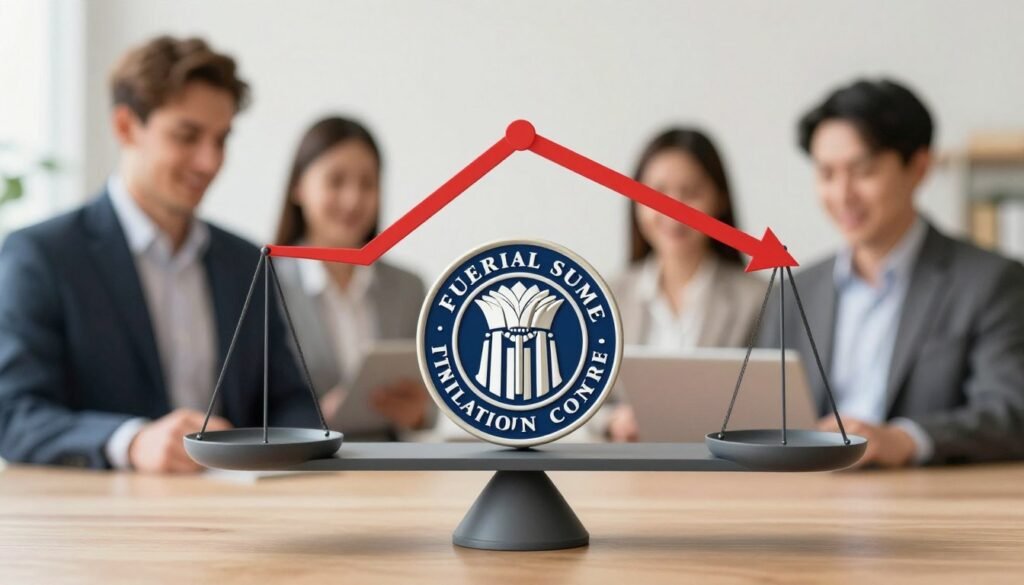
The impact on your daily life depends on your specific circumstances but affects all Americans through some combination of employment, investments, borrowing costs, and purchasing power. Understanding these dynamics helps you make informed decisions about your finances and future planning.
Expert forecasts span a range of possibilities from soft landing to significant recession. This uncertainty reflects genuine complexity in economic dynamics and the unprecedented nature of recent conditions. No one can predict outcomes with certainty. The wisest approach involves preparing for multiple scenarios rather than betting everything on a single forecast.
Policy responses from the Federal Reserve, Congress, and the administration will evolve based on incoming data. Flexibility and data-dependence characterize current policy approaches across institutions. This adaptive strategy makes sense given uncertainty but also means sudden policy shifts could occur if conditions change rapidly.
The next several years likely bring continued volatility and adjustment. Interest rates may remain elevated by historical standards even after the current tightening cycle concludes. The ultra-low rate environment of the past 15 years was exceptional rather than normal. Adjusting expectations to this new reality is essential for sound financial planning.
Key Takeaways for Americans
- Build emergency savings to weather potential job disruption or income reduction during economic slowdown
- Pay down high-interest variable-rate debt while rates remain elevated and before potential job loss makes this harder
- Avoid making major financial commitments you cannot sustain if economic conditions deteriorate significantly
- Review investment portfolio allocation to ensure appropriate risk level for your age and circumstances
- Stay informed about economic conditions but avoid panic-driven decisions based on short-term market movements
- Consider how your skills and industry position you for the changing economy and invest in relevant training
- Take advantage of higher savings account yields to build financial cushion with better returns than recent years
- Recognize that both opportunities and risks exist in every economic environment for those who understand the dynamics
Looking forward to 2026 and beyond, the U.S. economy faces both challenges and opportunities. Overcoming inflation without severe recession would preserve prosperity and set a foundation for sustained growth. Failure to navigate this transition successfully could result in prolonged economic difficulty affecting millions of American families.
Your individual actions cannot control Federal Reserve policy or global economic forces. However, you can control how you prepare for various scenarios and position yourself to weather economic storms while capitalizing on opportunities that emerge. Knowledge and preparation provide the best defense against economic uncertainty.
The relationship between interest rates and economic activity remains fundamental to understanding business cycles. Current conditions demonstrate these principles operating in real time with real consequences. Whatever specific path the economy takes in coming years, these underlying dynamics will continue shaping your financial future.