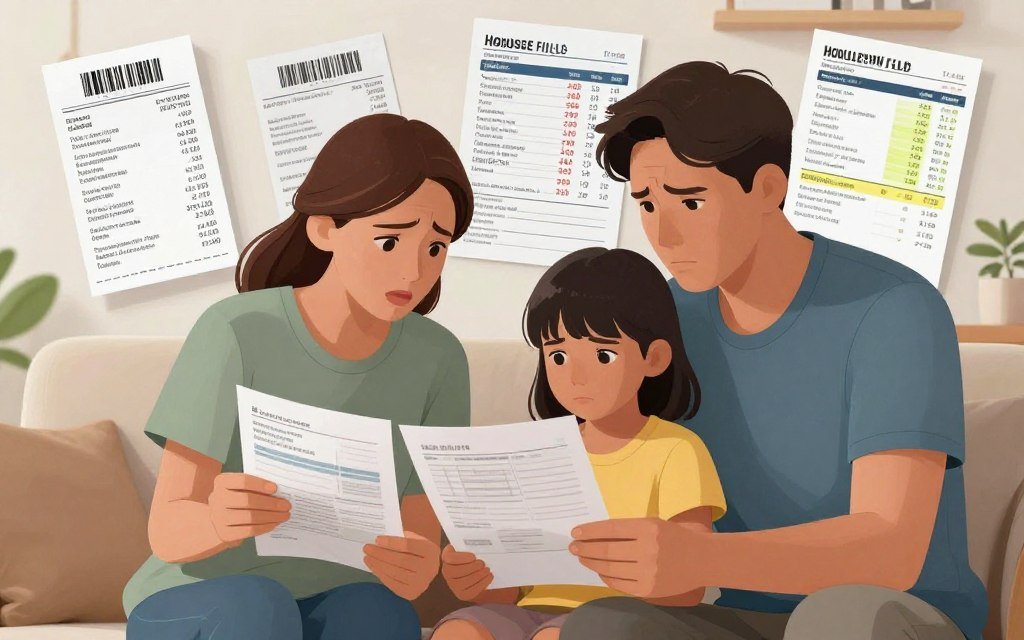
Persistent Inflation and Its Long-Term Impact on the U.S. Economy: How It Could Impact the U.S. Economy in 2026 and Beyond
The specter of persistent inflation continues to haunt the American economy. Despite aggressive monetary policy interventions by the Federal Reserve, inflation remains stubbornly elevated above the central bank’s target. This economic threat carries profound implications for every American household and business.
Current data reveals a troubling pattern. While headline inflation has moderated from its 2022 peaks, core measures show remarkable persistence. The Bureau of Labor Statistics reports that certain price categories remain resistant to the Federal Reserve’s rate increases. This inflation persistence suggests structural changes in how prices respond to policy actions.
Understanding this phenomenon matters now more than ever. The decisions policymakers make today will shape economic conditions through 2026 and beyond. Americans face critical questions about wages, savings, investments, and retirement planning. Businesses must navigate unprecedented uncertainty in pricing, supply chains, and strategic planning.
What Is Persistent Inflation?
Persistent inflation represents a sustained period where prices continue rising despite policy efforts to contain them. Unlike temporary price spikes caused by supply shocks, persistence inflation embeds itself into economic expectations and behavior patterns.
The Federal Reserve System defines price stability as inflation averaging two percent over time. When inflation persistently exceeds this target for extended periods, it signals fundamental changes in the inflation process itself. Current measures show this exact pattern unfolding.
Historical Context and Precedent
The United States experienced severe persistent inflation during the 1970s. That period saw inflation expectations become unanchored from the Federal Reserve target. Oil shocks from the Organization of the Petroleum Exporting Countries triggered initial price increases. However, inflation persisted long after those supply disruptions resolved.
The Federal Reserve Bank research shows critical differences between transitory and persistence inflation. Transitory shocks dissipate quickly as supply and demand rebalance. Persistent inflation feeds on itself. Workers demand higher wages to offset rising prices. Businesses raise prices to cover increased costs. This wage-price spiral becomes self-reinforcing.
Key Statistical Indicators
Several measures track inflation persistence. The personal consumption expenditures price index serves as the Federal Reserve’s preferred gauge. Core measures exclude volatile food and energy prices. These indicators reveal underlying inflation trends more accurately than headline numbers.
Recent data from the Bureau of Labor Statistics shows troubling persistence patterns. Services inflation remains elevated as wage pressures continue. Housing costs, representing a significant household spending component, show no signs of rapid moderation. The inflation rate for healthcare services continues climbing steadily.
Critical Point: The Federal Reserve tracks multiple inflation measures simultaneously. When all these measures show persistence over extended periods, it signals fundamental changes requiring sustained policy responses rather than temporary interventions.
Inflation expectations also demonstrate persistence. Household surveys conducted by the Federal Reserve Bank branches reveal elevated long-term price expectations. When consumers and businesses expect continued inflation, they adjust behavior in ways that validate those expectations. This expectation channel makes persistence particularly difficult to combat.
What Is Causing This Persistent Inflation Problem?
Multiple interconnected factors drive the current persistence inflation phenomenon. Understanding these causes helps explain why traditional monetary policy tools face unusual challenges in bringing inflation back to the Federal Reserve target.
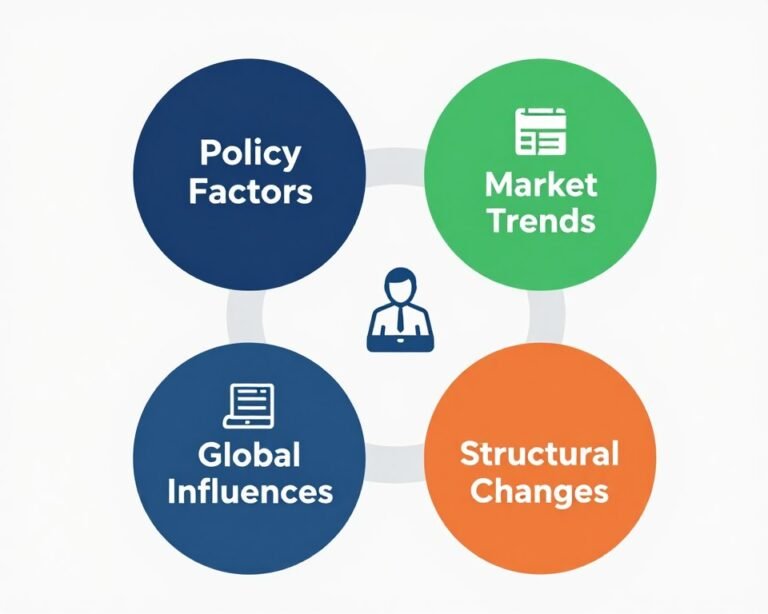
Policy Factors Driving Inflation Persistence
- Expansionary Fiscal Policy: Massive government spending during the pandemic period injected unprecedented money into the economy. This fiscal expansion occurred while supply remained constrained, creating classic demand-pull inflation conditions.
- Monetary Policy Lag Effects: The Federal Reserve maintained near-zero rates and asset purchases well into the inflationary period. This delayed response allowed inflation expectations to drift higher, making subsequent control more difficult.
- Supply-Side Policy Constraints: Regulatory barriers and infrastructure limitations prevent rapid supply responses to demand pressures. These structural impediments prolong price adjustment periods.
- Labor Market Policies: Various pandemic-era programs affected labor supply dynamics. Worker shortages in key sectors contribute to persistent wage pressures that feed into services inflation.
Market Trends and Structural Changes
Fundamental shifts in market structure amplify inflation persistence. The pandemic accelerated deglobalization trends already underway. Companies now prioritize supply chain resilience over cost efficiency. This restructuring raises baseline costs throughout the economy.
Labor markets exhibit unprecedented tightness. The ratio of job openings to unemployed workers remains historically elevated. This imbalance gives workers increased bargaining power. Wage increases, while beneficial for households, contribute to services price inflation that shows remarkable persistence.
Housing market dynamics create particularly stubborn inflation. Decades of underbuilding created supply shortages. Rising mortgage rates haven’t significantly reduced prices because supply remains constrained. Shelter costs represent nearly one-third of the consumer price index, making housing inflation especially impactful on overall measures.
Global Influences on Domestic Inflation
- Energy Price Volatility: The Organization of the Petroleum Exporting Countries production decisions continue affecting global energy prices. These shocks transmit quickly through transportation and production costs throughout the economy.
- Supply Chain Reconfiguration: Global supply networks remain disrupted years after initial pandemic shocks. Reshoring and friend-shoring initiatives raise production costs as companies move away from lowest-cost suppliers.
- Geopolitical Tensions: International conflicts disrupt commodity flows and create price uncertainty. These tensions particularly affect food and energy markets, with spillover effects throughout the inflation process.
- Currency Dynamics: Dollar strength affects import prices but also creates global financial stress. These cross-border effects create complex feedback loops influencing domestic price stability.
Structural Economic Transformations
The economy underwent profound structural changes during the pandemic period. Remote work permanently altered commercial real estate and residential location patterns. These shifts create relative price adjustments that appear as broader inflation in aggregate measures.
Technological disruption accelerated across industries. While technology typically exerts disinflationary pressure over time, transition periods involve significant adjustment costs. Companies invest heavily in digital transformation, costs that often appear in near-term prices before efficiency gains materialize.
Demographic shifts also contribute to persistence. Aging populations require more healthcare services, a high-inflation sector. Younger workers demand different compensation structures and work arrangements. These demographic pressures create sustained upward pressure on specific price categories resistant to monetary policy interventions.
Research Insight: Federal Reserve Bank analysis shows persistence inflation today reflects both cyclical and structural components. The structural elements may require years to resolve fully, even with appropriate policy responses to cyclical factors.
Impact on the U.S. Economy: Comprehensive Analysis
Persistent inflation ripples through every corner of the American economy. Its effects extend far beyond the inflation rate itself. Understanding these multifaceted impacts helps individuals and businesses prepare for continued economic challenges.
GDP Growth and Economic Output
Persistent inflation creates significant drag on gross domestic product growth. The Congressional Budget Office projects that sustained above-target inflation reduces potential output over multi-year periods. This occurs through several channels simultaneously.
Real interest rates rise as the Federal Reserve tightens monetary policy to combat inflation. Higher rates discourage business investment in productive capacity. Companies delay expansion plans amid uncertainty. This investment decline reduces the economy’s ability to grow without generating additional inflation pressures.
Consumer spending, which drives roughly seventy percent of economic activity, faces headwinds from persistent inflation. Real wages fall when price increases outpace nominal wage gains. Households reduce discretionary spending to maintain essential purchases. This demand moderation, while helpful for inflation control, slows overall economic growth.
The International Monetary Fund analysis indicates that economies experiencing persistence inflation face elevated recession risks. The Federal Reserve must weigh growth concerns against price stability mandates. This policy dilemma often results in stop-start patterns that create additional uncertainty and volatility in economic performance.
Inflation Dynamics and Price Behavior
The inflation process itself changes under persistent conditions. Price-setting behavior becomes more frequent and aggressive. Research from the Federal Reserve System shows that during high inflation periods, companies adjust prices more often. This increased frequency of price changes makes inflation more responsive to shocks but also harder to stabilize.
Inflation expectations play a crucial role in persistence. When households and businesses expect continued inflation, they adjust behavior in ways that validate those expectations. Workers demand larger wage increases. Companies implement preemptive price hikes. These expectation-driven actions create self-fulfilling prophecy dynamics.
Different sectors experience varying inflation rates. Services inflation typically shows more persistence than goods inflation. Wages drive service costs, and wage adjustments occur less frequently than other price changes. This creates long lags between policy actions and full inflation impacts on the overall price index.
Employment Market Transformations
Labor market dynamics shift fundamentally under persistent inflation conditions. Initially, inflation can coincide with strong employment growth. The current period saw historically low unemployment rates alongside elevated inflation. However, this favorable combination rarely persists.
The Federal Reserve eventually must slow the economy to contain inflation. This cooling process typically increases unemployment. The natural rate of unemployment rises as workers and jobs become mismatched. Skills demanded by employers shift, but workforce adaptation takes time.
Wage growth patterns become distorted during inflation persistence. Nominal wages rise, but real purchasing power may stagnate or decline. This creates worker frustration and potentially increased labor turnover as employees seek better compensation. Higher turnover raises business costs and reduces productivity growth.
Bureau of Labor Statistics data reveals that inflation particularly impacts lower-income workers. These households spend larger portions of income on necessities like food and energy. When these categories experience persistent inflation, lower-income families face severe budget pressures. This inequality dimension adds social and political complexity to the economic challenge.
Financial Market Disruptions
Persistent inflation creates substantial turbulence across financial markets. Bond markets experience significant losses as rates rise. Long-duration bonds prove especially vulnerable. Investors who purchased bonds during the low-rate period face substantial unrealized losses as yields climb.
Stock markets display increased volatility under inflation persistence. Equity valuations depend heavily on discount rates. As the Federal Reserve raises the policy rate to combat inflation, discount rates increase. This mechanically reduces present values of future cash flows, pressuring stock prices lower.
Different sectors respond variably to persistent inflation. Energy and commodity producers may benefit from higher prices. Technology companies, valued primarily on distant future earnings, face valuation pressure from higher discount rates. Financial sector performance depends on how rapidly they can reprice assets and liabilities.
Real estate markets face complex dynamics. Property values typically appreciate during inflationary periods. However, higher mortgage rates reduce affordability and transaction volumes. Commercial real estate confronts additional challenges from structural changes in office demand and retail patterns.
Consequences for Consumers and Businesses
Households experience persistent inflation through multiple channels simultaneously. Real income declines when wages lag price increases. Savings lose purchasing power. Retirement planning becomes more complex as future cost projections grow uncertain.
Consumer behavior adapts to sustained inflation. Shoppers increase price sensitivity and actively seek deals. Brand loyalty weakens as consumers prioritize value. These behavioral shifts force businesses to adjust marketing and pricing strategies continuously.
Businesses face strategic challenges from inflation persistence. Input costs rise unpredictably. Long-term contracts become riskier. Supply chain planning grows more complex. Companies must balance passing costs to customers against maintaining market share amid heightened price sensitivity.
Small businesses face particular difficulties. They lack the market power to pass through cost increases easily. Access to capital becomes more expensive as rates rise. Many small firms operate with thin margins that disappear quickly under persistent cost pressures.
GDP Growth Impact
Real GDP growth slows by an estimated one to two percentage points annually during persistent inflation periods. Investment declines and consumer spending moderates significantly.
Employment Effects
Unemployment rates typically rise by two to three percentage points as the Federal Reserve tightens policy. Job creation slows substantially across most sectors.
Market Volatility
Financial markets experience heightened volatility. Stock market corrections of twenty to thirty percent commonly occur during inflation-fighting cycles.
Recent Data and Trends: Current Inflation Landscape
The latest statistics paint a complex picture of persistent inflation’s evolution. While some indicators show improvement, others reveal stubborn resistance to Federal Reserve policy interventions. Understanding current trends provides essential context for future projections.
Latest Statistical Evidence
The Bureau of Labor Statistics reports that headline inflation has moderated from peak levels exceeding nine percent in mid-2022. However, the current rate remains substantially above the Federal Reserve target of two percent. Core inflation, excluding volatile food and energy categories, demonstrates even more troubling persistence.
Personal consumption expenditures price index data from recent months shows continued elevated readings. This measure serves as the Federal Reserve’s preferred inflation gauge. The stickiness in core PCE inflation particularly concerns policymakers. It suggests that inflation has broadened beyond initial pandemic-related supply shocks.
Services inflation remains especially persistent. The Bureau of Labor Statistics data reveals that services prices continue rising at rates incompatible with the Federal Reserve target. Housing services, medical care, and transportation services all show sustained upward price pressures.
Goods inflation has moderated more successfully. Supply chain normalization helped reduce goods price pressures. However, goods still contribute to overall inflation persistence. Used vehicle prices, while down from peaks, remain elevated. New vehicle prices continue climbing as manufacturers maintain tight inventories.
Labor Market and Wage Dynamics
Employment data reveals persistent tightness in labor markets. Job openings remain historically elevated relative to unemployed workers. This imbalance sustains wage growth at levels inconsistent with two percent inflation over time.
The Employment Cost Index shows continued strong wage pressures. Compensation growth across both wages and benefits exceeds rates consistent with price stability. These wage dynamics feed directly into services inflation, the most persistent component of overall price increases.
Labor force participation rates have recovered partially but remain below pre-pandemic levels. This reduced participation constrains supply and contributes to labor market tightness. Demographic factors suggest participation may not fully return to previous levels, implying sustained wage pressures.
Institutional Analysis and Projections
The International Monetary Fund recently revised U.S. inflation projections higher for extended periods. Their analysis suggests that bringing inflation back to target will take longer than initially anticipated. This revision reflects the accumulating evidence of inflation persistence.
The Congressional Budget Office baseline forecasts now incorporate more persistent inflation. Their projections show inflation remaining above target through 2025 before gradually converging. This extended timeline has significant implications for fiscal planning and economic growth projections.
Federal Reserve Bank research papers increasingly focus on understanding persistence mechanisms. Analysis suggests that both supply-side constraints and demand-side pressures contribute to current inflation dynamics. The policy implication is that sustained restrictive monetary policy remains necessary.
| Indicator | Latest Reading | Target Level | Trend Direction | Source |
| Core PCE Inflation | 2.8% (annual) | 2.0% | Declining slowly | Bureau of Labor Statistics |
| Services Inflation | 5.1% (annual) | 2-3% | Persistent elevation | Bureau of Labor Statistics |
| Wage Growth (ECI) | 4.3% (annual) | 3-3.5% | Gradual moderation | Bureau of Labor Statistics |
| Federal Funds Rate | 5.25-5.50% | Variable | On hold | Federal Reserve System |
| Inflation Expectations (5yr) | 2.9% | 2.0-2.5% | Elevated but stable | Federal Reserve Bank surveys |
Global Context and Comparative Analysis
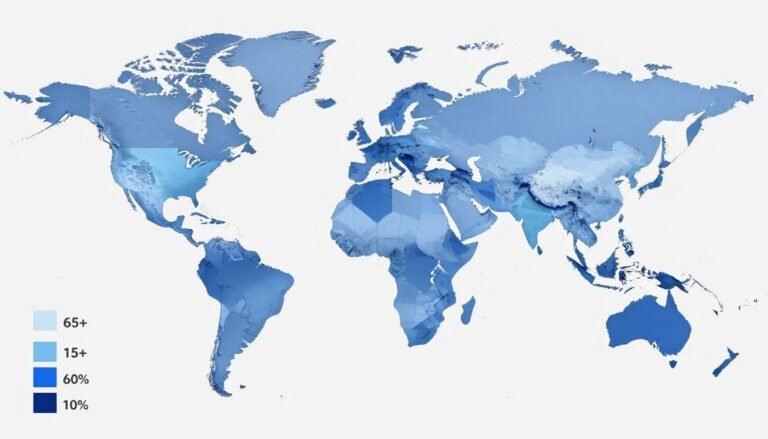
The United States is not alone in facing persistent inflation. The International Monetary Fund reports that major advanced economies globally experience similar challenges. European inflation shows comparable persistence despite different underlying economic conditions.
The World Bank analysis indicates that global supply chains remain more fragile than pre-pandemic norms. This fragility contributes to persistent inflationary pressures across countries. Commodity price volatility, particularly in energy and food, affects inflation globally.
However, the United States faces unique factors contributing to persistence. Fiscal policy remained more expansionary than in comparable economies. Labor market tightness is more pronounced. These domestic factors mean U.S. inflation may prove more persistent than in peer nations.
Forward-Looking Indicators
Leading indicators provide mixed signals about future inflation paths. Business surveys show easing price pressures in manufacturing. However, services sector surveys continue indicating pricing power and cost pressures. This divergence suggests uneven progress across sectors.
Housing market indicators warrant particular attention. Shelter costs represent the largest single component of consumer price measures. New lease data shows some moderation, but existing lease renewals continue rising substantially. The lag between new and existing leases means housing inflation will persist even as new rental markets soften.
Inflation expectations measures from household surveys and market-based indicators remain above levels consistent with sustained two percent inflation. The Federal Reserve emphasizes that anchoring expectations represents a critical challenge. Until expectations firmly anchor at target levels, policy must remain restrictive.
Expert Opinions and Economic Forecasts
Leading economists and institutions offer varied perspectives on persistent inflation’s trajectory. While consensus exists on certain fundamentals, significant disagreement remains about timing and policy requirements. These expert views shape market expectations and policy debates.
Federal Reserve Official Projections
The Federal Reserve System releases quarterly economic projections reflecting policymaker views. Recent projections show expectations for gradual inflation decline toward target over a multi-year period. However, these forecasts have consistently proven too optimistic as inflation demonstrates greater persistence than anticipated.
Federal Reserve Chair testimony to Congress emphasizes the commitment to restoring price stability. Officials acknowledge that bringing inflation to target will require sustained policy restrictiveness. The central bank projects that rates must remain elevated longer than initially expected to ensure inflation persistence breaks down.
Federal Reserve Bank presidents offer varying perspectives on appropriate policy stance. Some emphasize the risks of overtightening and causing unnecessary economic damage. Others stress the greater danger of allowing inflation expectations to become unanchored. This internal debate reflects genuine uncertainty about persistence mechanisms.
Private Sector Economic Outlook
Major investment banks and consulting firms publish regular inflation forecasts. The consensus view suggests inflation will remain above the Federal Reserve target through 2025 at minimum. Some analysts project persistence extending into 2026 before fully normalizing.
Market-based inflation expectations derived from Treasury Inflation-Protected Securities provide real-time sentiment indicators. These measures suggest investors anticipate inflation averaging above two percent for the next five years. Such elevated expectations create conditions favoring continued inflation persistence.
Business economists surveyed by professional associations express concern about structural factors supporting inflation persistence. Supply chain reorganization, deglobalization trends, and labor market tightness appear likely to sustain price pressures beyond cyclical factors. These structural elements require different policy responses than purely cyclical inflation.
Academic Research Perspectives
Leading academic economists analyze the nature of current inflation using sophisticated econometric models. Research published by Federal Reserve economists and university scholars suggests multiple factors contribute to observed persistence. Decomposing inflation into components helps identify which elements respond to monetary policy and which prove more resistant.
Some researchers emphasize supply-side constraints as key drivers. Their analysis suggests that even with appropriate monetary policy, inflation will remain elevated until supply capacity expands. This perspective implies that the Federal Reserve faces limits in how quickly inflation can return to target without causing severe recession.
Other scholars focus on demand-side factors and inflation expectations. Their models indicate that monetary policy must remain sufficiently restrictive to convince economic actors that the Federal Reserve will tolerate necessary growth slowdown to restore price stability. Credibility plays a central role in these analyses.
International Organization Assessments
The International Monetary Fund regularly updates global inflation forecasts. Their analysis indicates that persistent inflation represents a worldwide phenomenon, though severity varies across countries. The IMF emphasizes that coordinated monetary policy tightening across major economies increases effectiveness but also amplifies growth risks.
The World Bank focuses on inflation’s developmental impacts. Their research shows that persistent inflation particularly harms emerging economies and vulnerable populations within advanced economies. Food and energy price components, which show significant persistence, represent larger budget shares for lower-income households.
The Organization for Economic Cooperation and Development provides comparative analysis across member nations. Their data reveals that countries with more aggressive monetary policy responses showed earlier signs of inflation moderation. However, these countries also experienced sharper growth slowdowns, illustrating the inherent policy trade-offs.
Risk Level Assessment
Expert consensus places persistent inflation in the high-risk category for economic stability through 2026. The combination of elevated inflation, tight labor markets, and necessary monetary policy restriction creates multiple channels for economic disruption. Recession risk remains substantial even in baseline scenarios.
Key Areas of Expert Agreement
- Inflation will not return to two percent target quickly or easily
- The Federal Reserve must maintain restrictive policy for extended periods
- Significant economic growth slowdown is necessary to break inflation persistence
- Unemployment will likely rise substantially from current low levels
- Inflation expectations remain the critical variable determining policy success
- Supply-side improvements alone cannot resolve inflation without demand moderation
Key Areas of Expert Disagreement
Dovish Perspective
- Inflation already declining adequately through supply normalization
- Aggressive rate hikes risk unnecessary recession
- Labor market can remain tight without fueling inflation
- Policy should ease preemptively to avoid overtightening
Hawkish Perspective
- Inflation persistence remains dangerous and underestimated
- Rates must go higher and stay elevated longer
- Tight labor markets inherently inflationary at current levels
- Policy must err toward restrictiveness to ensure credibility
“The current inflation episode exhibits characteristics suggesting greater persistence than initially recognized. Historical experience indicates that allowing inflation to remain elevated for extended periods makes eventual stabilization more costly in terms of lost output and employment.”
Possible Solutions and Policy Responses
Addressing persistent inflation requires comprehensive policy approaches spanning multiple institutions and time horizons. The complexity of current inflation dynamics means no single policy lever can resolve the challenge quickly. Effective responses must coordinate monetary, fiscal, and structural policies.
Federal Reserve Monetary Policy Actions
The Federal Reserve System bears primary responsibility for inflation control. Monetary policy operates through several transmission channels. Interest rate increases represent the most visible and powerful tool. The federal funds rate serves as the benchmark influencing borrowing costs throughout the economy.
Current Federal Reserve policy maintains rates at levels considered restrictive. This stance aims to slow demand growth to levels consistent with available supply. The central bank projects that rates must remain elevated until clear evidence emerges that inflation is returning sustainably to the two percent target.
Quantitative tightening complements rate increases. The Federal Reserve allows its balance sheet to shrink by not replacing maturing securities. This withdrawal of liquidity reinforces restrictive policy. However, balance sheet reduction operates with longer and less certain lags than rate policy.
Forward guidance shapes inflation expectations. The Federal Reserve communicates its commitment to restoring price stability even if doing so requires tolerating below-potential growth and rising unemployment. This communication aims to anchor expectations and enhance policy effectiveness.
Government Fiscal Policy Adjustments
The U.S. Department of the Treasury and Congress control fiscal policy. During periods of persistent inflation, fiscal restraint supports monetary policy effectiveness. Reduced government spending or increased taxes withdraw demand from the economy, relieving inflationary pressures.
The Congressional Budget Office analyzes fiscal policy’s inflation impacts. Recent analysis suggests that sustained budget deficits complicate inflation control efforts. Deficit spending adds to aggregate demand when the economy already operates above capacity. Fiscal tightening would ease the Federal Reserve’s burden.
However, political constraints limit fiscal policy responses. Spending cuts face resistance from program beneficiaries. Tax increases encounter opposition from affected taxpayers. This political reality means fiscal policy likely provides limited assistance in fighting inflation, placing greater burden on monetary policy.
Targeted fiscal measures could address specific inflation sources without broad austerity. Supply-side investments in infrastructure, education, and research expand productive capacity. These investments take years to yield results but address structural factors contributing to inflation persistence.
Supply-Side and Structural Reforms
Expanding supply represents the only way to reduce inflation without sacrificing growth and employment. Multiple policy areas offer opportunities for supply enhancement. However, these reforms typically require extended implementation periods and involve political challenges.
- Labor Supply Expansion: Policies that increase labor force participation help ease wage pressures. Immigration reform, childcare support, and skills training programs all can expand effective labor supply over time.
- Housing Supply: Zoning reform, permitting streamlining, and infrastructure investment can increase housing construction. Given shelter’s large weight in inflation measures, housing supply expansion directly impacts measured inflation.
- Energy Development: Balanced energy policies that increase domestic production while managing environmental concerns can reduce energy price volatility. Energy costs affect inflation both directly and through input costs across industries.
- Trade Policy: Reducing trade barriers and diversifying supply sources enhances competition and limits price pressures. However, trade policy must balance inflation concerns against other objectives like national security and strategic autonomy.
Market-Driven Adjustments
Private sector responses play crucial roles in resolving inflation persistence. Market mechanisms naturally work to equilibrate supply and demand, but these adjustments take time and involve transitional costs.
Business investment in capacity expansion responds to high prices and profit opportunities. Manufacturing, logistics, and housing sectors all show increased capital spending aimed at relieving supply constraints. These investments gradually ease price pressures as new capacity comes online.
Labor market adjustments occur as workers and employers adapt to new conditions. Wage growth attracts workers back to the labor force. Employers invest in automation and efficiency improvements to reduce labor intensity. Workforce training programs help match worker skills to available opportunities.
Financial market adjustments allocate capital toward sectors most capable of expanding supply. Higher interest rates make capital more expensive, forcing more disciplined investment decisions. This reallocation process can be disruptive but ultimately supports more balanced growth.
Coordination Challenges and Trade-offs
Effective inflation control requires policy coordination across multiple authorities. The Federal Reserve operates independently but policy effectiveness depends on complementary fiscal and regulatory actions. Poor coordination can force the central bank to tighten more aggressively, increasing economic costs.
Policymakers face fundamental trade-offs between inflation control and other objectives. Aggressive rate increases slow inflation but also reduce employment and growth. The optimal policy path depends on relative weights assigned to different goals and assessments of economic structure.
International coordination presents additional complexity. Global supply chains mean that foreign developments affect domestic inflation. Synchronized monetary tightening across countries enhances individual effectiveness but amplifies global growth slowdown. Currency movements create winners and losers across countries.
Policy Risk: The greatest danger lies in insufficient policy persistence. Historical episodes show that premature policy easing allows inflation to reignite, necessitating even more costly subsequent tightening. Maintaining restrictive policy despite economic pain proves politically difficult but economically essential.
What Persistent Inflation Means for Americans
Beyond aggregate economic statistics, persistent inflation profoundly affects individual Americans’ daily lives and long-term prospects. Understanding these practical implications helps families and individuals make informed decisions amid economic uncertainty.
Cost of Living Pressures
Household budgets face sustained pressure from persistent inflation. Essential expenses like food, energy, and shelter consume larger portions of income. Families must make difficult trade-offs between necessities and discretionary spending. Lower-income households face particularly acute challenges as necessities represent larger budget shares.
Grocery costs remain elevated despite some commodity price moderation. Food price inflation shows remarkable persistence due to processing and distribution costs. Families report changing eating habits, choosing less expensive items, and reducing restaurant visits to manage food budgets.
Energy costs create uncertainty and budget volatility. Gasoline prices fluctuate but remain above pre-pandemic norms. Home heating and cooling costs vary by region but generally trend upward. These unpredictable expenses complicate household planning and force reduced spending elsewhere.
Healthcare costs continue rising faster than general inflation. Medical services, prescription drugs, and insurance premiums all show persistent upward pressure. These expenses prove especially burdensome for older Americans and those with chronic conditions. Health spending crowds out other budget priorities.
Employment and Income Implications
Workers experience inflation through multiple channels affecting their economic security. Nominal wages have risen substantially, but real purchasing power determines actual living standards. When price increases outpace wage gains, workers effectively receive pay cuts despite higher nominal compensation.
Job security concerns grow as the Federal Reserve tightens policy to combat inflation. While current unemployment remains low, leading indicators suggest future increases. Workers face elevated risks of layoffs or reduced hours as businesses respond to slowing demand and higher costs.
Career planning becomes more complex under inflation uncertainty. Education and training investments require longer payback periods when future income purchasing power is uncertain. Geographic mobility decisions must account for varying regional inflation rates and cost-of-living differences.
Retirement timing faces new pressures. Workers approaching retirement must reassess whether accumulated savings can sustain desired living standards. Some delay retirement to rebuild savings eroded by inflation. Others retire earlier if employment opportunities deteriorate during economic slowdown.
Investment and Savings Challenges
Persistent inflation fundamentally alters investment calculus for American households. Traditional safe investments like savings accounts and short-term bonds fail to preserve purchasing power when returns lag inflation. This forces savers into riskier assets to maintain real wealth.
Stock market volatility during inflation-fighting periods creates losses for many investors. Retirement account balances decline, forcing workers to save more or adjust retirement plans. The psychological impact of portfolio losses affects consumer confidence and spending patterns.
Real estate investment faces crosscurrents. Property values typically rise with inflation, providing some protection. However, higher mortgage rates reduce affordability and limit transaction volumes. Homeowners benefit from fixed-rate mortgages that inflation erodes in real terms. Prospective buyers face substantially higher monthly payments.
Fixed-income retirees suffer particularly from inflation persistence. Social Security Administration cost-of-living adjustments provide some protection but lag actual expense increases. Private pension benefits typically lack inflation protection. Bond portfolio values decline as rates rise. These factors severely stress retiree finances.
Housing Market Dynamics
Housing represents the largest single expense for most Americans. Persistent inflation creates complex housing market effects. Home prices rose dramatically during the pandemic period. Subsequent rate increases reduced affordability but haven’t triggered major price declines due to supply constraints.
Renters face sustained cost pressures. Rental price inflation shows particular persistence in tight housing markets. Lease renewals typically incorporate substantial increases. Renters lack the inflation hedge that homeowners enjoy through fixed-rate mortgages.
Homeowners with existing mortgages benefit from inflation’s erosion of real debt burdens. Their fixed monthly payments become easier to afford as nominal wages rise. However, property taxes, insurance, and maintenance costs all increase with inflation, partially offsetting mortgage payment advantages.
First-time homebuyers face historically difficult conditions. High prices combined with elevated mortgage rates create severe affordability barriers. Many potential buyers remain priced out of homeownership, extending rental periods and delaying household formation.
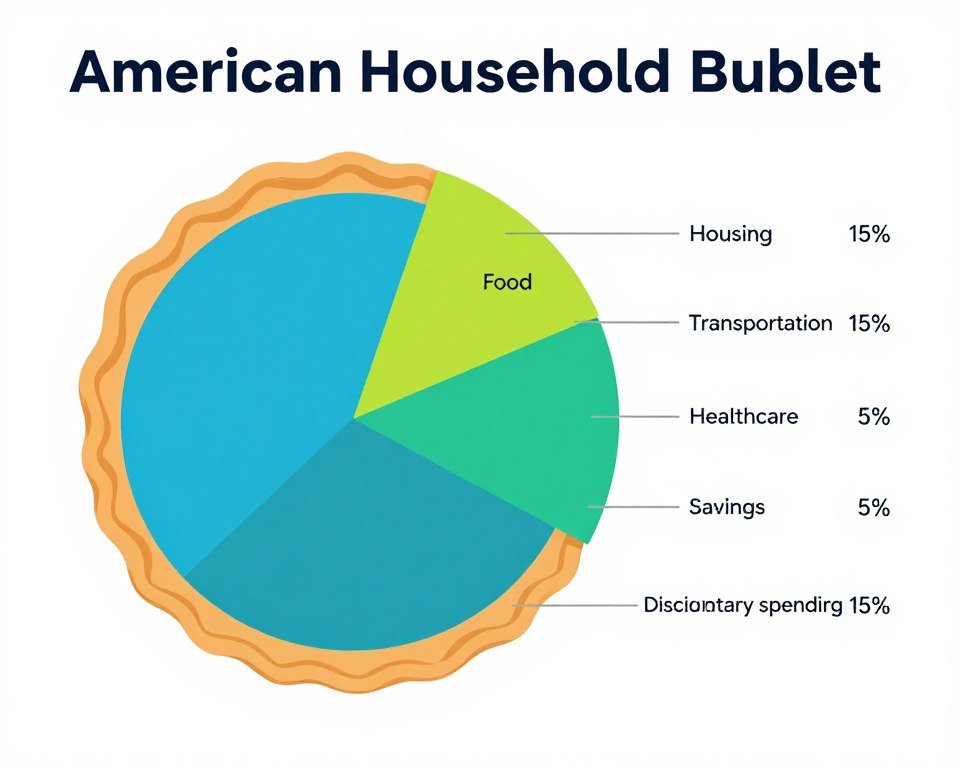
Budget Reallocation Under Inflation
American families fundamentally restructure spending patterns during persistent inflation. Essential categories consume larger budget shares, forcing discretionary spending cuts.
Housing costs now average thirty-five percent of household budgets, up from thirty percent. Food and energy combined claim another twenty-five percent, up from twenty percent. These increases force reduced spending on entertainment, dining out, and non-essential purchases.
Savings rates decline as families struggle to maintain consumption amid rising costs. This reduced savings has long-term implications for emergency preparedness and retirement security.
Psychological and Social Impacts
Beyond direct financial effects, persistent inflation creates psychological stress and social tensions. Consumer confidence surveys show sustained pessimism about economic conditions and future prospects. This reduced confidence affects spending decisions independently of current income levels.
Inequality concerns intensify during inflationary periods. Lower-income households suffer disproportionately while wealthy households can better protect themselves through diversified assets. This perceived unfairness breeds social discontent and political pressure for policy responses.
Generational tensions emerge around housing and opportunity. Younger Americans face unprecedented challenges achieving homeownership and financial security that previous generations accessed more easily. These frustrations shape political attitudes and policy demands.
Trust in institutions declines when inflation persists despite official assurances. Early Federal Reserve communications suggesting inflation would prove transitory damaged credibility when proven wrong. Rebuilding trust requires sustained policy success in returning inflation to target.
Cost of Living Impact
Essential expenses consume seventy percent of middle-income household budgets, up from sixty percent pre-inflation. Discretionary spending capacity severely constrained.
Real Wage Decline
Despite nominal wage increases, real purchasing power declined for most workers during peak inflation. Recovery slow and uneven across sectors and income levels.
Retirement Security
Inflation erodes savings value while market volatility reduces portfolio balances. Retirement planning requires substantial upward revision of savings targets.
Future Outlook: Persistent Inflation Through 2026-2030
Projecting inflation’s trajectory over multi-year horizons involves substantial uncertainty. However, analyzing current trends and structural factors allows informed scenario development. The outlook depends heavily on policy choices and economic adjustments during the next several years.
Short-Term Outlook: 2026-2027
The near-term period presents the clearest projections with highest confidence. Most forecasters expect inflation to remain above the Federal Reserve target through 2025 before beginning sustained decline toward two percent during 2026. However, this timeline depends on several critical assumptions.
The Federal Reserve must maintain restrictive monetary policy throughout this period. Any premature easing risks reigniting inflation and requiring even more aggressive subsequent tightening. Policy persistence represents the key variable determining success in breaking inflation expectations.
Labor markets will likely loosen gradually as job creation slows and unemployment rises moderately. The Bureau of Labor Statistics projects unemployment reaching four point five to five percent during this period. This cooling should ease wage pressures and facilitate services inflation moderation.
Supply-side improvements continue contributing to inflation reduction. Global supply chains show ongoing normalization. Housing construction increases modestly, though supply constraints persist. Energy markets stabilize as production adjusts to demand patterns. These supply factors provide tailwinds for disinflation.
However, significant risks cloud this baseline outlook. Geopolitical shocks could trigger new energy or commodity price spikes. Financial stability concerns may constrain how long the Federal Reserve can maintain restrictive policy. Fiscal policy might work against monetary tightening if political pressures force spending increases.
Medium-Term Outlook: 2027-2028
The medium term presents greater uncertainty but potentially more optimistic scenarios. If near-term policy proves successful, inflation could return to target by 2027. This would allow the Federal Reserve to normalize policy rates, removing significant economic headwind.
Growth could rebound as monetary policy eases and economic uncertainty declines. Business investment held back during the inflation-fighting period would resume. Consumer spending would strengthen as real wage growth returns. The economy might enjoy a period of balanced growth with stable inflation.
Labor markets in this scenario would reach new equilibrium. Unemployment stabilizes at sustainable levels. Wage growth moderates to rates consistent with productivity growth and two percent inflation. Labor force participation recovers further as improved conditions attract workers.
Alternative scenarios present darker possibilities. If inflation proves more persistent than expected, restrictive policy must continue longer. This extended tightness increases recession probability. The economy could experience protracted period of below-potential growth and elevated unemployment.
Financial stability risks also grow over time. Extended periods of high rates stress financial system vulnerabilities. Banking sector concerns, commercial real estate challenges, or corporate debt problems could force Federal Reserve policy changes even if inflation remains elevated.
Long-Term Outlook: 2028-2030
The longer-term horizon involves even greater uncertainty but offers perspective on structural economic evolution. Several fundamental questions shape this period’s outlook. Has the economy undergone permanent structural changes affecting the inflation process? What is the new normal for interest rates, growth, and unemployment?
Optimistic scenarios envision return to pre-pandemic economic conditions. Inflation stabilizes at two percent. Growth averages two to two point five percent annually. Unemployment settles around four percent. The Federal Reserve maintains policy rates in normal range of two point five to three point five percent.
This outcome requires successful navigation of near-term challenges without permanent economic damage. Supply-side improvements must materialize as anticipated. Inflation expectations must remain firmly anchored. Policy must prove sufficiently aggressive to prevent persistence while avoiding unnecessary recession.
Pessimistic scenarios involve lasting economic scarring from inflation and its treatment. Potential growth declines due to reduced investment during the inflation period. Higher structural unemployment emerges from labor market mismatches. Inflation persistence proves more durable, requiring extended restrictive policy.
Intermediate scenarios seem most probable. Inflation returns toward target but may stabilize slightly above two percent. Growth moderates below previous trends. Unemployment settles higher than pre-pandemic levels. This represents a new economic equilibrium reflecting structural changes from the pandemic period and inflation episode.
Structural Changes Shaping the Future
Several fundamental economic transformations will influence inflation dynamics through 2030. Understanding these structural shifts helps assess medium and long-term trajectories.
- Deglobalization: Supply chain restructuring toward resilience over efficiency implies persistently higher costs. This structural change creates upward pressure on neutral inflation rates.
- Energy Transition: Climate change responses require massive infrastructure investment. This transition involves significant relative price adjustments appearing as inflation in the near term before efficiency gains materialize.
- Demographics: Population aging reduces labor supply growth while increasing demand for high-inflation healthcare services. These demographic factors create structural inflation pressures.
- Technology: Automation and artificial intelligence could provide disinflationary forces. However, transition periods involve adjustment costs. Net inflation effects remain uncertain and will unfold gradually.
Policy Evolution and Institutional Learning
The Federal Reserve System and other policy institutions will adapt based on lessons from current inflation. Central bank frameworks may evolve to address revealed weaknesses. These institutional changes will shape future inflation dynamics.
Communication strategies will likely emphasize conditionality and uncertainty more than past forward guidance. The experience of overly confident inflation predictions during the pandemic period damaged credibility. Future communications may prove more cautious and less specific.
Policy frameworks might adjust inflation targets or timeframes. Some economists advocate temporary higher inflation tolerance to repair balance sheets. Others argue for more explicit long-run price level targets. These debates will influence institutional evolution through the decade.
International coordination may strengthen as policymakers recognize global inflation linkages. The International Monetary Fund and World Bank could play larger roles facilitating policy cooperation. Currency stability and trade relationships will require careful management as countries pursue domestic price stability.
“The path from persistent inflation back to price stability will likely prove longer and more challenging than initially anticipated. Historical experience suggests that breaking entrenched inflation requires sustained policy commitment and tolerance for economic costs. The critical question is whether policymakers maintain necessary persistence.”
Scenario Probability Assessment
Optimistic Scenario
Probability: 25%
Inflation returns to two percent by 2027. Growth rebounds. No severe recession. Policy normalization successful. Structural improvements materialize.
Key Requirements:
- Policy persistence maintained
- No major external shocks
- Supply improvements continue
- Expectations remain anchored
Baseline Scenario
Probability: 50%
Gradual inflation decline reaching target by 2028. Moderate growth slowdown. Unemployment rises to five percent. New equilibrium slightly worse than pre-pandemic.
Key Requirements:
- Adequate policy response
- Manageable external shocks
- Partial supply improvement
- Expectations eventually anchor
Pessimistic Scenario
Probability: 25%
Inflation persistence extends beyond 2028. Severe recession required. Lasting economic damage. Higher unemployment persists. Financial stability concerns emerge.
Key Risks:
- Policy errors or reversals
- Major external shocks
- Supply constraints persist
- Expectations become unanchored
Conclusion: Navigating the Persistent Inflation Challenge
Persistent inflation represents one of the most significant economic challenges facing the United States in decades. The implications extend far beyond headline statistics, touching every aspect of American economic life. Understanding this threat and its potential trajectories is essential for informed decision-making by individuals, businesses, and policymakers.
The path ahead requires sustained commitment from the Federal Reserve System to restore price stability. Monetary policy must remain appropriately restrictive even as economic costs mount. History demonstrates that premature policy easing risks worse outcomes requiring even more painful subsequent corrections. Policy persistence proves essential despite political and social pressures.
Americans face challenging years ahead as the economy adjusts. Cost of living pressures will persist. Employment security may weaken. Investment portfolios will experience volatility. However, these difficulties represent necessary adjustments to restore economic balance and create foundation for sustainable future growth.
The Bureau of Labor Statistics, Congressional Budget Office, Federal Reserve Bank researchers, and other authoritative institutions provide valuable analysis and data. Staying informed through reliable sources helps navigate uncertainty. Understanding economic fundamentals enables better personal and business decisions during turbulent periods.
Looking toward 2026 and beyond, multiple scenarios remain possible. Optimistic outcomes require successful policy implementation and favorable economic adjustments. Pessimistic scenarios could unfold if persistence proves deeper than currently understood or if policy errors occur. Most likely, the economy will muddle through to a new equilibrium somewhat different from pre-pandemic norms.
The persistent inflation challenge also creates opportunities. Businesses that successfully adapt to higher-inflation environment can gain competitive advantages. Investors who position portfolios appropriately can preserve and grow wealth. Workers who upgrade skills and maintain flexibility can navigate labor market changes successfully.
Policy solutions exist, but all involve trade-offs and implementation challenges. The Federal Reserve controls monetary policy directly but depends on fiscal and structural policies to support inflation control efforts. Government actions on spending, taxation, regulation, and supply-side reforms all influence inflation outcomes. Market adjustments through private investment and entrepreneurship play equally important roles.
The American economy has successfully navigated inflation challenges before. The experience of the early 1980s demonstrates that determined policy action can break even deeply entrenched inflation. However, that episode also illustrates the substantial costs involved. Unemployment exceeded ten percent before inflation succumbed to Federal Reserve Chair Paul Volcker’s restrictive policies.
Current circumstances differ in important respects from past inflation episodes. Global supply chains, digital technology, demographic shifts, and financial system evolution all create new dynamics. The Federal Reserve must adapt strategies to contemporary economic structure while applying timeless principles of sound monetary policy.
International dimensions add complexity. The International Monetary Fund and World Bank highlight global inflation linkages. The Organization of the Petroleum Exporting Countries influences energy prices affecting inflation worldwide. Currency movements create winners and losers across countries. Coordinated policy responses enhance effectiveness but prove politically difficult.
For individual Americans, the priority should be informed preparation. Understanding inflation’s impacts on personal finances enables proactive adjustments. Budgeting must account for persistent cost increases. Investment strategies should reflect higher interest rate environment. Career decisions should consider labor market evolution. Housing choices involve complex trade-offs between renting and buying.
Businesses face strategic imperatives from persistent inflation. Pricing strategies must balance cost recovery against demand sensitivity. Supply chain resilience requires continued investment. Workforce planning must address wage pressures and retention challenges. Financial management must adapt to higher interest costs and reduced profit margins.
The Social Security Administration faces long-term pressures from inflation persistence. Cost-of-living adjustments protect beneficiaries but strain program finances. These tensions will require policy attention as the population ages. Healthcare costs present similar challenges, particularly affecting older Americans and those with chronic conditions.
Despite near-term challenges, long-term American economic prospects remain fundamentally sound. The economy possesses substantial strengths including technological leadership, entrepreneurial dynamism, deep capital markets, and flexible labor markets. These advantages will eventually reassert themselves once inflation stabilizes and policy normalizes.
The persistent inflation episode will ultimately pass. The timing and path depend on policy choices and economic adjustments occurring now and over coming years. Americans who stay informed, remain adaptable, and make sound financial decisions can successfully navigate this challenging period and emerge financially secure.